22 Fall Dining Table Decor Ideas for Cozy Gatherings
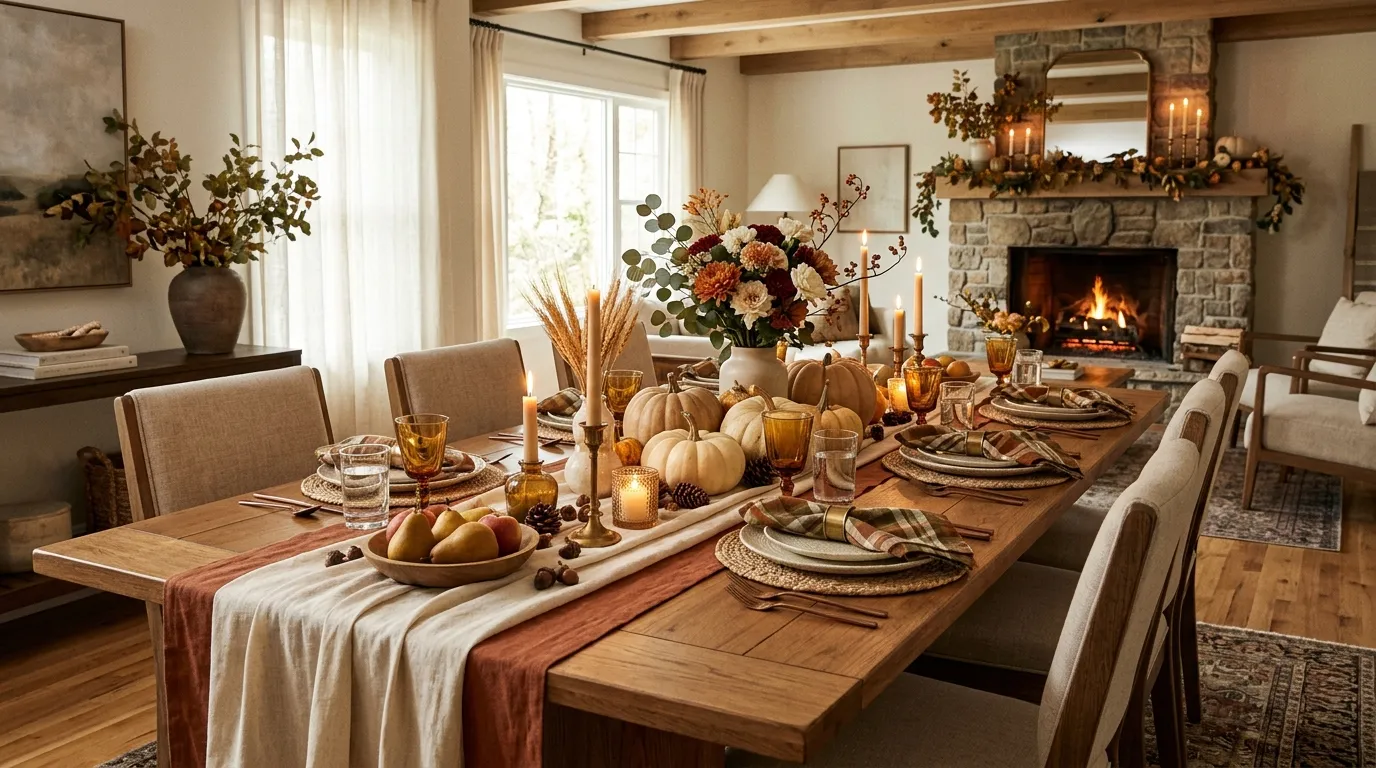
Your dining table can feel completely different with just a few thoughtful seasonal touches. Fall dining table decor can turn an ordinary meal into a warm, inviting gathering space that feels ready for family, friends, and cozy evenings.
This collection brings together simple ideas using pumpkins, plaid, linen, dried foliage, candles, wood, warm metals, and autumn-inspired colors. You do not need an expensive tablescape or a dining room makeover to create a beautiful seasonal setting. Small changes can make a surprisingly big difference. In my experience, combining natural textures with one or two richer autumn colors often creates the most welcoming result without making the table feel crowded. Whether you prefer rustic farmhouse style, soft neutrals, or deeper seasonal tones, these ideas can help you create a table that looks beautiful, feels practical, and photographs beautifully for Pinterest.
Rustic Pumpkin Centerpiece
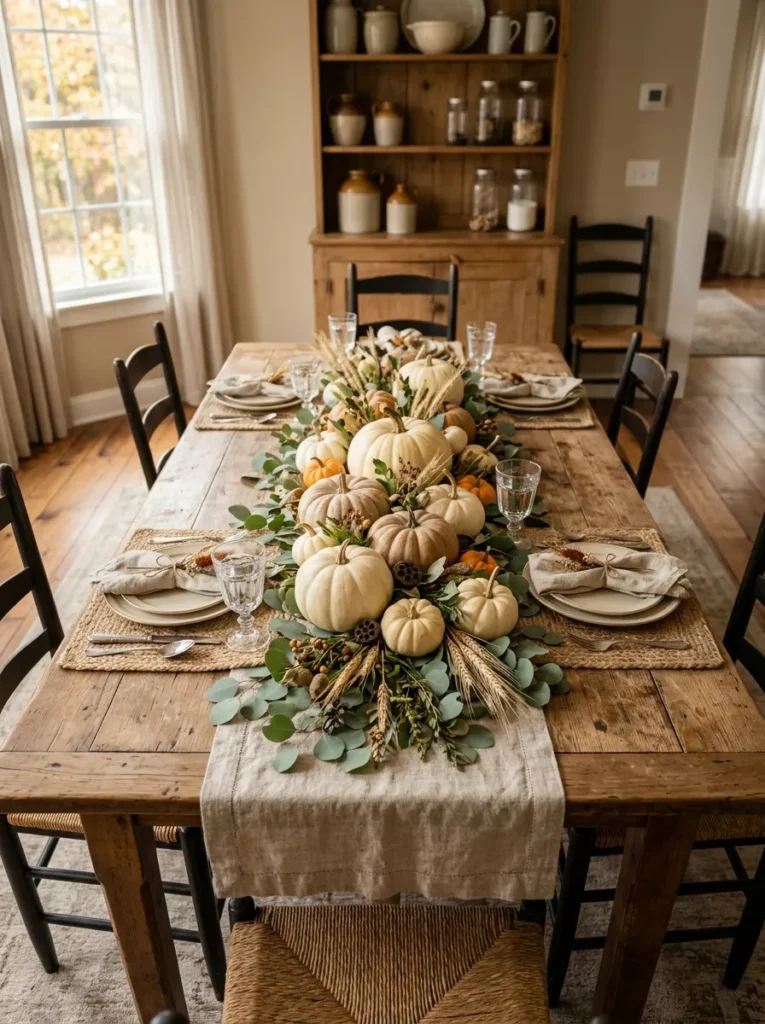
- Mix pumpkins in different sizes for a layered centerpiece.
- Choose cream, tan, and muted orange for a softer autumn palette.
- Add natural greenery to keep the arrangement fresh and balanced.
- Use a low centerpiece so guests can comfortably see across the table.
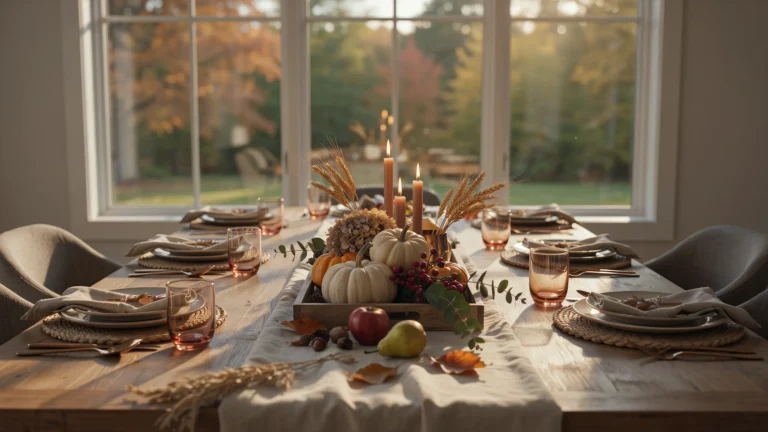
A simple pumpkin arrangement can instantly make a dining table feel ready for autumn without making the room look overly decorated. Choose three to five pumpkins in varied sizes and place them along the center of the table, leaving enough space for serving dishes. Cream, soft orange, and muted beige work especially well when you want a relaxed farmhouse appearance. Add a few eucalyptus stems, dried leaves, or small branches between the pumpkins for texture. In my experience, keeping the centerpiece low makes everyday meals feel comfortable while still creating a polished seasonal focal point.
For a more finished look, place the pumpkins on a narrow linen runner rather than directly on the tabletop. The fabric creates separation between the centerpiece and the wood while adding softness to the arrangement. If your table is small, use only two or three pumpkins and surround them with delicate greenery instead of filling the entire surface. This approach keeps the dining area practical for plates, glasses, and serving bowls. The result is a warm fall dining table decor arrangement that feels natural, inviting, and easy to recreate with pieces you may already have.
Amber Glass Accents

- Use amber glasses or small bottles to introduce warm autumn color.
- Pair translucent glass with neutral linens for a lighter appearance.
- Repeat the amber tone subtly instead of covering the entire table.
- Add candles nearby to make the glass glow beautifully in evening light.
Amber glass brings a rich seasonal tone to the table while keeping the overall arrangement light and sophisticated. Place amber tumblers at each setting or scatter a few small glass bottles through the centerpiece for gentle color repetition. Pair them with ivory plates, natural linen napkins, and warm wood to prevent the palette from becoming too dark. The transparent material also catches daylight beautifully, creating small golden reflections across the table. I’ve noticed that using just one accent color often makes seasonal decorating feel more intentional, especially when the surrounding pieces are simple and neutral.
This setup works particularly well when you want autumn style without relying heavily on pumpkins or traditional orange decorations. Add a few unscented candles in simple holders near the glass pieces for an inviting evening glow. Keep the rest of the table restrained with natural textures such as linen, ceramic, and wood. The amber accents become the visual thread connecting each place setting. As the light changes throughout the day, the glass shifts from warm and translucent to softly glowing, giving your dining area an easy seasonal update without requiring a complete tablescape makeover.
Layered Linen Runner
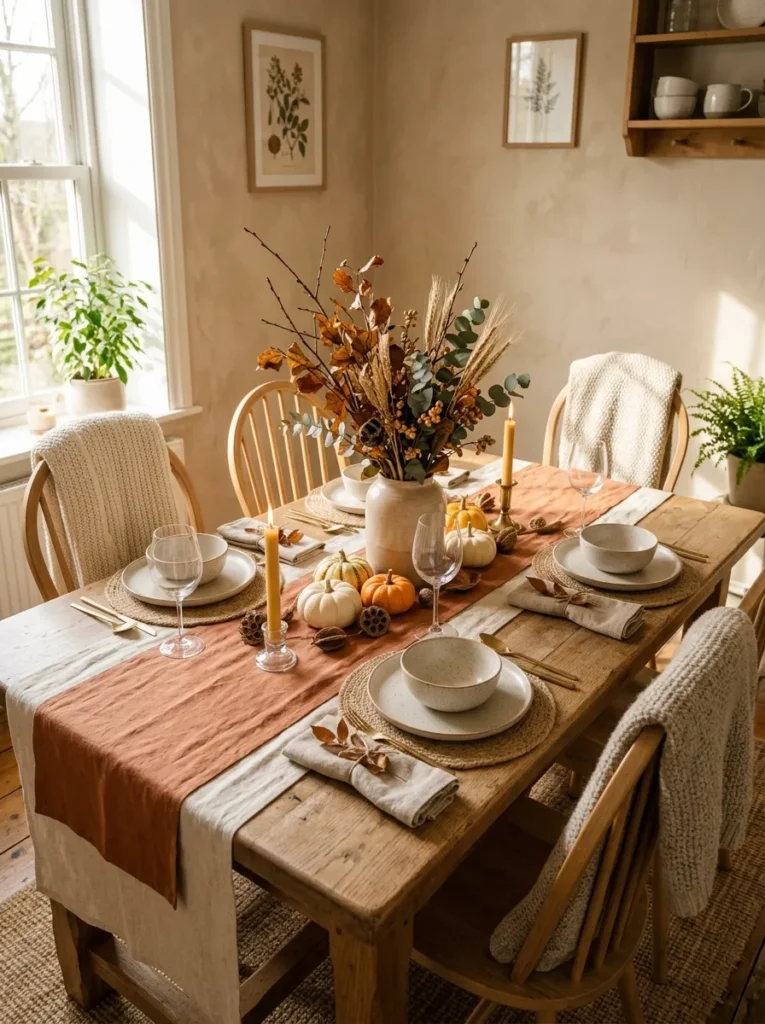
- Layer two linen runners for extra texture and visual depth.
- Combine cream fabric with rust, caramel, or muted olive tones.
- Let the table edges remain visible for a relaxed, natural finish.
- Choose washable fabrics for practical everyday dining.
Layered linen creates an easy way to give a dining table more depth without adding clutter. Start with a neutral cream runner and place a narrower rust, caramel, or olive runner over it. The overlapping fabrics create subtle contrast while allowing the natural tabletop to remain visible around the edges. Add simple ceramic plates and textured napkins to complete the setting. This technique works especially well on wooden tables because the soft fabric balances the harder surface. The result feels relaxed rather than overly formal, making the dining space comfortable enough for family dinners and casual gatherings.
The beauty of this approach is its flexibility throughout the season. You can remove the top layer when you want a lighter everyday arrangement or switch it for a deeper shade when hosting a larger autumn meal. Choose linen or cotton blends that can be washed easily, especially if your table is used frequently. In my experience, natural fabrics also photograph beautifully because their slight wrinkles and uneven texture make the setting feel authentic. For fall dining table decor, this simple layering trick adds seasonal color, softness, and dimension without requiring expensive accessories or complicated styling.
Dried Wheat Bundle
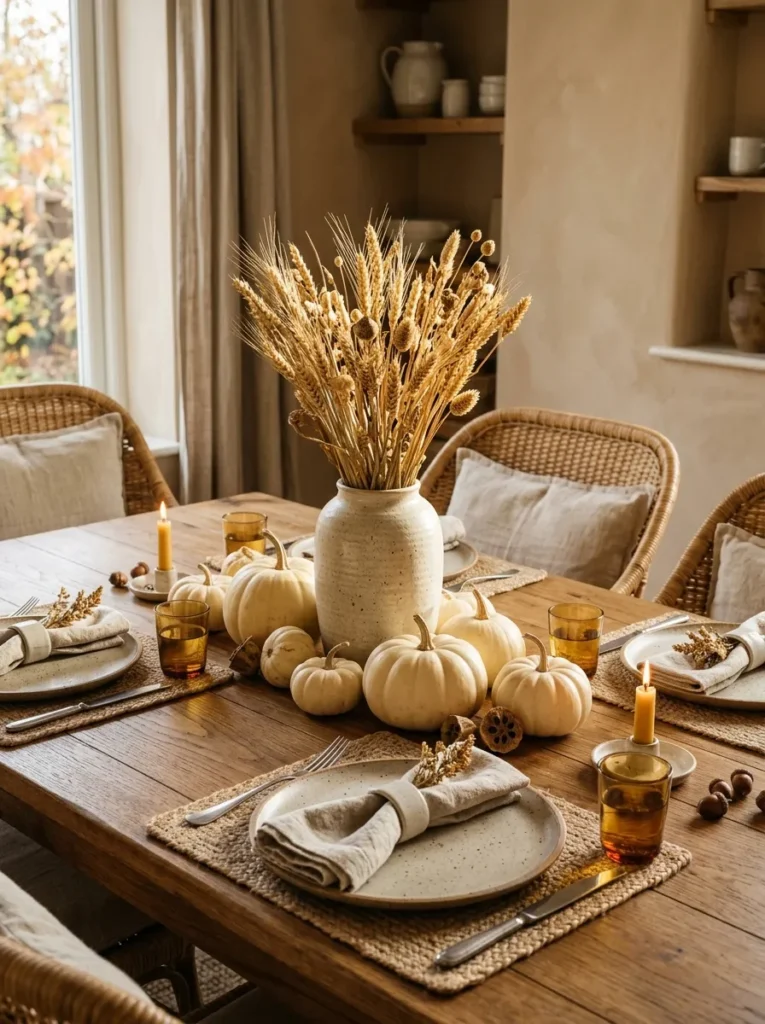
- Place dried wheat in a simple ceramic or glass vase.
- Use natural tan tones to soften darker autumn colors.
- Keep the arrangement narrow so it does not crowd the table.
- Mix wheat with eucalyptus or dried grasses for added texture.
A bundle of dried wheat adds height, movement, and natural texture without making the centerpiece feel heavy. Place several golden stems in a simple cream ceramic vase and position it slightly off-center for a relaxed arrangement. The warm wheat color works beautifully with wood, linen, and neutral dinnerware, creating a soft autumn palette. Keep the vase narrow if your table is compact, so it does not interfere with conversation. I’ve seen this approach work especially well in open dining rooms because the tall stems connect the tabletop with surrounding natural materials while keeping the overall styling visually light.
For a fuller seasonal arrangement, combine wheat with dried grasses, eucalyptus, or a few delicate branches. Avoid packing the vase too tightly because the individual stems look more graceful when they have room to spread naturally. You can also repeat the golden tone through napkins, candleholders, or small woven accents around the table. This creates visual consistency without making every item match. The finished setting feels warm and collected rather than overly themed. It is also practical because dried stems can remain attractive for months, making them a useful centerpiece beyond the autumn season.
Plaid Napkin Settings
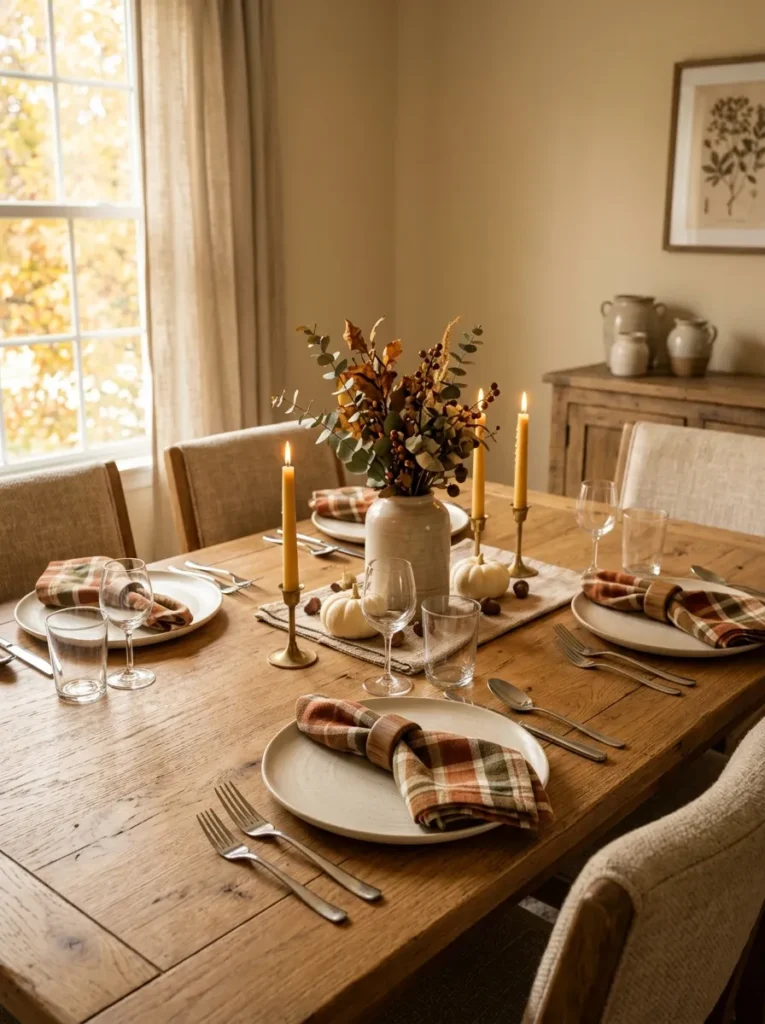
- Choose classic plaid in rust, cream, olive, or warm brown.
- Fold napkins simply so the pattern remains clearly visible.
- Pair patterned fabric with plain plates to avoid visual clutter.
- Add small wooden or metal napkin rings for a finished touch.
Plaid napkins can bring an unmistakable autumn feeling to the table with very little effort. Choose a pattern containing two or three warm shades, such as rust, cream, olive, or brown, and let the fabric become the main accent at each place setting. Keep plates and chargers relatively simple so the pattern remains easy to see. A relaxed fold placed beside the plate often looks more natural than an elaborate napkin shape. This small change can make an everyday table feel prepared for guests while keeping the overall arrangement comfortable and unfussy.
If your dining room already contains several patterns, choose a quieter plaid with thin lines and plenty of neutral space. For a simpler room, a larger check pattern can create stronger visual interest. Wooden napkin rings, brushed metal rings, or even a small dried sprig can finish each setting beautifully. I’ve noticed that repeating one textile pattern around the table helps the entire arrangement feel coordinated without requiring matching dishes. The plaid also photographs well for Pinterest because its strong lines and warm colors create an instantly recognizable seasonal detail against lighter plates and natural table surfaces.
Candlelit Centerpiece
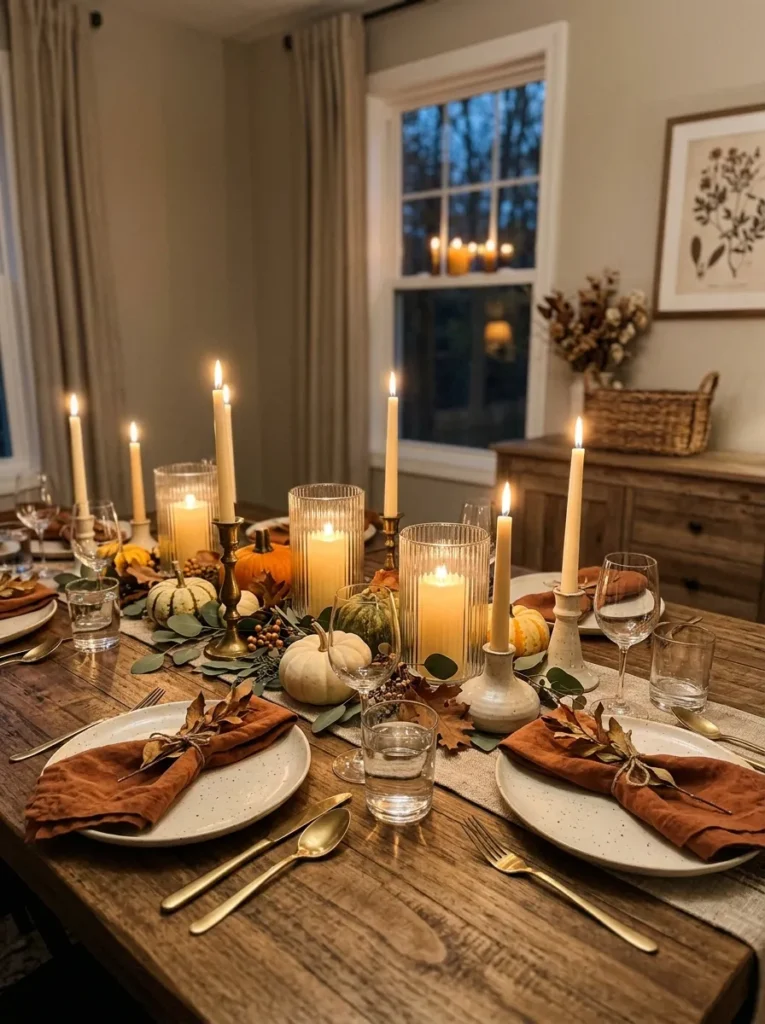
- Arrange unscented candles at different heights for gentle dimension.
- Use brass, glass, or ceramic holders to complement autumn colors.
- Leave open space between candles for a relaxed appearance.
- Choose flameless options when children or pets are nearby.
Few details create an inviting autumn atmosphere as quickly as warm candlelight across a dining table. Arrange several candles in different heights along the center, using brass, glass, or ceramic holders to add subtle material contrast. Keep the surrounding decorations simple so the light remains the focus. Small pumpkins, dried leaves, or eucalyptus can fill the spaces between holders without overwhelming the arrangement. The warm glow softens hard surfaces and makes neutral dinnerware look richer in the evening. This simple styling choice is especially effective when hosting dinner because it changes the atmosphere without taking up much table space.
For everyday use, choose unscented candles so their fragrance does not compete with food during meals. Flameless candles are another practical option, particularly for homes with children or pets. Place them at varied heights, but avoid creating a tall central barrier that blocks conversation. A few low holders mixed with one or two taller pieces usually provide enough dimension. In my experience, candlelight works best when the rest of the table remains restrained, allowing shadows and reflections to become part of the decoration. The result feels warm, intimate, and naturally suited to fall gatherings.
Mini Gourd Cluster
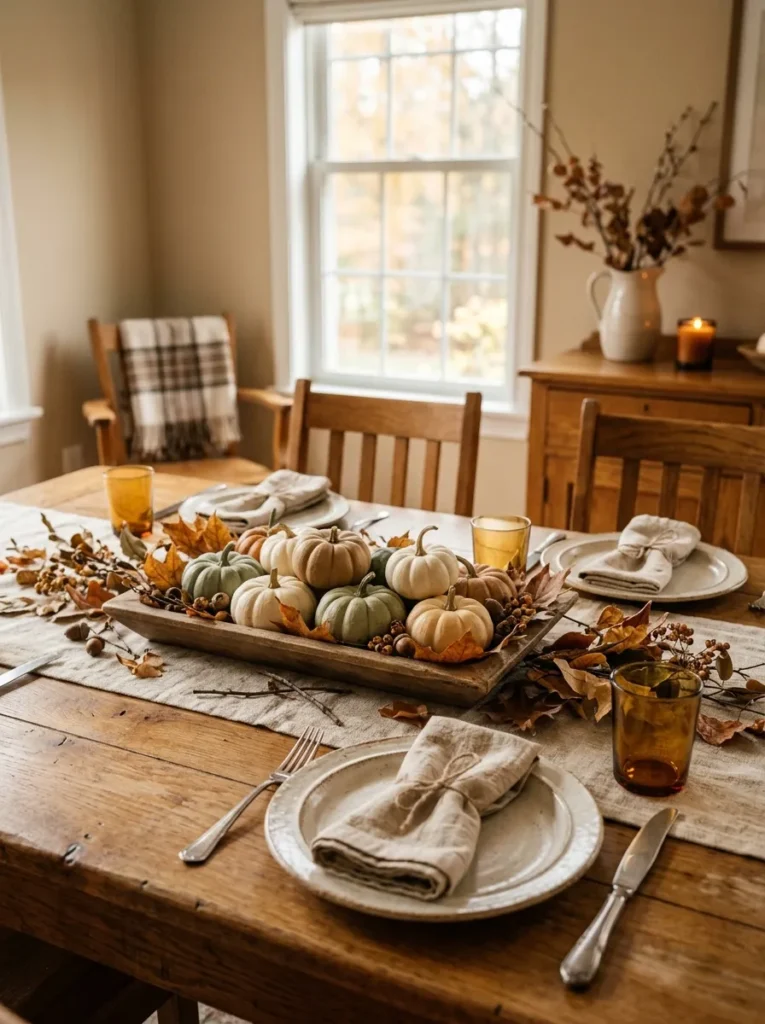
- Group small gourds in varied shapes for an organic centerpiece.
- Mix white, green, tan, and muted orange for natural contrast.
- Place them on a tray to keep the arrangement contained.
- Add a few leaves or twigs for extra seasonal texture.
Small gourds can create a charming seasonal focal point without taking over the dining table. Choose several shapes and sizes, then group them together on a shallow wooden tray or woven basket. Mixing white, pale green, tan, and muted orange creates more visual interest than using one color alone. Leave small gaps between pieces so each shape remains visible. A few dried leaves or thin branches can soften the edges of the arrangement. This works especially well for smaller dining spaces because the display feels substantial while remaining low enough for easy conversation across the table.
A contained cluster also makes seasonal decorating easier to manage during meals. When you need more space for serving dishes, simply lift the tray and move the entire arrangement instead of rearranging individual pieces. Choose a tray that complements your table, such as natural wood for rustic rooms or a woven material for softer interiors. I’ve noticed that odd-numbered groupings often look naturally balanced because the different shapes create gentle visual movement. Keep the surrounding place settings simple so the gourds remain the focal point. This approach adds autumn character while keeping the table practical and uncluttered.
Copper Tableware
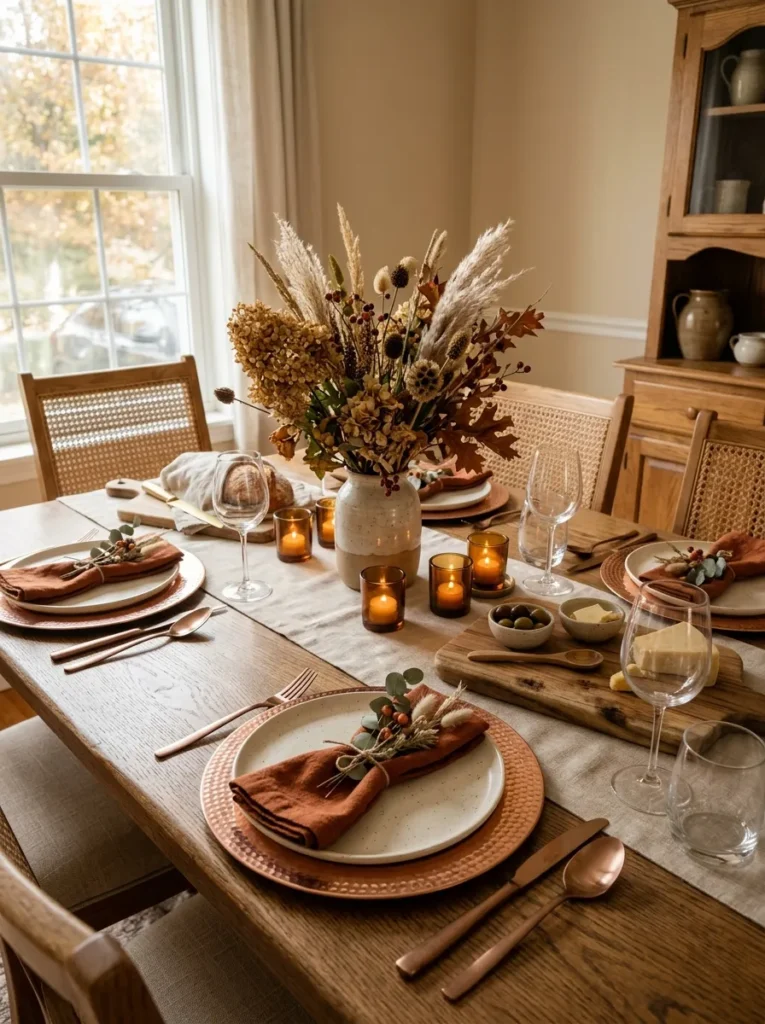
- Introduce copper through chargers, flatware, or small serving pieces.
- Pair metallic accents with cream and earthy tones.
- Mix copper with wood to create warmth without excessive shine.
- Repeat the finish in only a few places for balance.
Copper accents bring warmth and a subtle glow to an autumn table, especially when paired with natural materials. Use copper chargers, flatware, candleholders, or a small serving bowl to introduce the finish without covering the entire setting in metallic details. Ivory plates and rust-colored textiles help the copper stand out while keeping the palette grounded. Natural wood is another useful pairing because its matte texture balances the reflective surface. The result feels polished but still relaxed, making this combination suitable for both casual family meals and more carefully styled seasonal gatherings.
The key is repetition without overuse. If you choose copper flatware, repeat the finish with one small centerpiece accessory rather than several matching pieces. This gives the eye a consistent visual thread while preventing the table from looking overly formal. For a softer look, combine copper with cream linen, dried foliage, and warm beige ceramics. For a richer setting, add deeper brown or muted rust accents. In my experience, metallic finishes look most natural when surrounded by tactile materials such as wood, linen, and woven textures. That contrast gives the table depth and keeps the autumn styling inviting.
Woodland Place Settings

- Layer wood chargers beneath neutral ceramic dinnerware.
- Add small pinecones or leaves for a natural seasonal detail.
- Use earthy napkins to connect the place settings visually.
- Keep each setting functional enough for everyday meals.
Wooden chargers can instantly give each place setting a grounded, woodland-inspired character. Start with round wood chargers beneath neutral ceramic plates, then add olive, beige, or rust linen napkins for a touch of seasonal color. Small pinecones, dried leaves, or tiny branches can sit beside each napkin without crowding the setting. The natural materials work together because they share subtle variations in texture and tone. This style feels especially welcoming on a solid wood table, where the chargers visually connect the individual settings while creating a cohesive autumn arrangement.
For everyday dining, choose chargers with a smooth surface that can be wiped clean easily. Keep decorative pieces small so plates, glasses, and serving utensils remain comfortable to use. If your table is already visually busy, skip additional ornaments and let the wood itself provide the seasonal character. I’ve noticed that repeating natural materials at every seat makes a table look thoughtfully designed without requiring identical decorative pieces. The finished arrangement feels earthy and relaxed, while neutral ceramics keep it from becoming too rustic. It is a practical way to bring woodland-inspired texture into a fall dining setting.
Autumn Floral Arrangement
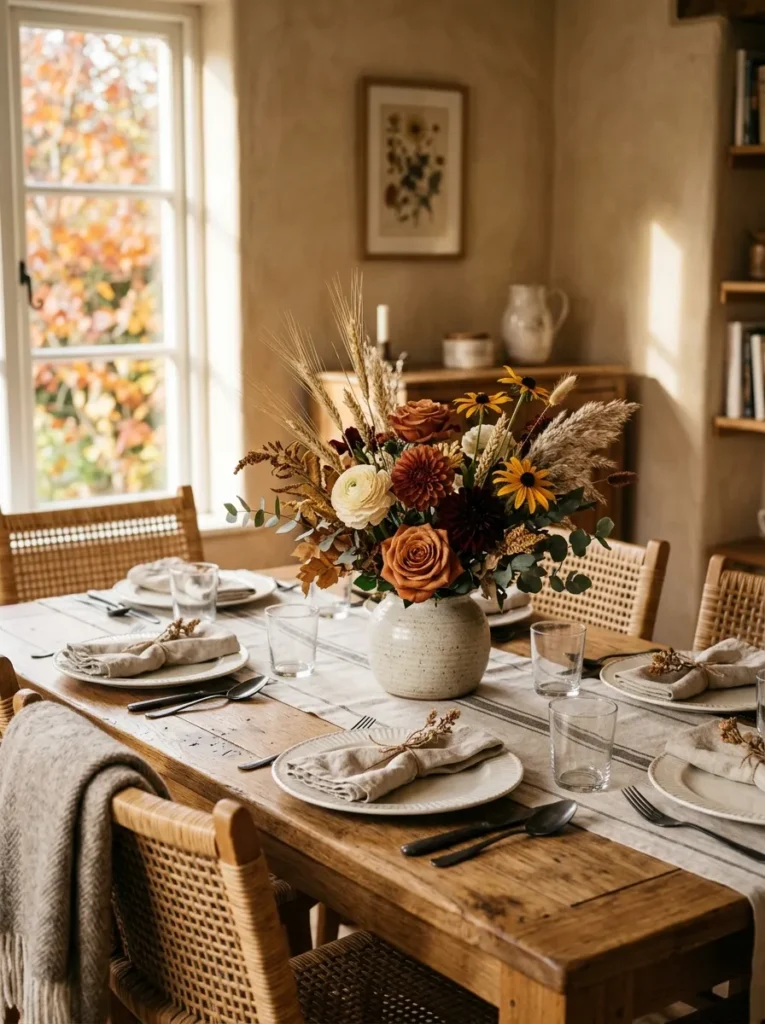
- Combine seasonal flowers with dried stems for natural texture.
- Choose rust, cream, burgundy, and soft yellow blooms.
- Use a low vase to keep the centerpiece conversation-friendly.
- Repeat one floral color through napkins or nearby accents.
A seasonal floral arrangement can make the dining table feel instantly refreshed while adding color and natural movement. Combine fresh flowers in rust, cream, burgundy, or soft yellow with dried grasses and delicate branches for a layered look. Choose a low, rounded vase so the arrangement stays below eye level and does not interrupt conversation. Neutral plates and natural linen allow the flowers to become the visual focus. This approach works beautifully when you want a centerpiece that feels organic rather than overly themed, especially for weekend dinners or relaxed gatherings with family and friends.
To keep the arrangement looking balanced, vary the height of the stems instead of cutting everything to the same length. Place the fullest blooms toward the center and allow a few lighter stems to extend naturally around the edges. If fresh flowers are not practical, use preserved or dried flowers for a longer-lasting display. In my experience, combining fresh and dried elements gives a more authentic seasonal appearance because the textures contrast beautifully. Keep the container simple so the flowers remain the star. A restrained arrangement can add color, softness, and an inviting focal point without making the table feel crowded.
Velvet Napkin Ties
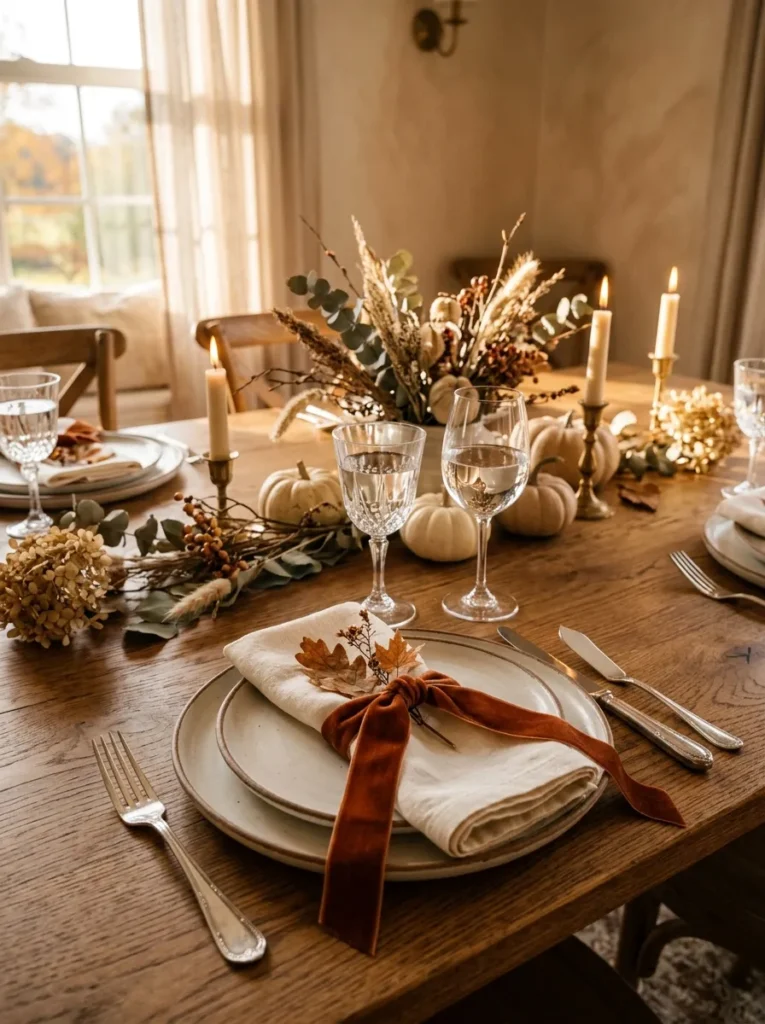
- Use velvet ribbon in rust, forest green, or deep burgundy.
- Tie napkins loosely for a soft, relaxed appearance.
- Add a tiny dried leaf or sprig for seasonal detail.
- Pair rich fabric with simple plates and understated tableware.
Velvet napkin ties add a small touch of richness without requiring a complete table makeover. Choose narrow velvet ribbon in rust, forest green, burgundy, or warm brown and loosely tie it around folded linen napkins. The plush texture contrasts beautifully with smooth ceramic plates and natural wood surfaces. For an understated seasonal detail, tuck a tiny dried leaf, wheat stem, or rosemary sprig into the knot. This technique is especially useful when your existing dishes are neutral because the ribbon introduces color and texture exactly where the eye naturally notices it at each place setting.
Keep the rest of the table relatively simple so the velvet does not compete with too many decorative details. A plain plate, clear glass, and natural charger provide enough structure around the richer textile. If you are hosting a larger gathering, prepare all the napkins together before guests arrive so the table comes together quickly. I’ve noticed that small textile changes often create a surprisingly polished effect because they make ordinary tableware feel intentionally styled. The result is warm and sophisticated without looking overly formal or requiring expensive seasonal accessories.
Natural Branch Runner
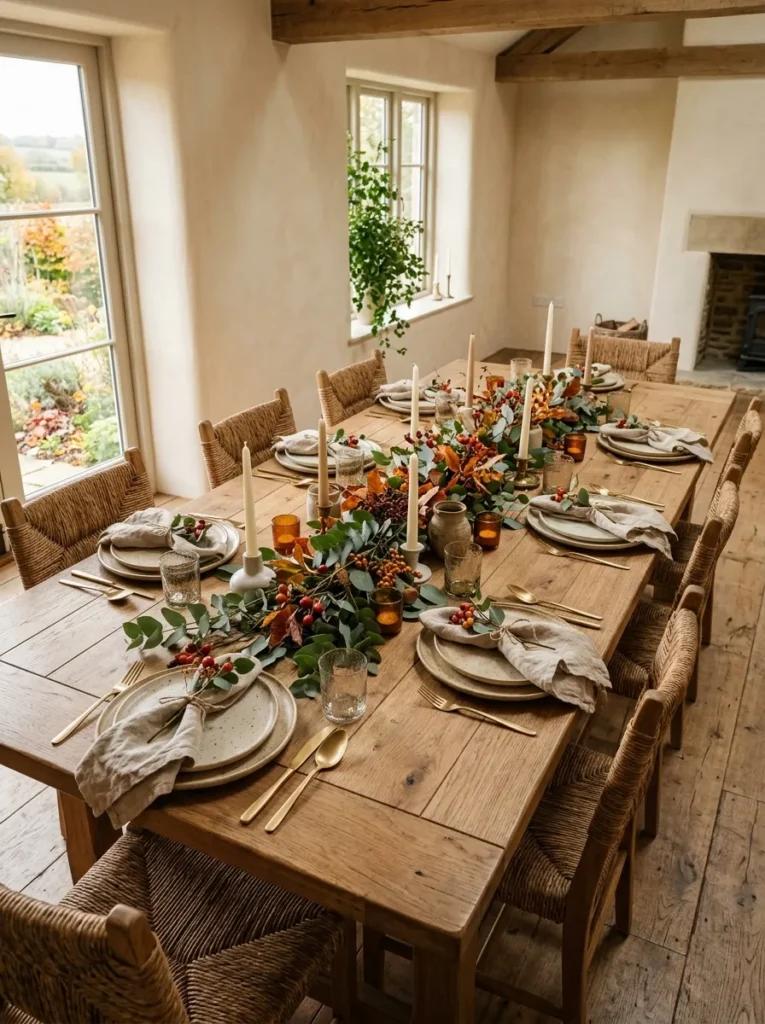
- Arrange slender branches directly along the table center.
- Add a few leaves or berries for subtle seasonal color.
- Use a restrained arrangement for a clean organic look.
- Pair branches with candles for warmth after sunset.
A natural branch runner creates an organic centerpiece that feels gathered rather than overly arranged. Lay slender eucalyptus, maple, olive, or seasonal branches loosely down the center of the table, allowing some stems to overlap naturally. Add a few small berries or dried leaves for subtle color, but avoid filling every open space. The branches look particularly beautiful against natural wood because the similar textures create a seamless connection. This idea works well when you prefer understated fall styling and want the table to feel seasonal without relying on traditional pumpkins or heavily decorated centerpieces.
Keep the arrangement low and slightly irregular so it looks natural from every seat. If the branches extend too far toward the table edges, trim them to preserve space for plates and serving dishes. Small glass votives can be placed between the stems to introduce warmth when the room becomes darker. For a cleaner appearance, choose branches with fewer leaves and more visible structure. This type of centerpiece also transitions easily into other seasons by changing only a few accents. The result is a flexible, textured table setting that feels connected to nature while remaining practical for everyday dining.
Burlap Runner Layers
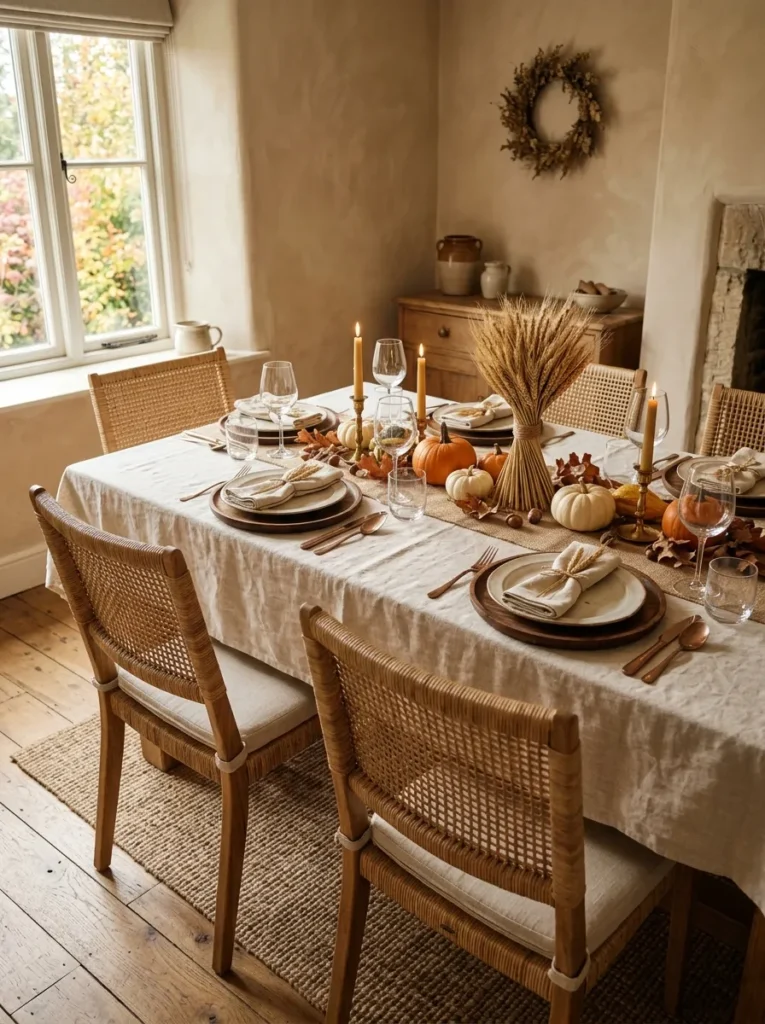
- Layer burlap over a softer linen runner for textural contrast.
- Choose natural beige or warm taupe instead of harsh brown.
- Add ceramic, wood, and dried accents around the fabric.
- Keep the layering narrow so the tabletop remains visible.
Burlap can give an autumn table a relaxed rustic texture, especially when it is layered over softer linen. Start with a cream or beige linen runner, then place a narrower burlap strip through the center. The contrasting textures immediately add depth while keeping the natural tabletop visible. Pair the fabrics with ivory ceramics, wooden chargers, dried stems, or small neutral pumpkins for a cohesive arrangement. This combination works particularly well in farmhouse and cottage-style dining rooms because the rougher weave feels connected to other natural materials without requiring many additional decorations.
If traditional burlap feels too dark or coarse for your space, choose a lighter natural weave with a finer texture. You can also soften the arrangement by adding cream napkins or pale ceramic pieces around the runner. Avoid covering the entire table with fabric because the exposed wood helps balance the heavier texture. I’ve noticed that mixing rough and smooth materials makes a table feel more thoughtfully styled without adding visual clutter. The finished look is casual, warm, and practical, making it suitable for both everyday meals and relaxed fall gatherings.
Harvest Fruit Display
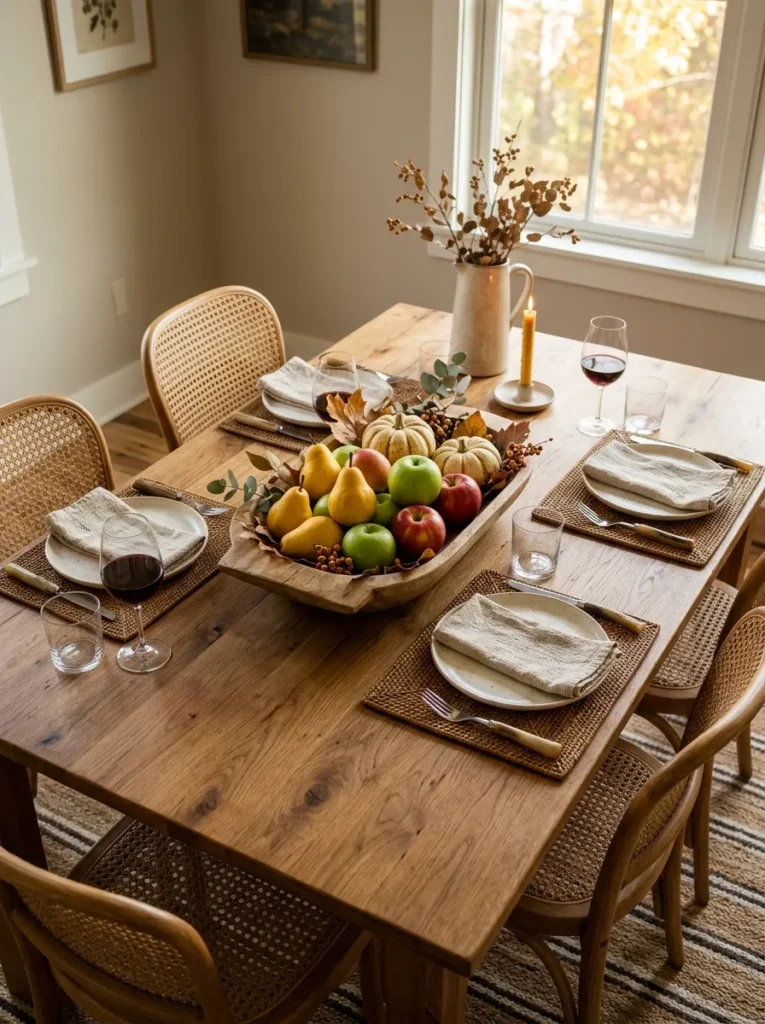
- Fill a shallow bowl with pears, apples, and small pumpkins.
- Mix green, golden, and muted red tones for natural variety.
- Choose seasonal fruit that can remain part of the meal.
- Keep the bowl low for easy conversation across the table.
A bowl of seasonal fruit can become a beautiful centerpiece while remaining useful during everyday meals. Fill a shallow wooden or ceramic bowl with pears, apples, and a few small pumpkins, mixing green, golden, cream, and muted red tones. The varied colors create an effortless harvest-inspired palette, while the natural shapes add visual interest. Keep the bowl low so it does not block conversation. This idea is particularly practical for busy households because the centerpiece can double as an accessible fruit display rather than becoming something that needs to be moved whenever the table is used.
Choose fruit with slightly different shapes and sizes to make the arrangement feel abundant without looking carefully staged. If you include pumpkins or decorative gourds, place them around the fruit rather than covering it completely. A simple linen runner underneath can help define the display against a darker tabletop. In my experience, edible centerpieces are especially useful when decorating smaller dining areas because they combine function and style. Once the fruit is eaten, the bowl can easily be refreshed with another seasonal selection, keeping the table attractive without creating unnecessary storage.
Moody Burgundy Accents
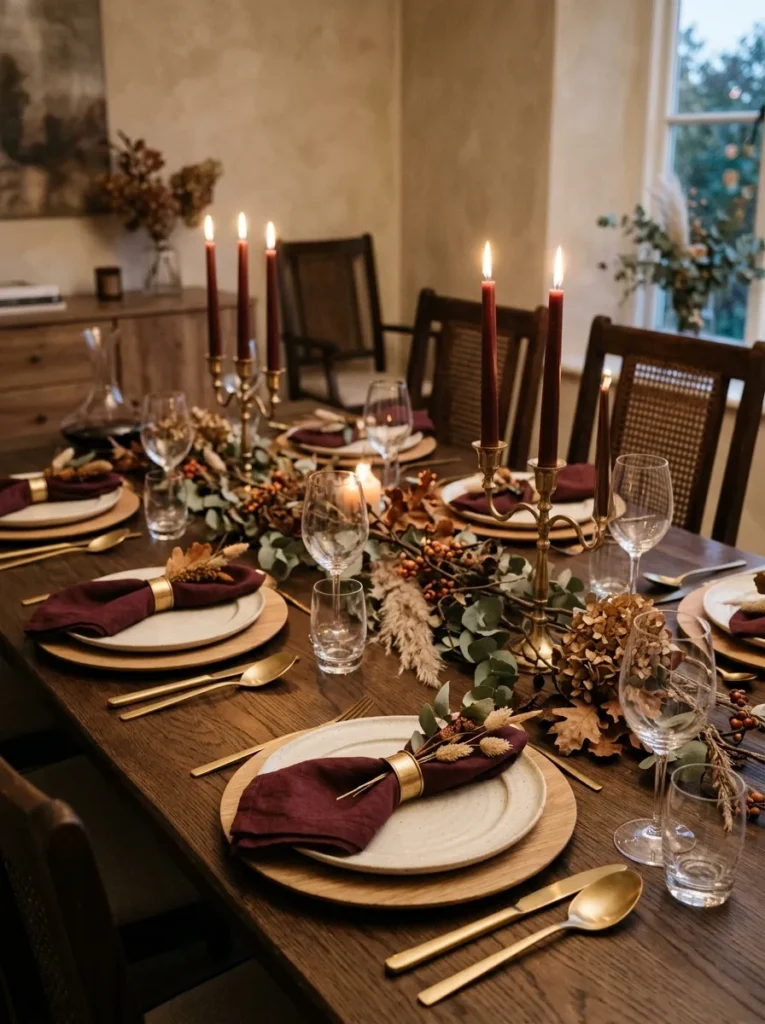
- Introduce burgundy through napkins, candles, or small accessories.
- Balance deep color with cream and natural wood.
- Repeat the shade subtly across the table for cohesion.
- Use warm lighting to enhance the richer autumn tones.
Deep burgundy accents can give a neutral dining room a richer autumn character without requiring a dramatic change. Introduce the shade through linen napkins, candles, small floral stems, or a single serving piece. Pair the darker color with cream ceramics and natural wood so the table remains balanced rather than visually heavy. Repeating burgundy in two or three locations helps connect the individual elements. This palette works especially well during evening gatherings because warm lighting brings out the depth of the color and creates a more intimate appearance across the table.
For a softer result, choose muted wine or berry tones instead of highly saturated red. Keep metallic details minimal, using brass or aged gold only where they add warmth. If your dining room already has dark furniture, lighten the arrangement with ivory linens and pale plates. I’ve noticed that one deep seasonal color can make a simple table feel much more considered when the surrounding pieces remain quiet. This approach also makes it easy to update an existing setting because you can introduce burgundy through inexpensive textiles rather than replacing plates, chargers, or larger decorative pieces.
Cream Pumpkin Trio
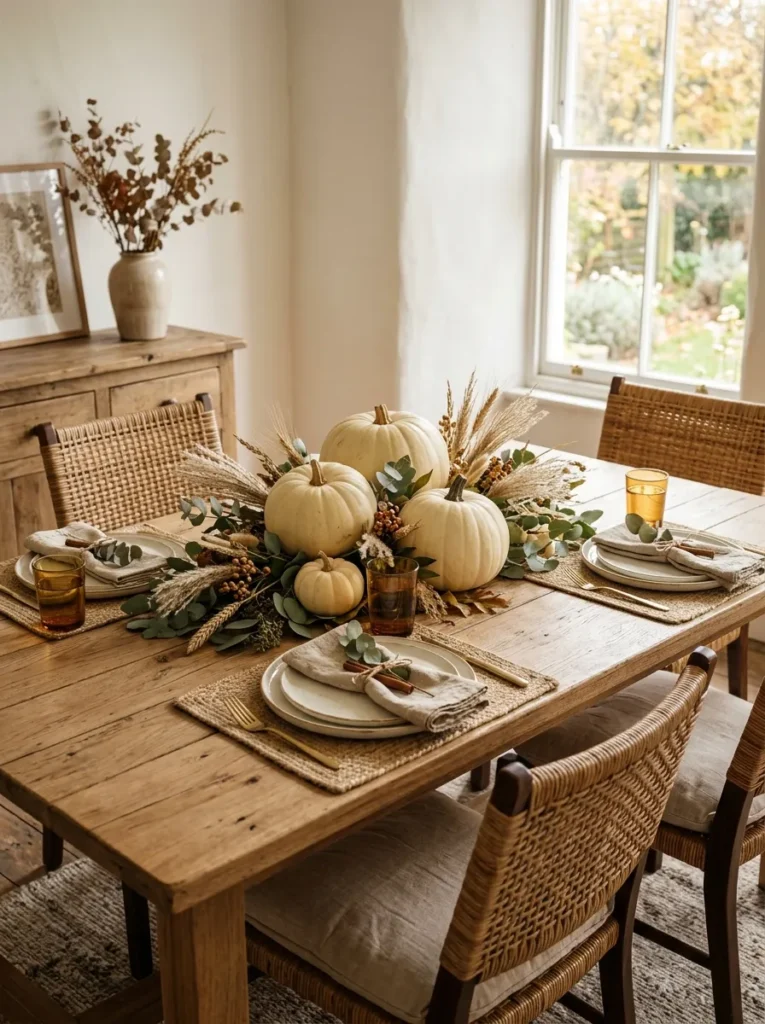
- Group three cream pumpkins in different sizes for soft contrast.
- Add eucalyptus or dried leaves around the bases.
- Use natural wood underneath to warm the pale palette.
- Keep surrounding tableware simple and neutral.
Cream pumpkins offer a softer alternative to traditional bright orange decorations while still creating an unmistakable autumn focal point. Choose three pumpkins in different sizes and arrange them together near the center of the table. Surround the bases with eucalyptus, dried leaves, or a few slender grasses to add natural texture. The pale pumpkins look especially attractive against warm wood because the contrast gives the arrangement definition. This approach works beautifully in neutral dining rooms where you want seasonal character without introducing strong colors or making the space feel overly themed.
Keep the surrounding tableware simple so the trio remains visually important. Ivory plates, beige linen, and clear glassware create a calm backdrop, while a few darker accents can prevent the setting from appearing washed out. If your table is narrow, arrange the pumpkins in a gentle line rather than a tight cluster. I’ve noticed that varying height is more important than adding lots of accessories because it creates dimension with fewer pieces. Once autumn ends, the same neutral pumpkins can often transition into winter decorating, making this arrangement useful beyond a single season.
Olive Green Linens
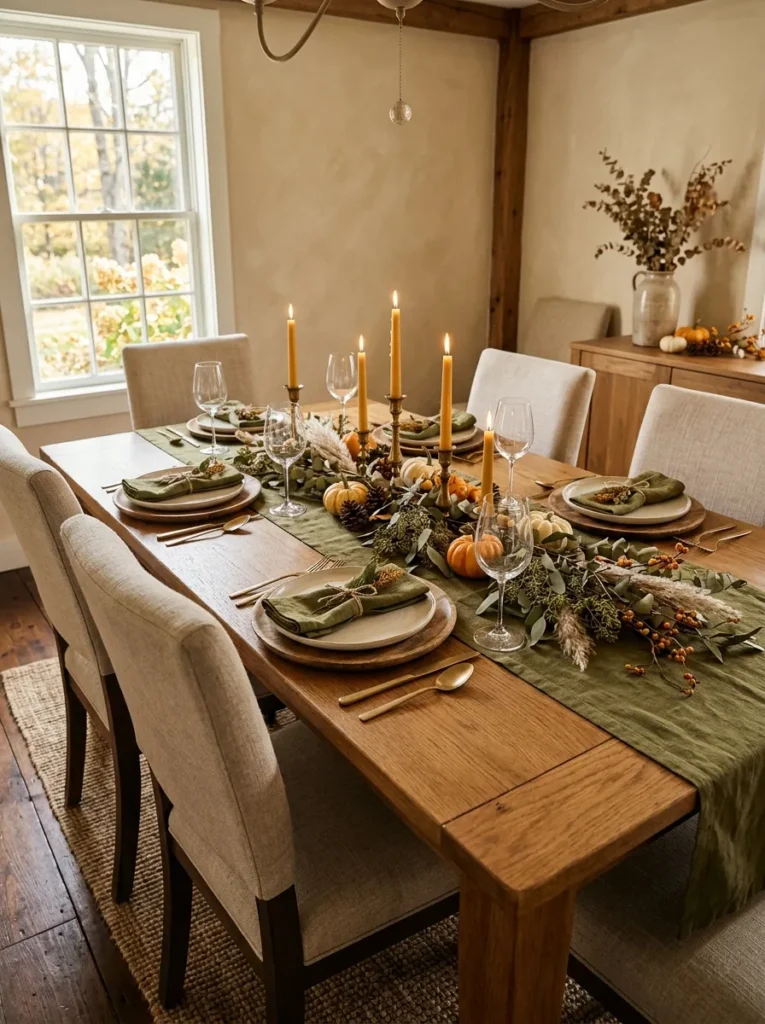
- Use olive napkins to bring a muted natural tone to the table.
- Pair green fabric with cream, tan, and warm wood.
- Choose linen or cotton for relaxed everyday texture.
- Repeat olive subtly through foliage or small ceramic accents.
Olive green linens bring a natural, understated color to an autumn table while avoiding the brighter shades often associated with seasonal decorating. Use olive napkins with cream plates, tan chargers, and warm wood to create a grounded palette. Linen or cotton works particularly well because its natural texture keeps the color from appearing too formal. Add a few eucalyptus stems or small green ceramic accents if you want to repeat the shade elsewhere. The result feels fresh and seasonal while remaining versatile enough for everyday meals throughout the cooler months.
Olive is especially useful when your dining room already contains neutral furniture because it adds depth without overwhelming the existing palette. If the table is dark, choose lighter cream plates to create contrast; if the table is pale, deeper olive fabric can provide definition. Avoid introducing too many additional colors, since the muted green already creates visual interest. In my experience, repeating one subtle color through textiles and greenery makes a tablescape look coordinated without appearing overly matched. It is an easy update when you want seasonal style but prefer a calmer, nature-inspired atmosphere.
Vintage Brass Details
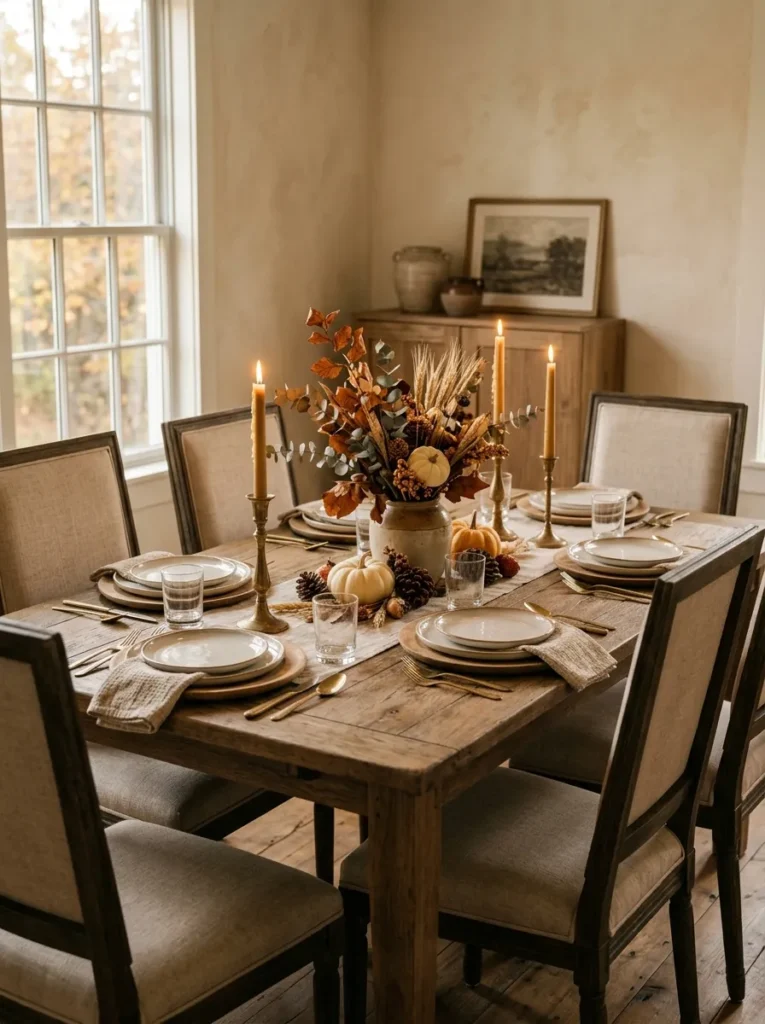
- Add brass candleholders or small serving pieces for warm shine.
- Choose aged finishes for a relaxed vintage appearance.
- Mix brass with wood and ceramic for material contrast.
- Repeat the metallic finish sparingly across the table.
Aged brass details can add warmth and character to a fall table without making the setting feel overly polished. Try brass candlesticks, small serving bowls, napkin rings, or a compact decorative tray. Choose an aged or brushed finish when you want a relaxed vintage appearance rather than a bright metallic look. Pair the brass with natural wood, cream ceramics, and linen so the reflective surfaces have softer textures around them. The combination creates a layered table that feels collected over time, even when most of the pieces are simple and contemporary.
Use the metallic finish selectively rather than repeating it at every place setting. Two brass candlesticks and a small serving piece may be enough to establish the look. Keep candle heights varied for visual movement, but avoid creating a centerpiece that blocks guests from seeing one another. If you already have brass hardware in the dining room, repeating that finish on the table can make the entire space feel more connected. I’ve noticed that aged metal looks particularly beautiful beside natural materials because small imperfections and variations give the arrangement a more authentic, lived-in quality.
Woven Charger Plates

- Layer woven chargers beneath simple ceramic dinnerware.
- Choose natural jute, rattan, or seagrass textures.
- Pair woven materials with linen for a relaxed finish.
- Keep colors neutral so the texture remains the main feature.
Woven chargers add instant texture to a dining table while creating a warm foundation for each place setting. Choose round pieces made from jute, rattan, seagrass, or another natural fiber, then layer simple ivory or cream plates on top. The contrast between rough woven texture and smooth ceramic creates visual depth without needing bright seasonal colors. Add linen napkins and clear glassware to keep the setting relaxed. This combination works particularly well with wood furniture because the natural materials repeat throughout the room, making the entire dining area feel connected and thoughtfully arranged.
For a cleaner appearance, choose chargers with a consistent weave and relatively simple shape. If your table already contains several rustic elements, lighter woven pieces can prevent the setting from becoming too heavy. Make sure the chargers are large enough to frame the plates without crowding nearby glasses or utensils. I’ve noticed that textured chargers can make inexpensive dinnerware look more intentional because they give every place setting a defined base. Once the autumn season ends, the same natural pieces can continue working with spring florals, summer linens, or everyday neutral tableware.
Dried Leaf Scatter
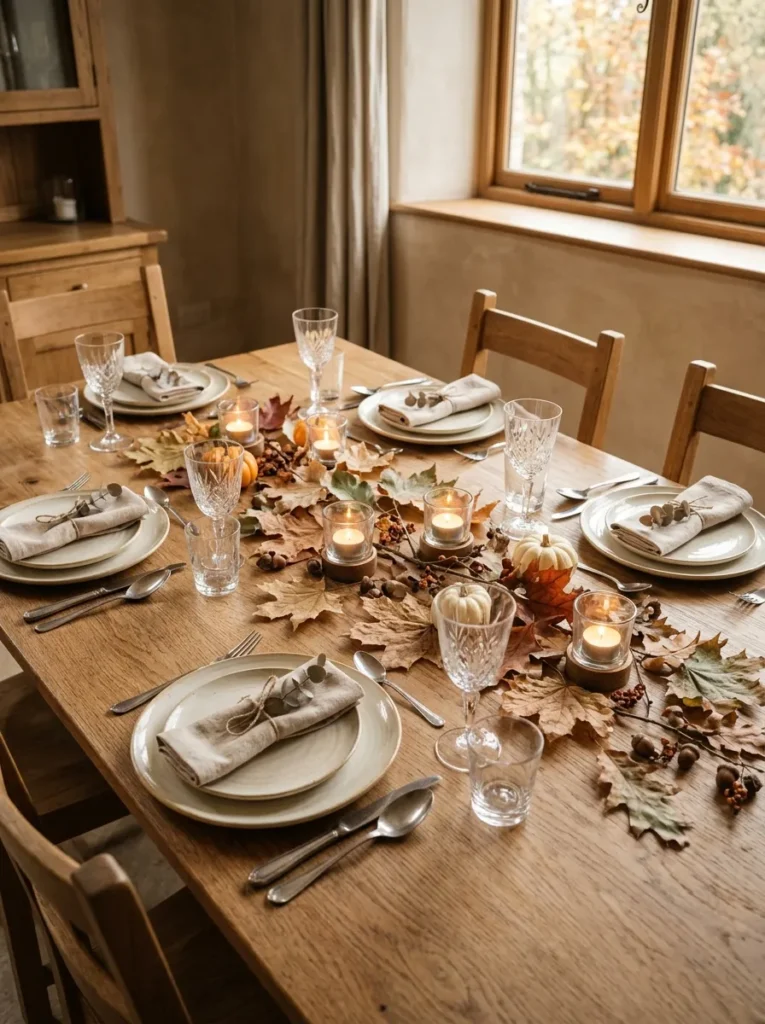
- Use preserved leaves for a delicate seasonal tabletop detail.
- Mix brown, tan, muted orange, and faded green tones.
- Scatter leaves lightly instead of covering the entire table.
- Combine them with candles or simple ceramics for balance.
A light scatter of dried leaves can make a dining table feel naturally connected to the season without adding bulky decorations. Choose preserved maple, oak, or similar leaves in faded brown, tan, muted orange, and soft green shades. Place a few around the center of the table and near candleholders or small serving pieces, leaving plenty of exposed tabletop between them. The irregular shapes create gentle movement and visual texture. This approach is especially effective when you prefer minimal decorating because just a handful of leaves can add seasonal detail without competing with dinnerware.
Use preserved leaves that are clean and reasonably sturdy so they do not crumble easily during meals. You can also place them beneath a glass centerpiece or around a low wooden tray if you want a more contained arrangement. Keep the scattering intentionally uneven rather than creating a perfectly symmetrical pattern. That small irregularity gives the table a more natural appearance. In my experience, subtle decorative details often make a setting feel more sophisticated because they leave room for the main functional pieces to breathe. The result is understated, seasonal, and easy to refresh whenever needed.
Layered Candle Heights
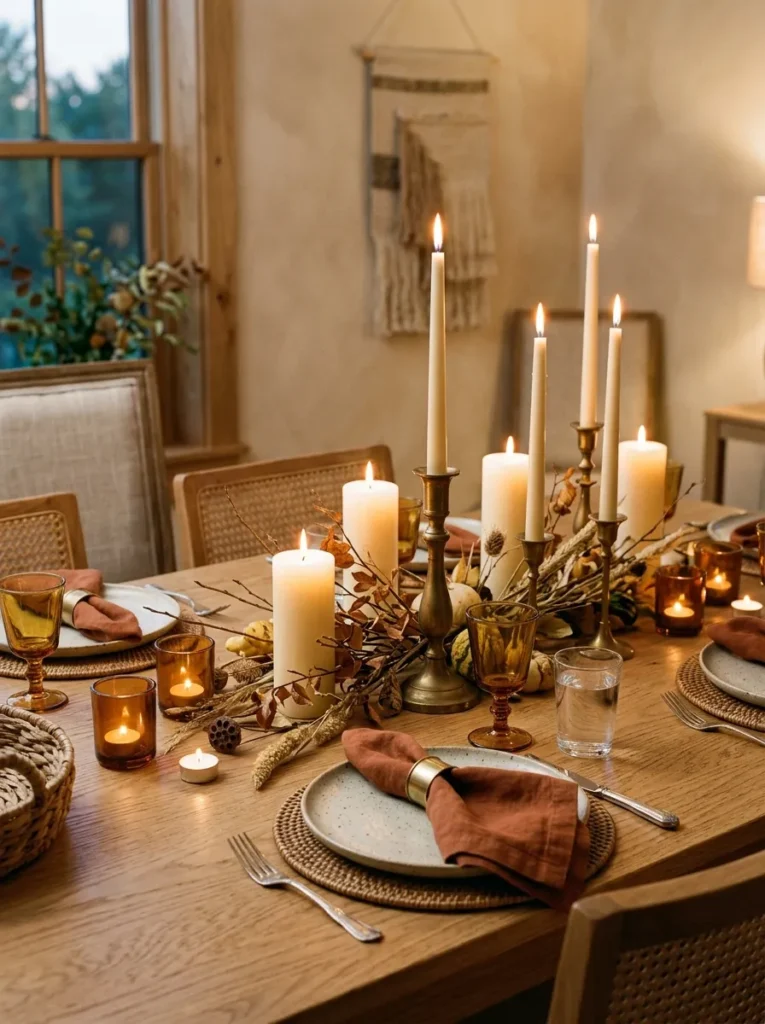
- Combine short votives with medium and tall candleholders.
- Use cream, amber, or soft brown candles for autumn warmth.
- Arrange heights gradually instead of creating one tall block.
- Keep flames away from napkins and other flammable materials.
Varying candle heights can turn a simple dining table into a softly illuminated autumn setting. Combine short glass votives, medium ceramic holders, and one or two taller brass or wood-toned holders along the center of the table. The different levels create depth and allow the candlelight to spread across the arrangement instead of appearing as one flat row. Cream, amber, and soft brown candles work naturally with autumn colors. Keep the surrounding decorations restrained so the changing heights and warm glow become the main visual feature during evening meals.
Arrange the candles with enough space between each piece to keep the table practical and safe. Avoid placing tall holders directly beside loose napkins, dried leaves, or other flammable materials, and consider flameless candles when appropriate. A gradual height change usually looks more balanced than placing the tallest pieces together. If your table is small, use three or four candles rather than filling the entire center. The combination of soft light, natural textures, and varied heights can make ordinary dinnerware feel more special while maintaining enough open space for serving dishes and comfortable conversation.
Cozy Plaid Runner
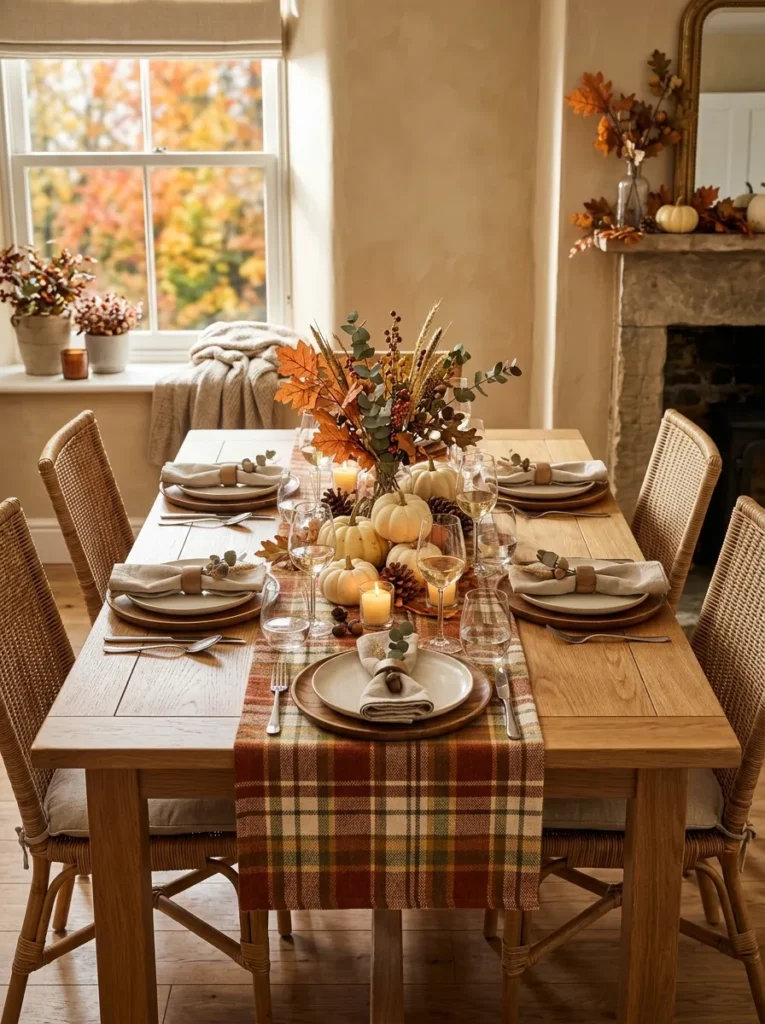
- Choose a warm plaid pattern in rust, cream, brown, or olive.
- Keep dinnerware neutral so the runner remains visually prominent.
- Add wood and ceramic pieces for natural texture.
- Let the runner extend neatly without overwhelming the tabletop.
A plaid runner can instantly give the dining table a recognizable autumn character while keeping the rest of the styling simple. Choose a pattern with warm rust, cream, brown, or olive tones, then place it lengthwise across the center of the table. Neutral plates and wooden chargers allow the pattern to stand out without creating visual clutter. Add a few cream pumpkins, dried stems, or ceramic accents for subtle seasonal texture. This works especially well when you want an inviting table that feels decorated for fall but still leaves enough room for serving dishes and everyday meals.
For a balanced look, choose a runner that complements the existing colors in your dining room rather than introducing several unrelated shades. If the table is already dark, a lighter plaid can brighten the arrangement; on a pale table, deeper rust or brown creates stronger definition. Keep the centerpiece low and avoid placing too many decorations directly on the patterned fabric. I’ve noticed that plaid works particularly well in photographs because its repeating lines naturally guide the eye along the table. The finished setting feels warm, practical, and ready for relaxed autumn gatherings without looking overly styled.
Conclusion
A beautiful autumn table does not have to be complicated. With the right textures, colors, natural accents, and thoughtful placement, fall dining table decor can make everyday meals feel warmer and special gatherings feel even more inviting. Start with one idea that fits your existing space, then build slowly with pieces you already own. I’ve seen how small changes like layered linens, candles, pumpkins, or seasonal foliage can completely refresh a dining area. Save this post on Pinterest for your next decorating project, try your favorite idea at home, and share it with someone who loves creating a cozy seasonal space.