23 Fall Bedroom Decor Ideas to Create a Cozy Autumn Feel
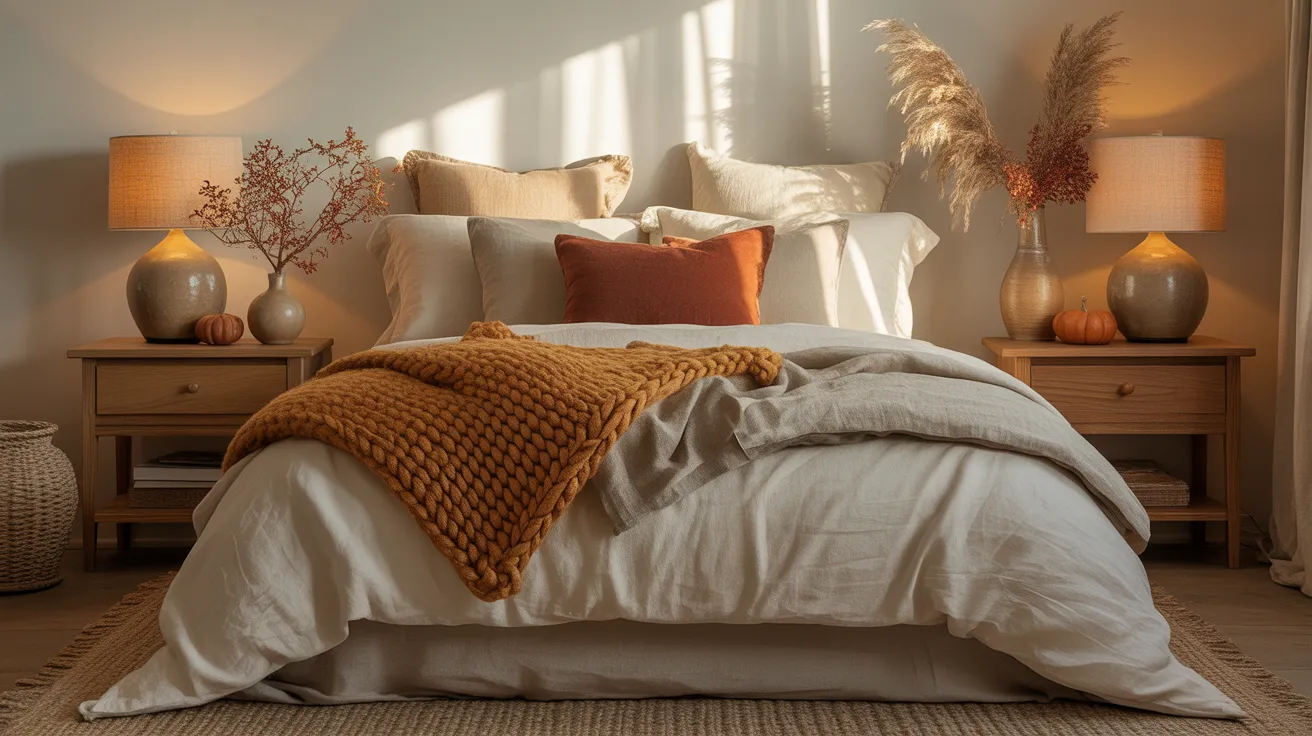
Ready to make your bedroom feel warmer the moment autumn arrives? A few thoughtful changes can turn an ordinary room into a cozy seasonal retreat. You don’t need a complete makeover to create that inviting fall feeling.
These fall bedroom decor ideas show you how to use warm colors, soft layers, natural textures, seasonal accents, and thoughtful lighting to give your space a comfortable autumn atmosphere. Whether your bedroom feels plain, too cool, or simply needs a seasonal refresh, these ideas offer simple ways to make it feel more welcoming. From chunky knit throws and terracotta pillows to warm wood, dried foliage, and soft amber lighting, there is something for every style and budget. In my experience, small changes often make the biggest difference, especially when you build around pieces you already own.
Warm Layered Bedding
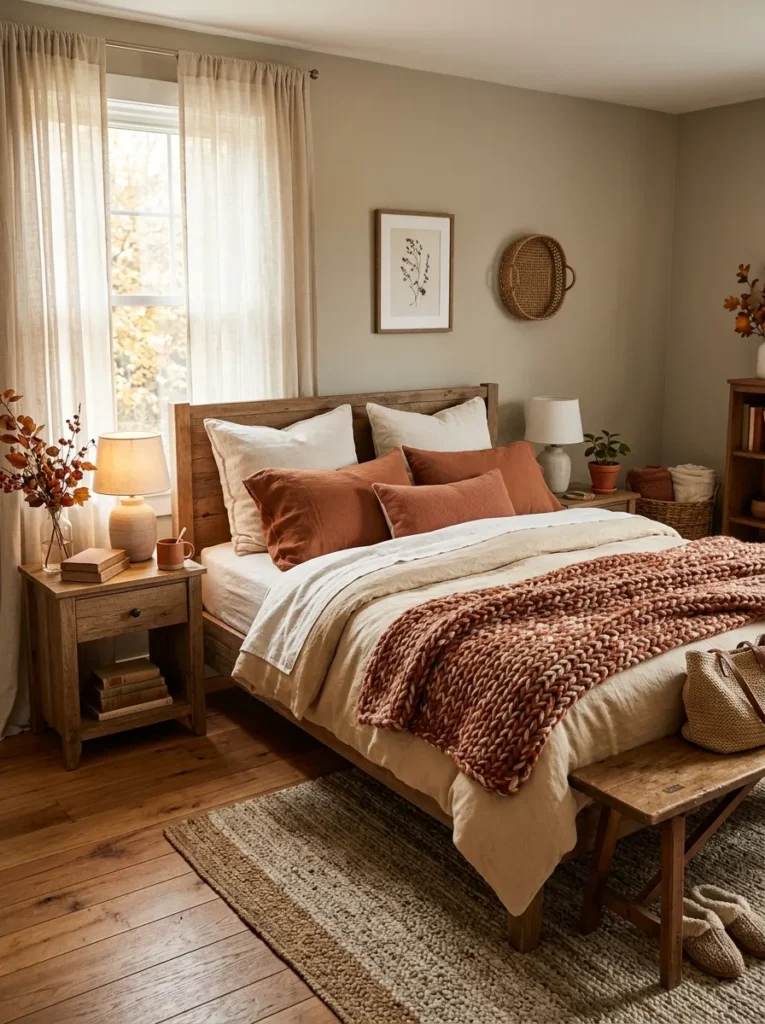
- Layering different fabrics instantly makes the bed look warmer and more inviting.
- Combine linen, cotton, and chunky knits for natural texture without visual clutter.
- A rust or terracotta throw adds an easy seasonal accent without replacing existing bedding.
- Keeping the base neutral makes autumn colors simple to change later.
Nothing makes a bedroom feel ready for autumn faster than a beautifully layered bed. Start with neutral cotton or linen sheets, then add a textured duvet, quilt, and chunky throw for depth. Warm shades such as rust, caramel, oatmeal, and muted terracotta create seasonal interest without making the room feel overly themed. In my experience, mixing textures is often more effective than adding lots of decorations because the bed becomes the main visual feature. Finish with two or three soft accent pillows, keeping their patterns subtle so the overall arrangement still feels calm and comfortable.
This approach works especially well in real homes because you can build it around bedding you already own. Instead of buying an entirely new set, introduce autumn through one quilt, throw, or pair of pillow covers. The different layers also make the room more functional when temperatures change throughout the night. Place the heavier blanket toward the foot of the bed so it remains easy to reach without making the sleeping area look bulky. For a polished Pinterest-style finish, slightly fold the top layers and let their textures remain visible rather than arranging everything perfectly flat.
Rust Velvet Accents
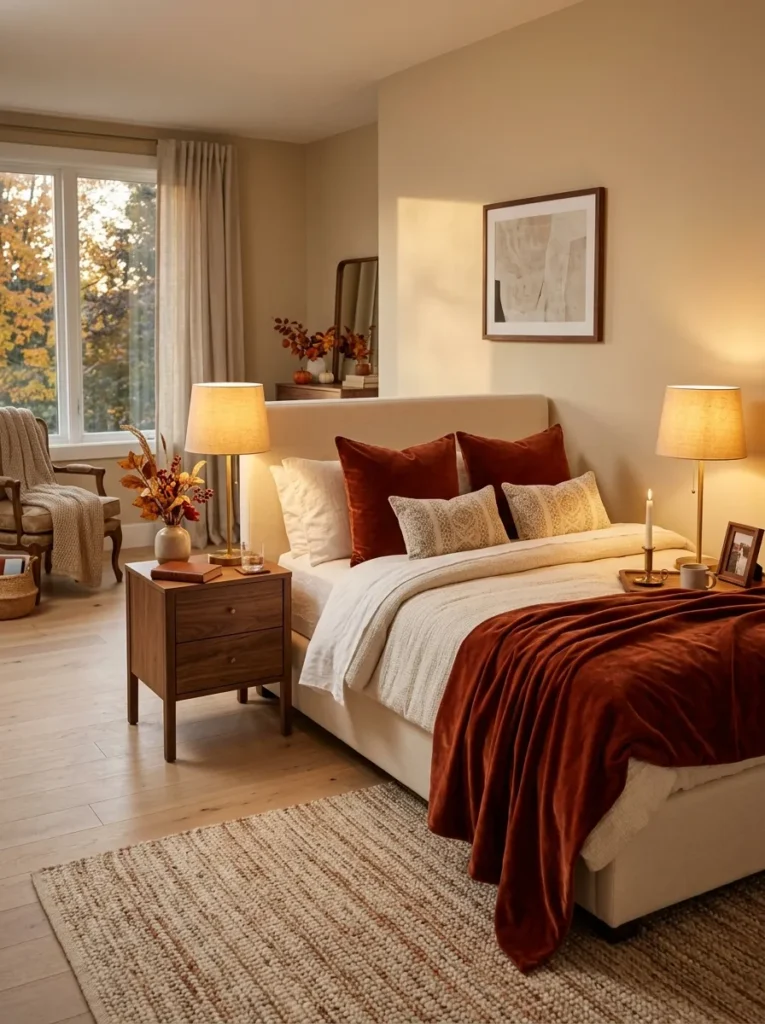
- Velvet introduces rich texture while keeping the seasonal palette sophisticated.
- Rust works beautifully with cream, beige, walnut, and soft brown furnishings.
- A few velvet pieces create impact without overwhelming a small bedroom.
- Use pillow covers or a single throw if you want an inexpensive seasonal update.
A touch of rust velvet can completely change the character of a neutral bedroom. The fabric catches light beautifully, giving pillows, a bench, or a throw a rich appearance that feels especially suited to autumn. Pair it with cream bedding and warm wood furniture to create contrast without making the room look dark. If your space already has neutral colors, this simple change can become the focal point. I’ve noticed that velvet works best when used selectively, because one or two richly textured pieces usually create more visual impact than covering every surface in the same material.
Rust is also a practical seasonal color because it feels warm without being overwhelmingly orange or red. Try two velvet pillows against a pale upholstered headboard, then repeat the shade with a small throw or decorative object nearby. This creates visual connection throughout the room while keeping the design balanced. For smaller bedrooms, choose just one accent area so the space remains open and breathable. Warm bedside lighting will make the velvet appear even deeper in the evening, adding dimension and making the room feel polished without requiring major furniture changes.
Woodland Accent Wall
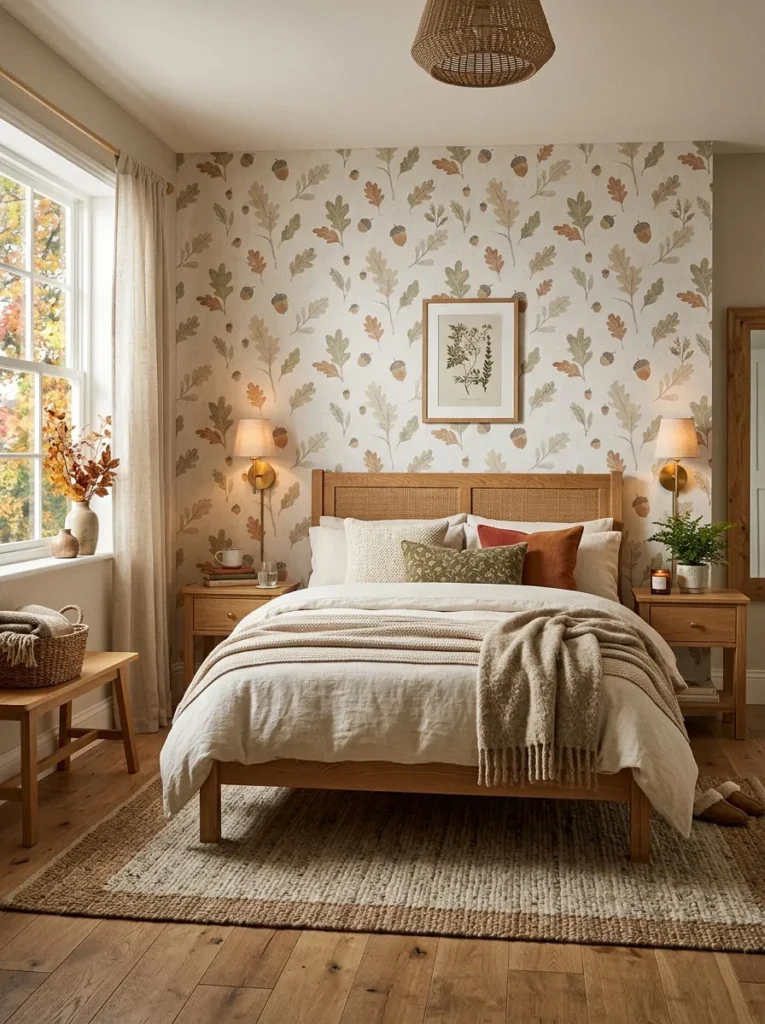
- A patterned accent wall gives the bedroom a strong focal point without decorating every surface.
- Soft botanical colors bring an outdoor feeling indoors while remaining easy to coordinate.
- Keep surrounding furniture simple so the wall remains visually important.
- Removable wallpaper is useful for renters or temporary seasonal decorating.
A woodland-inspired accent wall can bring an autumn landscape feeling into the bedroom without relying on obvious seasonal decorations. Choose subtle botanical wallpaper or a painted pattern featuring olive, taupe, beige, or muted brown. Position the design behind the headboard so it naturally becomes the room’s focal point. The surrounding bedding can remain simple in cream or warm white, allowing the wall to provide most of the visual interest. This is particularly useful when the rest of the bedroom feels plain, because one carefully chosen surface can add personality without requiring extensive redecorating.
The key is choosing a pattern that feels timeless rather than overly seasonal. Delicate branches, small leaves, or abstract botanical shapes can work throughout the year while still creating an autumn-inspired atmosphere. Balance the wall with natural materials such as oak, rattan, linen, or woven cotton. Keep artwork and accessories minimal so the room does not compete with itself. Soft lamps or warm wall sconces can emphasize the pattern after sunset, while daylight reveals its earthy tones. This combination creates a layered bedroom that feels thoughtfully designed rather than decorated for only one season.
Chunky Knit Throws
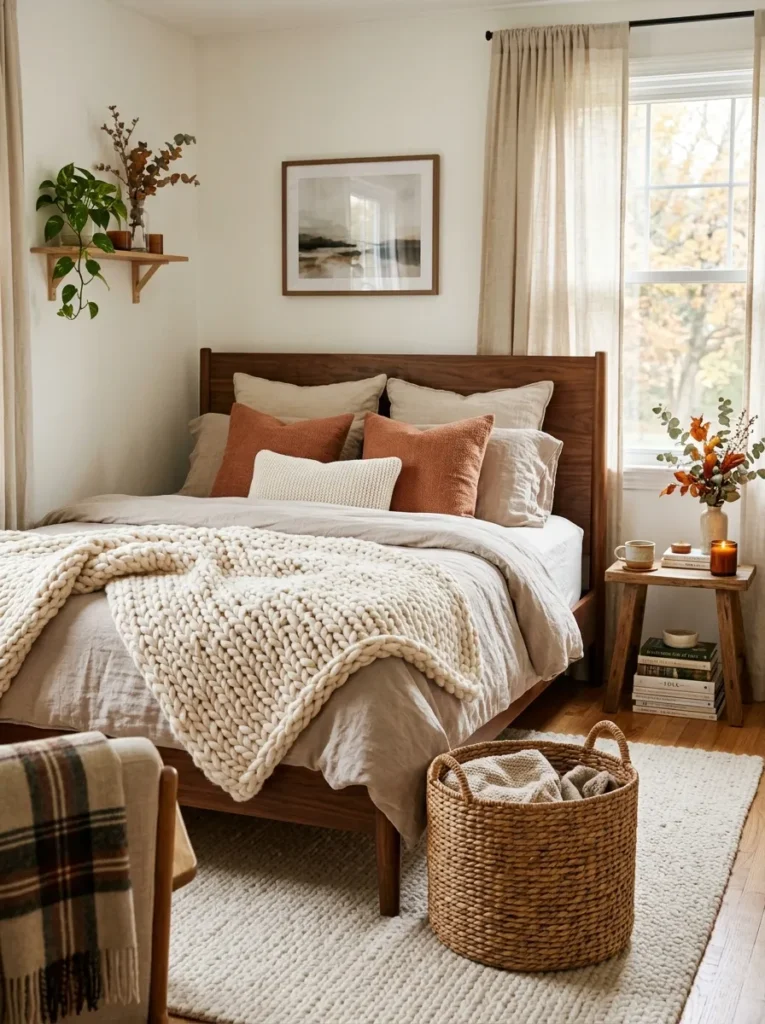
- A chunky knit instantly adds softness and visible texture to the bed.
- Cream and oatmeal tones keep the room bright while creating a cozy seasonal layer.
- Drape the throw loosely across the lower half of the bed for a relaxed look.
- A woven basket nearby adds practical storage while reinforcing the natural texture.
Few additions make a bedroom look cozier as quickly as a chunky knit throw. Its oversized texture creates visual depth against smoother sheets and duvet covers, making the bed feel softer and more inviting. Choose cream, oatmeal, camel, or warm beige for an understated autumn palette that works with almost any existing furniture. Instead of folding the blanket neatly, drape it naturally across the foot or one corner of the bed. This small styling choice makes the room look relaxed and lived-in while giving the bedding a Pinterest-friendly layered appearance that photographs beautifully.
A chunky throw also offers practical comfort when cooler evenings arrive. Keep it within easy reach at the foot of the bed, on a nearby bench, or folded inside a woven basket. If your bedroom is small, one substantial textile can provide enough warmth and texture without adding numerous decorative objects. I’ve seen this work especially well in neutral bedrooms because the knit creates interest without introducing another strong color. Pair it with linen bedding, a soft rug, and natural wood furniture to create an autumn-inspired space that feels comfortable rather than overly decorated.
Terracotta Pillow Mix
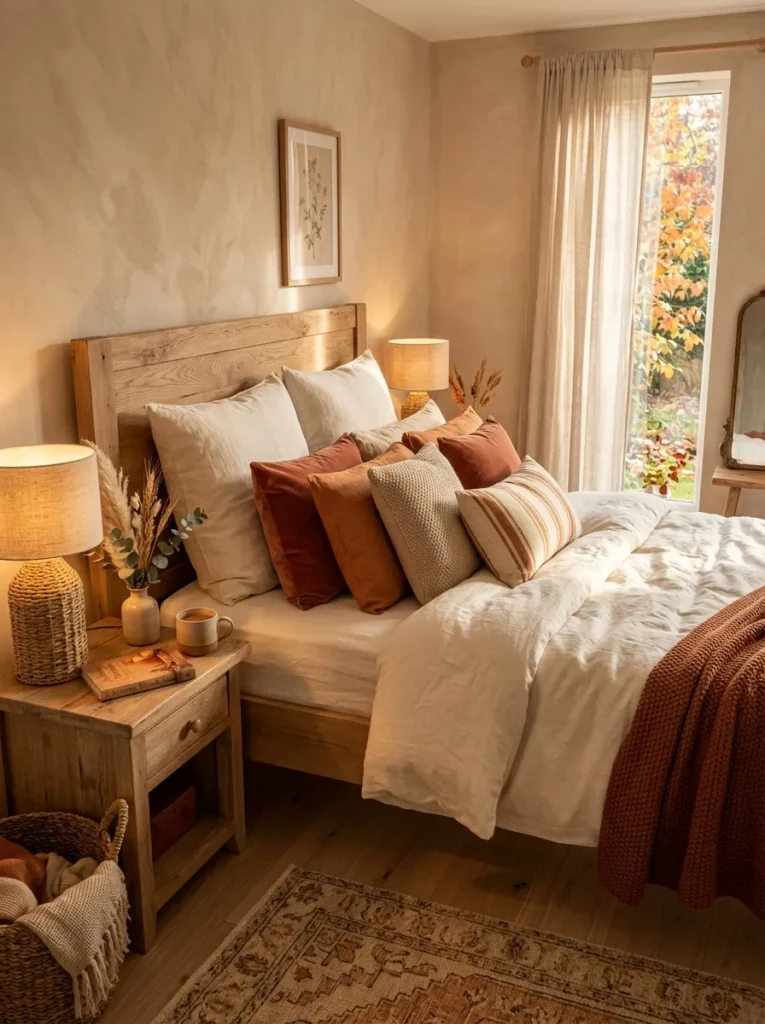
- Terracotta pillows add seasonal color without requiring permanent changes.
- Mix solid, striped, and lightly textured covers for a more collected appearance.
- Keep cream or beige pillows in the arrangement to soften stronger orange tones.
- Use pillow covers instead of new inserts for an affordable seasonal refresh.
Terracotta pillow covers are an easy way to bring autumn color onto the bed without changing your larger furniture or bedding pieces. The earthy orange tone works beautifully with cream, beige, camel, walnut, and muted olive, creating warmth while still feeling sophisticated. Try combining one solid terracotta pillow with a subtle stripe or textured design for visual variety. Place the strongest color toward the center or back of the arrangement, then surround it with lighter neutral pillows. This creates a balanced focal point and prevents the bed from looking too coordinated or overly themed.
For a polished result, repeat a small amount of terracotta elsewhere in the room rather than adding more pillows. A ceramic vase, framed artwork, candle holder, or woven accessory can quietly connect the colors. This technique helps the bedroom feel intentional because the eye naturally moves between related accents. In my experience, pillow covers are one of the easiest seasonal changes for renters and budget-conscious decorators because they require little storage and can be swapped in minutes. When spring arrives, simply replace the warm covers with lighter shades while keeping the same bedding foundation.
Soft Amber Lighting
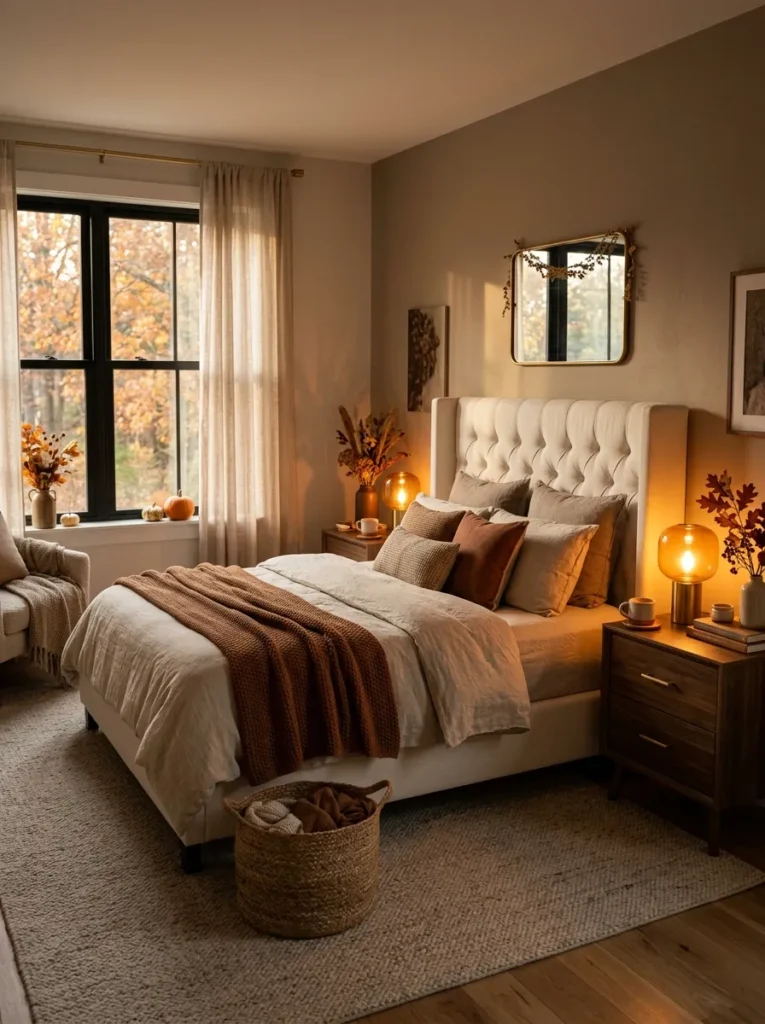
- Warm lighting can make neutral bedding and wood furniture feel noticeably cozier.
- Choose lamps with warm-toned bulbs rather than relying only on overhead lighting.
- Place matching or complementary lamps on both sides of the bed for balance.
- Add a small floor or reading lamp if the room needs another gentle light source.
The right lighting can completely change how an autumn bedroom feels after sunset. Replace harsh, cool overhead lighting with warm bedside lamps that cast a soft amber glow across the bedding and surrounding furniture. Table lamps with fabric shades are especially effective because they diffuse light instead of creating sharp reflections. Position them on both sides of the bed when possible to create visual balance. Warm bulbs also enhance earthy colors such as rust, brown, cream, and terracotta, allowing your existing fall-inspired accents to appear richer and more inviting without adding anything else.
Layering light is even more useful when the bedroom serves several purposes throughout the evening. Keep brighter task lighting available for reading, then rely on softer lamps when relaxing or getting ready for sleep. A small lamp on a dresser or floor lamp near a chair can create another pool of warm illumination. Avoid placing every light source at the same height, as different levels make the room feel more dimensional. For fall bedroom decor, this simple lighting adjustment often delivers a bigger atmosphere change than adding another decorative accessory.
Plaid Bedding Layers
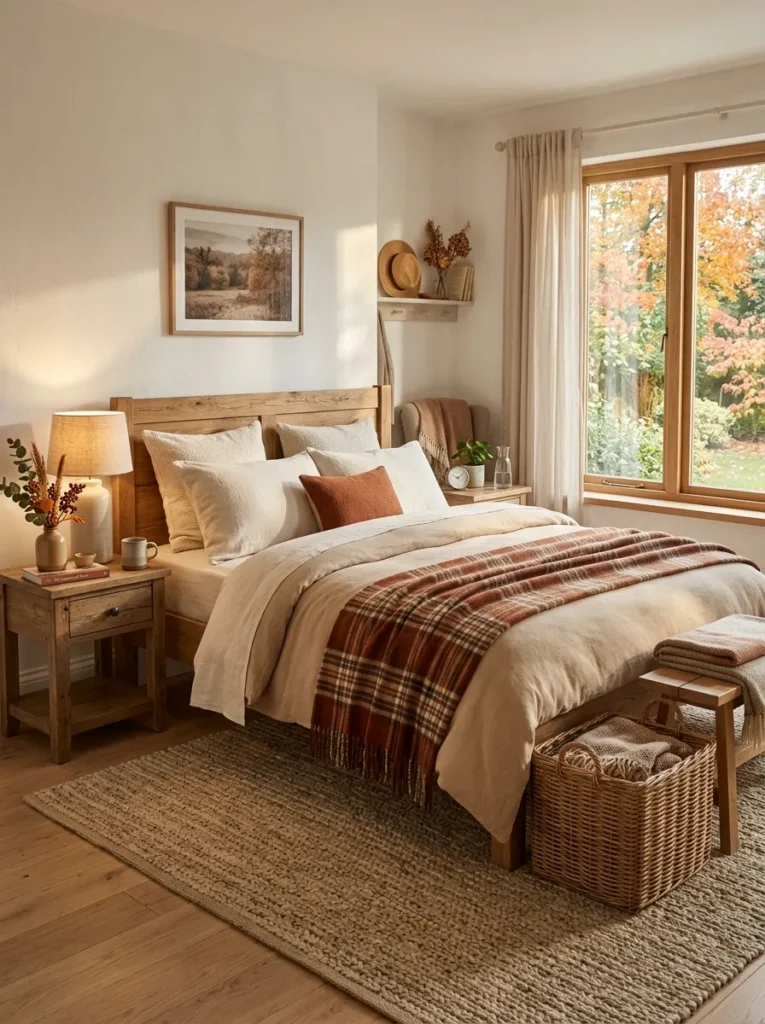
- Plaid introduces a classic autumn pattern without making the room feel overly themed.
- Choose muted rust, brown, cream, or olive instead of bright traditional reds.
- Layer plaid over solid bedding so the pattern remains the visual accent.
- A single plaid blanket can refresh an existing neutral bedroom affordably.
Plaid bedding brings instant autumn character to a bedroom while still feeling timeless. Choose a blanket, quilt, or duvet cover with muted rust, brown, cream, or olive lines rather than overly bright colors. The pattern adds visual movement against plain linen or cotton bedding, giving the bed a more collected appearance. Keep the remaining layers simple so the plaid remains easy on the eyes. A loosely folded blanket across the lower third of the bed creates an effortless focal point and makes the room look prepared for cooler weather without feeling overly decorated.
The beauty of plaid is its flexibility in real homes. You can use one blanket during fall and store it when you want a lighter seasonal look, making it a practical investment rather than a temporary decoration. Pair the pattern with natural wood, woven baskets, neutral rugs, and soft lighting to keep the overall palette grounded. I’ve noticed that smaller plaid patterns tend to work especially well in compact bedrooms because they provide character without visually shrinking the space. If the room already has patterned curtains or rugs, choose a quieter plaid with fewer contrasting colors for balance.
Dried Foliage Vases
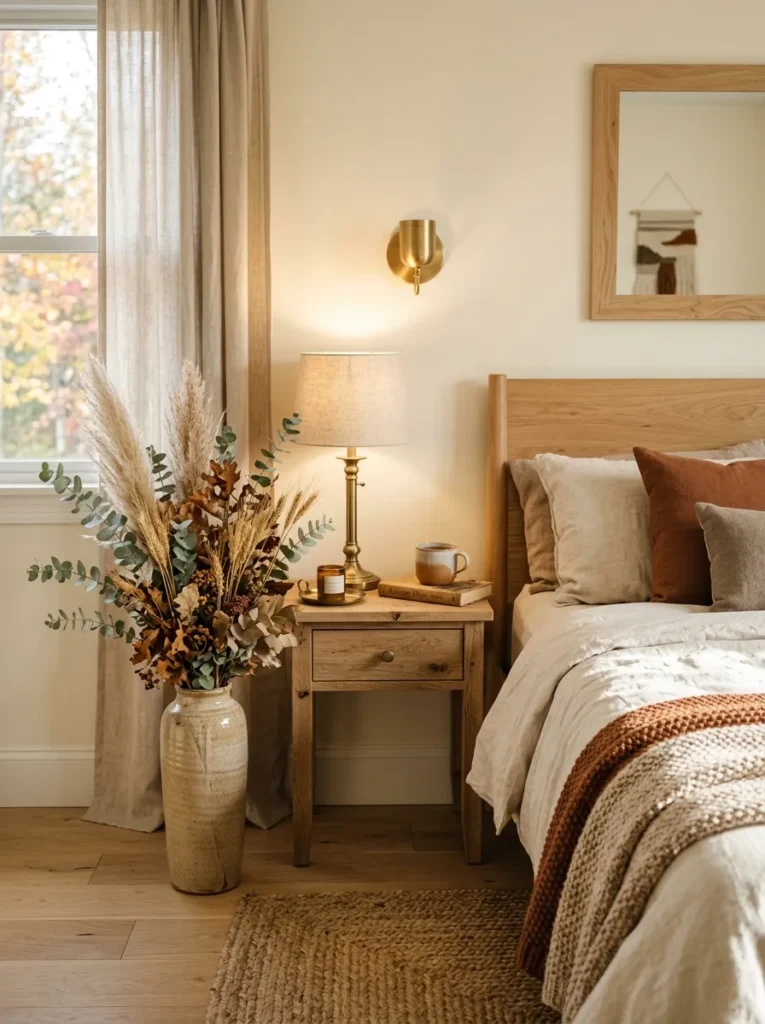
- Dried foliage adds natural autumn texture without requiring frequent maintenance.
- Use ceramic, stoneware, or glass vessels that complement the room’s existing materials.
- Place taller stems beside the bed or in an empty corner for vertical interest.
- Keep the colors muted so the arrangement feels elegant rather than overly seasonal.
Dried foliage can bring the colors and textures of autumn indoors without filling the bedroom with seasonal decorations. Place wheat stems, eucalyptus, pampas grass, or dried branches in a simple ceramic vase beside the bed, on a dresser, or in an empty corner. Their muted beige, brown, and dusty green tones work naturally with neutral interiors. The height of the stems also draws the eye upward, which can make a room feel more balanced. Choose an uncomplicated vessel so the organic shapes remain the main feature instead of competing with another decorative pattern.
This idea is especially useful when you want seasonal character without adding much maintenance. Unlike fresh flowers, dried arrangements can remain attractive for months with minimal care, making them practical for busy households. Keep the arrangement slightly loose rather than tightly packed so the stems retain an airy appearance. In smaller rooms, one narrow vase is often enough to create the effect. Pair the foliage with linen bedding, woven baskets, and warm wood furniture for continuity. A small arrangement can also soften an otherwise empty nightstand or dresser while keeping the room uncluttered.
Layered Neutral Rugs
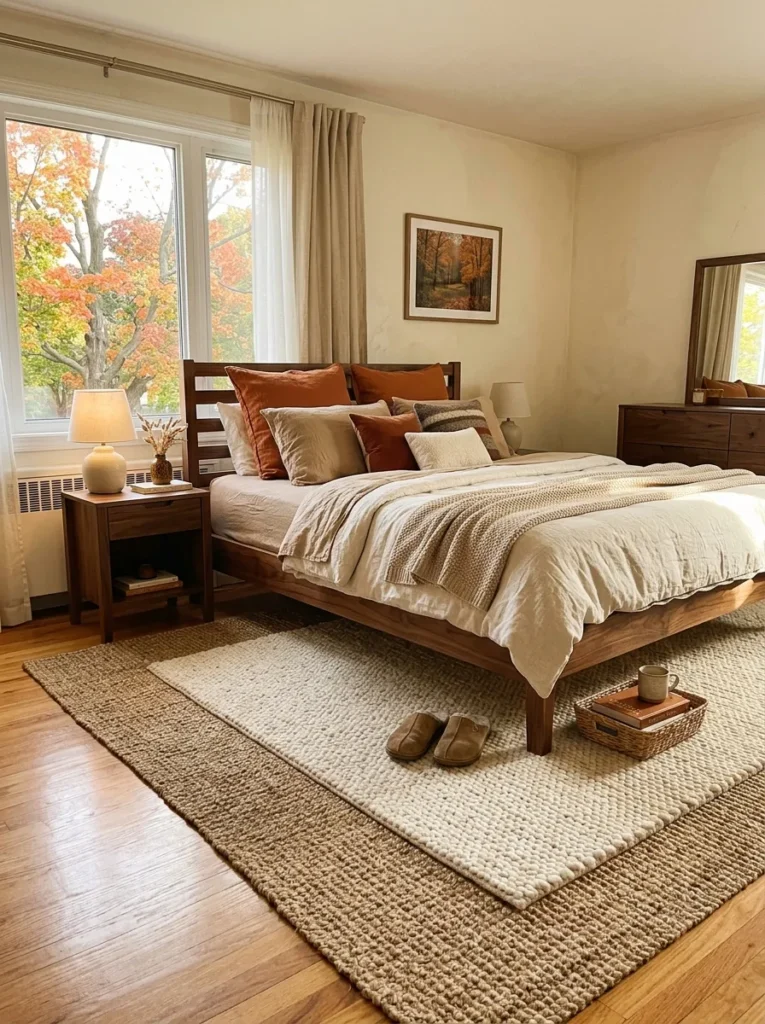
- Layering rugs adds softness and texture beneath the bed.
- A neutral wool rug over jute creates contrast without introducing too many colors.
- Position the larger rug so it extends beyond both sides of the bed.
- This approach can make hard flooring feel warmer during cooler autumn mornings.
A layered rug arrangement can make an autumn bedroom feel noticeably warmer from the moment you step inside. Start with a larger natural-fiber rug such as jute or sisal, then place a softer wool or cotton rug partially over it beneath the bed. The combination creates contrast through texture rather than strong color, which works beautifully with neutral bedding and warm wood furniture. Allow the larger rug to extend beyond the sides of the bed so the composition feels intentional. The smaller top layer can sit slightly off-center for a relaxed, designer-inspired appearance.
This setup also solves a practical problem in bedrooms with hardwood, laminate, or tile flooring. The extra textile provides a softer surface beside the bed, making cold morning floors more comfortable. Choose cream, oatmeal, taupe, or soft brown for an adaptable palette that works beyond fall. I’ve seen layered rugs work particularly well in larger bedrooms where a single small rug can look disconnected from the furniture. Keep patterns restrained if your bedding already includes plaid or botanical details, allowing the different textures to create enough visual interest on their own.
Woven Bedside Baskets
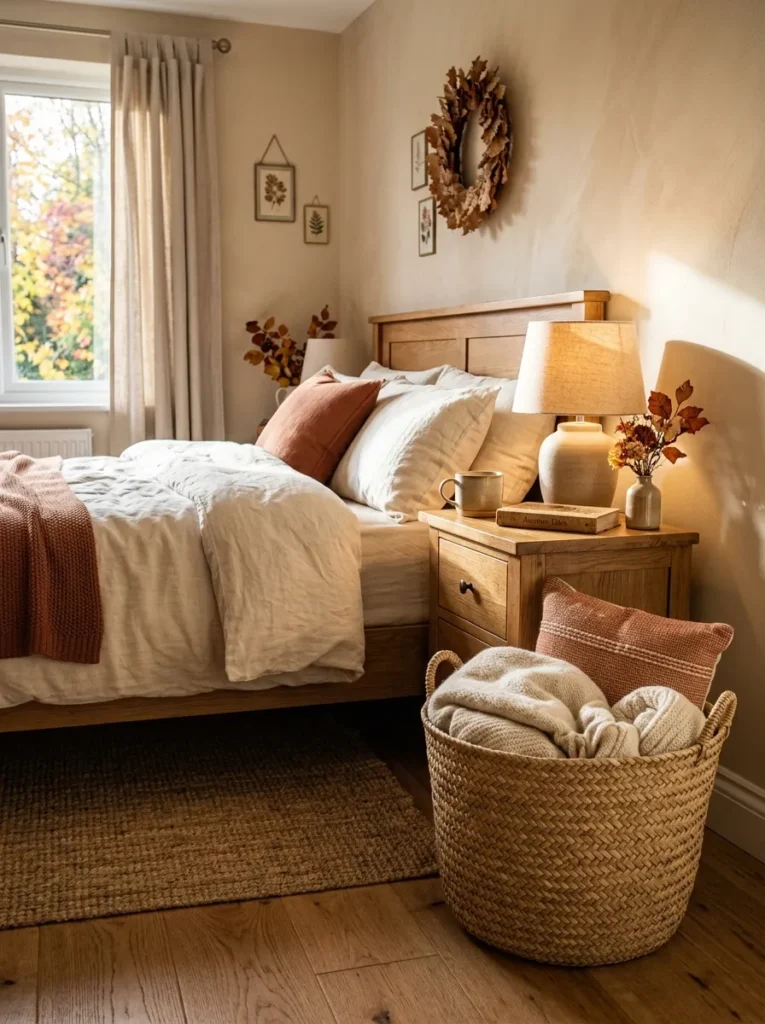
- A woven basket adds natural texture while providing useful blanket storage.
- Place it beside the bed so extra layers stay easy to reach.
- Choose warm rattan, seagrass, or wicker to complement wooden furniture.
- A tall basket can fill an empty corner without making the room feel crowded.
A woven bedside basket combines seasonal style with everyday function, making it an especially useful addition to a cozy bedroom. Choose rattan, seagrass, wicker, or another natural material with visible texture, then fill it with a folded throw or extra pillows. The warm tan color naturally complements cream bedding, wooden furniture, and autumn-inspired accents. Position the basket beside the bed or near a reading chair where it remains easy to access. Instead of leaving blankets piled across the furniture, you gain a simple storage solution that keeps the room looking organized and intentionally styled.
The basket can also help balance a bedroom where one side of the bed feels visually empty. Choose a taller design if you need height, or a wider basket if you want convenient storage for several blankets. Avoid overfilling it, because allowing part of the textile to remain visible makes the arrangement feel softer and more inviting. In my experience, natural baskets are particularly effective in bedrooms with modern furniture because their handmade texture prevents the space from feeling too sleek or sterile. Add one warm lamp nearby to highlight the woven surface after sunset.
Camel Linen Bedding
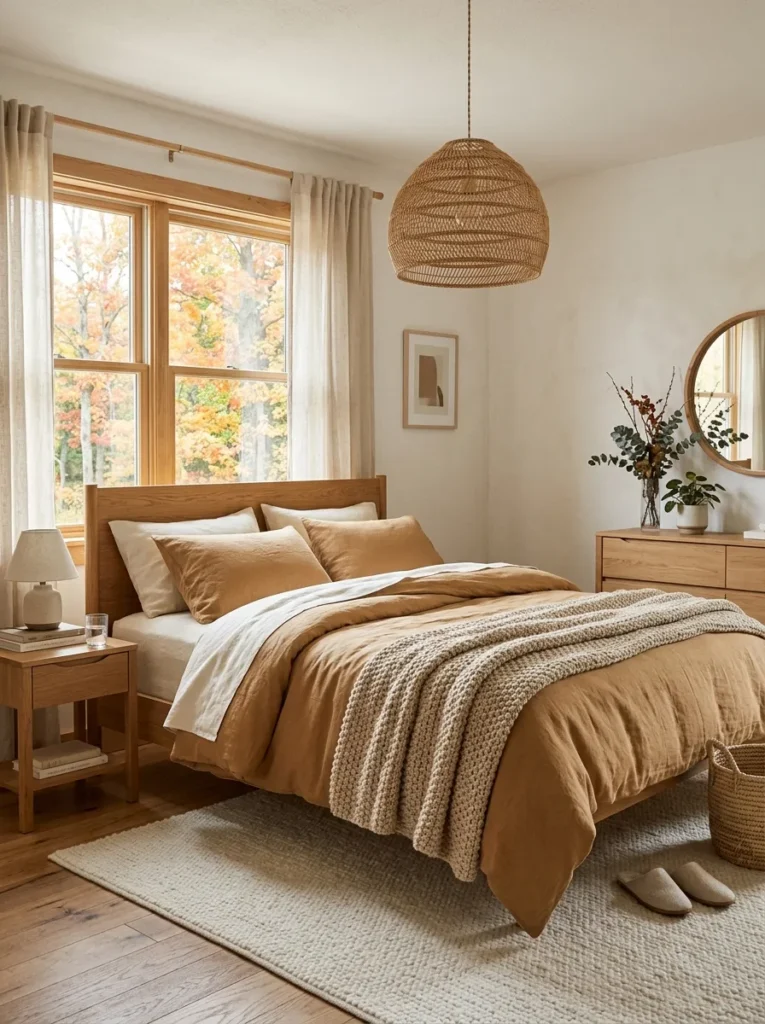
- Camel linen introduces warmth while keeping the bedding light and breathable.
- Natural wrinkles make linen feel relaxed rather than overly formal.
- Pair camel with ivory, cream, oatmeal, or muted brown for an earthy palette.
- Use contrasting textures such as wool or cotton to add depth.
Camel linen bedding creates a warm foundation without making the bedroom feel visually heavy. Its soft tan color sits between beige and brown, making it easy to combine with cream sheets, oatmeal throws, and darker wood furniture. The natural texture of linen also adds subtle dimension, especially when the fabric is allowed to remain gently rumpled. Instead of aiming for a perfectly smooth bed, let the layers look relaxed and comfortable. This creates an inviting focal point while keeping the overall design simple enough to work throughout the autumn season and beyond.
Linen is also practical because it works well across changing temperatures. Its breathable texture can feel comfortable on milder nights while still pairing beautifully with heavier blankets when the weather cools. If a full camel bedding set feels too strong, start with a duvet cover or two pillowcases and build from there. Combine them with cream, rust, or muted olive accents for seasonal variety. I’ve noticed that natural linen looks especially attractive in daylight because its uneven surface catches soft light and creates understated texture without needing additional decorative pieces.
Candlelit Nightstands
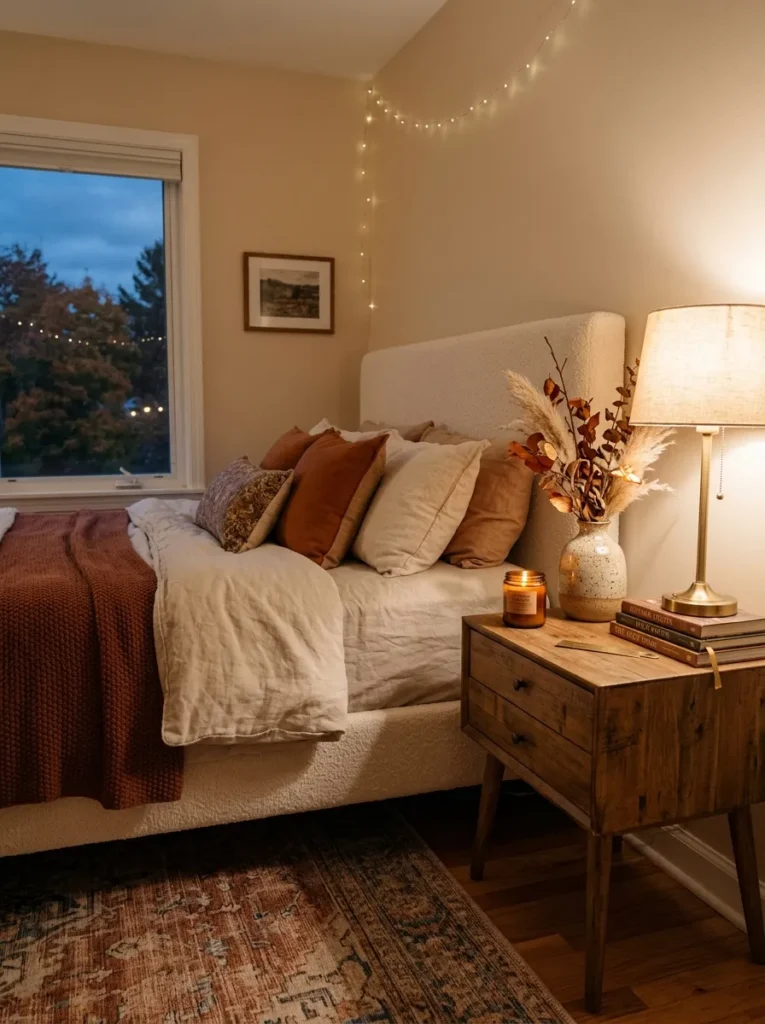
- A small candle adds a warm visual point to an otherwise simple nightstand.
- Amber glass and ceramic holders complement autumn-inspired neutral palettes.
- Keep candles on stable, heat-safe surfaces away from bedding and curtains.
- Group one candle with a book or small vase for an uncluttered arrangement.
A candlelit nightstand can create a gentle evening atmosphere with just a few carefully chosen pieces. Start with a warm-toned candle in amber glass, ceramic, or stoneware, then place it beside a small lamp, favorite book, or simple vase. The goal is not to fill the nightstand but to create one attractive cluster that feels useful and intentional. Warm candlelight brings out the richness of wood, rust, cream, and brown accents, making the entire bedroom appear softer. If you use real candles, always keep them stable and safely away from bedding, curtains, and other flammable materials.
You can create the same layered appearance with flameless candles if you prefer a low-maintenance option. Choose a soft amber glow rather than bright white light so the effect remains warm and natural. Keep the rest of the nightstand relatively clear, especially if you use it for glasses, books, or other bedtime essentials. A small ceramic vase or stack of books can provide height without clutter. This simple arrangement works particularly well when paired with layered bedding and warm lamps, because the different light sources create depth while maintaining a calm, comfortable bedroom environment.
Burnt Orange Curtains
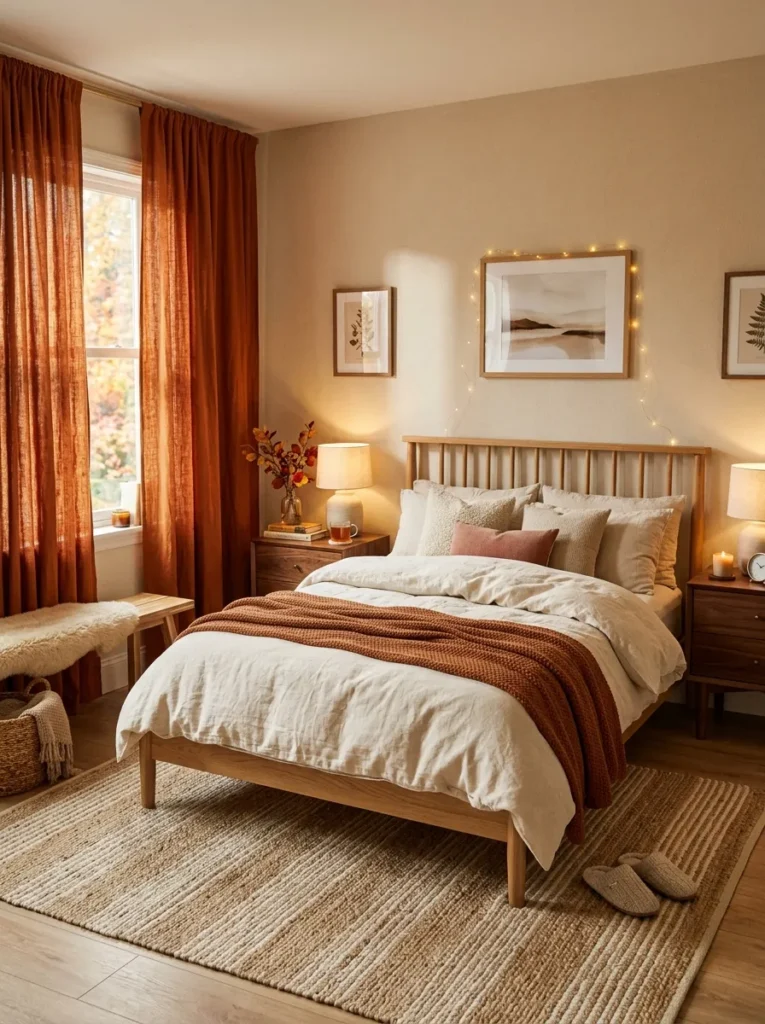
- Burnt orange curtains create a strong seasonal statement without adding many accessories.
- Linen or cotton fabric keeps the bold color looking soft and natural.
- Full-length curtains can visually emphasize ceiling height in smaller bedrooms.
- Balance the rich window treatment with cream, beige, or light wood furnishings.
Burnt orange curtains can transform a neutral bedroom by adding warmth exactly where the eye naturally notices it. Choose linen or cotton panels in a muted burnt orange rather than a bright, saturated shade for a softer autumn look. Hang them close to the ceiling and let them reach the floor to create a taller, more finished appearance. When daylight passes through the fabric, the color becomes especially inviting and gives nearby walls and bedding a gentle warm cast. This makes the window feel like part of the overall design rather than simply a functional feature.
Because curtains cover a large visual area, they can also reduce the need for numerous seasonal decorations. Keep the rest of the room relatively restrained with cream bedding, natural wood, woven textures, and small rust accents. If the bedroom is compact, choose lighter-weight fabric so the window remains visually open. I’ve noticed that repeating a small amount of the curtain color elsewhere, such as in one pillow or artwork detail, helps the room feel coordinated. This approach creates a polished autumn palette without making every element match too closely.
Vintage Brass Mirrors
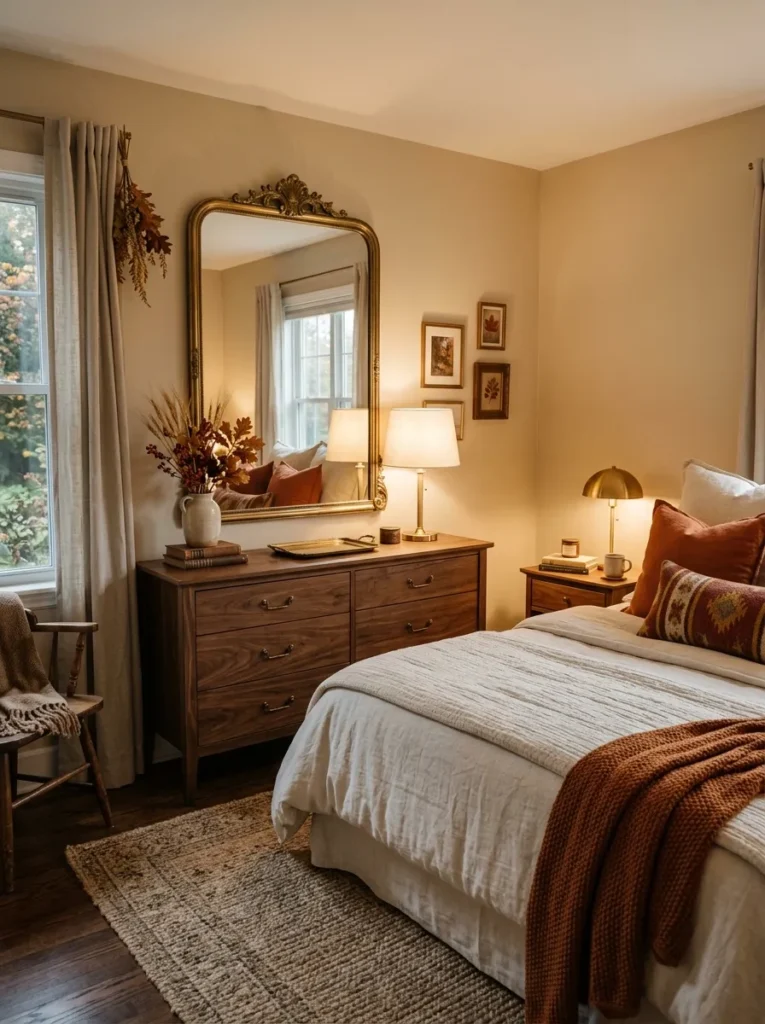
- Brass introduces a warm metallic detail that complements autumn colors beautifully.
- A mirror can reflect natural light and make a bedroom feel more spacious.
- Choose an aged or brushed finish for a softer vintage appearance.
- Position the mirror where it can reflect a window, artwork, or attractive light source.
A vintage brass mirror adds warmth, character, and useful light reflection to an autumn bedroom. Choose a frame with an aged, brushed, or softly antique finish rather than highly polished brass if you want a relaxed appearance. Hang it above a dresser, place it beside the bed, or lean a larger mirror against a wall when the layout allows. Brass works especially well with rust, camel, cream, walnut, and warm white because its golden undertone connects naturally with these colors. The mirror itself also introduces another layer of visual depth without taking up much floor space.
Placement matters just as much as the frame. Position the mirror opposite or near a window when possible so it reflects daylight and makes the room feel brighter. In the evening, it can reflect the warm glow from a bedside lamp, creating another soft light point. Keep the surrounding surface relatively uncluttered so the mirror remains the focal feature. In my experience, one well-positioned mirror often has more impact than several small decorative pieces because it combines style and function while helping the bedroom feel more open.
Earthy Ceramic Decor
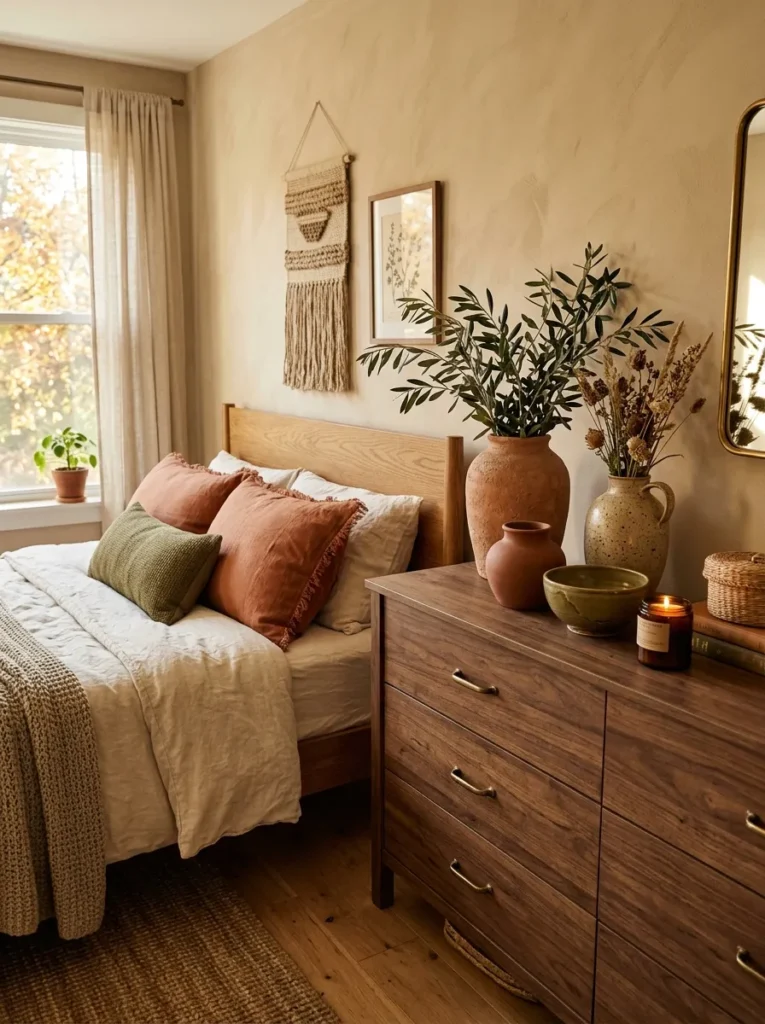
- Handmade ceramics add tactile character without overwhelming the bedroom.
- Matte finishes in clay, sand, cream, and terracotta suit autumn-inspired palettes.
- Group pieces at different heights to create a balanced dresser arrangement.
- Natural imperfections can make the space feel more personal and less mass-produced.
Earthy ceramic pieces can give a bedroom a handmade quality while keeping the seasonal styling subtle. Look for matte vases, small bowls, candle holders, or sculptural objects in clay, sand, cream, terracotta, or warm brown. Their slightly imperfect surfaces add texture that smooth furniture often lacks. Arrange two or three pieces together on a dresser or bedside table, using different heights to create a simple visual composition. Add a few dried stems to one vase if desired, but leave some pieces empty so their shapes remain visible and contribute to the overall styling.
Ceramics are also easy to incorporate because they do not need to be specifically labeled as autumn decorations. A simple clay vase can remain useful throughout the year while changing its surrounding accents with the seasons. Pair matte ceramics with linen, wood, woven baskets, and wool textures to create a natural material mix. Avoid placing too many small objects together, especially in a compact bedroom, because the surface can quickly become cluttered. A carefully edited arrangement usually looks more intentional and allows each piece to contribute texture without competing for attention.
Cozy Reading Corner
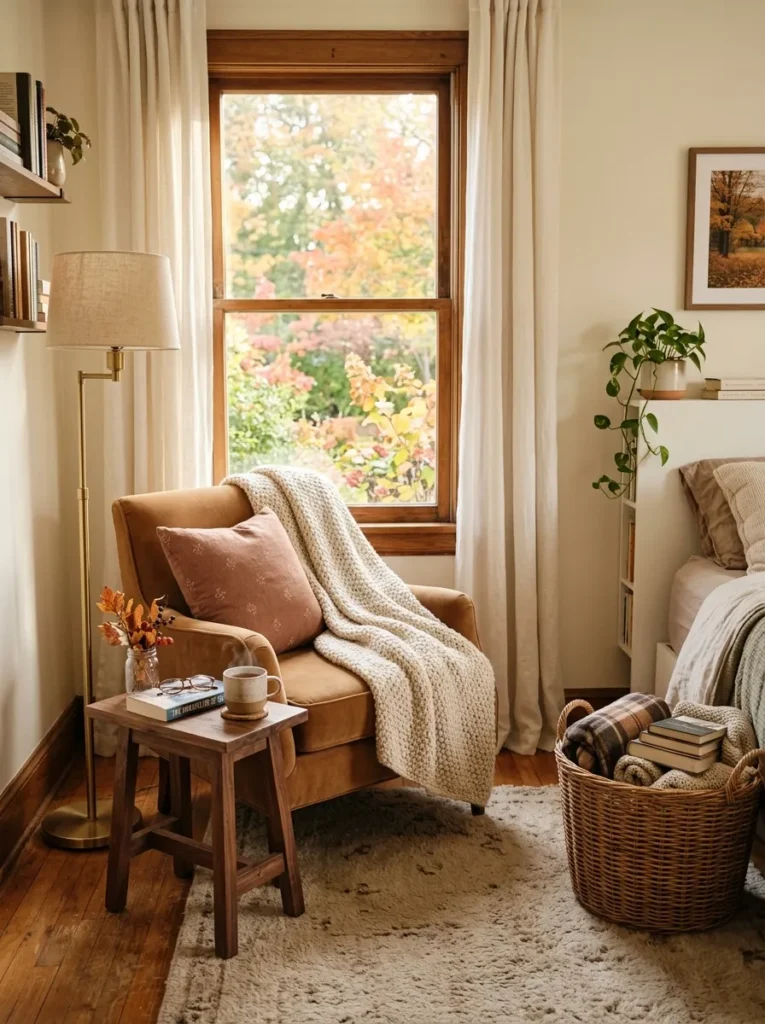
- A reading chair creates a useful second zone without changing the bedroom layout.
- Choose caramel, camel, cream, or warm brown upholstery for an autumn-friendly palette.
- Add one soft throw and a small cushion for comfort without visual clutter.
- A narrow side table keeps books, glasses, and a warm drink within easy reach.
A cozy reading corner can turn an unused bedroom corner into one of the most inviting parts of the room. Start with a comfortable upholstered chair in caramel, camel, cream, or warm brown, then add a soft throw and one supportive cushion. Place a small side table beside it for books or everyday essentials, and finish the area with a warm floor lamp. Position the chair near a window if possible so natural daylight can provide comfortable daytime reading light. This creates a distinct little retreat while adding another layer of function and personality.
The arrangement does not need a large bedroom or expensive furniture. A compact accent chair can fit beside a dresser, near a window, or in an otherwise awkward corner. Keep the surrounding accessories simple so the chair remains the main feature. A woven basket can hold extra blankets while a small rug visually defines the area. I’ve seen this setup work particularly well in bedrooms where one corner feels empty because it gives that unused space a clear purpose. Warm wood, textured fabrics, and soft lighting help connect the nook naturally with the rest of the room.
Moody Olive Walls
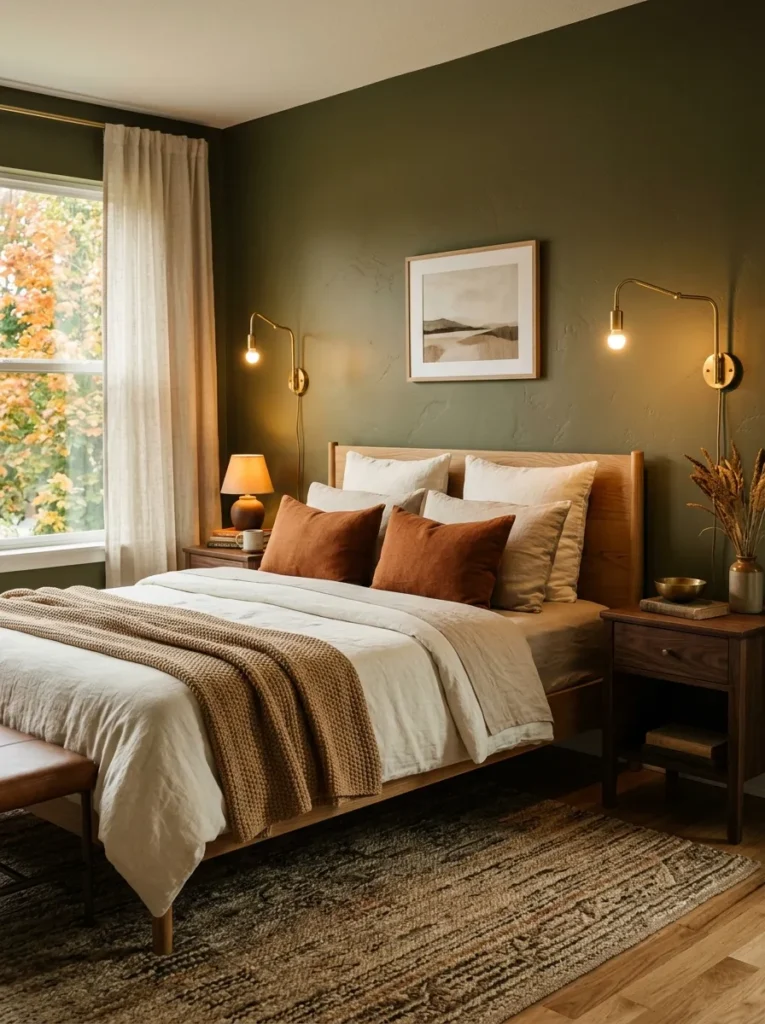
- Muted olive creates depth while remaining softer than very dark green.
- Pair the walls with light bedding to keep the bedroom from feeling heavy.
- Natural wood and brass details complement olive beautifully.
- Test paint samples in morning and evening light before committing to the color.
Muted olive walls can give an autumn bedroom a richer, more grounded appearance without relying on dark charcoal or brown paint. Choose a softened olive with gray or earthy undertones so the color feels natural rather than overly saturated. Keep the bed dressed in cream, ivory, or light beige to create contrast against the deeper walls. Natural oak, walnut, brass, and woven materials also pair beautifully with olive, creating a balanced combination of organic textures and warm finishes. The result feels sophisticated while still maintaining the relaxed character expected from a cozy bedroom.
Paint color can look dramatically different throughout the day, so always test a sample before covering an entire wall. Morning daylight may make olive appear softer, while warm lamps can bring out its deeper earthy qualities at night. If painting all four walls feels too intense, use the shade behind the bed as a single accent surface. In my experience, this approach provides much of the visual depth of a darker room while keeping the remaining walls lighter. Add minimal artwork and soft textiles so the wall color remains the foundation rather than competing with decoration.
Flannel Blanket Layers
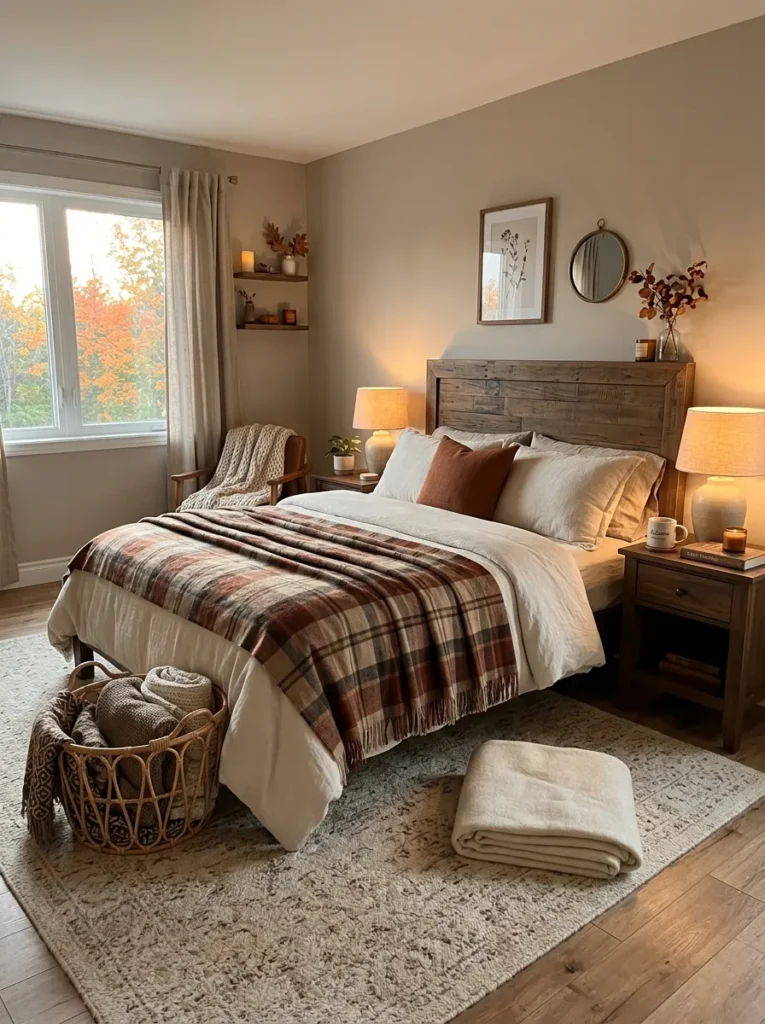
- Flannel adds softness and visual warmth when temperatures begin to drop.
- Muted checks create an autumn pattern without making the room look rustic-heavy.
- Layer it over plain bedding so the pattern remains easy to appreciate.
- Choose breathable cotton flannel for comfortable seasonal use.
A soft flannel blanket brings practical warmth and classic autumn texture to the bedroom. Look for muted checks in rust, taupe, cream, brown, or olive rather than highly contrasting colors. Place the blanket across the lower portion of the bed, leaving the main duvet or quilt visible underneath. This layering technique gives the bed more dimension while keeping the pattern contained. Flannel works especially well with linen, cotton, and wool because each material has a different surface texture. Together, they create a bed that looks comfortable, relaxed, and naturally suited to cooler evenings.
Beyond its appearance, flannel can make the bedroom more comfortable when temperatures start falling. Keep one blanket folded at the foot of the bed so it can be pulled upward whenever needed. If the bedroom already contains several patterns, choose a smaller check with closely related colors to avoid visual competition. A neutral bed frame and simple wooden furniture will keep the arrangement grounded. This is one of those seasonal updates that combines decoration with genuine usefulness, making it easy to keep in regular rotation instead of treating it as purely decorative.
Rattan Pendant Light
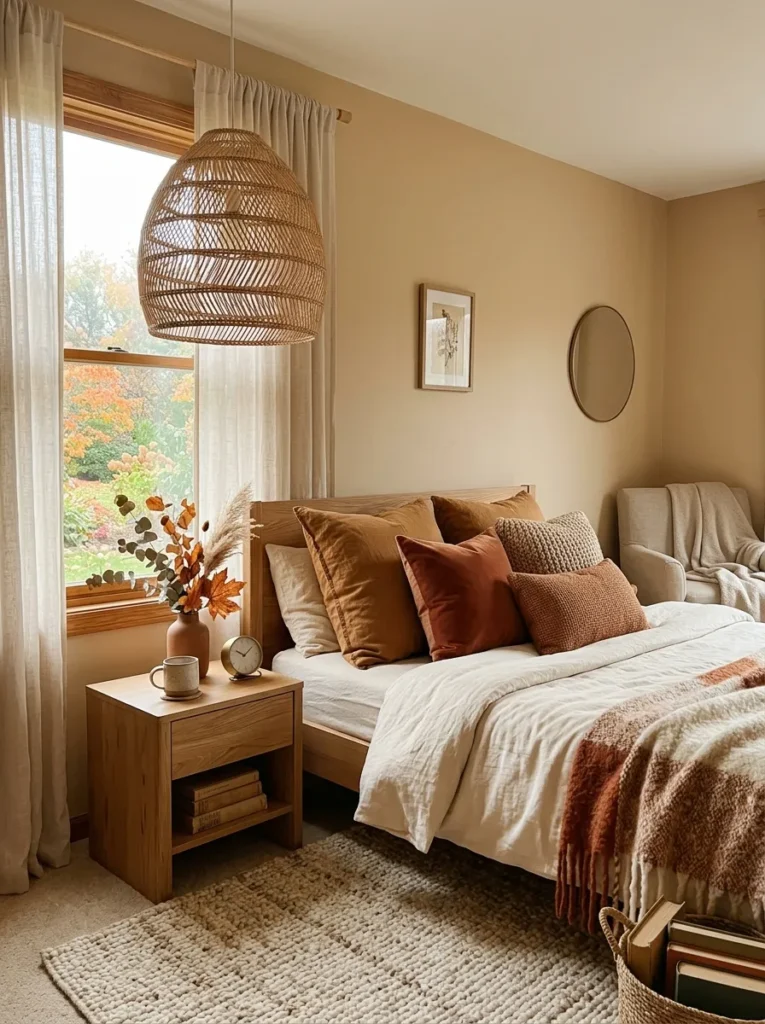
- A woven pendant introduces texture without taking up valuable floor or table space.
- Rattan works naturally with wood, linen, wool, and earthy autumn colors.
- Choose a warm bulb to emphasize the woven shade after sunset.
- Keep the surrounding ceiling and walls simple so the pendant remains noticeable.
A rattan pendant light can become a beautiful focal point while adding warmth from above. The woven shade creates interesting texture and softly filters the light, making the bedroom feel more layered than it would with a basic ceiling fixture. Choose natural rattan, cane, or woven grass in a warm tan shade, then pair it with cream bedding, wood furniture, and muted autumn accents. A simple rounded pendant works well above an open area, while a smaller design can hang near a reading corner. The result feels relaxed, organic, and visually connected to fall-inspired materials.
Lighting temperature matters when styling this type of fixture. Choose a warm white bulb rather than a cool blue-toned one so the natural fibers and surrounding textiles appear softer in the evening. Keep the rest of the ceiling area uncluttered to give the pendant room to stand out. If your bedroom already has several woven elements, select a simpler shade to avoid repeating the same texture too heavily. I’ve noticed that overhead woven lighting works particularly well in bedrooms with high ceilings because it adds visual interest at an otherwise overlooked level while making the room feel more complete.
Cream Bouclé Headboard
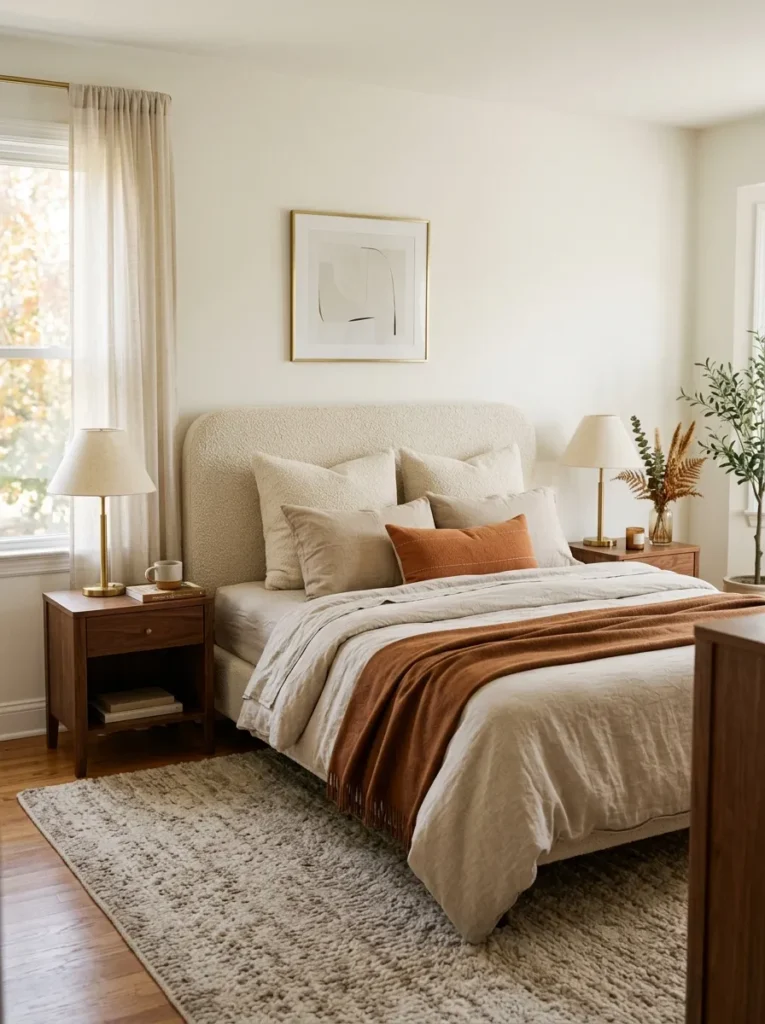
- Bouclé adds softness and tactile interest without introducing a strong color.
- A cream headboard keeps the room bright while supporting warmer autumn accents.
- Rounded shapes can soften bedrooms filled with straight-lined furniture.
- Add rust, camel, or brown textiles for seasonal contrast against the light upholstery.
A cream bouclé headboard can make the bed feel softer, richer, and more luxurious without relying on bold decoration. Its nubby texture catches light differently across the surface, giving a neutral bedroom subtle visual movement. Choose a rounded or gently curved shape if you want to soften furniture with strong straight lines. Pair the headboard with beige linen, rust pillows, camel throws, or warm brown accents to create an autumn palette without making the room feel dark. Because the color remains neutral, the headboard can continue working long after the seasonal decorations are stored away.
This style also works well when you want one major investment piece to carry much of the room’s visual interest. Keep nearby furniture simple, using natural wood or warm metal finishes that complement the creamy upholstery. A textured rug beneath the bed can reinforce the soft material story without making the room feel busy. In my experience, bouclé looks best when balanced with smoother surfaces such as wood, glass, or ceramic. That contrast allows the fabric to stand out while preventing every element from competing through texture.
Cinnamon Accent Pillows
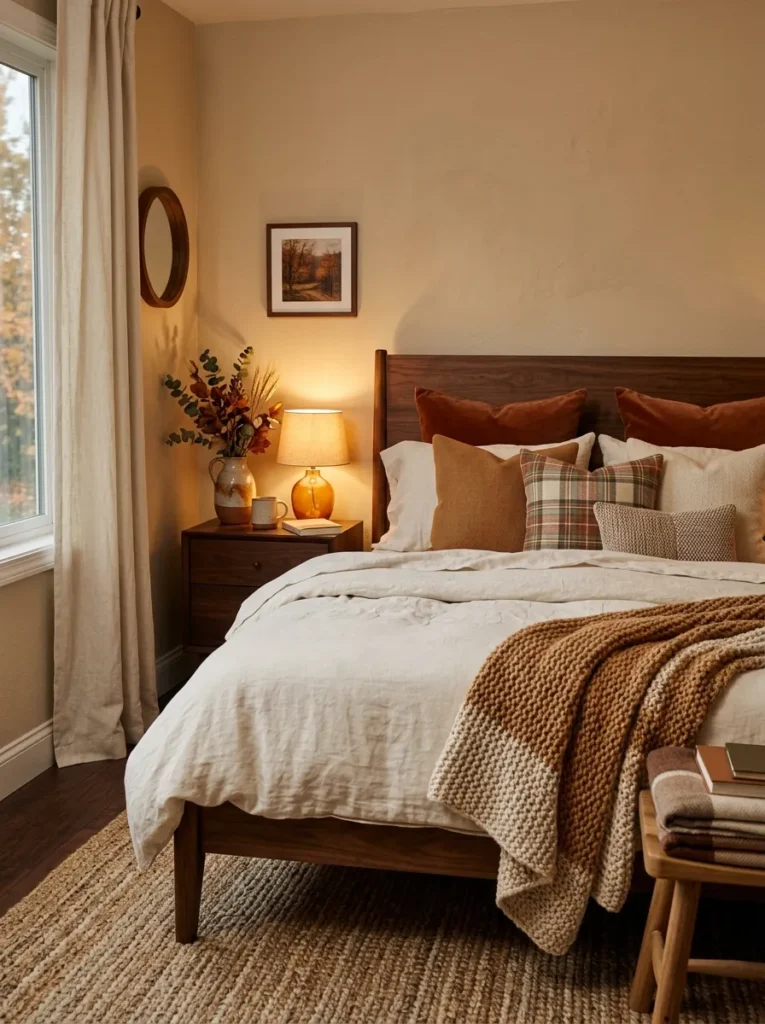
- Cinnamon tones add warmth without the intensity of bright orange.
- Combine different pillow shapes and textures for a relaxed layered arrangement.
- Keep the largest pillows neutral so the accent color remains controlled.
- Repeat a small cinnamon detail elsewhere for a more cohesive room.
Cinnamon accent pillows offer a simple way to bring a warm autumn tone into the bedroom without changing the larger pieces. The muted reddish-brown shade works beautifully with ivory, cream, camel, beige, and walnut, making it easy to layer with existing bedding. Try combining one cinnamon pillow with a textured neutral cushion and a smaller patterned accent. Varying the shapes and fabrics gives the arrangement a more relaxed appearance than using several identical pillows. This small update can make a plain bed look noticeably richer while keeping the overall design calm and sophisticated.
You can also use cinnamon as a connecting accent throughout the room without repeating it excessively. A small ceramic vase, artwork detail, or folded throw can echo the same warm undertone. This creates cohesion while allowing the bedding to remain the main focal point. For a smaller bedroom, two or three accent pillows are usually enough to create visual impact. Choose linen, cotton, velvet, or woven covers depending on the textures already present. The goal is to create layers that feel collected over time rather than assembling a perfectly matching set all at once.
Autumn Gallery Wall
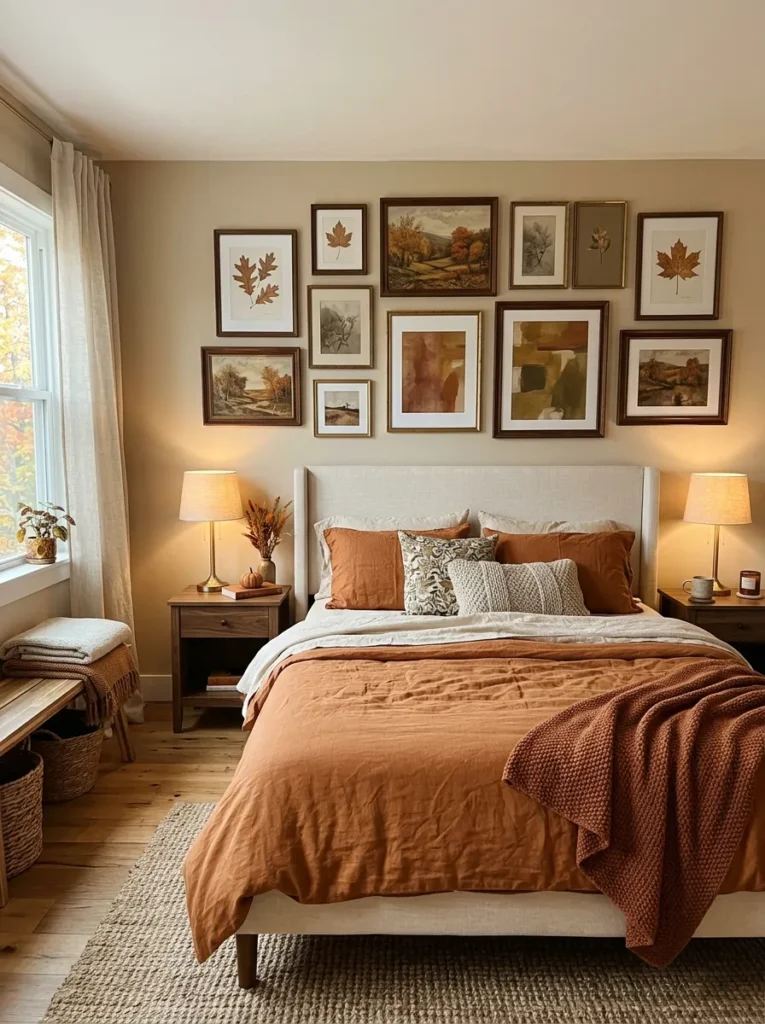
- A gallery wall adds personality without taking up floor space.
- Botanical and landscape prints naturally reinforce an autumn-inspired palette.
- Mix frame materials carefully while keeping artwork colors connected.
- Leave enough wall space between pieces so the arrangement feels intentional.
An autumn-inspired gallery wall can give the bedroom a personal finishing touch while creating a strong visual focal point above the bed. Choose artwork featuring botanical sketches, woodland scenes, vintage landscapes, dried leaves, or abstract shapes in earthy shades. Keep the palette connected through rust, olive, beige, brown, and cream rather than choosing identical images. Mixing walnut, brass, and simple black frames can add character while still maintaining cohesion. Arrange the pieces before hanging them so you can adjust spacing and balance without creating unnecessary holes in the wall.
The gallery does not need to be large to make an impact. In a smaller bedroom, four or five carefully selected prints can provide enough personality without overwhelming the wall. Keep the bedding relatively simple so the artwork remains easy to appreciate. If you already have patterned pillows or blankets, choose artwork with quieter designs and fewer contrasting colors. That balance helps the room feel layered rather than busy. I’ve noticed that personal artwork often makes seasonal decorating feel more authentic because the room still reflects the person living there instead of looking like a collection of temporary fall decorations.
Warm Wood Nightstands
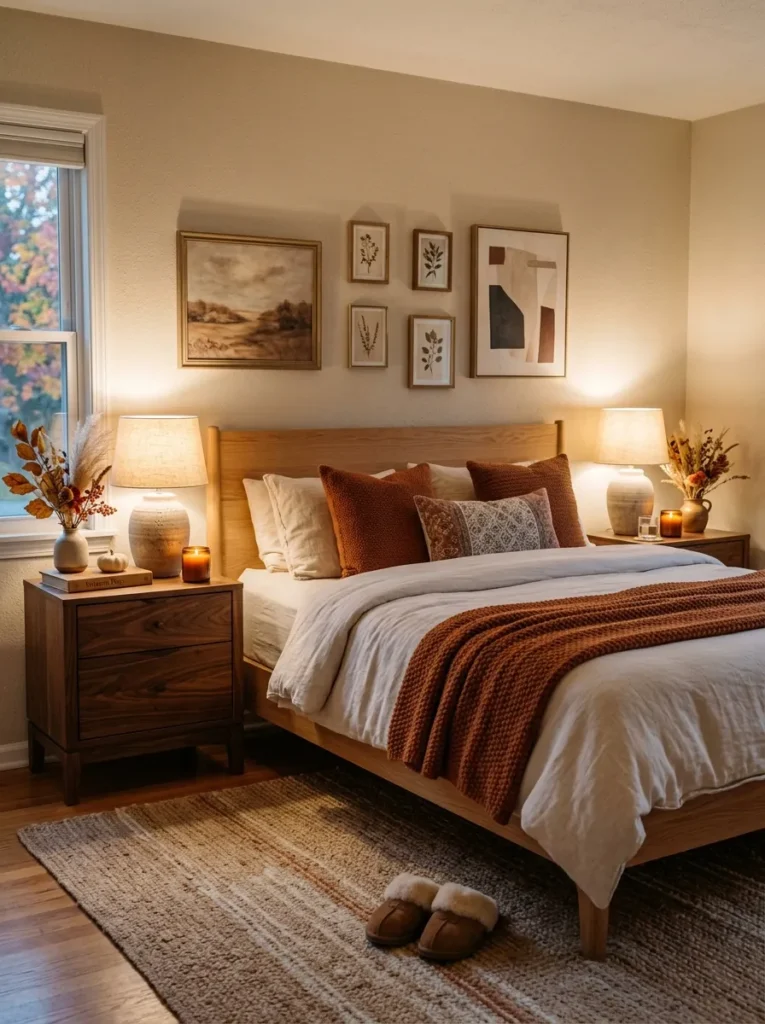
- Warm wood instantly adds natural depth to an otherwise neutral bedroom.
- Walnut, oak, and reclaimed wood pair beautifully with autumn textiles.
- Keep nightstand styling simple so the wood remains visually prominent.
- Matching wood tones can make the entire bedroom feel more cohesive.
Warm wood nightstands can anchor an autumn bedroom with natural color and visible grain. Walnut, oak, and medium-toned wood finishes work particularly well with cream bedding, rust textiles, woven accessories, and earthy ceramics. Choose nightstands with enough storage for everyday essentials so the surface can remain relatively clear. A small lamp, ceramic vase, and book are often enough to create an attractive arrangement. The combination of smooth wood, soft textiles, and handmade-looking accessories gives the room visual variety while keeping the overall palette warm and grounded.
Wood furniture is also a practical choice because it does not need to be replaced when the season changes. Once autumn decorations are removed, the same nightstands can work with lighter spring bedding or cooler summer colors. If your existing furniture is very pale, introducing one warmer wood piece can create useful contrast without requiring a complete bedroom makeover. Keep the finish consistent with other wood elements when possible, but do not worry about achieving a perfect match. Slight differences in natural grain and tone can actually make the room feel more collected and authentic.
Conclusion
Creating a cozy autumn bedroom doesn’t require expensive furniture or a complete redesign. The right textures, colors, lighting, and natural accents can make your space feel warmer, softer, and more inviting in surprisingly simple ways. Use these fall bedroom decor ideas as inspiration, then choose the changes that fit your room, style, and budget. Start with one small update, such as layered bedding, warm lighting, or a seasonal pillow, and build from there. Save this post on Pinterest for your next decorating project, try your favorite ideas, and share it with someone who loves a cozy autumn home. Let your bedroom become your favorite seasonal retreat.