21 Thanksgiving Dinner Table Setting Ideas for Guests
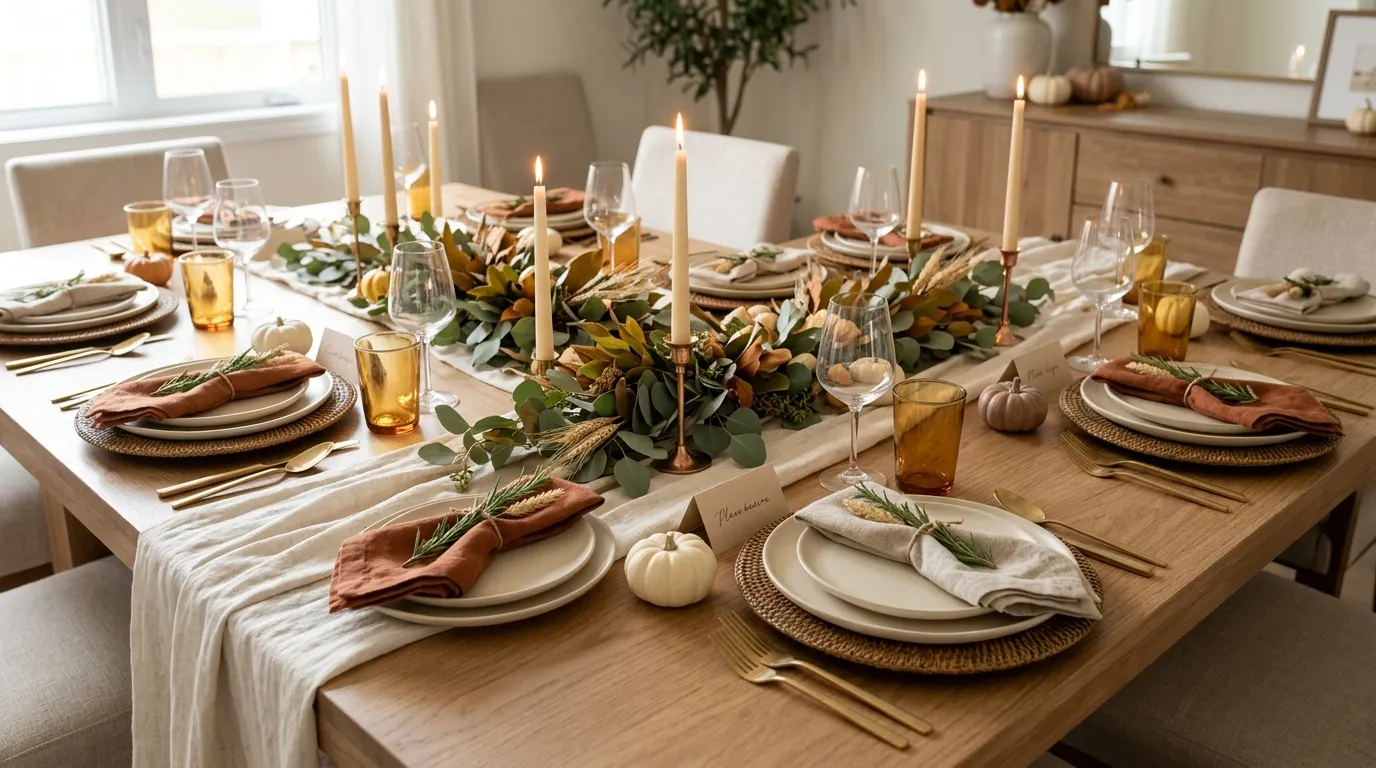
A beautiful holiday table can make guests feel special before the first dish is even served.
The right details can turn a simple dining room into a warm Thanksgiving gathering spot.
This thanksgiving dinner table setting guide brings together 21 practical ideas for creating a table that feels welcoming, polished, and easy to enjoy. From miniature pumpkins and layered linens to amber glassware, personalized place cards, natural foliage, and soft candlelight, each idea adds a simple visual upgrade without making the table difficult to use. Whether you are hosting close family or a larger group of friends, these arrangements can help you create defined, comfortable places for everyone. In my experience, small details often make the biggest difference, especially when they combine beauty with practical spacing and easy cleanup.
Pumpkin Place Settings
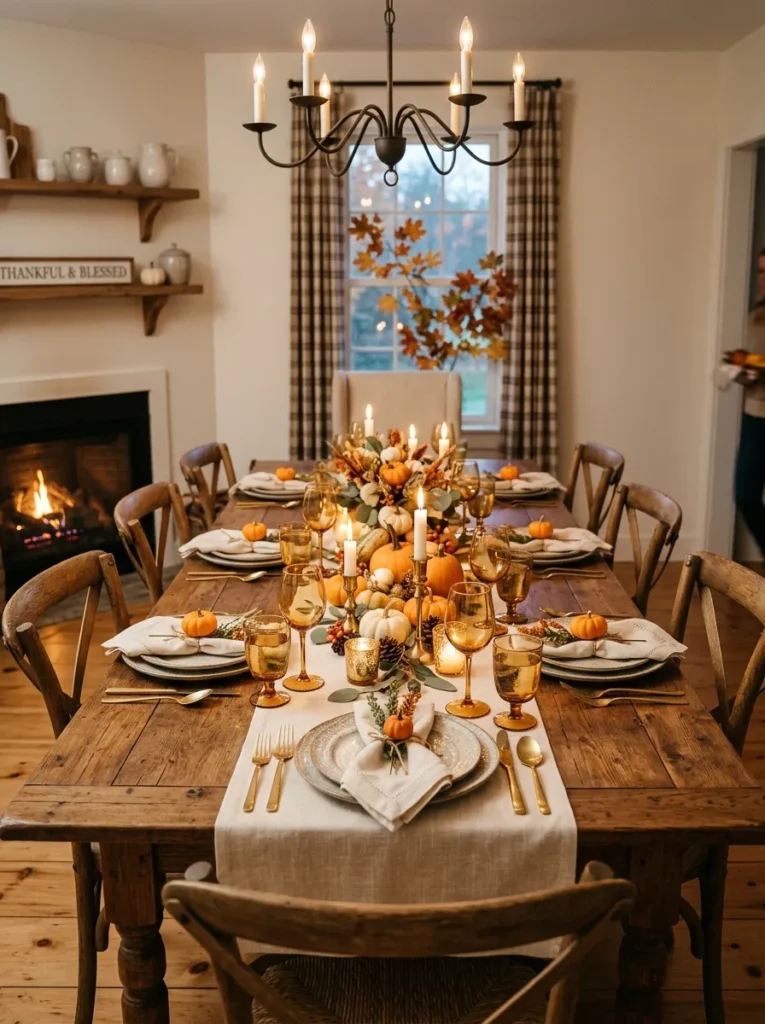
- Mini pumpkins create an instantly recognizable Thanksgiving focal point.
- Cream linens keep the table looking polished instead of overly busy.
- Small pumpkins can double as charming individual place markers.
- Gold or brass accents add a subtle festive finish.
Nothing makes a holiday table feel more inviting than a tiny pumpkin waiting at every place. This simple arrangement gives each guest a defined spot while bringing seasonal color into the setting without overwhelming the table. Use small white, orange, or muted green pumpkins, then pair them with neutral plates and soft linen napkins. I’ve noticed that keeping the pumpkin size modest makes the entire arrangement feel more refined. Add a handwritten name tag beneath each stem for a personal touch. The result feels festive, welcoming, and thoughtfully prepared for guests.
For a polished thanksgiving dinner table setting, repeat the same pumpkin style across every place rather than mixing too many shapes and colors. Set each pumpkin slightly above or beside the dinner plate, leaving enough room for glasses and serving dishes. A woven placemat underneath can add texture while protecting the tabletop from spills. If your dining room is small, choose miniature pumpkins so the arrangement stays practical. Warm candlelight or nearby natural light will highlight their colors beautifully. This setup works especially well with farmhouse, rustic, traditional, and transitional dining rooms.
Layered Linen Napkins
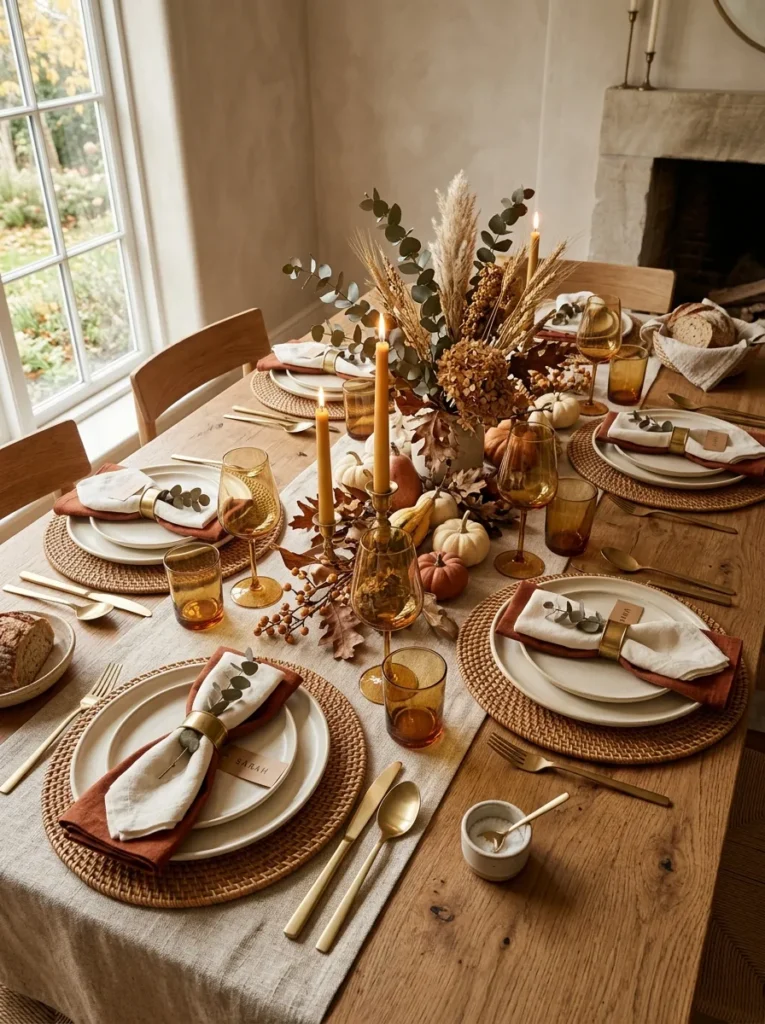
- Layered fabrics add depth without requiring expensive decorations.
- Rust, beige, and cream tones create a warm seasonal palette.
- A simple fold keeps the place setting practical for guests.
- Textured linen makes everyday dishes feel more special.
A beautifully layered napkin can make an ordinary plate arrangement look instantly considered and complete. Start with a neutral linen napkin, then place a smaller folded cloth in rust, cinnamon, olive, or muted gold on top. The contrasting layers create visual depth while keeping the overall look soft and natural. This approach is especially useful when you want Thanksgiving decoration without filling the table with excessive accessories. In my experience, textured linen works particularly well because it adds interest even when the rest of the table uses simple white dishes and understated serving pieces.
For an inviting holiday table, position the layered napkins directly over each dinner plate or tuck them slightly underneath the top edge. Keep the colors coordinated with your centerpiece, placemats, or glassware so the table feels connected. If you are working with a narrow dining table, this technique adds decoration vertically without taking up extra surface space. Choose washable linen or cotton blends if you expect a large gathering. The finished arrangement feels warm and intentional while still leaving plenty of room for plates, glasses, utensils, and shared Thanksgiving dishes.
Natural Foliage Accents

- Fresh greenery brings natural texture to each individual setting.
- Olive branches create movement without adding visual clutter.
- Green foliage balances warmer orange, brown, and gold decorations.
- Small sprigs are inexpensive and easy to arrange before guests arrive.
Bring the beauty of the outdoors directly to the table with small foliage accents beside each place setting. Olive branches, eucalyptus, rosemary, or seasonal leaves can add a fresh organic detail without competing with the centerpiece. Tuck one small sprig beneath a napkin or place it alongside the plate for an effortless finish. The greenery works beautifully with cream ceramics, natural wood, woven textures, and warm metals. I’ve seen this approach work especially well when homeowners want a Thanksgiving table that feels seasonal but not overly themed, making the dining space look relaxed and sophisticated.
Keep the foliage pieces short enough that guests can comfortably see across the table and converse without obstruction. For a cohesive look, repeat similar greenery at every setting while using a larger arrangement in the center. Dried leaves can be a practical alternative when fresh branches are unavailable or when you want the decoration prepared several days ahead. Pair green foliage with warm white candles, amber glasses, or brass utensils for gentle contrast. The combination creates a balanced thanksgiving dinner table setting that feels welcoming, natural, and easy to recreate.
Gold Flatware Details
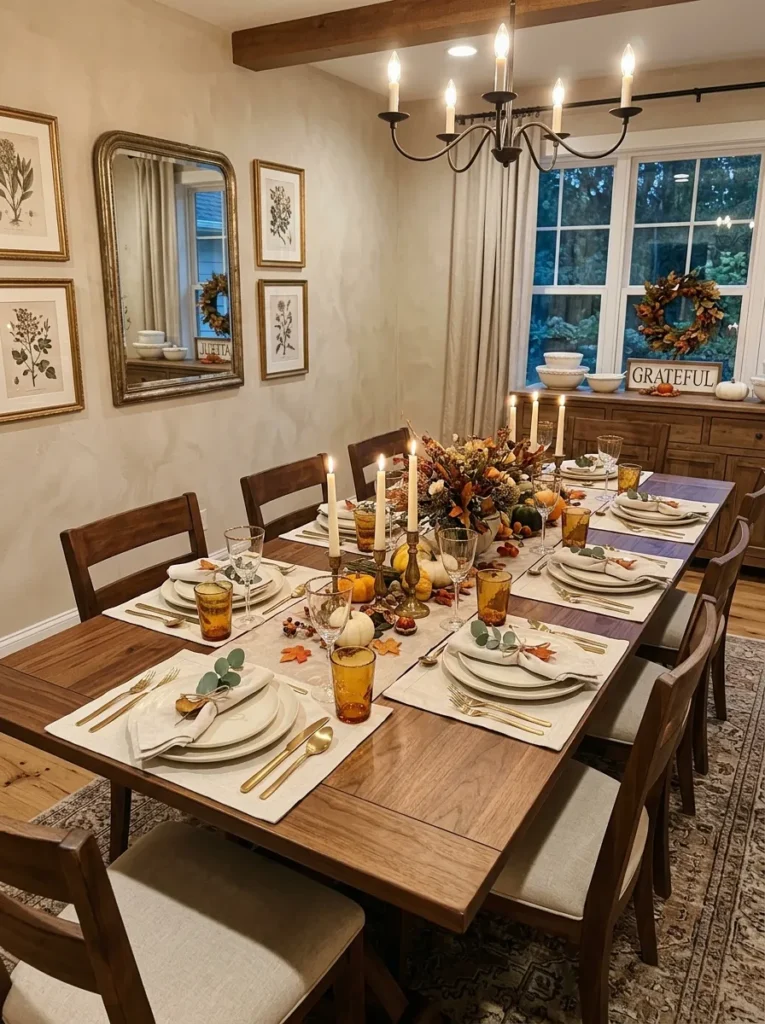
- Gold flatware instantly adds warmth and polish to simple dinnerware.
- Brushed finishes feel softer and more relaxed than highly reflective metals.
- Pairing gold with neutral linens keeps the table from looking too formal.
- Matching metallic details across the table creates visual consistency.
A little metallic detail can make a Thanksgiving table feel beautifully finished without requiring a large centerpiece. Brushed gold flatware adds warmth beside white or cream plates and creates an elegant contrast against natural wood. Place the fork, knife, and spoon neatly beside each setting, then repeat the same finish with candleholders or small decorative accents. I’ve noticed that matte or brushed gold often feels more inviting than highly polished metal because it catches the light gently. This small upgrade can make everyday dishes look intentionally chosen for a special gathering.
Balance metallic flatware with softer materials so the table remains comfortable and welcoming for guests. Cream linen napkins, woven placemats, wooden serving boards, and amber glassware can prevent gold accents from feeling overly formal. Keep the rest of the decoration restrained, especially if your table already has several serving dishes. For smaller dining spaces, this approach works particularly well because it adds visual richness without taking up additional surface area. Under warm evening lighting, the gold catches subtle highlights and gives the entire setting a cozy glow while maintaining a timeless Thanksgiving appearance.
Rustic Charger Plates
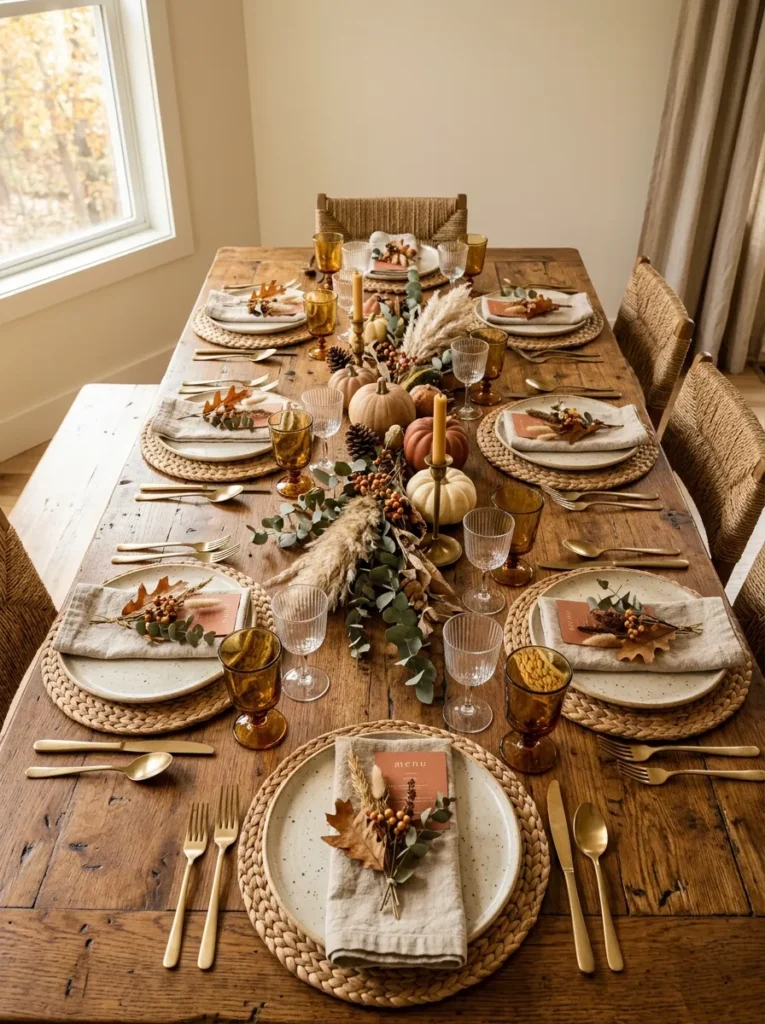
- Charger plates give each setting a stronger visual foundation.
- Woven or wood-style materials introduce natural seasonal texture.
- Neutral chargers work with both rustic and modern dinnerware.
- They also help protect the table from spills and crumbs.
Layering a charger beneath each dinner plate is an easy way to make a holiday table feel more complete. Natural rattan, woven seagrass, wood, or subtly distressed finishes work especially well for Thanksgiving because they bring earthy texture to the setting. Place the charger first, then add your dinner and salad plates above it for a structured layered effect. The extra border frames each place beautifully and makes even simple white dishes look more intentional. For a relaxed gathering, choose natural materials that complement your dining table instead of competing with its existing finish.
When selecting chargers, think about proportion as much as color. They should provide a visible border around the plates without making the setting feel crowded. A woven neutral charger pairs easily with rust-colored napkins, brass utensils, cream ceramics, and seasonal foliage. If your dining table has a dark wood finish, lighter chargers can create useful contrast. If the tabletop is pale, choose warmer brown or tan textures for definition. This practical layer also gives guests a clear visual boundary for their dishes, helping the entire table stay organized as the meal progresses.
Personalized Place Cards
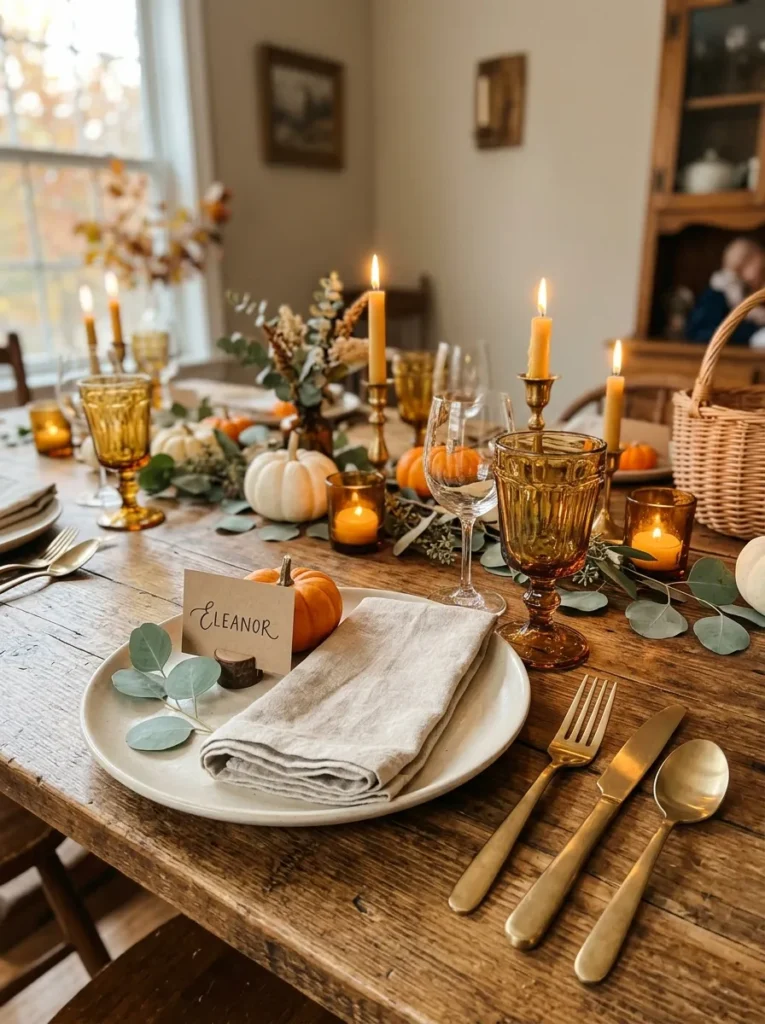
- Personalized cards make each guest feel thoughtfully welcomed.
- Small paper tags add decoration without taking much table space.
- Handwritten names bring a warm, personal touch to formal settings.
- Neutral cardstock can be coordinated with napkins and seasonal colors.
Give every guest a small moment of welcome with a personalized place card at their setting. Handwritten names on kraft paper, cream cardstock, or miniature tags can add personality while helping everyone find their seat quickly. Place the card beside the napkin, rest it against the plate, or attach it to a tiny seasonal detail such as a cinnamon stick or leaf. This idea works especially well for family gatherings where thoughtful details matter. In my experience, simple handwritten cards often feel more meaningful than elaborate printed decorations because they show genuine preparation.
Keep the lettering easy to read and choose materials that match the rest of your table. Kraft paper suits rustic settings, while ivory cards can create a cleaner traditional appearance. For a modern arrangement, use simple black lettering with a small botanical detail. Avoid oversized cards that compete with dinnerware or block conversation across the table. If children are attending, colorful but coordinated cards can make their places feel special too. This small addition gives the thanksgiving dinner table setting a personal layer while keeping the overall arrangement organized, practical, and visually balanced.
Amber Glassware
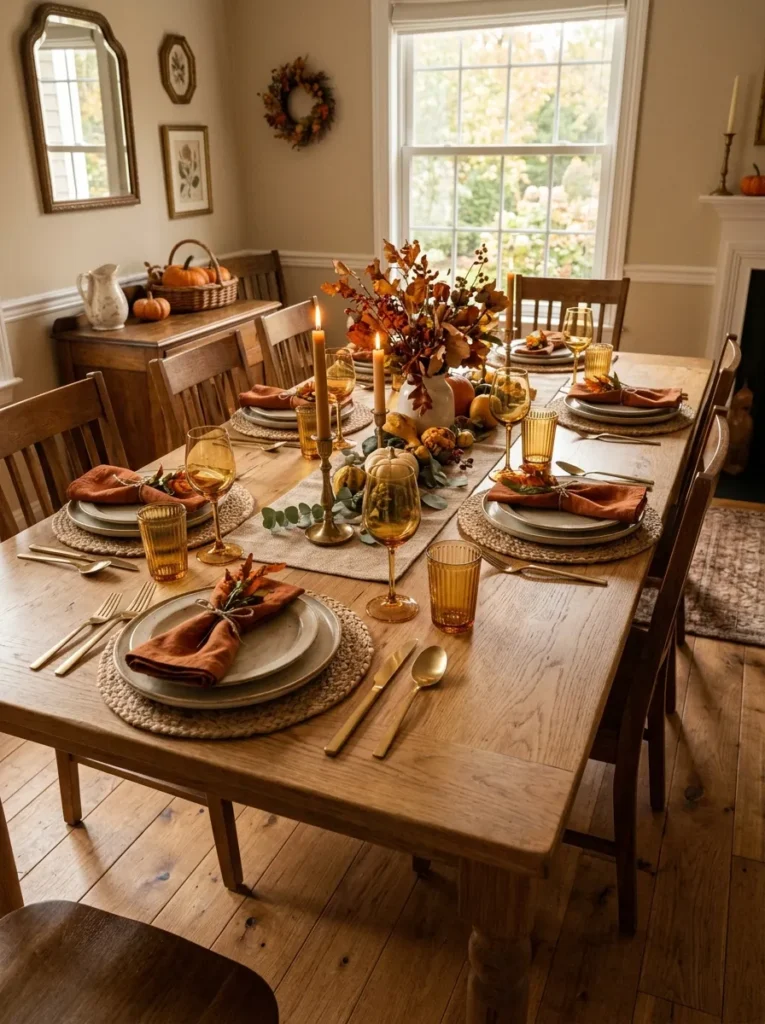
- Amber glassware introduces rich autumn color without overwhelming the table.
- Transparent surfaces keep the arrangement feeling light and open.
- Warm-toned glasses pair naturally with pumpkins, foliage, and brass accents.
- Different glass shapes can add subtle visual variety.
Add a touch of autumn color through amber glassware placed at each guest’s setting. The warm honey, caramel, or cognac tones look beautiful beside neutral plates and natural textiles, creating a richer palette without relying on bright decorations. Choose simple tumblers or stemmed glasses depending on the style of your gathering. Clear glass can be mixed with amber pieces if you want a lighter effect. I’ve noticed that colored glass catches daylight beautifully, especially when positioned near a window, creating small glowing details that make the entire table feel warmer and more inviting.
Keep the glassware arrangement practical by placing drinking glasses slightly above the knife and dinner plate. This creates a consistent pattern that looks polished while leaving the center of the table available for serving dishes. Pair amber glass with cream, beige, terracotta, olive, or muted gold accents for an easy seasonal palette. If your table already contains bold decorations, use fewer colored glasses to maintain balance. In the evening, warm overhead lighting or candles can make the amber tones appear especially rich, adding depth and coziness without making the table feel visually crowded.
Candlelit Place Settings
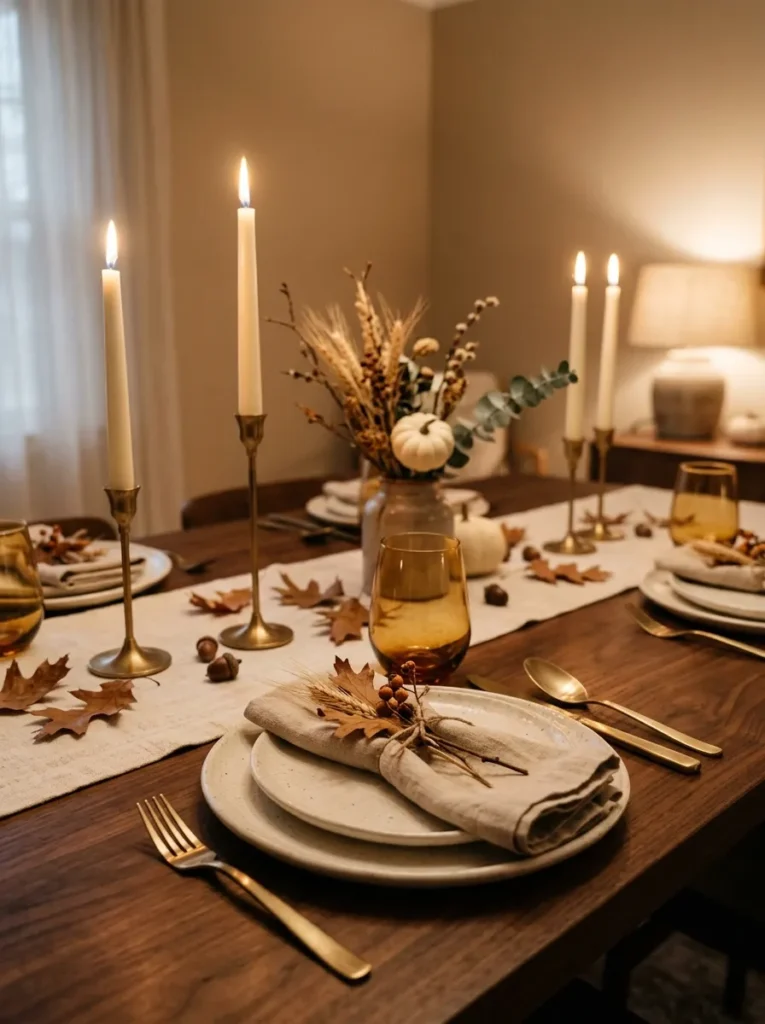
- Candlelight creates a warm glow around every individual setting.
- Slim taper candles provide height without taking up much space.
- Brass holders complement autumn colors and natural textures.
- Lower candle arrangements help guests maintain comfortable eye contact.
Few details change the atmosphere of a dinner table as quickly as warm candlelight. Place slender taper candles in small holders between the individual settings or along the center of the table, keeping enough space for serving dishes. Cream, ivory, or muted brown candles work beautifully with seasonal colors and natural materials. The gentle glow softens hard surfaces such as ceramic plates and glassware, making the entire arrangement feel more intimate. For a practical gathering, unscented candles are usually preferable because strong fragrances can interfere with the aromas of the meal.
Choose candleholders that complement your table rather than competing with the centerpiece. Brass, antique gold, ceramic, and dark metal finishes can all work depending on your overall style. If you have young children or pets, flameless taper candles can provide a similar visual effect with less concern around open flames. Keep candles at varying heights only when they remain stable and do not obstruct conversation. The finished arrangement gives your Thanksgiving setting a softly illuminated focal point, while the repeated candlelight creates visual rhythm from one end of the table to the other.
Woodland Table Layers
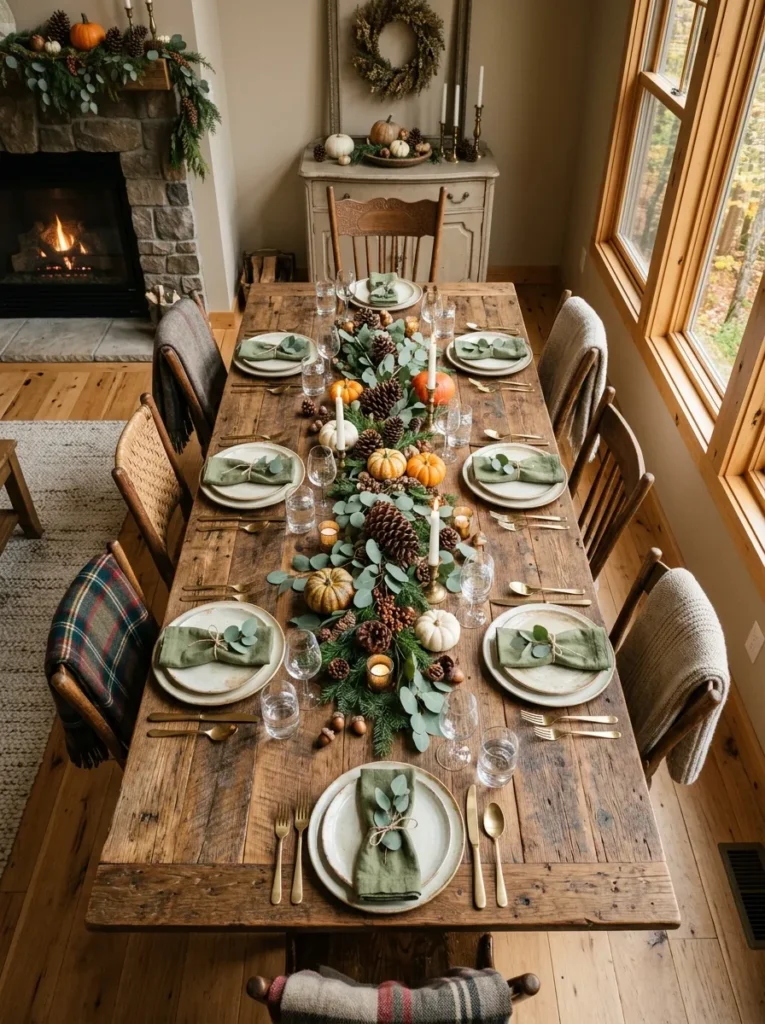
- Natural wood elements make the table feel grounded and welcoming.
- Pinecones and branches add seasonal texture without bright colors.
- Earthy greens balance warmer Thanksgiving shades beautifully.
- Layered materials make simple dinnerware look more thoughtfully styled.
Create a woodland-inspired table by combining natural materials with soft earthy colors. Start with a wooden tabletop or neutral runner, then layer cream plates, moss-green napkins, woven textures, and small pinecones around the settings. A few eucalyptus branches or delicate seasonal leaves can connect the individual places to the central arrangement. This approach feels especially natural in homes with farmhouse, cabin, rustic, or organic interiors. I’ve seen this style work well when the goal is to make a Thanksgiving gathering feel cozy without covering every surface in obvious seasonal decorations.
The key is to vary texture while keeping the color palette controlled. Combine rough wood, soft linen, smooth ceramic, woven fibers, and delicate foliage so each layer adds something different. Place larger natural elements toward the center and use smaller pieces near individual plates. Avoid loose decorations that could interfere with serving dishes or guests’ elbows. Shades of olive, taupe, cream, brown, and muted rust create a connected palette that feels appropriate for the season. The result is a relaxed table that looks collected, comfortable, and naturally connected to the autumn landscape.
White Pumpkin Accents

- White pumpkins create seasonal interest without adding strong orange tones.
- Their neutral color works beautifully with cream and beige dinnerware.
- Small pumpkins can frame each place without taking up much room.
- Mixing smooth ceramics with natural textures adds useful contrast.
White pumpkins offer a softer way to bring Thanksgiving character to the table while keeping the palette calm and sophisticated. Place one miniature pumpkin beside each napkin or just above the dinner plate for a simple seasonal accent. Their creamy surface blends naturally with ivory dishes, linen fabrics, and pale wood, while subtle differences in shape add organic character. This look is especially useful when your dining room already has neutral decor and you want the holiday arrangement to feel connected rather than overly decorated. A few muted green leaves can provide gentle contrast.
For a cohesive arrangement, repeat the same small pumpkin style at every setting and reserve larger pieces for the centerpiece. Choose smooth white pumpkins for a modern look or slightly irregular varieties for a more rustic appearance. You can also add a tiny handwritten name tag around the stem to combine decoration with function. Keep enough open space around each place for utensils and glasses. The neutral palette makes this setup easy to adapt, whether your home features farmhouse furniture, traditional woodwork, modern finishes, or a simple Scandinavian-inspired dining area.
Plaid Napkin Folds

- Plaid introduces classic autumn pattern without needing extra decorations.
- Folded fabric creates height and definition around each plate.
- Rust, cream, and brown patterns coordinate naturally with Thanksgiving colors.
- Cotton or linen blends offer texture while remaining practical for guests.
A classic plaid napkin can instantly make a Thanksgiving place setting feel warmer and more seasonal. Choose a pattern in rust, cream, tan, olive, or deep brown, then fold it neatly across the dinner plate or tuck it underneath the top edge. The pattern becomes a small visual focal point without taking over the table. This is particularly helpful when your dishes are simple and neutral. I’ve noticed that plaid looks most polished when the rest of the setting stays relatively quiet, allowing the fabric pattern to provide the main decorative contrast.
Coordinate the napkin colors with one or two other elements rather than matching everything exactly. A rust stripe can connect with pumpkins, while cream lines can echo ceramic plates and table linens. If the table is narrow, a compact fold keeps the setting functional while still showing enough of the pattern. Cotton plaid is practical for larger gatherings because it can be washed and reused for future seasons. Add simple brass flatware and clear or amber glassware for balance. The finished table feels traditional, comfortable, and welcoming without becoming overly themed.
Layered Plate Settings
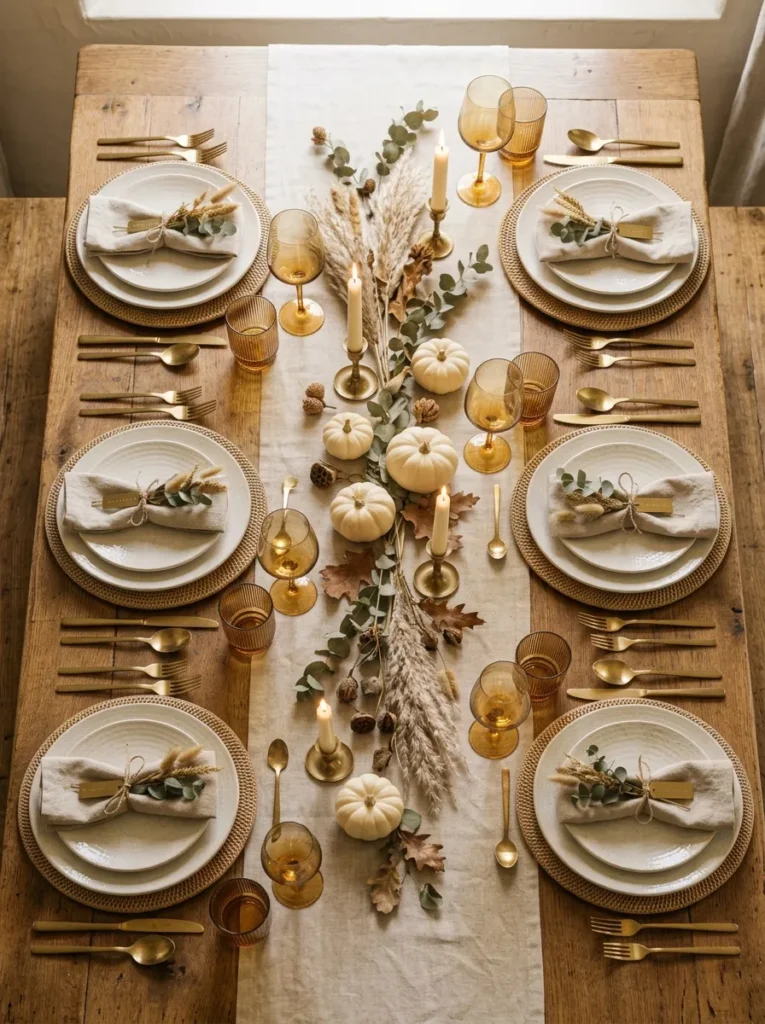
- Multiple plate layers create depth and make each setting feel complete.
- Neutral ceramics keep the arrangement elegant and easy to coordinate.
- Chargers provide a defined base beneath the dinnerware.
- The layered structure makes simple dishes feel more special.
Give each guest a polished visual foundation by layering a charger, dinner plate, and smaller salad or appetizer plate. This arrangement creates depth before you even add napkins or decorative accents. White, cream, stone, and soft beige ceramics are especially versatile because they allow seasonal details to stand out without creating color overload. Place each piece carefully so the edges remain evenly visible. The effect feels elevated but still practical for a family meal. For larger gatherings, using plates you already own can achieve the layered appearance without requiring an entirely new dinnerware collection.
Think about proportion when combining the layers. A woven or wooden charger should extend visibly around the dinner plate, while the smaller plate should leave enough of the larger surface exposed to create contrast. Add a folded linen napkin across the top or just beneath the salad plate. Keep flatware aligned consistently on both sides of each setting for a cleaner appearance. This approach works particularly well for a thanksgiving dinner table setting because it creates structure, gives every guest a clearly defined place, and leaves the center free for serving pieces.
Copper Accent Pieces
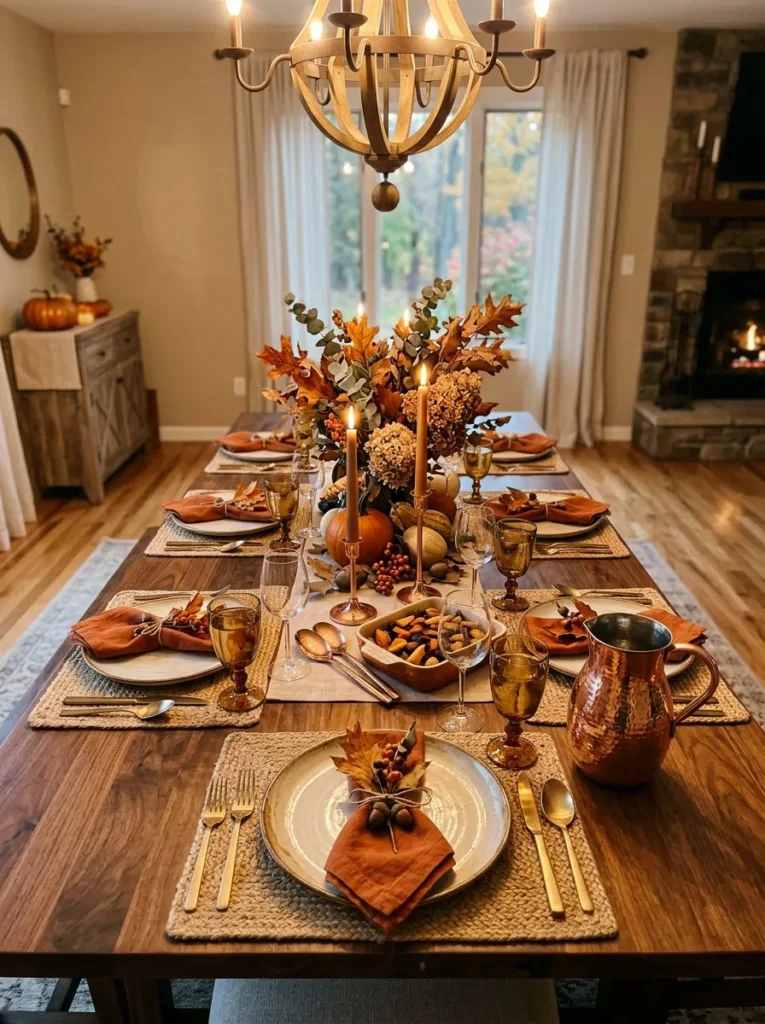
- Copper adds warmth without relying on bright seasonal orange.
- Small metallic pieces create attractive highlights around the table.
- Copper pairs naturally with wood, cream, rust, and earthy green.
- Repeating one metallic finish keeps the setting visually connected.
Warm metallic accents can give a Thanksgiving table a richer appearance while keeping the overall design understated. Copper candleholders, napkin rings, small serving pieces, or decorative bowls can introduce a soft reddish glow that complements autumn colors beautifully. Place one or two copper details near each setting rather than covering the entire table in metal. This creates small points of interest without making the arrangement feel excessive. In my experience, copper looks especially inviting against darker wood because the warm metal stands out while still blending naturally with the surrounding earthy materials.
Keep the palette balanced by combining copper with cream, brown, muted green, or soft rust instead of too many competing metallic finishes. A copper napkin ring can echo a larger centerpiece without requiring additional decoration at every place. If your existing flatware is silver, there is no need to replace it; simply use copper in smaller decorative pieces. Soft candlelight will enhance the metal’s warm surface and create gentle reflections. The result is a comfortable, polished setting that feels festive while remaining suitable for both casual family dinners and more formal Thanksgiving gatherings.
Herb Sprig Details
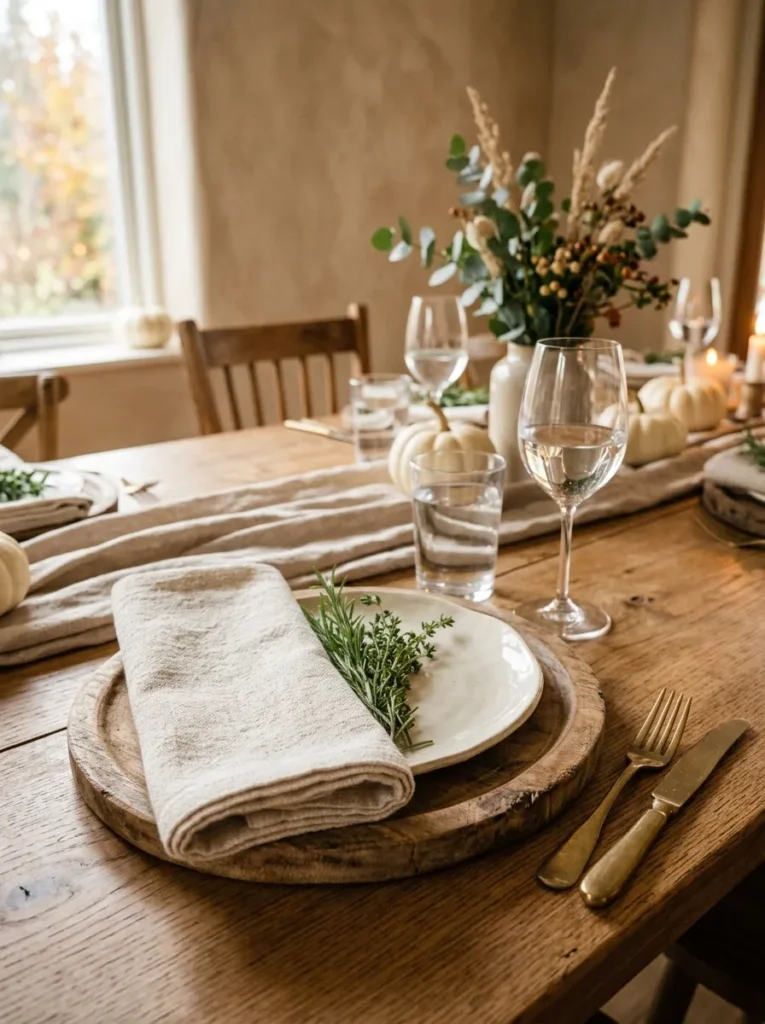
- Fresh herbs add fragrance and natural color in small amounts.
- Rosemary creates a simple vertical detail beside each napkin.
- Green sprigs soften neutral plates and warm wooden surfaces.
- The idea is inexpensive and easy to prepare before dinner.
Small herb sprigs can make a place setting feel surprisingly thoughtful without adding complicated decoration. Rosemary, thyme, sage, or bay leaves can be tucked beside a folded napkin or placed gently across the top of each plate. Their natural green tones provide contrast against cream ceramics and neutral linens, while the delicate texture keeps the setting feeling organic. Rosemary is especially useful because its sturdy stems hold their shape well. This simple detail works beautifully when you want a table that feels seasonal and fresh rather than heavily decorated with traditional Thanksgiving ornaments.
Prepare the herbs shortly before guests arrive so they remain fresh and attractive throughout the meal. If you are using fresh sprigs, choose clean, dry pieces and keep them away from sauces or food surfaces that could stain them. Pair the greenery with wooden chargers, linen napkins, or small pumpkins for an easy rustic combination. Dried herbs can also work when you want to prepare the table earlier. Repeat the same herb at each setting for consistency, then use a slightly larger cluster in the centerpiece to connect the individual details across the table.
Classic China Layers
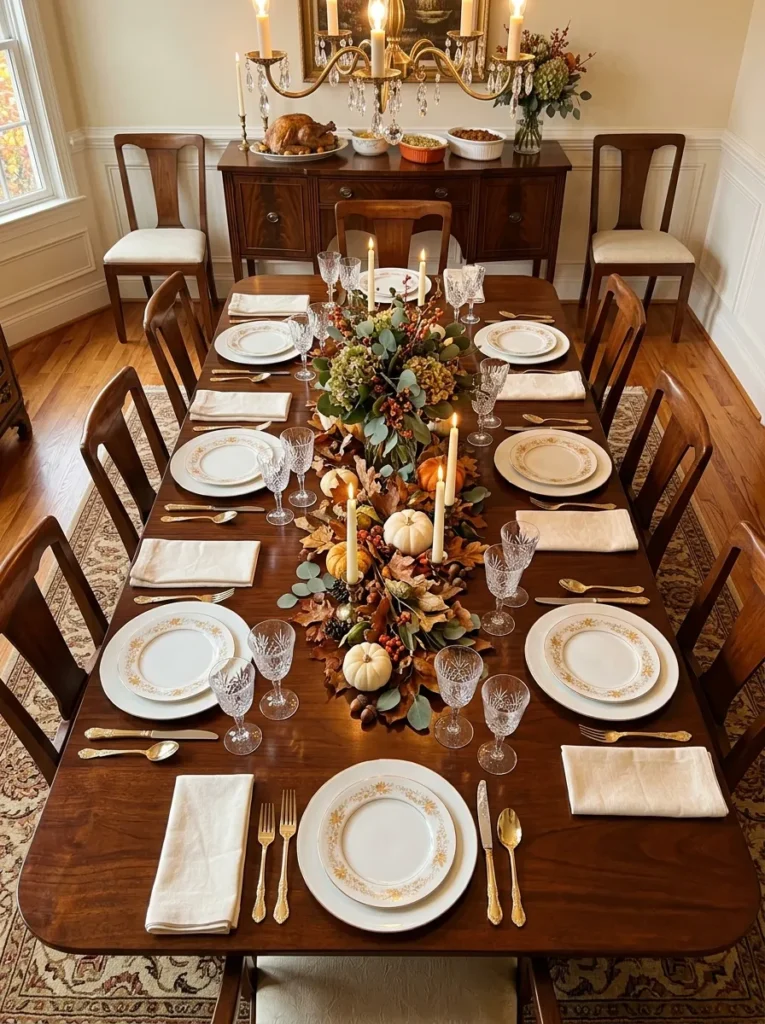
- Classic china gives the table an instantly refined foundation.
- Delicate patterns can add personality without overwhelming seasonal accents.
- Layering heirloom pieces creates a sense of occasion for guests.
- Neutral china remains versatile for future holiday gatherings.
Bring a timeless character to the table by layering classic china with simple seasonal details. A white dinner plate beneath a delicate floral, scalloped, or patterned salad plate creates a refined foundation for each guest. If you have inherited dishes or special pieces stored away, Thanksgiving can be a perfect opportunity to use them. Their familiar patterns can make the meal feel more personal while still allowing modern accents such as linen napkins or simple greenery. The key is to let the china provide the detail while keeping the surrounding decorations restrained and coordinated.
Balance traditional dishes with natural textures so the table does not feel overly formal. Woven chargers, linen napkins, wooden serving boards, or small foliage accents can soften the polished appearance of china. Keep patterns connected through color rather than trying to match every piece. For example, a plate with muted green and brown details can coordinate beautifully with eucalyptus branches and warm wood. Arrange each layer evenly and keep the flatware aligned. This setup creates a welcoming Thanksgiving table that feels elegant enough for special guests while remaining comfortable for a relaxed family meal.
Terracotta Color Palette
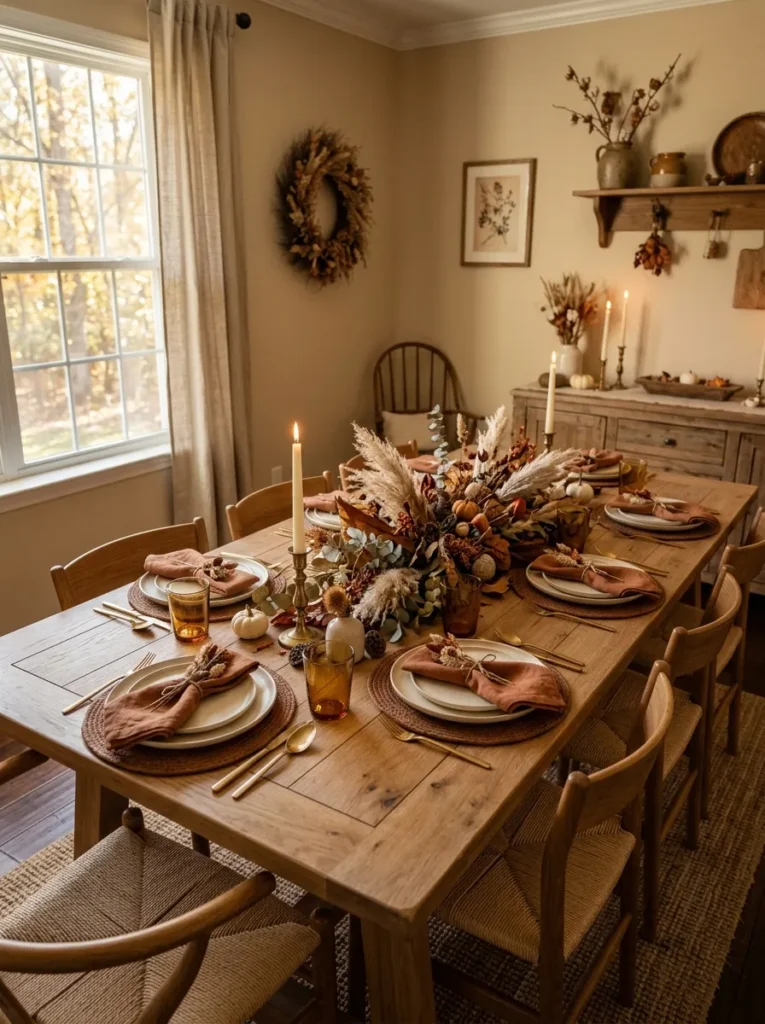
- Terracotta brings warm autumn color without looking overly bright.
- Earthy tones create a cozy connection between tableware and decor.
- Cream accents keep the palette balanced and visually breathable.
- Repeating terracotta details creates a cohesive seasonal look.
A terracotta color palette can give your Thanksgiving table a warm seasonal identity while still feeling sophisticated. Use terracotta through linen napkins, ceramic bowls, candleholders, or small decorative accents, then balance those richer tones with cream, beige, and natural wood. The result feels earthy rather than overly orange. This palette works especially well when the dining room already contains warm wooden furniture. I’ve noticed that using one dominant autumn shade and supporting it with neutrals makes a table look much more intentional than combining several strong seasonal colors at once.
Keep terracotta concentrated in a few repeated details so the table remains visually balanced. A rust-colored napkin at every place can connect beautifully with dried leaves or a centerpiece, while cream plates provide a clean break between the warmer tones. Add brass flatware or amber glassware for additional warmth without introducing another dominant color. If your room has darker furniture, lighter terracotta shades can prevent the setting from feeling heavy. This approach creates a welcoming holiday atmosphere while remaining flexible enough to work with rustic, traditional, modern farmhouse, or transitional interiors.
Woven Placemat Layers

- Woven placemats add texture beneath otherwise simple dinnerware.
- Natural fibers make the table feel warmer and more relaxed.
- Round shapes soften rectangular plates and straight table lines.
- They also create clear boundaries for each guest’s place.
Give each setting a natural foundation with a woven placemat beneath the dinnerware. Rattan, seagrass, jute, and other natural fibers introduce texture while visually separating each place from the tabletop. Round placemats are particularly useful when your table and plates have strong straight lines because their shape creates a softer contrast. Keep the colors natural, such as tan, beige, or warm brown, so they coordinate easily with seasonal accents. This simple layer can make inexpensive or everyday dishes feel more thoughtfully arranged without adding unnecessary decoration.
Place the placemats evenly around the table, leaving enough space between settings for comfortable dining. Center each dinner plate carefully, then add your napkin and flatware in a consistent arrangement. If the woven texture is already prominent, choose smooth ceramics and simple glassware to create contrast. For an especially cohesive look, repeat natural fibers in a basket, centerpiece container, or serving tray. This technique works in both casual and elevated settings, providing visual structure while protecting the tabletop from dishes, crumbs, and occasional spills during the Thanksgiving meal.
Miniature Gourd Details

- Tiny gourds add seasonal personality without crowding each setting.
- Mixed muted colors create more natural variation than bright decorations.
- Their compact size keeps the table practical for serving dishes.
- Gourds can also hold small name tags or decorative ribbons.
Miniature gourds are an easy way to add recognizable Thanksgiving character while keeping individual place settings compact. Choose small varieties in muted orange, cream, pale green, or soft yellow and place one beside each folded napkin or above the dinner plate. Their irregular shapes create natural visual interest, while the limited size prevents them from overwhelming the table. Pairing several subtle colors can make the arrangement feel collected rather than perfectly matched. For a charming extra detail, attach a tiny paper name tag to the stem and turn each gourd into a personalized place marker.
Because gourds vary naturally in size and shape, use them as small accents rather than trying to create identical arrangements. Keep the largest pieces toward the center and smaller ones near guests’ plates. Combine them with linen, woven placemats, wooden chargers, or simple greenery to reinforce an earthy seasonal palette. If your table is already decorated with a large centerpiece, use only one miniature gourd per setting. This keeps the layout functional and leaves sufficient room for glasses, utensils, serving bowls, and conversation. The finished look feels festive, relaxed, and naturally suited to a generous holiday meal.
Dried Floral Sprigs
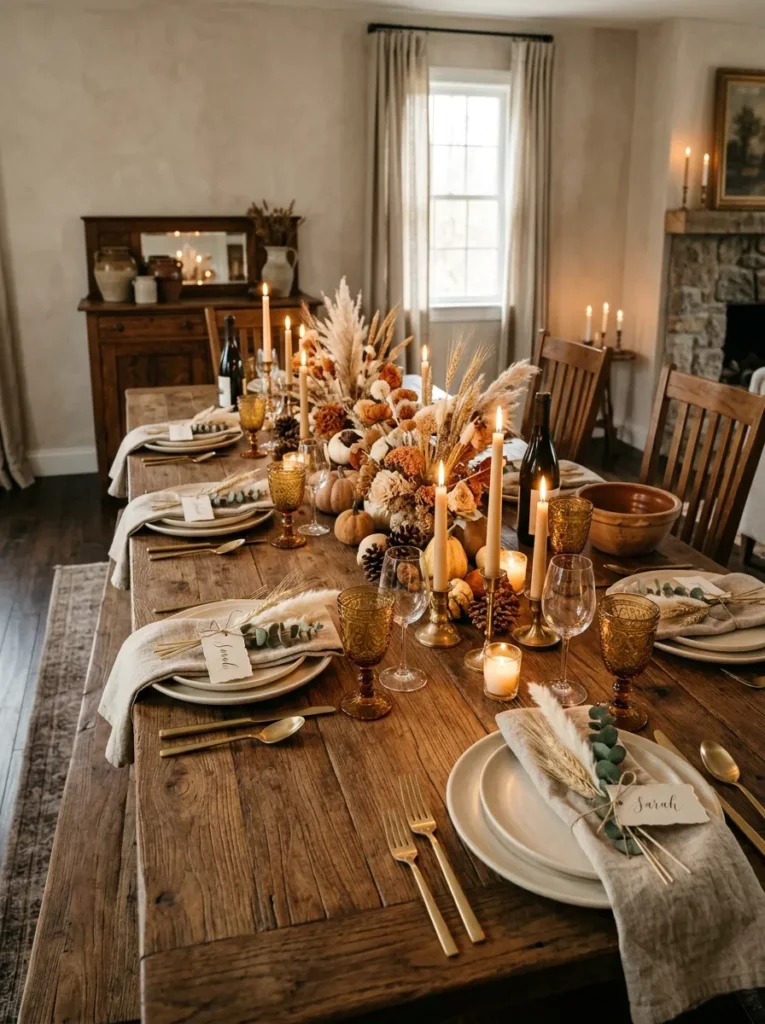
- Dried flowers add height and texture without needing constant maintenance.
- Wheat stems create an understated connection to the harvest season.
- Muted colors blend easily with neutral dinnerware and natural wood.
- Small bundles can decorate each place without crowding the table.
Dried floral sprigs can bring soft movement and harvest-inspired texture to individual place settings. Small bundles of wheat, dried grasses, bunny tails, or muted flowers can be tucked beneath a napkin or positioned beside each plate. Their beige, cream, and dusty rust tones complement natural wood and neutral ceramics without demanding attention. This approach is especially useful when you want decorations that can be prepared well before guests arrive. The dried stems also add a delicate vertical element, making simple place settings appear more layered and thoughtfully arranged.
Keep each bundle small enough that it does not interfere with plates, utensils, or conversation. Tie the stems with thin twine or a narrow ribbon that coordinates with your napkins for a subtle finishing detail. If you are using several varieties, repeat the same dominant colors throughout the table so the arrangement feels unified. Dried flowers work particularly well with woven placemats, wooden chargers, amber glassware, and warm metals. The finished table has a relaxed harvest character while remaining practical, reusable, and visually light enough for a busy Thanksgiving dining space.
Cranberry Color Accents
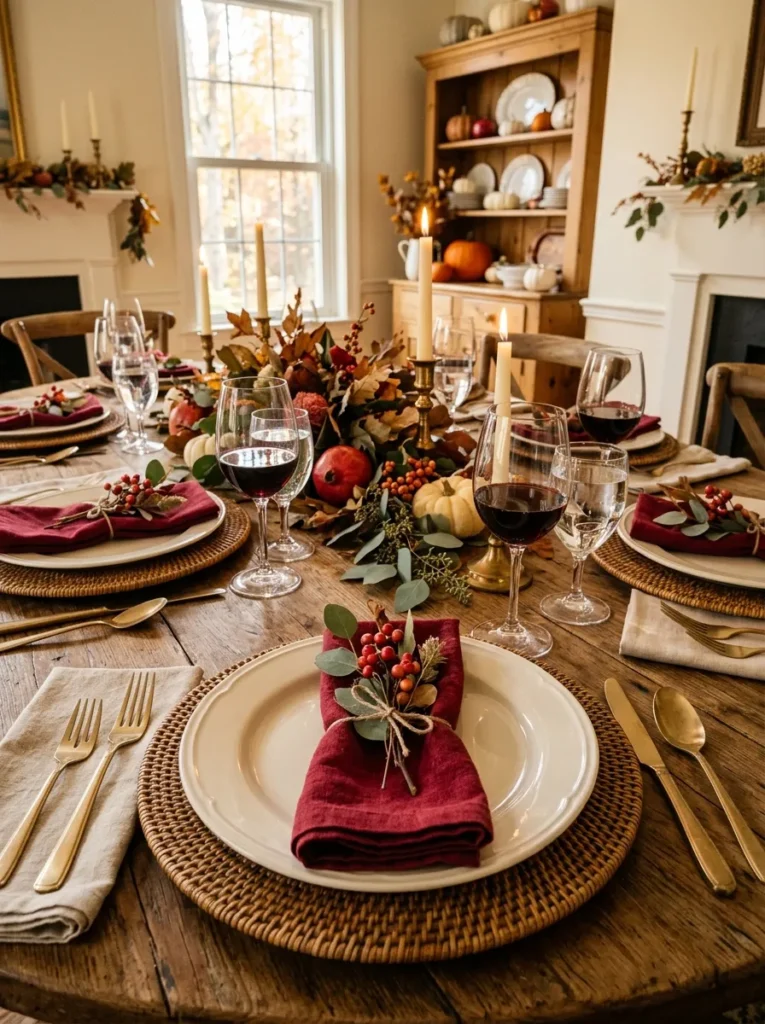
- Cranberry adds rich seasonal color without covering the table in bright red.
- Small repeated accents create visual connection between each place.
- Deep berry tones contrast beautifully with cream and natural wood.
- The color works especially well in traditional or elegant dining rooms.
Deep cranberry accents can give a Thanksgiving table a richer appearance while keeping the overall palette controlled. Use the color through napkins, ribbons, small berries, candle details, or decorative plates, then balance it with ivory, beige, brown, and natural wood. The darker red tone feels especially appropriate for an evening gathering because it adds depth without appearing overly bright. I’ve noticed that repeating one rich accent color in several small places often looks more polished than using one large block of color in the centerpiece.
Choose just two or three cranberry details and allow neutral elements to occupy most of the table. For example, a cranberry napkin can sit over an ivory plate while a few dried berries appear in the centerpiece. Brass flatware and warm wood provide additional richness without competing with the berry shade. If you prefer a lighter appearance, use cranberry only on ribbons or small decorative tags. This approach gives the setting a distinct seasonal identity while keeping the arrangement flexible enough to complement traditional china, rustic serving pieces, modern ceramics, or simple neutral dinnerware.
Elegant Neutral Layers
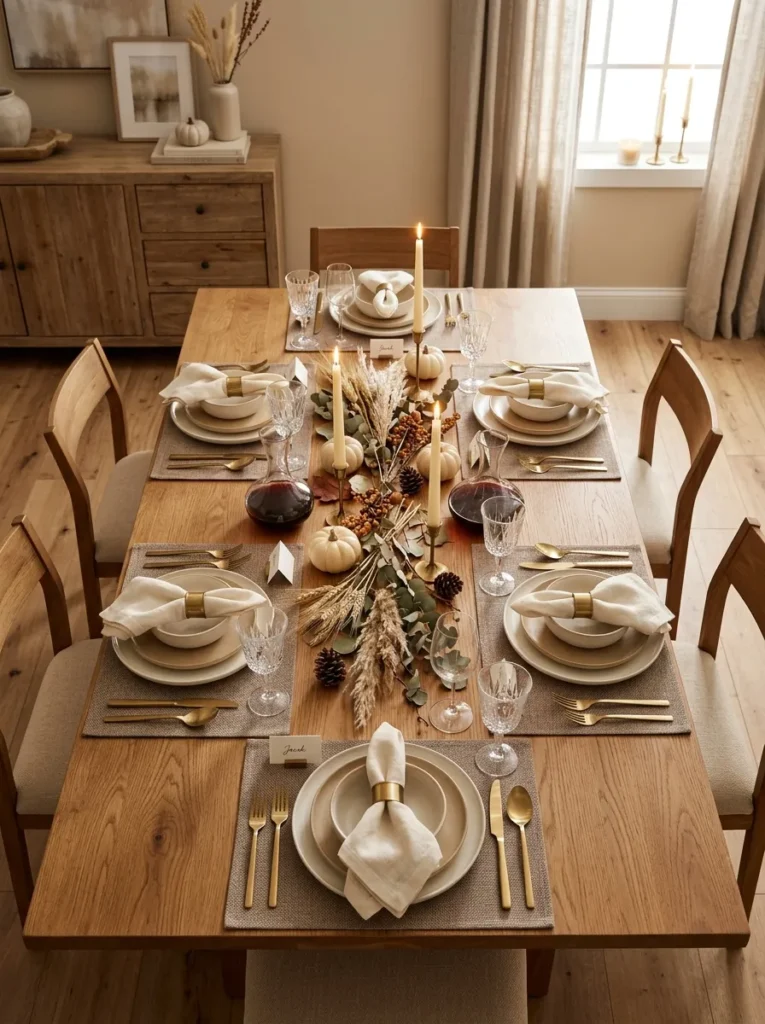
- Neutral layers create an elegant look without relying on bold seasonal colors.
- Different textures keep beige and cream tones from appearing flat.
- Soft colors make small dining rooms feel more open and spacious.
- The arrangement can easily transition into other seasonal gatherings.
A neutral table can feel just as festive as a colorful one when you build interest through layers and texture. Combine ivory plates, beige linen napkins, woven placemats, warm wood, and subtle brass accents to create a soft foundation for Thanksgiving dinner. Instead of relying on strong orange or red decorations, let the materials provide the visual richness. This creates a calm and timeless atmosphere that works especially well in homes with minimalist or light-colored interiors. The restrained palette also gives food, flowers, and serving pieces more room to become part of the overall design.
To keep a neutral arrangement from looking flat, vary the finishes and textures across the table. Pair smooth ceramic plates with nubby linen, woven fibers, lightly aged metal, and natural wood. Add one small seasonal detail, such as a cream pumpkin or dried leaf, at each place for a subtle holiday reference. Keep the arrangement symmetrical where possible, especially around plates and flatware, so the simplicity feels intentional. This approach creates a polished thanksgiving dinner table setting that feels welcoming for guests and remains versatile enough to reuse for Christmas, winter dinners, or everyday entertaining.
Conclusion
A memorable Thanksgiving table does not need expensive decorations or complicated styling. Small touches such as textured linens, seasonal accents, layered plates, natural greenery, and warm lighting can completely change the atmosphere. Use these thanksgiving dinner table setting ideas as inspiration, then mix the details that fit your home, table size, and personal style. I’ve seen how a few thoughtful changes can make an ordinary dining space feel much more welcoming for guests. Save this post on Pinterest so you can revisit your favorite ideas, try one or two for your next gathering, and share it with someone planning their holiday table.