22 Boho Coastal Bedroom Ideas for a Breezy Retreat
Dreaming of a bedroom that feels like a breezy coastal escape with a relaxed bohemian soul?
These boho coastal bedroom ideas can turn an ordinary room into a light, textured, inviting retreat.
Creating this look is less about buying everything new and more about combining the right natural textures, soft colors, and relaxed details. Think woven rattan, airy linen, pale wood, muted blue accents, jute rugs, and warm lighting layered together in a way that feels effortless. Whether your bedroom is spacious or compact, these ideas can help you make it feel brighter, calmer, and more personal. I’ve noticed that even one simple change, such as swapping heavy bedding for linen or adding a woven accent, can dramatically shift the atmosphere. Explore these ideas for practical inspiration you can actually use.
Woven Rattan Headboard
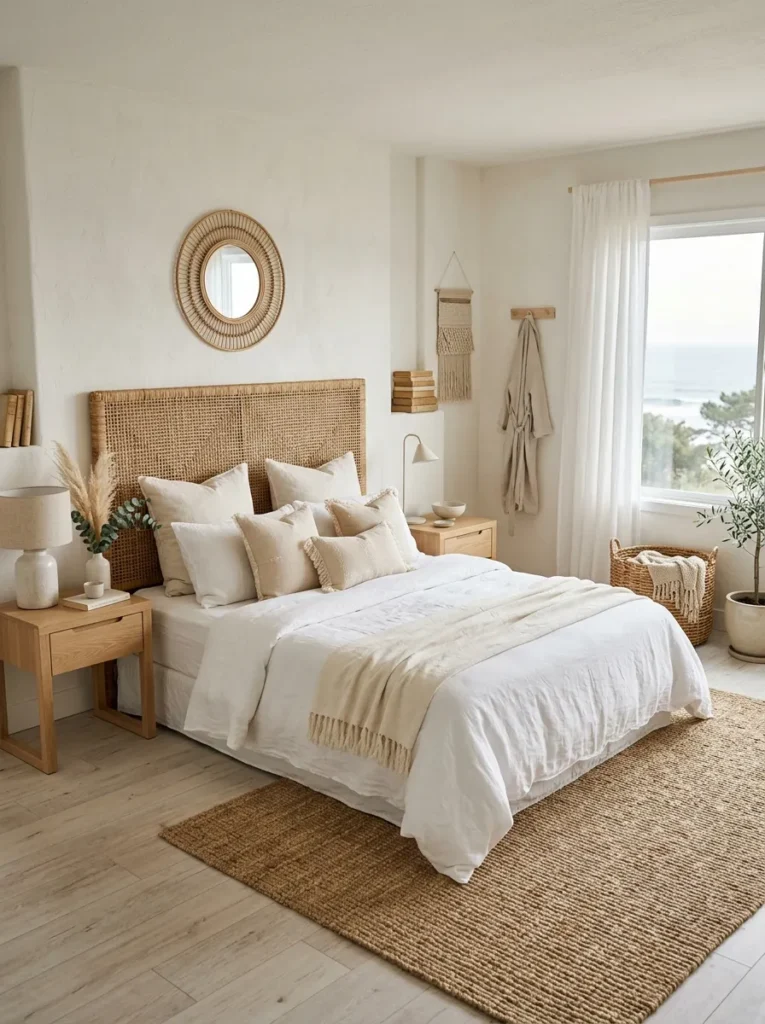
- A rattan headboard instantly brings natural texture into the bedroom.
- The open weave keeps the furniture feeling light rather than bulky.
- Pair it with white bedding for an airy coastal foundation.
- Add woven baskets or a jute rug to repeat the texture.
- In smaller rooms, the warm natural material adds character without visual clutter.
A woven rattan headboard can become the instant focal point of a relaxed bedroom without making the room feel heavy. Its open texture adds warmth while still allowing plenty of visual breathing space around the bed. For a coastal-inspired setting, combine it with white or ivory linen bedding, soft beige pillows, and pale wood furniture. I’ve noticed that natural woven materials look especially beautiful when surrounded by simple finishes because their texture becomes more noticeable. The result feels casual, collected, and comfortably imperfect, which is exactly the balance many people want when creating boho coastal bedroom ideas at home.
The best part is how easily this setup works across different bedroom sizes and layouts. In a compact room, choose a slimmer rattan frame and keep surrounding furniture low-profile so the headboard remains the main feature. In a larger bedroom, layer a woven bench, oversized rug, and baskets to create more depth. Keep the walls light and let sunlight highlight the natural fibers throughout the day. This combination gives the room a breezy character without relying on excessive decoration. The finished space feels inviting, textured, and relaxed while remaining practical enough for everyday living.
Linen Layered Bedding
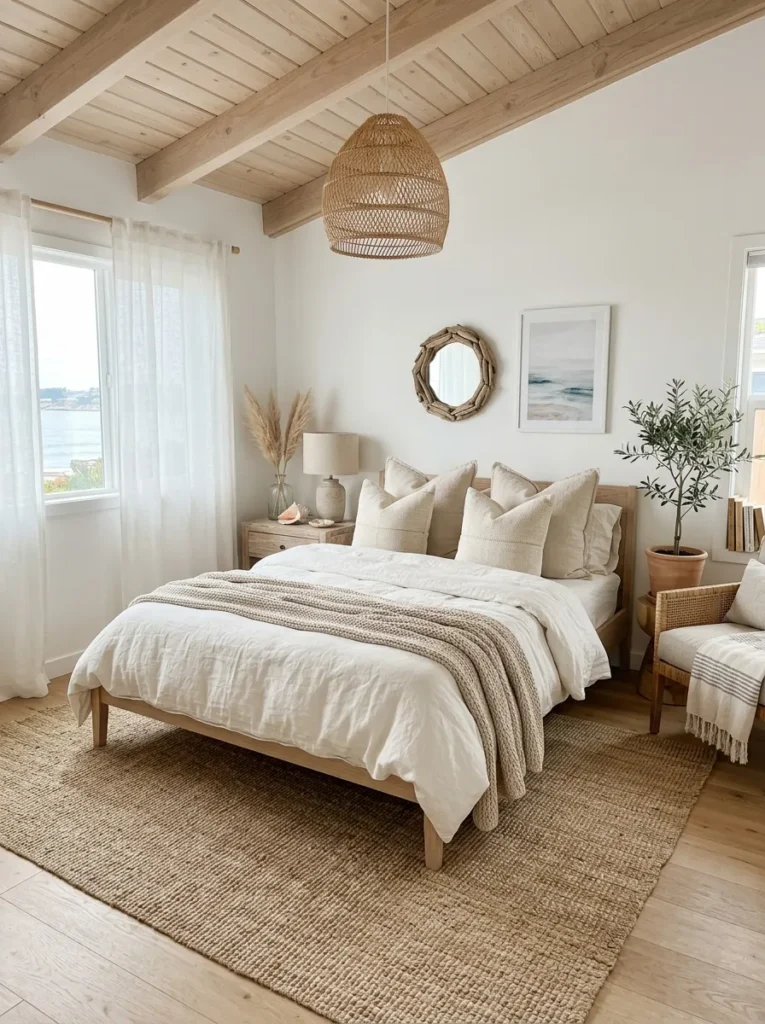
- Layered linen creates softness without making the bed look overly polished.
- Mix ivory, cream, oatmeal, and sandy beige for subtle coastal depth.
- Use different pillow sizes to make the arrangement feel naturally relaxed.
- A lightweight throw adds texture while keeping the bed practical.
- Choose breathable fabrics for a comfortable sleeping environment.
Nothing makes a bedroom feel effortlessly inviting quite like a bed layered with soft, rumpled linen. Start with ivory sheets, add an oatmeal duvet, then finish with cream pillows and a loosely folded sandy throw. The slightly imperfect texture keeps the arrangement from feeling too formal. For a coastal bohemian look, avoid matching every piece exactly and instead combine nearby neutral shades. This creates gentle contrast while preserving an airy palette. I’ve seen this approach work especially well in bedrooms where homeowners want a relaxed vacation-inspired atmosphere without sacrificing comfort, practicality, or an uncluttered appearance.
Layering also gives you an easy way to change the room throughout the year. Keep lightweight linen pieces during warmer months and introduce a slightly heavier woven blanket when temperatures drop. A few oversized pillows can make the bed look fuller, but avoid overcrowding the sleeping area. Let some of the duvet fall naturally over the sides for a casual finish. Against white walls and pale flooring, these soft layers create warmth without darkening the room. The overall effect is breezy and tactile, with enough visual detail to make the bed feel like the centerpiece without overwhelming the rest of the space.
Driftwood Accent Decor
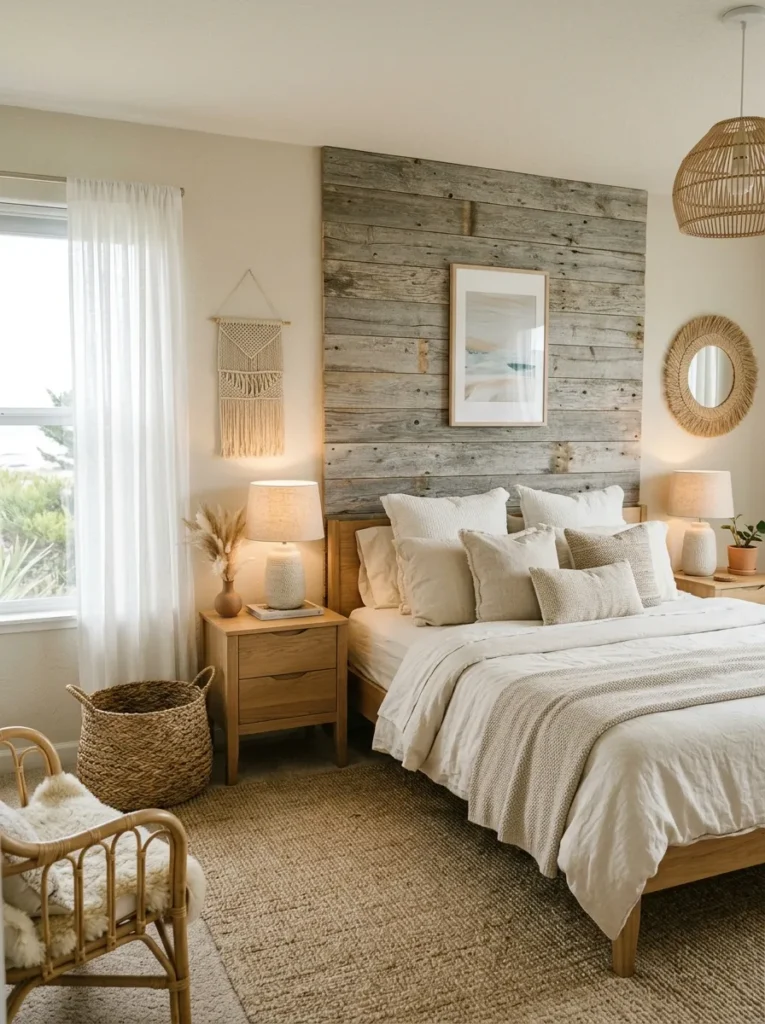
- Weathered wood introduces authentic beach-inspired character.
- Small driftwood pieces can add interest without filling every surface.
- Use natural imperfections to keep the styling relaxed and organic.
- Combine wood with woven, ceramic, and linen textures for balance.
- Keep accent pieces restrained so the bedroom still feels open.
A few pieces of weathered wood can give a bedroom that unmistakable coastal character while keeping the overall design grounded. Try placing a sculptural driftwood branch above the bed, leaning a weathered board against a wall, or using a small wood accent on a nightstand. The key is restraint. Too many beach-themed objects can make a room feel staged, while one or two naturally worn pieces feel more authentic. In my experience, driftwood looks best beside soft linen, woven textures, and pale finishes because the contrast highlights its irregular shape and adds personality without making the space visually busy.
You can also use driftwood to bring warmth into a room that already has plenty of white or cream surfaces. Position a weathered piece where natural light can reveal its grain, knots, and uneven edges throughout the day. Pair it with a simple ceramic lamp, woven basket, or handmade-looking vase for an organic arrangement. Avoid overly glossy accessories, which can compete with the wood’s natural texture. This small styling change creates a relaxed focal point and helps connect the bedroom to coastal landscapes while maintaining the free-spirited character associated with modern bohemian interiors.
Macramé Wall Hanging
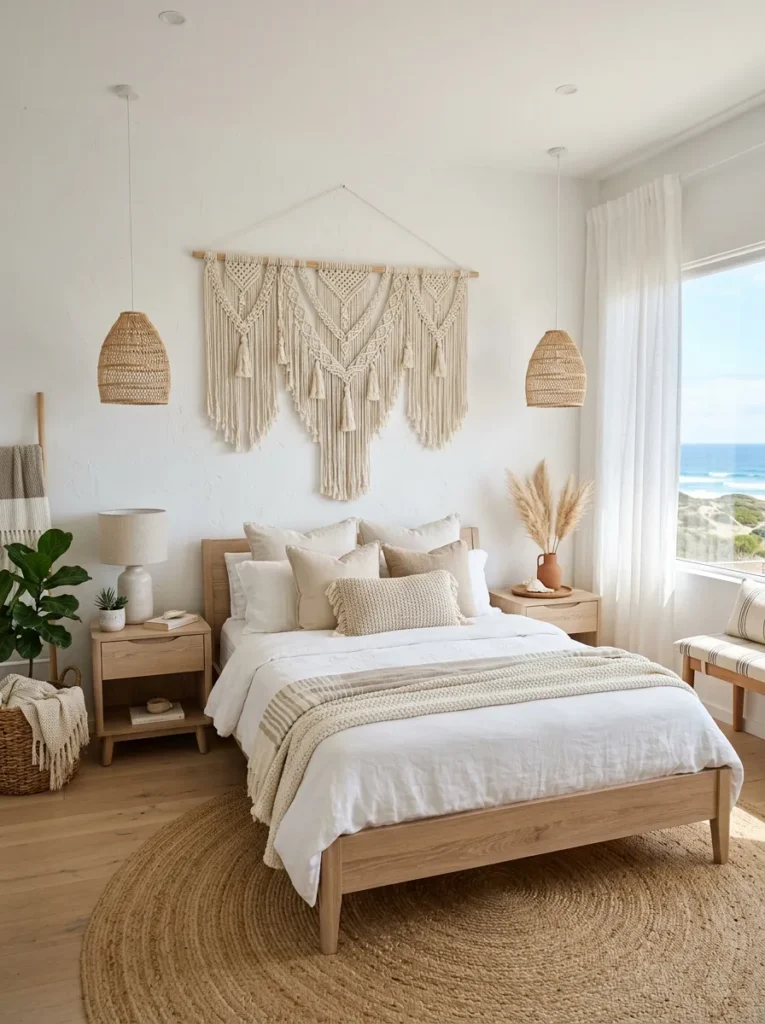
- A large macramé piece adds handcrafted texture above the bed.
- Cream or ivory fibers keep the palette light and coastal.
- Its vertical shape can visually emphasize ceiling height.
- Choose an open design to avoid making the wall feel crowded.
- Pair it with rattan and linen for a cohesive natural-material mix.
A statement macramé hanging can turn an otherwise plain bedroom wall into a soft, textured focal point. Choose an ivory or warm cream design with an open pattern so the wall still feels spacious and bright. Above a low wooden bed, the vertical strands create height while reinforcing the handmade character of the room. This works beautifully with white linen, rattan furniture, and woven baskets because each material contributes a different texture. For boho coastal bedroom ideas, macramé is especially useful when you want personality without introducing strong colors or heavy decorative elements.
Placement makes a noticeable difference with this look. Center the macramé directly above the headboard, leaving enough space around it so the piece feels intentional rather than crowded. If your bedroom has low ceilings, choose a taller, narrower design to draw the eye upward. In a larger room, a wider woven piece can balance the proportions of the bed. I’ve noticed that handmade wall textures look most natural when the surrounding decor stays simple. Let the macramé remain the star, then repeat its creamy tone through bedding, curtains, or a small textured accent nearby.
Jute Layered Rug
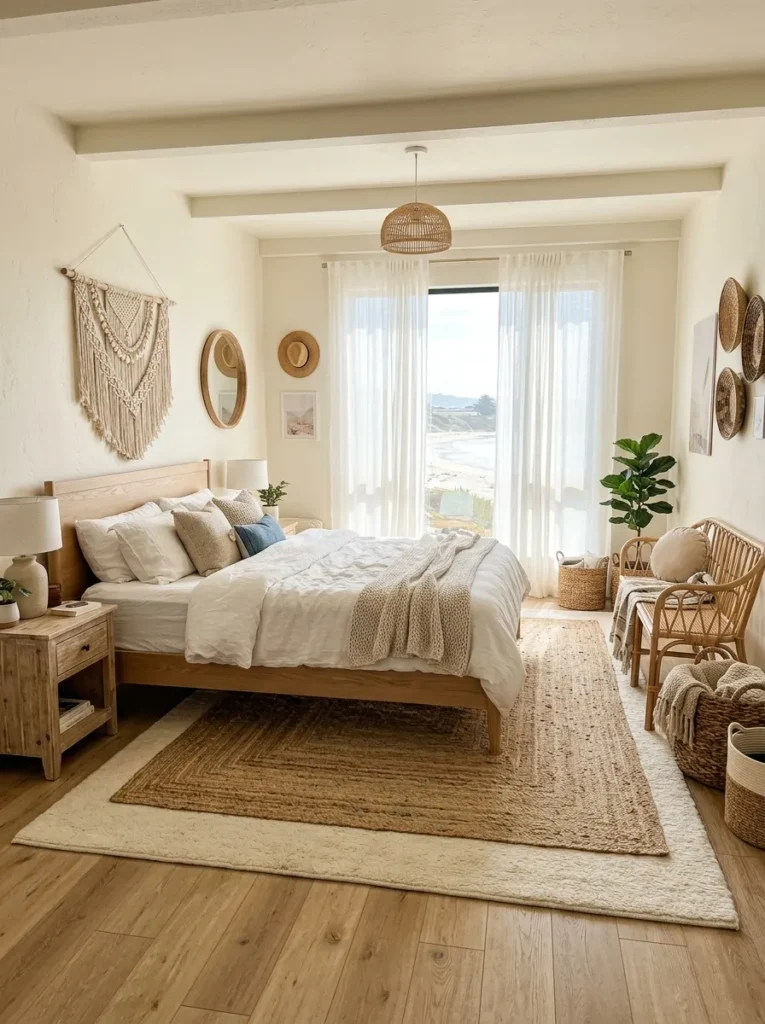
- A jute rug adds warmth beneath a pale coastal bedroom palette.
- Layer it over a larger neutral rug for extra softness.
- Natural fibers help balance smooth wood and painted surfaces.
- Position the rug far enough under the bed to anchor the furniture.
- Choose a low-pile weave for easier everyday maintenance.
A natural jute rug can instantly make a bright bedroom feel warmer and more grounded. Its woven surface introduces earthy texture beneath the bed while maintaining the sandy neutrals that suit a coastal palette. For extra softness, layer a smaller jute rug over a larger cream or ivory rug, allowing both borders to remain visible. This technique creates dimension without relying on bold patterns. The combination works particularly well with pale wood, rattan, linen, and woven accessories. If your room currently feels a little flat or overly white, adding texture underfoot can make the entire space feel more finished.
The rug should also be sized carefully so it visually connects the main furniture pieces. Ideally, position enough of it beneath the bed for the sides and lower edge to sit comfortably on the woven surface. In a smaller bedroom, a runner can provide a similar effect without overwhelming the floor. I’ve noticed that natural jute looks especially attractive when sunlight falls across its uneven weave, revealing subtle changes in tone. Keep nearby furnishings simple and let the rug provide the grounding texture. This creates a relaxed retreat that feels layered, practical, and naturally connected to coastal style.
Soft Blue Accents
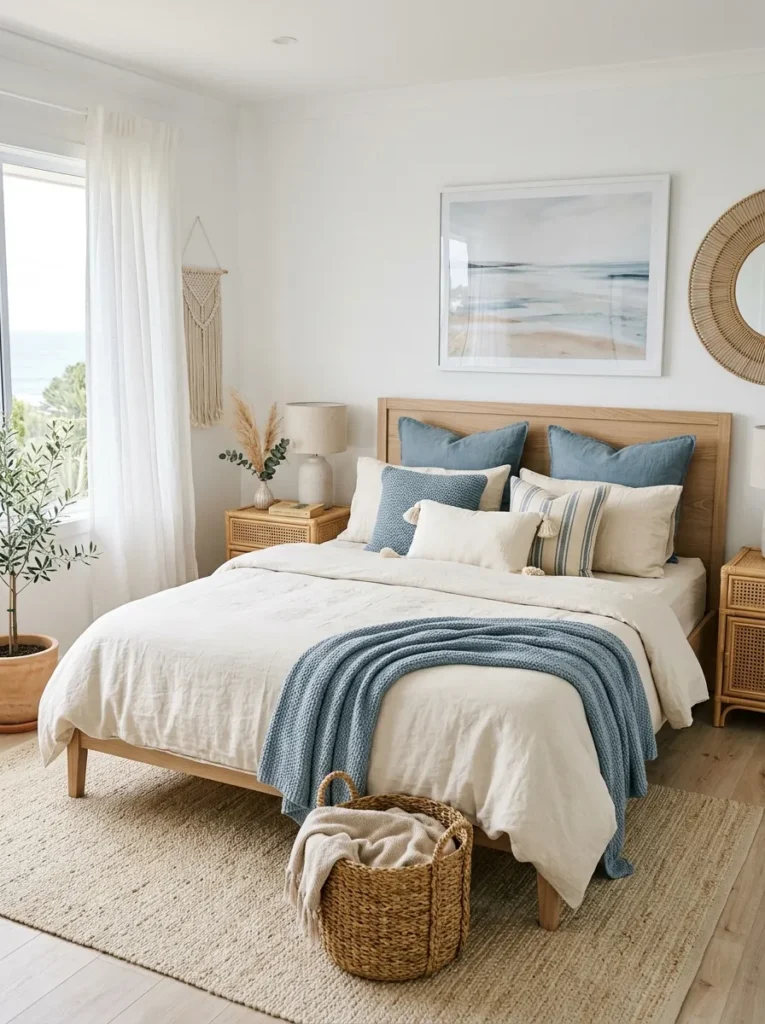
- Muted blue introduces a gentle coastal color without overpowering the room.
- Use blue through pillows, throws, artwork, or a small upholstered piece.
- Dusty or faded shades feel more relaxed than bright navy.
- Combine blue with cream and natural wood for warmth.
- Repeat the shade in two or three places for visual balance.
Soft blue accents can give a neutral bedroom the refreshing character of the coast without making the color scheme feel overly themed. Think dusty blue, faded denim, sea glass, or muted ocean tones rather than intense turquoise. Introduce the shade through pillows, a lightweight throw, artwork, or a small upholstered bench. Keeping most larger pieces cream, white, or natural wood allows the blue details to stand out gently. This approach is one of the easiest boho coastal bedroom ideas to adapt because you can change small accessories whenever you want a fresh seasonal look without replacing major furniture.
Balance is important when adding color to an otherwise neutral space. Repeat the same muted blue in two or three locations, such as the bed, artwork, and a small ceramic accessory, so the room feels coordinated. Avoid scattering too many different blue shades because that can make the palette look disconnected. Soft natural textures help temper the cooler color and keep the atmosphere welcoming. A woven basket beside a blue throw or pale wood nightstand beneath blue artwork creates subtle contrast. The finished room feels breezy and relaxed, while the restrained color keeps the overall design calm and timeless.
Rattan Pendant Lights
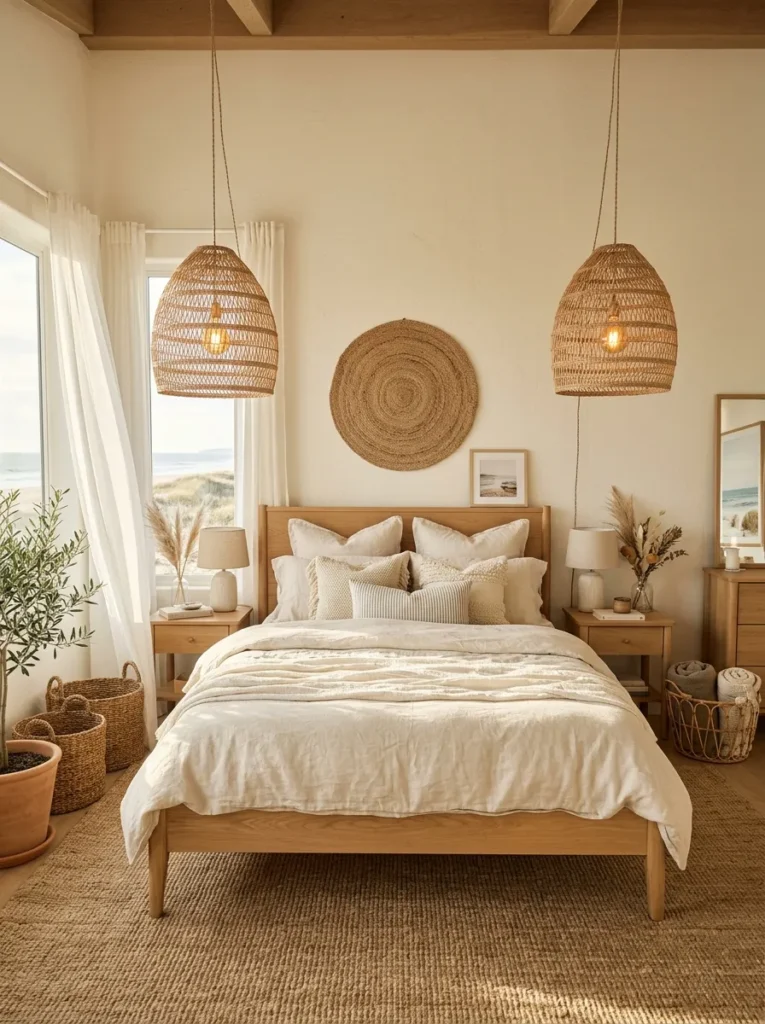
- Rattan lighting adds warmth while keeping the ceiling visually light.
- An oversized pendant can become a natural focal point above the bed.
- Choose an open weave to let light filter through softly.
- Pair warm bulbs with cream and sandy neutral finishes.
- Use matching bedside pendants when you want a balanced, symmetrical look.
Few details change the atmosphere of a bedroom as quickly as the right lighting. Rattan pendant lights bring natural texture overhead while casting soft patterns across nearby walls and furniture. Choose an open-weave shade in honey, tan, or natural beige to complement pale wood and linen. Hanging matching pendants beside the bed can also free up valuable nightstand space. The combination feels decorative without becoming fussy. For coastal bedrooms with bohemian influences, this type of lighting adds warmth and craftsmanship while keeping the ceiling area visually interesting. It is especially effective in rooms with simple white walls and minimal furniture.
Consider the size of the pendant carefully before installing it. A larger bedroom can handle an oversized woven shade, while a compact room may look better with a smaller, more open design. Warm white bulbs help soften the natural fibers and create a comfortable glow in the evening. During the day, sunlight passing through the weave adds another layer of texture. I’ve noticed that rattan lighting works best when other finishes remain relatively understated. Let the pendant provide the visual interest, then repeat its natural material through a basket, headboard, or small decorative accent.
Whitewashed Wood Furniture
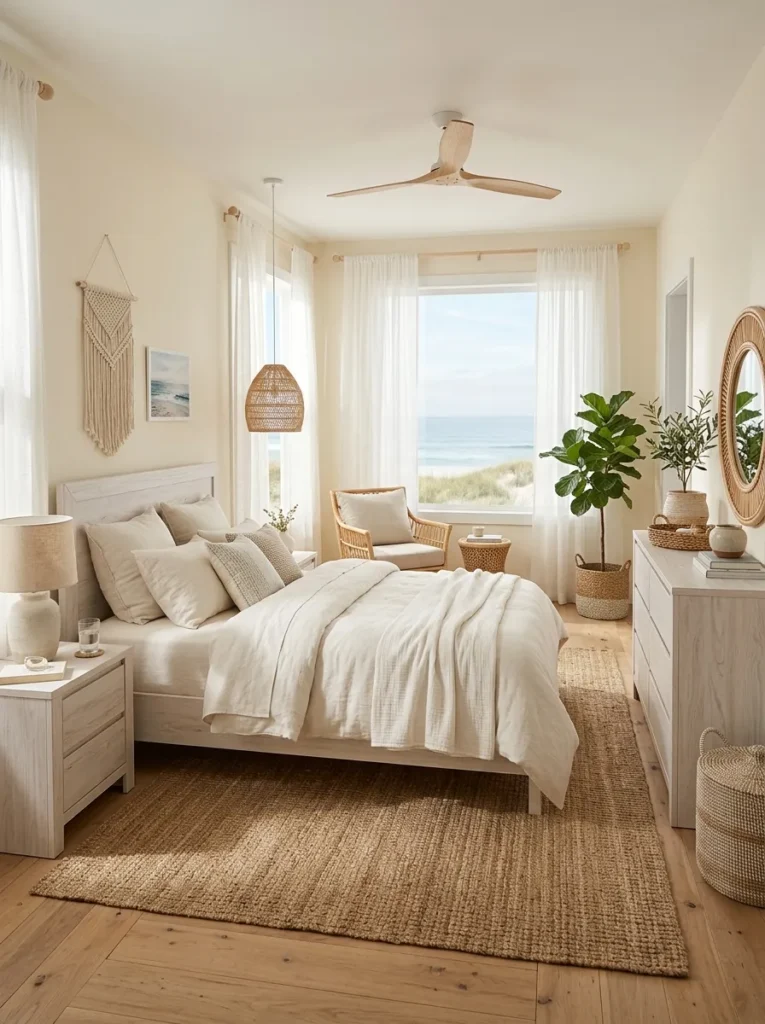
- Whitewashed wood creates a bright foundation with subtle natural grain.
- Its worn finish suits relaxed coastal and bohemian interiors.
- Pair it with darker woven accents for gentle contrast.
- Choose simple silhouettes to keep the furniture feeling contemporary.
- The pale finish can make smaller bedrooms appear more spacious.
Whitewashed wood furniture gives a bedroom that airy coastal foundation while preserving the warmth of natural grain. A pale wooden bed, nightstand, or dresser can brighten the room without making it feel stark or sterile. Look for finishes where subtle knots and grain remain visible because those imperfections add character. Combine the furniture with ivory linen, woven baskets, and sandy textiles for a cohesive palette. This approach is particularly helpful when a room feels dark or crowded because pale furniture reflects more available light and visually recedes. The result is relaxed, fresh, and easy to personalize.
To keep whitewashed furniture from looking too uniform, mix in a few warmer natural materials. A jute rug beneath the bed, rattan lamp beside the nightstand, or woven basket near the dresser can introduce enough contrast to give the room depth. Avoid matching every piece perfectly because a slightly collected arrangement feels more authentic. In my experience, simple furniture shapes work best with distressed or whitewashed finishes because the texture becomes the feature. Add only the pieces you genuinely need, and allow some open floor and wall space to preserve the breezy feeling that makes this style so appealing.
Seagrass Storage Baskets
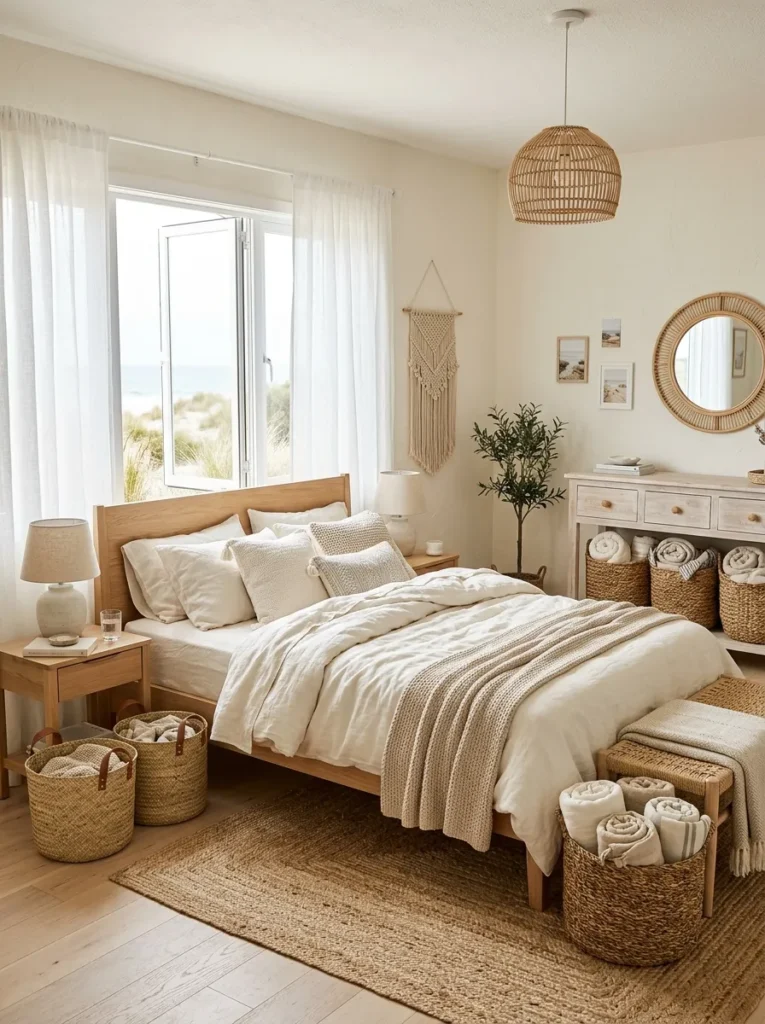
- Seagrass baskets provide attractive storage without disrupting the natural palette.
- Use them beside the bed for blankets, books, or everyday essentials.
- Larger baskets can hide extra linens near a dresser or bench.
- Their woven texture complements rattan, jute, and linen beautifully.
- Choose varied sizes to create a relaxed, collected arrangement.
Storage does not have to look purely functional, especially in a relaxed coastal bedroom. Seagrass baskets can hide blankets, spare pillows, books, or everyday clutter while adding another layer of natural texture. Place a large basket beside the bed, tuck a smaller one beneath a console, or group two different sizes near a dresser. Their woven surfaces work naturally with rattan, jute, and linen, so the storage becomes part of the decoration. This is one of those simple boho coastal bedroom ideas that can make a room look more organized without removing the casual character.
Think about what you reach for most often when deciding where baskets should go. A basket beside the bed is useful for extra throws, while one near a dresser can hold accessories or laundry. Leave frequently used baskets partially open so they remain convenient rather than becoming decorative objects you avoid using. Varying the shapes slightly can also make the arrangement feel more relaxed. I’ve seen this work well in smaller bedrooms because baskets add storage vertically and visually, without requiring another bulky cabinet. The result is a cleaner room with warmth, texture, and everyday practicality.
Sheer Coastal Curtains
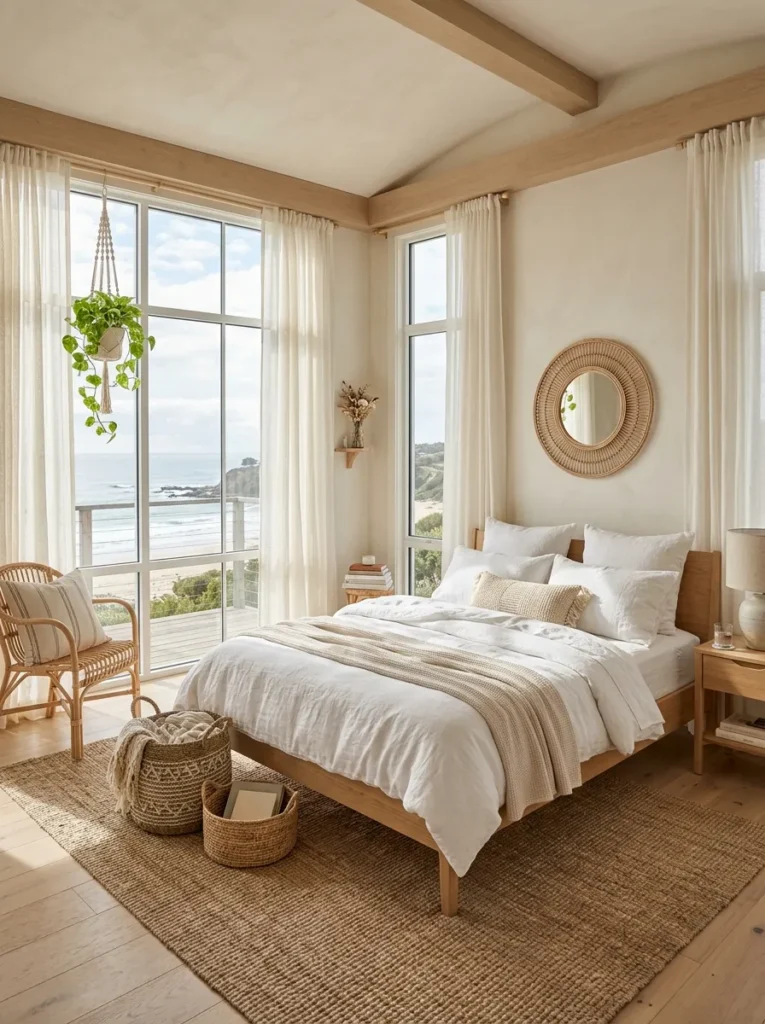
- Sheer curtains soften strong daylight without blocking the room’s airy quality.
- White or ivory panels keep the bedroom visually bright.
- Natural fabric textures add subtle softness around the windows.
- Hang panels close to the ceiling to emphasize vertical space.
- Let the curtains extend slightly beyond the window frame for a fuller look.
Few window treatments create an airy bedroom atmosphere as effortlessly as sheer curtains. Lightweight ivory panels allow natural daylight to filter through while softening the view and adding movement around the windows. Choose linen-look or cotton sheers with a slightly visible weave for more texture. Hanging them close to the ceiling can also make the room appear taller, especially when the panels fall all the way to the floor. This simple update works beautifully with pale wood, woven accents, and neutral bedding, creating the bright, relaxed foundation that defines a comfortable coastal-inspired sleeping space.
For the most polished result, allow the curtains to extend beyond the window edges rather than stopping exactly at the frame. This makes the window feel larger and gives the fabric room to gather naturally when opened. During the day, the translucent material helps create soft shadows across the bedding and floor. I’ve noticed that sheer curtains are especially useful in bedrooms with limited natural light because they brighten the space without introducing another strong color. Pair them with simple hardware in wood, brass, or matte black for a subtle finishing detail that complements the surrounding decor.
Shell-Inspired Details
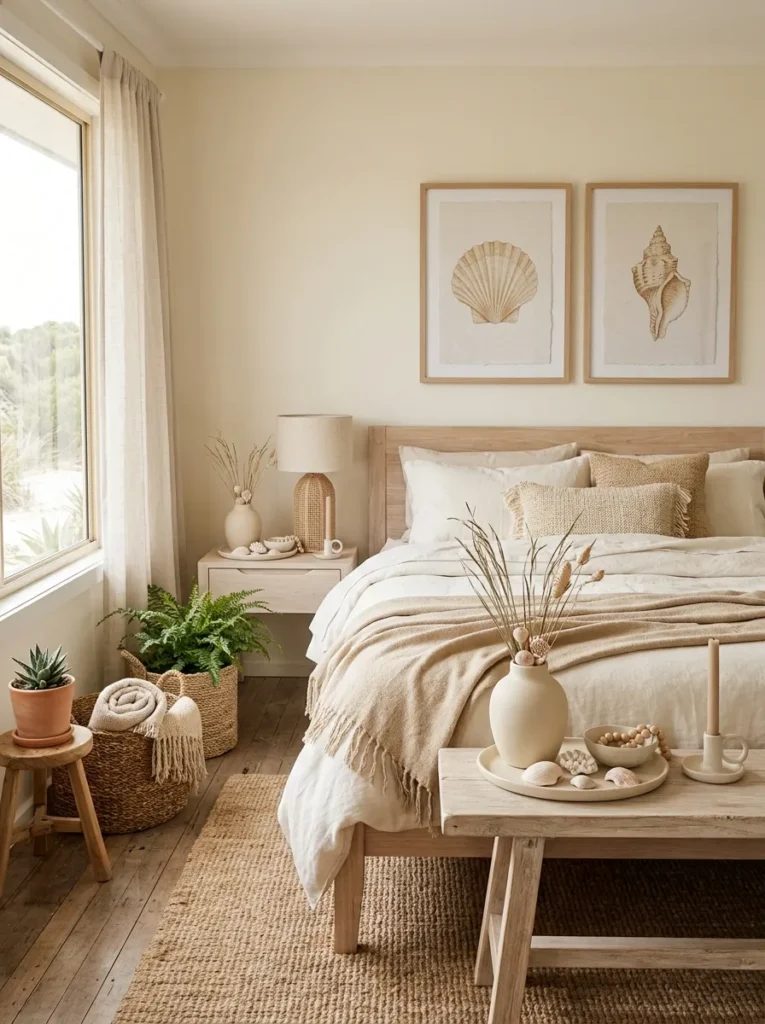
- Small shell details introduce coastal character without making the room feel themed.
- Use shells through artwork, trays, ceramics, or subtle decorative objects.
- Keep the palette natural with ivory, sand, cream, and muted beige.
- Mix shell-inspired pieces with handmade textures for a bohemian feel.
- Limit repeated motifs so the room stays sophisticated and relaxed.
Subtle shell-inspired details can bring a gentle coastal reference into the bedroom without turning the space into a traditional beach-themed room. Instead of covering every surface with seashells, choose one or two thoughtful accents such as shell-shaped ceramics, framed coastal artwork, a textured tray, or a small sculptural object. Keep the surrounding colors soft and natural so these details blend into the design. When paired with linen, rattan, and weathered wood, even a simple shell motif can feel sophisticated. The goal is to suggest the shoreline rather than recreate it literally throughout the entire bedroom.
Placement matters just as much as the accessory itself. A small shell-inspired object on a nightstand or dresser can provide enough coastal character without competing with larger furniture pieces. You can also echo the shape through artwork or softly curved ceramics rather than using actual shells everywhere. In my experience, restraint makes themed decorating feel much more timeless. Combine these accents with handmade textures, uneven woven surfaces, and pale natural materials to preserve the bohemian side of the look. The finished room feels connected to the coast while remaining comfortable, personal, and easy to live with.
Natural Canopy Bed
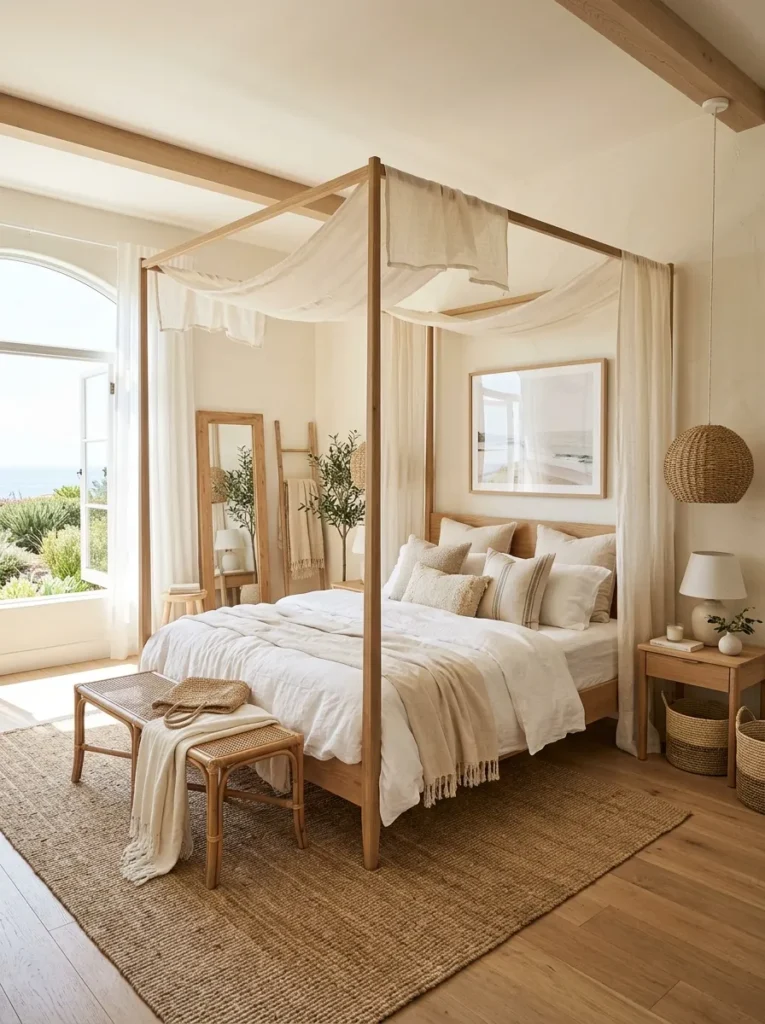
- A simple canopy frame adds height and architectural interest.
- Natural wood keeps the structure warm and relaxed.
- Drape lightweight white fabric for softness without visual heaviness.
- Keep the bedding neutral so the frame remains the main feature.
- This setup works especially well in rooms with tall ceilings.
A natural canopy bed can give a bedroom a striking focal point while still feeling light and relaxed. Choose a simple wood frame with slim posts rather than a heavy carved design, then drape lightweight ivory fabric loosely across the top if you want additional softness. The structure naturally draws attention upward, making the room feel more intentional and spacious. Keep the bedding simple with white or cream linen so the wood remains visible. This creates a beautiful balance between architectural structure and relaxed texture, making the bedroom feel like a peaceful retreat without becoming overly formal.
The canopy does not need to be surrounded by elaborate decoration. In fact, leaving some space around the frame often makes the design more effective. Add a woven bench at the foot of the bed, a jute rug underneath, and one or two natural baskets for practical storage. If the ceiling is low, choose a compact canopy with clean lines so it does not dominate the room. I’ve noticed that natural wood looks especially inviting when paired with warm daylight and soft fabrics. Together, these elements create depth, comfort, and a relaxed vacation-inspired atmosphere.
Beaded Chandelier
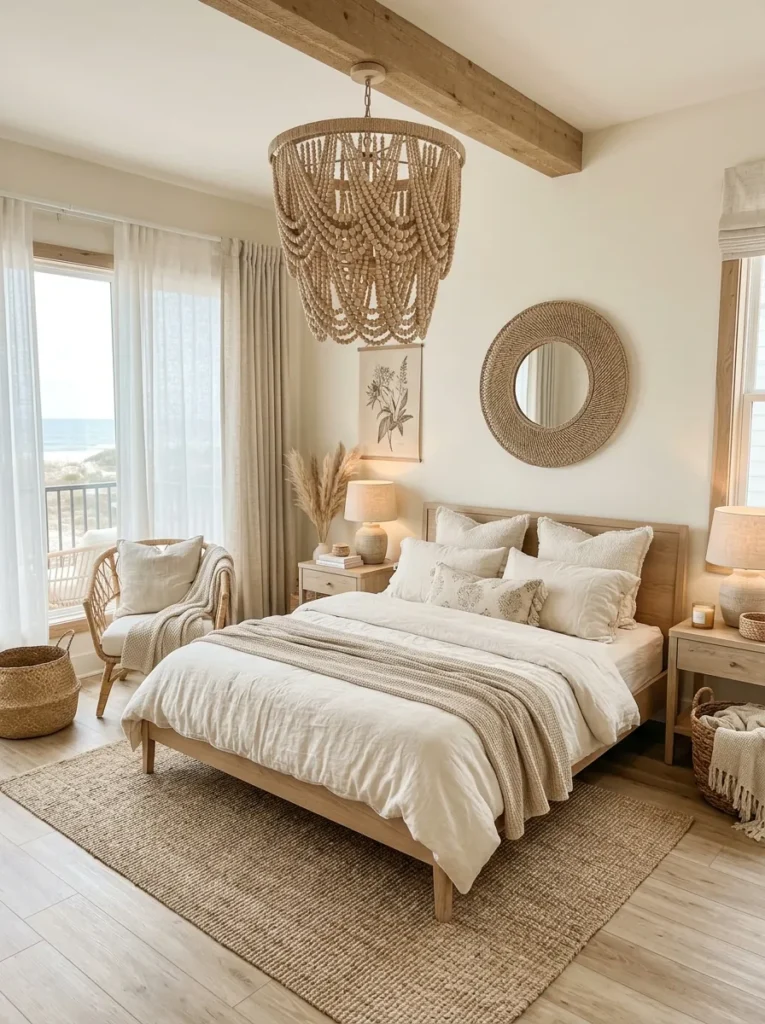
- A beaded chandelier adds sculptural texture above the bed.
- Natural wood beads keep the lighting connected to bohemian materials.
- Choose an open, lightweight design for a breezy appearance.
- Warm bulbs create a softer evening atmosphere.
- Keep surrounding decor simple so the fixture remains visually balanced.
A beaded chandelier can become a beautiful focal point when you want the bedroom to feel more layered without adding another piece of furniture. Natural wood beads introduce warmth and handcrafted texture while the open structure keeps the fixture from feeling visually heavy. Hang it centrally above the bed so it helps define the sleeping area. Choose warm bulbs to create a soft glow after sunset, especially against cream walls and pale textiles. The combination of sculptural lighting, woven materials, and relaxed bedding gives the room a polished bohemian touch while still preserving the lightness associated with coastal interiors.
Scale is the key to making this feature feel intentional rather than overwhelming. In a smaller bedroom, select a compact chandelier with plenty of open space between the beads. Larger rooms can handle a fuller design that visually fills the ceiling area above the bed. Keep the rest of the lighting understated so the chandelier remains the primary decorative element. I’ve noticed that natural wood bead fixtures look especially attractive when paired with rattan, linen, and jute because the materials share a warm organic quality. Together, they create a cohesive room with texture, softness, and relaxed character.
Pale Blue Accent Wall
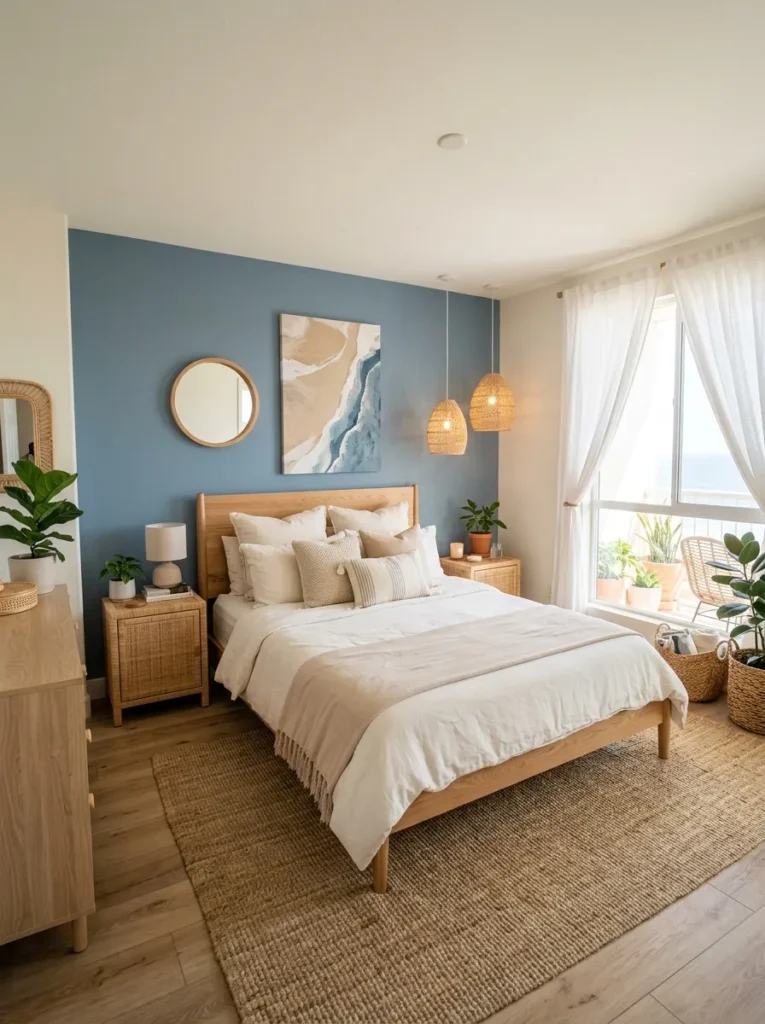
- A muted blue wall creates a soft coastal backdrop behind the bed.
- Dusty shades feel calmer and more sophisticated than bright blue.
- Keep the remaining walls light to maintain an airy atmosphere.
- Natural wood furniture warms the cooler wall color.
- This treatment can visually define the sleeping zone in an open room.
A pale blue accent wall can instantly establish a coastal mood while giving the bed a stronger visual backdrop. Choose a dusty, weathered, or sea-glass-inspired blue instead of a saturated shade so the room remains calm and sophisticated. Paint only the wall behind the bed and keep the remaining walls warm white or creamy beige. This creates gentle contrast without making the bedroom feel darker. The approach is especially useful when the furniture is mostly pale wood because the blue backdrop gives those natural finishes more definition. It is a simple way to introduce color without committing to colorful furniture.
Before choosing the paint, look at the room throughout the day because natural light can dramatically change how blue appears. North-facing rooms may need a warmer blue with subtle gray or green undertones, while bright sunny rooms can handle cooler dusty shades. Keep textiles neutral and repeat tiny touches of the wall color through pillows or artwork. In my experience, this restrained repetition makes the palette feel connected without becoming overly coordinated. Add woven textures and warm wood nearby to balance the cooler wall, creating a comfortable retreat that feels fresh, relaxed, and naturally coastal.
Woven Bedside Tables
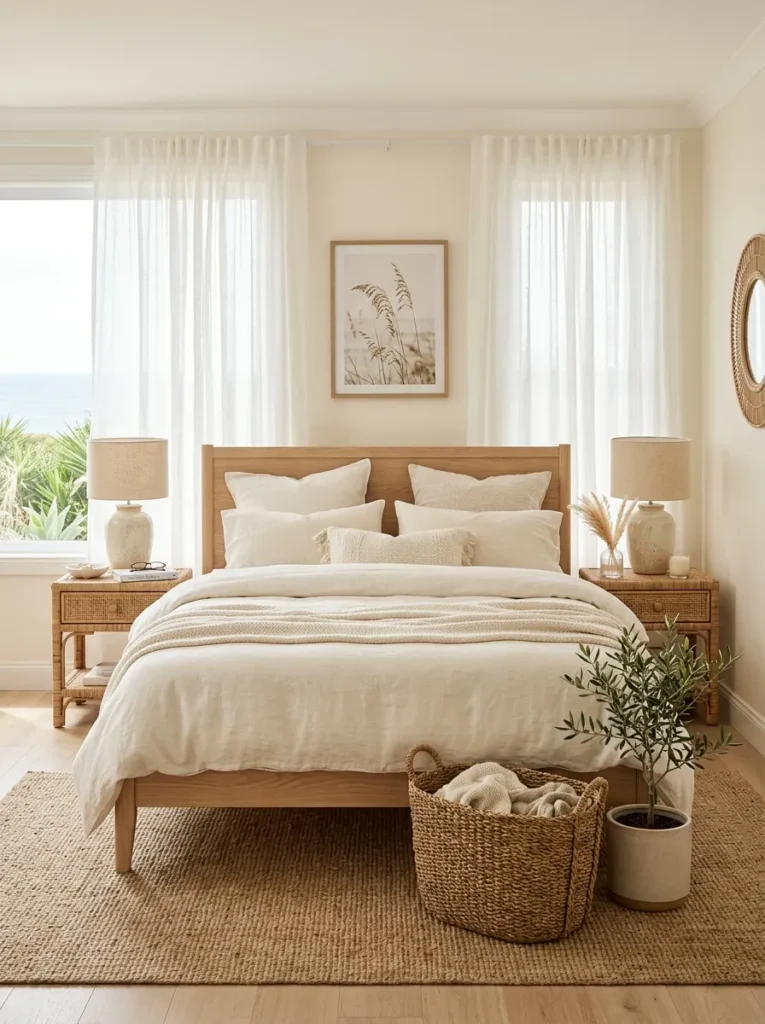
- Woven bedside tables add texture without making the room feel heavy.
- Choose rounded or softly shaped designs for a relaxed appearance.
- Open shelving can keep small bedrooms feeling visually spacious.
- Use baskets or drawers to hide everyday essentials.
- Pair them with ceramic lamps for a mix of natural and refined textures.
Woven bedside tables are an easy way to add character where a traditional wooden nightstand might feel too solid. Rattan, cane, or seagrass surfaces bring texture and warmth while keeping the furniture visually light. Choose a pair with rounded edges or open shelving for an especially relaxed look. Style each one with only a few useful pieces, such as a ceramic lamp, small dish, and favorite book. This combination feels personal without becoming cluttered. Against white bedding and pale walls, the woven texture stands out beautifully and reinforces the natural materials that make coastal bohemian bedrooms feel inviting.
Function should guide the styling as much as appearance. If you need hidden storage, choose woven nightstands with drawers or doors, while open shelves work well for displaying a small basket or neatly folded throw. Matching tables can create symmetry, but slightly different pieces can give the room a more collected personality. I’ve seen woven furniture work especially well in bedrooms where homeowners want warmth without introducing dark wood. Keep the surrounding palette soft and let the natural weave provide contrast. The result is practical bedside storage that feels decorative, relaxed, and seamlessly connected to the overall design.
Textured Neutral Walls
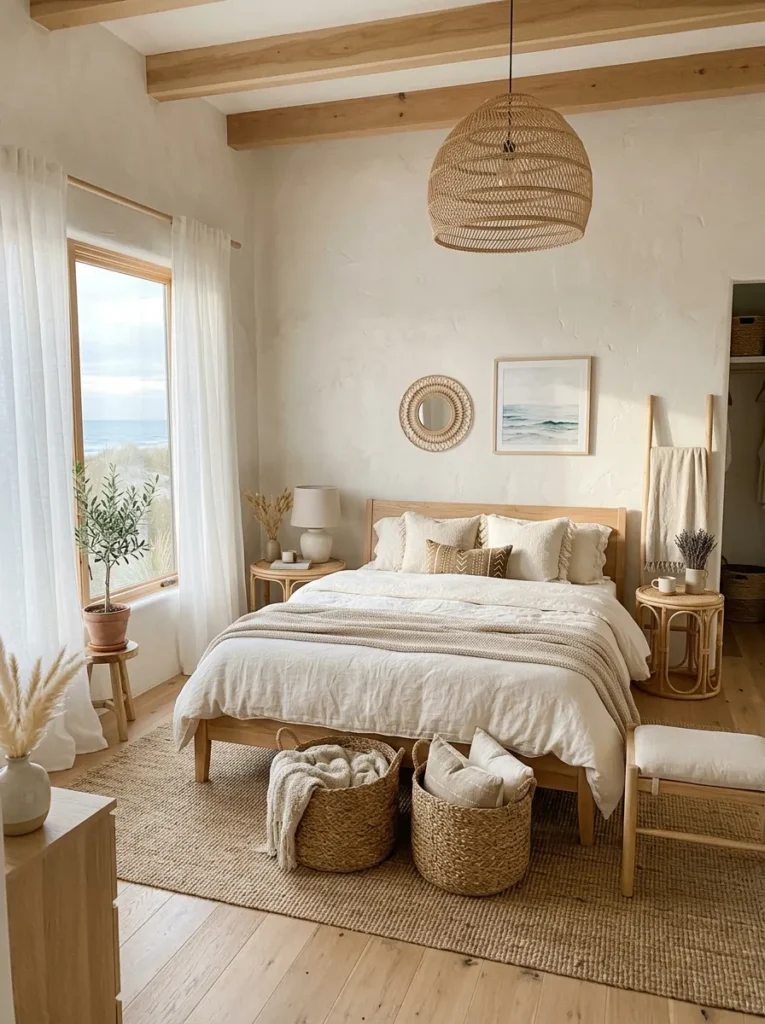
- Layered wall textures add depth without introducing strong colors.
- Limewash, plaster, or subtle woven finishes work beautifully here.
- Warm whites and sandy beige tones keep the room bright.
- Texture becomes more visible when natural light moves across the surface.
- Keep furniture simple so the walls remain an understated feature.
Plain walls can sometimes make an otherwise thoughtfully decorated bedroom feel unfinished, especially when the furniture and textiles are all neutral. A softly textured wall adds dimension without introducing another bold color or pattern. Consider limewash, subtle plaster, lightly brushed paint, or a fine woven wallcovering in warm white or sandy beige. These finishes catch changing daylight and create gentle shadows throughout the room. The effect works beautifully with rattan, linen, and pale wood because the materials complement rather than compete with one another. The result feels layered, natural, and quietly sophisticated.
Keep the texture subtle if the bedroom already contains several woven elements. You want the wall to provide a background rather than become another dominant feature. A warm-white finish can make a darker room feel brighter, while a sandy beige surface adds coziness to a large space. In my experience, textured walls look especially beautiful when paired with simple bedding because natural light becomes part of the decoration. Avoid covering every wall if you prefer a cleaner appearance. One feature wall behind the bed can provide enough visual interest while keeping the overall retreat calm and breathable.
Caned Wardrobe Doors
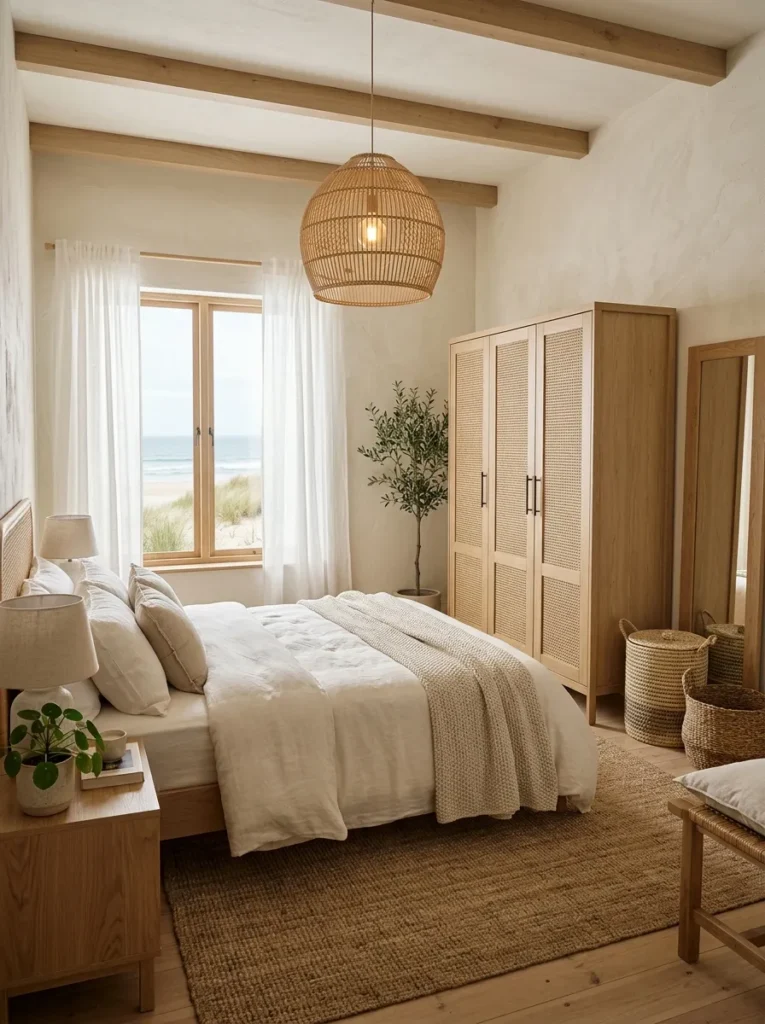
- Cane panels give large storage furniture a lighter appearance.
- Natural cane adds texture while allowing airflow through ventilated designs.
- Pale wood frames keep the furniture connected to the coastal palette.
- Use simple hardware in brass, wood, or matte black.
- This detail can refresh an existing wardrobe without replacing the entire room.
Large wardrobes can easily become visually heavy, particularly in bedrooms filled with light colors and natural textures. Caned doors solve that problem by introducing an airy woven surface across the furniture. The open pattern breaks up a broad cabinet front while adding handcrafted character. Choose a pale wood frame and natural cane to keep the finish warm and understated. This detail pairs naturally with linen bedding, rattan lighting, and woven baskets. If replacing a wardrobe is not practical, consider updating the doors or adding cane inserts to existing panels. It can completely change the furniture’s visual presence.
Think about the storage needs of the room before selecting the design. Cane panels work beautifully on wardrobe doors, drawers, or even a smaller linen cabinet, but the weave should complement rather than compete with other patterns. Keep hardware simple so the natural material remains noticeable. Pale brass can add a subtle refined touch, while wooden knobs create an even more casual look. I’ve noticed that caned furniture is particularly effective in bedrooms with limited floor space because its textured surface feels lighter than a solid cabinet. The room stays practical while gaining warmth, texture, and coastal character.
Coastal Gallery Wall
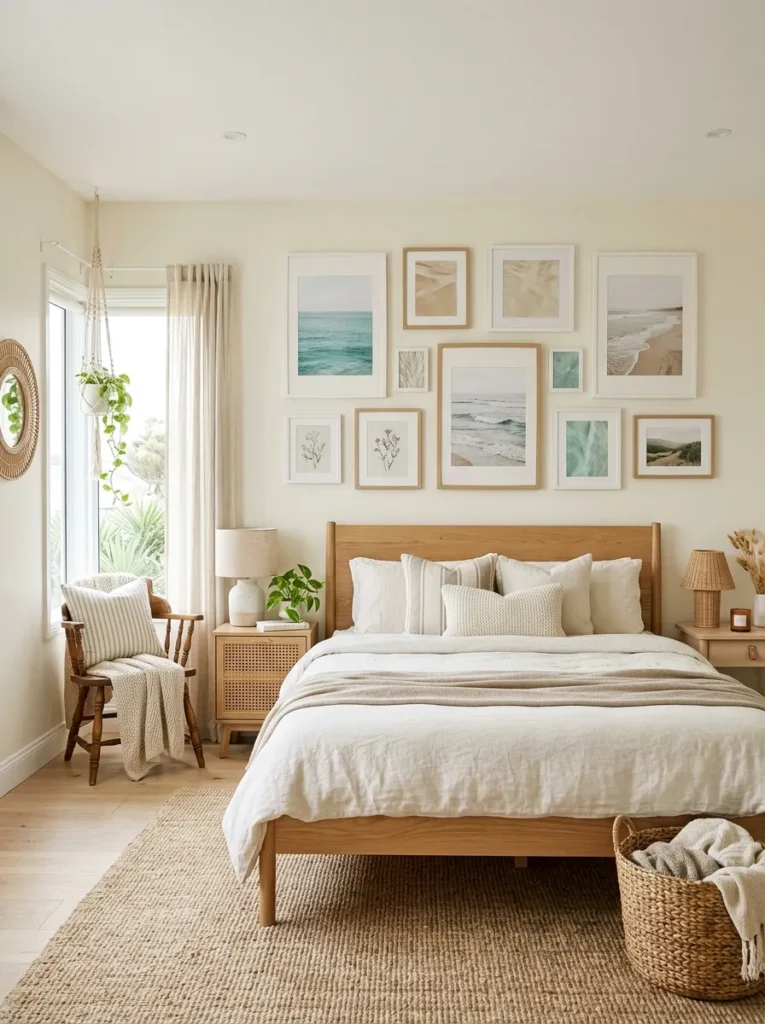
- A curated gallery wall gives personality to an otherwise simple bedroom.
- Mix ocean-inspired artwork with abstract prints and natural photography.
- Keep frames within a restrained wood, white, or neutral palette.
- Vary artwork sizes while maintaining consistent spacing.
- Position the arrangement above the bed or along an empty side wall.
A curated gallery wall can make a neutral bedroom feel personal without disturbing its relaxed coastal character. Instead of using identical beach prints, combine muted ocean photography, abstract shapes, sandy landscapes, botanical sketches, and simple line drawings. Keep the colors connected through ivory, faded blue, beige, and warm brown tones. This creates visual variety while maintaining a cohesive palette. Natural wood and white frames work especially well with bohemian furnishings because they feel casual rather than overly formal. The arrangement becomes a focal point that tells the room’s story without relying on excessive decorative objects.
Before hanging everything, arrange the frames on the floor to test the composition and spacing. Start with the largest piece near the center, then build outward with smaller prints to create balance. You do not need perfect symmetry; slight variations can make the display feel more collected and authentic. Leave enough breathing room around the arrangement so it does not visually merge with nearby furniture. I’ve noticed that a gallery wall looks most polished when its colors repeat elsewhere in the room. Echo one muted blue, sandy beige, or natural wood tone through pillows or accessories for continuity.
Woven Canopy Draping
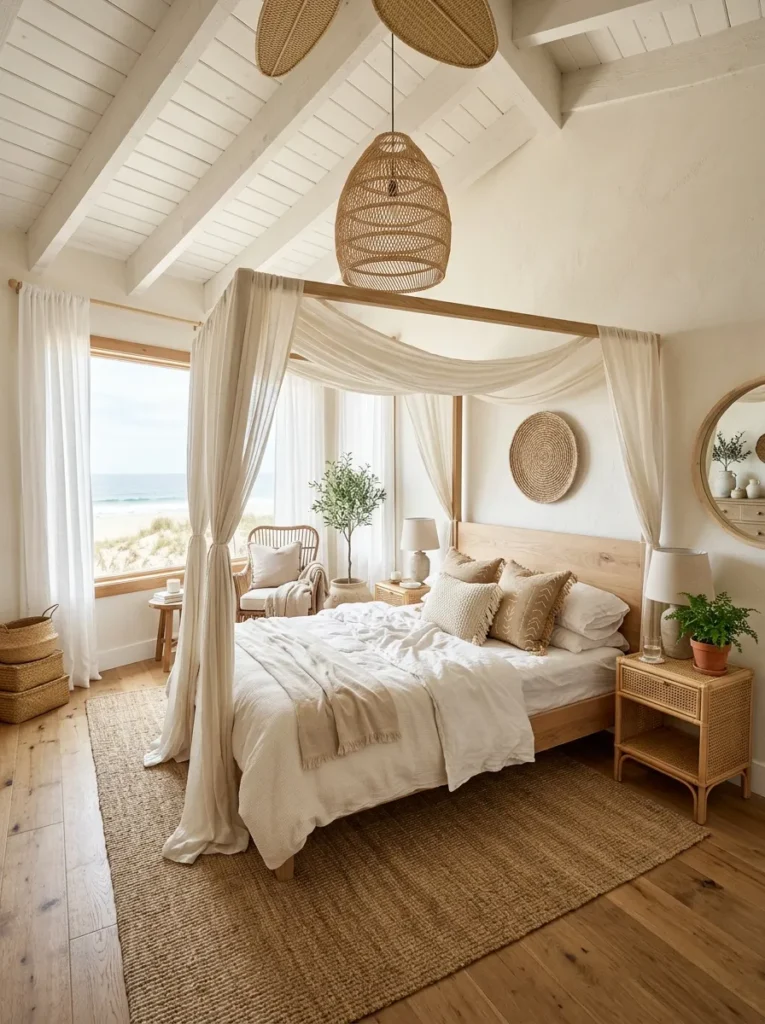
- Lightweight fabric softens the bed frame without making it feel heavy.
- Ivory or cream fabric keeps the palette bright and relaxed.
- Loose draping creates movement and emphasizes the bed as a focal point.
- Pair the fabric with natural wood for warmth and contrast.
- Keep the folds casual rather than perfectly symmetrical for a bohemian finish.
Soft fabric draped around a canopy bed can instantly make the sleeping area feel more relaxed and inviting. Choose lightweight cotton, linen, or gauzy fabric in ivory, cream, or warm white so the material moves naturally instead of appearing heavy. Let the panels fall loosely from the frame rather than arranging them into perfect folds. This relaxed treatment pairs beautifully with pale wood, rattan, and woven accessories because the soft fabric balances their stronger textures. The result is a comfortable focal point that gives the room a dreamy quality while still keeping the overall coastal palette fresh.
How you arrange the fabric can change the entire effect. For a clean look, let two panels fall beside the headboard and leave the center open. For something more casual, loosely gather the fabric over one corner and allow it to hang unevenly. Keep the bedding simple so the canopy remains the main feature. I’ve noticed that natural fabrics look particularly beautiful in rooms with strong daylight because their folds create gentle shadows throughout the day. Avoid overly thick curtains or excessive layers, which can make the bedroom feel enclosed instead of breezy and open.
Pampas Grass Accent
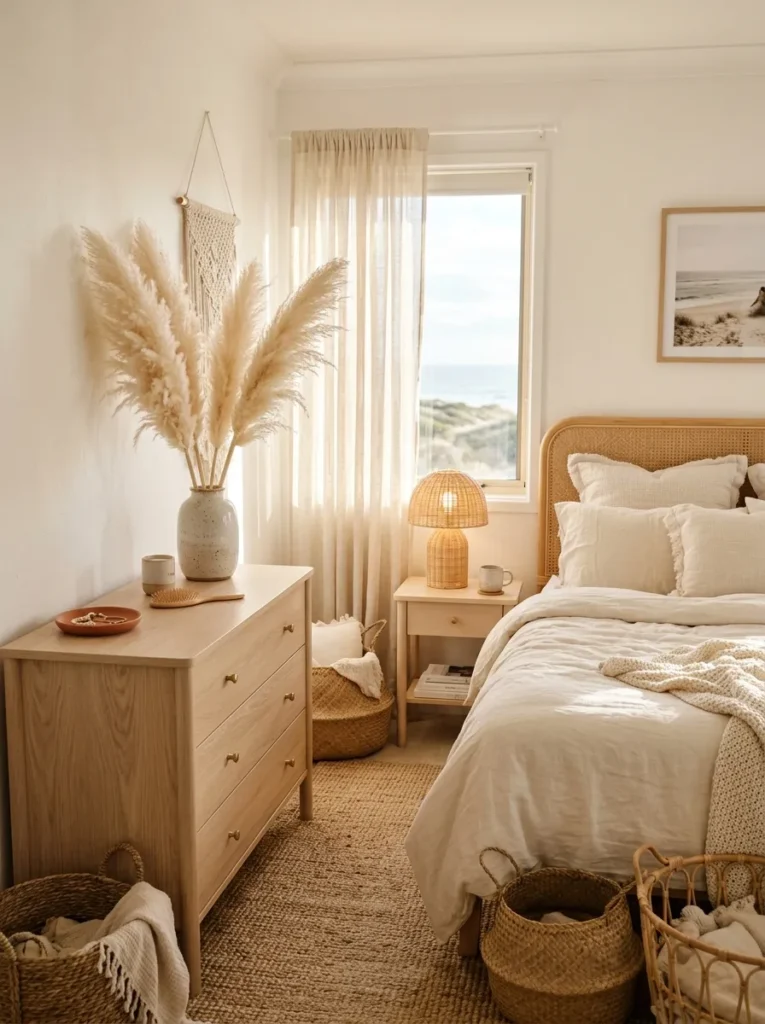
- Pampas grass introduces soft movement and natural height.
- A simple ceramic vase keeps the arrangement refined.
- Place it beside a dresser, bench, or empty corner.
- Creamy plumes complement ivory, beige, and pale wood finishes.
- Use a modest arrangement when the room already contains several textures.
Pampas grass can add height and softness to a bedroom without introducing another strong color. Tall cream plumes look especially natural against warm white walls, pale wood, and neutral linen bedding. Place a simple arrangement in a ceramic vase beside a dresser, at the corner of a bench, or near an empty wall where vertical interest is needed. The feathery texture contrasts beautifully with woven furniture and smooth ceramics. Rather than filling several corners with dried arrangements, choose one noticeable placement and let it provide a soft organic accent that supports the relaxed atmosphere.
The vase matters almost as much as the grass itself. A handmade ceramic vessel with a slightly irregular shape can reinforce the bohemian character, while a simple glass vase creates a cleaner coastal appearance. Keep the arrangement loose and allow the stems to spread naturally instead of trimming everything to identical heights. I’ve noticed that dried grasses work best when they echo materials already present in the room, such as linen, jute, or unfinished wood. If you have pets or allergies, consider realistic faux alternatives instead. The visual effect can remain soft, sculptural, and natural without demanding regular maintenance.
Layered Coastal Textiles
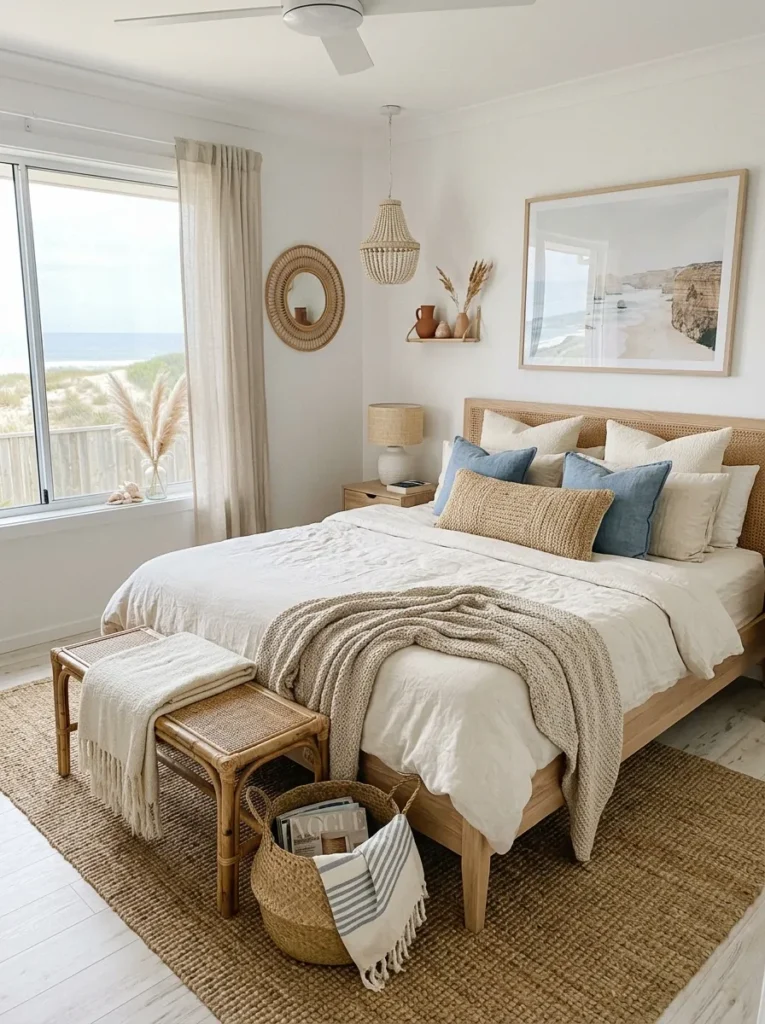
- Combining different fabrics makes the bedroom feel warmer and more inviting.
- Mix linen, cotton, woven blankets, and textured cushions.
- Keep colors within a soft palette of cream, sand, beige, and faded blue.
- Vary fabric textures instead of adding too many patterns.
- A folded throw at the bed’s edge creates an effortless finishing touch.
Layering textiles is one of the easiest ways to make a neutral bedroom feel finished without adding visual clutter. Start with crisp cotton or linen bedding, then introduce a textured throw, woven lumbar pillow, and one or two cushions in faded coastal colors. The goal is to create contrast through touch rather than relying heavily on patterns. Cream, sand, oatmeal, and muted blue work beautifully together because they create gentle variation while maintaining a cohesive palette. This approach makes the bed look inviting and comfortable, especially when the rest of the room has simple natural furniture.
Texture becomes even more effective when each layer serves a practical purpose. Keep breathable linen closest to the body, use a lightweight cotton blanket for cooler evenings, and reserve heavier woven pieces for occasional warmth. Fold one throw casually across the lower third of the bed rather than covering everything. In my experience, leaving some of the bedding visible prevents layered styling from becoming messy or excessive. Repeat one textile tone elsewhere through a bench cushion, curtain, or small rug. The finished room feels collected and comfortable while retaining the airy quality that makes coastal bedrooms so appealing.
Natural Wood Bench
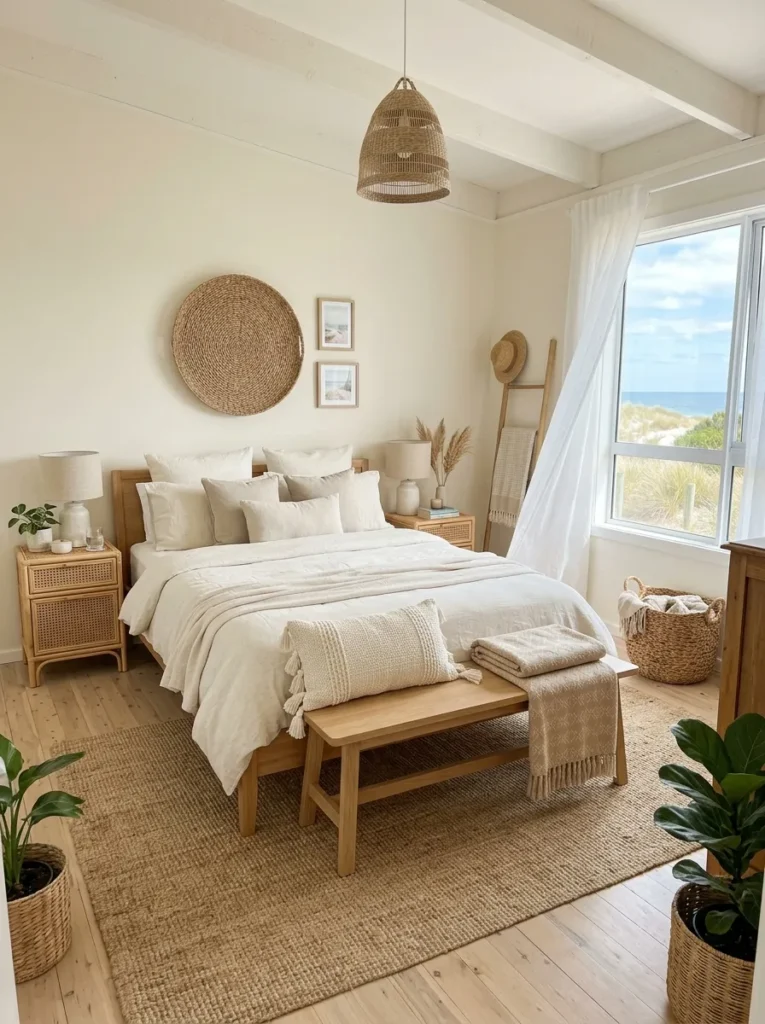
- A simple wood bench adds useful seating at the foot of the bed.
- Choose unfinished or lightly washed wood for a relaxed appearance.
- Add a folded throw or woven cushion for extra softness.
- Keep the bench narrow enough to preserve comfortable walking space.
- It can also provide a convenient spot for clothing or bedding.
A natural wood bench at the foot of the bed can combine practical function with the relaxed character of a coastal bedroom. Choose a simple design with visible grain, lightly weathered details, or a pale washed finish. The bench creates a visual stopping point for the bed while providing a convenient place to sit, fold blankets, or set down clothing. Add one woven cushion or casually folded throw if you want extra softness. Keep the styling restrained so the wood remains noticeable. This simple furniture addition can make the entire bedroom feel more complete without adding unnecessary bulk.
Measure the available space before choosing the bench, especially if the bedroom is compact. You want enough clearance around the bed for comfortable movement and easy access to drawers or doors. A narrow bench works particularly well in smaller rooms, while larger spaces can accommodate a wider woven or solid-wood design. I’ve noticed that pale wood looks especially effective when repeated elsewhere through nightstands, picture frames, or small accessories. Keep the surrounding textiles light and natural, allowing the bench to provide warmth and structure. The finished arrangement feels practical, relaxed, and naturally connected to coastal style.
Conclusion
A breezy bedroom does not require a complete makeover. Small changes like natural textures, soft coastal colors, woven accents, and relaxed bedding can create a space that feels lighter, warmer, and more inviting. These boho coastal bedroom ideas offer plenty of inspiration, whether you want to refresh one corner or completely transform your retreat. I’ve seen how thoughtful details can make an everyday bedroom feel wonderfully personal. Save this post on Pinterest so you can revisit your favorite ideas when planning your space, try one or two that inspire you most, and share this article with someone who loves relaxed coastal style.