21 Moody Dining Room Ideas That Instantly Impress
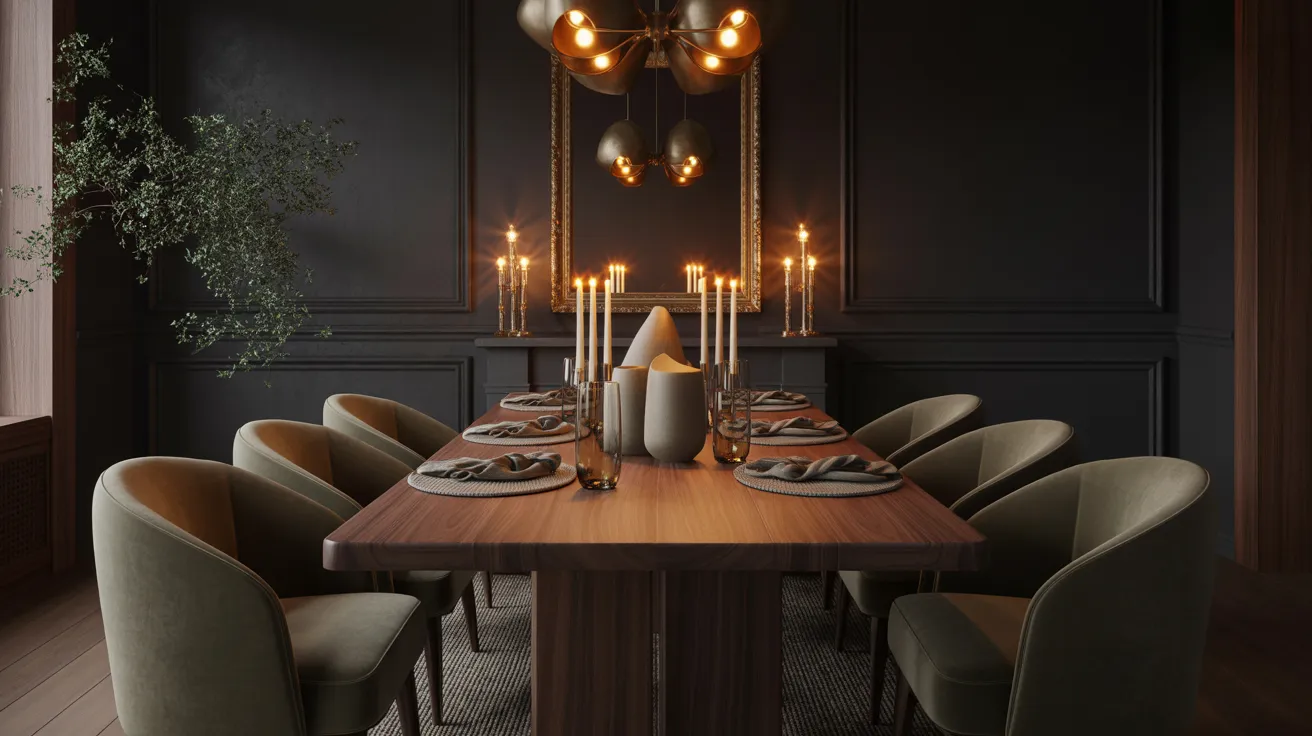
Your dining room should feel like more than just a place to eat.
It should tell a story, create comfort, and make every gathering feel special.
A moody dining room can transform an ordinary space into a warm, stylish retreat with the right colors, textures, and lighting choices. This collection shares 21 inspiring ideas designed to help you create a dining area that feels inviting, sophisticated, and full of personality. Whether your space is small, modern, or traditional, these practical design tips can help you add depth and character without expensive changes. In my experience, thoughtful details like layered lighting and natural materials often make the biggest difference. Explore these ideas to discover simple ways to refresh your home and create a space you love.
Charcoal Accent Wall
- Creates an elegant backdrop that makes furniture and artwork stand out.
- Adds instant depth without overwhelming the space.
- Pairs beautifully with warm wood and metallic finishes.
- Makes soft lighting feel richer and more inviting.
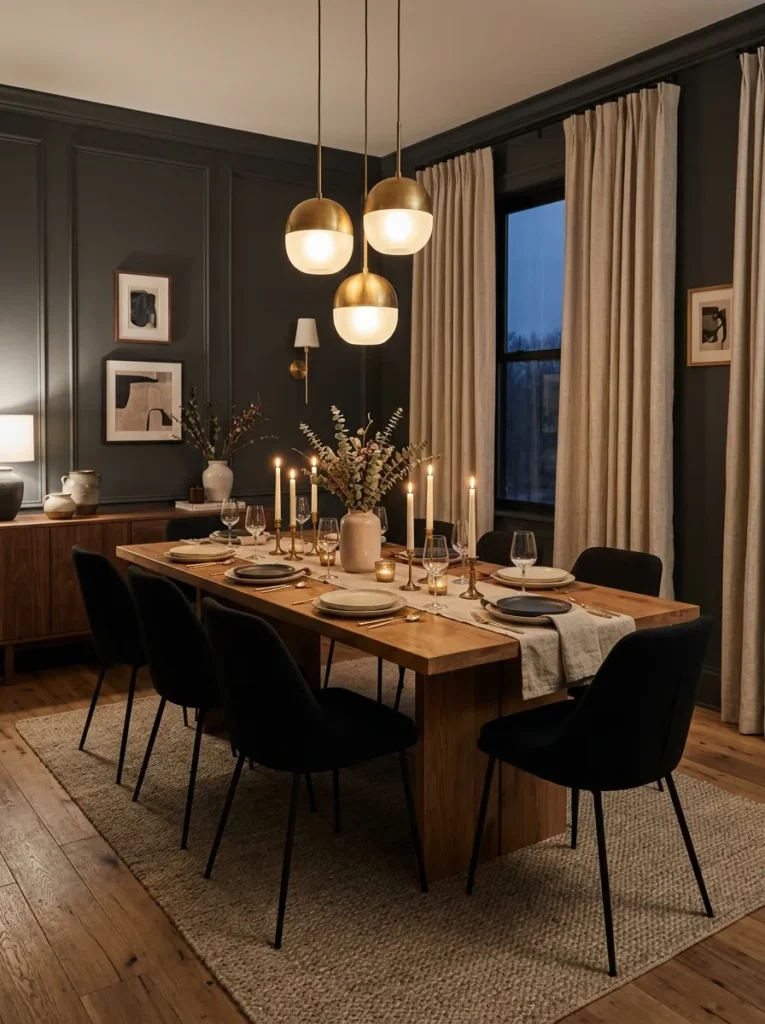
A dramatic backdrop can completely reshape how a dining space feels before anyone even sits down. Deep charcoal walls create a grounded atmosphere that instantly highlights natural wood furniture, metallic accents, and carefully chosen artwork. Instead of making the room feel smaller, this rich color often adds unexpected depth when paired with warm lighting. In a moody dining room, the contrast between dark walls and lighter decorative pieces creates visual balance while making every detail appear more intentional, refined, and welcoming for everyday meals or special gatherings.
The beauty of this approach is its flexibility across many decorating styles. Modern homes gain sleek sophistication, while traditional interiors feel warmer and more layered. I’ve noticed that matte paint finishes usually create a softer, more luxurious effect than glossy surfaces because they absorb light rather than reflecting it harshly. Add textured fabrics, subtle artwork, and warm-toned lighting to keep the room comfortable instead of heavy. Small decorative changes, such as brass candleholders or cream-colored ceramics, become far more noticeable against a rich charcoal backdrop.
Walnut Statement Table
- Gives the room a strong natural focal point.
- Rich wood tones soften darker color palettes.
- Works beautifully with both modern and classic seating.
- Ages gracefully with everyday use.
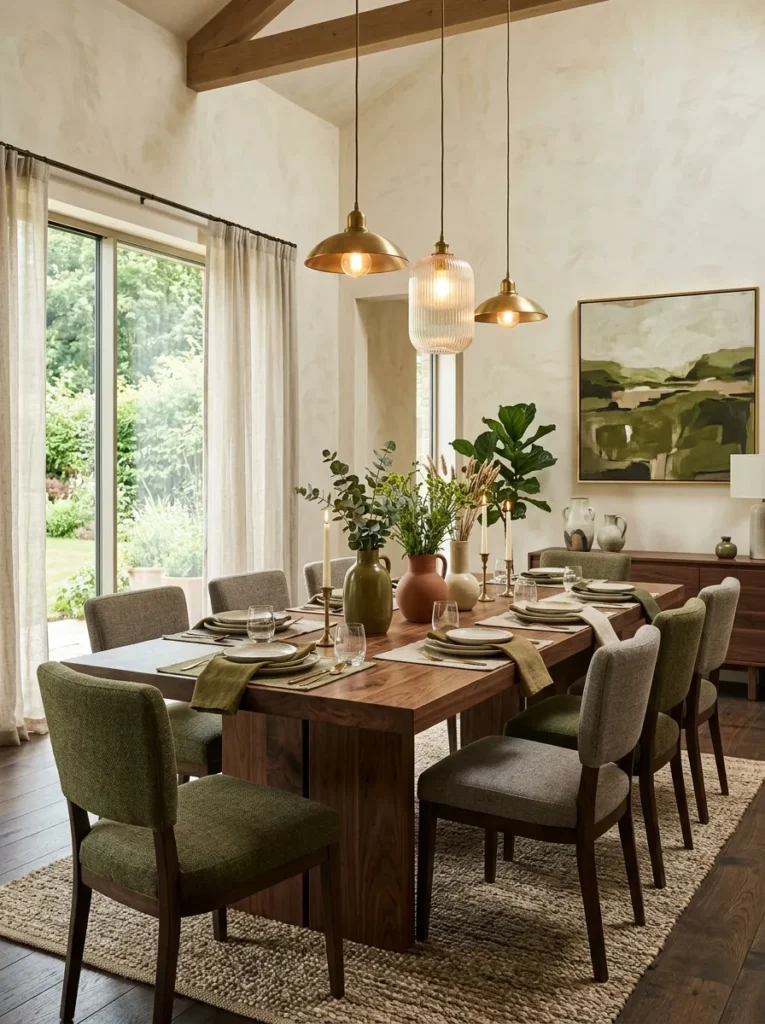
Nothing anchors a dining area quite like a beautifully crafted walnut table. Its rich grain introduces warmth that balances darker walls, dramatic lighting, and textured finishes without competing for attention. The natural variations in the wood keep the space from feeling overly designed while adding lasting character. Whether paired with upholstered seating or minimalist chairs, this centerpiece encourages conversation and creates a welcoming environment where daily dinners and celebrations feel equally comfortable, timeless, and thoughtfully styled.
In my experience, investing in one high-quality dining table often has a bigger visual impact than replacing several smaller decorative pieces. Walnut develops even more personality over time as its finish matures with regular use. That’s why many designers recommend allowing the tabletop to remain mostly clear, adding only a simple centerpiece for seasonal interest. This approach keeps the room feeling calm while letting the craftsmanship remain the star of the overall design without creating visual clutter.
Layered Ambient Lighting
- Makes evening meals feel warm and inviting.
- Reduces harsh shadows while adding depth.
- Highlights furniture, textures, and decorative accents.
- Offers flexibility for casual dinners or entertaining guests.
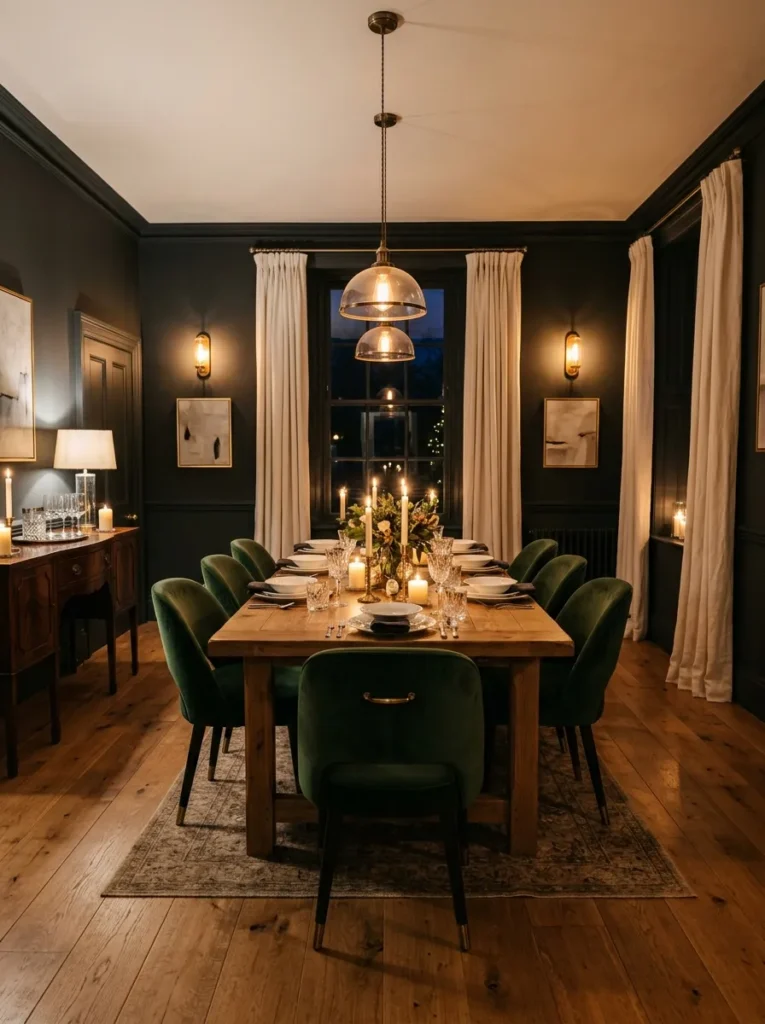
Lighting often determines whether a dining room feels inviting or flat, regardless of the furniture inside it. Combining pendants, wall sconces, candles, and subtle accent lighting creates layers that give the entire space greater dimension. Instead of relying on one bright ceiling fixture, different light sources work together to produce a softer glow that flatters every surface. This balanced approach makes dark finishes feel welcoming while drawing attention to artwork, table settings, and architectural details that deserve to be noticed.
I’ve seen this work well in many homes because adjustable lighting allows the atmosphere to change with every occasion. A brighter setting works well for family meals, while dimmed lighting instantly creates a more intimate mood for evening gatherings. Warm-toned bulbs generally produce a more comfortable feeling than cool white lighting, especially alongside darker color palettes and natural wood finishes. Even a few candles can elevate the space, making ordinary dinners feel memorable without requiring expensive renovations.
Velvet Dining Chairs
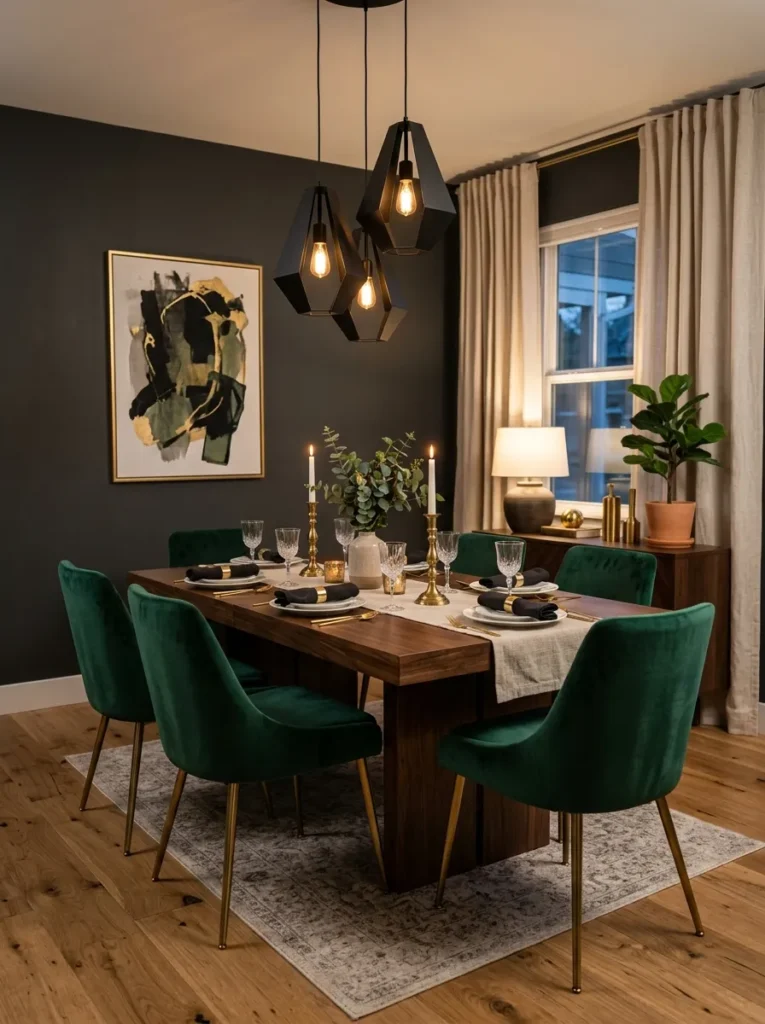
- Introduces soft texture that balances darker finishes.
- Makes everyday seating feel more elegant and comfortable.
- Adds rich color without overwhelming the room.
- Elevates both modern and traditional dining spaces.
One simple furniture upgrade can completely transform the look of your dining space, and velvet chairs are a perfect example. Their soft texture brings warmth and comfort while adding a touch of understated luxury. Against dark walls or wood finishes, velvet catches light beautifully and creates subtle contrast that makes the room feel layered rather than flat. Whether you choose deep green, navy, charcoal, or chocolate brown, the fabric instantly gives the dining area a polished appearance without making it feel overly formal or difficult to maintain.
I’ve noticed that performance velvet fabrics have become much more practical for busy households than many people expect. They resist everyday wear surprisingly well and are often easier to clean than lighter woven materials. Pairing upholstered chairs with a natural wood table also prevents the room from feeling cold or overly dramatic. This thoughtful combination creates a balanced atmosphere that feels welcoming during casual family dinners while still looking impressive when friends or guests come over.
Brass Pendant Lighting
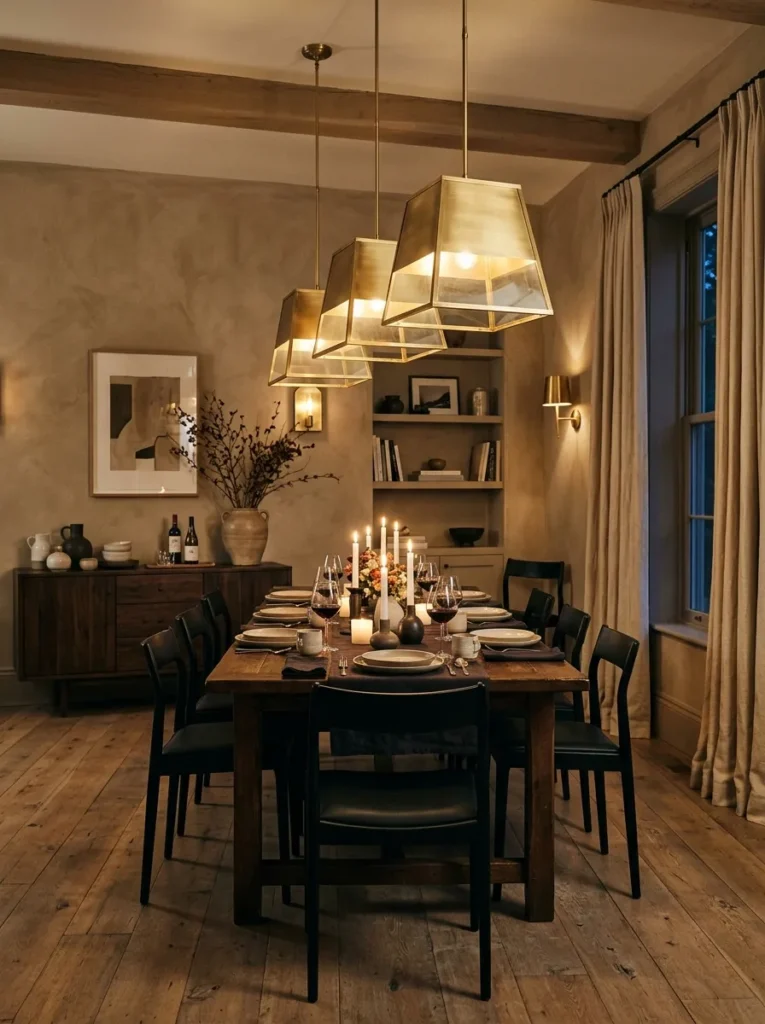
- Adds warmth to darker color palettes.
- Creates a striking focal point above the table.
- Reflects light beautifully without feeling harsh.
- Complements wood, stone, and matte finishes.
The right ceiling fixture can completely change how a dining room feels, and brass pendants bring warmth that balances darker interiors beautifully. Their soft metallic finish reflects gentle light across the table while adding an elegant architectural feature overhead. Instead of competing with other décor, the warm glow helps highlight natural materials like wood, linen, and stone. Even a simple room instantly feels more refined when lighting becomes part of the overall design rather than just a practical necessity.
In my experience, hanging pendant lights at the proper height makes a noticeable difference in both comfort and appearance. Fixtures placed too high lose their impact, while those positioned correctly create intimacy around the dining table without blocking conversation. That’s why many designers recommend using dimmable warm bulbs to adjust the atmosphere throughout the day. The combination of golden brass and soft lighting creates an inviting setting that works equally well for everyday meals and special occasions.
Dark Botanical Decor
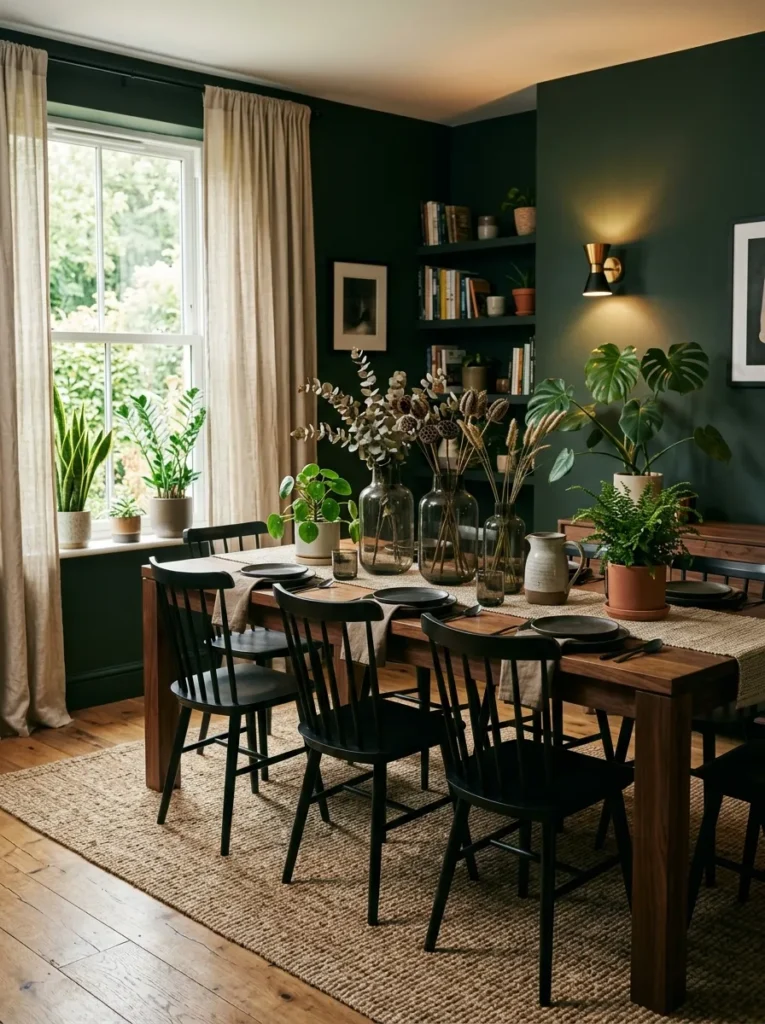
- Softens dark interiors with fresh natural color.
- Creates visual contrast without bright décor.
- Adds life and texture to simple spaces.
- Works beautifully throughout every season.
Natural greenery becomes even more striking when surrounded by darker finishes and muted colors. Large leafy plants, olive branches, or simple arrangements of seasonal foliage introduce freshness while maintaining the room’s sophisticated mood. Instead of relying on colorful accessories, greenery provides organic contrast that feels timeless and calming. The layered combination of plants, wood textures, ceramics, and soft lighting helps the dining area feel lived in, balanced, and welcoming without distracting from the overall design.
I’ve seen this work well in many homes because plants naturally soften rooms that feature dark paint, metal accents, and heavier furniture. Choosing simple ceramic or smoked glass planters keeps the arrangement elegant while allowing the greenery to become the visual highlight. Even one oversized plant placed near a window can transform an empty corner into a beautiful focal point. This small update brings movement, texture, and warmth while requiring very little effort compared to larger decorating projects.
Black Ceiling Finish
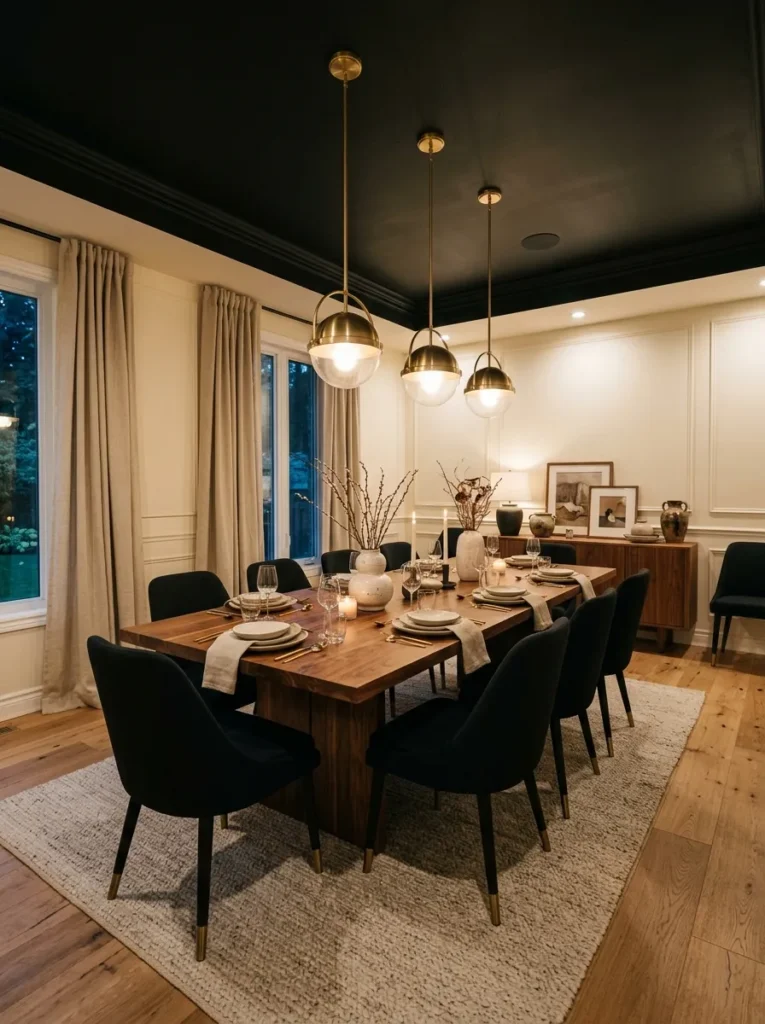
- Adds dramatic depth without changing the room layout.
- Makes pendant lighting stand out beautifully.
- Creates a cozy, intimate atmosphere for dining.
- Draws the eye upward for a designer-inspired finish.
Sometimes the most overlooked surface becomes the one that transforms the entire room. A matte black ceiling adds unexpected depth while making the dining area feel more intimate and sophisticated. Instead of closing in the space, it visually frames the room when paired with lighter walls, warm wood tones, and layered lighting. The darker overhead finish also helps pendant fixtures become a striking focal point, creating a balanced design that feels intentional rather than overwhelming in both modern and classic interiors.
I’ve noticed this technique works especially well in rooms with average or tall ceilings because it naturally creates a cozier atmosphere without making the space uncomfortable. Soft lighting reflects gently against the matte finish, avoiding glare while enhancing the warmth below. Keeping wall colors slightly lighter ensures the room still feels open and welcoming. Combined with natural textures like oak, linen, and stone, a dark ceiling becomes an elegant design feature that instantly elevates the entire dining experience.
Fluted Wood Paneling
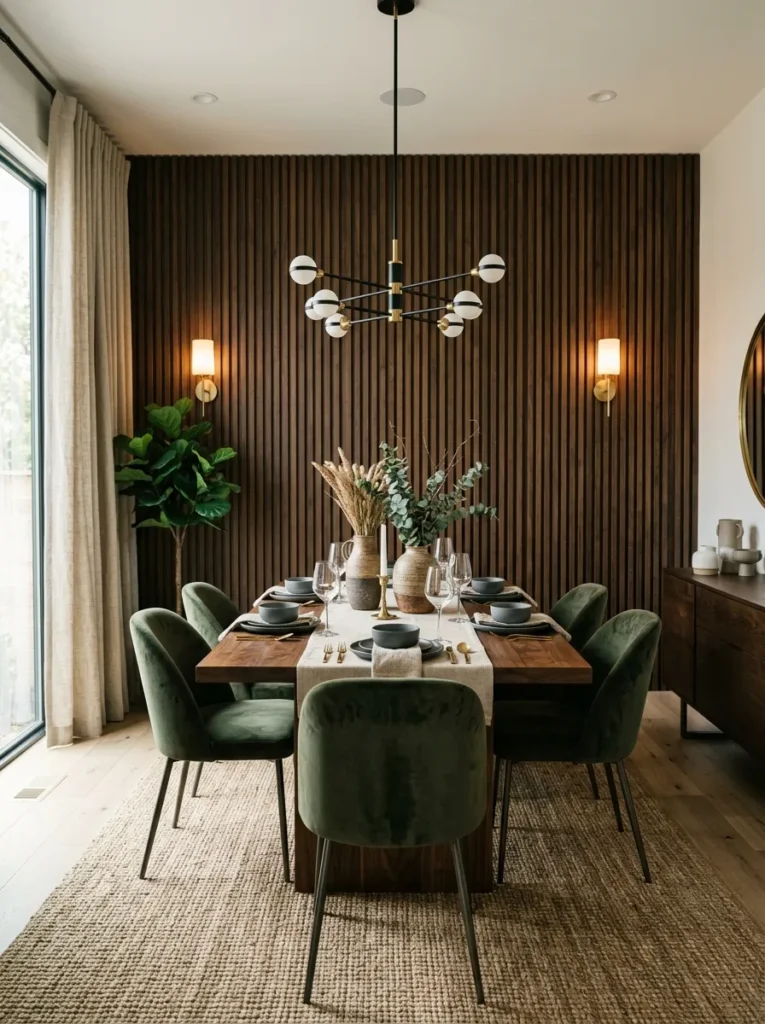
- Adds texture without relying on bold patterns.
- Creates a custom built-in appearance.
- Brings warmth to darker interiors.
- Instantly upgrades plain walls with architectural detail.
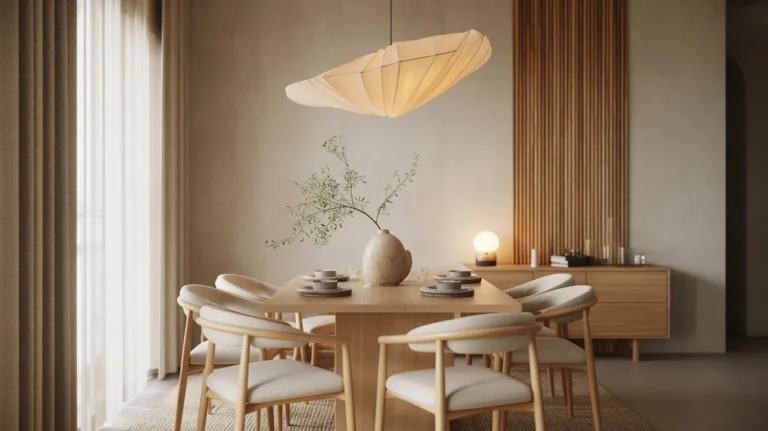
Flat walls can sometimes leave a dining room feeling unfinished, but fluted wood paneling introduces texture that immediately adds depth and character. The vertical grooves catch light throughout the day, creating subtle shadows that make the room feel more dynamic without overwhelming the overall design. Dark walnut finishes pair especially well with warm lighting, natural fabrics, and matte black accents, giving the space a polished appearance that feels both modern and timeless.
In my experience, even installing fluted panels on just one feature wall creates a noticeable transformation. There’s no need to cover every surface to achieve a high-end look. That’s why many designers recommend placing paneling behind the dining table, where it naturally becomes the room’s visual anchor. Add a large mirror or oversized artwork nearby, and the layered textures create an elegant backdrop that photographs beautifully while remaining practical for everyday living.
Marble Dining Table
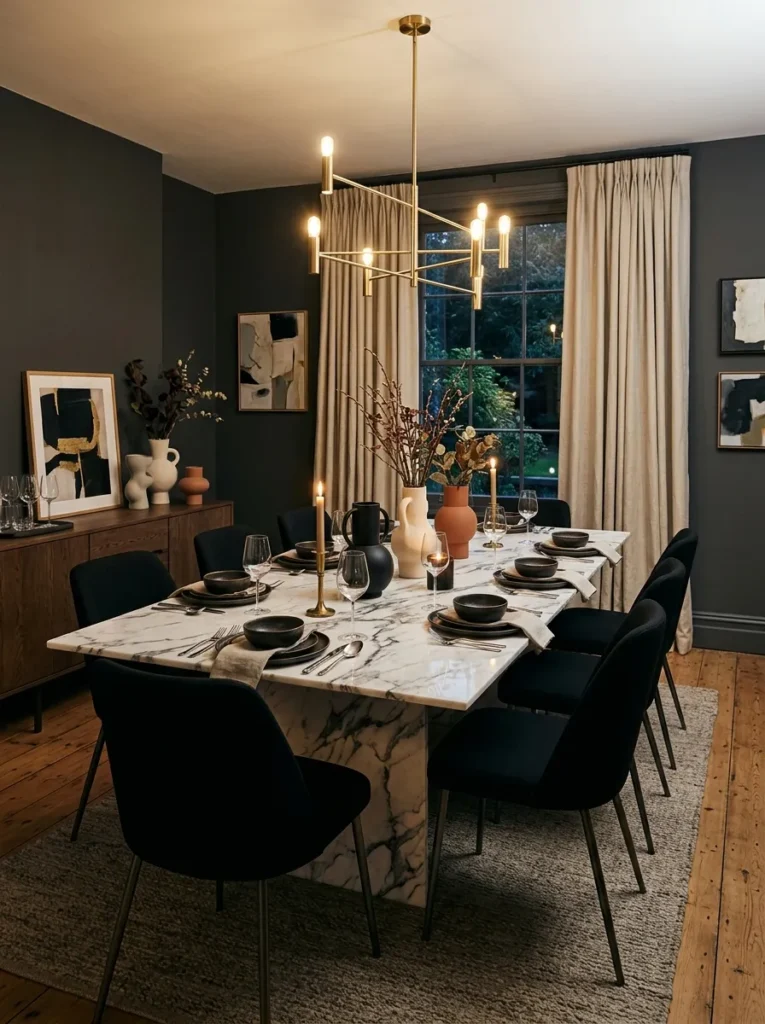
- Brightens a darker color palette naturally.
- Introduces timeless luxury without excessive décor.
- Creates beautiful contrast with wood and metal finishes.
- Reflects warm lighting for added visual depth.
A marble dining table creates an eye-catching contrast that prevents darker interiors from feeling too heavy. The natural veining introduces movement while the polished surface gently reflects warm lighting, helping the entire room feel brighter and more balanced. Paired with dark chairs, rich wall colors, and metallic accents, marble becomes an elegant centerpiece that blends sophistication with everyday functionality. The combination of light stone and deeper finishes delivers a timeless look that remains stylish through changing design trends.
I’ve seen this work well in many homes because marble complements nearly every decorating style, from contemporary to traditional. If natural stone feels beyond your budget, high-quality marble-look surfaces offer a similar visual impact with easier maintenance. Keeping the tabletop styling simple allows the beautiful veining to remain the focal point. A single ceramic vase, fresh greenery, or a few candles are often enough to complete the space without creating unnecessary clutter.
Floor-to-Ceiling Drapes
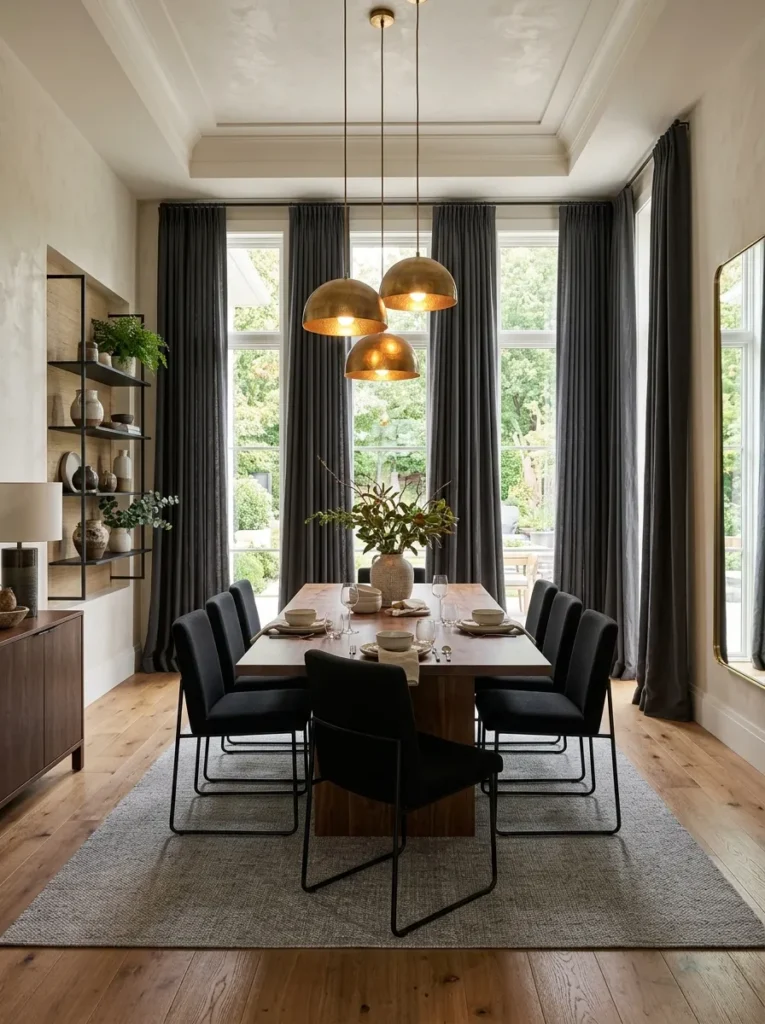
- Makes ceilings appear taller and the room feel larger.
- Softens hard surfaces with rich texture.
- Controls natural light throughout the day.
- Creates a polished, designer-inspired finish.
One of the easiest ways to make a dining room feel more luxurious is by installing floor-to-ceiling drapes. Long panels naturally draw the eye upward, creating the illusion of higher ceilings while adding softness to darker interiors. Rich linen, velvet, or textured woven fabrics introduce another layer of warmth that balances wood, stone, and metal finishes. Whether left open during the day or closed for evening gatherings, full-length curtains create a refined backdrop that makes the entire room feel thoughtfully designed.
I’ve noticed that hanging curtain rods close to the ceiling rather than directly above the window makes a surprisingly dramatic difference. This simple adjustment visually expands the space without requiring any renovation. Choosing fabrics in charcoal, deep taupe, forest green, or warm brown keeps the palette cohesive while still allowing natural light to filter gently inside. The result feels elegant, comfortable, and timeless, making everyday meals feel just as inviting as holiday celebrations.
Antique Gold Mirror
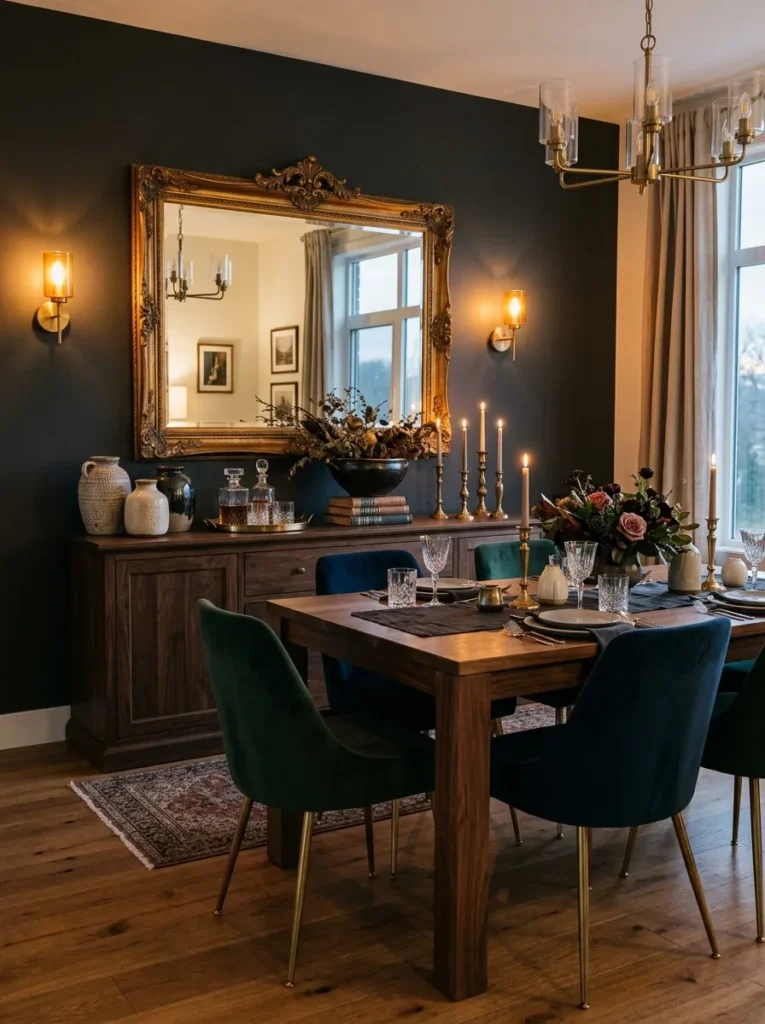
- Reflects light to brighten darker interiors.
- Adds elegance without overwhelming the space.
- Makes the dining room feel larger.
- Creates a beautiful focal point above a sideboard.
A well-placed antique gold mirror adds both beauty and function to a dining room with darker finishes. The reflective surface bounces natural and artificial light around the room, preventing deep colors from feeling too enclosed. At the same time, the warm metallic frame introduces a subtle touch of luxury that complements wood furniture, brass accents, and textured walls. Positioned above a buffet or console table, the mirror becomes an eye-catching feature that enhances the room without requiring additional decorative pieces.
In my experience, larger mirrors usually create a stronger visual impact than several smaller wall decorations. They simplify the design while making the entire space appear brighter and more open. That’s why many designers recommend selecting a frame with classic detailing rather than something overly ornate. This balanced approach keeps the room sophisticated and allows surrounding furniture, lighting, and decorative accents to work together in a cohesive, timeless arrangement.
Mixed Wood Finishes
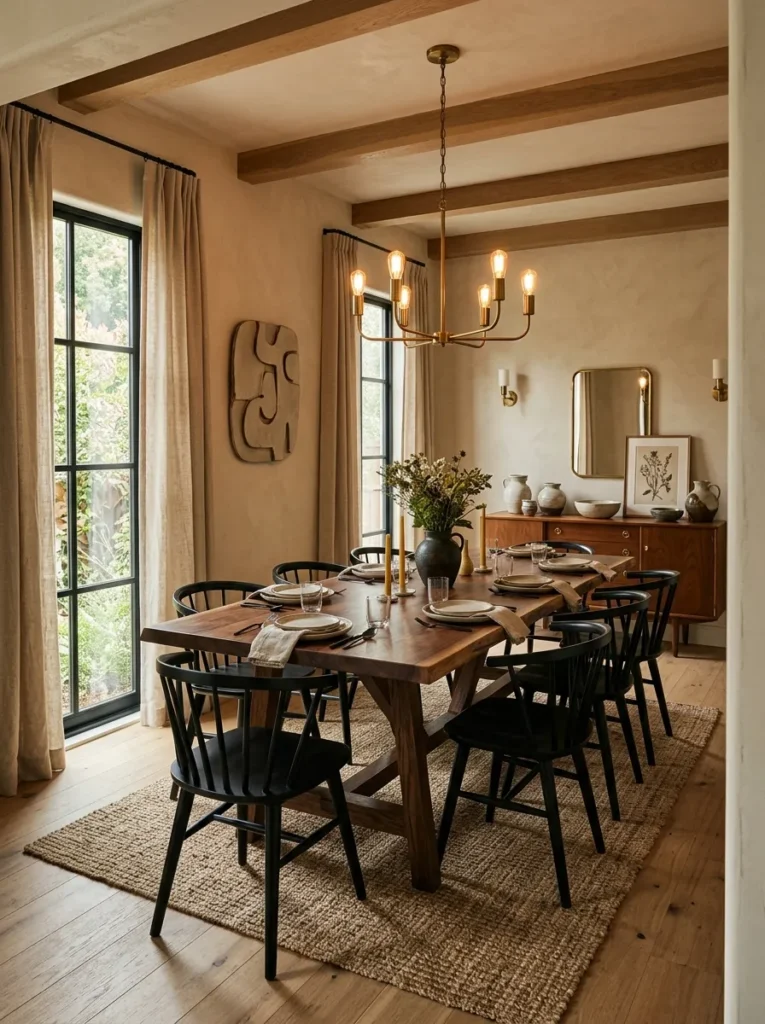
- Prevents the room from feeling flat or overly matched.
- Adds natural warmth through layered textures.
- Creates a collected, lived-in appearance.
- Works across modern, rustic, and transitional styles.
Using multiple wood finishes is an easy way to create depth without adding unnecessary decoration. A walnut dining table, oak flooring, and darker accent furniture work together to produce a layered look that feels natural instead of perfectly matched. The variation in wood tones introduces subtle contrast while maintaining warmth throughout the room. Rather than appearing busy, carefully mixed finishes create a collected style that feels authentic and gives the dining space more personality.
I’ve seen this work well in many homes because perfectly matching every wood surface often makes a room feel overly staged. Mixing warm undertones while keeping the overall color palette consistent creates a more relaxed and timeless appearance. Balance is the key, so repeating each finish at least twice helps everything feel intentional. Add textured fabrics, soft lighting, and simple decorative accessories, and the different wood tones blend together beautifully without competing for attention.
Matte Black Built-Ins
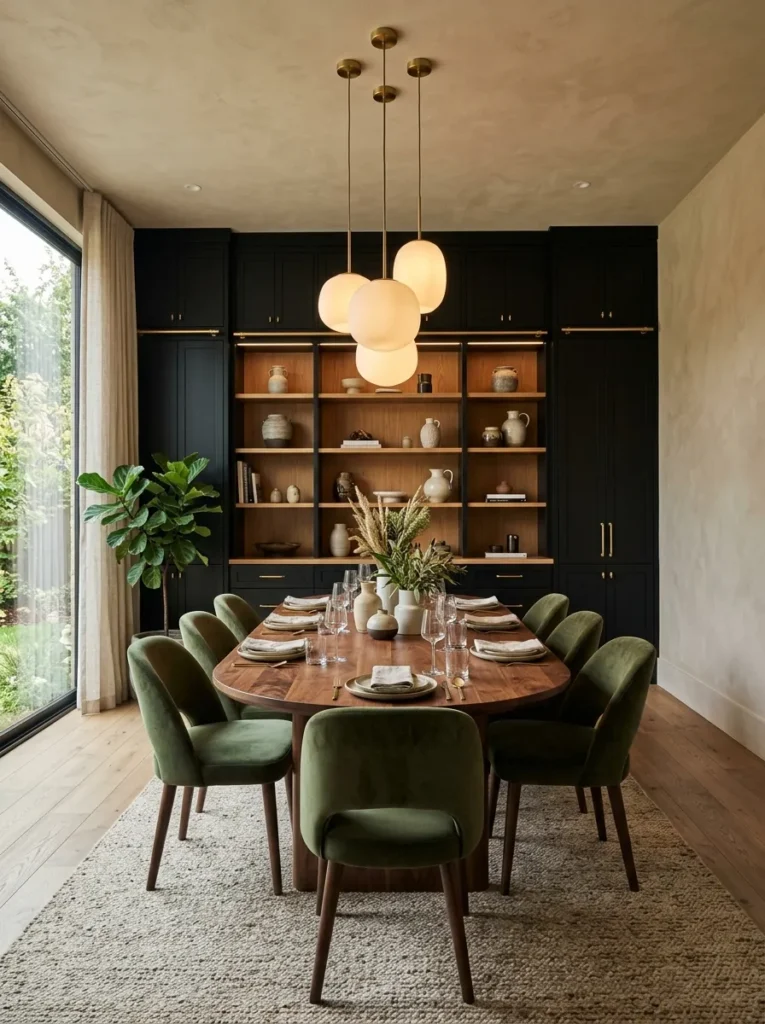
- Adds stylish storage without sacrificing elegance.
- Makes dinnerware and décor feel intentionally displayed.
- Creates a custom, high-end appearance.
- Keeps the room organized while enhancing visual depth.
Custom-looking storage can instantly make a dining room feel more polished, and matte black built-ins deliver that effect with timeless appeal. The dark finish blends beautifully into the background while allowing ceramics, glassware, and decorative pieces to stand out naturally. Open shelving mixed with closed cabinets keeps everyday essentials accessible without creating visual clutter. This combination adds depth, improves organization, and gives the space an upscale appearance that feels both practical and beautifully curated.
I’ve noticed that built-ins become even more striking when styled with restraint. Leaving small gaps between decorative objects allows each piece to stand out while preventing shelves from looking crowded. Warm wood accents, woven baskets, and neutral ceramics soften the darker cabinetry, creating a balanced design that feels welcoming rather than heavy. Even if custom cabinetry isn’t possible, painted bookcases with matching hardware can achieve a similar designer-inspired result for a fraction of the cost.
Smoky Glass Accents
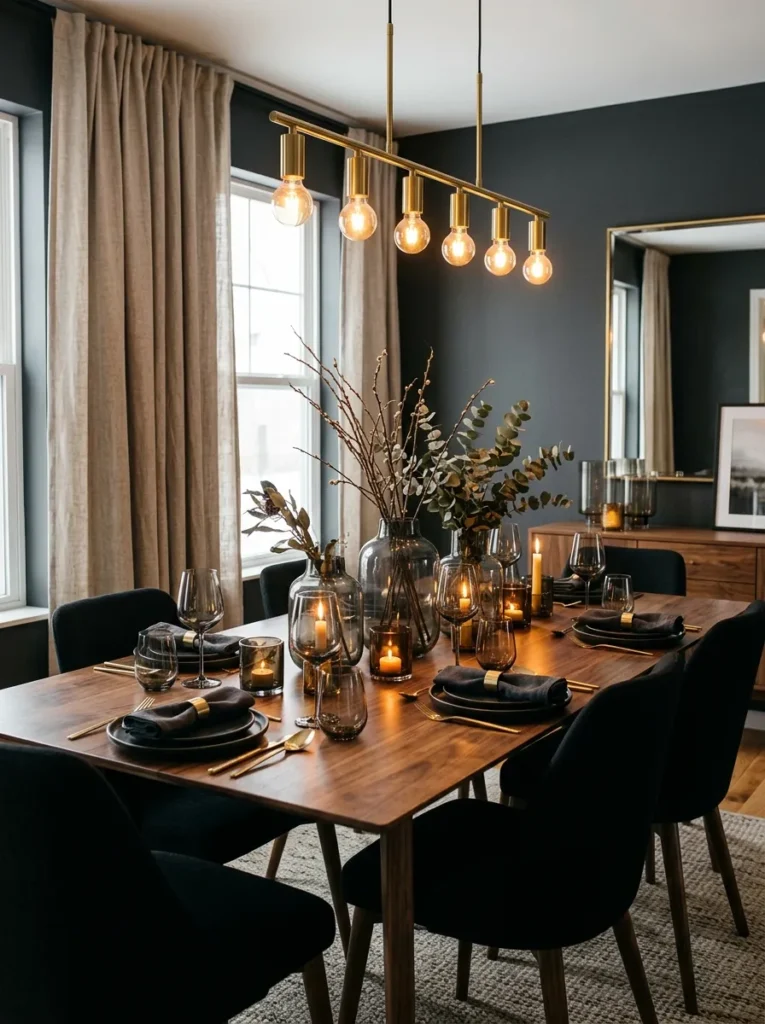
- Introduces subtle shine without overpowering the room.
- Softens darker color palettes with gentle reflections.
- Layers beautifully with candles and metallic finishes.
- Adds elegance through simple decorative details.
Decorative accessories often make the biggest difference when they quietly enhance the overall design instead of demanding attention. Smoky glass vases, candle holders, and serving pieces introduce soft reflections that add depth to darker dining spaces. Their slightly tinted finish feels richer than clear glass while maintaining an understated elegance. When paired with wood, stone, and brass accents, these pieces create subtle visual movement that keeps the room interesting from every angle without feeling overly decorative.
In my experience, repeating smoky glass elements throughout the room creates a more cohesive look than relying on a single statement accessory. A vase on the dining table, matching candle holders on a sideboard, and a decorative bowl on open shelving help tie the design together naturally. Because tinted glass reflects warm lighting so beautifully, the room gains extra dimension in the evening, making everyday dinners feel noticeably more inviting.
Textured Area Rug
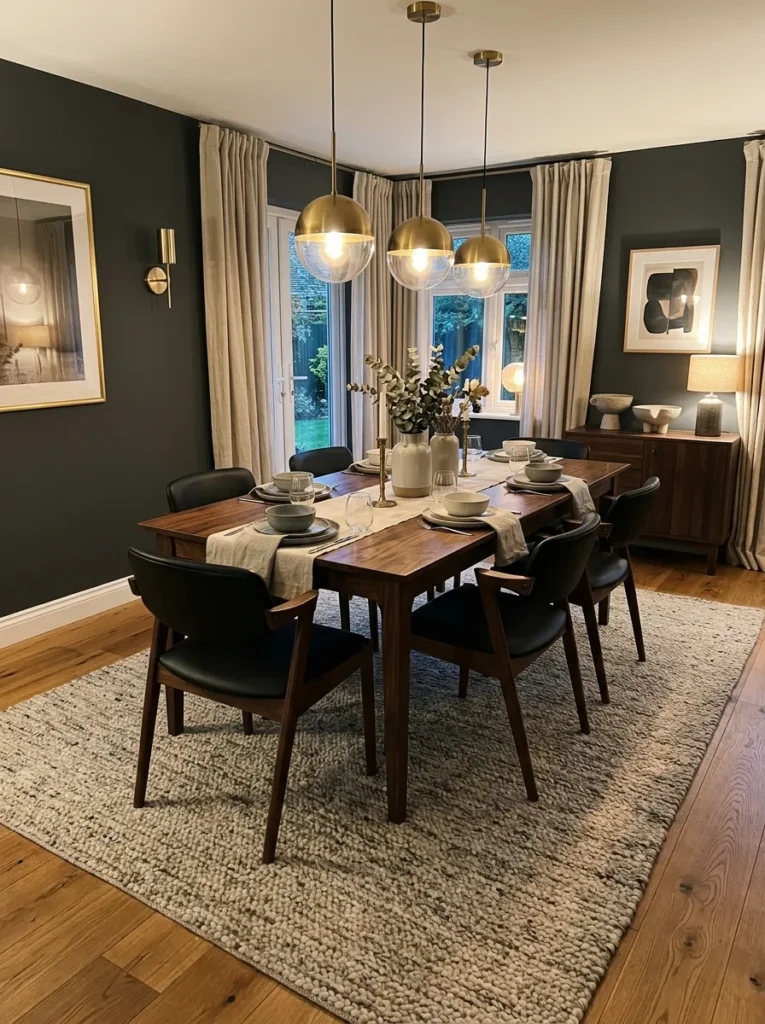
- Defines the dining area with added comfort.
- Softens echoes on hard flooring.
- Brings texture without introducing busy patterns.
- Helps furniture feel anchored within the room.
A carefully selected area rug does far more than protect the floor. It visually anchors the dining table while adding warmth, texture, and softness beneath your feet. Neutral woven rugs, low-pile wool designs, or subtly patterned options work especially well in darker interiors because they provide contrast without distracting from the furniture. The added layer also helps define the dining zone in open-concept homes, making the space feel more intentional and comfortably connected.
I’ve seen this work well in many homes because a properly sized rug instantly improves the room’s proportions. Ideally, chairs should remain on the rug even when pulled out, creating a smoother and more functional dining experience. Choosing durable materials with gentle texture ensures the rug stays practical for everyday use while maintaining its visual appeal. Combined with layered lighting and natural wood finishes, this simple addition makes the space feel noticeably warmer and more complete.
Sculptural Centerpiece
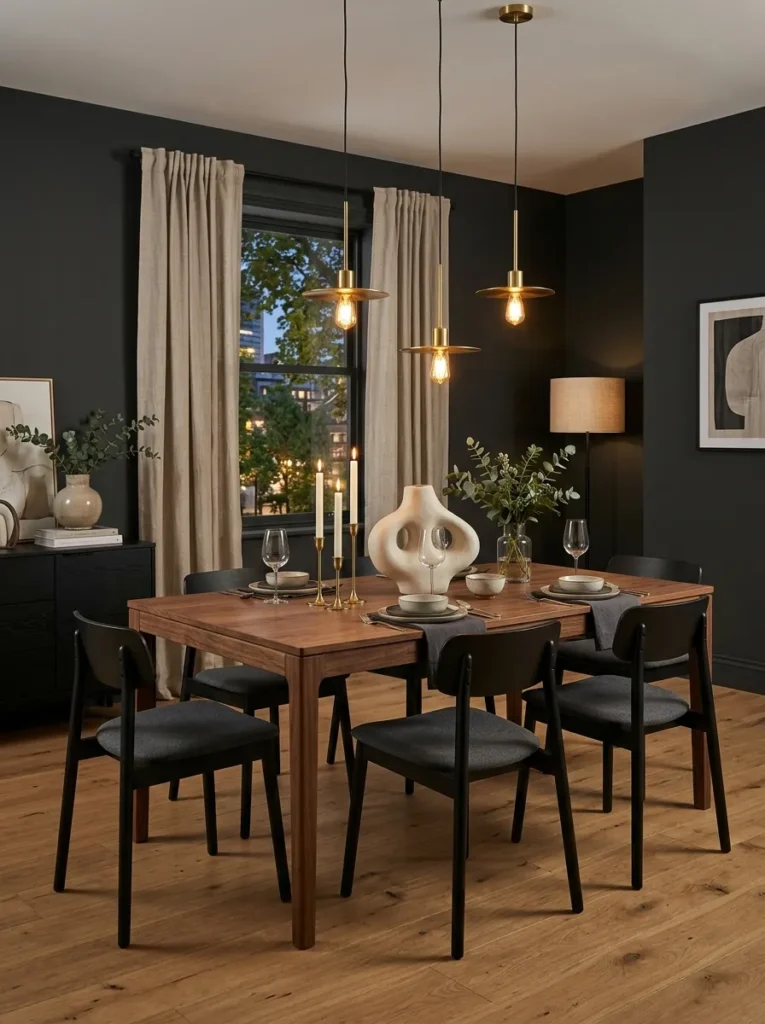
- Gives the table an elegant focal point.
- Adds artistic character without creating clutter.
- Complements both modern and classic interiors.
- Makes everyday table styling feel intentional.
A thoughtfully chosen centerpiece can transform an ordinary dining table into a striking design feature without requiring constant seasonal decorating. Sculptural ceramics, handcrafted bowls, or organic stone pieces create visual interest through shape rather than bright color. Their clean silhouettes complement darker finishes while allowing the table to remain practical for everyday meals. This approach keeps the room feeling refined and balanced, proving that a single meaningful object often has a greater impact than several smaller decorative accessories scattered across the surface.
I’ve noticed that oversized centerpieces usually create a stronger visual statement than multiple small items competing for attention. Choosing natural materials such as ceramic, travertine, or carved wood helps maintain warmth while blending effortlessly with layered lighting and textured fabrics. A few seasonal branches or dried stems can be added when desired, but the sculptural piece should remain the star. This simple styling method keeps the dining room elegant all year without requiring frequent updates.
Leather Dining Chairs

- Adds warmth through rich natural texture.
- Becomes more beautiful as it ages.
- Balances wood, metal, and darker finishes.
- Offers comfort while maintaining a sophisticated look.
Leather dining chairs introduce texture and warmth that perfectly complement darker interiors. Whether finished in cognac, chocolate brown, or deep black, leather develops character over time while remaining timeless and versatile. The material softens the bold appearance of dark walls and substantial furniture, creating a welcoming balance between elegance and comfort. Combined with wood tables and warm lighting, leather seating gives the room a relaxed luxury that feels equally appropriate for everyday family dinners and formal entertaining.
In my experience, high-quality leather becomes even more attractive with regular use because it develops a natural patina that adds personality. That’s why many designers recommend choosing classic colors that will continue to look stylish for years instead of following short-lived trends. Pairing leather with woven textiles, ceramic accents, and natural greenery also keeps the room from feeling overly polished. The result is a dining space that feels comfortable, inviting, and effortlessly sophisticated.
Candlelit Table Styling
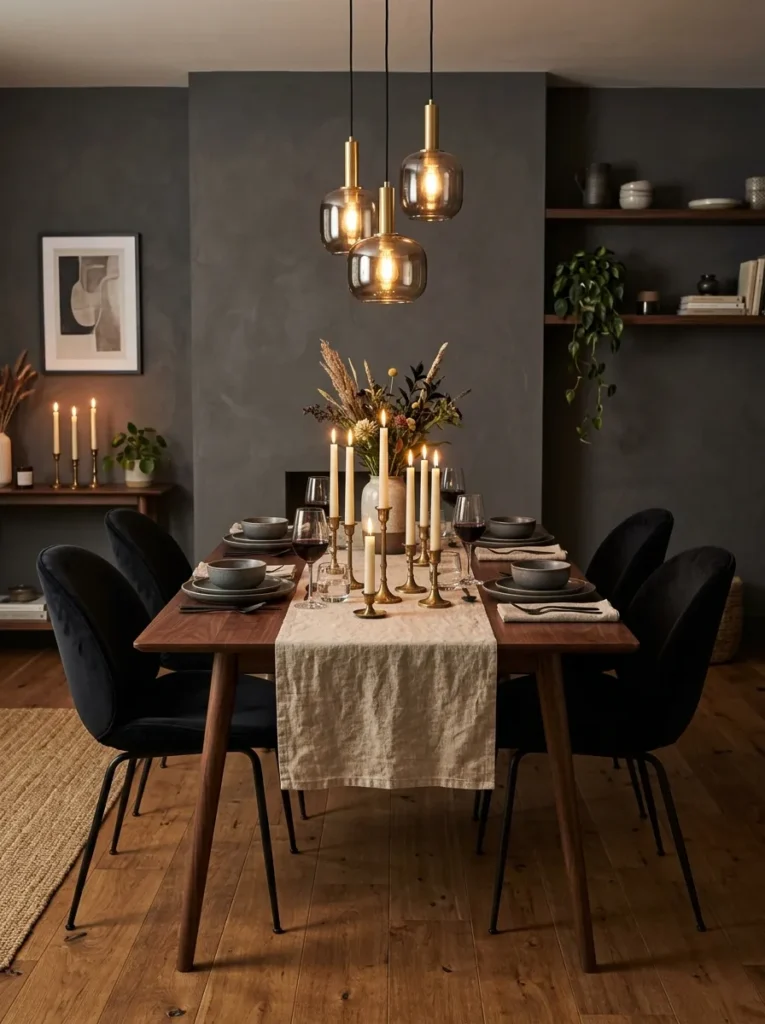
- Creates an inviting atmosphere within minutes.
- Adds warmth without expensive updates.
- Highlights table textures and decorative details.
- Makes everyday dinners feel more special.
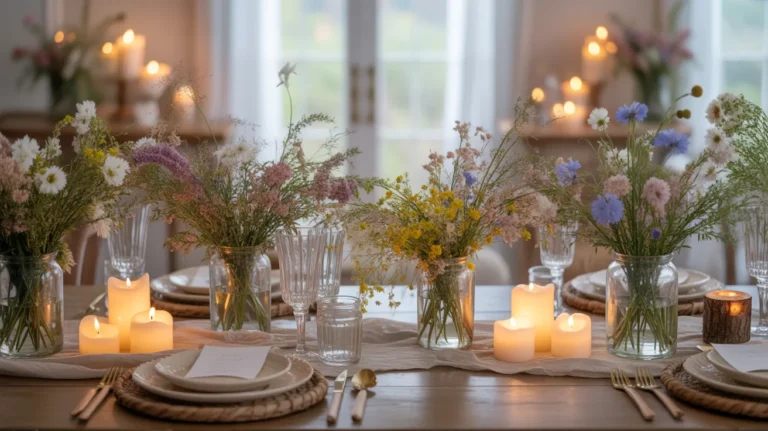
Sometimes the smallest details leave the strongest impression, and candlelight is one of the easiest ways to elevate a dining room. Soft flickering light enhances wood grain, reflects gently from metallic accents, and creates beautiful shadows that add depth throughout the space. Even a simple table setting instantly feels more welcoming when illuminated by warm candlelight. This timeless styling choice works beautifully alongside darker color palettes, making the room feel intimate without requiring any permanent design changes.
I’ve seen this work well in many homes because candles encourage a slower, more relaxed dining experience. Mixing taper candles with varying holder heights creates visual balance while avoiding an overly formal appearance. Unscented candles are usually the best choice since they won’t compete with the aroma of meals. Combined with textured linens and simple ceramic tableware, this affordable update delivers a memorable atmosphere that guests notice immediately and homeowners enjoy every evening.
Stone Feature Wall
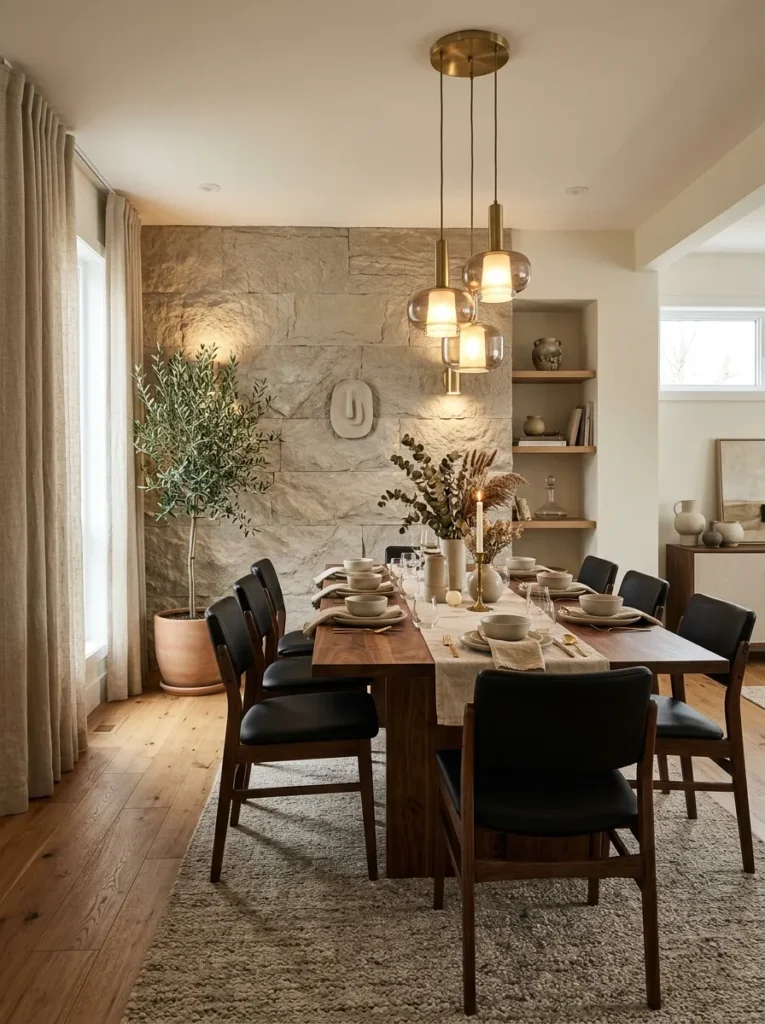
- Adds natural texture without relying on bold colors.
- Creates a stunning focal point behind the dining table.
- Blends beautifully with wood and metal finishes.
- Brings timeless character to modern interiors.
Natural stone instantly introduces depth that paint alone cannot achieve. Whether you choose limestone, slate, travertine, or stacked stone, the textured surface creates gentle shadows that change throughout the day as lighting shifts. This subtle movement makes the dining room feel more dynamic while maintaining a calm, sophisticated appearance. Paired with warm wood furniture and soft lighting, a stone feature wall delivers an upscale look that feels grounded, welcoming, and designed to stand the test of time.
I’ve noticed that even a single accent wall can completely transform the atmosphere without overwhelming the space. That’s why many designers recommend keeping nearby décor simple, allowing the natural texture to become the focal point. Warm-toned lighting further enhances the stone’s depth, making every dinner feel a little more inviting. The combination of earthy materials and layered finishes creates a dining area that feels luxurious while remaining comfortable enough for everyday living.
Oversized Abstract Art
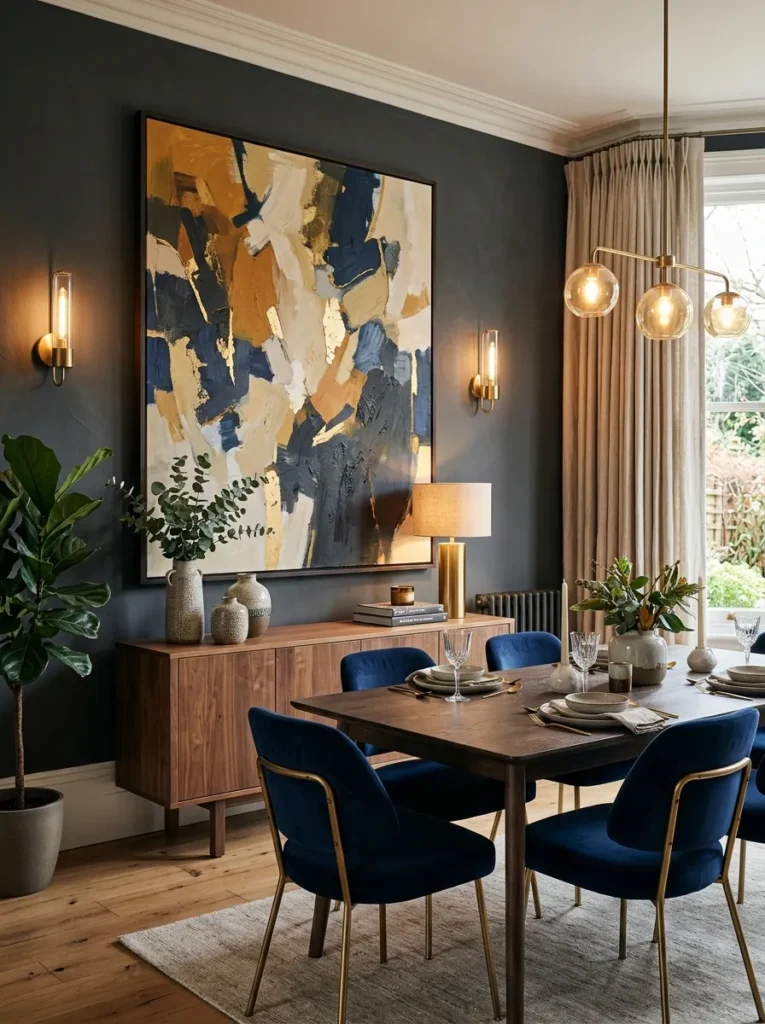
- Fills large wall spaces with effortless style.
- Adds personality without visual clutter.
- Balances minimalist furniture beautifully.
- Creates a gallery-inspired focal point.
Large-scale artwork can completely redefine the personality of a dining room while keeping the overall design clean and uncluttered. An oversized abstract piece introduces movement, texture, and subtle color variations that complement darker interiors without dominating them. Instead of filling walls with multiple smaller decorations, one carefully chosen artwork creates a stronger visual statement and helps anchor the entire space. This simple approach makes the room feel thoughtfully designed while allowing furniture and lighting to remain equally important.
In my experience, artwork with muted earth tones, soft blacks, warm creams, or deep greens blends effortlessly into sophisticated dining spaces. Choosing pieces with visible texture or hand-painted details adds even more character when illuminated by warm lighting. Hanging the artwork at eye level above a sideboard or console creates a balanced composition that feels professionally styled. The result is an elegant focal point that enhances the room without making it feel busy.
Built-In Window Bench
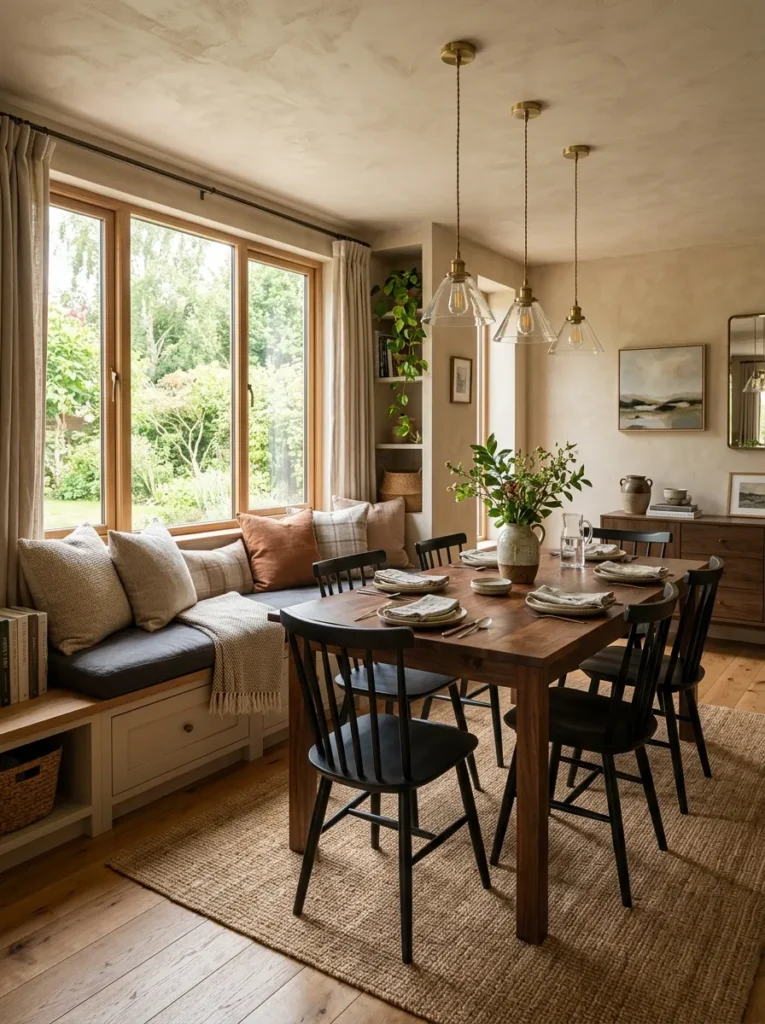
- Maximizes seating without crowding the room.
- Creates a cozy, custom-built appearance.
- Adds hidden storage in smaller spaces.
- Makes casual meals feel more relaxed.
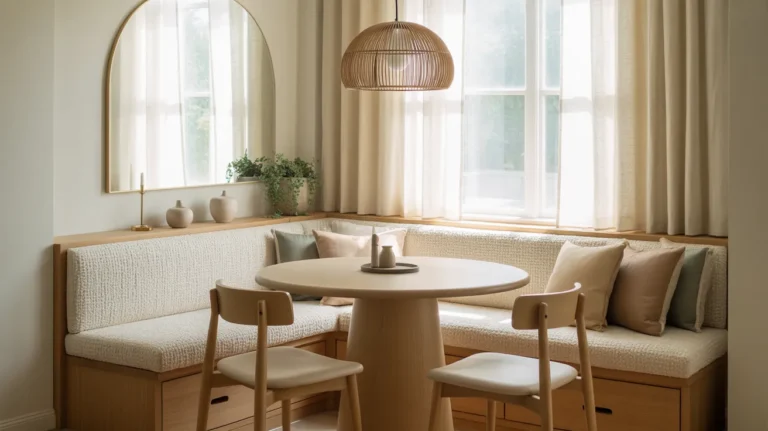
A built-in window bench combines beauty and practicality, making the dining area feel more welcoming while using space efficiently. Positioned beside a table, it creates a comfortable gathering spot that encourages longer conversations and relaxed family meals. Soft cushions and textured pillows introduce warmth while balancing darker finishes throughout the room. The built-in appearance also gives the space a custom, high-end feel without requiring excessive decoration or complicated furniture arrangements.
I’ve seen this work especially well in smaller homes where every square foot matters. Many window benches include hidden storage beneath the seat, offering a convenient place for table linens, seasonal décor, or extra dinnerware. Choosing durable upholstery in rich neutral tones keeps the design timeless while standing up to everyday use. Combined with natural light, layered lighting, and warm wood finishes, this feature creates a dining room that feels both functional and beautifully inviting.
Conclusion
Your dining space can become a beautiful reflection of your personal style with just a few thoughtful updates. The ideas in this article show how colors, textures, lighting, and furniture choices can create a more welcoming atmosphere. A well-designed moody dining room does not need to feel dark or overwhelming; it can feel warm, comfortable, and memorable. I’ve seen how small changes like better lighting or richer textures can completely transform a space. Save these ideas on Pinterest for future inspiration, try your favorites at home, and share this guide with anyone looking to create a more inviting dining area.