24 Japandi Bathroom Design Ideas with Natural Style
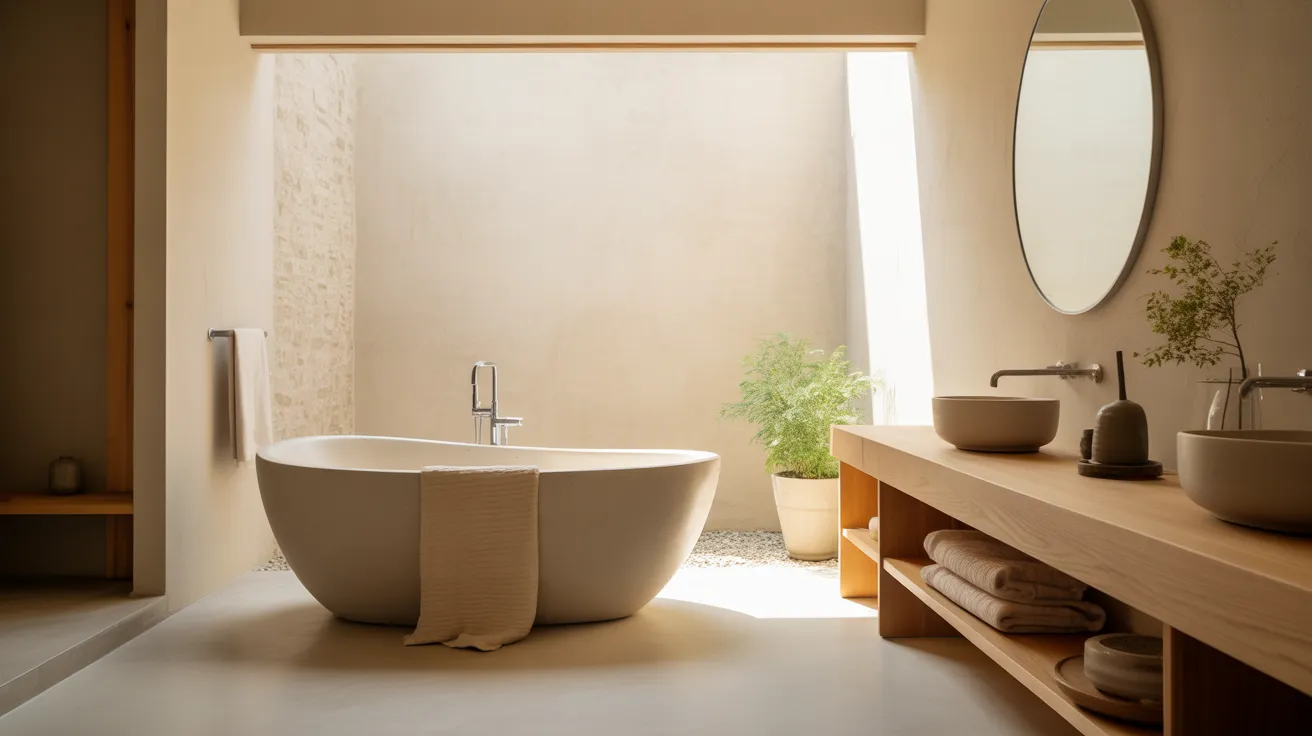
Transform your bathroom into a peaceful retreat with japandi bathroom design ideas that blend natural beauty, simplicity, and modern comfort. Discover how small changes can create a calmer, more organized space.
This collection of inspiring ideas shows how wood, stone, soft lighting, greenery, and thoughtful layouts can completely refresh your bathroom. Whether you have a compact room or a spacious home, these practical design choices can help you create a relaxing atmosphere that feels intentional and timeless. I’ve noticed that many homeowners struggle with making bathrooms feel warm instead of plain, and these nature-inspired solutions offer simple ways to add personality without clutter. Explore each idea and find inspiration you can bring into your own space.
Natural Wood Accents
- Adds warmth and softness to a simple bathroom layout
- Creates a natural connection with calming materials
- Makes small spaces feel more welcoming and balanced
- Works beautifully with neutral colors and minimalist decor
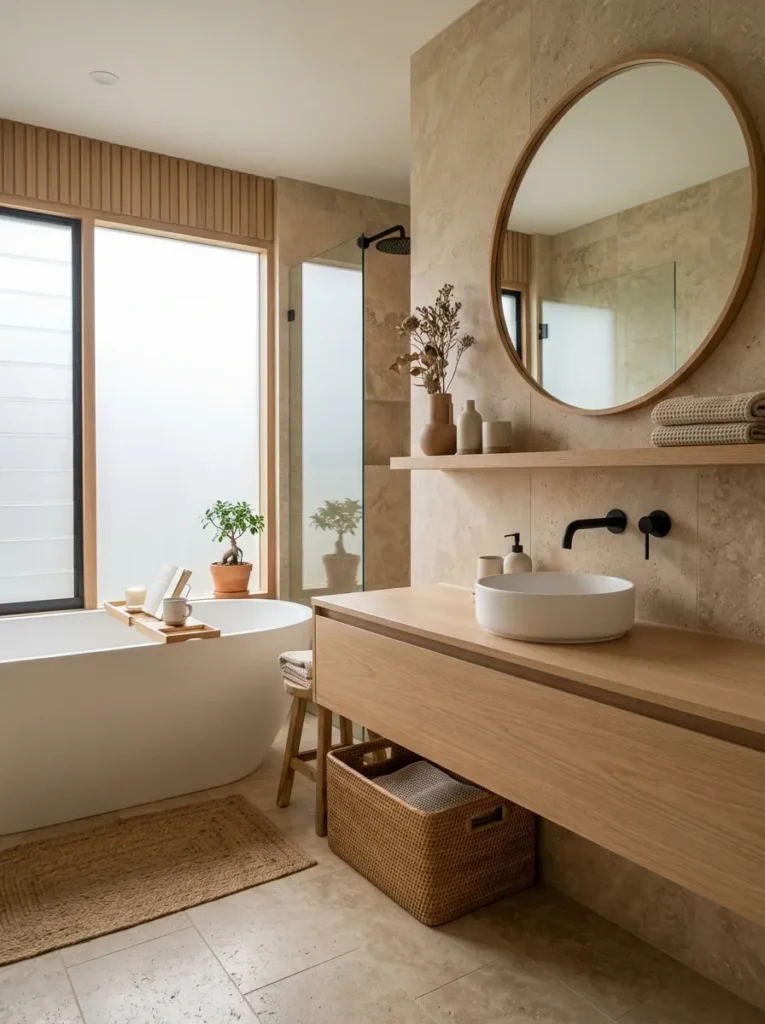
A simple wood detail can completely change how a bathroom feels by adding warmth without creating visual clutter or heaviness. Natural timber elements bring balance to the clean lines often found in Japanese-inspired spaces, making the room feel softer and more inviting. In my experience, wooden vanities and shelves work especially well in smaller bathrooms because they add texture while keeping the design airy. Pairing wood with stone, neutral colors, and simple shapes creates a peaceful atmosphere that feels intentional. This approach also helps a japandi bathroom design achieve a timeless look that stays stylish for years with minimal updates.
The beauty of wood accents comes from their ability to connect modern bathrooms with nature-inspired comfort and practical function. A floating oak shelf, bamboo accessory tray, or wooden stool can introduce warmth while maintaining a minimalist appearance. I’ve noticed these small additions often make bathrooms feel more personal and organized without overwhelming the space. The combination of natural materials and uncluttered surfaces supports relaxation during everyday routines. This style choice creates a welcoming retreat where every element has a purpose and contributes to a balanced, calming environment for busy families.
Stone Texture Walls
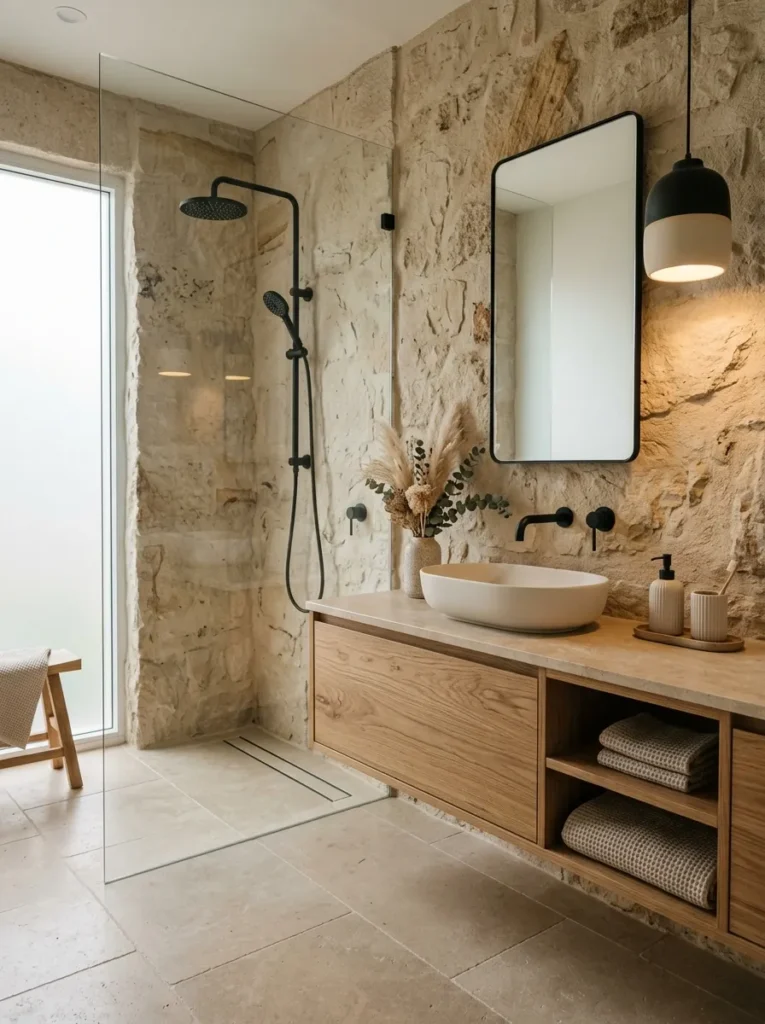
- Brings organic texture without adding unnecessary decoration
- Creates a natural spa-inspired feeling in the bathroom
- Adds depth to plain walls and simple layouts
- Pairs well with wood, ceramics, and warm lighting
Stone textures instantly bring a grounded feeling to bathrooms by adding natural depth and quiet character. Rough stone surfaces or soft limestone finishes create a beautiful contrast against smooth fixtures and simple cabinetry. This idea works well in japandi bathroom design because it combines organic materials with minimalist principles. I’ve seen this work well in many homes where plain bathrooms needed more visual interest without extra decoration. Choosing neutral stone tones keeps the room calm while adding a luxurious feel. The result is a balanced space that feels natural and thoughtfully designed.
A stone-inspired wall does more than improve appearance; it can make a bathroom feel connected to the outdoors and more relaxing during daily routines. Natural textures reflect the Japandi-inspired focus on simplicity and harmony while giving the space a handcrafted touch. In my experience, textured walls are especially effective behind vanities or around shower areas where they become a subtle focal point. Combining stone with warm lighting, wood accents, and soft colors creates a spa-like atmosphere that feels peaceful yet practical. Even a small bathroom can benefit from this elegant upgrade.
Minimal Floating Vanities
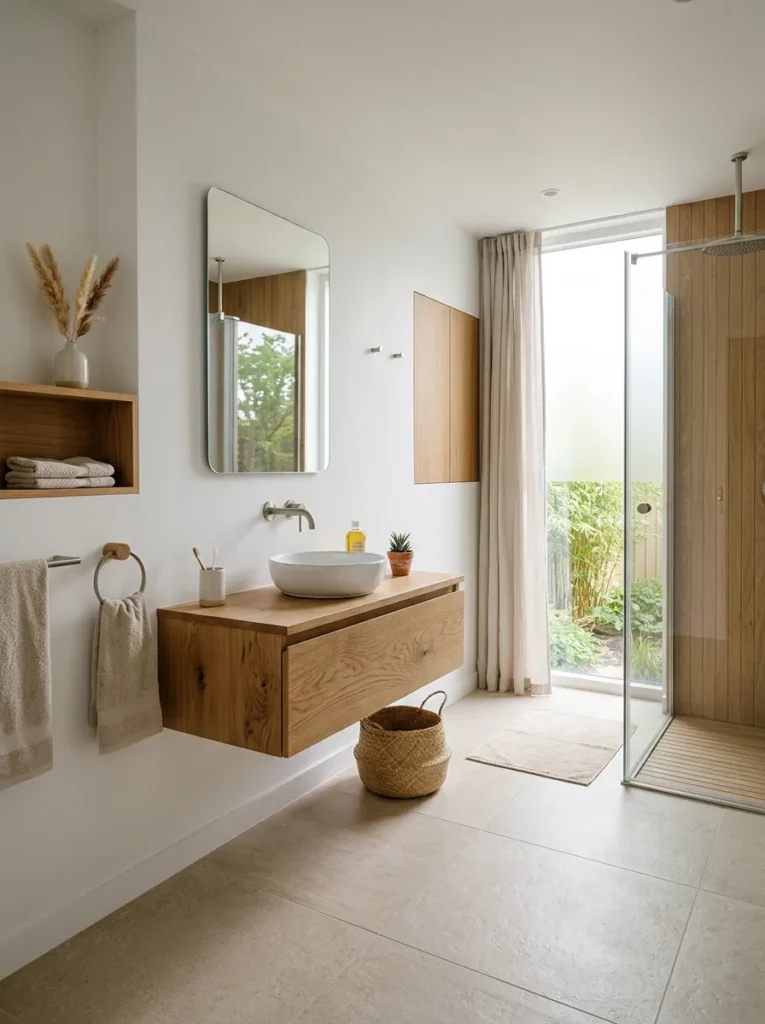
- Creates an open and spacious visual appearance
- Keeps the floor area clean and easy to maintain
- Highlights beautiful flooring materials underneath
- Adds modern simplicity without losing warmth
A floating vanity creates a clean visual effect that instantly makes a bathroom appear more open and spacious. By lifting the cabinetry away from the floor, this design introduces an airy feeling while improving the overall layout. Many modern Japanese-inspired bathrooms use this approach because it supports simplicity and efficient use of space. I’ve noticed that floating units are especially helpful in compact homes where every inch matters. Their streamlined shape keeps the room organized and highlights beautiful flooring details underneath. This makes the bathroom feel larger without adding unnecessary visual weight or distractions.
The right floating vanity can transform an ordinary bathroom into a peaceful and functional retreat with very little effort. Choosing natural wood, soft finishes, or simple handles helps maintain the calm appearance associated with Japandi interiors. I’ve noticed homeowners often appreciate this style because cleaning becomes easier and the floor area feels less crowded. A wall-mounted design also allows better visibility of tiles and creates a more intentional composition. When paired with neutral lighting and minimal accessories, the vanity becomes a practical centerpiece that supports both beauty and everyday comfort.
Neutral Color Palette
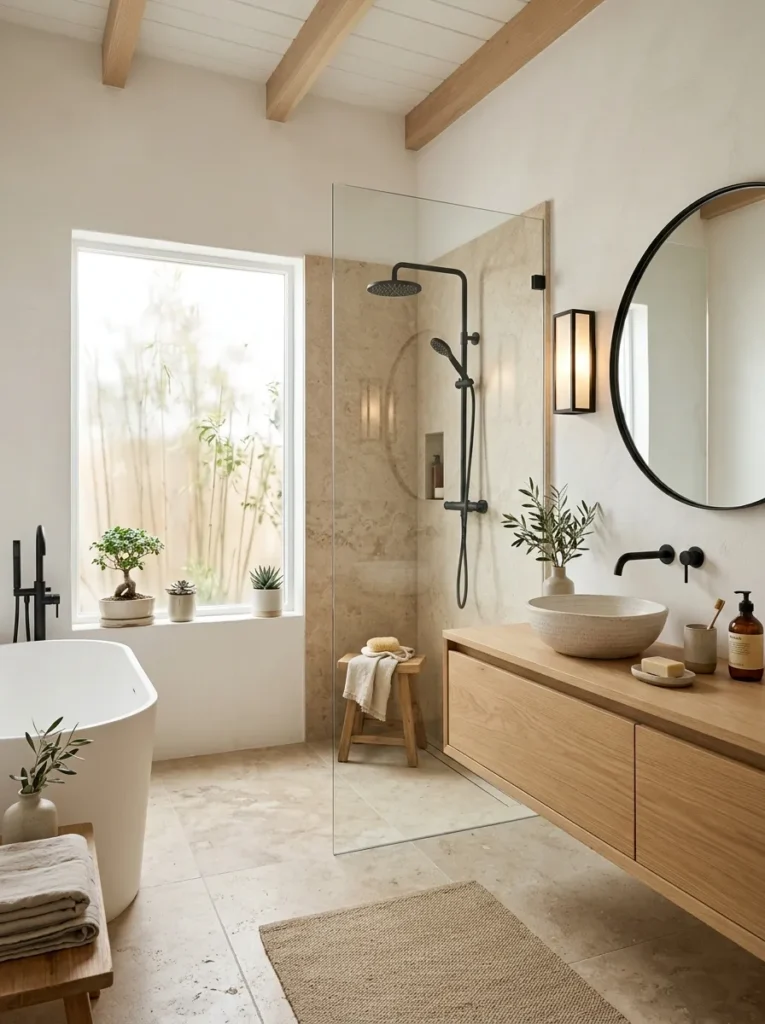
- Creates a peaceful foundation for natural materials
- Makes small bathrooms appear brighter and more spacious
- Keeps the design timeless and easy to refresh
- Helps different textures blend together beautifully
A carefully chosen neutral color palette can turn a bathroom into a peaceful and visually balanced space. Soft shades like warm white, beige, sand, and light gray create a relaxing foundation that allows natural materials to stand out. This approach is central to Japandi-inspired interiors because it focuses on harmony rather than bold contrasts. In my experience, neutral tones make bathrooms feel cleaner and more spacious, especially when paired with natural textures. The gentle colors help create a timeless look that feels comfortable, calming, and easy to update with small decorative changes.
Using neutral tones does not mean creating a boring bathroom; instead, it creates a flexible canvas where every detail feels intentional. I’ve noticed that homeowners often enjoy this style because it reduces visual stress and makes daily routines feel more peaceful. Warm neutrals work beautifully with wooden cabinets, stone surfaces, and soft lighting to create a balanced atmosphere. This idea supports a japandi bathroom design by combining simplicity with natural beauty. The finished space feels organized, welcoming, and thoughtfully designed without relying on excessive patterns or unnecessary extra decorations.
Soft Ambient Lighting
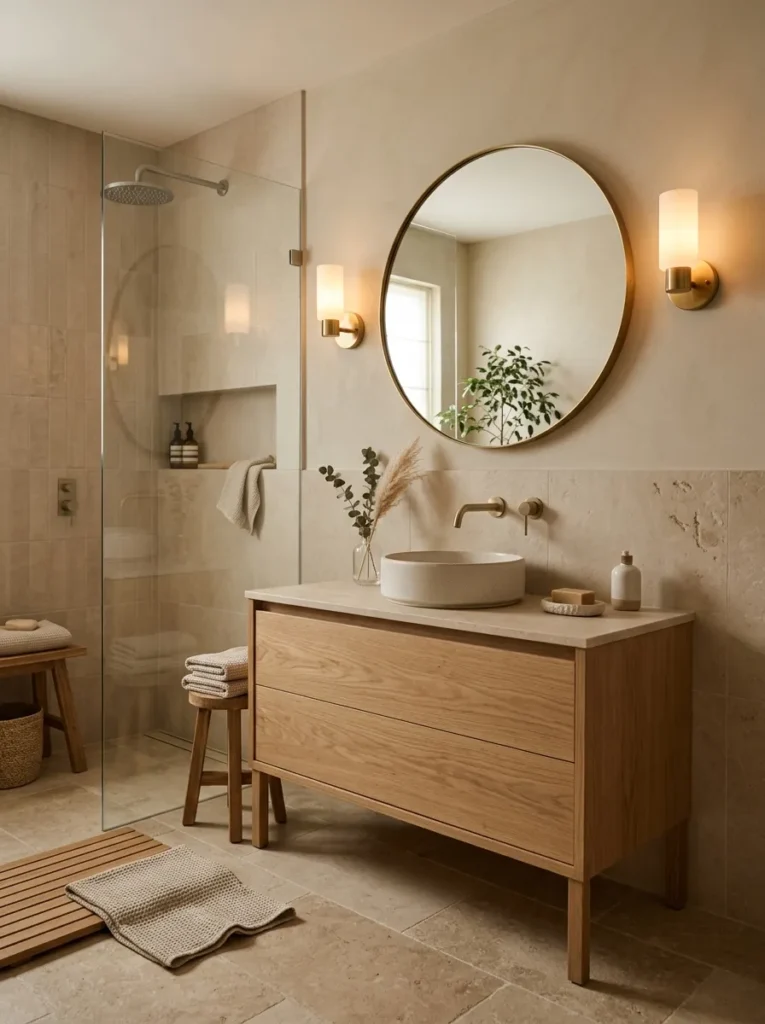
- Creates a relaxing mood during daily routines
- Highlights textures and natural materials beautifully
- Replaces harsh lighting with a softer atmosphere
- Makes the bathroom feel warmer and more inviting
Soft lighting can completely change the mood of a bathroom by creating warmth and comfort during everyday use. Gentle illumination works especially well with minimalist interiors because it highlights textures without making the space feel harsh. Japandi-inspired spaces often use natural light, warm bulbs, and layered lighting to create a peaceful environment. I’ve noticed that replacing cold overhead lights with softer options can make even simple bathrooms feel more inviting. This small upgrade improves both the visual atmosphere and practical experience, helping the room feel like a relaxing personal retreat.
Lighting choices play an important role in making materials, colors, and architectural details look their best. Warm fixtures near mirrors, shelves, or shower areas can add depth while maintaining a clean appearance. In many homes, thoughtful lighting creates the feeling of a luxury spa without requiring major renovations. This approach complements a japandi bathroom design by supporting calmness, functionality, and natural beauty. When combined with wood, stone, and neutral shades, soft lighting helps every element work together. The final result is a bathroom that feels balanced, comfortable, and beautifully simple.
Indoor Greenery Touches
- Adds freshness without creating visual clutter
- Brings a natural outdoor feeling indoors
- Softens hard surfaces like stone and tiles
- Creates a calming atmosphere with simple additions
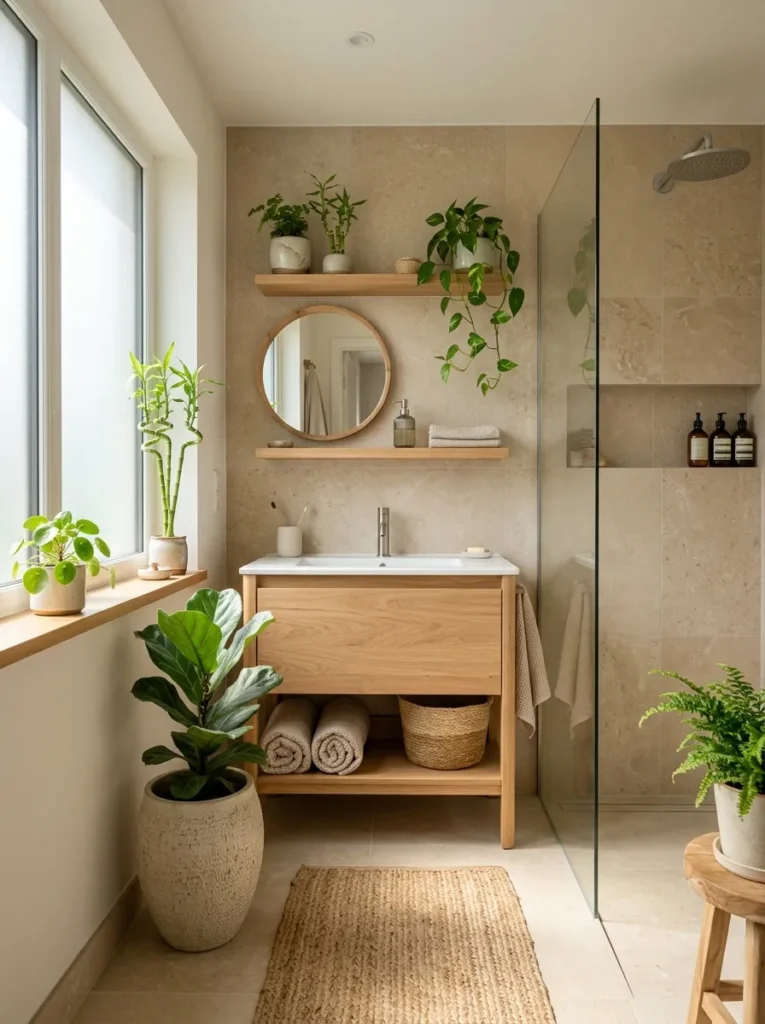
Natural plants bring life into minimalist bathrooms while adding freshness and a gentle connection to the outdoors. Greenery works beautifully with neutral colors, wood textures, and simple surfaces because it introduces a subtle natural contrast. Many Japandi-inspired spaces include plants that are easy to maintain, such as bamboo, ferns, or small leafy varieties. I’ve seen this work well in homes where bathrooms needed more personality without adding clutter. A carefully placed plant can soften hard materials, improve the atmosphere, and create a peaceful feeling that makes daily routines more enjoyable.
Adding greenery does not require a large bathroom or complicated maintenance routine. A small plant near the sink, hanging greenery beside the shower, or a simple ceramic pot on a shelf can make the room feel more welcoming. I’ve noticed that natural elements often help people feel more relaxed because they bring a sense of freshness indoors. This design choice supports the principles behind japandi bathroom design by blending simplicity with organic beauty. The result is a calmer, more balanced space that feels connected to nature while remaining practical and easy to care for.
Wooden Bath Accessories
- Adds warmth through small affordable details
- Makes everyday items feel more intentional
- Complements natural materials already in the space
- Creates a coordinated minimalist appearance
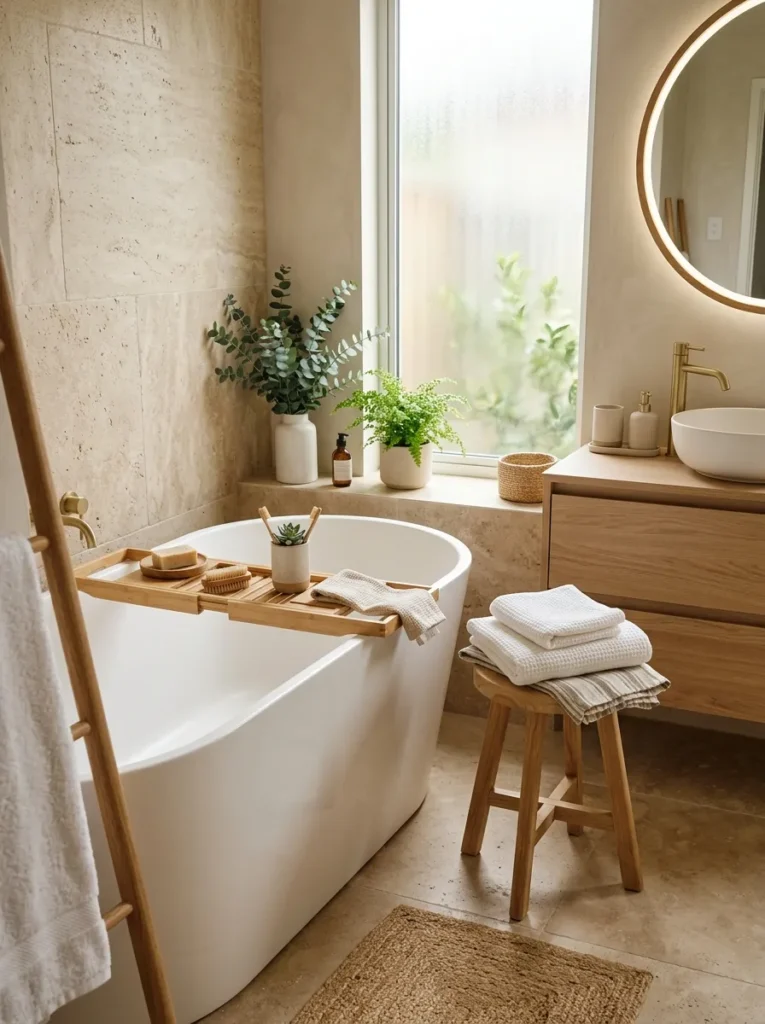
Small wooden accessories can make a bathroom feel warmer and more thoughtfully designed without requiring major changes. Items like bamboo trays, wooden stools, soap dishes, and storage boxes introduce natural texture while keeping the space organized. These simple additions are often overlooked, but they can completely improve the overall appearance of a room. In my experience, small material changes are one of the easiest ways to refresh a bathroom while maintaining a calm aesthetic. When paired with stone, ceramics, and neutral colors, wooden details help create the balanced feeling often desired in a japandi bathroom design.
The best part about wooden accessories is their ability to combine beauty with everyday usefulness. A wooden bath tray can organize essentials, while a simple stool can add comfort and function near the shower or bathtub. I’ve noticed that these small upgrades make bathrooms feel more personalized without creating unnecessary decoration. Natural wood also ages beautifully, developing character over time while keeping the room connected to organic materials. This idea works especially well for renters or homeowners who want a peaceful minimalist style without changing walls, flooring, or permanent fixtures.
Freestanding Bathtubs
- Creates a peaceful focal point in larger bathrooms
- Adds a relaxing spa-like visual element
- Works beautifully with natural materials and textures
- Enhances the feeling of simplicity and comfort
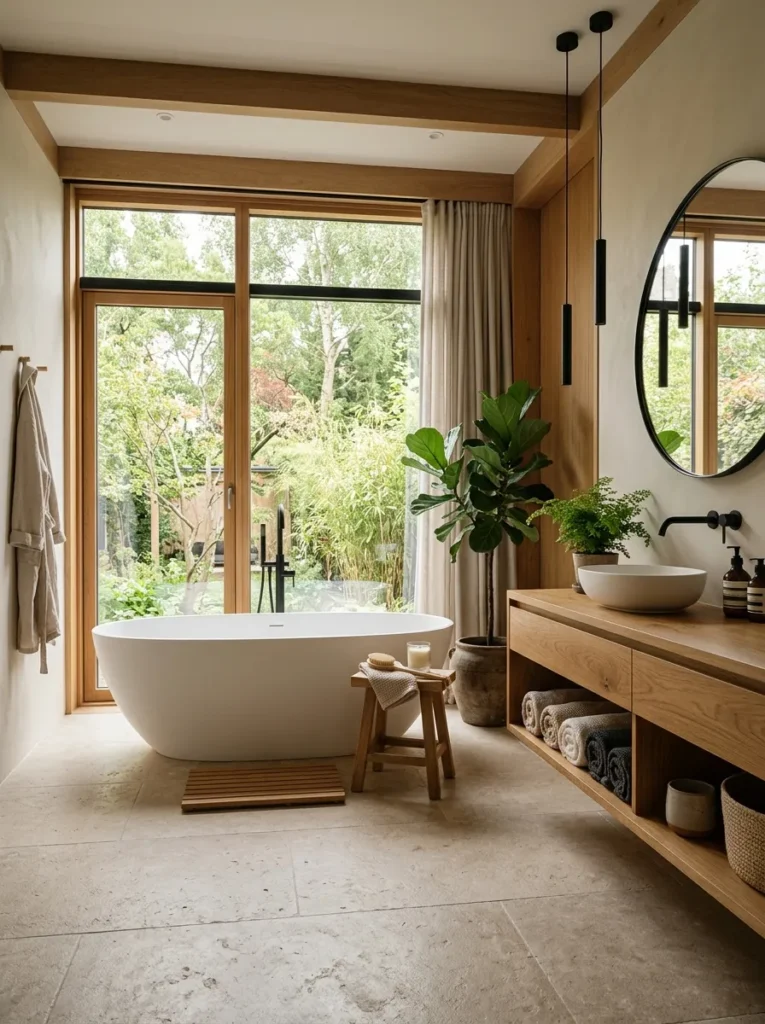
A freestanding bathtub instantly creates a sense of calm luxury while keeping the bathroom design simple and elegant. Its smooth shape becomes a natural focal point without needing extra decoration around it. This feature works especially well in Japandi-inspired spaces because it combines relaxation with clean visual balance. I’ve noticed that homeowners often choose simple white tubs because they pair effortlessly with wood, stone, and neutral tones. The open space around the bathtub also helps the room feel less crowded, creating a peaceful environment where daily routines feel more enjoyable and relaxing.
Choosing the right bathtub style can transform a bathroom into a personal retreat that feels both modern and timeless. A curved freestanding tub softens the straight lines commonly found in minimalist rooms, creating a more balanced appearance. In my experience, placing the tub near natural light or pairing it with warm textures makes the entire space feel more inviting. This approach supports a japandi bathroom design by focusing on comfort, simplicity, and natural beauty. Even though the bathtub is a statement feature, the overall look remains quiet, functional, and beautifully uncluttered.
Natural Stone Flooring
- Adds durability with natural visual appeal
- Creates a grounded and organic foundation
- Works well with warm minimalist interiors
- Improves the overall texture of the space
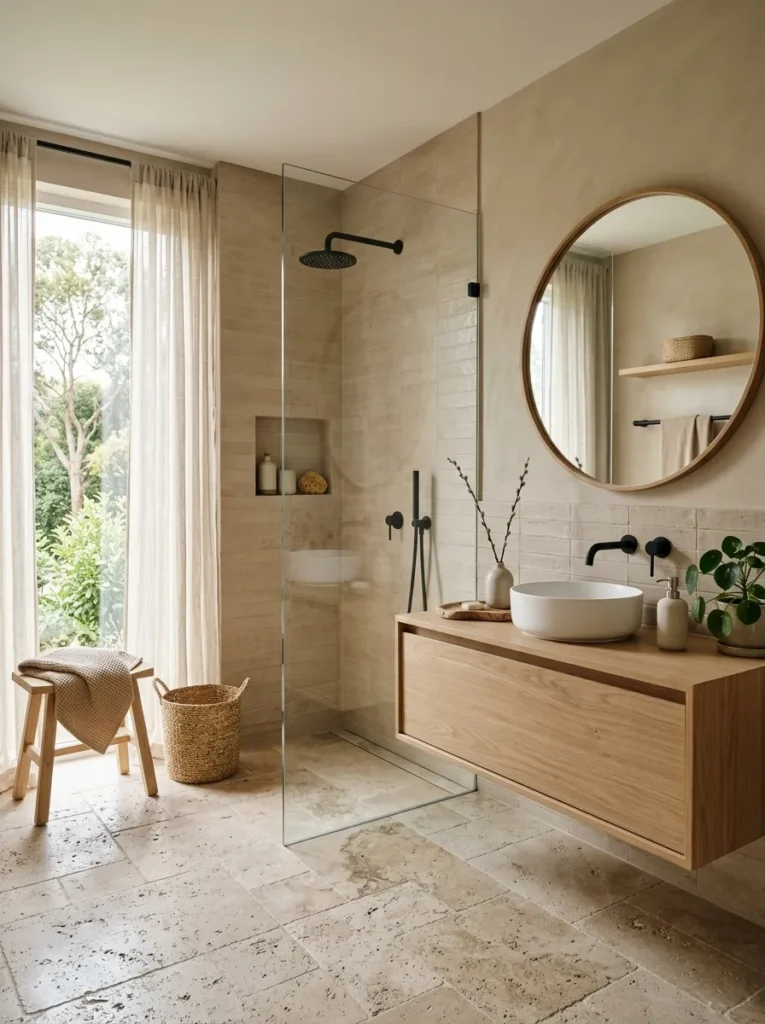
Natural stone flooring creates a strong foundation for a bathroom by adding texture, durability, and a connection to nature. Materials like limestone, travertine, and stone-look tiles bring subtle patterns that make the floor visually interesting without feeling overwhelming. This style fits beautifully with minimalist spaces because it adds character while keeping the overall design calm. I’ve seen many bathrooms feel more luxurious simply by changing the flooring material because it influences the entire atmosphere. A natural surface helps support a japandi bathroom design by combining practical function with timeless visual appeal.
The right flooring choice can make a bathroom feel more balanced, comfortable, and connected to the surrounding design elements. Stone tones naturally complement wooden furniture, ceramic pieces, and soft neutral colors, creating a cohesive appearance throughout the room. I’ve noticed that textured flooring is especially helpful because it adds depth while hiding small marks from daily use. When paired with simple layouts and warm lighting, natural stone creates a peaceful environment that feels carefully planned. This idea proves that even functional surfaces can become beautiful design features when chosen with intention.
Minimal Mirror Designs
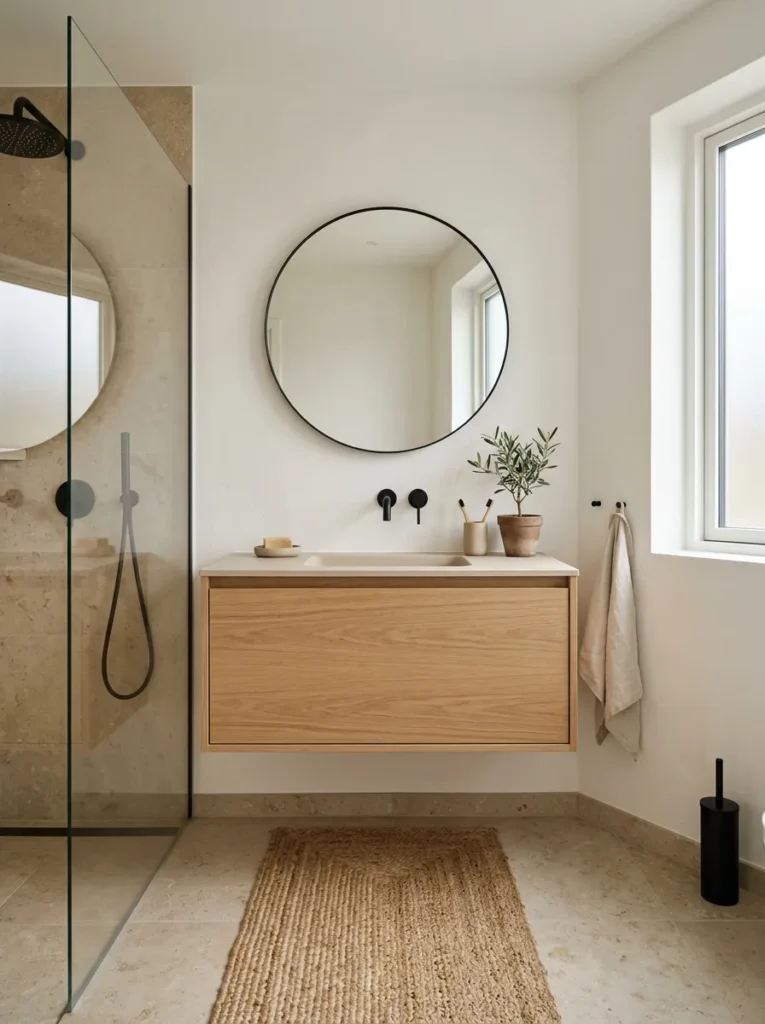
- Creates a clean and spacious visual effect
- Enhances natural light throughout the room
- Adds function without unnecessary decoration
- Complements simple lines and natural textures
A simple mirror can become one of the most important design elements in a minimalist bathroom because it influences both style and function. Round mirrors, frameless designs, and natural wood frames work beautifully in Japandi-inspired spaces by adding softness to clean layouts. The right mirror reflects light, improves the sense of space, and creates a balanced focal point above the vanity. I’ve noticed that choosing a mirror with fewer details often makes a bathroom feel more peaceful and organized. This approach supports a japandi bathroom design by keeping the room visually calm while still adding practical beauty.
The placement and shape of a mirror can completely change how a bathroom feels, especially in smaller spaces. A large mirror can make the room appear brighter, while a simple curved design can soften straight architectural lines. In my experience, mirrors with natural materials or subtle finishes create a more relaxing atmosphere than overly decorative options. Pairing a minimalist mirror with warm lighting, wooden surfaces, and neutral colors helps every element feel connected. The result is a bathroom that looks polished, open, and thoughtfully designed without relying on excessive accessories or bold features.
Bamboo Storage Solutions
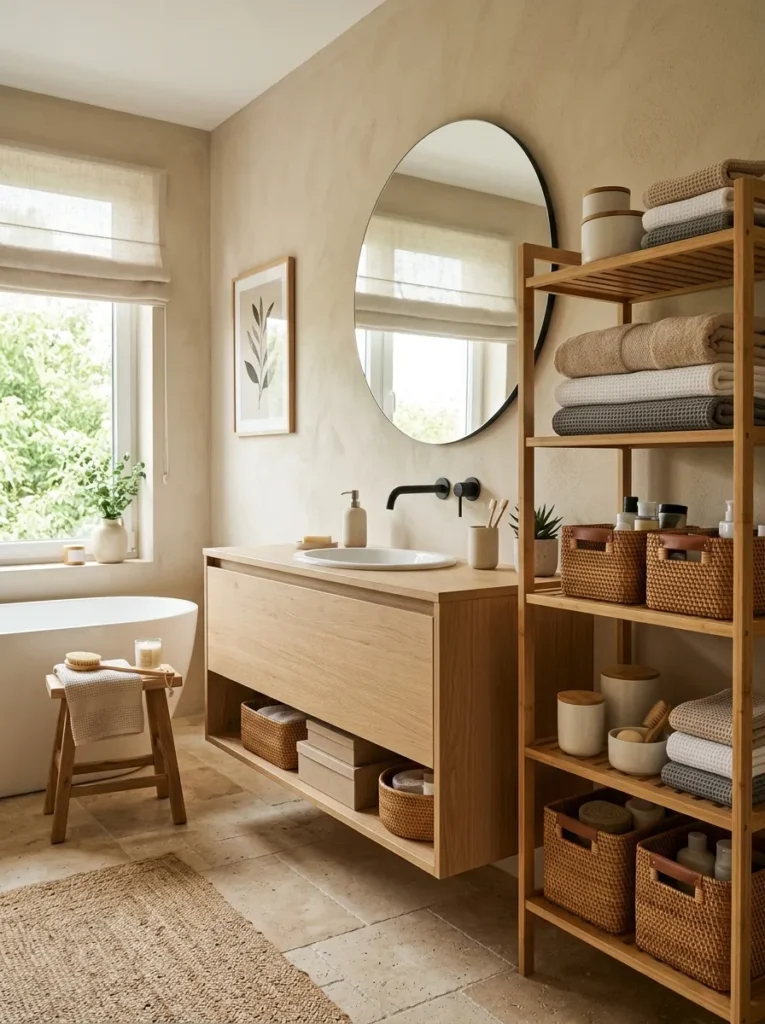
- Keeps essentials organized with natural textures
- Adds storage without making the space feel crowded
- Creates warmth through sustainable materials
- Supports a simple clutter-free bathroom routine
Bamboo storage is a practical way to introduce natural texture while keeping bathroom essentials neatly arranged. Open shelves, woven baskets, and bamboo organizers create a warm appearance that feels both functional and beautiful. These materials fit naturally into minimalist interiors because they add character without creating visual noise. I’ve noticed that bathrooms often feel more relaxing when everyday items have dedicated places instead of sitting randomly on counters. Bamboo solutions help maintain a cleaner appearance while supporting the natural, balanced style associated with a japandi bathroom design. Small storage upgrades can make a surprisingly noticeable difference.
Organized storage does not need to look complicated or overly modern. Bamboo baskets and shelves create a softer alternative to heavy cabinets while allowing frequently used items to stay accessible. I’ve seen this work well in compact bathrooms where smart organization is essential for maintaining an open feeling. The natural color of bamboo pairs beautifully with wood, stone, and neutral shades, creating a cohesive look throughout the room. This simple storage idea improves both appearance and functionality, helping the bathroom feel calmer, more efficient, and easier to enjoy every day.
Warm Wood Ceilings
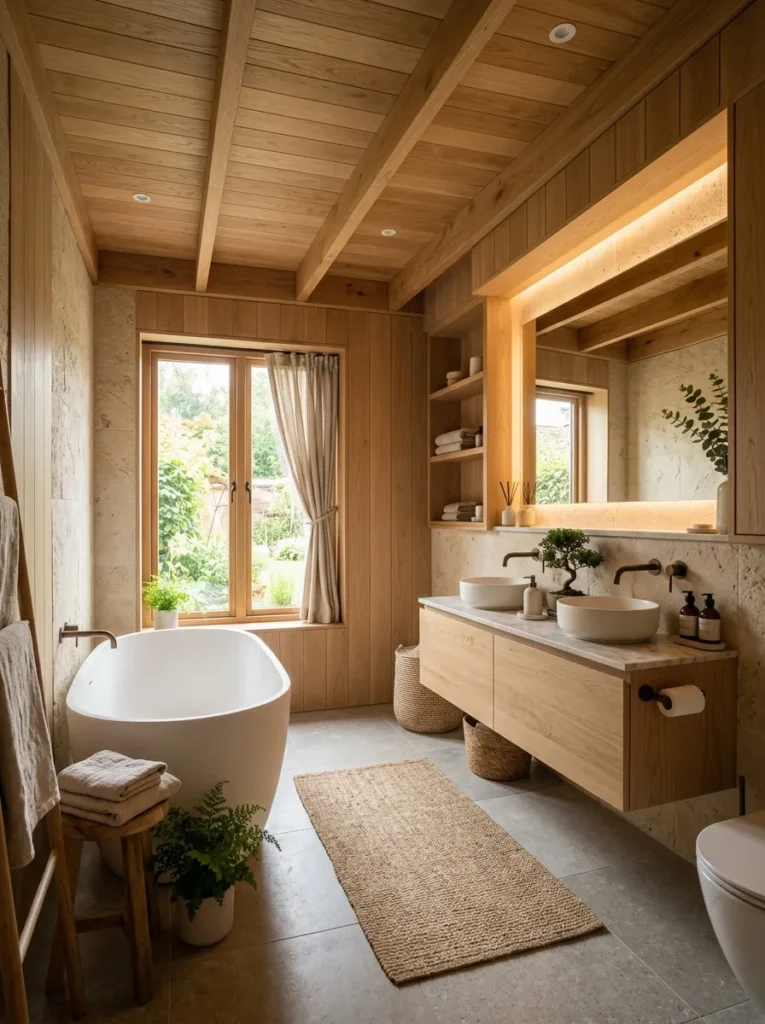
- Adds warmth to large or open bathrooms
- Creates a unique architectural feature
- Makes the space feel more connected to nature
- Balances cool materials like stone and tile
A wooden ceiling can completely transform the feeling of a bathroom by adding warmth from above and creating a unique architectural statement. This design idea works especially well in spacious bathrooms where the ceiling becomes an important part of the overall composition. Natural wood panels introduce texture and soften the appearance of stone, glass, and ceramic surfaces. I’ve noticed that warm ceiling materials can make modern bathrooms feel less cold and more inviting. When combined with simple furniture and neutral colors, this feature enhances the peaceful atmosphere often found in Japandi-inspired interiors.
Using wood on the ceiling creates a beautiful sense of balance because it brings natural elements into an unexpected area of the room. Many homeowners focus only on floors and cabinets, but overhead details can have a powerful visual impact. In my experience, a wooden ceiling works best when the rest of the bathroom remains simple and uncluttered. Soft lighting can highlight the natural grain while creating a relaxing glow. This approach supports a japandi bathroom design by combining craftsmanship, comfort, and organic beauty in a way that feels timeless and carefully considered.
Wabi Sabi Details
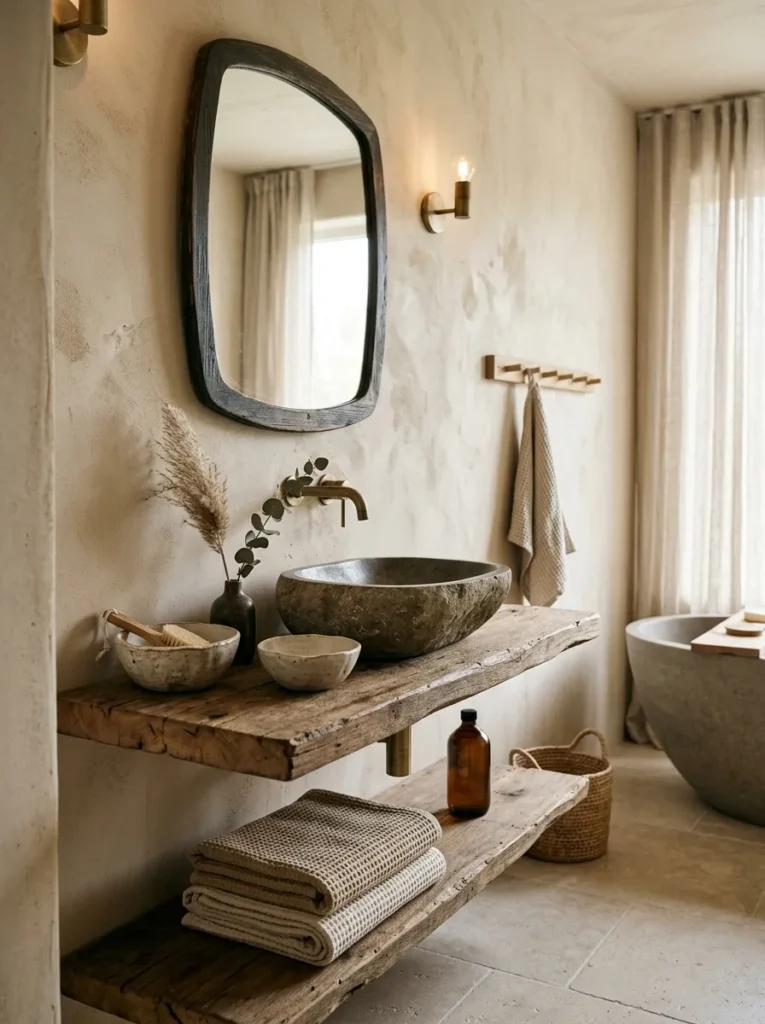
- Adds personality through handmade imperfections
- Creates a more authentic and relaxed atmosphere
- Brings warmth to minimalist spaces
- Encourages thoughtful choices over excessive decoration
Wabi Sabi details bring a sense of authenticity and calm by celebrating natural textures, handmade elements, and imperfect beauty. In a bathroom, this can appear through handcrafted ceramics, uneven stone surfaces, or simple wooden accessories with visible character. These details make the space feel less manufactured and more connected to nature. I’ve noticed that rooms with subtle imperfections often feel warmer because they reflect individuality rather than looking overly styled. Adding these touches helps create a japandi bathroom design that feels peaceful, personal, and naturally balanced without needing many decorative pieces.
The charm of Wabi Sabi comes from choosing items that feel meaningful instead of filling the bathroom with unnecessary objects. A handmade soap dish, textured wall finish, or slightly irregular ceramic piece can create visual interest while maintaining simplicity. In my experience, these small details help bathrooms feel more relaxing because they encourage a slower and more mindful atmosphere. The combination of minimalist design and organic imperfections creates a timeless look that does not depend on changing trends. This approach makes the bathroom feel comfortable, thoughtful, and connected to natural materials.
Glass Shower Panels
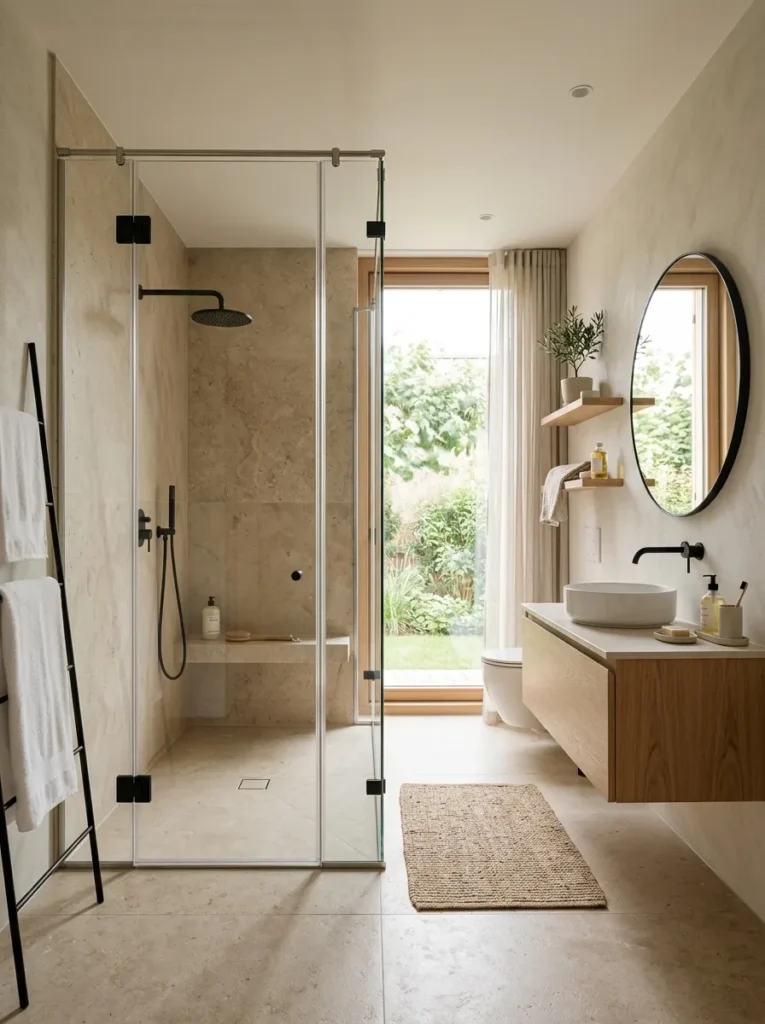
- Makes the bathroom appear larger and brighter
- Keeps the design open and uncluttered
- Showcases beautiful tile and material choices
- Adds a modern touch while staying simple
Glass shower panels create a clean and open appearance that works beautifully with minimalist bathroom styles. Unlike bulky shower curtains or heavy partitions, transparent glass allows light to move freely through the space. This makes the bathroom feel larger, brighter, and more connected. I’ve noticed that glass panels are especially helpful in smaller homes because they remove visual barriers and highlight the beauty of surrounding materials. When combined with natural textures and simple fixtures, they support the calm and balanced feeling that defines a japandi bathroom design while improving everyday functionality.
A well-designed glass shower area can make even a basic bathroom feel more sophisticated without adding unnecessary decoration. Clear panels allow stone walls, textured tiles, and wooden details to become part of the overall visual design. I’ve seen this work well in bathrooms where homeowners wanted a spacious feeling without major structural changes. Choosing simple hardware and clean edges keeps the look elegant and timeless. This design choice blends practicality with beauty, creating a relaxing shower experience while maintaining the uncluttered appearance that makes minimalist interiors so appealing.
Ceramic Accent Pieces
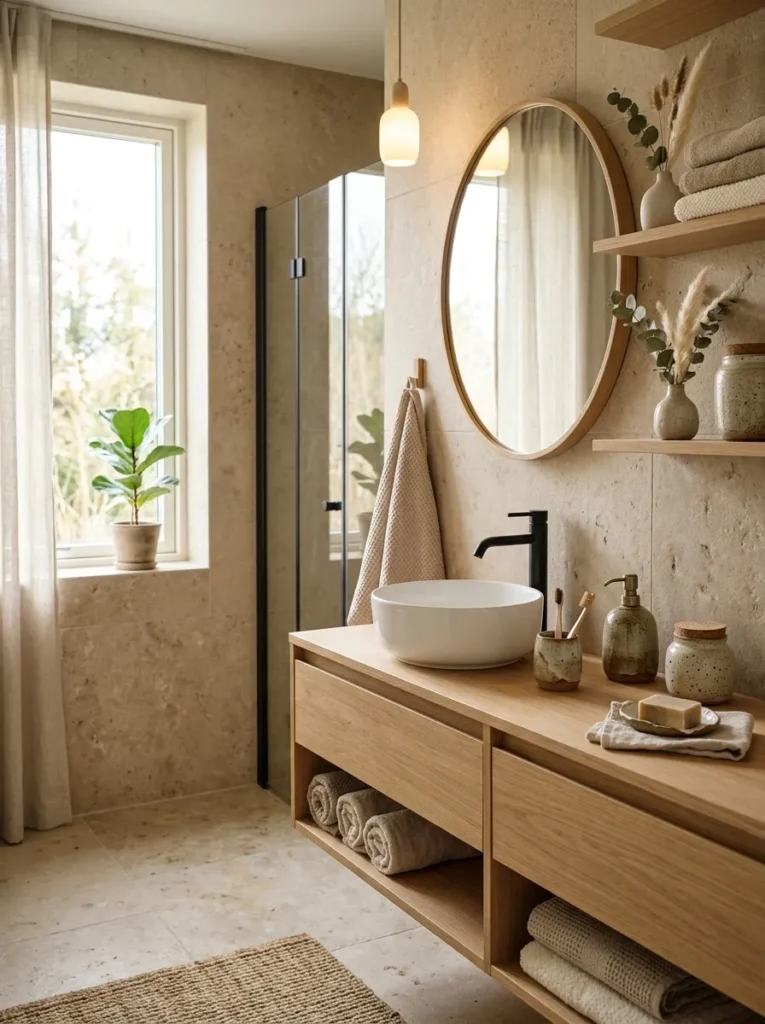
- Adds subtle artistic touches without clutter
- Introduces handmade texture and character
- Complements wood and stone materials
- Makes everyday items look more intentional
Ceramic accents add a handcrafted feeling to bathrooms while keeping the overall design simple and elegant. Small pieces like soap dispensers, bowls, vases, and storage containers can introduce texture without overwhelming the space. This works especially well in minimalist interiors because each item has room to stand out. I’ve noticed that handmade ceramics often make bathrooms feel warmer and more personal compared to mass-produced accessories. These details support the natural beauty behind a japandi bathroom design by combining function, craftsmanship, and quiet visual interest in a thoughtful way.
Choosing ceramic pieces with soft shapes and neutral finishes helps maintain a peaceful bathroom atmosphere. White, beige, gray, and earthy tones blend naturally with wood, stone, and other organic materials. In my experience, carefully selected accessories can make a simple bathroom feel complete without adding unnecessary decoration. A beautiful ceramic container can organize essentials while also becoming part of the room’s aesthetic. This approach focuses on quality over quantity, creating a space where every object feels purposeful. The result is a bathroom that feels balanced, calm, and beautifully connected to natural design principles.
Open Wooden Shelves
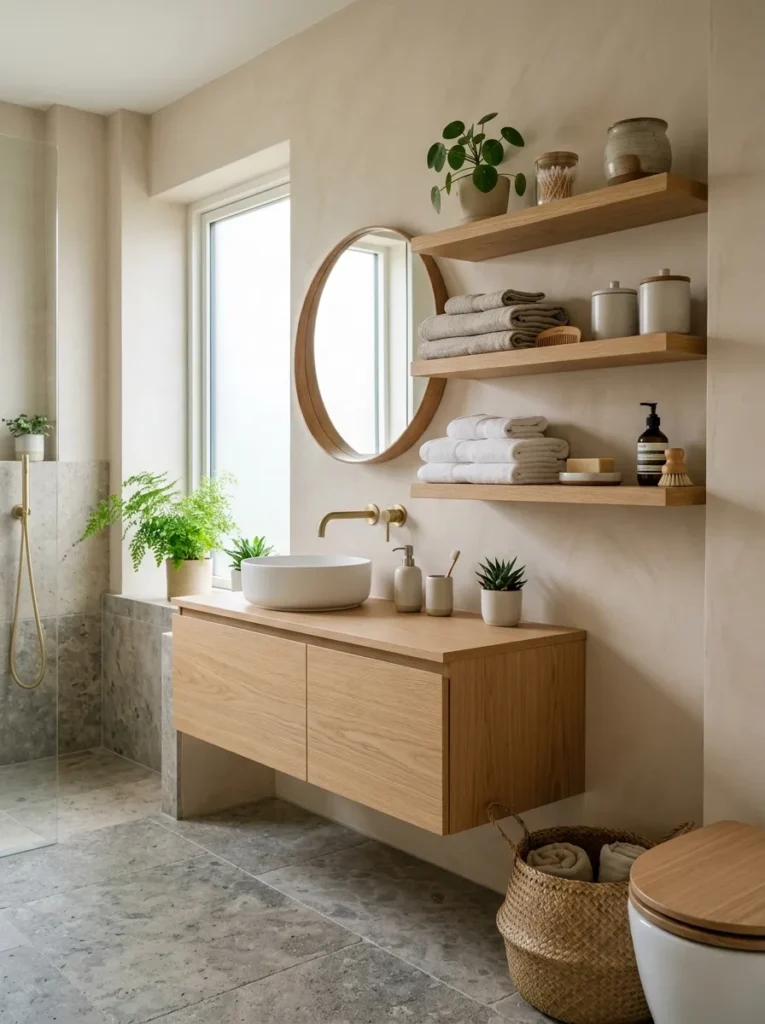
- Adds practical storage with a lightweight appearance
- Displays beautiful everyday bathroom essentials
- Keeps the space open and visually balanced
- Introduces warmth without bulky cabinetry
Open wooden shelves create a simple storage solution that adds warmth while keeping the bathroom feeling spacious and airy. Unlike closed cabinets, floating shelves allow carefully chosen items to become part of the design. Towels, ceramics, plants, and natural accessories can be displayed in a way that feels intentional rather than cluttered. I’ve noticed that open shelving works especially well in smaller bathrooms because it provides storage without making walls feel heavy. This idea supports japandi bathroom design principles by combining practical organization with natural materials and minimalist beauty.
The key to successful open shelving is choosing fewer items and arranging them with purpose. A small stack of linen towels, a ceramic container, or a wooden tray can create a balanced display while keeping essentials within easy reach. In my experience, shelves made from natural wood bring more warmth than traditional storage options and help soften hard bathroom surfaces. When paired with neutral colors and simple fixtures, open shelving creates a calm atmosphere that feels organized and welcoming. This design choice proves that storage can be both functional and visually appealing.
Textured Linen Towels
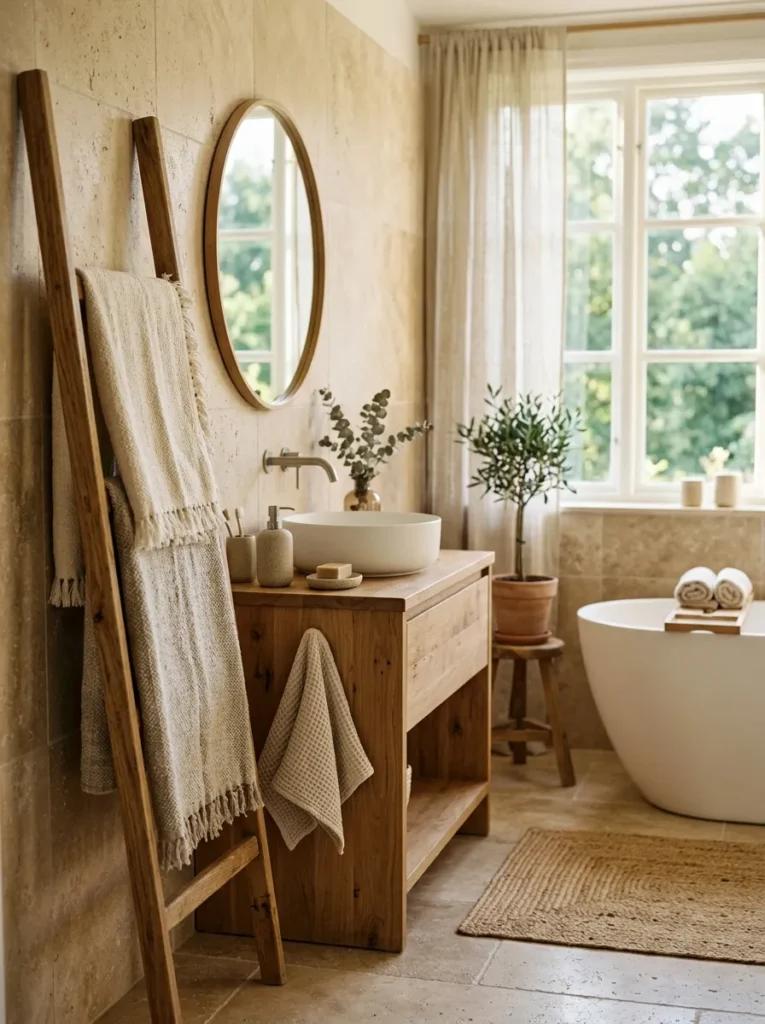
- Adds softness to hard bathroom surfaces
- Creates a cozy and natural finishing touch
- Enhances the layered texture of the room
- Provides simple style updates without renovation
Textured linen towels are a small detail that can make a bathroom feel instantly warmer and more inviting. Their natural fibers add softness and visual depth while complementing materials like wood, stone, and ceramics. In minimalist bathrooms, textiles play an important role because they prevent the space from feeling too cold or plain. I’ve noticed that switching to neutral-toned towels is one of the easiest ways to refresh a bathroom’s appearance. These simple fabric choices enhance the calm atmosphere often associated with japandi bathroom design while also improving everyday comfort.
The beauty of linen and cotton textiles comes from their relaxed appearance and practical function. Slight textures, natural wrinkles, and soft colors create a more organic feeling compared to overly polished fabrics. I’ve seen this work well in homes where owners wanted a peaceful bathroom makeover without replacing fixtures or furniture. Choosing towels in shades like cream, sand, or warm gray helps maintain a cohesive look throughout the space. This idea shows how small updates can create a meaningful visual impact while keeping the bathroom simple, comfortable, and connected to natural design elements.
Curved Bathroom Forms
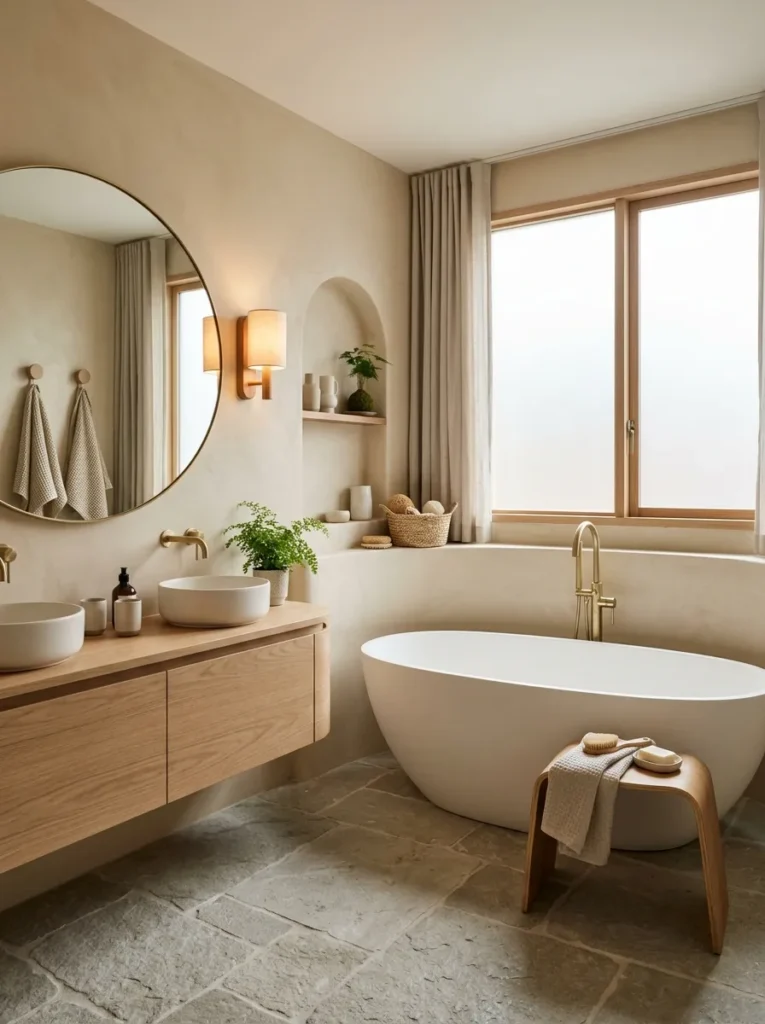
- Softens sharp lines in modern bathrooms
- Creates a more relaxing visual flow
- Adds elegance without excessive decoration
- Works beautifully with minimalist layouts
Curved bathroom forms introduce softness and balance by replacing harsh straight lines with gentle, natural shapes. Rounded mirrors, oval sinks, and curved bathtubs create a smoother visual flow that feels relaxing and welcoming. This design approach works beautifully with Japandi-inspired spaces because nature often influences the use of organic forms. I’ve noticed that curved elements can make bathrooms feel more comfortable and less rigid, especially when combined with simple materials. These subtle shape changes help create a japandi bathroom design that feels modern, peaceful, and thoughtfully connected to natural surroundings.
Adding curves does not require a complete bathroom renovation; even one rounded feature can change the overall appearance of the room. A circular mirror, curved shelf, or soft-edged stool can introduce balance while keeping the minimalist style intact. In my experience, these gentle shapes help small bathrooms feel less crowded because they create a smoother visual transition between different areas. When paired with warm wood, neutral colors, and soft lighting, curved forms create an inviting environment. This design idea combines functionality with beauty, making the bathroom feel more harmonious and comfortable for daily use.
Matte Black Fixtures
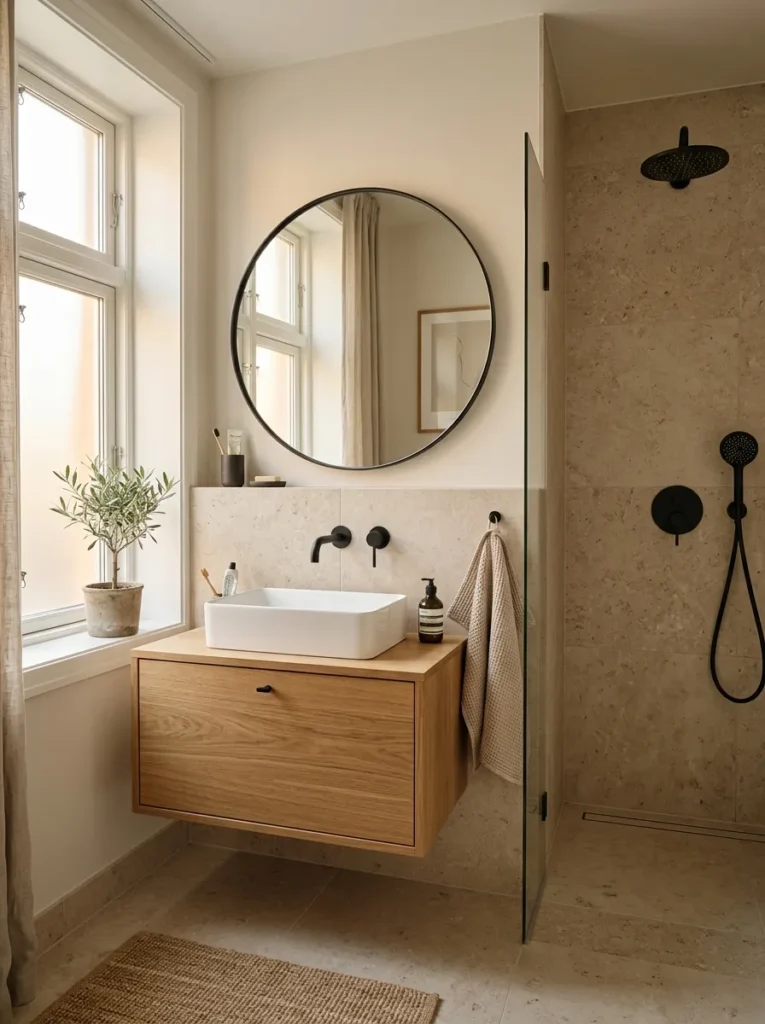
- Adds contrast while maintaining minimalist balance
- Creates a modern and refined appearance
- Highlights simple bathroom features beautifully
- Works well with wood and stone finishes
Matte black fixtures create a beautiful contrast that adds depth to a calm minimalist bathroom without making the space feel overwhelming. Faucets, shower handles, and cabinet hardware in matte black finishes can define important details while keeping the overall design clean. This approach works well because the dark accents stand out against soft neutral colors and natural materials. I’ve noticed that small black details often make simple bathrooms look more polished and intentional. When combined with wood, stone, and warm lighting, they enhance a japandi bathroom design by adding modern character while preserving a peaceful atmosphere.
The appeal of matte black fixtures comes from their ability to create visual balance without becoming the main focus of the room. A few carefully chosen pieces can add sophistication while maintaining the simplicity that makes minimalist interiors so attractive. In my experience, black hardware works especially well in bathrooms with light walls and natural textures because it creates gentle contrast. This design choice helps connect different elements throughout the space and gives the bathroom a finished appearance. The result is a stylish yet calming environment where every detail feels purposeful and well considered.
Natural Fiber Rugs
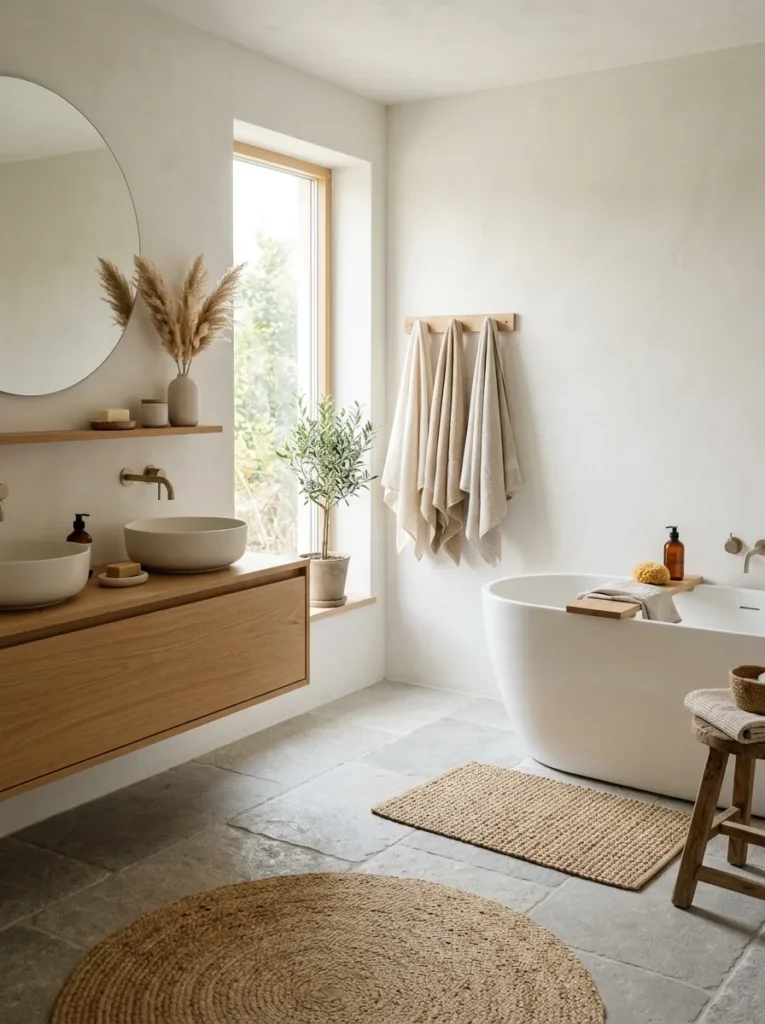
- Adds comfort to hard bathroom surfaces
- Introduces natural texture underfoot
- Makes the room feel warmer and softer
- Creates a welcoming finishing layer
A natural fiber rug can instantly make a bathroom feel more comfortable by adding softness and warmth underfoot. Materials like jute, cotton, and woven fibers introduce texture while keeping the space connected to nature. This simple addition works beautifully in minimalist bathrooms because it provides comfort without adding unnecessary decoration. I’ve noticed that a well-placed rug near a vanity or bathtub can make the room feel more complete and inviting. It supports the relaxed feeling of a japandi bathroom design by combining practical comfort with natural visual appeal.
Choosing the right rug is about finding a balance between beauty and everyday function. Neutral shades and simple patterns blend easily with wooden furniture, stone surfaces, and soft lighting. I’ve seen this work well in homes where bathrooms needed a warmer atmosphere without major design changes. Natural fiber rugs help break up large areas of tile while adding a handmade, organic touch. When selected carefully, they create a cozy layer that enhances the room’s overall design while keeping the minimalist style clean, balanced, and easy to maintain.
Built-In Shower Niches
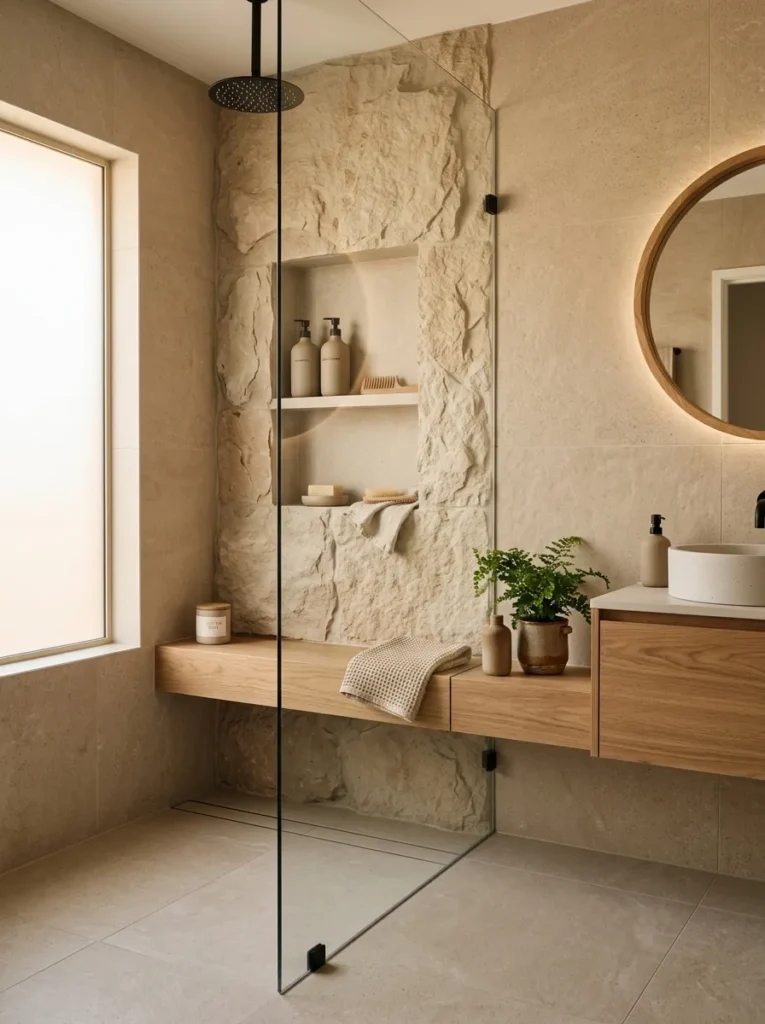
- Keeps shower essentials neatly organized
- Removes clutter from visible surfaces
- Creates a practical design feature
- Improves both function and appearance
A built-in shower niche is a smart design feature that combines storage with a clean, seamless appearance. Instead of leaving bottles and products scattered around the shower area, a recessed niche keeps everything organized and easy to access. This idea works especially well in minimalist bathrooms because it removes unnecessary visual clutter. I’ve noticed that functional details like these often make a bathroom feel more thoughtfully designed. A japandi bathroom design benefits from this approach because it focuses on simplicity, purpose, and creating a peaceful environment where every element has a clear role.
A shower niche can also become a subtle decorative feature when designed with beautiful materials. Using matching stone, textured tiles, or wooden accents inside the niche adds depth while maintaining harmony with the rest of the bathroom. In my experience, built-in storage makes daily routines smoother because essentials stay organized without taking up extra space. This small architectural detail improves both practicality and appearance. When paired with glass panels, natural textures, and warm lighting, a shower niche helps create a bathroom that feels calm, efficient, and beautifully organized.
Organic Material Mixes
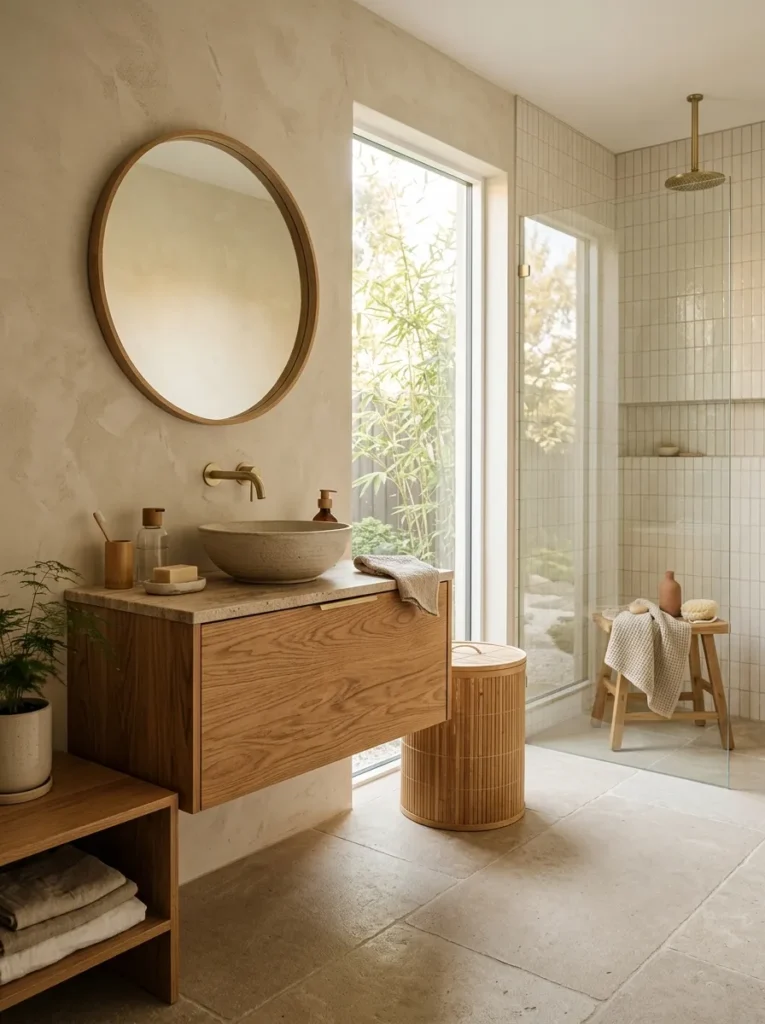
- Creates warmth through natural textures and finishes
- Adds depth without making the bathroom feel busy
- Helps different materials work together harmoniously
- Brings a timeless and calming visual style
Natural materials can transform a bathroom into a calmer and more balanced space by bringing warmth, texture, and a stronger connection to nature. Materials like wood, stone, clay, and bamboo create a layered appearance without making the room feel crowded. I’ve noticed that bathrooms with organic finishes often feel more relaxing because the surfaces add character while maintaining simplicity. This approach supports a japandi bathroom design by focusing on harmony, functionality, and timeless beauty. The result is a space that feels comfortable, welcoming, and thoughtfully designed for everyday routines and peaceful moments.
Choosing organic materials does not mean every surface needs to look rustic or traditional. The key is combining natural elements with clean shapes and simple layouts to create a refined appearance. In my experience, mixing textures such as smooth stone with warm wood creates a balanced atmosphere that feels both modern and peaceful. Natural finishes also age beautifully, adding character over time. This design approach helps create a bathroom that feels connected to the outdoors while remaining practical, elegant, and easy to maintain throughout changing trends and seasons with confidence for years.
Natural Light Features
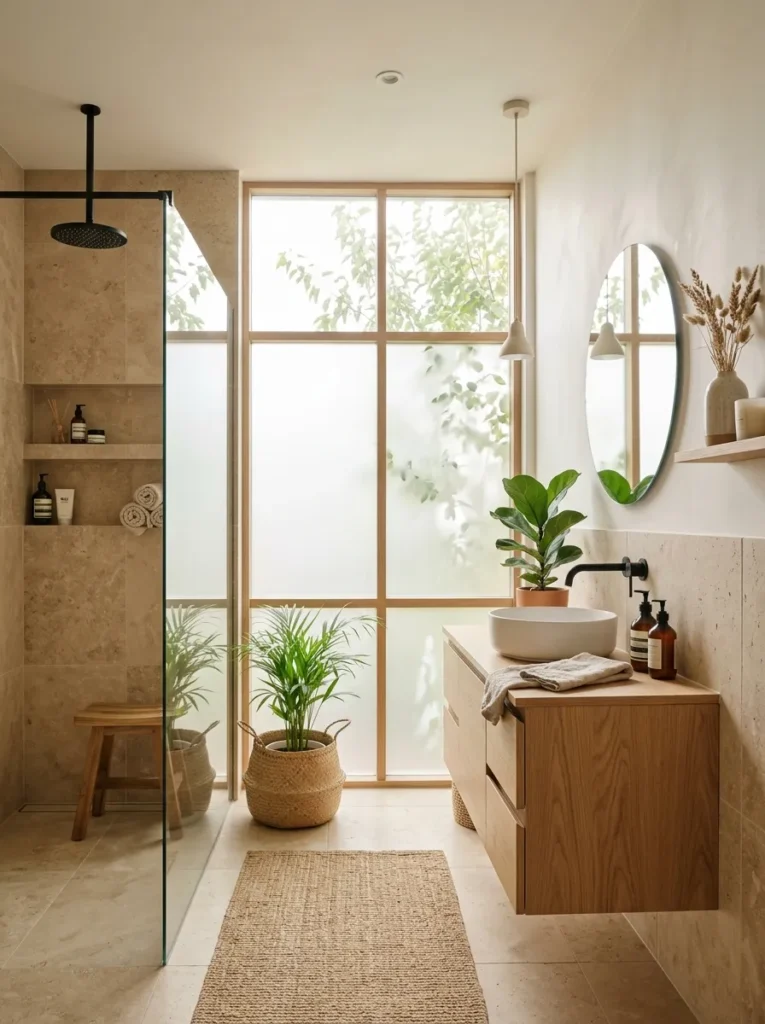
- Makes the bathroom feel brighter and more spacious
- Highlights natural textures and soft color tones
- Creates a refreshing connection with outdoors
- Reduces the need for harsh artificial lighting
Natural light can completely change the feeling of a bathroom by making the space appear brighter, fresher, and more connected to the outdoors. Large windows, skylights, or carefully placed openings allow sunlight to highlight wood textures, stone surfaces, and neutral colors. I’ve noticed that bathrooms with more daylight often feel larger and more relaxing during daily routines. This idea works beautifully with japandi bathroom design because it emphasizes simplicity, balance, and a connection with nature. The result is a peaceful environment that feels open, airy, and comfortable throughout the day.
Using natural light effectively does not always require major renovations or large windows. Mirrors, light-colored surfaces, and thoughtful layouts can help distribute available sunlight throughout the room. In my experience, even small bathrooms can feel transformed when lighting choices are planned carefully. Soft daylight enhances textures, reduces the need for artificial brightness, and creates a more welcoming atmosphere. Pairing natural illumination with warm materials and minimalist furniture helps the bathroom feel calm and functional. This approach creates a beautiful space that feels refreshing, balanced, and naturally inviting for everyone daily.
Balanced Bathroom Layouts
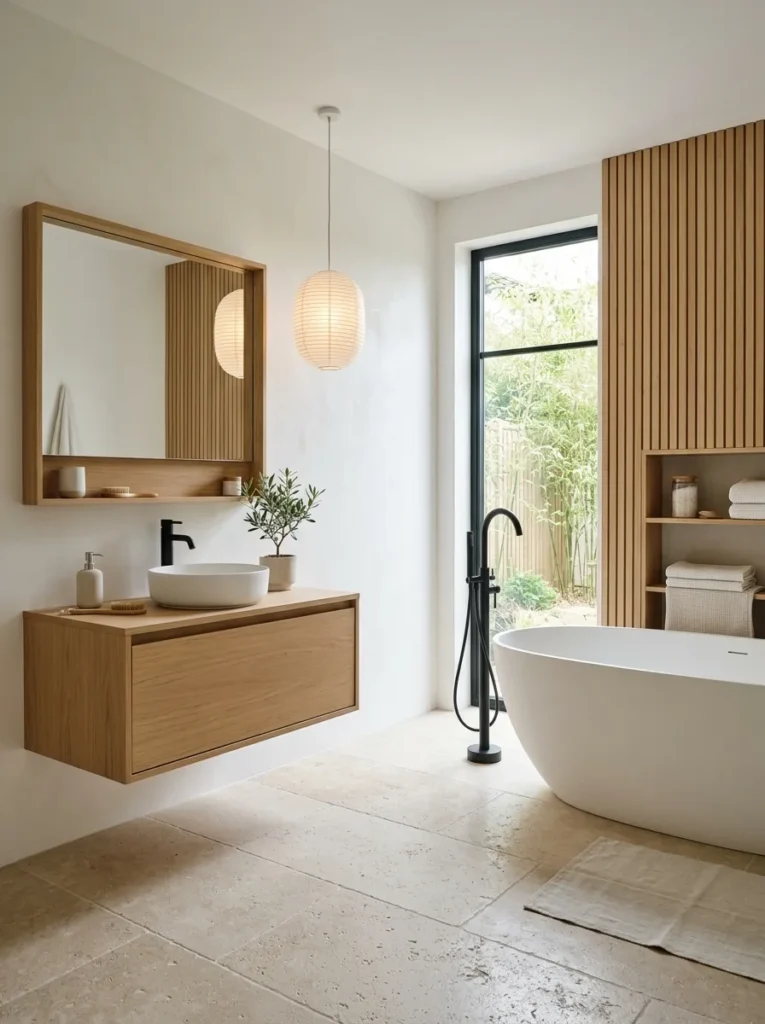
- Improves movement and everyday bathroom function
- Makes the room feel more open and organized
- Allows key design features to stand out
- Creates harmony between beauty and practicality
A peaceful bathroom layout focuses on creating enough space for movement while keeping every element simple and purposeful. Open areas, clean surfaces, and carefully arranged fixtures help the room feel comfortable instead of crowded. I’ve noticed that thoughtful layouts can make even smaller bathrooms appear more spacious and relaxing. This concept is an important part of japandi bathroom design because it combines beauty with everyday practicality. A well-planned arrangement allows natural materials, soft colors, and functional features to work together while creating a calm environment for daily self-care routines too.
A balanced layout can improve how a bathroom looks and how easily people use it every day. Placing storage, lighting, and fixtures in the right positions creates a smoother experience while maintaining a minimalist appearance. In my experience, removing unnecessary obstacles often makes the biggest difference in smaller spaces. A simple floor plan allows beautiful details to stand out without competing for attention. This final design approach brings together comfort, organization, and visual harmony, creating a bathroom that feels peaceful, efficient, and thoughtfully designed for modern living today.
Conclusion
Creating a peaceful bathroom does not require a complete makeover; thoughtful details can make a powerful difference. These japandi bathroom design ideas show how natural materials, simple layouts, and calming textures can transform everyday spaces into relaxing retreats. I’ve seen how small updates like warmer lighting or wooden accents can completely change the feeling of a room. Save this collection on Pinterest for future inspiration, try your favorite ideas in your own bathroom, and share this article with anyone looking for a fresh, natural design style. Your dream calm and beautiful space can begin with one simple change.