20 1950 Bathroom Ideas for a Vintage Inspired Makeover
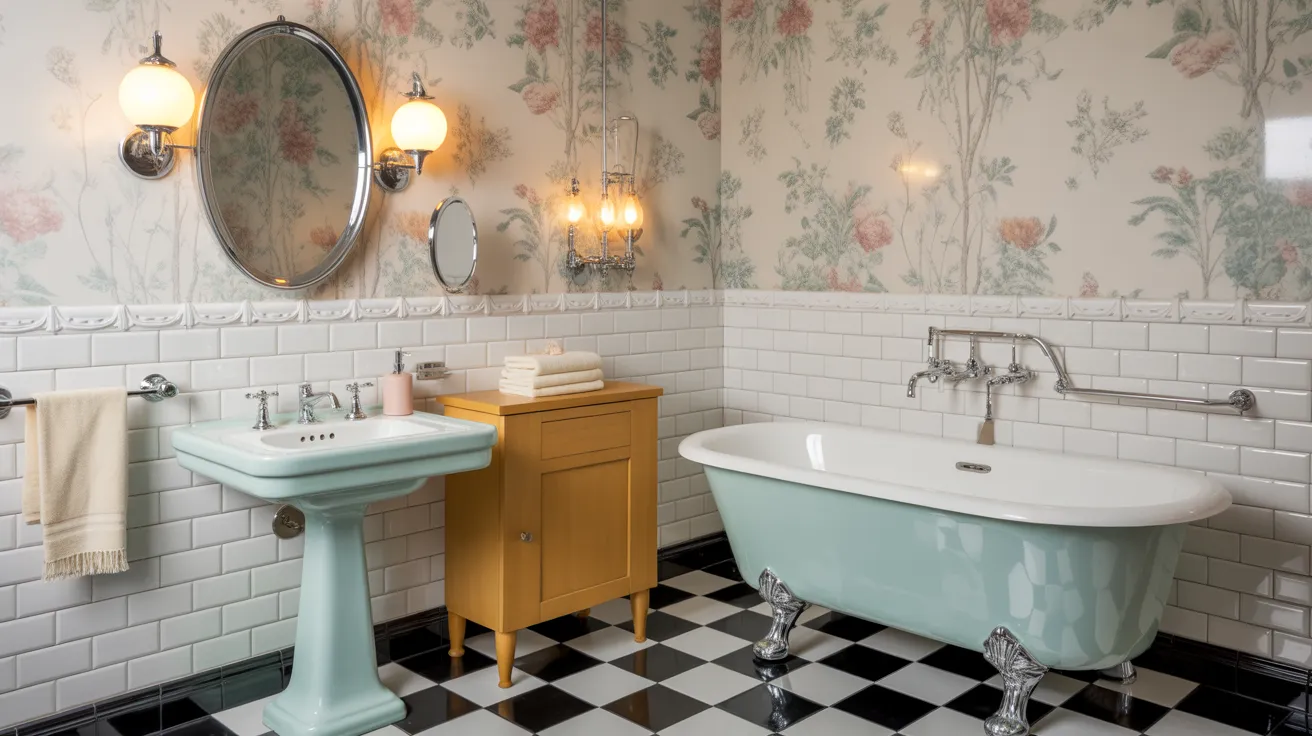
A vintage bathroom can feel cheerful, characterful, and surprisingly fresh with the right details.
These 1950 bathroom ideas make it easy to bring that timeless charm into a modern home.
Whether your bathroom feels plain, dated, or simply lacks personality, small changes can create a dramatic difference. Think pastel tile, rounded ceramic sinks, chrome fixtures, checkerboard patterns, floral wallpaper, and warm wood accents that instantly add visual interest. The best part is that you do not need to recreate an entire bathroom from the 1950s to capture its appeal. In my experience, choosing one or two distinctive vintage features and pairing them with simple modern elements creates the most balanced result. Explore these ideas for practical inspiration, then choose the colors, fixtures, and details that make your own space feel welcoming and uniquely yours.
Pink Tile Vanity
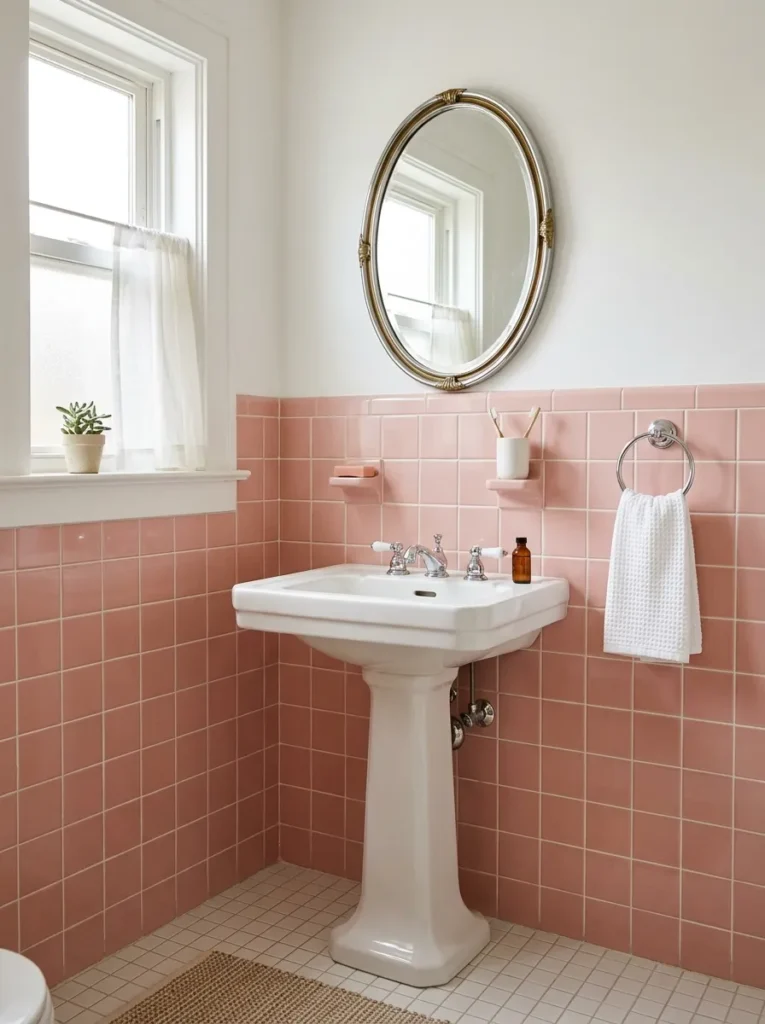
- Soft pink wall tile brings instant 1950s character without making the bathroom feel dated.
- A simple pedestal sink keeps the room visually open and authentic.
- Chrome fixtures add the polished shine associated with mid-century bathrooms.
- Pairing pink with white makes the palette feel cheerful rather than overwhelming.
This classic combination makes one of the most recognizable 1950 bathroom ideas feel surprisingly fresh today. Picture glossy blush-pink tiles covering the lower walls, crisp white surfaces above, and a compact pedestal sink beneath a simple mirror. The contrast creates a playful vintage look while keeping the room bright and easy to maintain. Chrome faucets, towel bars, and small cabinet pulls provide just enough sparkle. In my experience, pink works especially well in smaller bathrooms because its warm undertone adds personality without visually crowding the space when balanced with plenty of white.
The best part is how easily this setup can be adapted to a modern home. Keep the original-inspired elements, but choose clean-lined fixtures and uncluttered accessories so the room feels intentional rather than themed. A white ceramic soap dish, glass tumbler, and neatly folded towels can reinforce the period-inspired character without adding visual noise. For flooring, small white tiles or subtle checkerboard patterns create a natural connection with the walls. Warm bulbs or soft daylight make the pink tile glow gently, giving the entire bathroom a welcoming appearance that photographs beautifully for Pinterest.
Mint Green Fixtures
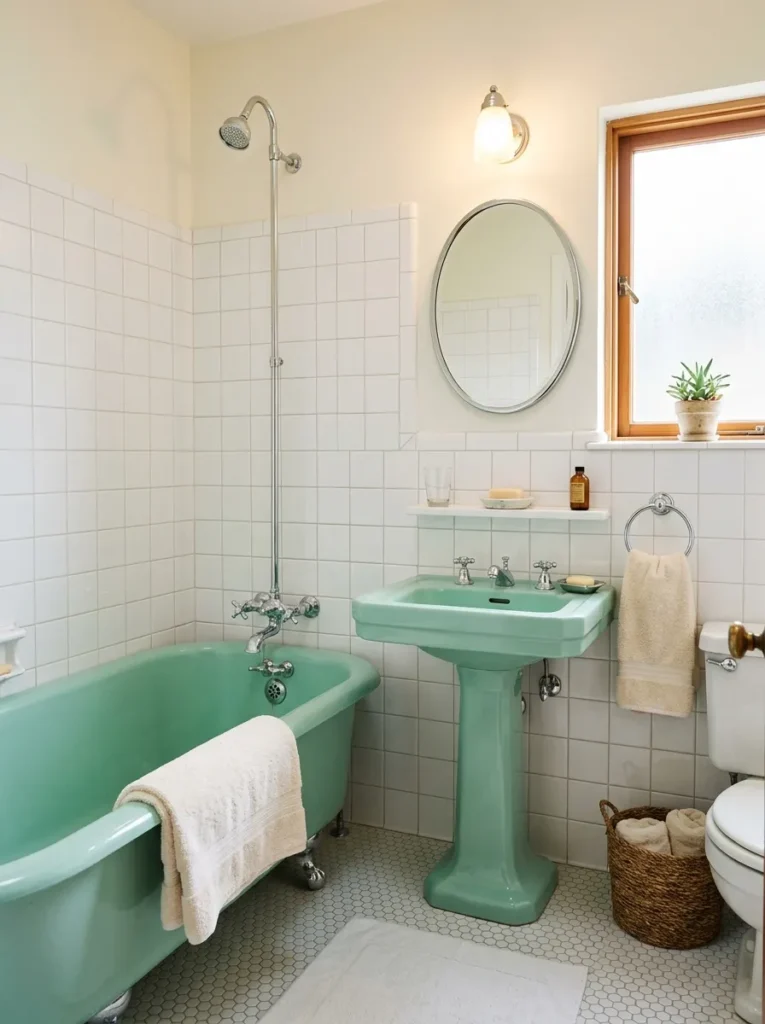
- Mint green creates a distinctly retro look while keeping the room light and refreshing.
- Matching fixtures can become the main visual feature without requiring elaborate decoration.
- White walls and flooring prevent the green from becoming visually heavy.
- Small chrome details sharpen the softer color palette.
A mint green bathtub, sink, or toilet can instantly establish the cheerful character associated with mid-century bathroom design. Among timeless 1950 bathroom ideas, this approach stands out because the fixture itself becomes the focal point instead of relying on excessive decoration. Keep surrounding surfaces simple with white tile, pale walls, and restrained accessories. The result feels colorful but balanced. I’ve noticed that vintage-inspired rooms look more convincing when one strong period detail leads the design rather than several competing elements. A mint fixture paired with chrome hardware can provide exactly that focused visual identity.
For a practical update, consider using one authentic-looking colored fixture while keeping the remaining pieces neutral. A white vanity, simple mirror, and pale floor give the eye somewhere to rest while allowing the mint shade to shine. Choose towels in white, cream, or very soft green rather than introducing several unrelated colors. Warm lighting can soften the cooler tone and make the bathroom feel comfortable at night. This setup also works beautifully in compact spaces because the pale green reflects light, helping the room feel brighter, cleaner, and more open without sacrificing its unmistakable vintage personality.
Checkerboard Tile Floor
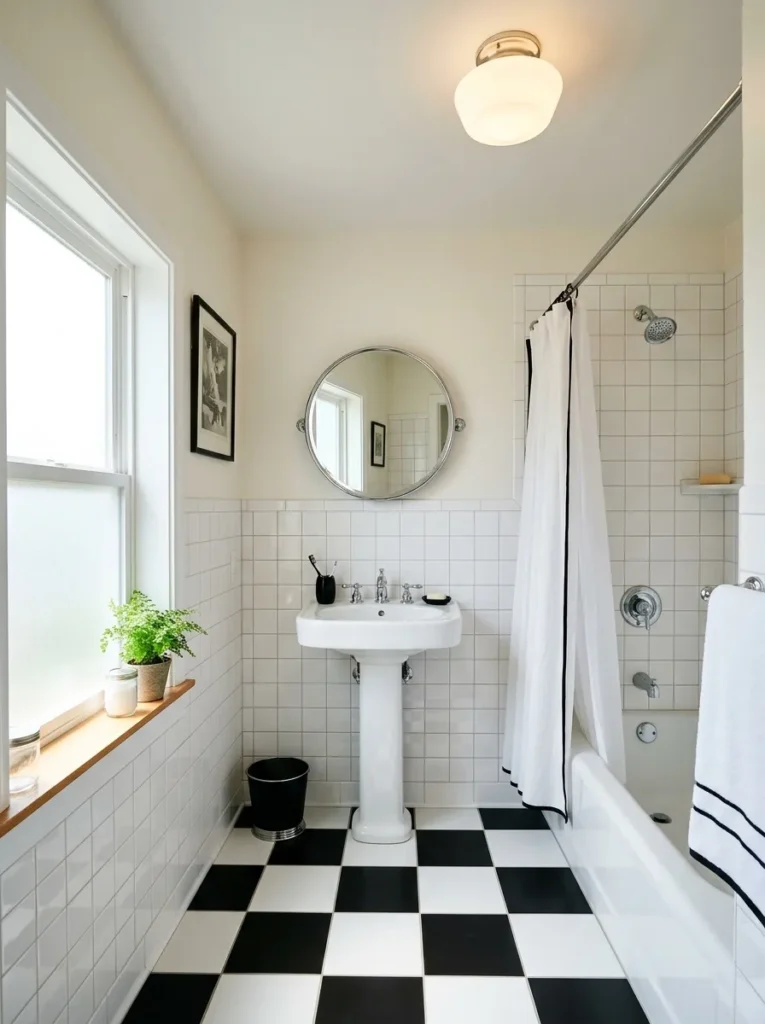
- Black-and-white checkerboard flooring creates instant vintage character underfoot.
- The strong pattern can anchor otherwise simple walls and fixtures.
- Small square tiles feel authentic while remaining practical for everyday use.
- Keeping the rest of the palette restrained prevents the floor from dominating.
Few details create retro impact as quickly as a black-and-white checkerboard floor. This pattern is especially useful when you want 1950 bathroom ideas that feel unmistakably vintage without covering every surface in period-specific materials. Alternating square tiles give the room structure and visual rhythm, while white walls keep the overall space bright. A compact vanity or pedestal sink fits naturally with the pattern. Chrome fixtures add another reflective layer without competing for attention. In real homes, this flooring can also help disguise tiny marks between cleanings, making it both decorative and surprisingly practical.
To keep the look polished, use the checkerboard pattern as the bathroom’s strongest graphic element and let everything around it remain quiet. White subway or square wall tiles, a simple framed mirror, and classic chrome hardware create an easy backdrop. If the bathroom is narrow, running the squares consistently across the floor can make the space feel more connected rather than visually fragmented. I’ve seen this work well when homeowners want vintage personality but still prefer a clean modern finish. The result feels playful, structured, and highly photographable without looking like a staged period set.
Chrome-Framed Medicine Cabinet
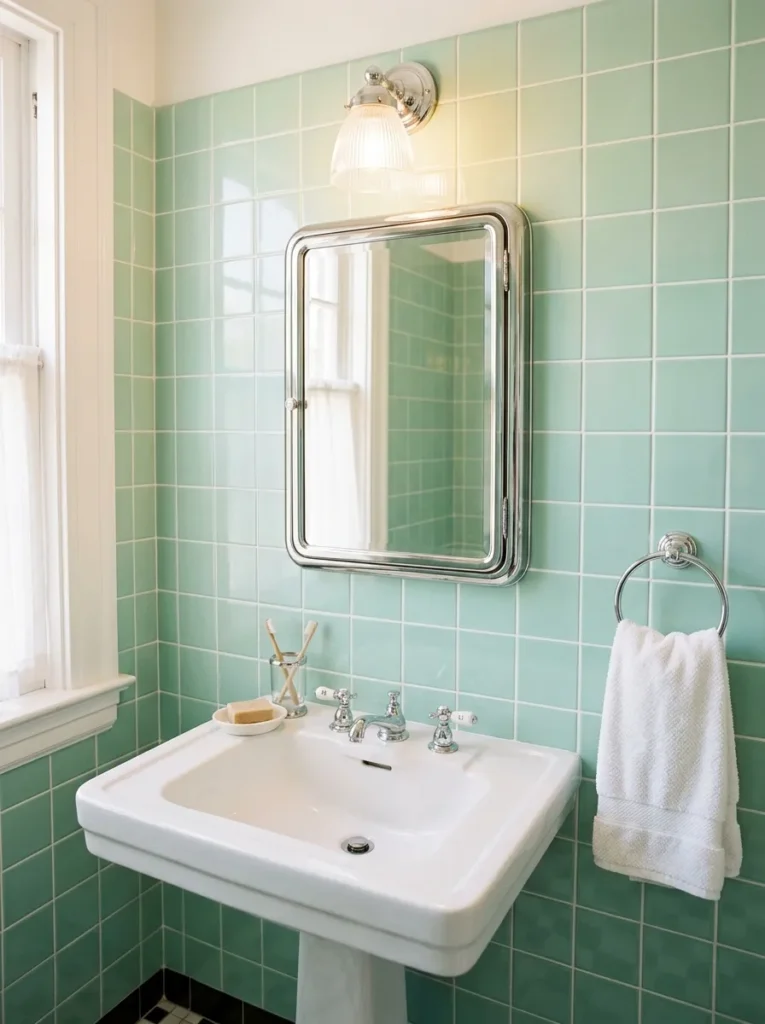
- A mirrored cabinet combines storage with an unmistakably mid-century bathroom detail.
- Polished chrome adds brightness and ties together faucets, lighting, and accessories.
- Recessed or shallow cabinets work especially well in smaller bathrooms.
- Keep countertop items minimal so the mirror remains the visual focus.
A chrome-framed medicine cabinet can give a simple bathroom the polished character of a carefully preserved mid-century home. The reflective frame catches daylight and connects naturally with chrome faucets, towel bars, and light fixtures. Behind the mirror, practical storage keeps everyday toiletries organized and countertops clear. This balance makes the room feel both authentic and functional. For anyone exploring 1950 bathroom ideas, it is a small upgrade with a noticeable visual payoff. The clean rectangular shape also works beautifully with square tile, rounded accessories, and other period-inspired details without making the room feel overly decorated.
For the most convincing result, choose a cabinet with simple proportions and minimal ornamentation. A recessed model creates a streamlined appearance, while a surface-mounted cabinet can add a slightly more traditional vintage presence. Pair it with a small chrome wall light or globe fixture above the mirror for extra character. I’ve noticed that reflective surfaces are particularly helpful in bathrooms with limited natural light because they bounce brightness around the room. Add only a few coordinated accessories, such as a ceramic soap dish and neatly folded towels, to maintain that clean, uncluttered 1950s appearance.
Pastel Blue Wall Tile
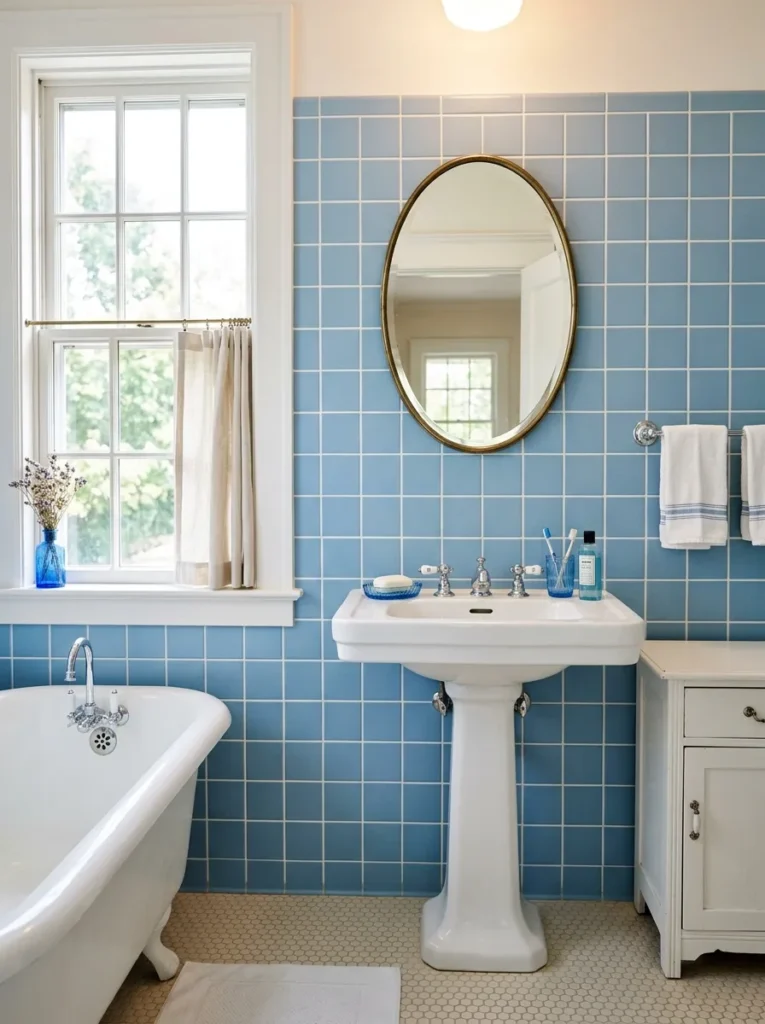
- Powder blue tile introduces a calm, recognizable mid-century color.
- White grout keeps the pattern crisp and visually fresh.
- Chrome fixtures provide contrast against the softer blue surface.
- Simple white accessories prevent the palette from becoming too themed.
Soft pastel blue tile can completely change the atmosphere of a bathroom without requiring major architectural changes. The cool color feels clean and airy, while its gentle saturation gives the walls unmistakable vintage character. For a balanced composition, use blue ceramic tiles around the shower or lower wall sections and keep the remaining surfaces white. This approach lets the color become a focal point without shrinking the visual space. Among classic 1950 bathroom ideas, pastel tile is especially versatile because it pairs naturally with chrome fixtures, white porcelain, and warm wood accents.
The key is choosing supporting details that make the blue feel intentional rather than nostalgic for nostalgia’s sake. A rounded mirror, simple chrome faucet, and white pedestal sink reinforce the period influence while maintaining a practical layout. Warm-white lighting can soften the cooler tile and make the room more inviting during evening hours. In my experience, pastel shades look strongest when repeated sparingly through small accessories rather than matching every element. A blue glass tumbler, small towel, or ceramic container can quietly connect the palette while leaving plenty of visual breathing room.
Rounded Ceramic Sink
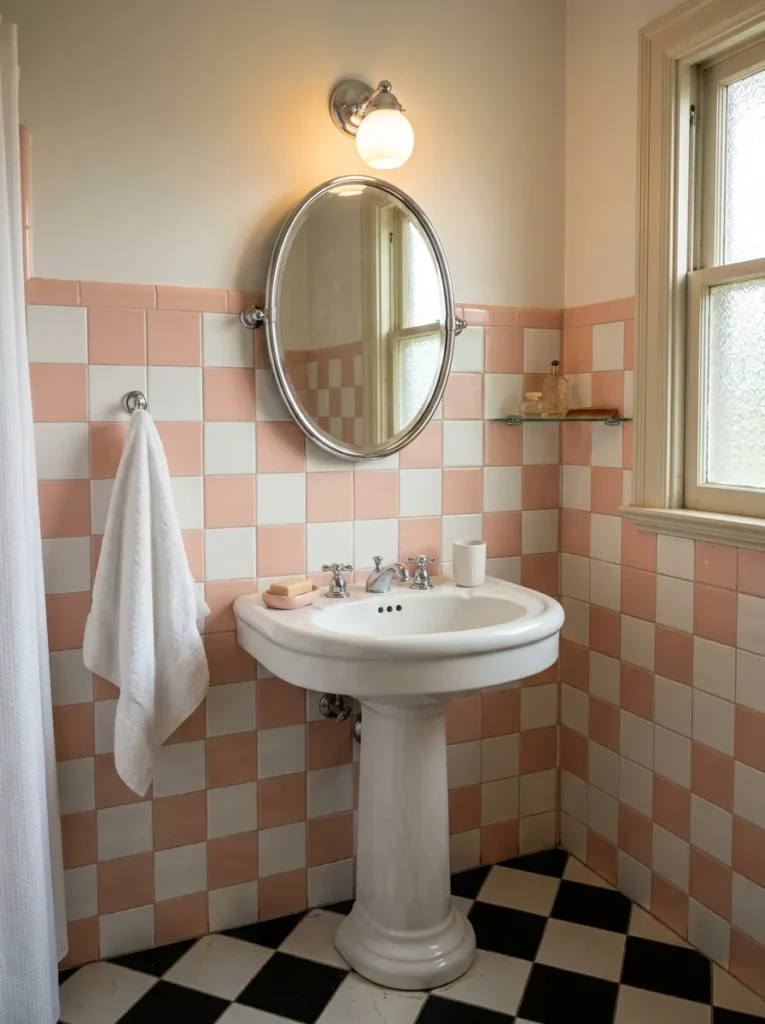
- Soft curves bring an authentic mid-century silhouette to the vanity area.
- White ceramic keeps the fixture bright, timeless, and easy to coordinate.
- Chrome hardware adds a crisp finishing detail.
- Pairing rounded forms with square tile creates appealing visual contrast.
A rounded ceramic sink introduces the softer geometry that makes many vintage bathrooms feel welcoming rather than strictly utilitarian. Instead of sharp rectangular lines everywhere, the curved basin creates a gentle focal point while preserving plenty of practical countertop space. A white ceramic finish works beautifully with pastel tile, checkerboard flooring, or plain white walls. This makes it an easy feature to incorporate into different retro-inspired layouts. The combination also gives a bathroom a collected appearance, as though each fixture was chosen for its shape and usefulness rather than simply following one decorating trend.
To strengthen the look, repeat the curved shape in one or two nearby details instead of filling the room with rounded objects. An oval mirror, curved chrome faucet, or softly shaped wall light can create visual continuity. Keep storage simple with a narrow cabinet or open shelf beneath the sink if the layout allows. That approach preserves floor visibility and helps a smaller bathroom feel less crowded. I’ve seen this kind of balanced geometry work particularly well in compact spaces, where one distinctive sink can provide plenty of personality without overwhelming the rest of the design.
Clawfoot Tub Focal Point
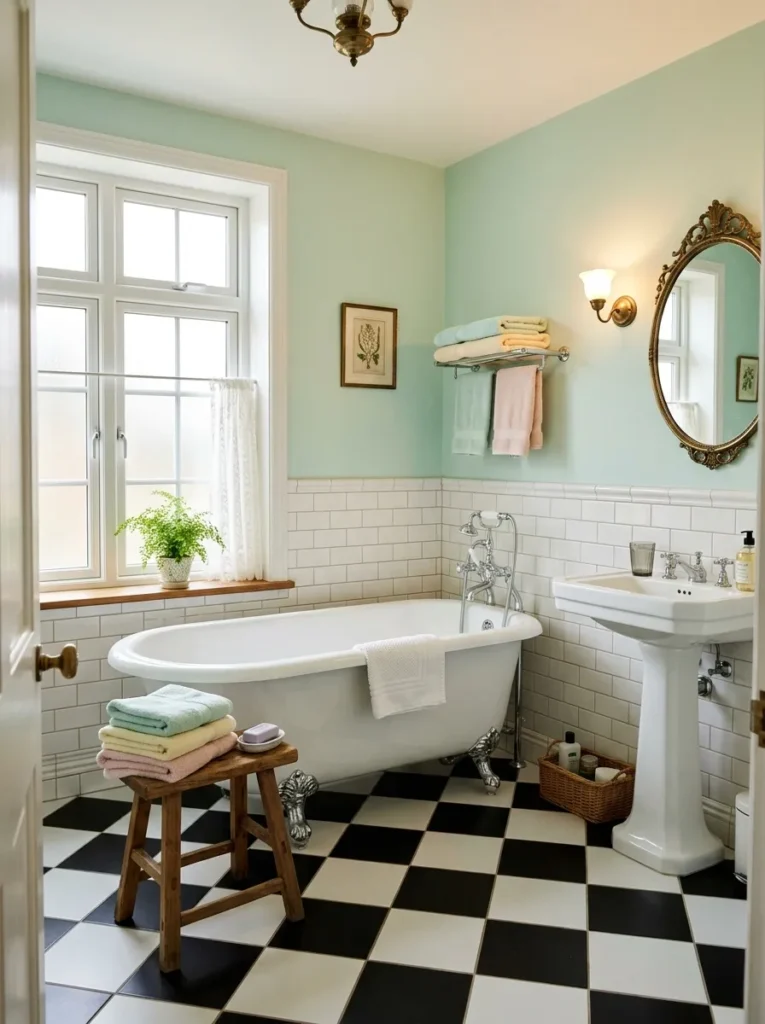
- A compact clawfoot tub creates an unmistakable vintage centerpiece.
- Painted exteriors can introduce soft color without changing the entire room.
- Chrome feet and fixtures add delicate period-inspired shine.
- Keep surrounding surfaces simple so the tub remains visually dominant.
A clawfoot tub can instantly turn an ordinary bathroom into a charming vintage retreat. Its raised profile, curved basin, and decorative feet create a strong focal point while leaving more visible flooring underneath. For a 1950s-inspired makeover, choose a white tub with chrome feet and pair it with simple wall tile. A pale pink, mint, or powder-blue accent can appear through towels or a painted exterior. This arrangement works especially well when the bathroom has enough floor space to let the tub breathe visually rather than squeezing it tightly between other fixtures.
Placement matters just as much as the tub itself. Position it beneath a window, beside a tiled wall, or opposite the vanity where its silhouette can be appreciated immediately. A freestanding chrome faucet reinforces the period character while keeping the surrounding floor visually open. I’ve noticed that vintage fixtures look more believable when the accessories remain restrained. Choose one framed mirror, a small ceramic stool, and neatly folded towels instead of filling every surface. The result feels collected and comfortable, with enough modern simplicity to keep the bathroom practical for everyday routines.
Globe Sconce Lighting
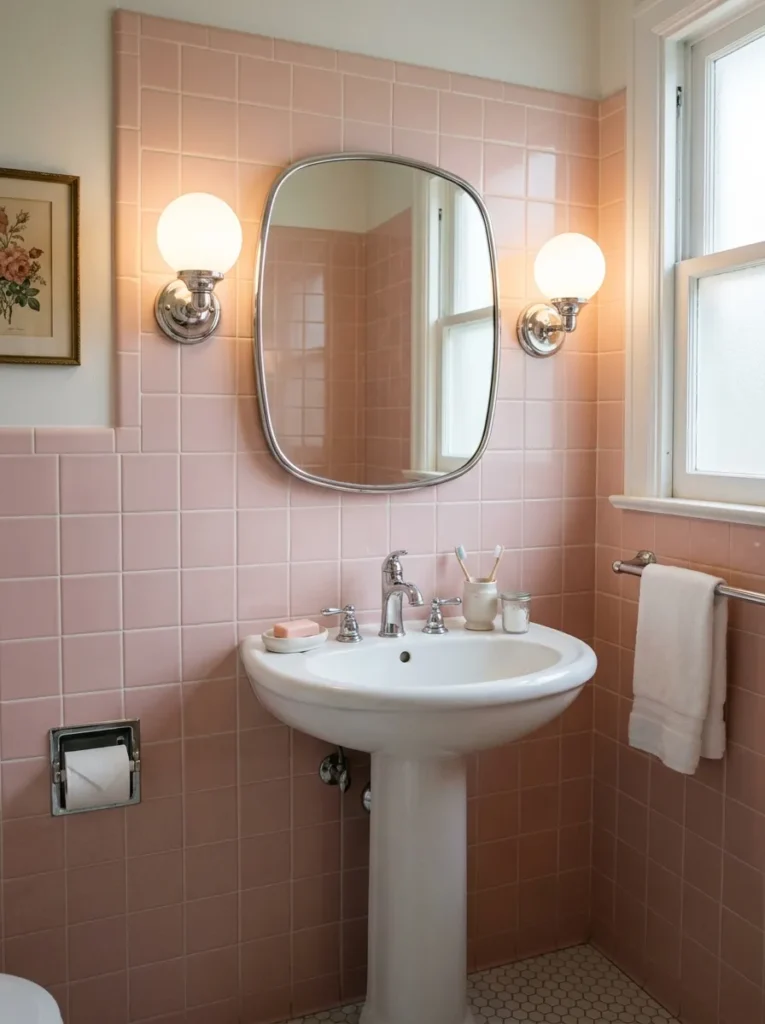
- Frosted globe lights add a recognizable mid-century bathroom detail.
- Soft illumination makes pastel tile colors appear warmer and more inviting.
- Symmetrical sconces can frame a mirror beautifully.
- Chrome or brushed metal bases connect the lighting with other fixtures.
Few upgrades change the atmosphere faster than replacing ordinary lighting with rounded globe sconces. Frosted glass shades diffuse the light, creating a soft glow that flatters vintage tile and white porcelain. Place matching sconces on both sides of a mirror for balanced illumination, especially around a compact vanity. Chrome bases work naturally with period-inspired faucets and cabinet hardware. This lighting choice fits beautifully within 1950 bathroom ideas because it combines decorative character with useful task lighting. The rounded silhouettes also soften bathrooms dominated by straight tile lines and rectangular cabinetry.
For everyday practicality, choose bulbs with a warm-white appearance while keeping the fixture bright enough for grooming. Mount the sconces around eye level beside the mirror rather than placing every light directly overhead. This reduces harsh shadows and gives the vanity a more comfortable glow. I’ve noticed that layered lighting makes vintage bathrooms feel much more finished: use the sconces for daily routines and a softer ceiling light for general illumination. Keep the surrounding decor simple, allowing the frosted globes to become a small but memorable focal point.
Retro Wood Vanity
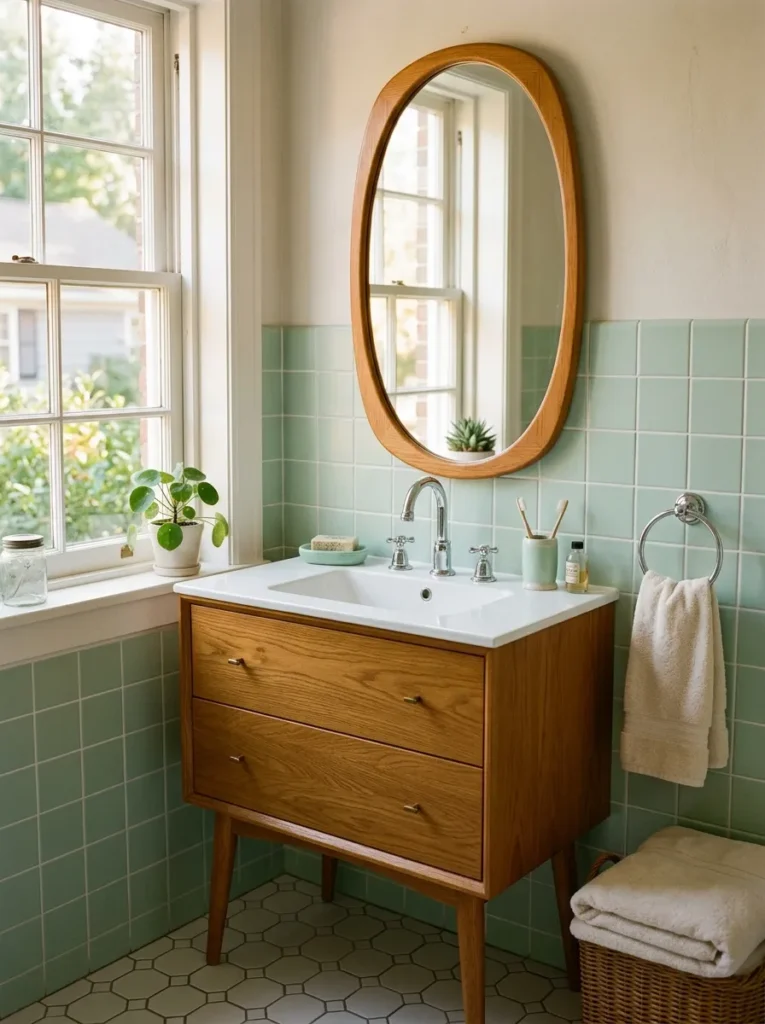
- Warm wood introduces natural texture against cool ceramic surfaces.
- A compact vanity provides practical storage without losing vintage character.
- Tapered legs can reinforce a distinctly mid-century silhouette.
- Keep the wood finish simple to avoid making the room feel heavy.
A warm wood vanity brings an inviting layer of texture to a bathroom filled with glossy tile and porcelain. Choose a compact cabinet with clean lines, tapered legs, or simple rounded edges to capture the relaxed character of mid-century furniture. Honey oak, walnut, or medium natural wood can all work beautifully against white, cream, mint, or pastel blue surfaces. This approach is especially useful when the room feels too cold or clinical. Instead of adding many decorative objects, the vanity itself supplies warmth, storage, and a strong visual anchor.
Balance the wood with bright ceramic surfaces and reflective metal details so the bathroom remains airy. A white countertop, chrome faucet, and simple oval mirror create an easy combination that feels vintage without becoming overly rustic. For smaller rooms, choose a vanity raised slightly from the floor to preserve visible flooring and create a lighter appearance. In my experience, natural wood works best when its grain remains visible and the surrounding accessories stay understated. Add one ceramic container, folded towels, and perhaps a small plant for a practical finishing touch.
Pink-and-Black Contrast
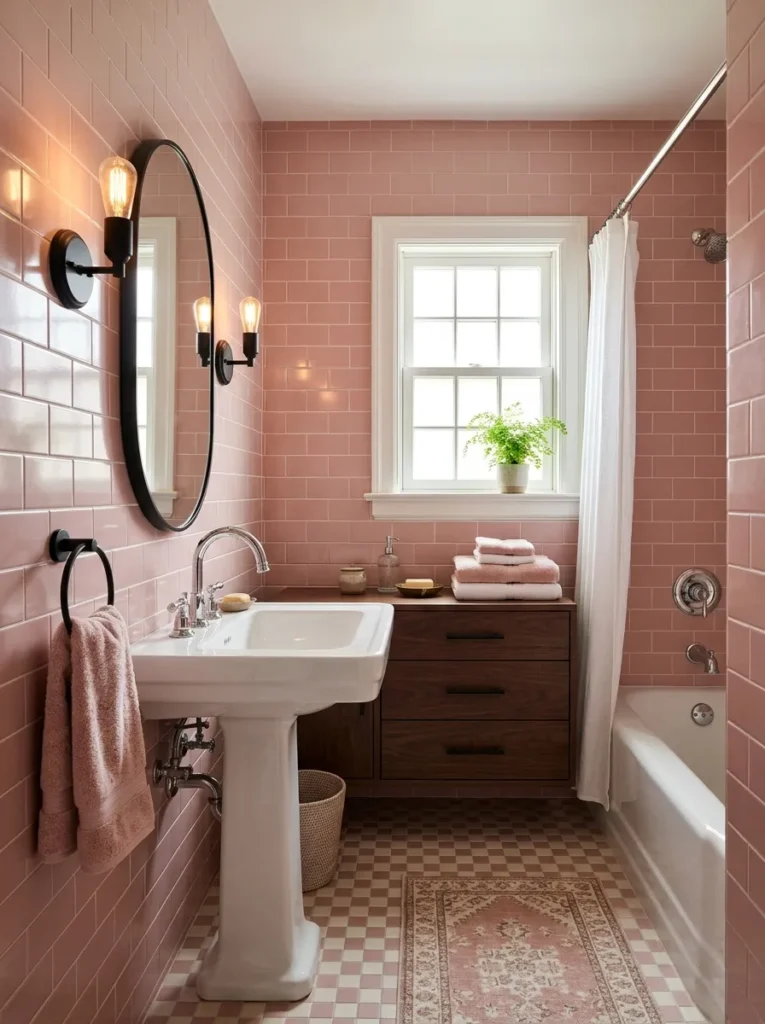
- Pairing dusty pink with black creates a stronger, more sophisticated retro palette.
- Black hardware gives pastel surfaces sharper definition.
- White porcelain keeps the combination from feeling too dark.
- Small black accents can refresh an otherwise traditional vintage bathroom.
A dusty pink and black palette gives a vintage bathroom a surprisingly polished edge. Instead of using pastel color everywhere, keep the walls soft pink and introduce black through small, deliberate details such as mirror frames, cabinet pulls, light fixtures, or a narrow border. White porcelain fixtures keep the room bright and prevent the darker accents from becoming overwhelming. This is one of those 1950 bathroom ideas that can feel nostalgic while still looking intentional in a contemporary home. The contrast also photographs beautifully because the darker details create clear visual definition.
The easiest way to make this palette work is to repeat black in several small places rather than using one oversized dark feature. A black-framed mirror can connect with cabinet hardware and a slim shower frame, while chrome faucets provide another reflective layer. Choose warm white bulbs to soften the contrast and make the pink walls appear richer. I’ve noticed that strong color combinations look more balanced when the flooring stays relatively simple. White hexagonal tile, pale terrazzo, or understated checkerboard flooring can complete the room without competing with the pink-and-black focal details.
Scalloped Tile Border
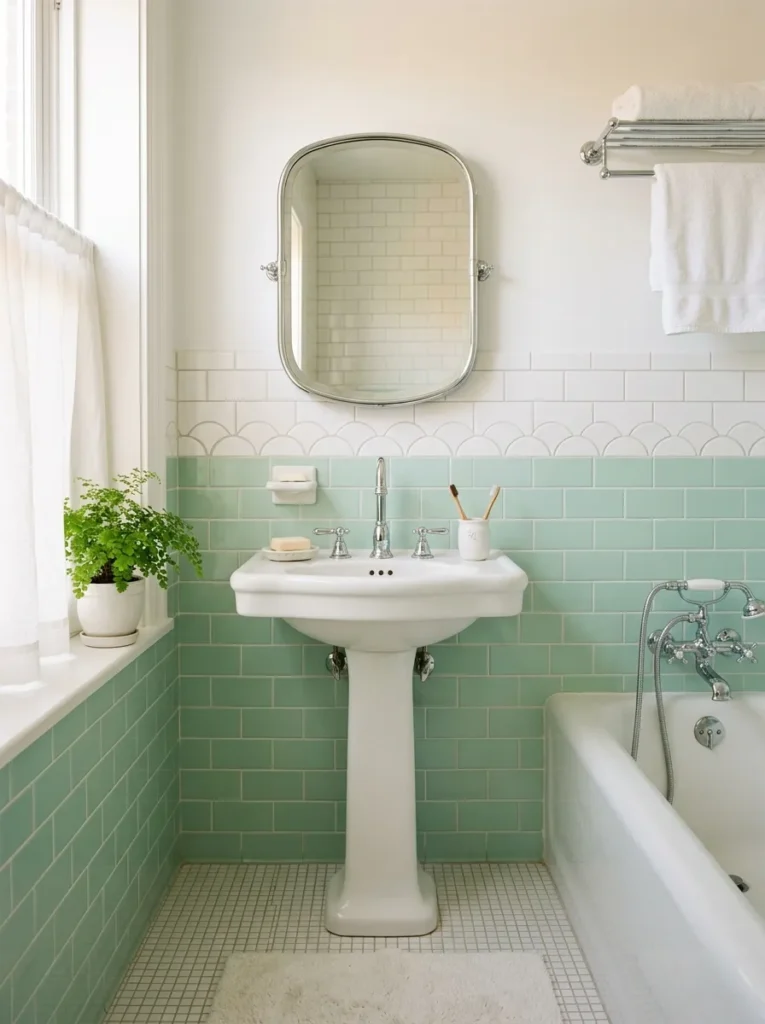
- A curved tile border adds delicate period-inspired detail without overwhelming the room.
- Repeating scallops create a decorative transition between different wall surfaces.
- Soft pastel and white combinations keep the pattern light.
- The border works especially well around mirrors, tubs, or halfway up tiled walls.
A scalloped tile border can add the kind of small decorative detail that makes a vintage bathroom feel thoughtfully designed. Use curved or fan-shaped tiles along the top of a tiled wall, around a mirror, or as a transition between two colors. White scallops against pale pink, mint, or powder blue create a delicate visual rhythm while keeping the overall palette bright. The pattern gives plain ceramic surfaces more personality without requiring elaborate decoration. For homeowners who love subtle retro details, this approach delivers character in a focused, highly visible area.
Keep the rest of the bathroom relatively simple so the decorative border has room to stand out. Pair it with a classic pedestal sink, chrome fixtures, and a simple rounded mirror. If you are renovating rather than building from scratch, even a narrow decorative strip can make existing tile feel more intentional. In my experience, repeating one small shape elsewhere—such as a curved mirror or rounded light shade—helps the design feel cohesive. Avoid combining several intricate patterns, because the scalloped edge already provides enough visual interest to become the room’s signature detail.
Wall-Mounted Soap Dish
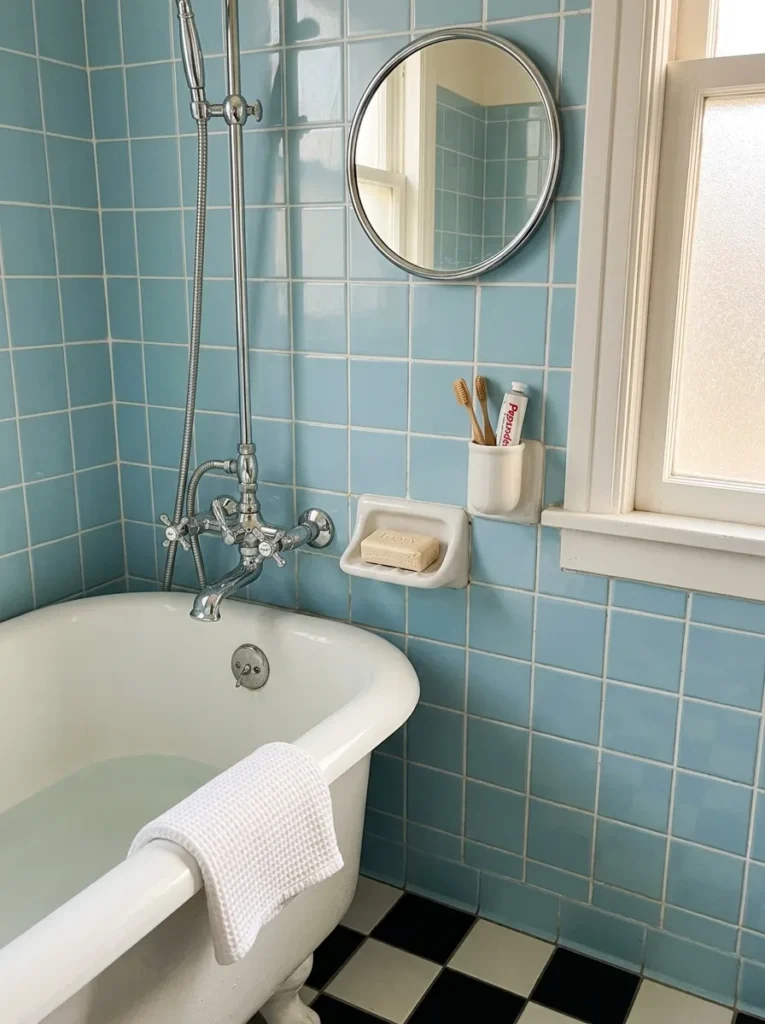
- A built-in soap dish adds authentic-looking function to the shower area.
- Ceramic surfaces are easy to coordinate with vintage wall tile.
- Wall-mounted storage keeps the countertop and tub edge uncluttered.
- A small decorative detail can make a renovation feel more period-inspired.
Sometimes the smallest bathroom details create the strongest sense of authenticity. A wall-mounted ceramic soap dish beside the sink or bathtub adds useful storage while echoing the practical fixtures common in older bathrooms. Choose white ceramic for a timeless appearance, or coordinate the dish with pastel blue, pink, or mint tile. This subtle feature works especially well when larger elements already have a vintage influence. Rather than adding decorative objects simply for appearance, it gives the room a functional detail that also contributes to its overall visual character.
Position the soap dish where it is genuinely convenient, such as beside the shower, tub, or sink, and keep the surrounding area uncluttered. Pair it with a matching ceramic toothbrush holder or small wall shelf if additional storage is needed. Avoid filling every available surface because vintage bathrooms often look best when their fixtures remain easy to see. I’ve seen this simple approach make a noticeable difference in smaller bathrooms, where countertop clutter can quickly overwhelm the room. A few coordinated ceramic pieces can provide charm while keeping daily routines organized and effortless.
Pastel Pink Bathtub
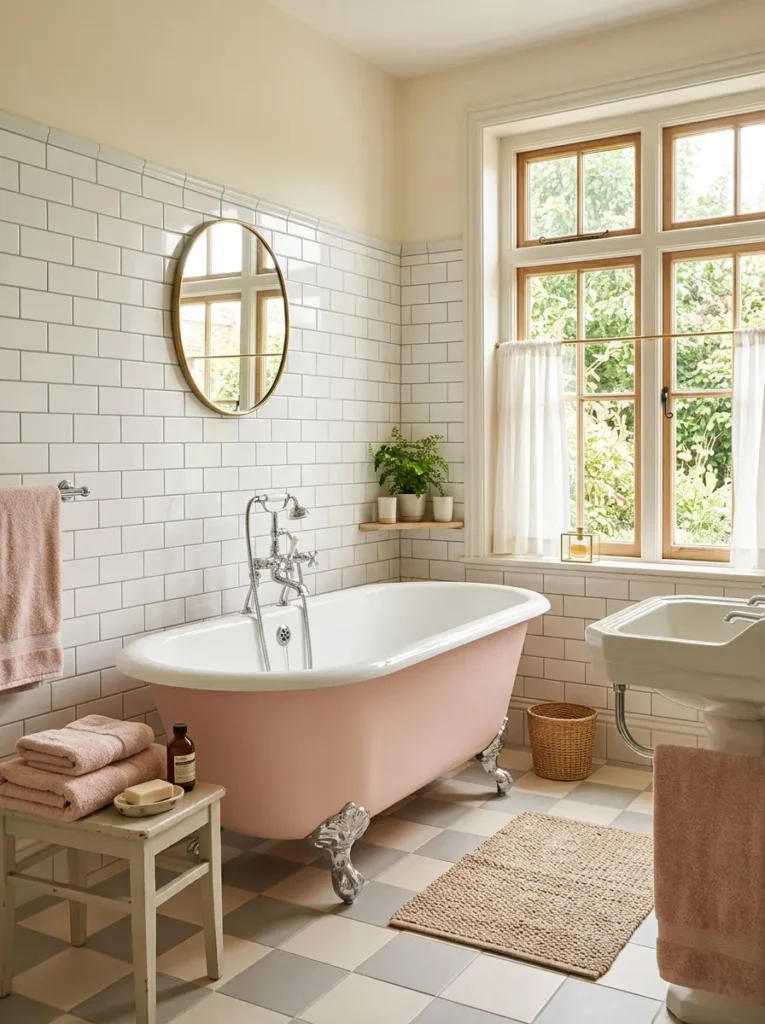
- A pastel pink tub creates a strong focal point without covering every surface in color.
- White walls keep the bathroom feeling bright and spacious.
- Chrome fixtures add a crisp, polished finish.
- Matching pink accessories can quietly connect the tub to the rest of the room.
A pastel pink bathtub can become the star of a vintage-inspired bathroom while keeping the surrounding design surprisingly simple. Choose a soft blush or dusty rose finish and let the tub stand against white tile or another pale neutral backdrop. The color immediately adds personality, while the curved silhouette reinforces the gentle character of mid-century interiors. This is one of the most playful 1950 bathroom ideas because it turns an everyday fixture into a decorative feature. Keeping the remaining surfaces restrained helps the tub feel intentional rather than overly themed or visually heavy.
For a cohesive finish, repeat the pink in only a few small details, such as a folded hand towel, ceramic container, or subtle tile border. Chrome plumbing fixtures can provide contrast and reflect light around the room. If the bathroom is compact, choose a lighter pastel shade and keep the floor pale to maintain an open appearance. I’ve noticed that statement fixtures look most convincing when they have breathing room around them. Instead of surrounding the tub with decorations, allow its color, shape, and clean placement to provide most of the visual interest.
White Subway Tile
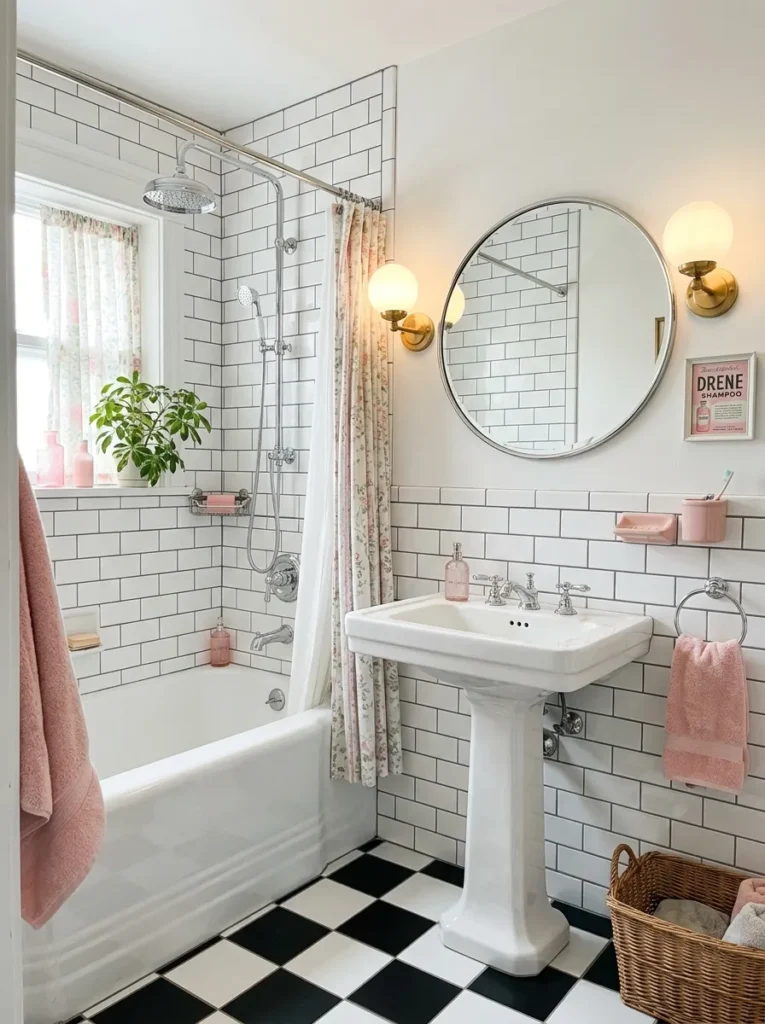
- Classic white subway tile creates a clean foundation for vintage fixtures.
- Dark grout can emphasize the individual tile pattern.
- Glossy surfaces reflect light and help compact bathrooms feel brighter.
- Colorful accessories can be changed easily without redesigning the walls.
White subway tile provides a versatile backdrop for nearly every vintage bathroom detail. Its simple rectangular shape feels timeless, while a glossy finish reflects natural and artificial light across the room. Use it around the bathtub, shower, or lower wall sections, then introduce personality through colored fixtures, patterned flooring, and chrome hardware. This restrained foundation lets stronger elements stand out without creating visual chaos. It is also a practical choice for homeowners who want the atmosphere of a classic mid-century bathroom but prefer surfaces that will continue looking fresh through changing decorating styles.
The grout choice can subtly change the entire appearance. White grout creates a softer, seamless effect, while charcoal or medium-gray grout emphasizes each tile and adds stronger definition. Keep accessories simple with a chrome mirror, ceramic soap dish, and neatly folded towels. A small pastel fixture or colorful artwork can provide the period-inspired accent. In my experience, white subway tile is especially useful when combining several vintage references because it acts as a visual reset between them. That makes the room feel coordinated rather than crowded, even when the floor, lighting, and fixtures each have distinct character.
Vintage Floral Wallpaper
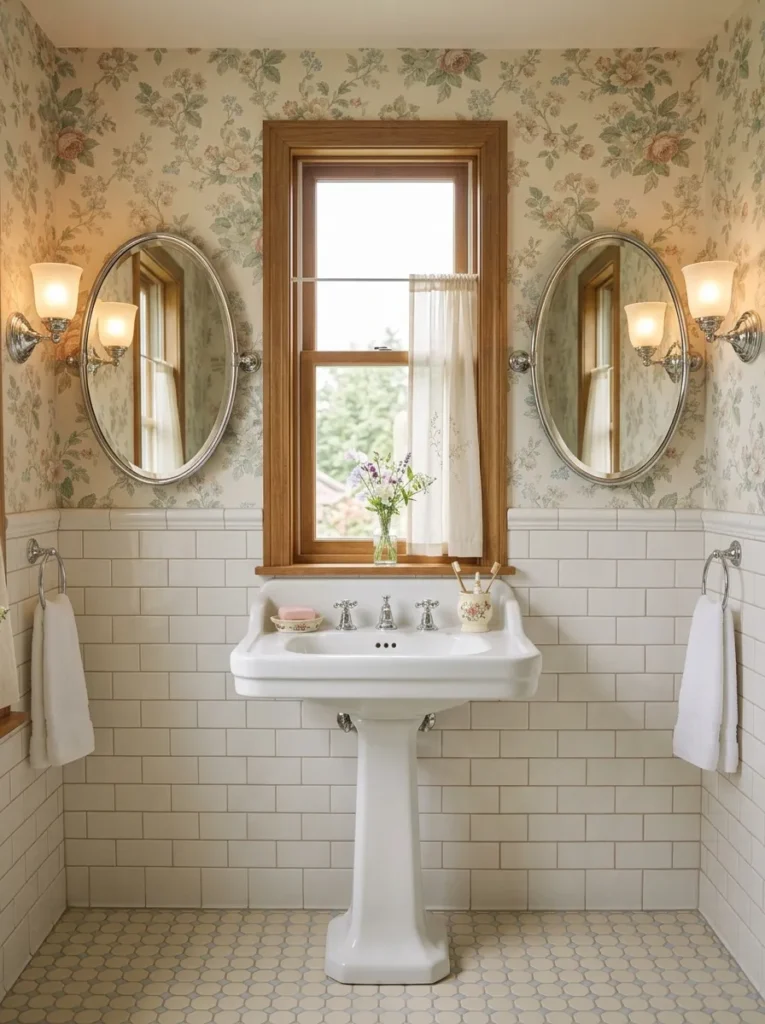
- Small-scale floral patterns introduce softness and nostalgic personality.
- Wallpaper can transform an otherwise plain bathroom without replacing fixtures.
- Muted colors keep the floral design sophisticated rather than overly busy.
- Pairing patterned walls with simple porcelain creates visual balance.
Vintage floral wallpaper can bring warmth and personality to a bathroom that feels too plain or overly clinical. Choose a small-scale pattern featuring muted pink, sage, cream, dusty blue, or warm yellow rather than an oversized contemporary print. The delicate motifs pair naturally with white porcelain and chrome fixtures, creating a softer interpretation of mid-century style. Wallpaper works particularly well above tile wainscoting, where the patterned upper wall adds interest without exposing the entire room to moisture. This approach can make a simple bathroom feel carefully decorated without requiring major structural changes.
Use wallpaper strategically around a vanity wall or another area protected from direct water exposure, and select a product specifically suited to bathroom conditions. Keep the remaining surfaces quiet so the floral pattern remains the main decorative element. A simple oval mirror, white ceramic sink, and chrome sconces can reinforce the vintage mood without competing for attention. I’ve noticed that muted floral patterns often feel more timeless than highly saturated designs because they blend easily with changing accessories. Add cream towels and one small ceramic accent to complete the room without making it feel overly styled.
Mid-Century Wall Mirror
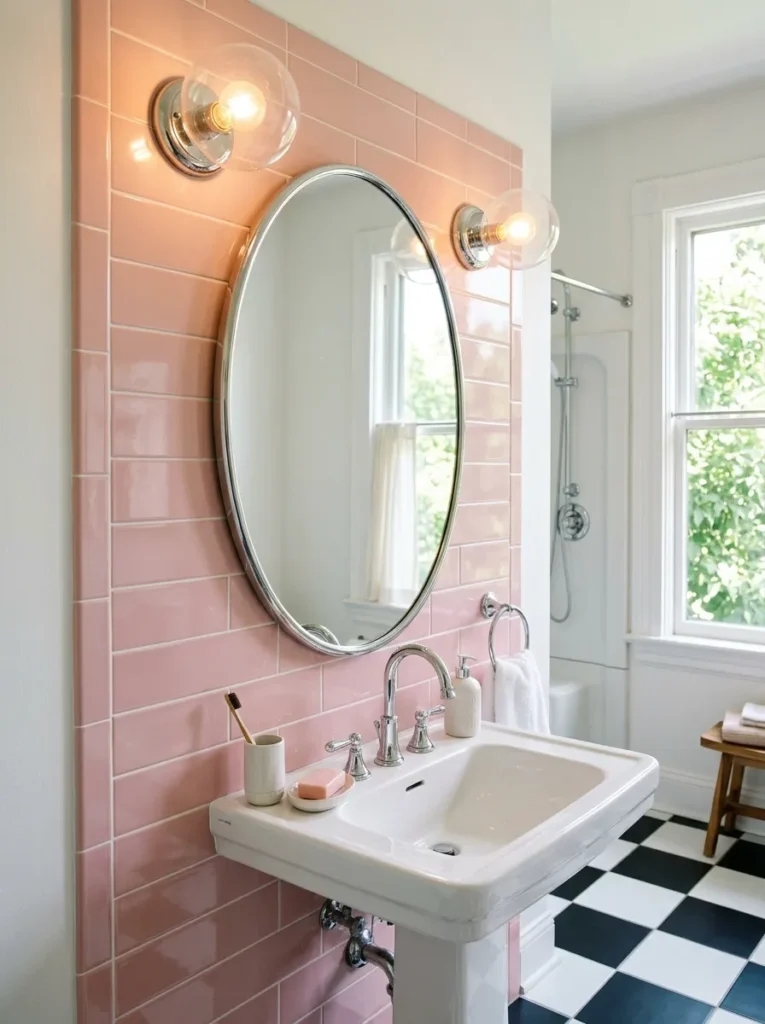
- A rounded mirror softens the straight lines found in tile and cabinetry.
- Thin chrome framing keeps the look authentic without adding visual weight.
- A larger mirror can make a compact bathroom appear more spacious.
- Positioning it above the sink creates an easy, practical focal point.
A rounded mid-century mirror can instantly give a plain bathroom a more distinctive vintage personality. Look for oval, pill-shaped, or softly rounded rectangular designs with slim chrome or metal frames. These shapes contrast beautifully with square wall tiles and geometric flooring, creating the layered look often associated with classic bathrooms. The mirror also performs an important practical role by reflecting light and making the vanity area feel brighter. For a Pinterest-friendly makeover, position it where daylight or a nearby wall sconce can reflect across its surface.
Keep the surrounding vanity area simple so the mirror remains easy to notice. A white ceramic sink, chrome faucet, and one pair of globe sconces can create a cohesive arrangement without unnecessary decoration. If the bathroom is narrow, choose a vertically oriented oval mirror to draw the eye upward and emphasize ceiling height. In my experience, mirrors with thin frames tend to work better in smaller rooms because they provide vintage character without visually closing in the wall. Finish the space with a small ceramic soap dish and neatly folded towels for a polished appearance.
Teal Accent Fixtures
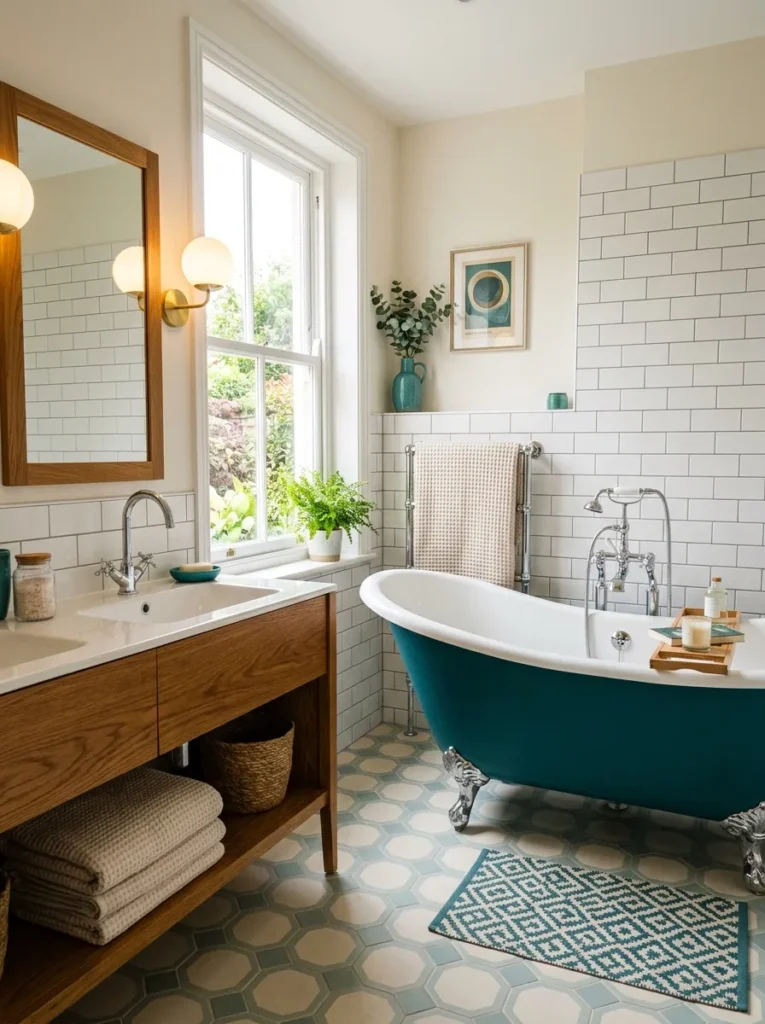
- Deep teal adds richer color while preserving a distinctly retro atmosphere.
- A single colored fixture creates impact without overwhelming the room.
- White tile provides a bright contrast against saturated teal.
- Chrome details add reflection and keep the palette polished.
Deep teal can bring a richer interpretation of vintage bathroom style when softer pastels feel too predictable. Use the color on one strong feature, such as a vanity, bathtub exterior, cabinet, or painted accent wall. Against white ceramic tile, teal creates dramatic contrast while retaining the playful character of mid-century interiors. The color also pairs beautifully with chrome, warm wood, cream, and muted pink. Among 1950 bathroom ideas, this approach is particularly useful for anyone who wants retro influence with a slightly more sophisticated and contemporary appearance.
The secret is restraint. Let teal become the room’s strongest color, then repeat it through one or two small accessories rather than matching every fixture. A warm wood vanity or cream-colored towel can soften the contrast, while chrome faucets add a clean reflective element. Keep the flooring neutral so the eye naturally settles on the colored feature. I’ve noticed that deeper colors look especially effective when paired with generous white space and strong lighting. A window, globe sconces, or warm overhead fixture can prevent teal from making a smaller bathroom feel visually enclosed.
Chrome Tub Surround
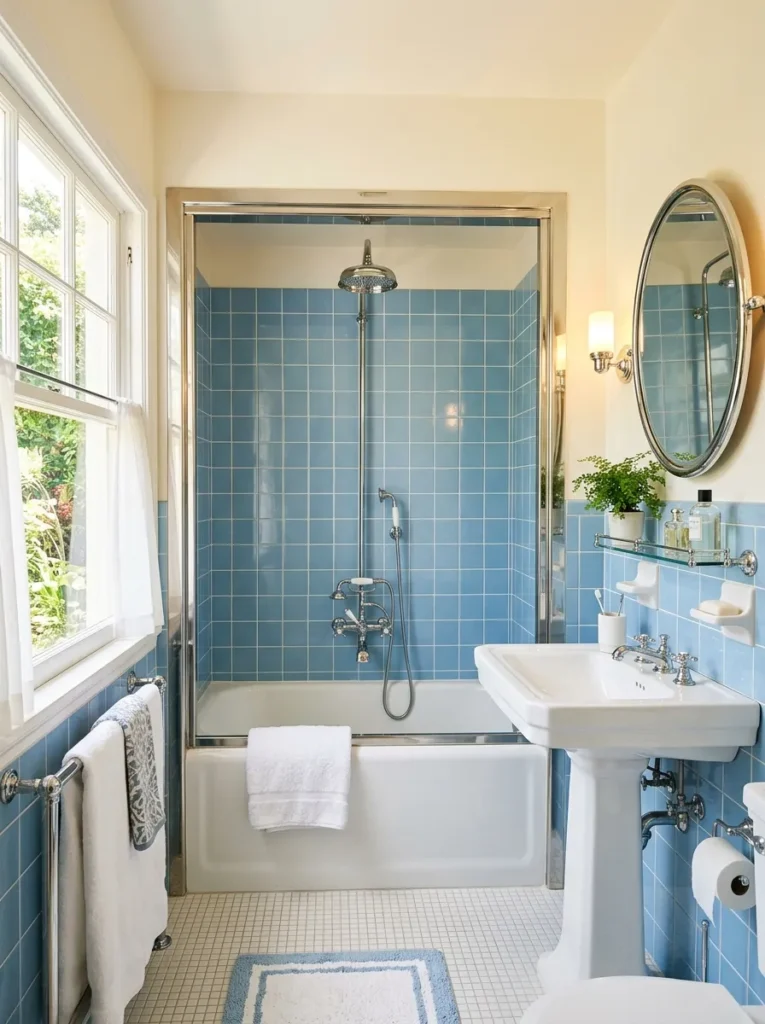
- A chrome tub surround adds polished period character around the bathing area.
- Reflective metal brightens glossy tile and visually connects nearby fixtures.
- Simple geometric lines complement square and rectangular wall tile.
- Keeping accessories minimal lets the metallic detail remain refined.
A chrome tub surround can add an unmistakable vintage finish without changing the entire bathroom layout. Shiny metal edging around the bathtub creates a crisp boundary against ceramic tile while connecting visually with faucets, towel rails, cabinet handles, and lighting. The reflective surface catches both daylight and artificial illumination, giving the bathing area extra brightness. This detail works particularly well in bathrooms where the larger fixtures are already simple. Instead of introducing another color or complicated pattern, polished chrome adds texture and period character through reflection and clean geometry.
For the best result, combine the chrome surround with white or pastel tile and keep the rest of the metal finishes consistent. A chrome-framed mirror and matching faucet can make the room feel deliberately coordinated. Avoid mixing too many metallic finishes because the reflective elements are already visually strong. A small ceramic soap dish and neatly folded towels can provide softer contrast. I’ve seen this approach work especially well in bathrooms that need a subtle vintage update rather than a complete renovation. The result feels polished, practical, and distinctly retro without becoming overly decorative.
Retro Pedestal Vanity
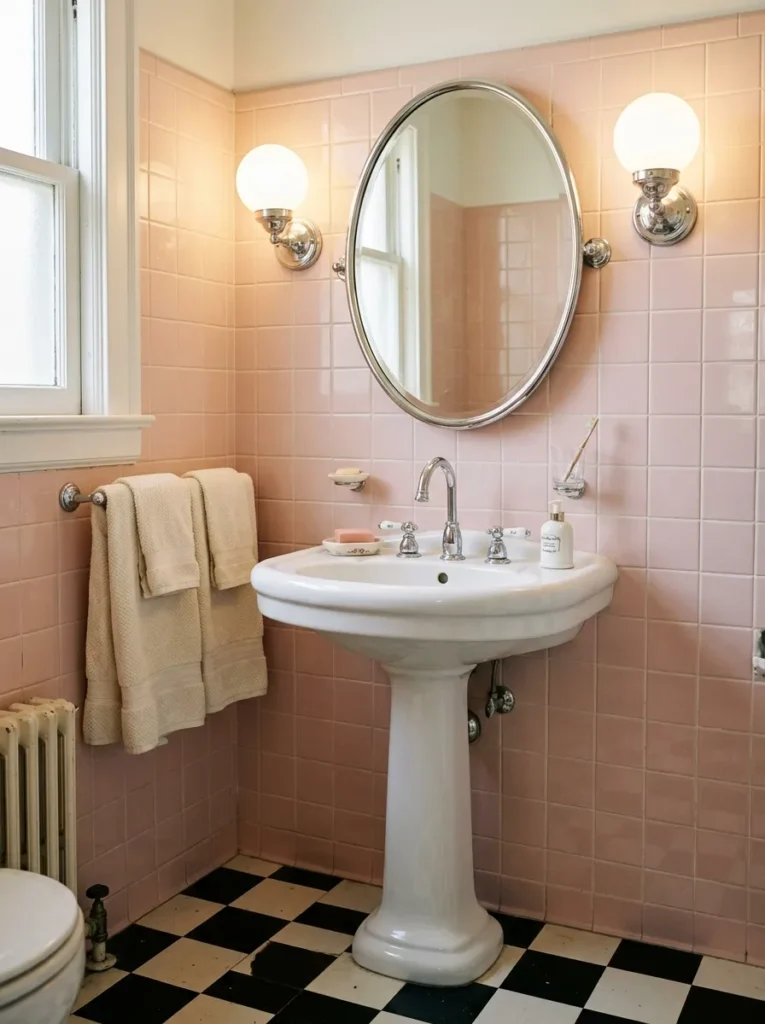
- A pedestal vanity keeps the floor visually open and emphasizes classic bathroom silhouettes.
- White ceramic works beautifully with pastel tile and vintage flooring.
- Chrome fixtures add a polished finishing touch.
- Open space underneath makes smaller bathrooms feel less crowded.
A retro pedestal vanity can give the bathroom an instantly recognizable mid-century foundation while keeping the layout visually light. Its simple ceramic basin, narrow profile, and exposed base create a clean silhouette that works beautifully with colorful tile and patterned flooring. Unlike bulky cabinetry, the open space beneath the sink allows more of the floor to remain visible, which can make a compact room feel larger. For anyone collecting 1950 bathroom ideas, this setup offers an authentic-looking feature without requiring excessive decoration or a complicated renovation.
Make the vanity the central anchor, then build around it with simple supporting pieces. An oval mirror, chrome faucet, globe sconces, and small ceramic accessories can reinforce the vintage aesthetic without making the room feel staged. If storage is limited, add a slim freestanding cabinet or wall-mounted shelf nearby rather than replacing the open vanity with a heavy cabinet. I’ve noticed that keeping the area beneath the sink visually clear makes patterned floors especially effective because more of their design remains visible. The finished space feels practical, airy, and comfortably nostalgic.
Checkerboard Wall Detail
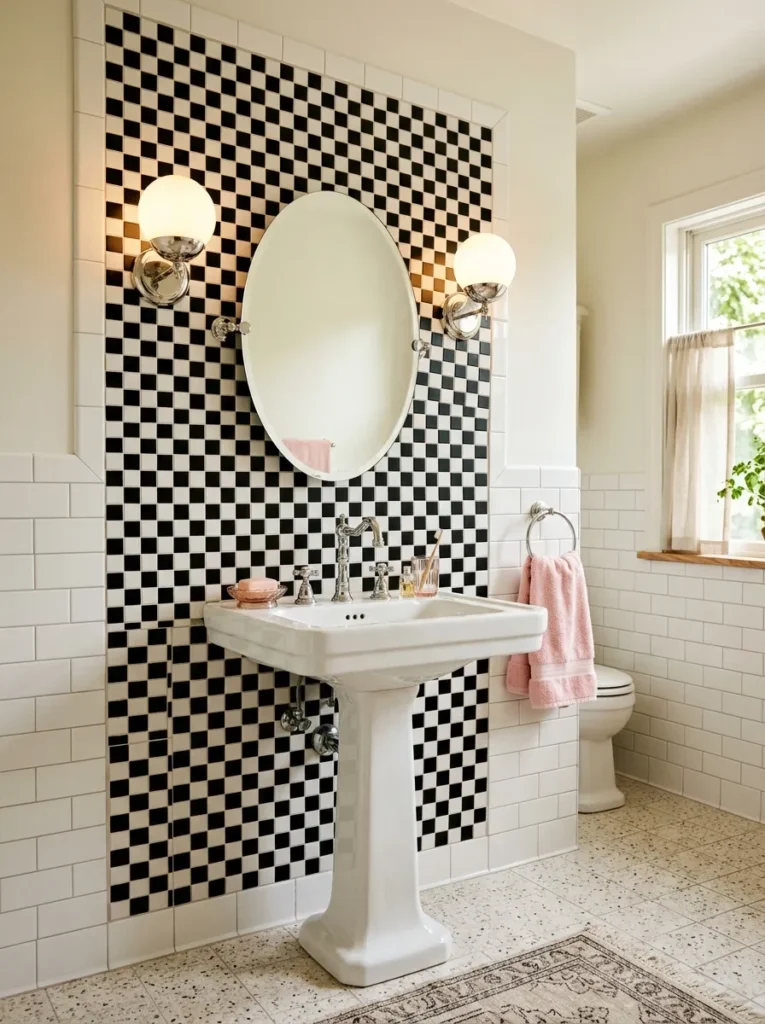
- A small checkerboard wall section adds graphic contrast without overwhelming the bathroom.
- Black-and-white tiles pair naturally with white porcelain and chrome.
- Using the pattern selectively makes the design easier to balance.
- The bold geometry adds a memorable Pinterest-friendly focal point.
A small checkerboard wall detail can bring strong vintage character to a bathroom without covering every surface in pattern. Use alternating black-and-white square tiles behind the vanity, inside a shower niche, or as a narrow accent around the bathtub. The graphic contrast immediately draws attention while leaving the rest of the room available for softer colors and classic fixtures. This is a smart way to incorporate 1950 bathroom ideas when you want a recognizable retro touch but prefer a cleaner overall aesthetic. The pattern can also visually define one specific area within an open bathroom.
Balance the bold wall treatment with quiet surrounding elements such as white tile, a simple pedestal sink, and polished chrome fixtures. If the accent sits behind the vanity, use a plain mirror so the tile remains visible around its edges. Warm lighting can soften the black-and-white contrast and make the room feel more welcoming. In my experience, limiting a strong geometric pattern to one focused area creates a more sophisticated result than repeating it throughout the room. Add one pastel accessory, natural wood detail, or soft textile to introduce warmth without competing with the graphic tile.
Conclusion
A vintage-inspired bathroom does not need a complete time-capsule makeover to feel special. From pastel fixtures and checkerboard tile to chrome details and rounded mirrors, these 1950 bathroom ideas offer simple ways to add character, warmth, and personality. Start with one feature that immediately catches your eye, then build around it with practical colors and timeless materials. I’ve seen how small changes can completely transform the atmosphere of a space. Save this post on Pinterest for your next bathroom project, try an idea that fits your style, and share it with someone who loves vintage-inspired interiors. Your beautiful bathroom makeover can start with one detail.