21 Bed Without Headboard Ideas You’ll Save Fast
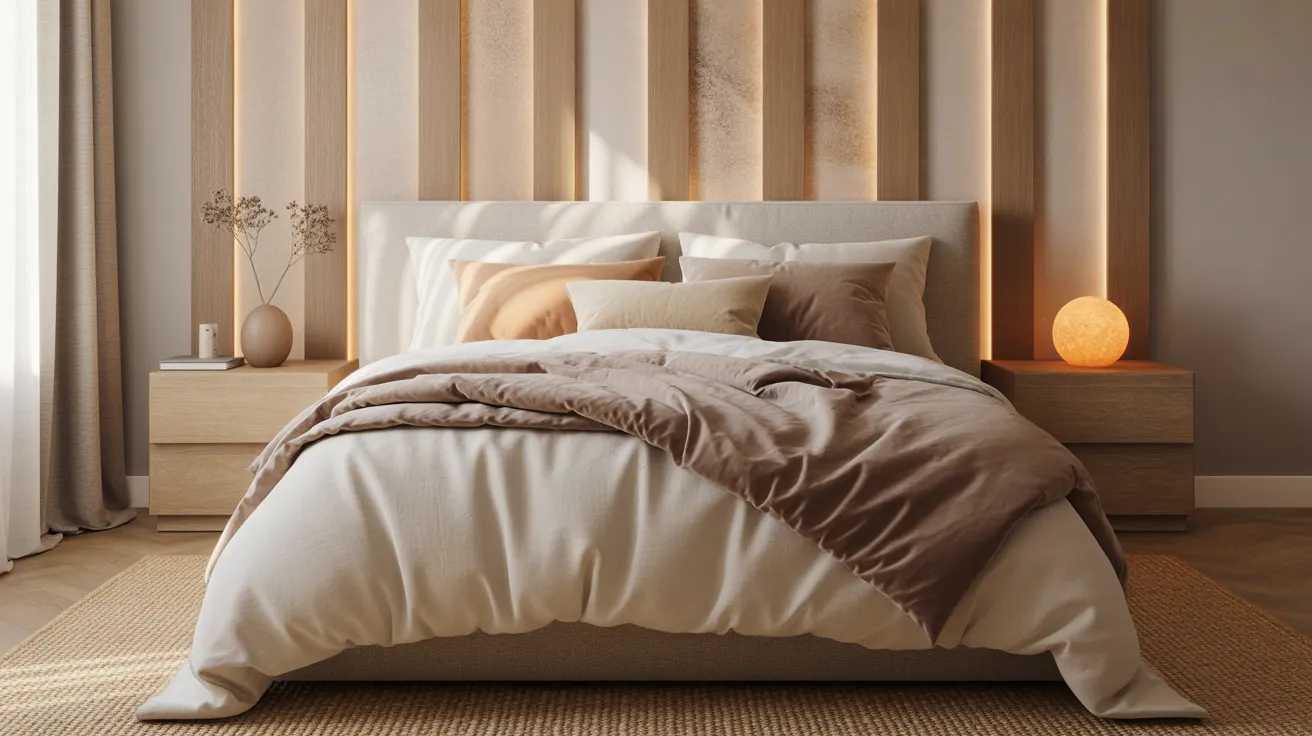
A Bed Without Headboard can feel plain at first but it actually opens the door to some of the most beautiful, creative bedroom designs you’ll ever see. If you’ve ever looked at your room and felt like something is missing, this guide is exactly what you need.
Inside this article, you’ll discover simple yet stunning ways to turn an empty wall into a stylish focal point without using a traditional headboard. From soft textures and natural wood to modern lighting and artistic wall ideas, each concept is designed to elevate your space effortlessly.
In my experience, even small changes behind the bed completely shift how a room feels, more cozy, more intentional, and far more Pinterest-worthy. I’ve seen many people transform basic bedrooms into calming retreats just by rethinking this one area. If you’re ready for inspiration that is both practical and visually powerful, you’re in the right place.
1. Floating Wood Slats
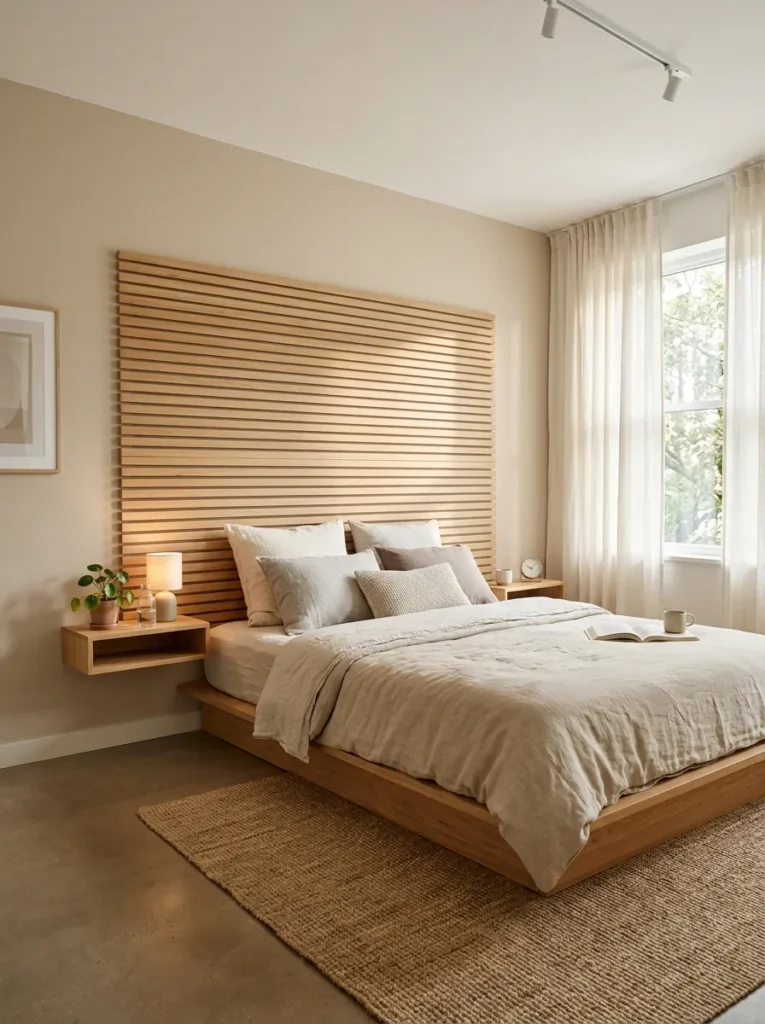
- Creates a clean architectural look without a traditional headboard
- Adds warmth through natural wood tones
- Makes the wall feel intentionally designed and structured
- Works especially well in minimalist and Scandinavian interiors
A floating wood slat setup completely changes the feel of a simple sleeping area, especially when you want a modern look without a traditional frame. In my experience, this approach instantly creates a sense of structure on an otherwise plain wall. It draws the eye upward and adds depth without overwhelming the room. Many people choose this style when they want a calm, uncluttered environment that still feels thoughtfully designed and visually intentional in everyday living spaces.
This idea works beautifully in homes where simplicity is the main goal but personality is still needed. The natural wood texture softens the overall space and prevents the room from feeling cold or empty. I’ve noticed that even small bedrooms feel more balanced when this is used behind the bed. It also pairs well with neutral bedding, soft lighting, and minimal décor, creating a cohesive look that feels both relaxing and visually pleasing in modern interiors.
2. Oversized Wall Art
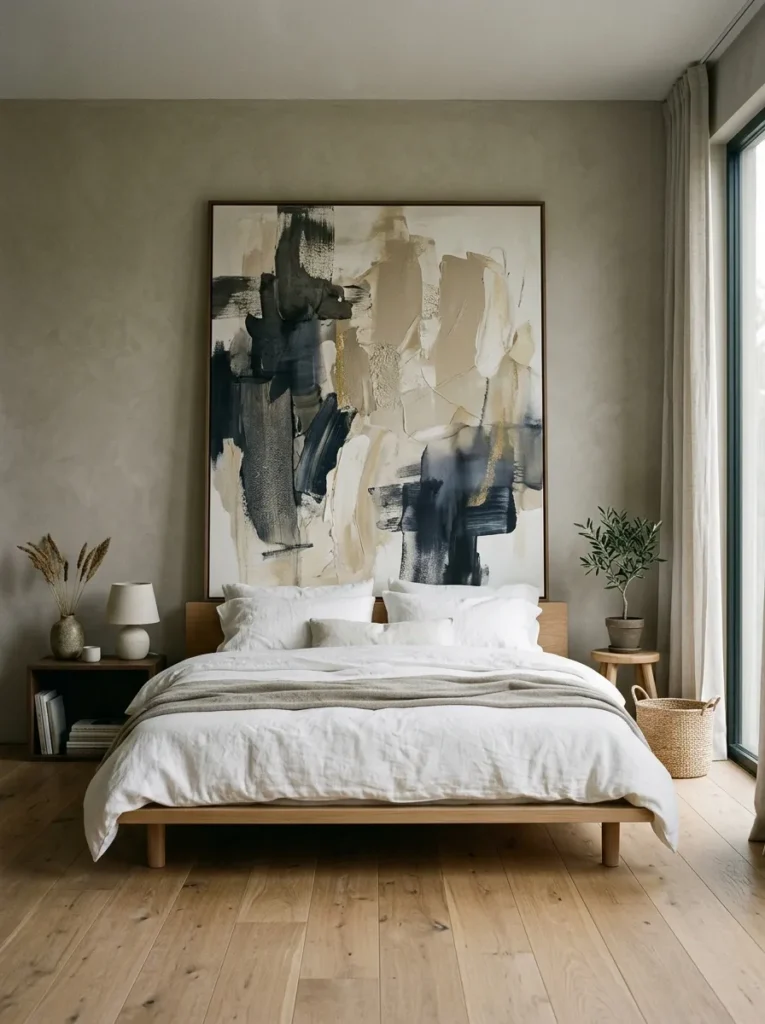
- Acts as a bold visual anchor in the room
- Removes the need for a physical headboard
- Adds personality through artwork and color
- Works well in modern and contemporary spaces
Oversized wall art is one of the most effortless ways to define a sleeping area when you don’t want a traditional frame. The large canvas naturally becomes the focal point of the room, pulling attention upward and giving the bed a strong visual identity. In my experience, this approach works best when the artwork reflects calm, abstract, or nature-inspired themes that don’t overpower the space but still bring character and depth.
This setup works especially well in apartments or modern homes where flexibility is important. Instead of committing to fixed furniture, you can easily switch artwork to refresh the entire look. I’ve seen this work well in many homes where people want a gallery-like aesthetic without clutter. The key is choosing soft, balanced colors that blend with bedding and flooring, ensuring the entire space feels cohesive, intentional, and visually soothing.
3. Upholstered Wall Panel
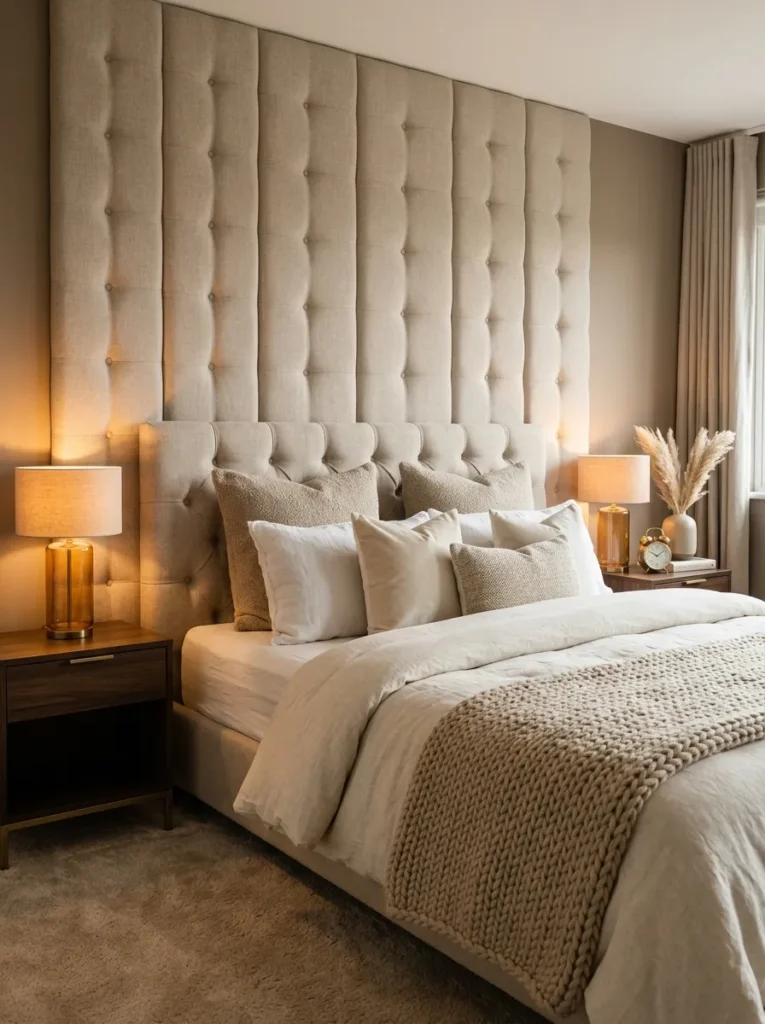
- Adds softness and comfort to the sleeping wall
- Improves acoustic quality in the room
- Creates a luxury hotel-inspired atmosphere
- Works well in modern and cozy interiors
An upholstered wall panel instantly transforms a plain bedroom into something that feels soft, warm, and inviting. The padded texture behind the bed creates a sense of comfort that you usually find in high-end hotels. I’ve noticed that this design is especially popular in rooms where people want both style and relaxation without adding bulky furniture. It visually frames the sleeping area while still maintaining a clean and minimal overall layout.
This idea works particularly well in spaces where comfort is a priority, especially bedrooms designed for rest and calm energy. The fabric absorbs light softly, reducing harsh shadows and creating a peaceful environment. In my experience, neutral tones like beige, gray, or muted taupe work best because they blend easily with bedding and décor. It also enhances sound insulation, making the room feel quieter, more private, and more restful overall.
4. Vertical Wood Planks
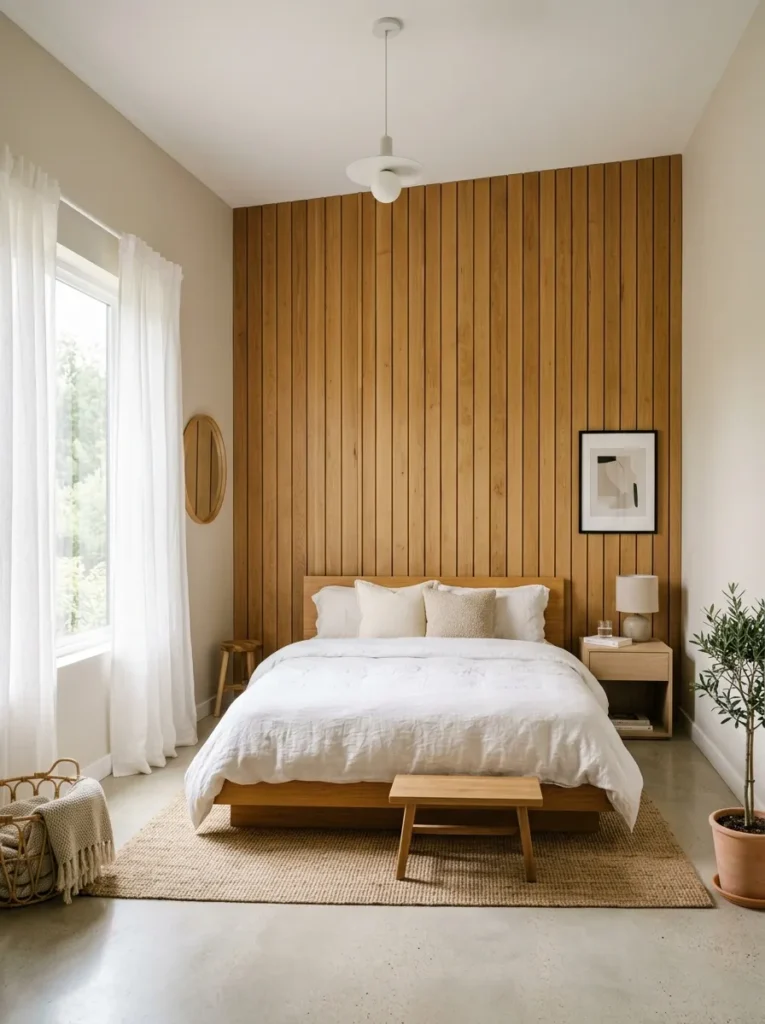
- Adds height and visual extension to the wall
- Creates a structured and architectural backdrop
- Brings warmth through natural wood tones
- Enhances minimalist bedroom aesthetics
Vertical wood planks create a strong sense of height behind the bed, making even small rooms feel taller and more spacious. The vertical rhythm naturally draws the eye upward, which helps balance low furniture like platform beds. In my experience, this design is often chosen when people want a clean yet slightly textured backdrop that still feels warm and natural. It works especially well in modern homes where simplicity and structure go hand in hand without unnecessary decoration or visual clutter.
This idea works beautifully because it combines function with visual impact in a very subtle way. The wood texture adds warmth, while the vertical lines create order and elegance. I’ve seen this approach used in compact bedrooms where maximizing perceived space is important. When paired with neutral bedding and soft lighting, the result feels calm, airy, and thoughtfully designed, making the entire room feel more refined and balanced without needing extra furniture or décor elements.
5. Soft Fabric Tapestry
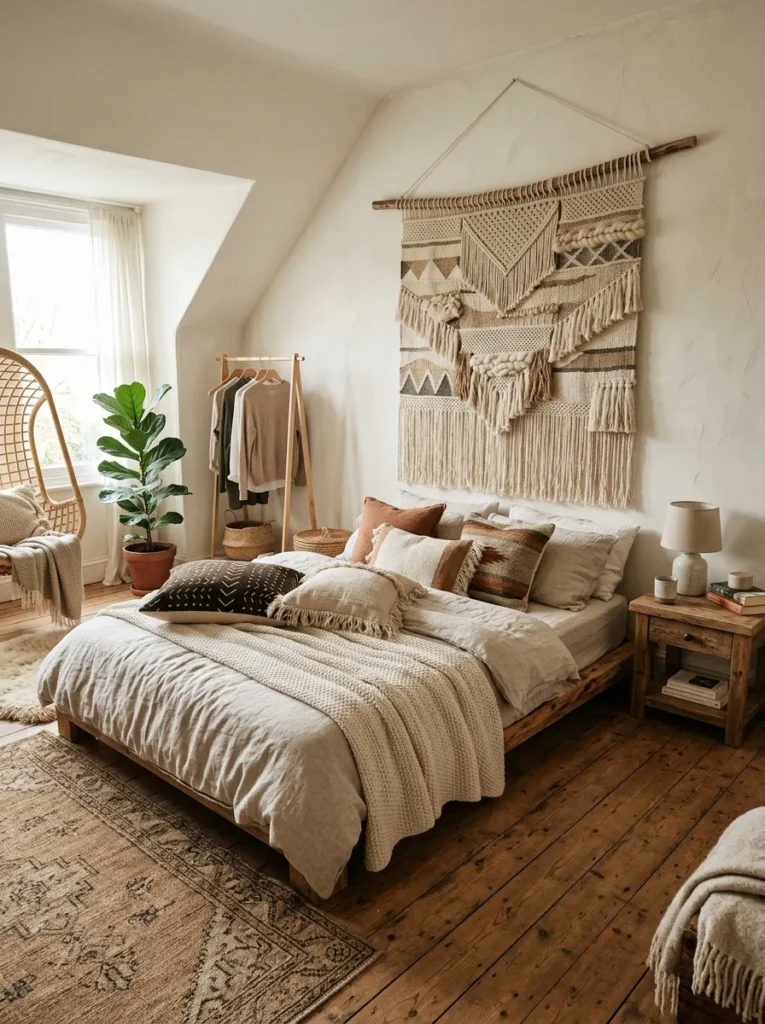
- Adds softness and artistic texture to the wall
- Easy to install and change anytime
- Creates a cozy bohemian-inspired atmosphere
- Works well in rental-friendly spaces
A soft fabric tapestry is a simple yet powerful way to bring warmth and personality into a bedroom without using traditional structures. The flowing texture instantly softens the wall and creates a relaxed, artistic backdrop. I’ve noticed this works especially well in spaces where people want flexibility and affordability while still achieving a styled look. It’s an easy upgrade that transforms plain walls into something expressive, cozy, and visually interesting without requiring permanent installation.
This idea works particularly well in rental homes or dorm-style spaces where drilling or heavy décor is not an option. The fabric naturally diffuses visual harshness and adds a layered feel to the room. In my experience, earthy tones or handwoven textures create the most balanced effect. When combined with soft lighting and minimal furniture, the space feels calm, creative, and inviting, making it perfect for relaxed everyday living.
6. Painted Arch Accent
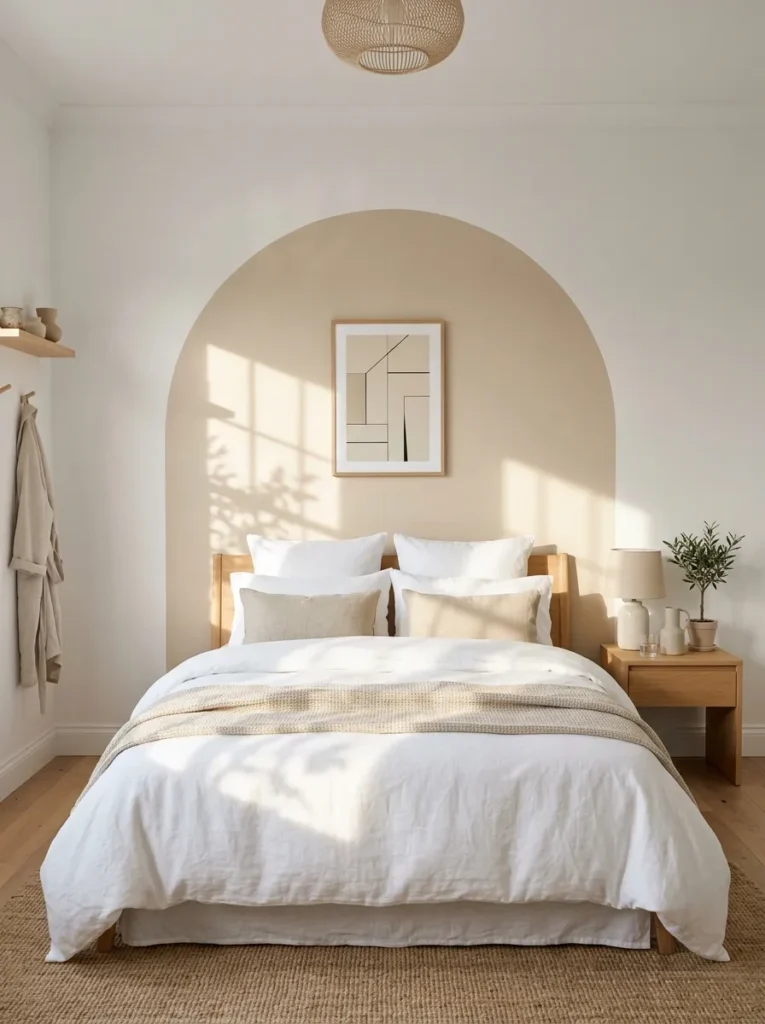
- Creates a focal point without physical furniture
- Adds artistic shape and softness to the wall
- Easy and budget-friendly wall transformation
- Works well in modern minimalist bedrooms
A painted arch accent is one of the most creative ways to define a sleeping space without using a traditional structure. The curved shape instantly softens the geometry of the room and adds a subtle artistic touch. In my experience, this idea is especially popular among people who want a modern, Pinterest-inspired look without spending much. It gives the illusion of depth and framing, making the bed area feel intentional and visually centered.
This idea works well because it relies purely on shape and color rather than objects or furniture. The soft arch creates a calming focal point that naturally draws attention without overwhelming the room. I’ve seen this used effectively in small bedrooms where simplicity is key. When paired with neutral tones and minimal décor, it creates a peaceful, design-forward atmosphere that feels both stylish and easy to maintain over time.
7. LED Light Frame
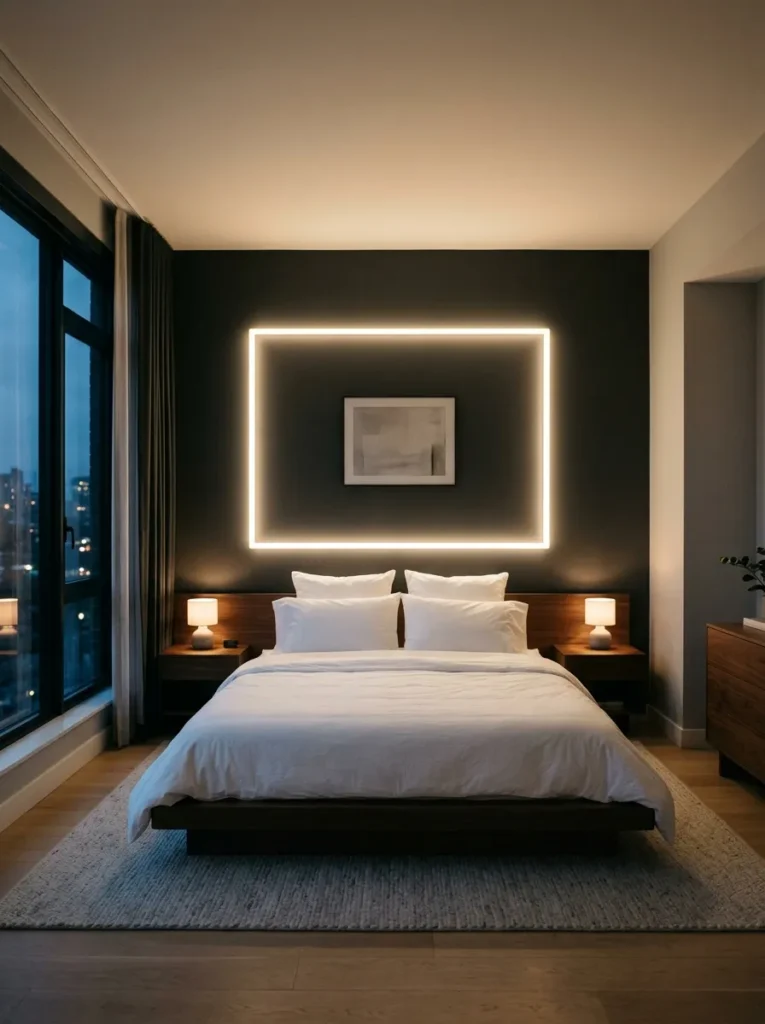
- Adds a soft glowing focal point behind the bed
- Creates a modern, cinematic bedroom atmosphere
- Enhances nighttime ambiance without harsh lighting
- Works well in contemporary and tech-inspired interiors
An LED light frame creates an instant mood shift in any bedroom, especially when you want a modern and cozy glow instead of a traditional structure. The soft illumination outlines the sleeping area and gives the wall a floating, dimensional effect. In my experience, this type of lighting works best when the rest of the room is kept minimal, allowing the glow to become the main visual feature without overwhelming the space or competing with other design elements.
This idea works beautifully for people who enjoy ambient lighting and a slightly futuristic aesthetic. The gentle glow adds depth during nighttime and makes the bed feel like a focal zone of calm and relaxation. I’ve noticed that warm white tones are most effective because they create a soothing environment. When combined with dark or neutral walls, the result feels cinematic, modern, and highly visually appealing for both comfort and style.
8. Floating Shelf Wall
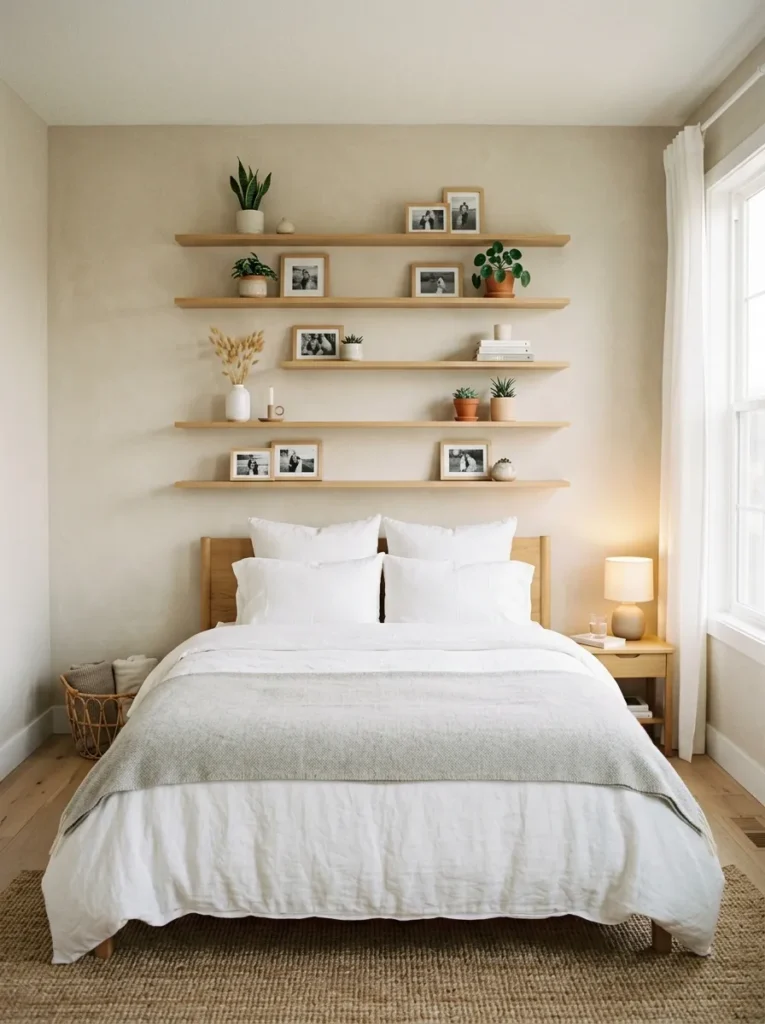
- Adds decorative structure without bulky furniture
- Provides space for small art and personal items
- Creates a layered and organized wall look
- Works well in small and minimalist bedrooms
A floating shelf wall is a practical and stylish way to define the bed area without relying on a traditional structure. The shelves create a subtle layered effect that brings personality and function together. In my experience, this design works especially well when people want to display small décor items like plants, books, or framed memories without cluttering the space. It keeps everything visually light while still adding interest to the wall behind the bed.
This idea works because it combines storage and decoration in a very minimal form. The horizontal lines of the shelves naturally guide the eye and create balance across the wall. I’ve seen this approach used in compact bedrooms where every inch matters. When styled carefully with neutral tones and a few natural elements, the result feels calm, organized, and visually appealing without making the room feel heavy or overcrowded.
9. Woven Rattan Panel
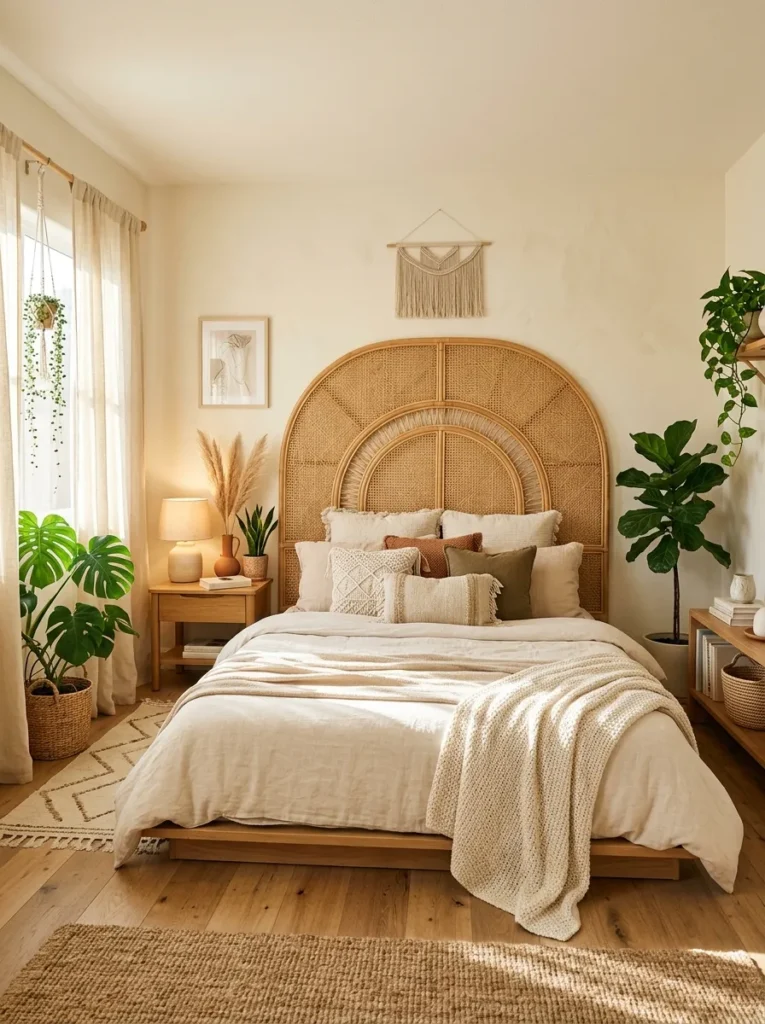
- Adds natural texture and earthy warmth
- Creates a relaxed bohemian atmosphere
- Works well with organic and eco-inspired interiors
- Lightweight and visually breathable wall feature
A woven rattan panel brings an organic, earthy feel to a bedroom, making the space feel closer to nature and more relaxed. The natural texture adds depth to the wall without making it feel heavy or overly structured. In my experience, this type of design is especially effective in rooms where warmth and softness are preferred over sharp modern lines. It instantly creates a cozy, grounded atmosphere that feels inviting and visually calming at the same time.
This idea works well because it introduces texture in a very subtle and breathable way. The open weave pattern allows light and shadow to interact naturally, adding visual interest throughout the day. I’ve noticed it pairs beautifully with neutral bedding and wooden furniture. When styled correctly, the entire room feels balanced, organic, and peaceful, making it ideal for anyone who loves a relaxed, nature-inspired bedroom aesthetic.
10. Half Wall Paint
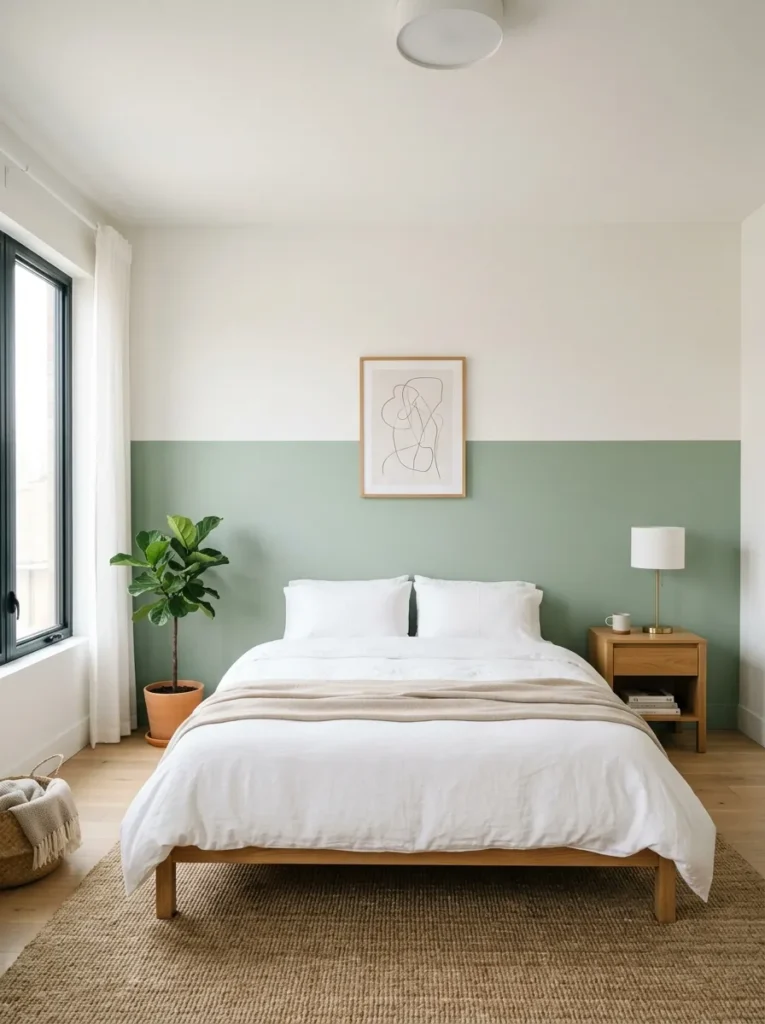
- Creates a natural visual boundary behind the bed
- Adds color without overwhelming the room
- Easy budget-friendly wall transformation
- Works well in modern and Scandinavian interiors
A half wall paint design is a simple yet powerful way to define the sleeping area without using any physical structure. The soft color break naturally frames the bed and creates a grounded visual zone. In my experience, this approach works especially well in small bedrooms where full accent walls might feel too heavy. It gives just enough contrast to make the space feel intentional while still keeping everything light, airy, and visually balanced.
This idea works beautifully because it relies on color proportion rather than décor. The lower painted section anchors the room, while the upper white space keeps it open and bright. I’ve noticed that muted tones like sage, beige, or dusty blue create the most calming effect. When paired with simple furniture and soft lighting, the result feels modern, peaceful, and thoughtfully designed without needing any extra accessories or bulky headboard structures.
11. Macramé Wall Hanging

- Adds handmade artistic texture to the wall
- Creates a soft boho-inspired focal point
- Lightweight and easy to hang or replace
- Works well in cozy, creative bedroom styles
A macramé wall hanging instantly adds warmth and personality to a bedroom, especially when you want something soft and artistic behind the bed. The handwoven texture creates a sense of craftsmanship that feels both personal and inviting. In my experience, this style works particularly well in rooms that aim for a relaxed, bohemian vibe without strict structure. It visually fills the empty wall space in a gentle way while keeping the overall atmosphere light and breathable.
This idea works because it introduces texture without adding visual weight. The intricate knots and patterns create subtle shadows that change throughout the day, making the wall feel alive and dynamic. I’ve seen this used in many cozy bedrooms where comfort and creativity matter more than rigid design rules. When combined with natural fabrics and earthy tones, it produces a warm, grounded space that feels personal, calm, and effortlessly stylish.
12. Framed Mirror Panel
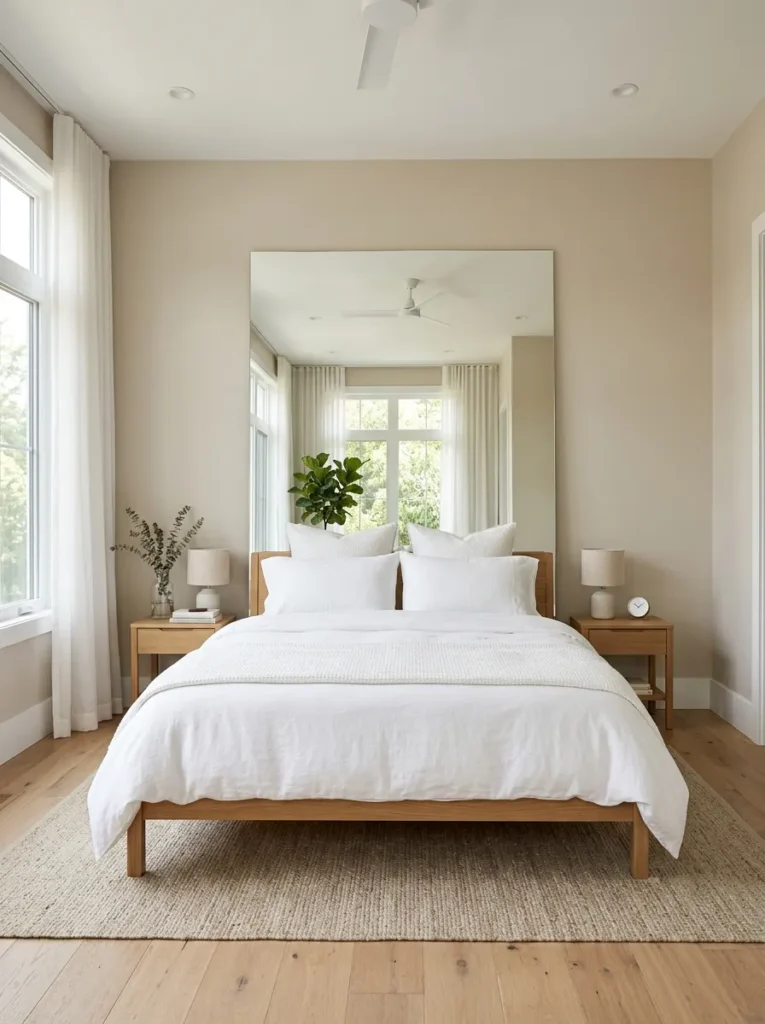
- Expands visual space and increases brightness
- Reflects light to make the room feel larger
- Adds a sleek modern and clean aesthetic
- Works well in small bedrooms with limited light
A framed mirror panel is one of the most effective ways to enhance a bedroom without using a traditional structure. The reflective surface instantly makes the space feel larger and brighter by bouncing natural light around the room. In my experience, this approach is especially useful in compact spaces where maximizing openness is important. It creates a clean, modern backdrop that doubles the visual depth of the room while keeping everything minimal and elegant.
This idea works beautifully because it combines function with style in a very subtle way. The mirror doesn’t just serve as décor—it actively transforms the perception of space. I’ve noticed that when placed behind the bed, it creates a soft glow effect during daylight hours. Paired with neutral tones and simple furniture, the room feels airy, refined, and visually expanded without needing any heavy or traditional headboard structure.
13. Cane Webbing Panel
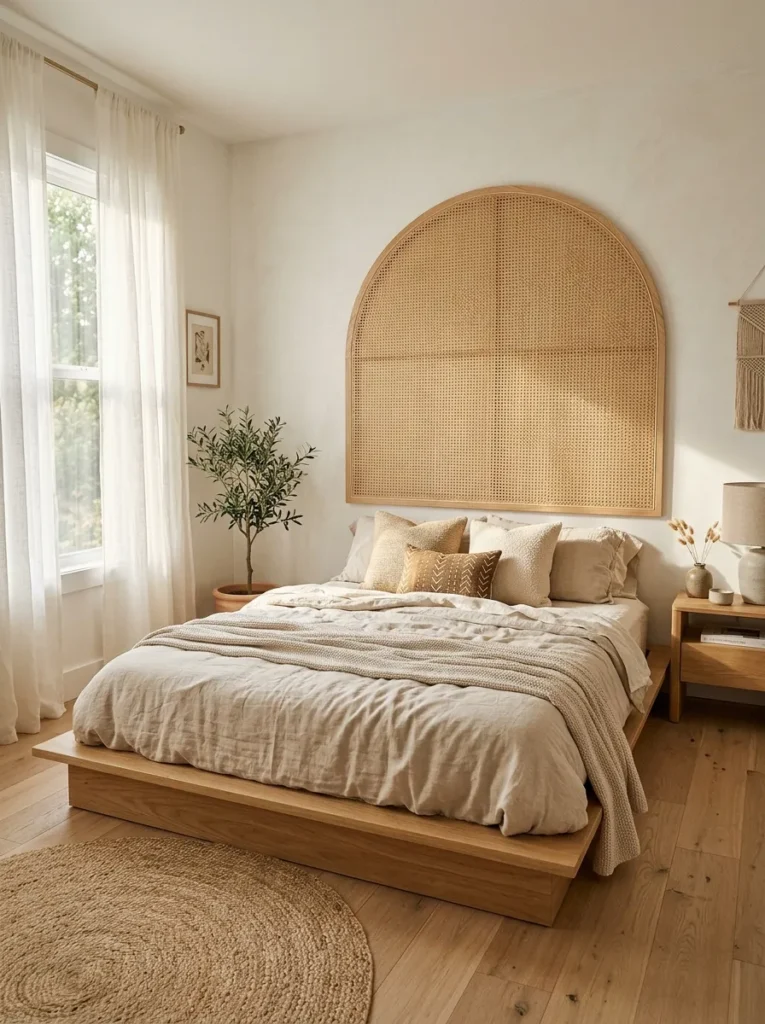
- Adds natural woven texture behind the bed
- Creates a light and breathable visual backdrop
- Blends modern and boho aesthetics effortlessly
- Works well in warm, neutral bedroom palettes
A cane webbing panel brings a soft, airy texture to the bedroom, making the wall behind the bed feel naturally styled without being heavy or overpowering. The woven pattern adds depth while still allowing light and shadow to pass through gently. In my experience, this design works best in spaces where you want warmth and simplicity together. It gives just enough detail to make the wall interesting while still keeping the overall look calm and uncluttered.
This idea works because it introduces texture in a very balanced and natural way. The organic weave creates a subtle rhythm that visually anchors the bed area without needing bulky furniture. I’ve noticed it pairs especially well with wooden furniture and neutral bedding tones. When styled minimally, the entire room feels relaxed, cohesive, and slightly earthy, making it ideal for anyone who prefers a soft, nature-inspired bedroom atmosphere.
14. Dark Accent Wall
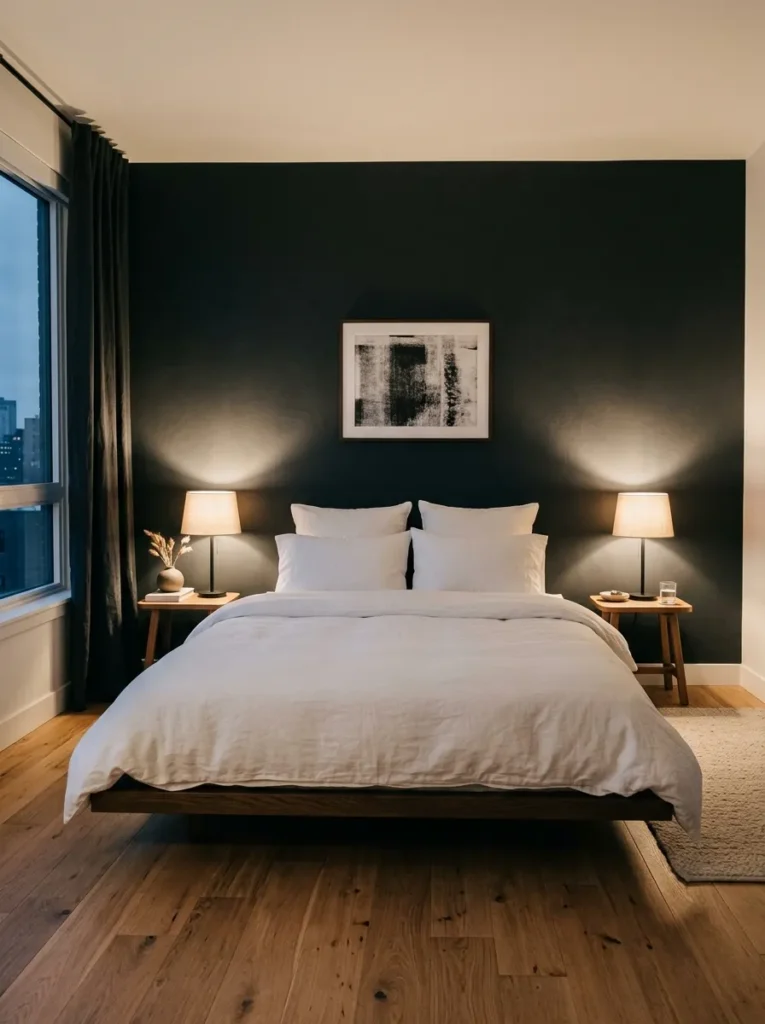
- Creates strong contrast behind the bed
- Adds depth and visual drama to the room
- Makes light bedding stand out beautifully
- Works well in modern and bold interiors
A dark accent wall instantly transforms a bedroom by creating a strong visual anchor behind the bed. The deep tones add depth and make the sleeping area feel more grounded and intentional. In my experience, this approach works especially well when paired with light bedding, as the contrast naturally highlights the bed and makes it the main focal point of the room without needing any additional structure.
This idea works beautifully because it introduces mood and sophistication in a very simple way. The darker backdrop creates a cozy, cocoon-like feeling that many people find relaxing. I’ve noticed it’s especially effective in larger bedrooms where some visual weight is needed to balance the space. When combined with warm lighting and minimal décor, the result feels modern, dramatic, and comfortably intimate.
15. Hanging Fabric Strips
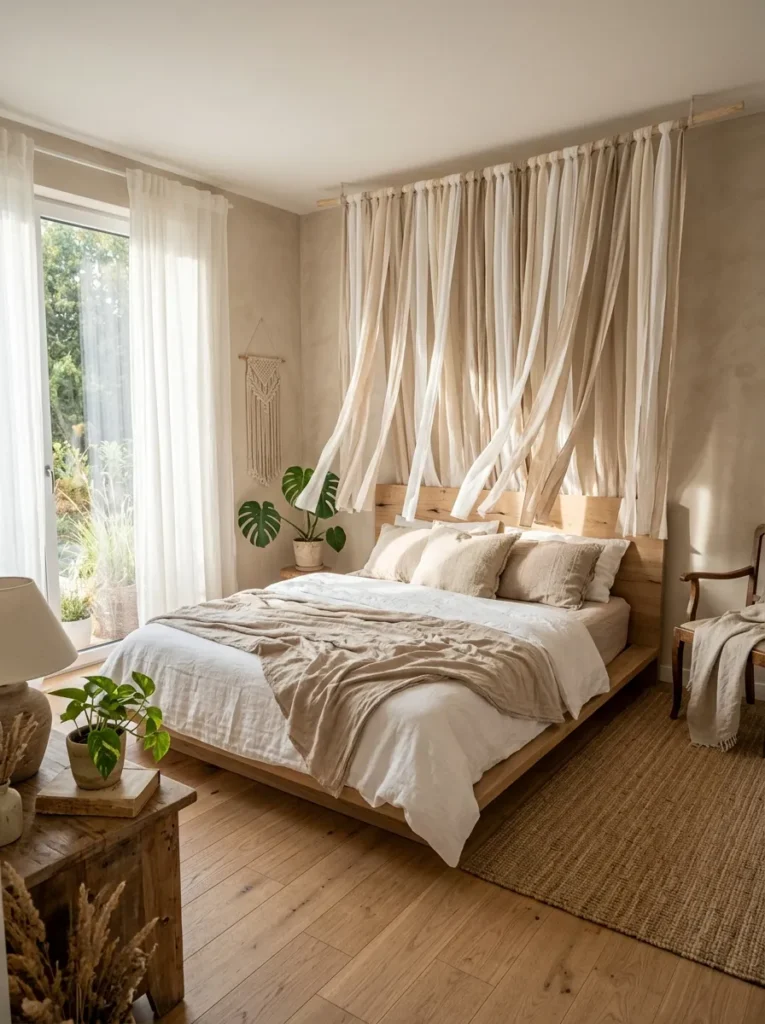
- Adds movement and softness to the wall
- Creates a light, airy decorative backdrop
- Easy to install and customize anytime
- Works well in creative and boho interiors
Hanging fabric strips create a delicate and artistic backdrop that brings subtle movement into the bedroom. The soft vertical lines gently frame the bed without feeling heavy or structured. In my experience, this idea works well for people who want something unique yet minimal. It introduces texture and flow, making the wall feel dynamic while still maintaining a calm and breathable atmosphere that doesn’t overwhelm the rest of the room.
This idea works because it adds visual interest through simplicity rather than solid form. The fabric naturally sways slightly with air movement, creating a soft, calming effect. I’ve noticed it pairs beautifully with neutral interiors and natural light. When styled carefully, the result feels dreamy, lightweight, and creative, making the bedroom feel more personal and expressive without relying on traditional headboard designs or permanent installations.
16. Stone Texture Wall
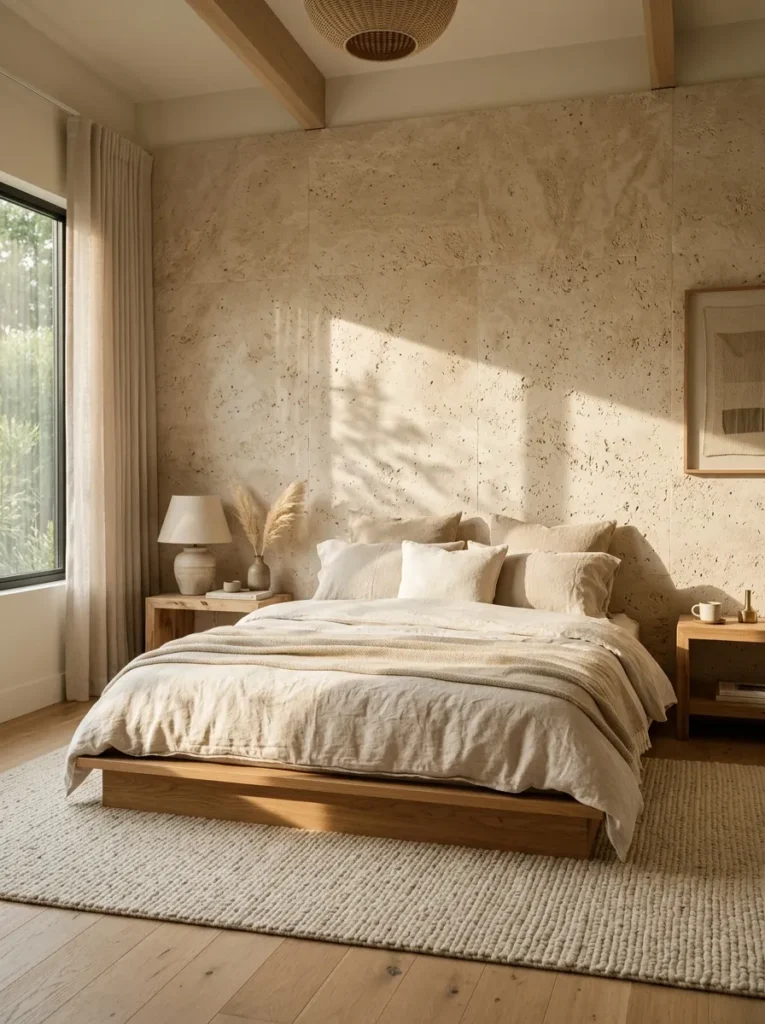
- Adds natural depth and earthy character
- Creates a strong yet calming focal wall
- Brings a luxury organic feel to the bedroom
- Works well in modern rustic interiors
A stone texture wall brings a grounded, natural feel to the bedroom that instantly replaces the need for a traditional headboard. The rough yet refined surface adds depth and character without overwhelming the space. In my experience, this style works especially well in interiors that aim for a calm, earthy luxury look. It creates a strong visual anchor behind the bed while still feeling soft enough to blend with minimal furniture and neutral color palettes.
This idea works beautifully because it introduces raw material contrast in a subtle, controlled way. The natural texture interacts with light throughout the day, creating soft shadows that make the wall feel alive. I’ve noticed it pairs especially well with linen bedding and wooden accents. When balanced correctly, the space feels sophisticated, peaceful, and naturally elegant, giving the bedroom a timeless quality without needing additional decorative structures.
17. Upholstered Divider Screen
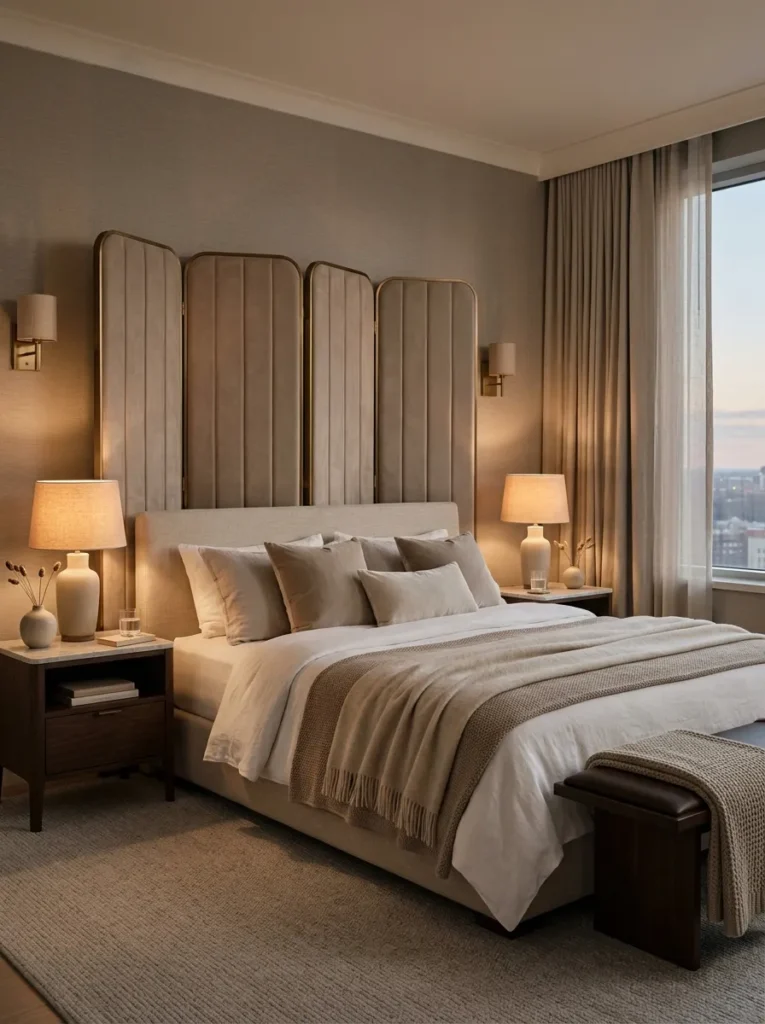
- Creates a soft and movable backdrop behind the bed
- Adds privacy and layered depth to the room
- Introduces hotel-style luxury feel
- Easy to reposition or replace anytime
An upholstered divider screen offers a flexible and stylish alternative when you want structure behind the bed without permanent installation. The soft fabric panels add warmth and create a subtle separation that visually frames the sleeping area. In my experience, this idea is especially useful in shared or multifunctional spaces where adaptability matters. It instantly elevates the room’s atmosphere while keeping the overall setup lightweight and easy to adjust.
This idea works because it combines functionality with soft visual design. The padded surface reduces harsh lines and creates a cozy, enclosed feeling around the bed. I’ve seen this used effectively in modern apartments where flexibility is key. When paired with neutral tones and warm lighting, the screen enhances the sense of comfort, making the bedroom feel intimate, organized, and visually balanced without permanent structural changes.
18. Layered Frames Grid
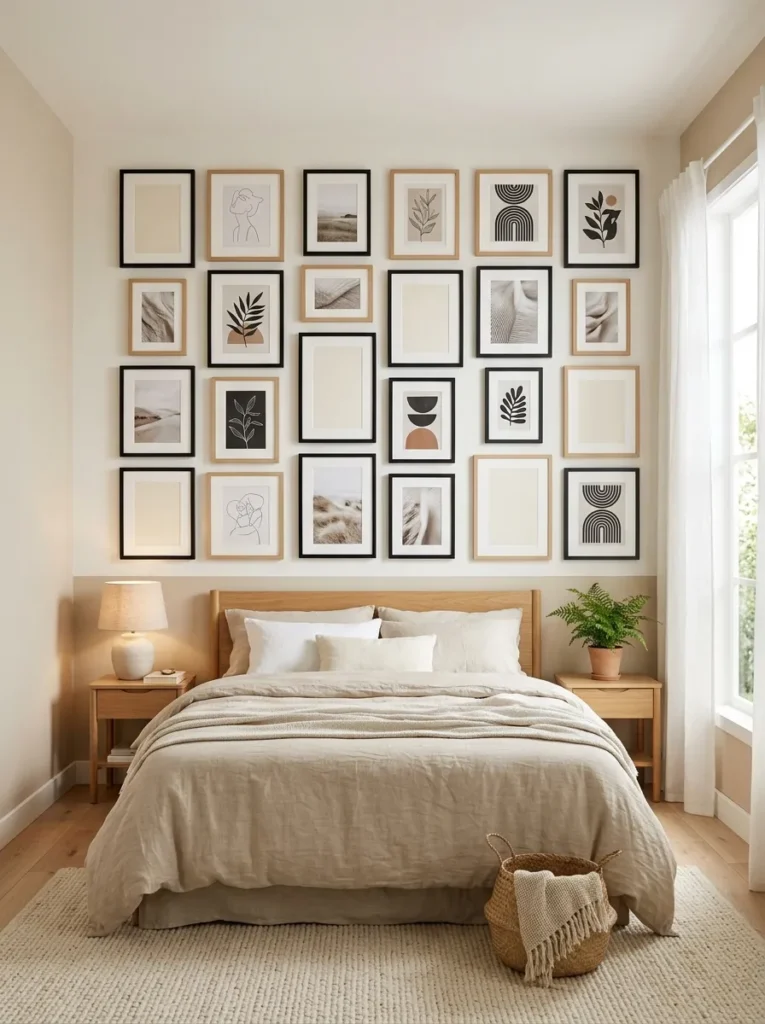
- Creates structured gallery-style wall design
- Adds personality through layered framing
- Works as a lightweight alternative to headboards
- Easy to customize and rearrange anytime
A layered frames grid brings structure and personality to the bedroom wall without using a traditional headboard. The arrangement of frames creates a visual rhythm that naturally draws attention to the bed area. In my experience, this style works especially well for people who enjoy a clean yet artistic look. It allows flexibility in design since frames can be changed or rearranged easily, keeping the room feeling fresh and personalized over time.
This idea works because it transforms an empty wall into a curated visual display. The combination of empty and filled frames adds depth without cluttering the space. I’ve noticed it works beautifully in minimalist interiors where balance and order matter. When styled with neutral tones and soft lighting, the result feels modern, creative, and thoughtfully arranged, giving the bedroom a gallery-like atmosphere that feels both personal and visually refined.
19. Rope Wall Weave
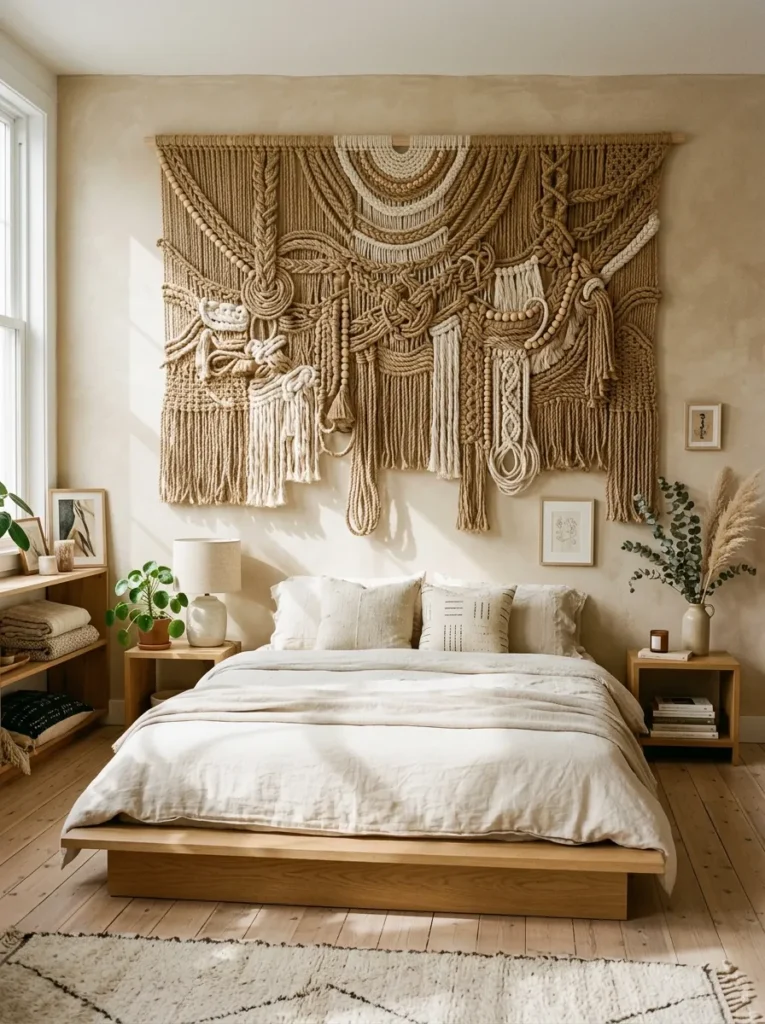
- Adds strong handcrafted texture to the wall
- Creates a unique artistic focal point
- Brings warm organic boho character
- Works well in earthy, natural interiors
A rope wall weave creates a bold yet natural statement behind the bed, turning an empty wall into a handcrafted focal point. The textured rope pattern adds depth and visual interest without relying on traditional furniture pieces. In my experience, this idea works especially well for people who want something artistic and unconventional. It instantly makes the space feel more personalized and creative while still keeping a warm, grounded atmosphere that feels inviting and comfortable.
This idea works because it plays with texture rather than solid form, giving the wall a sculptural quality. The interplay of shadows between the ropes changes throughout the day, making the design feel alive and dynamic. I’ve seen this work beautifully in bohemian-inspired bedrooms where natural materials are prioritized. When paired with soft bedding and neutral tones, the result feels earthy, expressive, and visually rich without overwhelming the simplicity of the room.
20. Neutral Layer Backdrop
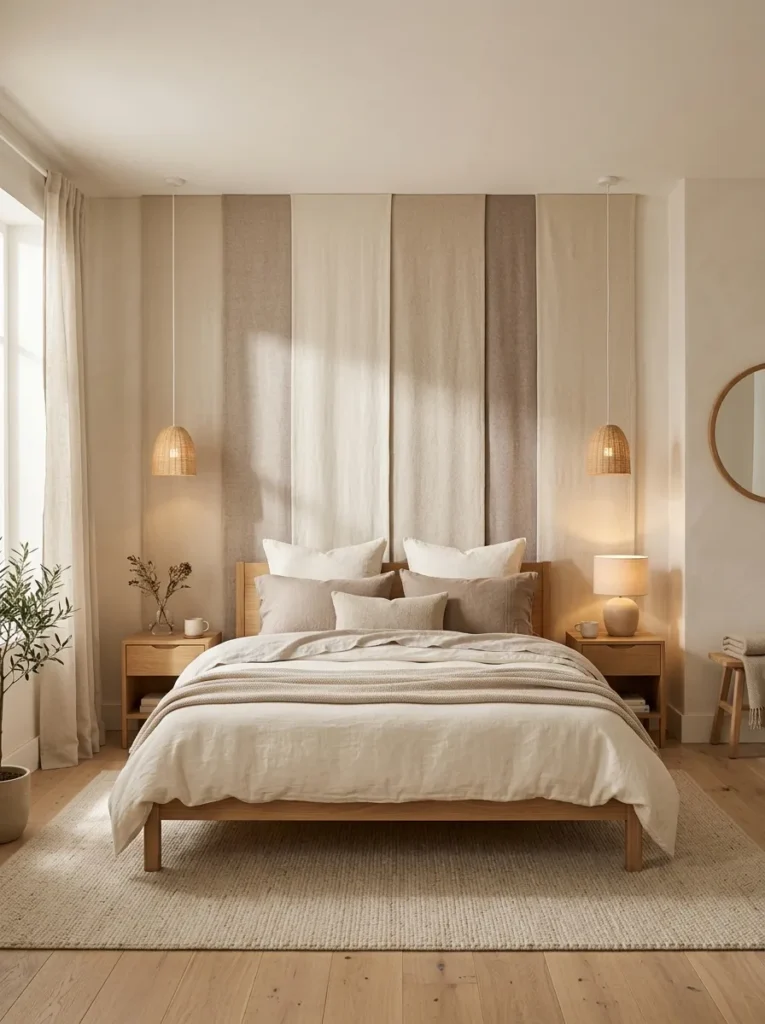
- Adds soft layered depth to the wall
- Creates calm and cohesive neutral palette
- Enhances warmth without visual clutter
- Works well in minimalist and cozy interiors
A neutral layer backdrop is a subtle yet powerful way to define the bed area using soft tonal variation instead of physical structure. The layered fabrics or painted tones create depth while maintaining a calm and unified look. In my experience, this approach is perfect for people who prefer peaceful, clutter-free bedrooms. It allows the space to feel warm and inviting without introducing strong contrasts or heavy visual elements that might disrupt relaxation.
This idea works because it focuses on harmony rather than bold design features. The gradual shifts in beige, ivory, and taupe create a soft visual rhythm behind the bed. I’ve noticed it works especially well in Scandinavian-inspired spaces where simplicity is key. When combined with natural textures and soft lighting, the result feels soothing, balanced, and effortlessly elegant, making the bedroom feel like a calm retreat.
21. Wooden Beam Accent
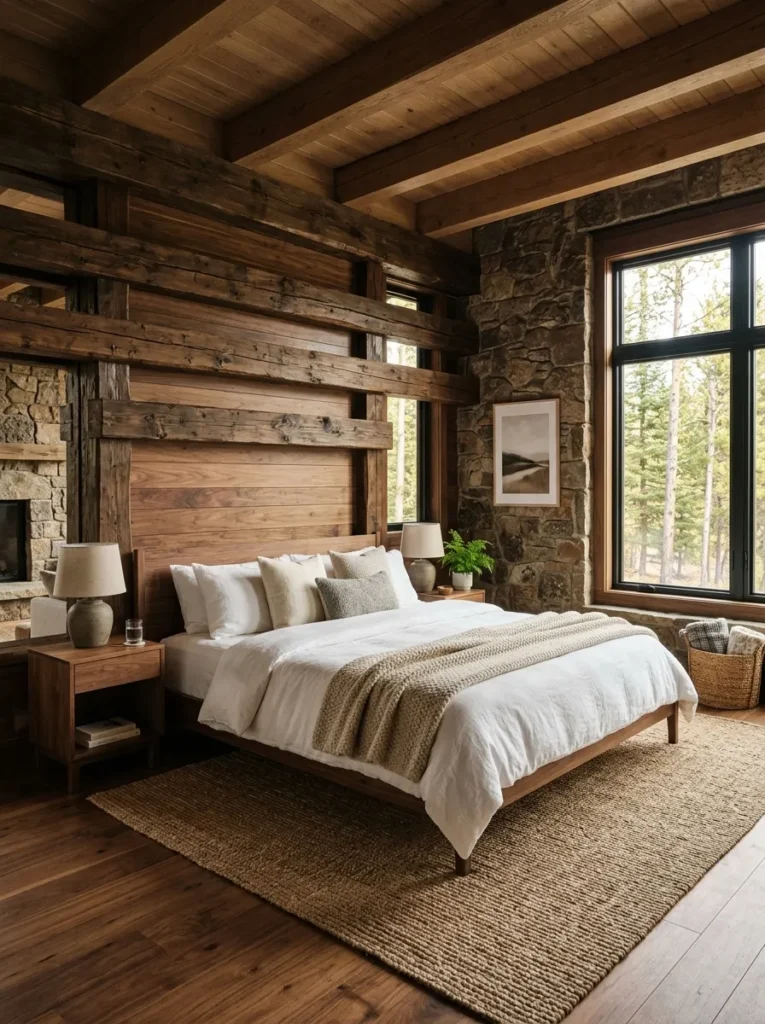
- Adds strong architectural character to the wall
- Creates a warm rustic-modern focal point
- Brings natural structure without bulky furniture
- Works well in cozy and cabin-style interiors
A wooden beam accent creates a strong architectural presence behind the bed without needing a traditional structure. The horizontal lines naturally frame the sleeping area and add warmth to the overall space. In my experience, this design works especially well in homes that blend rustic and modern elements. It brings a grounded, natural feel that makes the bedroom appear both structured and inviting while maintaining a simple and uncluttered visual layout.
This idea works beautifully because it uses natural materials to create form and balance. The wood grain adds texture, while the linear arrangement guides the eye across the wall. I’ve seen this used effectively in cozy, cabin-inspired interiors where warmth is essential. When paired with soft bedding and neutral tones, the result feels stable, harmonious, and visually comforting, turning the bedroom into a naturally styled retreat.
Conclusion
Creating a beautiful sleep space doesn’t require a traditional setup, these ideas show how much personality a bed without headboard can truly have. From textures and lighting to natural materials and art-inspired walls, each concept helps you turn a plain wall into something visually calming and inspiring.
I’ve seen how small design shifts like these can completely change the mood of a bedroom, making it feel more peaceful and personal. Save these ideas on Pinterest so you can revisit them later, try your favorite design in your own space, and share them with someone looking for bedroom inspiration. Small changes can truly create a big transformation.