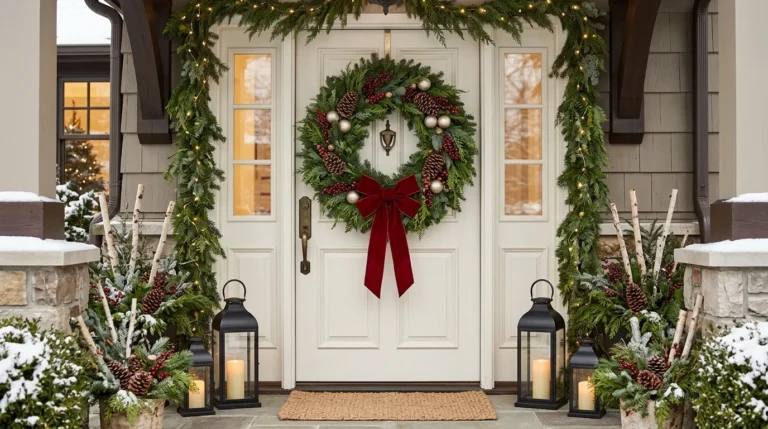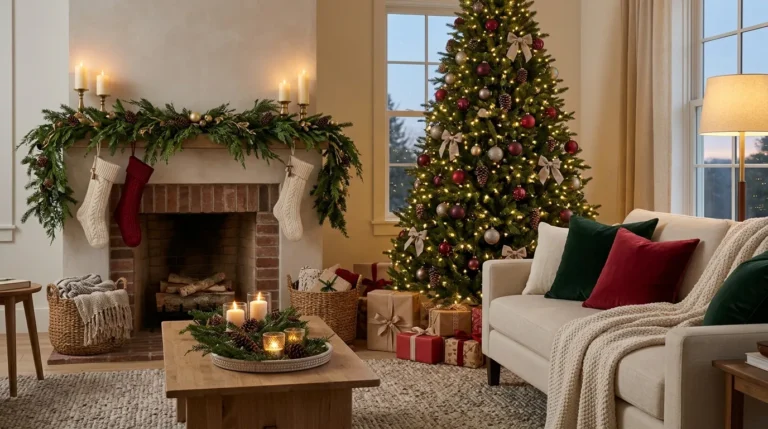
23 Neutral Christmas Decor Ideas for a Cozy Holiday Home

A calm, cozy Christmas home doesn’t need bright red ribbons or piles of decorations. Sometimes, the softest details create the most beautiful holiday atmosphere.
Neutral Christmas decor brings together creamy whites, warm beige, natural wood, soft greenery, woven textures, and gentle lighting to create a home that feels festive without looking overwhelming. This collection of 23 ideas is designed for anyone who wants holiday charm while keeping their existing style clean and inviting. You’ll find simple ways to decorate fireplaces, trees, tables, bedrooms, entryways, and cozy corners using materials that feel natural and easy to live with. In my experience, layering texture rather than adding more color can completely change a room. These ideas can help you create a warm, polished holiday home that still feels like you.
1. Layered Ivory Textiles
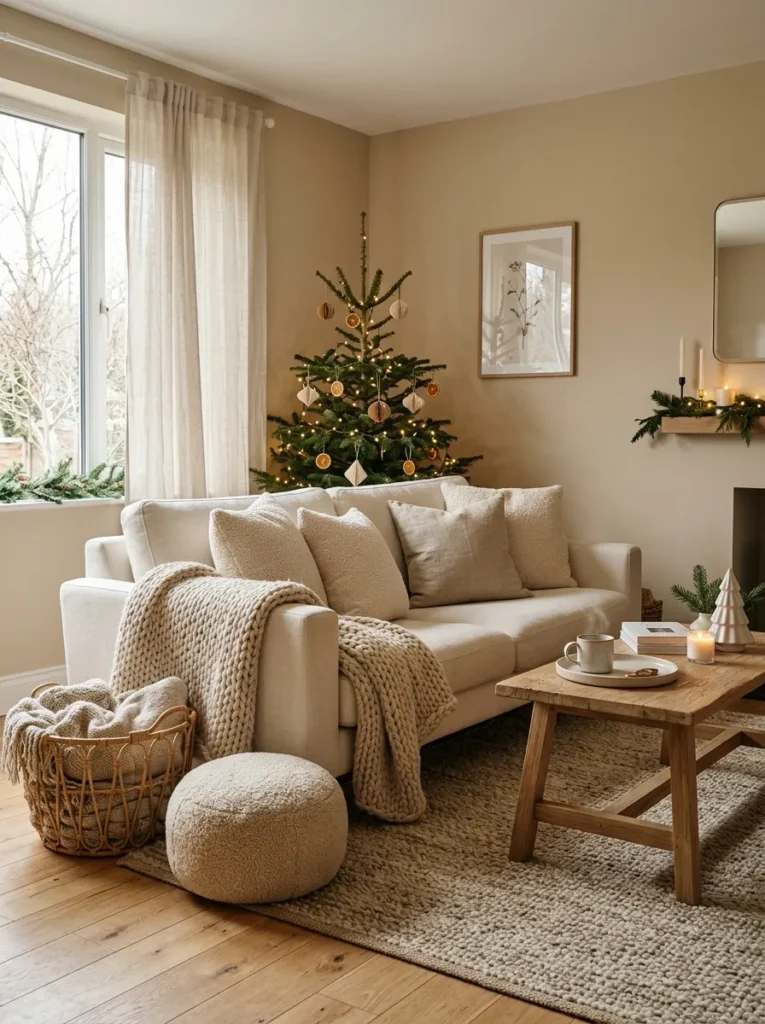
- Mix ivory throws, boucle pillows, and soft woven blankets for instant warmth.
- Keep the palette tonal so the room feels calm rather than flat.
- Add different textures to make pale colors visually interesting.
- Drape a blanket casually over a sofa corner for an effortless finish.
Layered ivory textiles can make a holiday living room feel warm without introducing strong seasonal colors. Start with a creamy sofa or neutral seating, then add boucle pillows, knitted throws, linen cushions, and softly textured blankets in slightly different shades. The subtle variation keeps the space from looking one-dimensional while maintaining a peaceful palette. I’ve noticed that mixing textures is especially helpful in neutral rooms because the materials create visual depth where bold colors normally would. Keep the layers relaxed rather than perfectly arranged, allowing the room to feel comfortable, inviting, and naturally decorated for the holidays.
For a polished result, combine materials that feel different to the touch but share similar undertones. A chunky knit beside smooth cotton or nubby boucle creates enough contrast to catch attention in photographs. Add one or two pieces with gentle fringe or woven detailing for extra character. This approach works particularly well in smaller homes because it adds seasonal warmth without making the room feel crowded. The finished look feels festive through softness rather than bright ornaments. For neutral Christmas decor, these simple textile layers create an inviting foundation that can stay in place throughout the winter season.
2. Wooden Ornament Tree

- Use unfinished or lightly stained wood ornaments for an organic holiday accent.
- Choose a simple tree shape so the natural materials remain the focus.
- Mix round, star, and snowflake ornaments for subtle visual variety.
- Place the tree near a window where daylight highlights the wood grain.
A small Christmas tree decorated with wooden ornaments brings warmth and natural character to a neutral home. Choose ornaments in pale oak, birch, or softly weathered wood, then combine simple shapes such as stars, bells, circles, and snowflakes. Keep the branches lightly decorated so the greenery remains visible between ornaments. This balance prevents the display from becoming overly busy. A woven tree collar or simple ceramic base can reinforce the earthy look. In my experience, natural wood works beautifully with cream walls and light flooring because its warm undertones add depth without disturbing an otherwise soft holiday palette.
Position the tree where it can become a quiet focal point, such as beside a console, fireplace, reading chair, or large window. Warm white lights can add a gentle glow after sunset while preserving the understated color scheme. You can also place a few wrapped gifts in kraft paper and ivory ribbon underneath for a coordinated finish. The result feels festive but relaxed, making it suitable for homes that favor Scandinavian, farmhouse, rustic, or modern interiors. Repeating the same wood tone in nearby baskets or furniture helps the entire corner feel thoughtfully connected.
3. Creamy Mantel Greenery

- Combine soft evergreen branches with cream stockings and understated ornaments.
- Let the greenery provide natural contrast against a pale mantel.
- Add ceramic houses or simple candles for gentle seasonal detail.
- Keep the arrangement slightly asymmetrical for a relaxed, collected appearance.
A creamy mantel becomes instantly more inviting when soft evergreen branches are layered across its surface. Instead of colorful decorations, use muted greenery, ivory candles, pale ceramic accents, and natural wood details. Allow some branches to extend gently over one edge while keeping the opposite side lighter for balance. This creates movement without making the arrangement feel overly styled. Neutral Christmas decor works especially well around a fireplace because the greenery adds the contrast needed to define the display. The combination feels seasonal while still blending naturally with everyday furniture, neutral walls, woven textures, and understated accessories.
For a practical mantel arrangement, begin with the greenery and then build around its natural shape. Add two or three cream candles at different heights, followed by a few small ceramic houses or wooden ornaments. If stockings are included, choose oatmeal, ivory, or warm beige fabrics with simple textures. I’ve seen this approach work well in homes where the fireplace already has strong architectural character because the decorations enhance rather than compete with it. Finish with a few small pieces of greenery at floor level or on a nearby console to visually connect the mantel with the rest of the room.
4. Linen Ribbon Garland
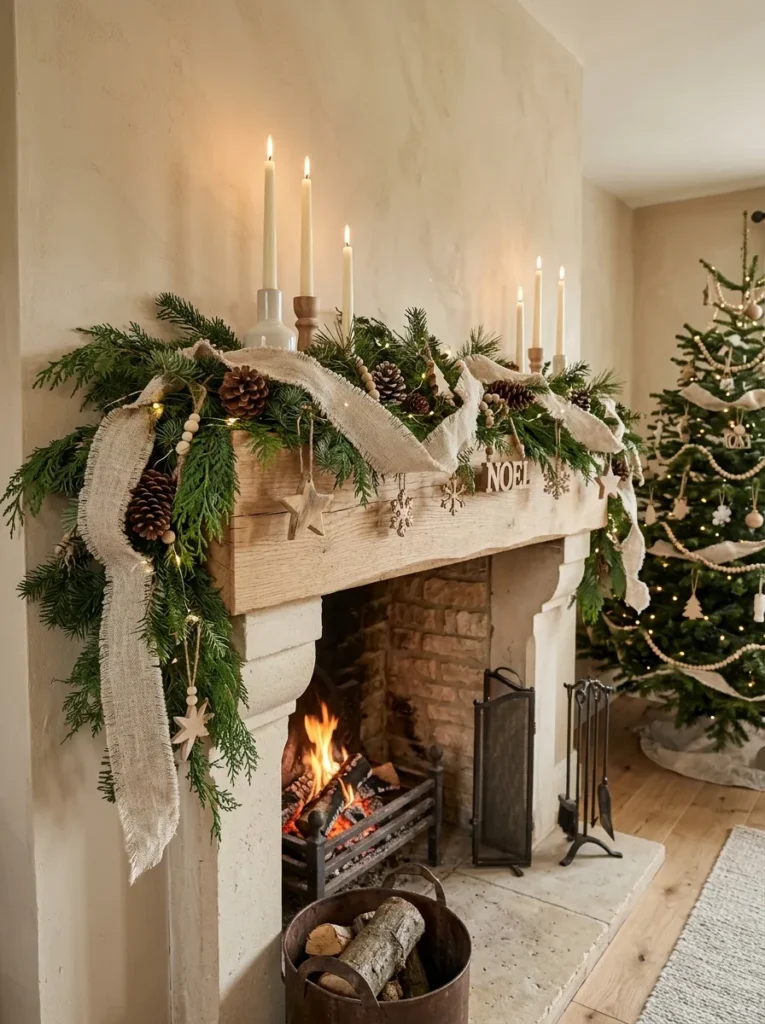
- Use wide linen ribbon to soften a mantel, staircase, or console display.
- Choose oatmeal, beige, or muted taupe for a naturally coordinated look.
- Let loose ribbon tails add movement without making the arrangement feel busy.
- Pair the fabric with greenery, pinecones, or simple wooden ornaments.
A linen ribbon garland adds a soft, relaxed finish to holiday decorating without relying on shiny or colorful materials. Choose ribbon in oatmeal, flax, warm beige, or muted taupe, then weave it loosely through evergreen branches. The slightly wrinkled texture gives the arrangement an authentic, lived-in quality that feels especially comfortable in family spaces. Unlike stiff decorative ribbon, linen blends naturally with wood, wicker, ceramic, and woven fabrics. The result is understated but still festive. For neutral Christmas decor, this small textile detail can make an otherwise simple mantel or staircase feel thoughtfully finished.
Try varying the ribbon width or allowing several sections to hang naturally rather than creating perfectly even loops. This makes the display feel less formal and gives photographs more visual movement. If your room already contains patterned fabrics, choose a plain linen ribbon so the overall composition stays balanced. I’ve noticed that neutral ribbon looks particularly beautiful when paired with warm white lights because the soft fabric catches the glow without becoming reflective. Add a few pinecones or small wooden ornaments to complete the garland while keeping the palette calm and cohesive.
5. White Ceramic Village
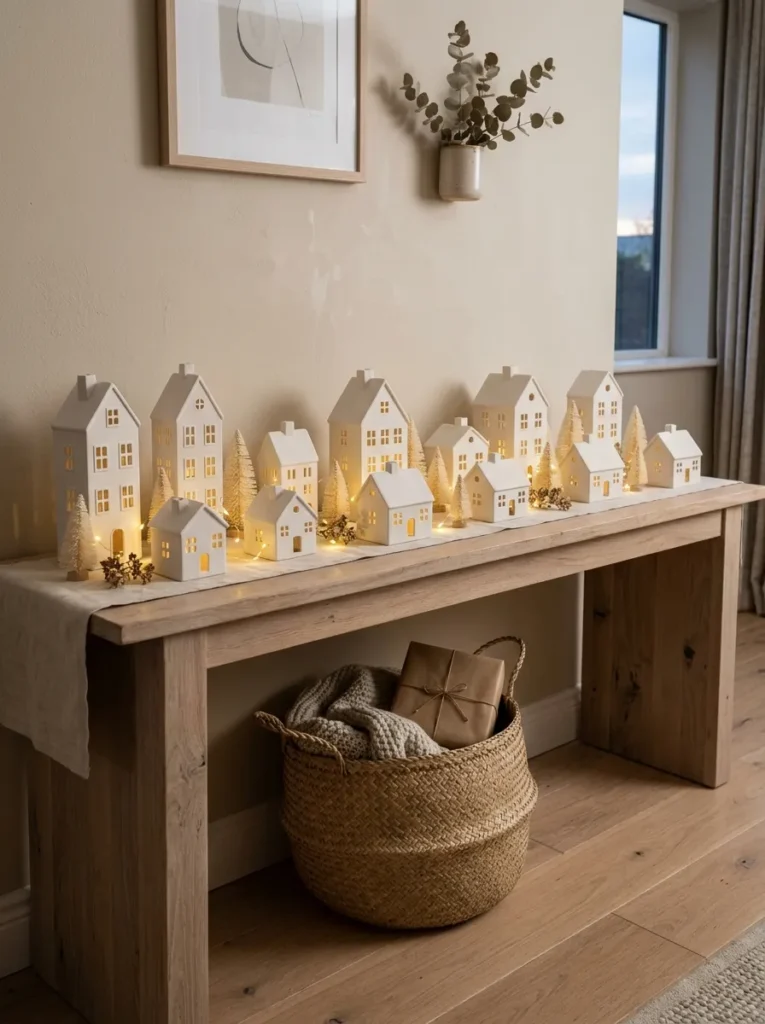
- Arrange small white ceramic houses in varied heights for a miniature holiday scene.
- Use a wooden tray or pale shelf to keep the display organized.
- Add tiny warm lights between the houses for evening glow.
- Leave some empty space so the arrangement feels airy rather than crowded.
A collection of white ceramic houses can create a charming holiday village while keeping the room visually quiet. Choose simple buildings in matte white, cream, or soft ivory, preferably with slightly different heights and roof shapes. Arrange them together on a console, shelf, mantel, or dining sideboard, then add a few miniature trees to create depth. Because the pieces share a limited palette, the display feels cohesive even when the shapes vary. This setup is particularly useful for smaller rooms where a large Christmas arrangement could overwhelm the available surface and make everyday spaces feel crowded.
For an evening display, place warm micro lights behind or between the houses so the windows and surrounding gaps receive a subtle glow. A pale wooden tray can visually group the pieces while making the collection easier to move or store. In my experience, leaving small spaces between each building makes the village look more sophisticated and photographs better than tightly packing every inch. Add a little faux snow only if it suits your style. The finished arrangement can sit beautifully beside everyday books, pottery, or woven accessories without looking disconnected from the room.
6. Natural Pinecone Bowl
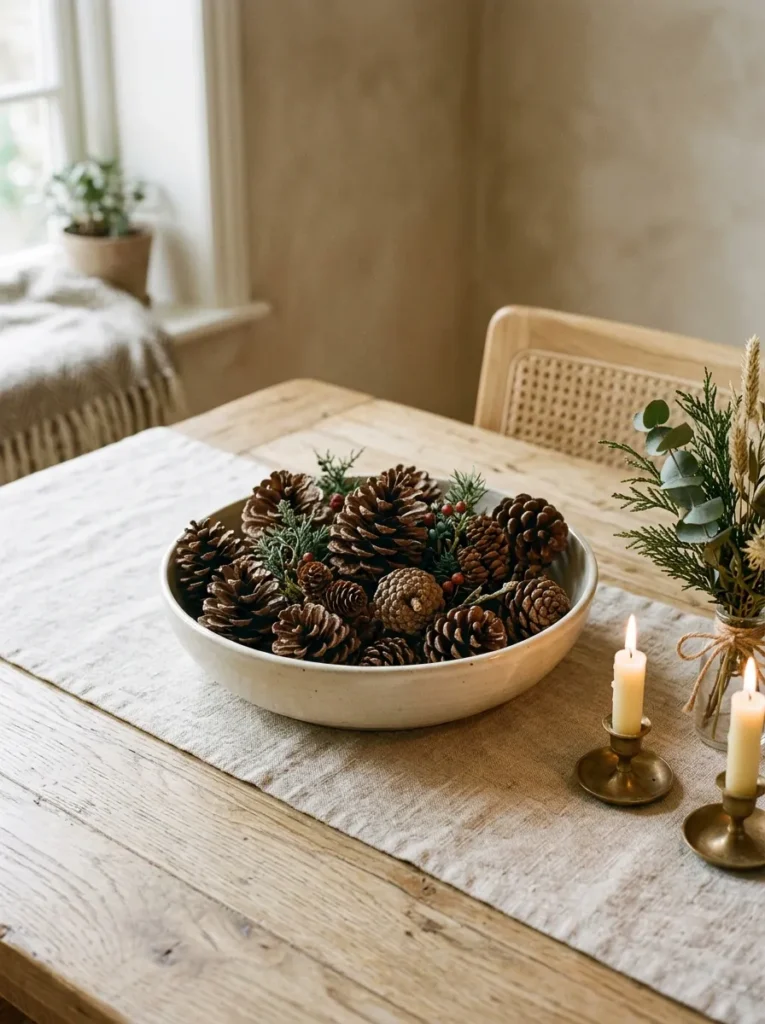
- Fill a shallow ceramic bowl with pinecones for an easy seasonal centerpiece.
- Choose a cream, stone, or taupe vessel to keep the arrangement understated.
- Mix small and large pinecones to create natural variation.
- Place the bowl on a dining table, coffee table, or entry console.
A bowl filled with natural pinecones is one of the simplest ways to bring seasonal texture into a neutral room. Choose a shallow ceramic or stoneware vessel in cream, sand, taupe, or soft gray, then fill it loosely with clean, dry pinecones. Their earthy brown tones provide gentle contrast against pale surroundings without introducing a strong color block. Place the bowl on a dining table, coffee table, entry console, or kitchen island where its organic shape can be appreciated. The arrangement takes very little space, yet it immediately adds a recognizable holiday detail.
For a more layered centerpiece, place the bowl on a woven runner or natural linen cloth and surround it with a few small candles. Keep the surrounding accessories minimal so the pinecones remain the main feature. I’ve seen natural materials work especially well when several textures are repeated throughout a room, such as wood furniture, woven baskets, linen cushions, and ceramic pieces. This arrangement can also transition easily into winter decor after Christmas. Simply remove any explicitly seasonal accents and leave the pinecones with the bowl for a warm, nature-inspired display.
7. Soft White Stockings
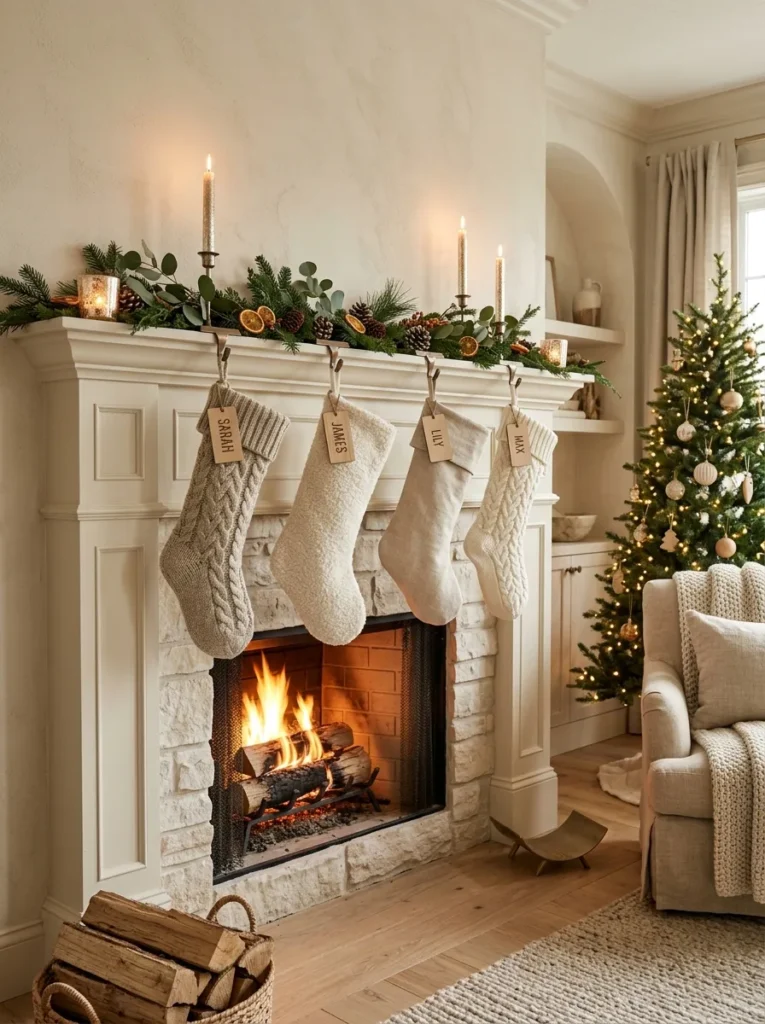
- Choose stockings in ivory, cream, or oatmeal for a soft fireplace display.
- Mix subtle textures such as cable knit, boucle, and brushed cotton.
- Hang them evenly across the mantel for a clean, balanced arrangement.
- Add simple wooden tags for a personalized touch without strong colors.
Soft white stockings create an understated holiday moment that feels cozy without overwhelming the fireplace. Look for ivory, cream, oatmeal, or warm beige stockings with subtle details such as cable knitting, tassels, boucle texture, or simple cuffs. Hang them from a pale mantel or natural wood shelf, keeping enough space between each stocking for the individual textures to remain visible. This simple arrangement works particularly well with neutral furniture because it reinforces the room’s existing palette instead of introducing another dominant color. The result is festive, comfortable, and easy to coordinate with greenery or candles.
To make the display feel more personal, add small wooden name tags or simple fabric loops in matching tones. Avoid placing too many decorative objects around the stockings because the soft fabrics already provide plenty of visual interest. Warm white lights or candles nearby can highlight the different textures during evening hours. I’ve noticed that varying stocking shapes slightly can make a mantel feel more collected and natural, especially when the rest of the room is carefully coordinated. After the holidays, the stockings can be stored easily while the neutral mantel arrangement continues into winter.
8. Taupe Tree Ornaments
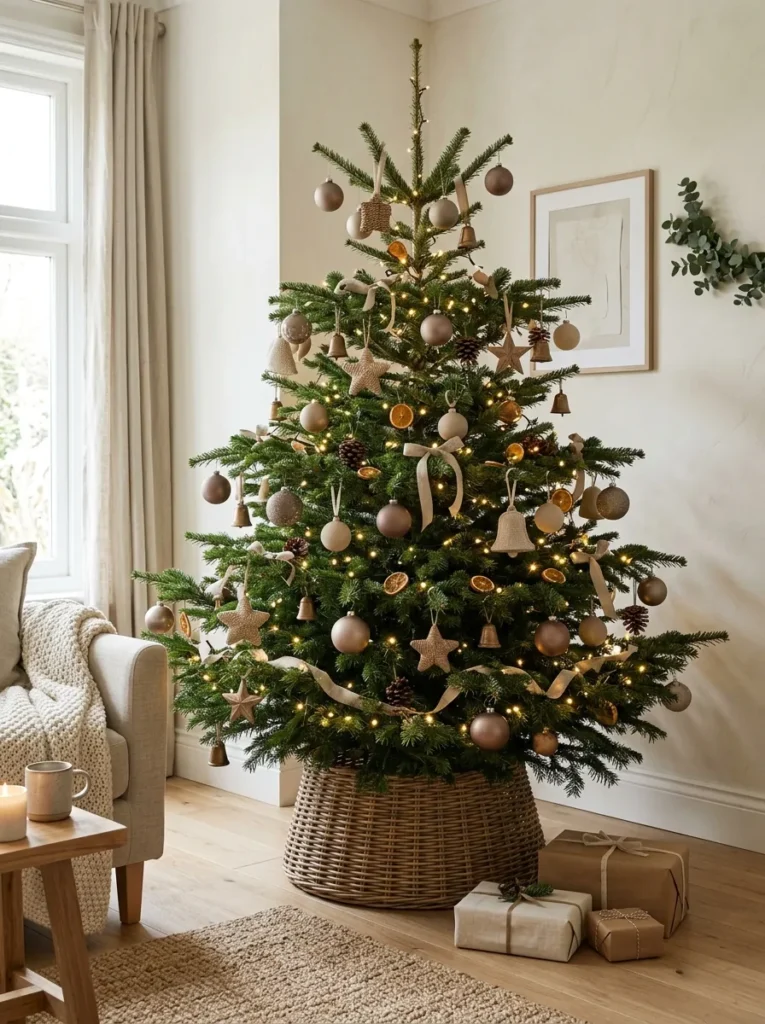
- Decorate the tree with ornaments in taupe, mushroom, beige, and soft brown.
- Mix matte and lightly textured finishes for subtle dimension.
- Leave some branches visible so the greenery remains part of the design.
- Repeat taupe accents elsewhere to make the room feel connected.
Taupe ornaments offer a gentle alternative to traditional red, green, or metallic Christmas decorations. Use a combination of mushroom, beige, warm brown, and soft greige ornaments to create depth while keeping the tree visually calm. Mixing matte finishes with lightly textured pieces prevents the arrangement from appearing flat. Choose several shapes, such as round baubles, stars, bells, and elongated drops, but keep the color family consistent. This approach works beautifully with natural evergreen branches and is especially suited to homes with cream walls, light wood furniture, linen fabrics, or other earthy finishes.
Start by spreading the larger ornaments evenly through the branches, then fill smaller gaps with compact pieces. Leave enough greenery exposed to create contrast between the muted ornaments and deep foliage. A few warm white lights can provide a soft glow without changing the restrained palette. In my experience, taupe decorations are also easier to reuse because they blend naturally with winter styling after Christmas. Pair the tree with a woven basket, linen tree skirt, or simple wooden base for a cohesive finish that feels intentional without looking overly decorated.
9. Beige Table Setting
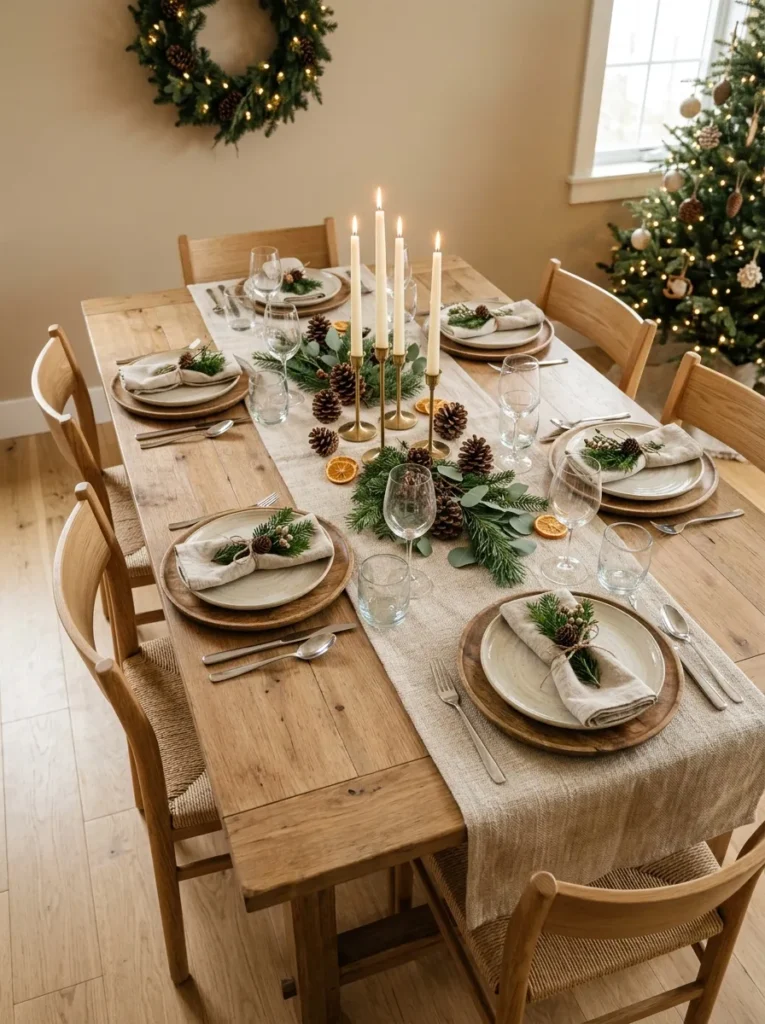
- Layer beige linens, cream plates, and natural wood details for a relaxed holiday table.
- Use simple ceramic dinnerware instead of heavily patterned seasonal pieces.
- Add small evergreen sprigs at each place setting for freshness.
- Keep centerpiece height low so conversation remains comfortable across the table.
A beige holiday table setting can make everyday dining feel special while staying comfortable and understated. Begin with a natural linen tablecloth or runner, then layer cream ceramic plates, warm beige napkins, and simple wooden or woven accents. Instead of elaborate seasonal dinnerware, choose pieces that can remain useful throughout the year. Small evergreen sprigs tucked beside each place setting add a fresh holiday touch without taking up valuable table space. This approach creates a polished foundation for neutral Christmas decor while keeping the dining area functional for family meals, guests, and casual holiday gatherings.
For the centerpiece, use a low arrangement of greenery, pinecones, and ivory candles so the table remains easy to use. Wooden chargers or woven placemats can add another layer of texture without making the setting feel formal. I’ve noticed that keeping the centerpiece low makes a surprisingly big difference during gatherings because everyone can see and talk across the table comfortably. Choose warm white or cream napkins rather than bright white if you want a softer appearance. Finish with simple glassware and natural cutlery for a timeless table that photographs beautifully in daylight.
10. Woven Tree Collar

- Replace a traditional tree skirt with a natural woven collar.
- Choose rattan, seagrass, jute, or light wicker for organic texture.
- Keep nearby gifts wrapped in cream or kraft paper for coordination.
- Pair the collar with simple greenery for a relaxed finish.
A woven tree collar gives a Christmas tree a finished, grounded appearance while adding natural texture to the lower part of the room. Choose a collar made from rattan, seagrass, jute, or light wicker, depending on the style of your furniture. The warm fibers contrast beautifully with green branches and pale ornaments without introducing a busy pattern. It also neatly hides the tree stand, making the entire arrangement look more intentional. This simple switch can make a noticeable difference in a neutral room because the woven material adds warmth exactly where the display might otherwise feel visually empty.
Keep the area around the tree simple so the collar remains noticeable. A few gifts wrapped in cream paper, kraft paper, or soft beige fabric can reinforce the natural palette without competing with the tree. If the room already contains woven baskets or rattan furniture, repeat that texture nearby for better visual flow. I’ve noticed that a woven base also makes smaller trees feel more substantial because it visually anchors them to the floor. Finish with warm white lights and restrained ornaments for a relaxed holiday display that works beautifully in modern, farmhouse, and Scandinavian interiors.
11. Frosted Branch Arrangement

- Place pale frosted branches in a simple ceramic vase for an airy seasonal accent.
- Choose branches with delicate white tips rather than heavy artificial snow.
- Keep the arrangement tall and narrow for consoles or small surfaces.
- Add a few neutral ornaments for subtle holiday detail.
A frosted branch arrangement brings the look of a winter landscape indoors without requiring a full Christmas tree or elaborate display. Choose slender branches with lightly whitened tips and place them in a tall ceramic vase in ivory, stone, or warm gray. The sparse structure allows plenty of negative space, making this idea particularly useful for narrow consoles, entry tables, bedside surfaces, or small dining corners. The pale branches create height while maintaining an airy appearance. Against beige or cream walls, the frosted finish feels delicate and seasonal rather than heavy or overly decorative.
For extra holiday character, hang a few small wooden stars, matte cream ornaments, or simple paper decorations from the branches. Keep the ornaments widely spaced so the natural silhouette remains visible. A woven tray beneath the vase can introduce another organic texture while helping the arrangement feel grounded. In my experience, tall branch displays are especially effective in rooms where floor space is limited because they add vertical interest without taking up much surface area. Use warm lighting nearby during the evening to create gentle shadows and make the pale branches stand out beautifully.
12. Oatmeal Throw Corner

- Create a dedicated cozy corner with an oatmeal throw and textured neutral pillows.
- Add a small wooden stool or woven basket for practical storage.
- Place the seating near a window or warm lamp for comfortable reading.
- Keep the surrounding decor minimal so the soft textiles remain the focus.
An oatmeal throw can transform an ordinary reading chair or sofa corner into a warm holiday retreat without requiring much decoration. Choose a chunky knit, brushed wool, or soft woven blanket in oatmeal, beige, or warm cream, then drape it naturally over one arm or the back of the seat. Add one or two pillows with complementary textures, such as boucle or linen. The layered fabrics create the visual softness people often want during winter while keeping the overall room light and uncluttered. This is an easy way to introduce seasonal comfort without filling every surface with decorations.
Complete the corner with a small wooden stool, woven basket, or simple side table for function as well as style. A warm table lamp can provide a gentle pool of light when natural daylight fades, making the space inviting for reading or relaxing. I’ve noticed that small comfort-focused zones often make a room feel more welcoming than adding decorations everywhere. Choose pieces that can remain useful after the holidays, and the corner will transition naturally into winter decor. A neutral palette also makes the space easy to refresh with seasonal greenery or candles.
13. Minimal Evergreen Wreath
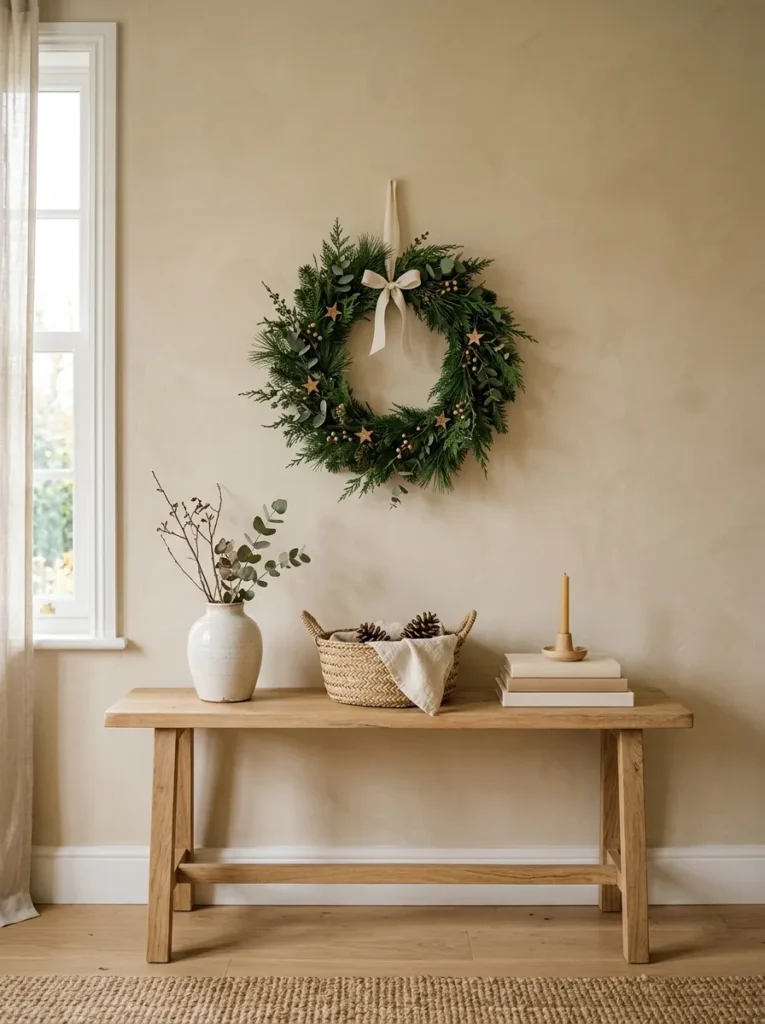
- Hang a simple evergreen wreath where its natural shape can stand out.
- Choose a lightly decorated design instead of a heavily embellished wreath.
- Add a linen or cotton ribbon in cream or oatmeal.
- Place it on a door, wall, mirror, or cabinet for flexible styling.
A minimal evergreen wreath brings an unmistakable holiday touch while keeping the overall decoration clean and uncomplicated. Choose a wreath made from natural-looking pine, cedar, eucalyptus, or mixed evergreen branches, then leave most of the foliage exposed. A small cream linen ribbon can provide just enough softness without distracting from the greenery. Hang the wreath on an interior door, entry wall, cabinet, or large mirror where its circular shape creates an easy focal point. The restrained design works especially well when your home already has warm wood, pale textiles, and simple architectural details.
For a more natural appearance, avoid adding too many ornaments or metallic accents. A few tiny wooden stars, pinecones, or dried berries can add subtle seasonal interest if desired. I’ve noticed that a sparse wreath often looks more sophisticated in photographs because the negative space around it allows the greenery to stand out. Choose a placement with a contrasting background so the foliage remains clearly visible. Whether used indoors or at the entrance, this simple arrangement can become one of the easiest ways to introduce holiday character while keeping the rest of the room calm.
14. Neutral Gift Wrapping

- Wrap presents in kraft paper, cream paper, linen, or soft beige tones.
- Use natural twine instead of brightly colored decorative ribbon.
- Add small evergreen sprigs or wooden tags for simple seasonal detail.
- Group packages beneath the tree to create a coordinated display.
Neutral gift wrapping can make the area beneath a Christmas tree feel like part of the overall room design instead of a collection of unrelated packages. Choose kraft paper, ivory wrapping paper, oatmeal fabric, or muted beige paper, then finish each package with natural twine or simple cotton ribbon. Vary the package sizes and shapes to create visual interest while keeping the colors consistent. Small wooden tags, dried greenery, or tiny pinecones can add character without introducing strong seasonal colors. The result feels organized, warm, and naturally connected to the rest of the holiday decor.
Arrange the wrapped gifts loosely rather than creating a perfectly symmetrical stack. Place larger packages toward the back and smaller ones toward the front so the grouping feels layered and balanced. If you have children or frequent gift exchanges, keep practical labels clear while using similar materials for visual consistency. In my experience, coordinated wrapping can make a surprisingly large difference in holiday photos because it fills the lower part of the tree with texture. After the gifts are opened, the remaining paper and twine can be stored separately for future use or repurposed for small craft projects.
15. Stoneware Candle Display

- Group cream and beige stoneware candleholders for a softly layered centerpiece.
- Mix different heights while keeping the shapes visually simple.
- Place them on a console, mantel, dining table, or sideboard.
- Add small evergreen sprigs between pieces for a seasonal connection.
A stoneware candle display adds warmth and texture to a holiday room without relying on glitter, bright ornaments, or metallic finishes. Choose candleholders in cream, sand, taupe, or warm gray, then arrange them in groups of different heights. Their handmade appearance can introduce subtle variation while maintaining a cohesive palette. Place the arrangement on a mantel, console, dining table, or sideboard where the soft surfaces of the pottery can contrast with greenery and wood. This combination creates a quiet seasonal focal point that feels decorative during the day and especially inviting when the candles are lit.
For the most balanced arrangement, place the tallest candle toward the back and shorter pieces toward the front, then leave enough space between each holder to preserve visual clarity. Add a few evergreen sprigs or small pinecones around the base for an understated holiday connection. I’ve noticed that matte ceramic surfaces look particularly beautiful under warm candlelight because their uneven texture catches the glow softly. Use flameless candles when the display will be left unattended. The finished arrangement works beyond Christmas too, making it a practical addition to a neutral winter home.
16. Sheer Window Greenery
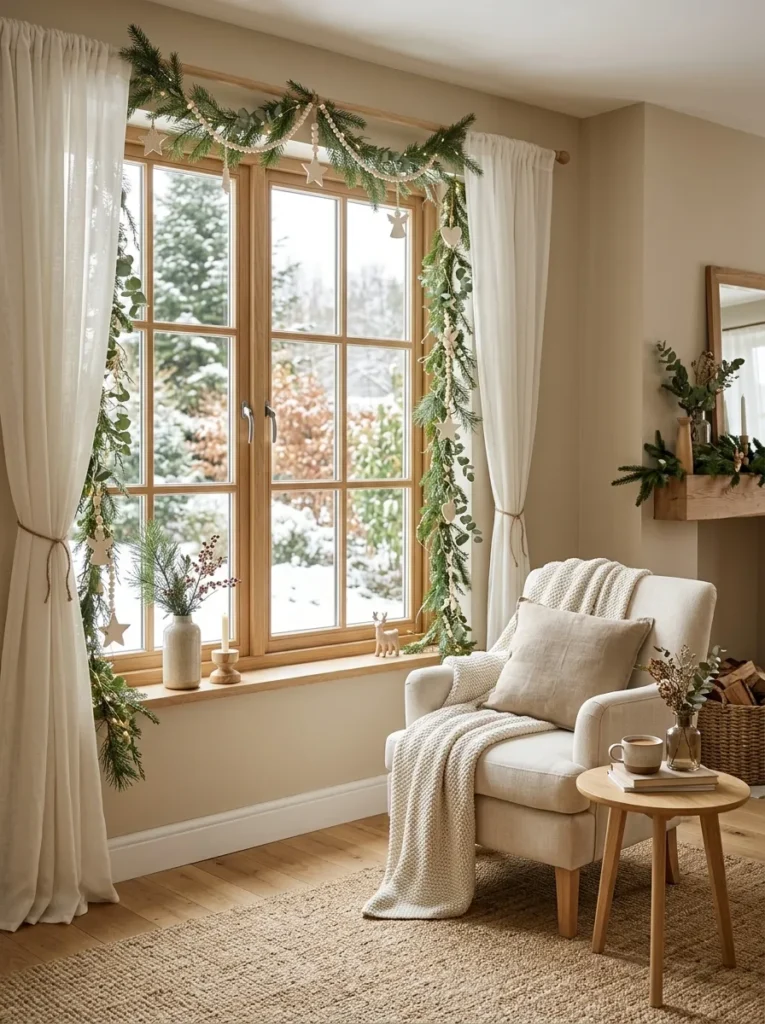
- Frame a bright window with lightly draped evergreen branches.
- Use thin greenery so natural daylight remains the main feature.
- Add small cream ornaments for subtle seasonal detail.
- Keep the surrounding furniture simple to preserve an airy appearance.
Sheer window greenery creates a gentle holiday frame while allowing natural light to remain the star of the room. Drape slender evergreen branches loosely along the top or sides of a large window, then add a few small cream ornaments or wooden stars. Avoid dense foliage that blocks too much daylight or makes the space feel visually heavy. The greenery works beautifully with linen curtains, pale walls, and light flooring because the darker branches provide just enough contrast. This setup is especially effective in living rooms, dining areas, and bedrooms where windows already provide a strong architectural focal point.
Keep the arrangement intentionally uneven rather than forcing both sides to look identical. A few branches can extend farther on one side, creating a relaxed and natural silhouette. Secure the greenery carefully so it stays stable without placing unnecessary pressure on curtain rods or delicate trim. I’ve noticed that window decorations look particularly beautiful in photographs when the light comes through the greenery from behind. Add warm white lights if you want an evening glow, but keep them subtle. The finished display brings holiday texture into the room without sacrificing the open, breathable feeling of the space.
17. Creamy Tree Skirt
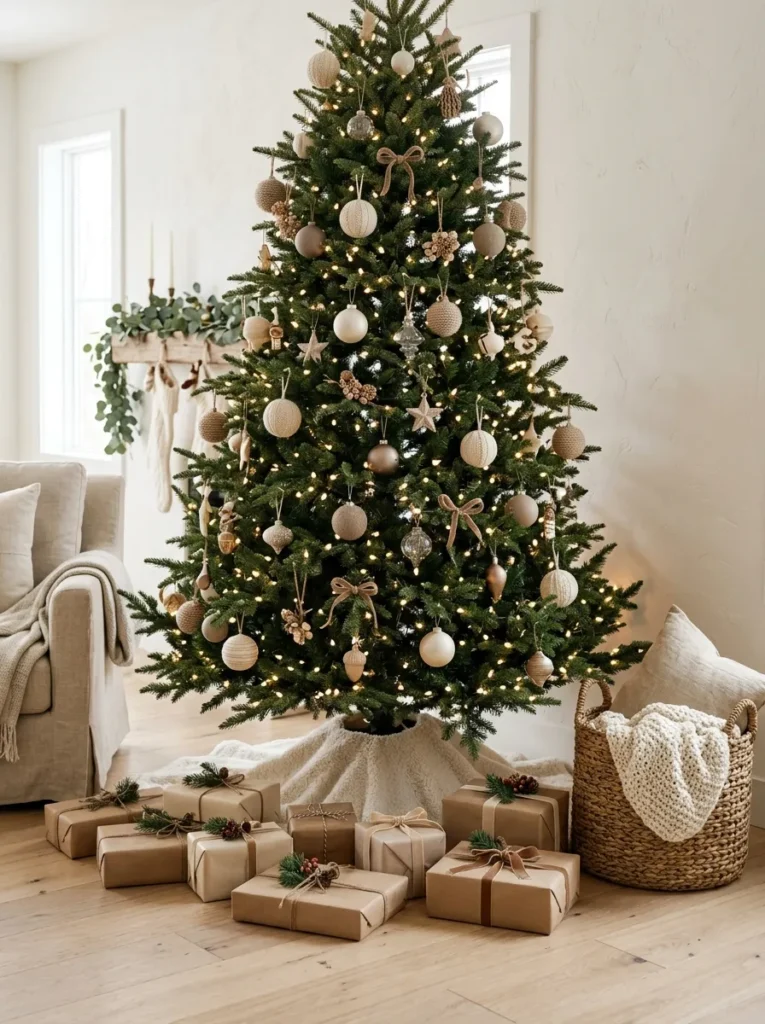
- Choose a plush cream tree skirt to soften the base of the Christmas tree.
- Look for boucle, faux fur, knitted, or quilted textures.
- Keep ornaments muted so the soft base feels connected to the tree.
- Layer a few neutral gifts around the skirt for added dimension.
A creamy tree skirt gives a Christmas tree a soft, finished base while adding warmth to the surrounding floor area. Choose boucle, faux fur, quilted cotton, or chunky knitted fabric in ivory, cream, or warm beige. The texture creates a cozy contrast against evergreen branches and pale wood flooring. Unlike highly patterned tree skirts, a simple neutral version allows the tree and ornaments to remain the main focus. It works particularly well in homes with light furniture because the soft fabric visually connects the tree with the rest of the room.
For a balanced arrangement, spread the skirt evenly around the trunk and allow its edges to fall naturally rather than creating sharp folds. Add a few packages wrapped in kraft paper or cream paper around the outside edge to create gentle layering. A woven basket nearby can reinforce the natural textures used elsewhere in the room. In my experience, plush fabrics make smaller trees feel more substantial because they create a stronger visual base. After the holiday season, the skirt can be folded and stored easily, making it a simple seasonal upgrade with plenty of practical value.
18. Neutral Entry Console
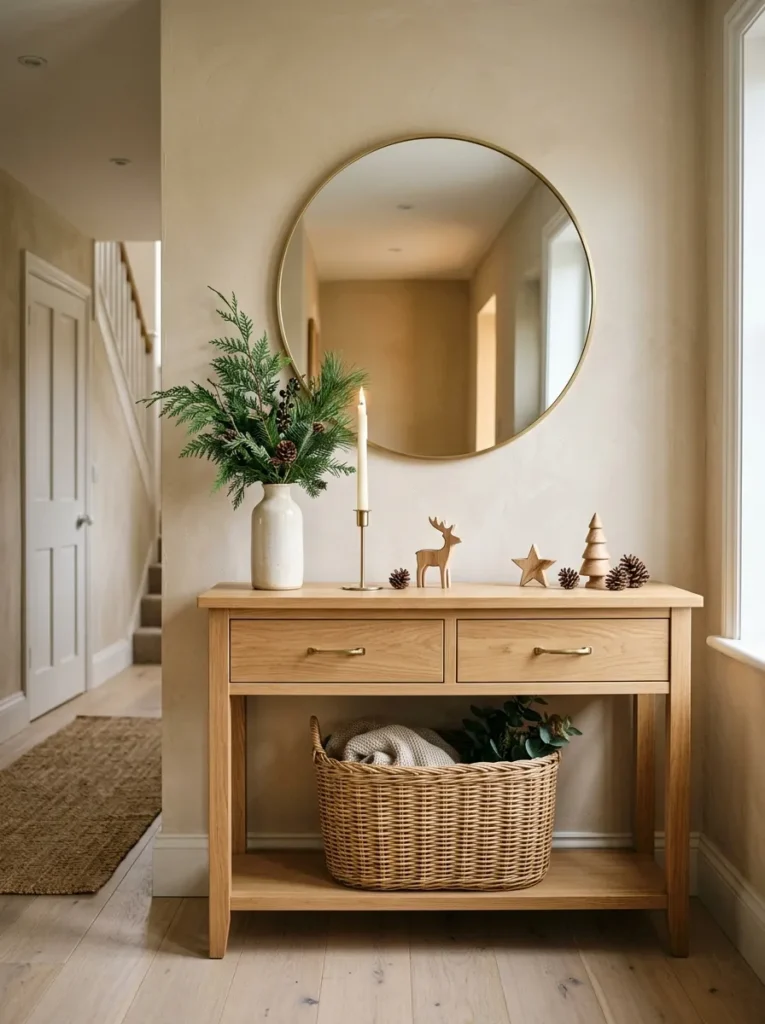
- Style an entry console with a few carefully chosen seasonal pieces.
- Combine greenery, ceramic vessels, wood accents, and soft candlelight.
- Keep the surface partially open so the entry still feels functional.
- Use a large mirror above the console to reflect light and greenery.
A neutral entry console can create a welcoming holiday moment before guests even reach the main living area. Start with a light wood or painted console, then add a simple evergreen arrangement, cream ceramic vessel, small candle, and one or two natural ornaments. A large mirror above the console can reflect both daylight and greenery, making the entry feel brighter and more spacious. Keep the surface intentionally open so keys, mail, and everyday items still have somewhere to go. This balance between decoration and function makes the setup practical for busy households during the holiday season.
To keep the arrangement visually balanced, place the tallest object slightly to one side and use smaller accessories to build toward the opposite side. A woven basket underneath can provide useful storage while adding another layer of natural texture. I’ve seen this approach work especially well in narrow entryways because vertical elements create interest without taking much floor space. Avoid filling every available surface; a little negative space helps each piece stand out. The finished console feels festive without looking overly themed, creating a calm transition between the entrance and the rest of the home.
19. Rustic Wooden Stars

- Hang unfinished wooden stars on the tree, mantel, or nearby wall.
- Choose natural wood tones that complement existing furniture.
- Mix several sizes to create a simple layered arrangement.
- Pair them with greenery and linen for a relaxed holiday look.
Rustic wooden stars add recognizable holiday detail while keeping the decorating palette natural and restrained. Choose stars made from unfinished oak, birch, reclaimed wood, or lightly stained timber, then place them where their organic grain can remain visible. Hang several from a Christmas tree, arrange them across a mantel, or display a few on a nearby wall. Their simple silhouettes work beautifully with evergreen branches, linen textiles, and woven accessories. This approach adds seasonal personality without requiring glitter, metallic finishes, or brightly colored decorations that might compete with an otherwise peaceful interior.
Mixing different star sizes can make the display feel more natural and collected. Use larger pieces as visual anchors, then add smaller stars around them to fill open areas without overcrowding the arrangement. A thin cotton or linen string can preserve the handmade appearance. In my experience, natural wood details are especially useful when a room already contains pale colors because they introduce enough contrast to define individual decorations. Repeat the same wood tone in furniture, trays, frames, or baskets nearby for continuity. The result is simple, versatile, and easy to adapt to different Christmas decorating styles.
20. Dried Citrus Garland
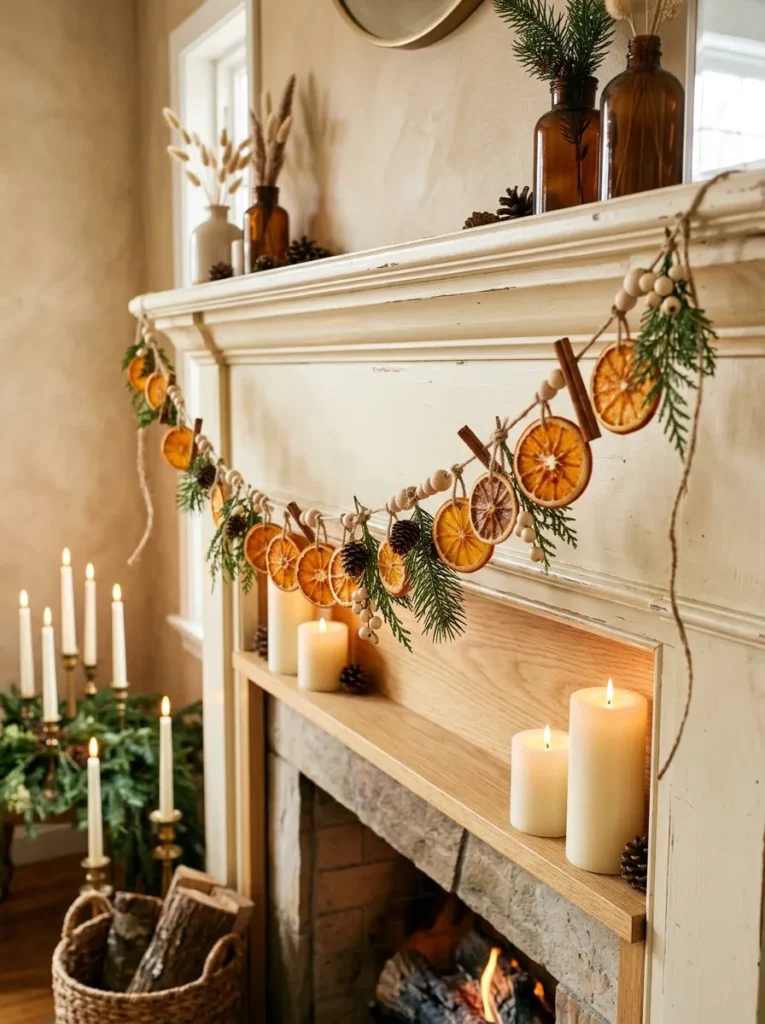
- String dried orange slices with natural twine for a warm handcrafted accent.
- Combine the citrus with cinnamon sticks or small wooden beads.
- Hang the garland across a mantel, window, staircase, or tree.
- Keep the surrounding colors soft so the natural citrus tones stand out gently.
A dried citrus garland introduces a subtle handmade element while adding warm natural color to a neutral holiday room. Thin slices of dried orange can be threaded onto natural twine and combined with cinnamon sticks, wooden beads, or small pinecones. The muted amber and tan tones provide gentle contrast against cream walls and evergreen branches without becoming visually overwhelming. Hang the garland across a mantel, staircase, window, or Christmas tree where its repeating shapes create rhythm. This is also an inexpensive way to add personality to a space using materials that feel connected to traditional winter decorating.
Keep the slices evenly spaced but allow small variations in the arrangement so the garland feels handmade rather than manufactured. Pair it with linen ribbon, natural greenery, or simple wooden ornaments for a cohesive palette. The citrus slices can also add delicate texture and visual warmth when photographed against pale backgrounds. If you enjoy making seasonal decorations, this is an easy project that can become part of your yearly routine. Store completely dried pieces in a cool, dry place, and replace them when they begin to lose their shape or freshness.
21. Textured Neutral Pillows

- Layer cream, beige, oatmeal, and taupe pillows across sofas or beds.
- Combine boucle, linen, knit, and woven covers for tactile variety.
- Use subtle patterns sparingly so the arrangement stays calm.
- Add one small seasonal pillow if you want a clearer holiday reference.
Textured neutral pillows can refresh a sofa or bed for the holidays without changing the room’s main furniture or color scheme. Combine cream, oatmeal, beige, taupe, and soft greige covers in materials such as boucle, linen, knitted cotton, velvet, and woven fabric. The different surfaces create depth even when the colors are closely related. Start with larger pillows at the back and add smaller cushions toward the front. This simple layering technique makes seating look fuller and more inviting while keeping the overall arrangement relaxed. It is an easy seasonal update for homes where permanent changes are not practical.
Avoid using too many different patterns because texture alone can provide plenty of visual interest. If you want a stronger holiday reference, introduce one small pillow with a simple tree, star, or winter motif while keeping its colors muted. I’ve noticed that changing only a few pillow covers can make a room feel surprisingly different without requiring a major decorating budget. Choose removable covers whenever possible so they can be stored after the season. Pair the pillows with an ivory throw, natural wood furniture, and soft lighting to create a cohesive holiday corner that remains comfortable and useful.
22. Soft Candle Glow

- Group ivory candles around greenery for a warm evening centerpiece.
- Use glass, ceramic, or stone holders in soft neutral finishes.
- Choose varied heights to create gentle visual layering.
- Place the arrangement where candlelight can reflect against nearby surfaces.
Soft candlelight can completely change the atmosphere of a neutral holiday room once the sun goes down. Arrange ivory or cream candles in simple ceramic, stone, or clear glass holders, then surround them with small evergreen sprigs and a few pinecones. Varying the candle heights creates gentle layers of light without making the centerpiece feel overly formal. Place the arrangement on a dining table, mantel, coffee table, or console where the glow can reflect against nearby surfaces. The warm illumination brings depth to pale colors and makes simple materials feel richer during winter evenings.
For everyday use, flameless candles are a practical choice, especially around children, pets, fabrics, or busy dining areas. Choose warm-white bulbs that mimic natural candlelight rather than cool white lighting, which can make beige and cream tones appear harsh. I’ve noticed that a small cluster of lights often feels more inviting than a single large candle because the glow spreads across several points. Keep the surrounding accessories restrained so the light remains the visual focus. This simple arrangement creates a cozy seasonal atmosphere while remaining versatile enough to use throughout the colder months.
23. Neutral Bedroom Greenery
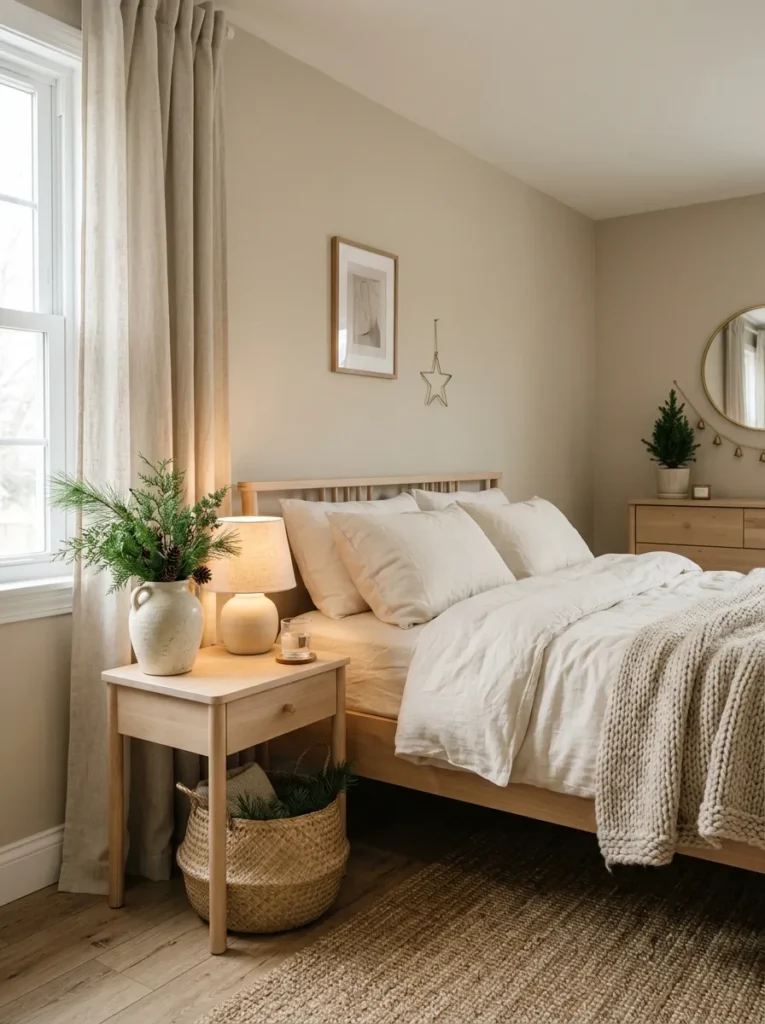
- Add small evergreen branches to a bedside table, dresser, or headboard area.
- Choose cream bedding to keep the bedroom light and restful.
- Use woven baskets and pale wood for additional natural texture.
- Keep the greenery sparse so the bedroom remains peaceful and uncluttered.
A few evergreen branches can give a neutral bedroom a gentle holiday update without turning the space into a heavily decorated seasonal room. Place a small bundle in a cream ceramic vase on a bedside table, dresser, or floating shelf. Pair the greenery with ivory bedding, oatmeal throws, light wood furniture, and woven accessories so the seasonal detail feels naturally integrated. Keeping the branches sparse is important because the bedroom should remain visually restful. The result is a subtle holiday atmosphere that adds freshness and texture without taking away from the room’s calm, everyday function.
For an especially cohesive look, repeat one or two materials from the greenery arrangement elsewhere in the bedroom. A woven basket at the foot of the bed, linen curtains, or a small wooden tray can create continuity without requiring additional Christmas decorations. I’ve seen this approach work beautifully in bedrooms because even a tiny seasonal detail can change the mood of the entire space. Add a warm bedside lamp rather than bright overhead lighting in the evening. The finished room feels cozy and festive while remaining comfortable enough for relaxing, reading, and sleeping throughout the winter season.
Conclusion
Creating a beautiful holiday home doesn’t always require dramatic colors or elaborate decorations. With the right textures, natural materials, soft lighting, and thoughtful details, neutral Christmas decor can make everyday spaces feel warm and festive. Start with one idea that fits your home, whether it’s a textured throw, wooden ornaments, soft greenery, or a simple candle display, and build from there. I’ve seen how small changes can completely transform a space without making it feel cluttered. Save this post on Pinterest for your next decorating project, try your favorite ideas, and share it with someone who loves cozy holiday inspiration.