24 Classy Christmas Decor Ideas for an Elegant Home

A beautiful Christmas home doesn’t need to feel crowded or overly decorated.
Sometimes, a few thoughtful details can make the entire space feel instantly more polished.
These classy Christmas decor ideas are designed for anyone who wants a festive home that feels elegant, warm, and inviting without losing its everyday comfort. From ivory Christmas trees and velvet ribbons to sophisticated table settings, soft lighting, natural greenery, and timeless ornaments, these ideas offer plenty of inspiration for every room. You’ll find simple ways to layer texture, coordinate colors, and create beautiful focal points without starting from scratch. In my experience, the most successful holiday spaces usually combine a restrained color palette with a few meaningful details. Whether you love traditional decorating or prefer a more modern neutral look, these ideas can help you create a Christmas home that feels thoughtfully styled, welcoming, and easy to enjoy throughout the season.
Ivory Christmas Tree

- Choose ivory, cream, and soft champagne ornaments for a refined palette.
- Add velvet ribbons and warm white lights for subtle richness.
- Keep the surrounding furniture simple so the tree remains the focal point.
- Use a woven tree skirt to soften the overall look.
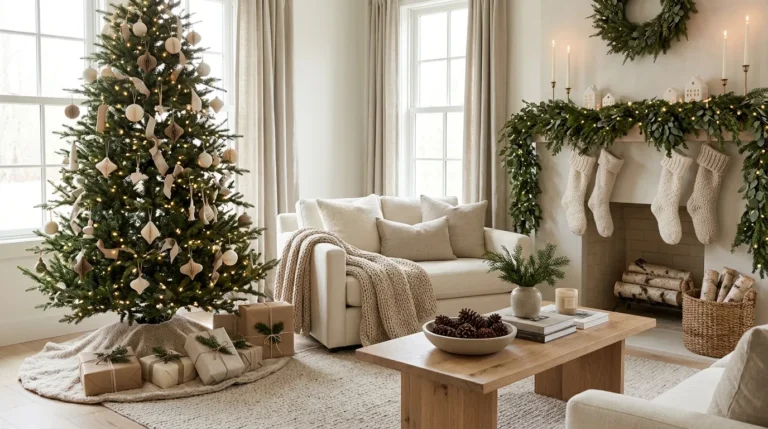
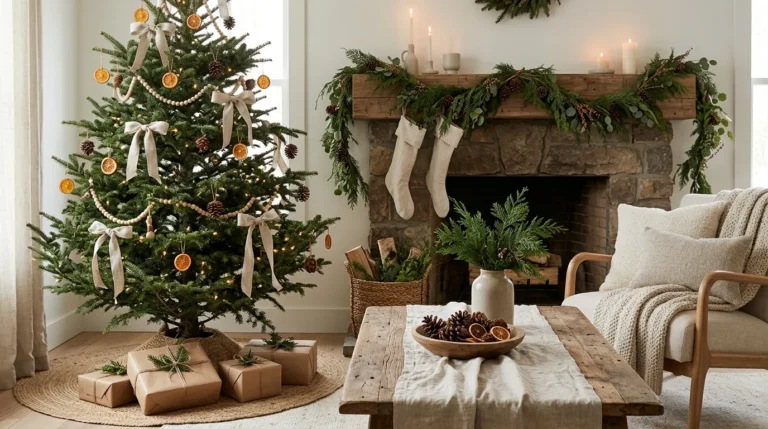
An ivory Christmas tree instantly creates a polished holiday focal point without making the room feel overly decorated. Soft cream ornaments, champagne accents, and warm white lights work beautifully against neutral walls and natural wood because they add sparkle without introducing harsh contrast. For a sophisticated finish, vary ornament textures instead of relying on many colors. Try matte baubles beside glossy glass pieces, then add a few velvet ribbons for softness. In my experience, keeping the palette restrained makes even an inexpensive tree look more intentional. Finish with a simple woven or fabric skirt that connects the tree to the room’s existing textures.
The beauty of this arrangement is how easily it blends with everyday furniture. A cream sofa, beige rug, light wood table, or warm neutral curtains can all support the holiday display without competing for attention. Place larger ornaments toward the lower branches and smaller pieces higher up to create visual balance. Warm white lights should be distributed deep inside the branches as well as around the outer edges, giving the tree a gentle layered glow. This approach is especially useful in smaller living rooms because the limited palette keeps the space visually open while still delivering a distinctly festive, upscale appearance.
Velvet Ribbon Accents

- Use wide velvet ribbon to introduce depth and softness.
- Choose burgundy, forest green, champagne, or deep brown for an elegant accent.
- Let ribbon tails fall naturally instead of creating overly perfect loops.
- Repeat the same fabric on nearby pillows or stockings for cohesion.
A simple ribbon can completely change the character of a holiday display, especially when the fabric has a rich velvet texture. Instead of covering the tree with dozens of different decorations, use one beautiful ribbon as the visual thread that ties everything together. Deep burgundy, forest green, chocolate brown, or muted champagne can create depth against neutral furnishings. I’ve noticed that wider ribbon often looks more luxurious because it creates larger, intentional shapes among the branches. Let sections tuck naturally into the tree while allowing a few relaxed tails to fall downward. This creates movement without making the arrangement appear overly styled.
Velvet accents can also continue beyond the tree, making the room feel thoughtfully coordinated. Repeat the ribbon color through a pair of cushions, dining napkins, stocking cuffs, or a small bow on a wreath. The repetition should be subtle rather than identical everywhere. For example, one burgundy cushion can echo the ribbon without turning the entire room red. Warm lamps and Christmas lights enhance velvet beautifully because the fabric absorbs and reflects light differently across its surface. The result is a layered holiday atmosphere that feels sophisticated, comfortable, and practical enough for everyday family living.
Brass Candle Display

- Group brass candleholders at different heights for a collected appearance.
- Pair them with ivory taper candles for a softer contrast.
- Place the arrangement on a mantel, console, or dining table.
- Mix polished and aged brass finishes for added dimension.
Few details create an elegant holiday atmosphere as quickly as candlelight. A collection of brass candleholders gives a mantel, console, or dining table a warm focal point while adding a timeless metallic accent. Rather than choosing identical holders, combine several heights and silhouettes so the display feels collected over time. Ivory taper candles keep the palette soft and prevent the metallic finish from becoming too heavy. This kind of arrangement works particularly well in homes with neutral interiors because brass introduces warmth without overwhelming cream, beige, white, or natural wood finishes. The gentle glow also makes evening gatherings feel instantly more inviting.
For a balanced display, start with the tallest candleholder slightly toward the back, then layer shorter pieces around it. Add a few evergreen sprigs, pinecones, or small ornaments while leaving plenty of breathing room between objects. That negative space is important because an elegant arrangement should feel edited rather than crowded. If you have children or pets, use flameless taper candles designed for decorative displays instead. The visual effect remains warm and polished while reducing everyday concerns. This simple setup can also transition easily from a formal Christmas dinner to a relaxed evening, making it both beautiful and functional.
Champagne Mantel Decor
- Layer champagne ornaments with greenery for a soft, sophisticated display.
- Mix metallic finishes to prevent the mantel from looking flat.
- Keep the center slightly open for a clean focal point.
- Add warm lights to enhance the metallic details.
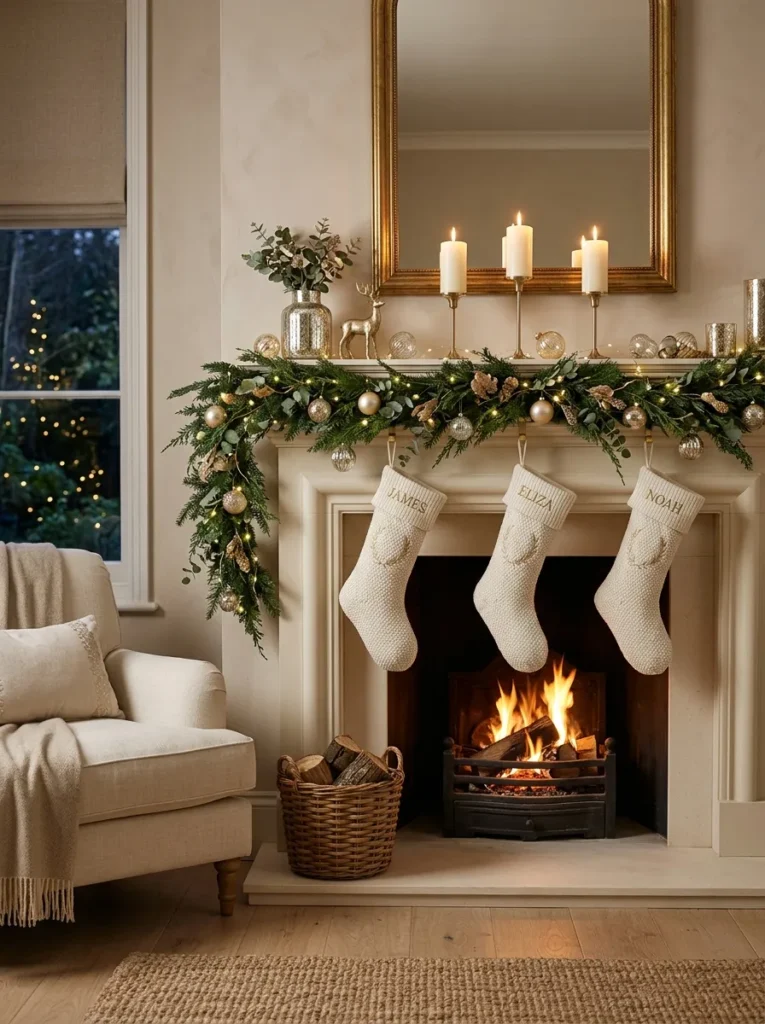
A champagne-toned mantel brings instant refinement without relying on bright metallics or traditional red decorations. Start with a simple evergreen garland, then layer champagne ornaments, brushed brass details, and a few ivory accents across the mantel. The combination catches warm light beautifully while keeping the overall palette calm and sophisticated. Instead of filling every available space, leave small gaps between decorative pieces so the eye can appreciate each element. This approach works especially well above a white, cream, or stone fireplace because the pale backdrop allows the metallic finishes to provide subtle contrast without making the room feel visually busy.
The key to making this arrangement feel intentional is varying height, texture, and shine. Place taller candlesticks toward the sides, medium ornaments through the greenery, and smaller accents closer to the front edge. A few warm white lights tucked into the garland can create a soft evening glow that makes champagne finishes appear richer. I’ve seen this style work particularly well in open-plan homes because its neutral colors connect naturally with nearby furniture and finishes. For a cohesive result, repeat one champagne or brass detail elsewhere in the room, such as a vase, picture frame, or decorative tray.
Monochrome Gift Wrapping
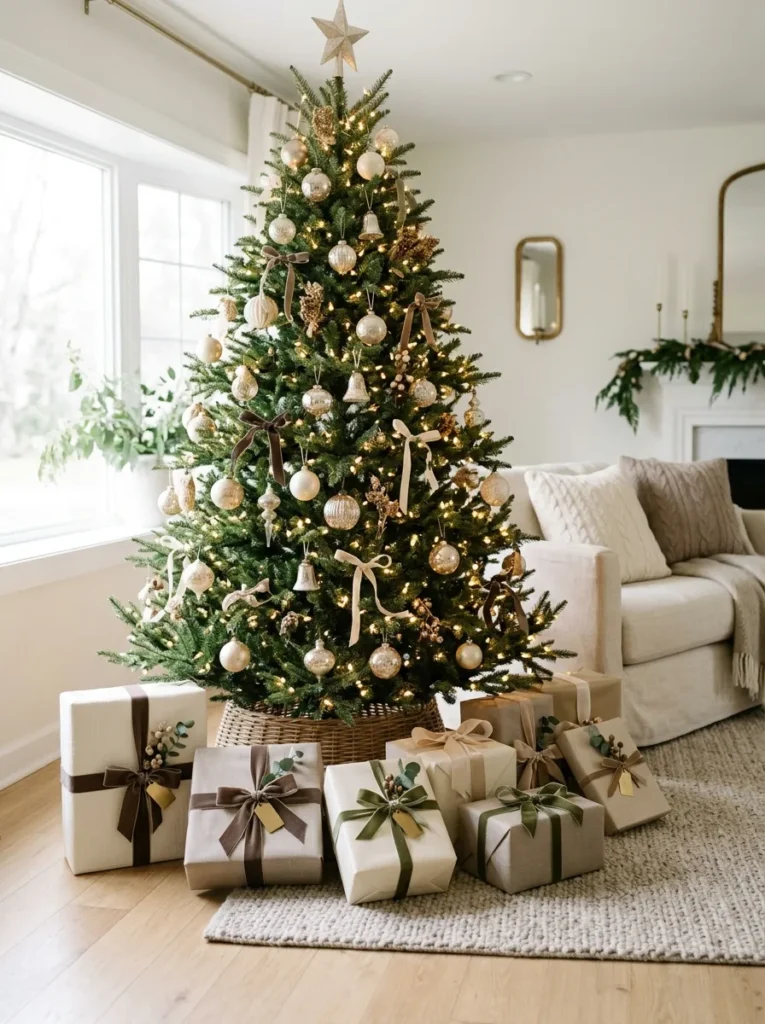
- Use one restrained color family for every wrapped present.
- Combine matte paper with velvet, satin, or textured ribbons.
- Place packages in small groups instead of spreading them randomly.
- Repeat the wrapping palette beneath the tree and around the room.
Beautiful wrapping can become part of the room’s decoration rather than something hidden beneath the tree. A monochrome palette of ivory, cream, taupe, or soft champagne gives presents a coordinated appearance that instantly elevates the entire display. The secret is adding texture instead of introducing more colors. Pair smooth paper with ribbed finishes, velvet ribbon, natural twine, or subtle embossed patterns. When the packages share a common palette, different shapes and sizes still look connected. This is a simple way to create classy Christmas decor while using an area that would otherwise feel visually unfinished during the holiday season.
Arrange wrapped gifts in small, intentional groups rather than scattering them randomly around the tree. Place larger boxes toward the back, medium packages in the middle, and smaller parcels toward the front to create depth. You can also tuck a few gifts beside a fireplace or on a nearby bench when the tree area becomes crowded. In my experience, repeating one ribbon style across several packages makes even simple wrapping paper look custom. Finish with handwritten tags in a matching neutral shade. The result feels polished, personal, and Pinterest-ready while remaining easy enough to recreate with everyday wrapping supplies.
White Ceramic Village

- Choose simple white houses for a clean holiday vignette.
- Add bottlebrush trees to create height and depth.
- Use a wooden tray to keep the arrangement organized.
- Place warm lights behind the village for a gentle glow.
A white ceramic Christmas village offers a charming holiday display while keeping the overall room visually calm. Small houses, churches, cottages, and trees can create the feeling of a miniature winter scene without introducing bright colors or excessive patterns. Arrange the pieces on a wooden tray, mantel, console, or sideboard so the collection feels like one intentional vignette. White ceramics work especially well with neutral interiors because they add seasonal character while maintaining a clean palette. Add a few natural wood elements nearby to introduce warmth and prevent the display from feeling too stark against a pale wall.
Lighting can make this simple arrangement feel especially magical after sunset. Place tiny warm white lights behind or between the ceramic buildings so the windows and rooflines appear softly illuminated. Vary the height of the houses by placing a few pieces on discreet wooden blocks or stacked books beneath the display cloth. Leave open space around the village so each building remains recognizable. If you prefer a more sophisticated look, avoid mixing too many figurines or novelty pieces. A restrained collection of white houses, greenery, and warm light can create a timeless focal point that feels festive without overwhelming the rest of the room.
Natural Greenery Layers

- Combine eucalyptus, cedar, pine, or fir for varied texture.
- Layer greenery across mantels, consoles, and dining tables.
- Add small neutral ornaments instead of overwhelming the foliage.
- Use fresh or realistic faux stems for an effortless finish.
Natural greenery instantly brings depth and seasonal character to a neutral interior without requiring a large collection of decorations. Layering different foliage, such as cedar, eucalyptus, pine, and fir, creates subtle variation in shape and texture. Let some branches extend naturally beyond the edges of a mantel or console so the arrangement feels relaxed rather than perfectly symmetrical. A few ivory ornaments or small brass accents can add sparkle while keeping the focus on the greenery. This approach is especially useful when your everyday furniture already has a refined, neutral appearance and you want holiday touches that blend seamlessly.
For a polished result, build the arrangement in layers rather than placing every stem at the same height. Start with longer branches toward the back, then add fuller pieces in the middle and smaller sprigs toward the front. I’ve noticed that greenery looks more convincing when there is slight variation in direction and density. If fresh foliage is inconvenient, high-quality faux branches can provide the same layered effect with much less maintenance. Add warm white lights beneath the greenery for evening warmth, then repeat a small amount of the same foliage on a nearby table or shelf to connect the spaces visually.
Cream Stocking Row

- Choose linen, knit, velvet, or boucle stockings in soft neutrals.
- Hang them evenly across the mantel for a tailored look.
- Add simple monogrammed tags for a personal touch.
- Mix subtle textures while keeping the color palette consistent.
A row of cream stockings can make a fireplace feel festive while preserving the calm character of an elegant interior. Choose several neutral materials, such as linen, knit, velvet, or boucle, and let texture create the visual interest. Keeping the colors within a narrow range makes different stocking styles feel coordinated rather than mismatched. Hang them evenly across the mantel or fireplace ledge, allowing enough space between each one to keep the display visually clean. This is an easy way to introduce holiday personality while avoiding the strong reds and greens that can sometimes dominate traditional Christmas decorating.
Small details can make the arrangement feel much more personal without sacrificing its polished appearance. Add understated monogram tags, brass stocking holders, or narrow velvet ribbons in one complementary shade. If your mantel is already decorated with greenery, let the stockings remain relatively simple so the display does not become crowded. In my experience, mixing two or three textures is enough to make a neutral stocking row feel rich. For homes without a fireplace, the same idea can work along a console table, staircase railing, or sturdy wall-mounted shelf, creating a flexible holiday feature almost anywhere.
Elegant Dining Table
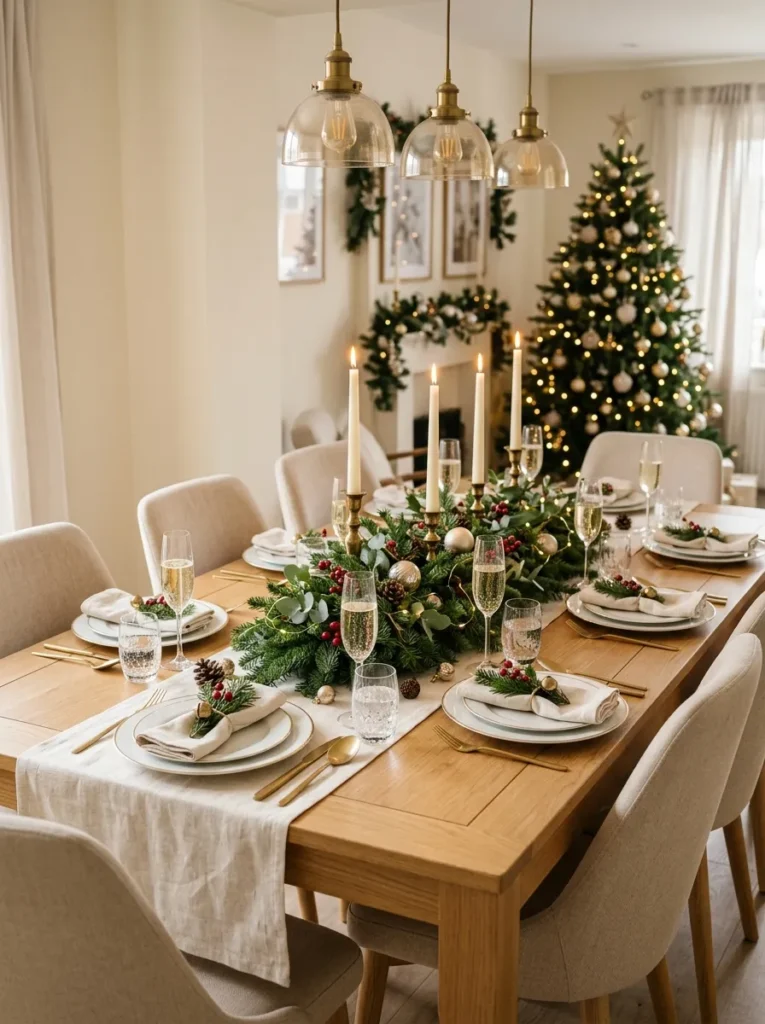
- Use neutral linens as the foundation for the tablescape.
- Combine greenery with ivory candles and understated metallic accents.
- Keep place settings simple enough for everyday meals.
- Choose low centerpieces so guests can comfortably see across the table.
An elegant Christmas table does not need an elaborate centerpiece to make a strong impression. Start with an ivory or beige linen runner, then add a low arrangement of evergreen branches through the center. Place brass candleholders between the greenery and use ivory candles to create a soft, cohesive palette. Simple white plates and neutral napkins keep the setting practical for meals while allowing the natural textures to stand out. This restrained approach works especially well when the dining room already features wood, linen, or warm neutral finishes because the holiday additions feel connected to the existing space.
Keep the centerpiece low enough that guests can easily see one another across the table. This small practical detail makes the setting more comfortable while preserving its visual impact. Add a few champagne ornaments or pinecones along the greenery for subtle seasonal sparkle, but avoid filling every open area. That breathing room makes the entire table feel more sophisticated. Warm pendant lighting or nearby candles can enhance the textures once evening arrives. For everyday dining, you can remove the candles and ornaments while leaving the greenery and linen runner in place, making this festive setup easy to maintain throughout the season.
Gold Ornament Cluster

- Group gold ornaments together instead of scattering them evenly.
- Mix matte, brushed, and lightly reflective finishes.
- Add a few cream ornaments to soften the metallic effect.
- Repeat small gold accents elsewhere for a connected look.
A carefully arranged cluster of gold ornaments can make a Christmas tree look dramatically more polished without adding dozens of decorations. Instead of distributing every bauble evenly, gather several complementary pieces into small groups throughout the branches. Mix brushed gold, antique brass, matte finishes, and subtle glossy surfaces to create depth. A few ivory ornaments can soften the metallic palette and keep the display from appearing too flashy. This technique works particularly well with neutral interiors because the gold catches available light while the cream and beige surroundings keep the overall composition balanced, warm, and sophisticated.
When creating each cluster, combine different sizes and shapes so the arrangement feels layered rather than repetitive. Place larger ornaments deeper into the branches and smaller pieces toward the outer tips for dimension. Warm white lights will highlight the metallic surfaces beautifully, especially during evening hours. I’ve noticed that repeating a small amount of gold elsewhere in the room makes the tree feel much more integrated. Try a brass picture frame, gold candleholder, or metallic tray nearby. The repeated accent creates continuity without requiring every decorative object to match, helping the entire holiday room feel intentionally styled.
Linen Table Runner
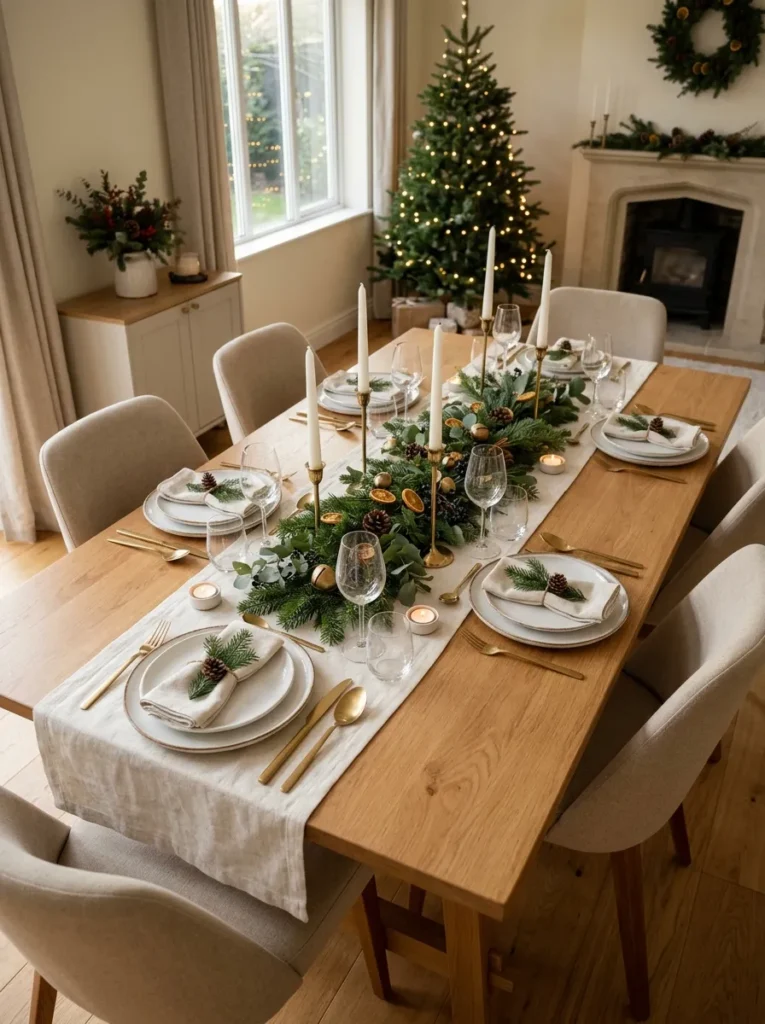
- Choose washed linen for a relaxed but refined foundation.
- Layer greenery directly along the center of the table.
- Pair natural fabric with ceramic, wood, or brass accents.
- Let the runner remain slightly loose for an effortless finish.
A linen table runner brings understated elegance to a Christmas dining space while keeping the table comfortable and approachable. Choose ivory, oatmeal, or soft beige linen and allow its natural texture to remain visible rather than pressing everything perfectly flat. Layer a simple evergreen arrangement along the center, then add ceramic dishes, wooden details, or brass candleholders around it. The combination of soft fabric and natural materials creates visual warmth without needing elaborate decorations. This is particularly effective in dining rooms where the furniture already features light wood, neutral upholstery, or other organic finishes.
Leave some of the tabletop visible on both sides so the arrangement does not feel crowded. Slightly uneven linen edges can actually make the setting look more relaxed and authentic, especially when paired with informal greenery. For a sophisticated finish, keep the dinnerware simple and introduce only one or two metallic accents. A few pinecones or neutral ornaments can provide seasonal detail without competing with the centerpiece. The runner can also remain useful after Christmas by removing the greenery and replacing it with a simple vase, making this decoration practical beyond the holiday season.
Frosted Window Details

- Add delicate faux snow effects around selected window areas.
- Use white branches or frosted greenery for subtle framing.
- Keep the treatment light so natural daylight remains visible.
- Pair frosted details with cream curtains and warm lighting.
Frosted window details can give a room a quiet winter character without covering the glass with heavy decorations. Use a few frosted branches, delicate white greenery, or removable faux-snow accents around the edges of the window rather than across the entire surface. The restrained treatment allows natural daylight to remain part of the design while creating a subtle seasonal frame. Against cream curtains and neutral walls, these pale details feel crisp and refined. This idea is especially useful for homes where larger Christmas decorations would make the room feel crowded or where the windows already serve as an architectural focal point.
Keep the frosted elements concentrated around the corners or lower portions of the window for a balanced appearance. You can place a slim vase of white branches on the sill or attach lightweight decorative stems along the frame. During the evening, warm lamps or nearby Christmas lights create a beautiful contrast with the cooler white details. For renters, removable window decals and temporary faux-snow products can provide a similar effect without permanent changes. I’ve seen this approach work well in neutral rooms because it introduces a winter-inspired layer while keeping the overall space bright, airy, and uncluttered.
Velvet Tree Skirt

- Choose velvet in ivory, taupe, champagne, or deep green.
- Use a soft fabric skirt to conceal the tree stand.
- Coordinate its texture with nearby pillows or curtains.
- Keep surrounding gifts simple so the skirt remains visible.
A velvet tree skirt gives the base of a Christmas tree a finished, luxurious appearance while hiding the stand and cords underneath. Choose ivory, champagne, taupe, or muted green depending on the room’s existing palette. The soft fabric creates a beautiful contrast against evergreen branches and hard ornaments, making the entire tree feel more layered. Look for a skirt with enough weight to drape naturally rather than one that lies completely flat. In my experience, this small addition often makes a bigger visual difference than expected because it completes the transition between the decorated tree and the surrounding floor.
Keep the area around the skirt relatively simple so its texture remains visible. A few coordinated gifts can be placed around the edge, but avoid covering the entire fabric with boxes or baskets. If your living room already includes velvet cushions, curtains, or an upholstered chair, repeating the material creates subtle visual continuity. For a more natural look, pair the velvet with a woven basket, wooden ornaments, or a jute rug nearby. Warm white tree lights will also highlight the fabric beautifully after sunset, giving the lower portion of the display a soft glow without requiring additional decoration.
Marble Accent Tray

- Use a marble tray to organize small seasonal accessories.
- Combine brass, ceramic, and greenery for varied texture.
- Place the tray on a coffee table or console.
- Keep the arrangement limited to three or four key pieces.
A marble accent tray creates an instant sense of order when decorating a coffee table, console, or sideboard for Christmas. Its smooth surface provides a refined foundation for smaller seasonal pieces while preventing them from looking scattered. Pair white or softly veined marble with brass, ivory ceramic, and a touch of greenery for a balanced arrangement. You do not need many objects; three or four carefully chosen pieces can create enough visual interest. This is especially useful in smaller rooms where large holiday displays may overwhelm the furniture or make everyday surfaces difficult to use.
Start with one taller object, such as a small vase or candleholder, then add a lower ceramic bowl and a few evergreen sprigs around it. Keep some of the marble visible because the open surface helps the arrangement feel lighter. If you use a patterned or strongly veined tray, keep the accessories simple so the textures do not compete. A marble tray can also be moved easily when guests arrive or when the table is needed for drinks. That combination of beauty and flexibility makes it a practical choice for creating a polished holiday vignette in real homes.
Minimalist Wreath Display
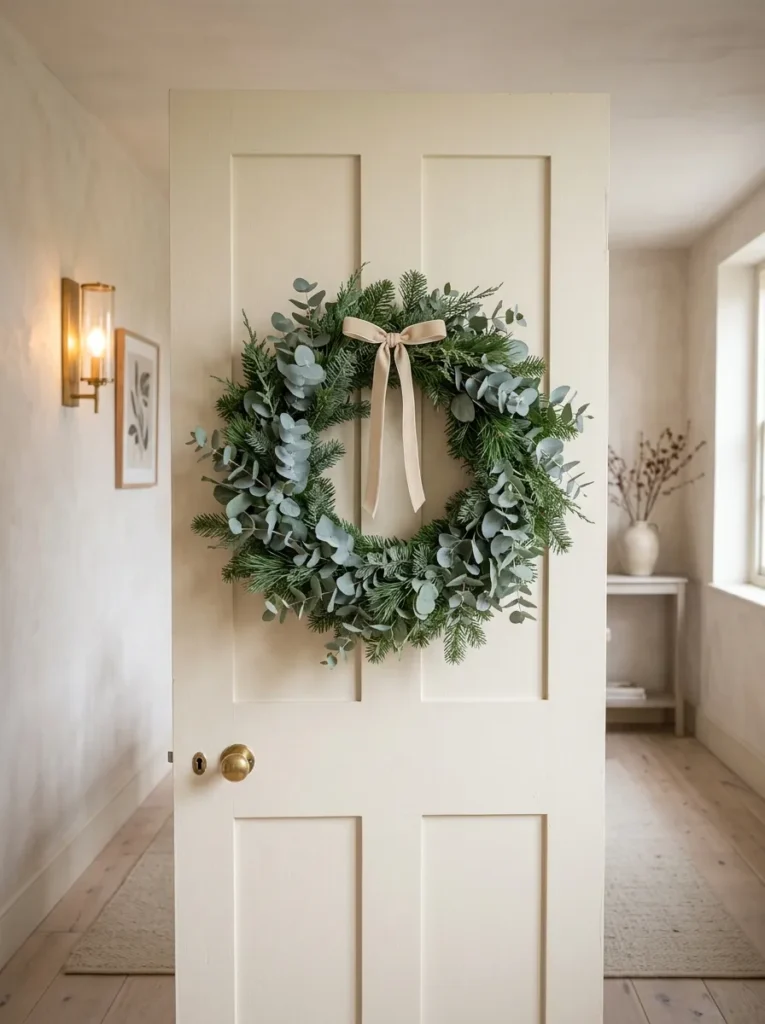
- Choose a simple wreath with restrained greenery.
- Hang it on an interior door, wall, or cabinet.
- Add one ribbon instead of multiple decorative elements.
- Leave surrounding wall space open for a cleaner composition.
A minimalist wreath can bring seasonal character to an elegant home without creating visual clutter. Choose a wreath made from eucalyptus, cedar, olive branches, or lightly frosted greenery, then finish it with one understated ribbon. Champagne, ivory, taupe, or muted green works beautifully when the surrounding room uses neutral colors. Hang the wreath on an interior door, cabinet, wall, or even above a console where it can act as a simple focal point. The limited decoration allows the natural shape of the foliage to remain visible, creating a sophisticated holiday accent that feels intentional rather than overly themed.
Placement makes a noticeable difference with a simple wreath. Give it enough empty wall space around the edges so its circular shape remains clear and visually strong. If the wreath is positioned above a console, repeat one material from the wreath below, such as a small ceramic vase or wooden bowl. This creates connection without copying the exact design. For a softer look, choose a slightly asymmetrical wreath with foliage extending more heavily on one side. I’ve noticed that these organic shapes often feel more relaxed and contemporary than perfectly symmetrical arrangements, especially in homes with modern or transitional interiors.
Candlelit Staircase

- Wrap a slim evergreen garland along the staircase railing.
- Add warm lights for a soft evening glow.
- Use flameless candles on nearby steps or landings.
- Keep the greenery loose to preserve the staircase’s clean lines.
A staircase can become one of the most beautiful holiday features in the home when decorated with restraint. A slim evergreen garland running along the railing creates a graceful line that naturally draws the eye upward. Add warm white lights and a narrow ivory ribbon for softness without making the staircase feel crowded. The greenery should follow the shape of the railing rather than hanging heavily over it. This approach works particularly well in homes with white walls, natural wood, or neutral stair runners because the greenery provides seasonal contrast while preserving the architecture’s clean and elegant appearance.
Safety should remain part of the design, especially in a busy household. Secure the garland firmly and keep ribbons, cords, and decorative pieces away from walking areas. Instead of placing real candles directly on steps, use flameless versions on nearby landings or consoles for a similar warm effect. A few brass or champagne ornaments can be attached sparingly to the greenery for additional sparkle. In my experience, staircase decorating looks most sophisticated when the greenery is allowed to remain the main feature. Too many ornaments can hide the natural shape and make the entire arrangement feel heavier than necessary.
Neutral Holiday Pillows

- Layer cream, beige, taupe, and muted green cushions.
- Mix boucle, linen, velvet, and knitted textures.
- Use subtle patterns instead of oversized holiday graphics.
- Keep the base sofa neutral for easy seasonal changes.
Holiday pillows are one of the easiest ways to introduce seasonal style without changing the main furniture. Start with a neutral sofa and layer cushions in cream, beige, taupe, and muted green. Instead of large Christmas graphics, choose subtle patterns such as small checks, botanical motifs, stripes, or understated winter details. Different fabrics create more visual richness than multiple colors, so combine linen with boucle, velvet, cotton, or chunky knit textures. This approach works particularly well for renters or anyone who prefers flexible decorating because the pillows can be changed quickly while the larger furniture remains timeless.
Create depth by placing larger neutral cushions at the back and smaller textured ones toward the front. You can include one seasonal design as an accent while keeping most of the collection simple. A velvet cushion in champagne or deep green can provide enough holiday color without overwhelming the room. I’ve noticed that repeating one pillow texture elsewhere, such as in a throw or tree ribbon, makes the seating area feel more connected. Once Christmas is over, remove the overtly seasonal cushion and leave the remaining neutral layers in place for a comfortable winter arrangement.
Glass Ornament Bowl
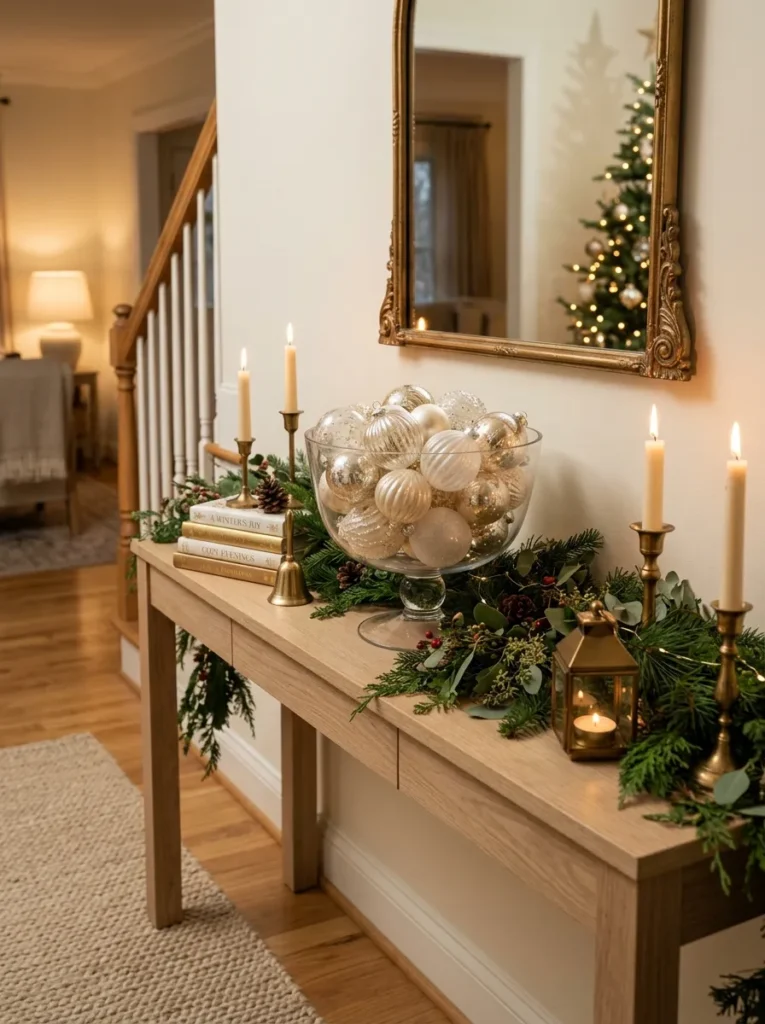
- Display glass ornaments in a wide transparent or ceramic bowl.
- Mix clear, champagne, and ivory ornaments for subtle sparkle.
- Add greenery around the bowl without hiding its contents.
- Place it on a console, coffee table, or dining surface.
A bowl filled with glass ornaments can turn a simple tabletop into a polished Christmas vignette with very little effort. Choose clear, ivory, champagne, or lightly frosted ornaments and place them together in a wide transparent or ceramic bowl. The layered glass surfaces catch natural and artificial light, creating subtle sparkle throughout the room. Because the display is contained, it feels organized rather than scattered. This is especially helpful on coffee tables or consoles where you still need usable space. The limited palette also allows the arrangement to complement existing furniture instead of competing with larger holiday decorations.
For extra depth, place a few evergreen sprigs around the outside of the bowl rather than covering the ornaments. A small brass candleholder or neutral ceramic vase can complete the arrangement while keeping the composition simple. Use ornaments in several sizes so the bowl has natural variation rather than appearing like a collection of identical pieces. If you have young children or pets, choose durable shatter-resistant ornaments instead of fragile glass. The same display can also be refreshed throughout the season by swapping a few ornaments or adding pinecones, making it an adaptable accent for everyday holiday decorating.
Layered Mantel Garland

- Combine evergreen branches with eucalyptus for varied texture.
- Add ivory ribbon for softness and movement.
- Place candleholders at different heights for balance.
- Let the garland extend slightly beyond the mantel edges.
A layered mantel garland creates a rich Christmas focal point while keeping the overall color palette refined. Start with a base of evergreen branches, then add eucalyptus or another lighter foliage to introduce variation in shape and tone. Allow the greenery to extend slightly beyond the mantel edges so the arrangement feels natural rather than rigid. Ivory ribbon can be woven loosely through the branches for softness, while a few brass candleholders add warm metallic contrast. This combination works beautifully with stone, white, or cream fireplaces because the greenery provides definition without overpowering the architecture.
Build the display from back to front, placing fuller branches behind and smaller details toward the front edge. This creates dimension and keeps ornaments visible instead of allowing everything to blend into one dense layer. Add warm white lights deep within the garland if you want a gentle evening glow. In my experience, leaving some sections of the mantel uncovered makes the arrangement feel more expensive because the eye has space to rest. Repeat one element, such as brass or ivory, in another part of the room to create a cohesive holiday look without matching every decoration exactly.
Antique Gold Details
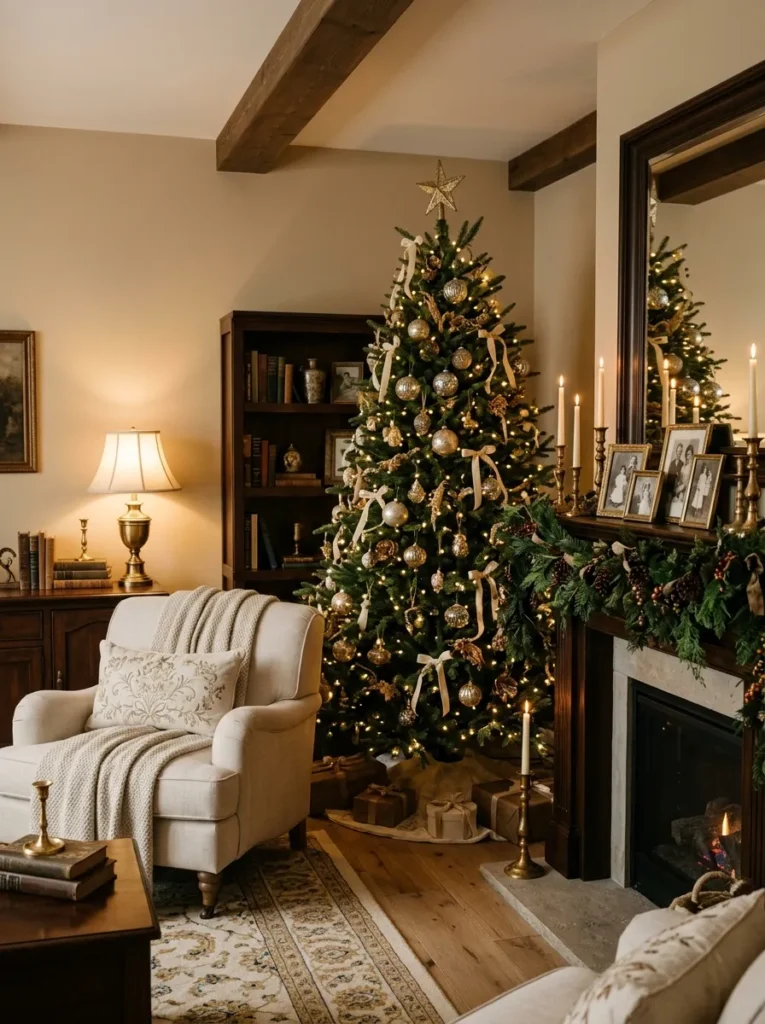
- Choose aged gold rather than highly reflective metallic finishes.
- Pair antique accents with cream, wood, and natural greenery.
- Use small touches on frames, candlesticks, or ornaments.
- Mix finishes carefully for depth without visual clutter.
Antique gold details bring warmth and character to holiday decorating without creating the intense shine associated with highly polished metallics. Look for aged brass candleholders, muted gold ornaments, vintage-style frames, or softly distressed decorative objects. These finishes pair especially well with cream fabrics, natural wood, evergreen foliage, and warm neutral walls. Instead of using gold everywhere, select a few meaningful accents and allow them to stand out. The slightly weathered appearance gives the room a collected quality, making the Christmas styling feel established rather than like a temporary collection of matching decorations.
Balance is important when mixing metallic finishes. If you already have brass lighting or hardware, antique gold accents can complement them without needing to match perfectly. Place a small aged-gold frame beside a vase of greenery, or add muted gold ornaments to a neutral tree. Warm lamps and candles will enhance the softer metallic surface after dark. That’s why many designers recommend repeating a metallic finish in small doses rather than creating one heavily decorated zone. The result is a room that feels layered and sophisticated while still retaining the warmth and comfort expected from a lived-in holiday home.
Elegant Entryway

- Keep the entry palette simple with greenery and warm neutrals.
- Add one statement wreath to establish the focal point.
- Use a narrow console for candles and seasonal accents.
- Leave walking space open and uncluttered.
The entryway sets the visual tone for the rest of the home, so a restrained holiday arrangement can make a strong first impression. Begin with one substantial wreath on the main door or a nearby interior wall, then support it with a narrow console decorated with greenery, candles, or a small ceramic vase. Keep the color palette centered on cream, beige, evergreen, and subtle brass. This creates a polished arrival area without taking up valuable floor space. The goal is to make the entrance feel festive and welcoming while preserving enough open space for coats, shoes, bags, and everyday movement.
Avoid filling every surface simply because the entryway is a decorating opportunity. One strong focal point is often more effective than several competing displays. A slim runner can add warmth, while a small bowl on the console can provide a practical place for keys. If the area is dark, warm wall lighting or a small lamp will enhance the greenery and metallic accents. I’ve noticed that entryways often look more elegant when their decorations are slightly simpler than those in the living room. The transition feels intentional, and the home immediately feels coordinated without becoming overly decorated.
Soft White Lighting
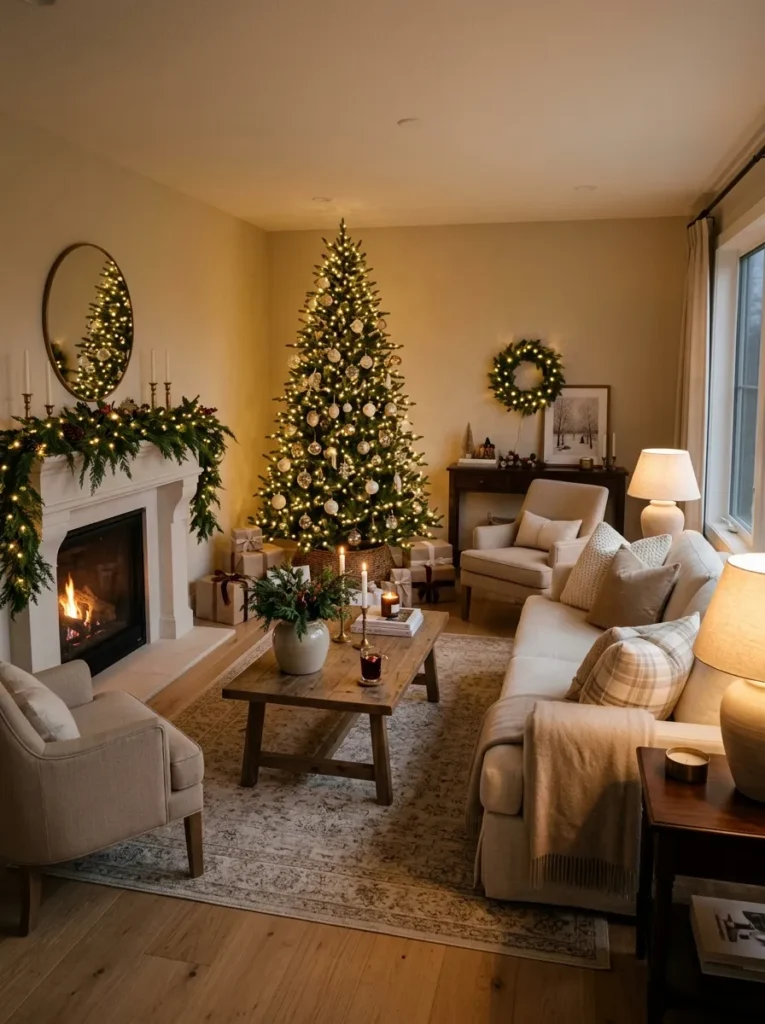
- Choose warm white bulbs instead of cool blue-toned lighting.
- Layer tree lights with lamps and subtle accent lighting.
- Tuck small lights into greenery for hidden illumination.
- Keep brightness soft enough to preserve a relaxed atmosphere.
Soft white lighting can transform an ordinary holiday arrangement into a warm, sophisticated room after sunset. Choose bulbs with a warm tone rather than cool white or blue light, then layer several sources throughout the space. Tree lights can provide the main sparkle, while table lamps, wall sconces, and small accent lights create gentle illumination around the room. Tucking tiny lights inside greenery keeps the wires less noticeable and allows the foliage to glow from within. This layered approach makes neutral furnishings appear warmer while highlighting textures such as velvet, linen, wood, and brass.
Avoid making every light source equally bright because that can flatten the atmosphere and make the room feel harsh. Instead, allow certain areas to remain softly shadowed while the tree, mantel, or centerpiece becomes the visual focus. Battery-powered lights can be especially useful for shelves, wreaths, and garlands where electrical outlets are inconvenient. In my experience, warm lighting is one of the easiest ways to make simple decorations look more elevated. Once the holiday season ends, the same lamps and ambient lighting can remain in place, making this an improvement that continues to benefit the room.
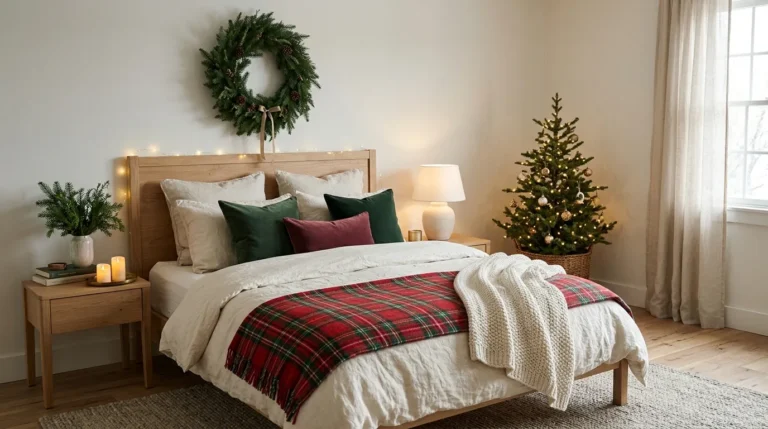
Classic Plaid Touches
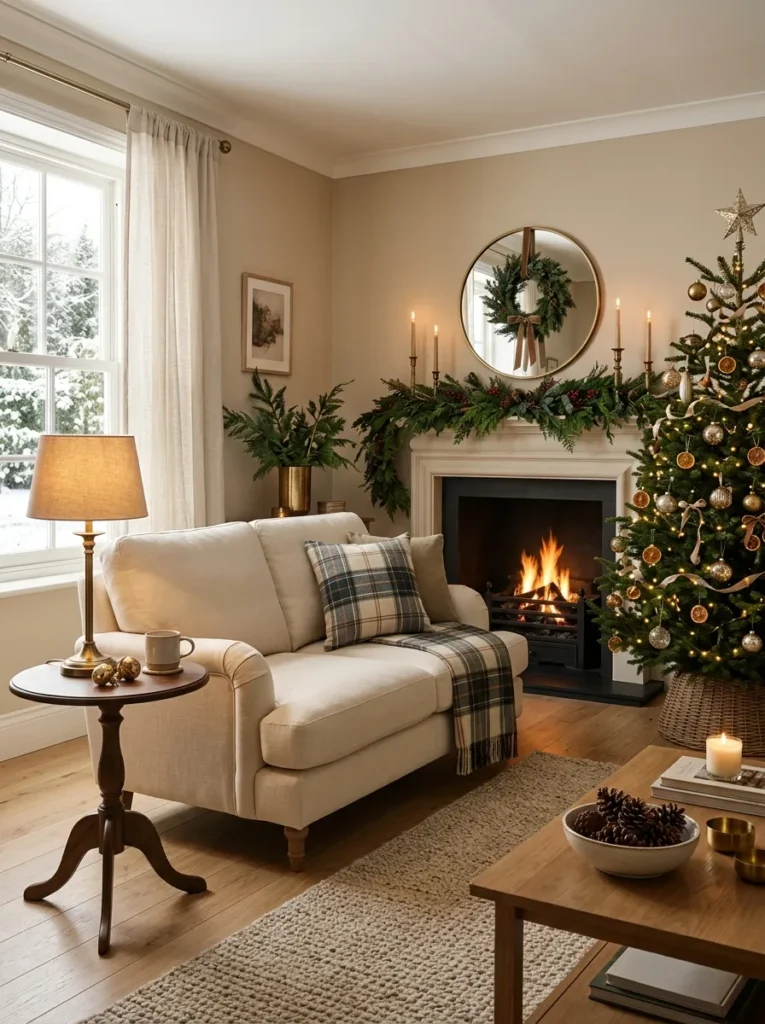
- Introduce plaid through one or two carefully chosen textiles.
- Choose muted tartan colors instead of overly bright patterns.
- Pair patterned pieces with solid neutral fabrics.
- Use pillows, throws, or table linens for easy updates.
Plaid can add traditional Christmas character while still looking sophisticated when the pattern is carefully controlled. Instead of covering the room in tartan, introduce one or two pieces such as a cushion, throw, runner, or pair of napkins. Muted forest green, burgundy, cream, taupe, and brown plaid can feel much more refined than highly saturated patterns. Pair the patterned textile with solid neutral fabrics so the room has visual breathing space. This approach allows you to enjoy a classic holiday detail without losing the calm, coordinated appearance of an elegant interior.
Use plaid where it can provide warmth without becoming the dominant feature. One patterned cushion can sit among several cream pillows, while a folded throw can rest casually over the arm of a sofa or accent chair. For dining areas, a plaid runner can work beautifully with simple white dishes and natural greenery. If your existing furniture already has patterns, choose a smaller plaid accent in related colors rather than introducing another strong contrast. This makes the seasonal update easier to coordinate and remove later, while still giving the room a recognizable Christmas character that feels timeless rather than overly themed.
Timeless Tree Ornaments
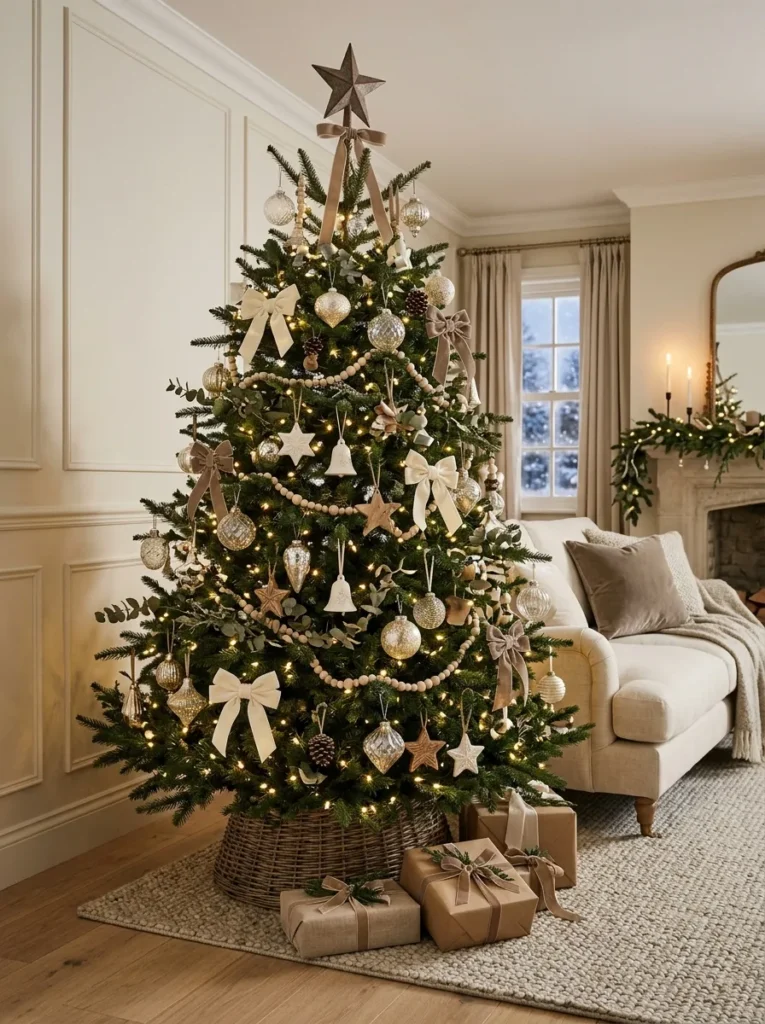
- Combine classic shapes with restrained neutral colors.
- Use glass, ceramic, velvet, and wood for varied texture.
- Keep ornament sizes varied to create visual depth.
- Reserve a few special pieces for meaningful focal points.
Timeless ornaments can give a Christmas tree an elegant appearance that remains appealing year after year. Build the collection around classic shapes and restrained colors such as ivory, champagne, clear glass, muted gold, and natural wood. Then introduce texture through ceramic figures, velvet details, ribbed baubles, or lightly frosted finishes. Using several materials keeps the tree visually interesting even when the color palette stays simple. This is especially helpful when creating classy Christmas decor because sophistication often comes from thoughtful variation rather than adding more and more decorations.
Start with larger ornaments deeper inside the branches and place smaller pieces toward the outer tips. This creates depth and prevents the tree from appearing flat when viewed from across the room. Save a few meaningful ornaments for visible focal positions instead of distributing every special piece randomly. This gives the tree a personal quality without sacrificing its polished appearance. If you prefer a coordinated look, repeat one or two materials from the surrounding room, such as wood, brass, or velvet. The finished tree should feel collected and personal while still fitting naturally into the home’s existing style.
Conclusion
Creating an elegant holiday home is often about making small, intentional changes rather than adding more decorations. These classy Christmas decor ideas can help you bring warmth, texture, sparkle, and personality into your space while keeping the overall look polished and comfortable. Choose one idea that immediately catches your eye, or combine several to create a complete seasonal style that feels uniquely yours. I’ve seen how simple changes like better lighting, coordinated textiles, and natural greenery can completely transform a room. Save this post on Pinterest for your decorating plans, try your favorite ideas at home, and share it with someone who loves beautiful Christmas inspiration. Make your space festive, welcoming, and wonderfully yours.