24 Christmas Wreaths for a Beautiful Holiday Entrance

Your front door is the first glimpse of your holiday style, so why not make it unforgettable?
A beautiful wreath can turn a simple entrance into a warm, festive welcome.
Whether you love classic greenery, rustic textures, or elegant winter details, the right design can make all the difference.
These Christmas wreaths offer 24 inspiring ways to refresh your holiday entrance without making it feel cluttered or overdecorated. You’ll find ideas featuring velvet ribbons, pinecones, berries, frosted foliage, metallic accents, natural textures, and more. Each style can be adapted to different doors, porch sizes, and decorating preferences. In my experience, even one thoughtful seasonal detail can completely change how an entrance feels. As you explore these ideas, look for colors, textures, and shapes that naturally complement your home. You may discover the perfect inspiration for creating a welcoming holiday doorway that feels personal, polished, and easy to recreate.
Classic Red Ribbon
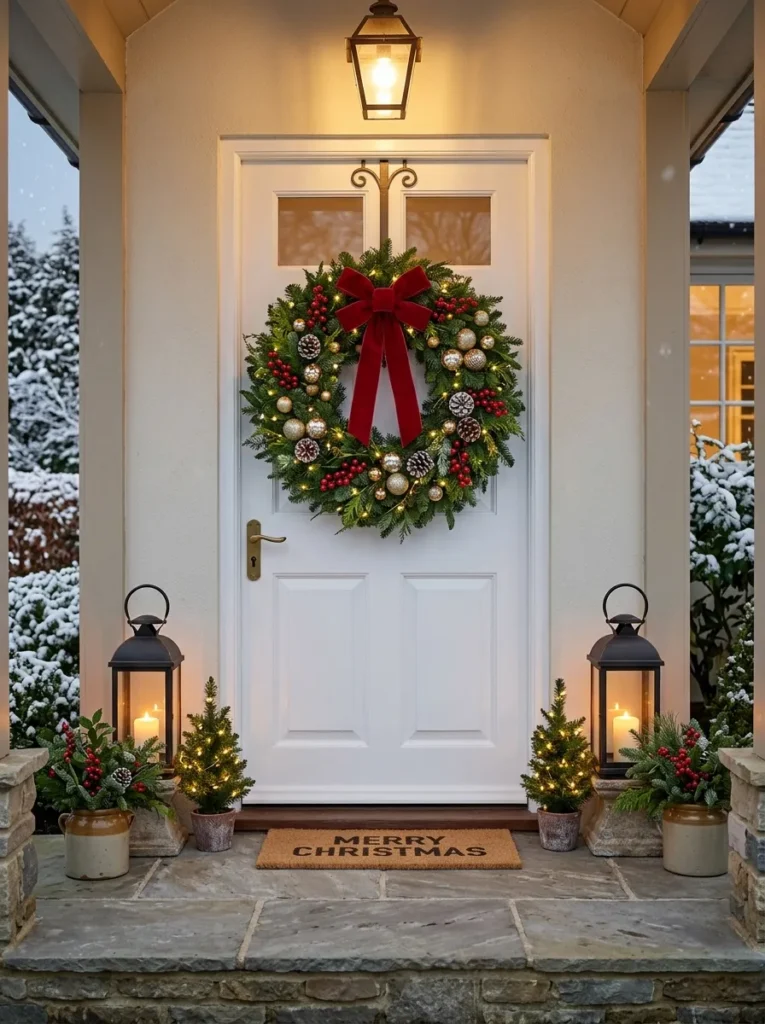
- A traditional red ribbon instantly gives the entrance a cheerful holiday finish.
- Evergreen branches create a full, natural shape that looks welcoming from the street.
- Gold accents add subtle richness without making the design feel overly formal.
- A wide ribbon can also hide uneven areas and make the wreath look fuller.
The right wreath can make an ordinary doorway feel instantly festive, and a classic red ribbon does that beautifully without requiring complicated decorating. Start with a full evergreen base and weave a wide red velvet ribbon through the branches, allowing a few soft loops to fall naturally. Add small gold ornaments, pinecones, and clusters of red berries for depth. I’ve noticed that keeping the color palette limited makes traditional decorations look more polished. This combination works especially well with white, cream, black, or natural wood doors because the greenery and ribbon create a strong seasonal focal point.
A classic arrangement also works when you want an entrance that feels festive without looking crowded. Choose ornaments in different sizes, but keep them close to the same two or three colors for visual balance. Secure the ribbon firmly behind the greenery so it stays neat when the door opens and closes. A small matching bow on the wreath can connect the decoration with a nearby doormat or porch planter. For a finished look, add warm white lighting around the doorway rather than using many competing colors. The result feels welcoming, timeless, and easy to recreate each December.
Pinecone Evergreen Ring
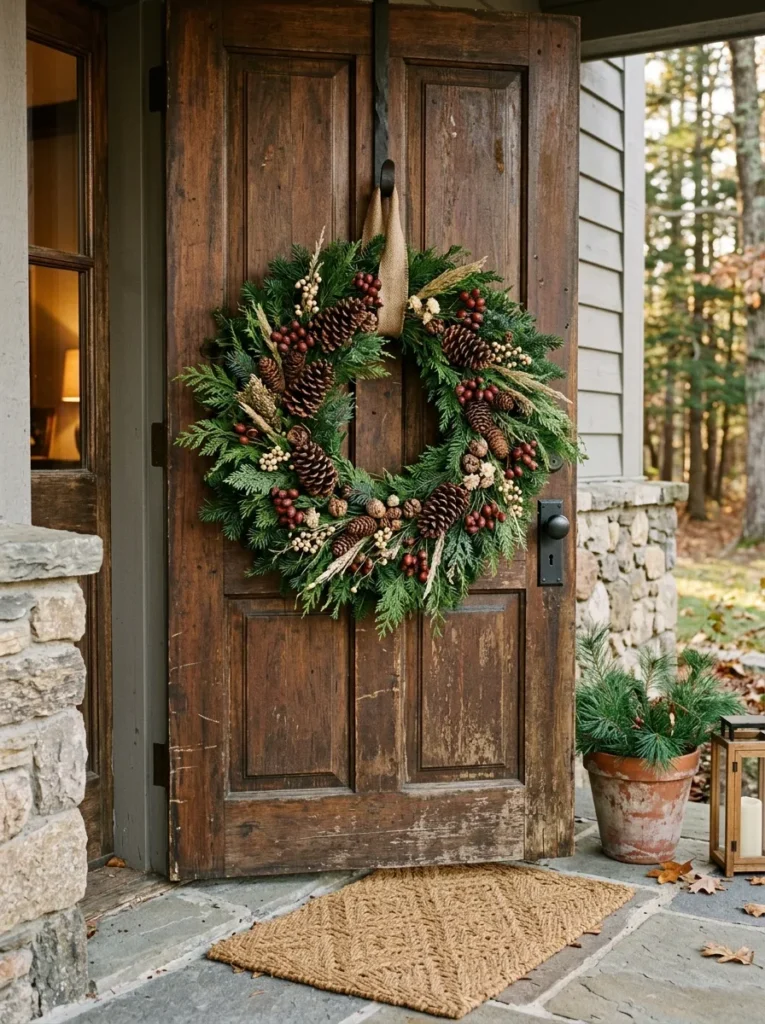
- Natural pinecones bring texture and make the greenery feel more dimensional.
- A simple evergreen ring suits rustic, farmhouse, and woodland-inspired entrances.
- Small berries provide color while keeping the overall arrangement understated.
- Leaving some branches slightly uneven creates a relaxed handmade appearance.
For a doorway with a natural, relaxed character, pinecones can turn a simple greenery arrangement into something much more interesting. Build around an evergreen ring and distribute pinecones at different angles instead of lining them up evenly. Add cedar sprigs, muted berries, and a few cream-colored accents to soften the rustic texture. The uneven placement gives the piece a handcrafted appearance that feels especially comfortable on wooden or painted doors. In my experience, natural materials are also forgiving because small gaps or irregular branches tend to look intentional rather than unfinished.
This design is particularly useful for homes with farmhouse, cottage, or woodland-inspired exteriors. Keep the greenery slightly loose around the outer edge so the circular shape remains visible from a distance. Pinecones should be secured deeply into the branches to prevent them from shifting when the door moves. If your entrance already has several decorative elements, skip oversized ornaments and let the natural textures carry the look. A woven mat, simple lantern, or small evergreen planter nearby can complete the arrangement without competing with the wreath.
White Berry Accent

- White berries create a crisp contrast against deep green foliage.
- A few silver or cream details can make the arrangement feel brighter.
- This palette works beautifully with dark, navy, black, or natural wood doors.
- Keeping the accents concentrated on one side adds movement without losing balance.
A touch of white can completely change the character of greenery, making the entrance look brighter and more refined. For this arrangement, combine deep evergreen branches with clusters of frosted white berries, cream flowers, and a few silver ornaments. Instead of spreading every accent evenly, concentrate some decorations along one side and let the foliage remain visible elsewhere. That contrast keeps the circular form easy to see. White details are especially effective on dark doors, where they stand out clearly, while the green foliage prevents the palette from feeling too cold or overly formal.
This style is a practical choice when you want seasonal decoration that coordinates easily with an existing exterior. Keep silver accents limited if your porch already includes metallic hardware, because too many reflective details can make a small entrance feel busy. For a softer appearance, substitute cream ornaments for bright white ones and add eucalyptus or cedar among the evergreen branches. Warm porch lighting will make the pale accents glow after sunset. The finished look feels clean and festive while still allowing the architecture, door color, and surrounding materials to remain part of the overall design.
Plaid Bow Detail
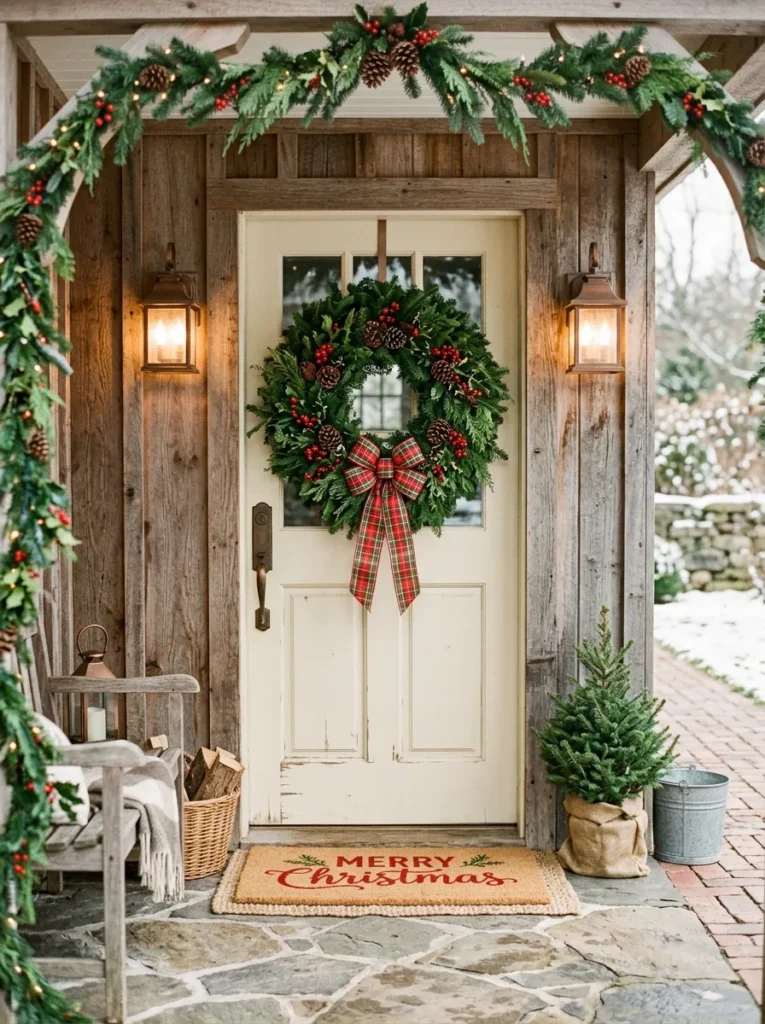
- A plaid bow adds cozy pattern without requiring many extra decorations.
- Red, green, and cream tones connect naturally with traditional holiday colors.
- The pattern works especially well with farmhouse and cottage-style entrances.
- Use a structured bow to give a simple greenery base a finished appearance.
Nothing says cozy holiday style quite like a generous plaid bow placed against rich evergreen branches. Choose ribbon with red, green, cream, or muted brown tones to create a warm farmhouse-inspired entrance. A simple greenery base is enough because the patterned ribbon becomes the visual focal point. Place the bow slightly below center or toward one side for a relaxed arrangement rather than a perfectly symmetrical look. I’ve seen this work especially well on cream and natural wood doors, where the warm colors blend naturally with the surrounding porch materials and create an inviting seasonal welcome.
For a more polished result, use wired ribbon that holds its shape and create loops of slightly different sizes. Let two ribbon tails hang below the wreath, trimming their ends at an angle for a finished appearance. Keep additional ornaments small so they do not compete with the plaid pattern. If your porch already contains patterned cushions or textiles, repeat one ribbon color nearby to make the entrance feel coordinated. A matching plaid bow on a planter or mailbox can also create continuity. The finished arrangement feels cheerful, comfortable, and collected without requiring extensive decorating.
Berry Cluster Ring

- Bright berry clusters add concentrated color without covering the greenery.
- Repeating small groups around the ring keeps the arrangement visually balanced.
- Red berries pair easily with wood, black, white, and natural stone exteriors.
- Mixed berry sizes create depth and prevent the wreath from looking flat.
A few generous berry clusters can make evergreen foliage look instantly fuller and more festive. Rather than covering the entire ring with ornaments, group red and burgundy berries in several small sections around the greenery. This creates visual rhythm while allowing the natural branches to remain visible. Place larger clusters slightly apart and fill the spaces with smaller berries for added depth. The technique works particularly well when the doorway needs more color but you still want the decoration to feel natural. Dark doors make the red tones especially noticeable, while lighter doors create a brighter traditional contrast.
To keep the arrangement balanced, imagine the wreath divided into four sections before attaching the decorations. Place berry clusters around the ring rather than concentrating everything at the bottom. Secure each group firmly between the branches, especially if the entrance is exposed to wind. A few pinecones can soften the bright red accents and add earthy texture. For a more elegant finish, choose berries with slightly varied shades instead of one uniform red. This small difference makes the arrangement appear layered and handcrafted while keeping the overall design simple and easy to maintain.
Frosted Eucalyptus Mix
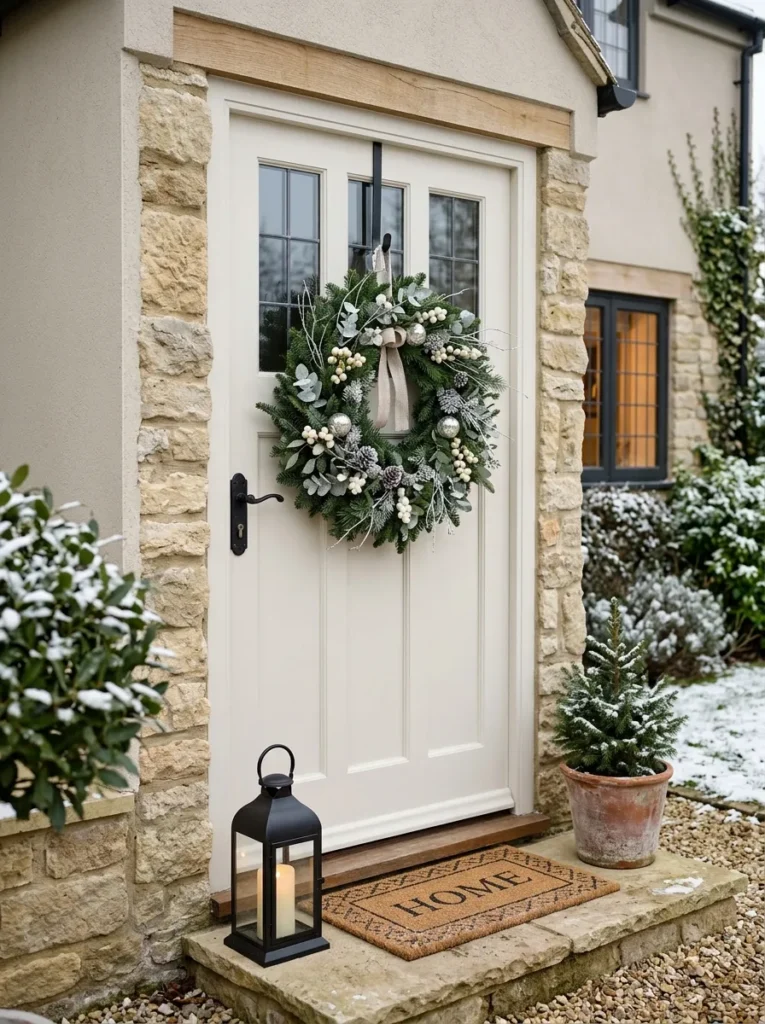
- Frosted eucalyptus introduces a softer, silvery texture to traditional greenery.
- The muted palette works beautifully with neutral and contemporary exteriors.
- Layering eucalyptus with evergreen branches creates natural depth and movement.
- Small white berries can reinforce the lightly frosted appearance.
Soft, silvery foliage can give a traditional doorway a lighter and more contemporary holiday appearance. Combine deep evergreen branches with frosted eucalyptus stems, pale berries, and a few understated silver accents. The contrast between dark greenery and muted foliage creates dimension without relying on bright colors. Arrange the eucalyptus so several stems extend slightly beyond the circular edge, giving the wreath an organic silhouette. This approach works particularly well on white, beige, gray, or pale wood doors. In my experience, using different leaf shapes makes even a simple arrangement look layered and professionally styled.
Keep the metallic elements restrained so the natural foliage remains the main feature. A handful of matte silver ornaments or tiny white berries can provide enough sparkle without making the design feel formal. Eucalyptus also pairs beautifully with linen, stone, light wood, and woven textures around the entrance. If the wreath feels too cool, add a warm cream ribbon or use warm-white porch lighting after sunset. The result is festive but understated, making it suitable for homes where you want seasonal decoration that blends smoothly with an existing neutral exterior.
Woodland Branches
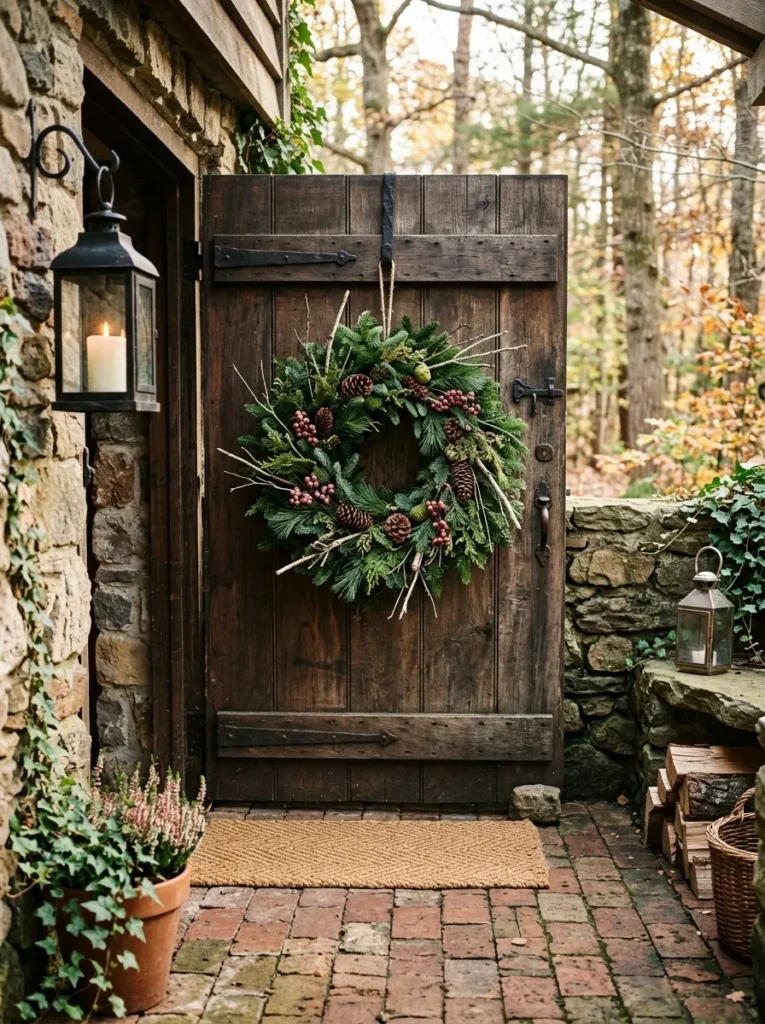
- Bare branches add height and an organic woodland character to the greenery.
- Small pinecones and berries provide natural seasonal texture.
- The asymmetrical shape feels relaxed and handmade rather than overly arranged.
- This style works especially well beside stone, wood, or brick entrances.
Bring a little woodland character to the doorway by mixing evergreen foliage with slender natural branches. The branches can extend beyond the circular shape, creating height and an intentionally organic silhouette. Add pinecones, cedar sprigs, and a few muted berries for seasonal color without making the arrangement feel overly decorated. This approach gives the wreath more texture and movement than a perfectly symmetrical design. It works especially well on wood, brick, and stone entrances because the natural materials visually connect with the surrounding architecture. The result feels handcrafted, relaxed, and comfortably festive.
For a balanced composition, place the longest branches toward one side and repeat shorter stems around the opposite edge. This creates asymmetry while still keeping the wreath visually stable. Avoid adding too many ornaments because the branches themselves provide plenty of interest. A simple burlap, linen, or dark green ribbon can finish the arrangement without overpowering the natural textures. If your porch already includes wood planters or stone details, repeat those materials nearby for cohesion. Warm lantern light in the evening will highlight the branches and create attractive shadows against the door.
Golden Ornament Spray

- Gold ornaments bring warmth and sparkle to a simple evergreen base.
- Concentrating decorations on one side creates a modern asymmetrical shape.
- Matte and glossy finishes provide subtle visual contrast.
- Warm lighting makes the metallic details especially noticeable after sunset.
A concentrated spray of golden ornaments can turn simple greenery into a polished holiday focal point. Instead of distributing decorations evenly, gather champagne, antique gold, and soft metallic ornaments along one side of the wreath. Mix matte and glossy finishes so the arrangement catches light from different angles. Keep the opposite side mostly green to preserve the natural shape and create an elegant asymmetrical effect. This style works beautifully on charcoal, black, navy, white, and deep green doors. The limited color palette also makes the entrance feel coordinated rather than overloaded with competing seasonal details.
When arranging the ornaments, begin with the largest pieces and gradually fill the gaps with smaller balls, pinecones, or berries. Secure heavier decorations close to the wreath frame so they do not pull the branches downward. A narrow cream ribbon can soften the metallic finish and add another layer of texture. Warm-white porch lighting will make the gold details glow beautifully in the evening. I’ve noticed that using several gold tones instead of one identical finish gives the arrangement more depth while keeping the overall look refined and easy to reproduce.
Cedar And Bells

- Cedar foliage creates a fresh, textured base with naturally layered needles.
- Small bells add a classic decorative detail and a subtle traditional feel.
- Neutral ribbon keeps the arrangement from becoming visually crowded.
- This combination suits both rustic and classic holiday entrances.
Cedar brings a naturally layered texture that makes a doorway decoration look full without requiring many additional accents. Build the arrangement with cedar and evergreen branches, then add several small antique brass bells for a classic seasonal detail. A cream linen ribbon can soften the metallic elements while a few pinecones and tiny red berries provide gentle contrast. Keep the bells distributed around the lower half or grouped near one side so they remain visible against the greenery. This combination feels especially inviting on white, cream, wood, or lightly weathered doors.
For the most natural appearance, allow some cedar stems to extend beyond the main circular outline rather than trimming everything to exactly the same length. Choose bells with a muted brass finish if you prefer an aged, farmhouse look, or polished gold for a more traditional entrance. Keep the ribbon relatively simple because the greenery and bells already provide plenty of detail. A matching cedar garland around a nearby railing can extend the look without overwhelming the doorway. The finished design feels fresh, textured, and festive while remaining practical for everyday holiday decorating.
Burlap Bow Finish

- Burlap adds warm texture and a relaxed farmhouse character.
- Its neutral color lets greenery remain the main visual feature.
- A large bow can make a simple wreath look intentionally finished.
- This option pairs naturally with wood, brick, stone, and neutral doors.
A simple burlap bow can make evergreen foliage feel warmer, softer, and more inviting without adding bright colors. Choose natural tan burlap with visible woven texture, then attach a generous bow near the lower center or slightly off to one side. Add pinecones, cedar sprigs, and a few muted berries for subtle seasonal detail. The neutral ribbon works especially well when the entrance already includes wood, stone, brick, or woven materials. Because burlap has such a recognizable texture, even a modest wreath can look thoughtfully styled rather than plain or unfinished.
When working with burlap, use wired ribbon if you want fuller loops that hold their shape throughout the season. Keep the tails long enough to create movement, but trim them neatly so they do not overwhelm the doorway. A few cream-colored berries can brighten the arrangement while maintaining its natural palette. If the wreath looks too rustic, introduce one or two small metallic ornaments for balance. I’ve noticed that this combination is particularly forgiving in busy family entrances because its earthy colors hide minor imperfections while still giving the door a clear festive focal point.
Berry And Cotton

- Cotton stems introduce soft white texture against darker evergreen branches.
- Red berries create a simple seasonal color contrast.
- The combination works well with farmhouse and modern rustic exteriors.
- Neutral materials make the design easy to coordinate with existing porch decor.
Soft cotton stems can give traditional greenery a lighter, more textural appearance while keeping the decoration easy to coordinate. Combine fluffy white cotton with deep evergreen branches, small red berry clusters, and a few pinecones for contrast. The white stems stand out naturally against darker foliage, creating a snowy effect without covering the wreath in artificial frost. This design works particularly well with muted green, cream, white, or natural wood doors. The restrained color palette also allows nearby porch elements, such as planters or lanterns, to remain visible instead of competing for attention.
For a fuller arrangement, place cotton stems at slightly different heights so they peek through the greenery rather than sitting completely on top. Use small berry clusters to create visual repetition around the ring, keeping larger accents toward the center. A cream or natural linen ribbon can complete the look without introducing another strong color. If your entrance already has farmhouse details, repeat cotton or soft white accents in a nearby planter for continuity. The finished design feels cozy and fresh, combining familiar holiday colors with natural textures that suit both rustic and contemporary homes.
Miniature Ornament Mix

- Small ornaments add sparkle while preserving the shape of the greenery.
- Mixing several sizes creates depth without making the arrangement bulky.
- A limited color palette keeps the decoration visually organized.
- This approach works well when the doorway needs detail but not excessive volume.
Small ornaments can create a surprisingly rich display when they are layered carefully throughout evergreen branches. Choose miniature balls in two or three coordinating shades, such as red, champagne, cream, or gold, and combine them with tiny pinecones or berry clusters. Smaller decorations allow more of the natural greenery to remain visible while adding sparkle across the entire ring. This technique is especially useful for narrow entryways where a large, heavily decorated piece could feel overwhelming. The result is detailed enough to catch attention from the street without making the doorway look crowded.
Begin by placing the largest miniature ornaments first, spacing them around the wreath rather than clustering everything in one area. Fill smaller gaps with tiny ornaments and berries, then step back occasionally to check the balance from several feet away. Secure each piece firmly because lightweight ornaments can shift when doors move or outdoor breezes pass through. A narrow velvet ribbon can add softness without taking over the design. In my experience, limiting the palette makes mixed ornaments look much more intentional, especially when the surrounding porch already contains several textures or decorative elements.
Oversized Velvet Bow

- A large velvet bow creates an instant focal point with very few decorations.
- Deep burgundy or forest green adds a sophisticated holiday accent.
- Velvet introduces softness and richness against textured evergreen branches.
- Keep the greenery simple so the bow remains the star.
A dramatic velvet bow can make a simple greenery arrangement feel instantly polished and luxurious. Choose deep burgundy, forest green, cranberry, or classic red velvet, then create generous loops that hold their shape against the evergreen base. Keep the rest of the wreath relatively restrained with a few pinecones and berry clusters so the bow remains the strongest visual element. This approach works particularly well on neutral doors because the rich fabric creates immediate contrast. The soft texture of velvet also adds depth, making the entrance feel warmer and more thoughtfully decorated.
For the best proportions, choose a bow that is large enough to be noticed from the sidewalk but not so wide that it hides the circular greenery. Wired velvet ribbon is useful because it allows you to reshape the loops after hanging. Let the tails fall naturally, then trim them into clean angled or V-shaped ends. If the bow is burgundy, repeat that color with a few berries or a nearby planter accent. Warm porch lights will emphasize the velvet texture after sunset, creating a refined finish without requiring numerous ornaments or additional decorative pieces.
Natural Citrus Garland

- Dried orange slices bring warm color and organic texture to evergreen branches.
- Cinnamon sticks add another natural material and subtle visual detail.
- The warm palette suits rustic, farmhouse, and cottage-style entrances.
- Use dried fruit sparingly to keep the wreath balanced and lightweight.
Dried citrus can bring unexpected warmth to traditional greenery while keeping the decoration natural and approachable. Add thin dried orange slices among evergreen branches, then introduce a few cinnamon sticks, pinecones, and muted red berries for texture. The golden orange tones contrast beautifully with deep green foliage and work especially well on cream, wood, or muted green doors. Use natural twine or a simple linen ribbon instead of shiny metallic materials to maintain the organic character. The finished arrangement feels seasonal without relying heavily on conventional ornaments or bright synthetic colors.
To keep the wreath visually balanced, distribute orange slices in small groups rather than covering every section. Place the largest pieces where they can be seen clearly, then fill nearby spaces with smaller berries and greenery. Cinnamon sticks can be bundled together or tucked individually into the branches for additional texture. If the wreath will hang outdoors, make sure all dried materials are firmly attached and protected from excessive moisture. A nearby terracotta planter or wooden lantern can repeat the warm tones, creating a cohesive entrance that feels natural, welcoming, and thoughtfully layered.
Black And Gold

- Black accents create a strong modern contrast against fresh evergreen foliage.
- Gold details add warmth and prevent the palette from feeling too stark.
- This combination suits contemporary doors and minimalist entrances.
- A simple arrangement keeps the bold colors looking sophisticated rather than busy.
Black and gold can give evergreen foliage a distinctly modern holiday character while keeping the arrangement visually controlled. Start with a full green base and add matte black ornaments, brushed gold balls, and a narrow black ribbon. The dark accents create strong contrast, while the gold introduces warmth and catches the light. This palette is especially effective on white, charcoal, navy, or natural wood doors. Because the colors are bold, you do not need many decorations. Leaving generous areas of greenery visible helps the design feel sophisticated rather than overly dramatic.
Choose a mixture of matte and lightly reflective finishes to create subtle dimension without introducing additional colors. Place larger ornaments deeper into the branches and smaller pieces closer to the surface, allowing the wreath to look layered from different viewing distances. A few pinecones can soften the geometric appearance of metallic decorations. For an especially clean entrance, pair the wreath with simple black lanterns and a neutral doormat. In my experience, limiting the surrounding porch accessories helps this color combination stand out while keeping the overall entrance calm, balanced, and contemporary.
Snowy White Foliage

- White foliage creates a soft winter-inspired appearance against green branches.
- Frosted details make the arrangement feel lighter and brighter.
- Silver ornaments add subtle sparkle without overpowering the greenery.
- This palette works especially well with neutral and dark-colored doors.
A snowy foliage design can make the entrance look bright, crisp, and winter-inspired without relying on excessive decoration. Layer evergreen branches with frosted pine, pale eucalyptus, white berries, and lightly dusted pinecones. Add a few silver ornaments where they can catch natural or porch lighting. The contrast between dark green and white creates immediate visual depth, especially against black, navy, charcoal, or deep wood doors. Keep the frosted elements slightly uneven so the wreath retains a natural shape. This approach gives traditional greenery a fresh seasonal update while remaining easy to coordinate with neutral surroundings.
When choosing artificial frosted branches, look for finishes that appear lightly dusted rather than heavily coated. Too much white can hide the natural texture and make the wreath look flat. Use silver accents sparingly and place them at different depths within the greenery. A warm white light nearby can soften the cooler palette and create a welcoming glow after sunset. If the entrance already contains white planters or pale stone, repeat those tones for continuity. The finished design feels airy and polished, with enough texture to remain visually interesting from both close and distant views.
Asymmetrical Greenery

- An uneven arrangement creates a relaxed, contemporary silhouette.
- Extending foliage beyond one side adds movement around the doorway.
- Minimal decorations keep attention on the natural greenery.
- This style works well for modern, Scandinavian, and minimalist homes.
An asymmetrical greenery arrangement can make a doorway feel modern without adding complicated decorations. Begin with a simple evergreen ring, then extend cedar, eucalyptus, or pine branches farther on one side to create an organic sweeping shape. Add only a few pinecones or cream berries so the foliage remains the main feature. The uneven silhouette draws the eye naturally and works particularly well with contemporary architecture, where clean lines benefit from a softer organic contrast. A neutral linen ribbon can finish the arrangement while keeping the overall design understated and visually calm.
The key is to create intentional imbalance rather than simply placing decorations randomly. Keep the main greenery dense enough to establish the circular base, then allow several stems to extend outward on one side. Step back frequently while arranging so the silhouette remains attractive from several feet away. If your door has strong architectural lines, the organic shape can soften the entrance without competing with them. I’ve noticed that this approach is especially effective in minimalist spaces because fewer decorations allow the texture, shape, and natural variation of the foliage to become the main visual interest.
Red Berry Cascade
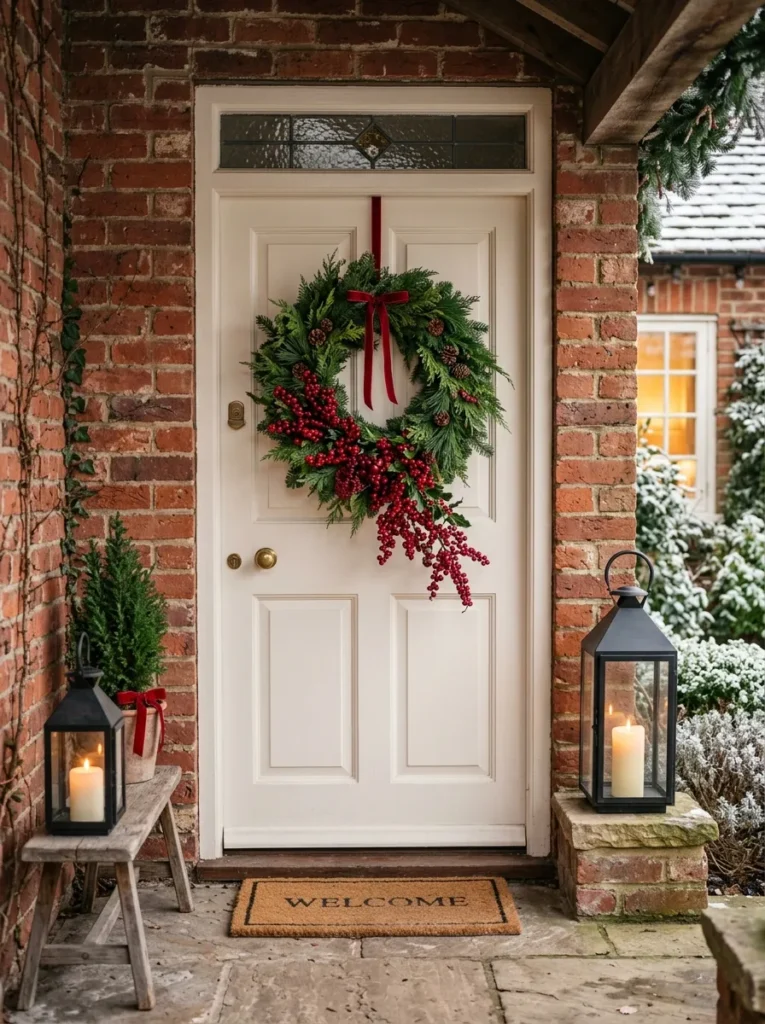
- Cascading berries create vertical movement and make the wreath feel more dynamic.
- Deep red tones provide strong contrast against evergreen foliage.
- Longer stems can visually soften a tall or narrow doorway.
- Keep the upper portion simple so the lower accents remain prominent.
Cascading berry stems can give a traditional greenery arrangement more movement while adding a strong seasonal color accent. Instead of placing berries evenly around the ring, allow several longer clusters to fall naturally from one lower side. Combine deep red berries with evergreen branches, cedar, and a few pinecones for texture. The downward shape can visually lengthen the arrangement and works particularly well around tall doors or narrow entryways. Keep the upper portion relatively simple so the eye naturally follows the berries downward rather than getting distracted by too many competing details.
Use flexible berry stems so you can gently curve them into the shape you want before securing them. Position the longest stems first, then add shorter clusters to create a gradual transition back toward the main wreath. A narrow velvet ribbon can provide softness without interrupting the cascading effect. Make sure the lower decorations are firmly attached if the doorway receives wind or frequent movement. For a cohesive entrance, repeat the berry color in a nearby planter, doormat detail, or small porch decoration. This creates a connected look without requiring matching accessories everywhere.
Ribbon Loop Layers
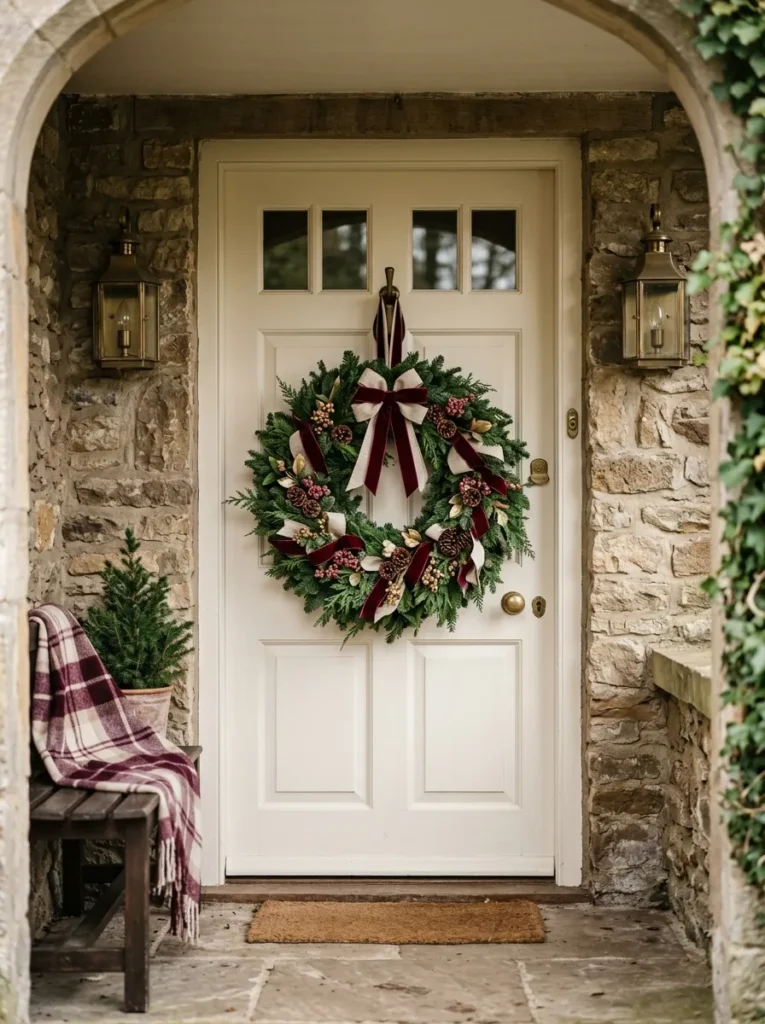
- Layered ribbon creates fullness without adding many ornaments.
- Combining two coordinating fabrics gives the greenery more visual depth.
- Velvet and linen work well together for a soft, textured finish.
- Keep the colors related so the arrangement remains cohesive.
Layering two ribbons can make a simple evergreen arrangement look fuller, richer, and more carefully styled. Combine a wider velvet ribbon with a narrower linen, plaid, or metallic ribbon in a coordinating shade. Weave the ribbons through the branches in loose loops, allowing both textures to remain visible instead of covering one another completely. This technique works especially well when you want more visual interest without adding lots of ornaments. Deep red with cream, forest green with gold, or burgundy with natural linen can create attractive combinations while keeping the overall palette controlled.
Start with the wider ribbon and secure it firmly at several points around the wreath before adding the narrower layer. Avoid making every loop identical because slight variations create a more natural appearance. Keep ornaments limited to a few pinecones or berry clusters so the ribbons remain easy to notice. If your door already has hardware or nearby decorations in a particular metallic finish, repeat that finish sparingly in the wreath. This helps the entrance feel coordinated. The layered textures also photograph beautifully, making the doorway especially appealing in Pinterest-style vertical images.
Evergreen And Lanterns

- Evergreen foliage creates a strong natural foundation for a classic entrance.
- Small lantern accents reinforce the warm holiday atmosphere.
- Neutral accessories keep the doorway balanced and uncluttered.
- Matching greenery around the entrance can make the display feel more complete.
Pairing a lush evergreen arrangement with lanterns creates a welcoming entrance that feels festive without becoming overly decorated. Use a full greenery base with a few pinecones, berries, or a simple ribbon, then place matching lanterns on the porch floor or steps. The lanterns add warm illumination while the wreath provides the main seasonal focal point. This combination works particularly well around cottage, farmhouse, and traditional architecture. Neutral stone, brick, wood, and cream-colored walls help the greenery and warm lighting stand out naturally while keeping the entire entrance visually balanced.
Choose lanterns that are proportionate to the doorway and avoid placing too many decorative pieces around them. Warm-white candles or battery-operated lights provide a soft glow without competing with the wreath. If the porch is narrow, use taller lanterns rather than several small accessories to save floor space. Repeat a little greenery inside the lanterns or nearby planter for continuity. In my experience, combining vertical lighting with a circular wreath creates a pleasing contrast because the two shapes guide the eye around the entrance while maintaining a simple, organized holiday display.
Copper Accent Foliage
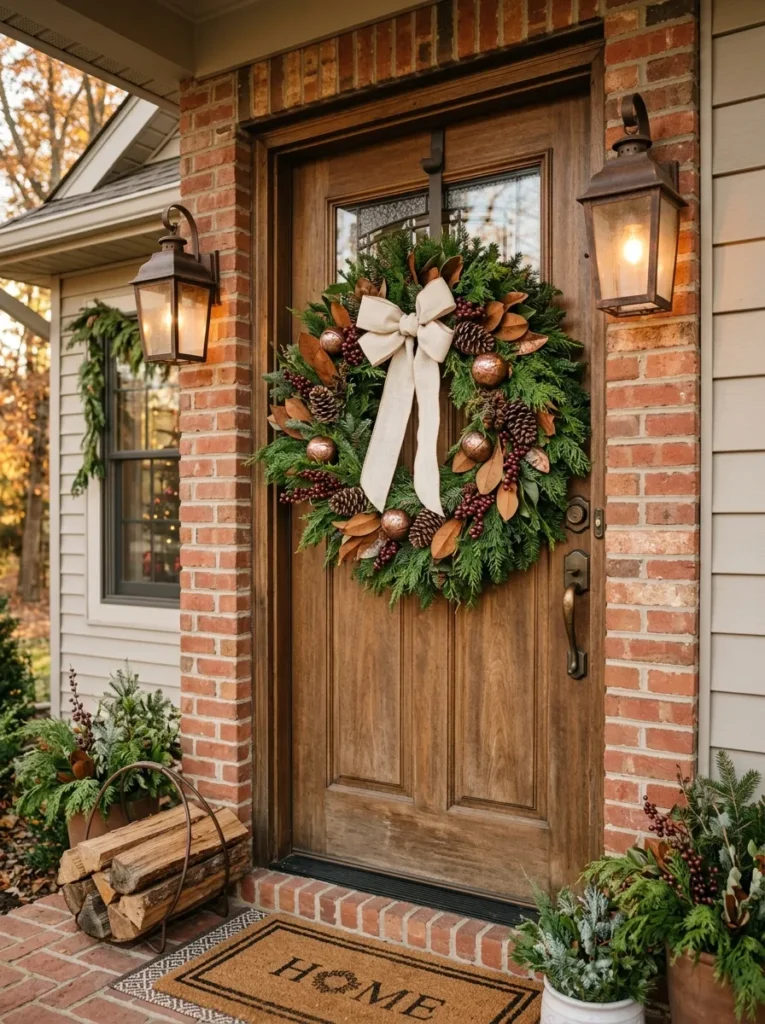
- Copper details bring a warm metallic glow to deep green branches.
- Muted metallic finishes feel softer than bright gold or silver.
- Copper works especially well with brown wood and warm neutral exteriors.
- A few metallic leaves can add interest without overwhelming natural greenery.
Copper accents offer a warm alternative to traditional gold and silver while pairing beautifully with rich evergreen foliage. Start with a natural greenery base and add a few copper leaves, antique-finish ornaments, or small metallic berries. Combine them with pinecones and burgundy accents to create a warm, earthy palette. The muted metallic finish catches light without looking overly shiny, making it especially suitable for wooden, brown, cream, or warm gray doors. Keep copper details concentrated in a few areas so they provide highlights while the natural greenery remains the foundation of the arrangement.
For the most balanced result, place larger copper pieces slightly deeper within the branches and use smaller accents toward the outer edge. This creates depth while preventing the metallic elements from dominating the wreath. A cream ribbon can soften the warmer tones, while burgundy berries provide a subtle color connection to traditional holiday decorating. Coordinate the copper with bronze or antique-brass porch hardware when possible. Warm outdoor lighting will emphasize the metallic finish beautifully after dark, giving the entrance a cozy glow while maintaining an earthy, sophisticated appearance throughout the day.
Minimal Greenery Ring
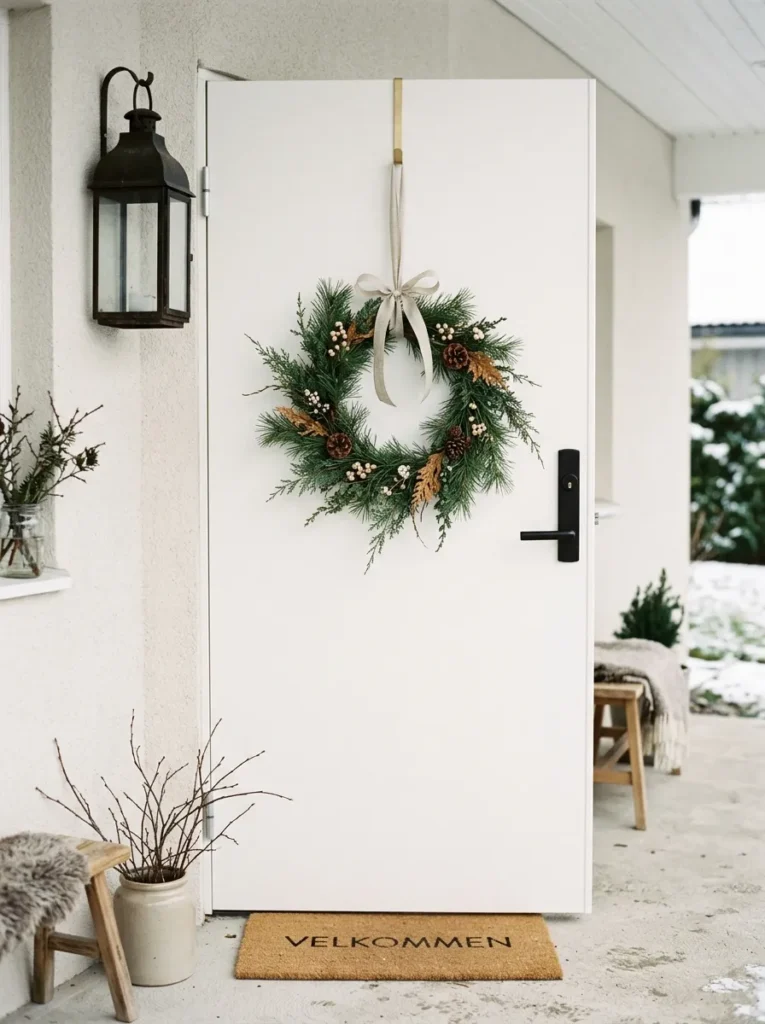
- Simple greenery creates a clean look without overwhelming a small entrance.
- A few pinecones provide natural texture while keeping the design understated.
- Thin ribbon can add color without covering the foliage.
- This style suits modern, Scandinavian, and minimalist exteriors.
Sometimes the simplest arrangement creates the strongest entrance, especially when the doorway already has attractive architectural details. Use a lightly layered evergreen ring with visible spaces between branches, then add only a few pinecones, cream berries, or cedar sprigs. A narrow linen ribbon can introduce a small amount of seasonal color without covering the natural foliage. This restrained approach works beautifully with white, black, gray, pale wood, and natural stone finishes. The open shape also keeps a small porch from feeling crowded while still giving the entrance a clear holiday focal point.
To make a minimal design look intentional, focus on branch quality and spacing rather than adding more decorations. Choose greenery with different needle textures so the wreath has subtle dimension even without ornaments. Secure a few accents at irregular intervals, then view the arrangement from several feet away before making final adjustments. If your front door has modern hardware, repeat its finish with one understated ornament or ribbon detail. The result is easy to maintain, photographs cleanly, and transitions naturally between daytime and evening lighting. It proves that seasonal decorating does not always require a heavily embellished display.
Plaid And Pinecones

- Plaid ribbon adds pattern and warmth to natural evergreen branches.
- Pinecones reinforce the rustic character without requiring many ornaments.
- Red and cream plaid works beautifully with wood and neutral exteriors.
- A simple arrangement keeps the pattern from becoming visually overwhelming.
Plaid and pinecones create an easygoing holiday combination that feels especially natural on a farmhouse or cottage entrance. Start with a dense evergreen base, then add natural pinecones throughout the branches and finish with a red-and-cream plaid ribbon. The pattern introduces warmth and personality, while the pinecones add earthy texture. Keep the berries or ornaments minimal so the plaid remains easy to see. This combination looks particularly attractive against whitewashed wood, natural timber, brick, and stone because the materials reinforce the comfortable rustic character without making the doorway feel overly decorated.
Use wired plaid ribbon so the loops remain full and structured after the wreath is hung. Position the bow slightly off center if you want a relaxed handmade appearance, or place it at the bottom for a more traditional arrangement. Pinecones should be spread at different depths so they do not form a single heavy band around the wreath. A woven doormat and simple black lanterns can complete the entrance without competing with the main decoration. I’ve noticed that repeating one plaid color in a nearby porch accessory helps connect the wreath to the rest of the space.
Silver Winter Glow

- Silver accents create a cool, elegant contrast against deep evergreen foliage.
- White berries and frosted branches reinforce the winter-inspired palette.
- Soft lighting keeps the cooler colors welcoming after sunset.
- A dark door provides the strongest background for reflective details.
A cool silver palette can give the entrance a polished winter appearance while keeping the greenery rich and natural. Combine deep evergreen branches with frosted berries, pale eucalyptus, white pinecones, and a handful of silver ornaments. Choose mostly matte or softly reflective finishes so the arrangement catches light without looking overly shiny. Dark charcoal, navy, and black doors provide strong contrast and allow the pale accents to stand out clearly. The mixture of cool foliage and warm lighting creates a balanced appearance that feels seasonal without relying heavily on traditional red decorations.
For a layered look, place frosted foliage toward the outer edge and tuck silver ornaments deeper into the greenery. This creates depth while keeping the circular shape visible. Avoid using too many different metallic finishes because the restrained palette is what gives this design its polished appearance. Warm-white porch lights can soften the cooler colors after sunset, while daylight highlights the frosted textures. A gray stone step, black lantern, or neutral doormat can reinforce the palette. The finished entrance feels bright, refined, and winter-ready while remaining practical for a range of home styles.
Conclusion
A beautiful holiday entrance doesn’t require complicated decorating or an overflowing collection of accessories. The right greenery, ribbon, texture, or seasonal accent can create a welcoming transformation with surprisingly little effort. These Christmas wreaths offer inspiration for everything from classic and rustic homes to modern and minimalist spaces. Save this post on Pinterest so you can revisit your favorite ideas when decorating your doorway. Then choose one design and make it your own with colors and materials that suit your space. I’ve seen how small changes like these can completely transform an entrance. Share this article with someone who loves creating a festive home, too!