23 Thanksgiving Decor Ideas for a Cozy Celebration
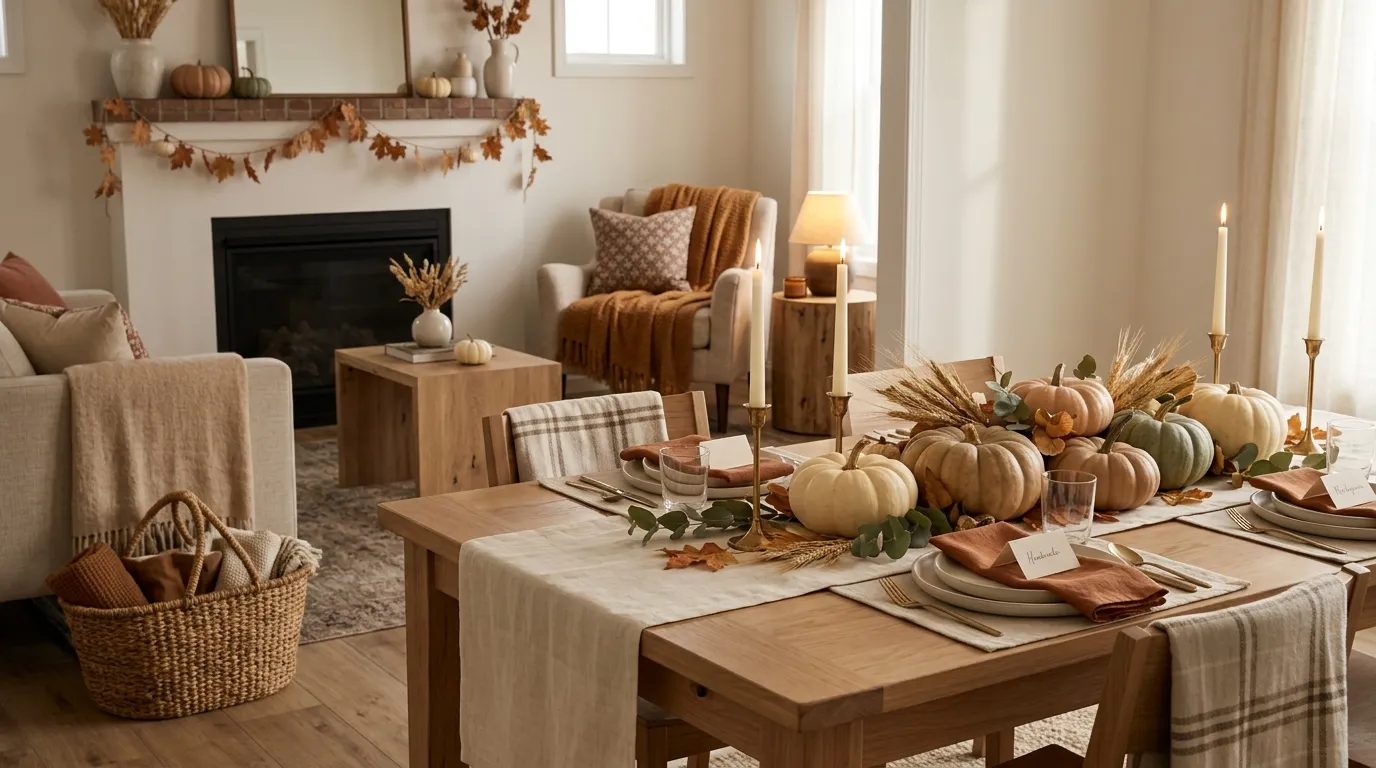
Ready to make your home feel extra warm and inviting this Thanksgiving? These thanksgiving decor ideas can turn ordinary rooms into cozy spaces that feel special for family and guests.
From a welcoming front door and layered dining table to glowing candles, pumpkins, natural textures, and charming seasonal accents, these ideas offer simple ways to refresh your home without making decorating feel overwhelming. Whether you love rustic farmhouse style, soft neutral colors, or classic autumn touches, you’ll find inspiration that can easily fit your space and budget. In my experience, small changes often create the biggest visual difference, especially when you repeat a few colors and natural textures throughout the home. Explore these ideas, choose the ones that suit your style, and create a Thanksgiving setting that feels beautiful, comfortable, and genuinely welcoming.
Pumpkin Centerpiece Display
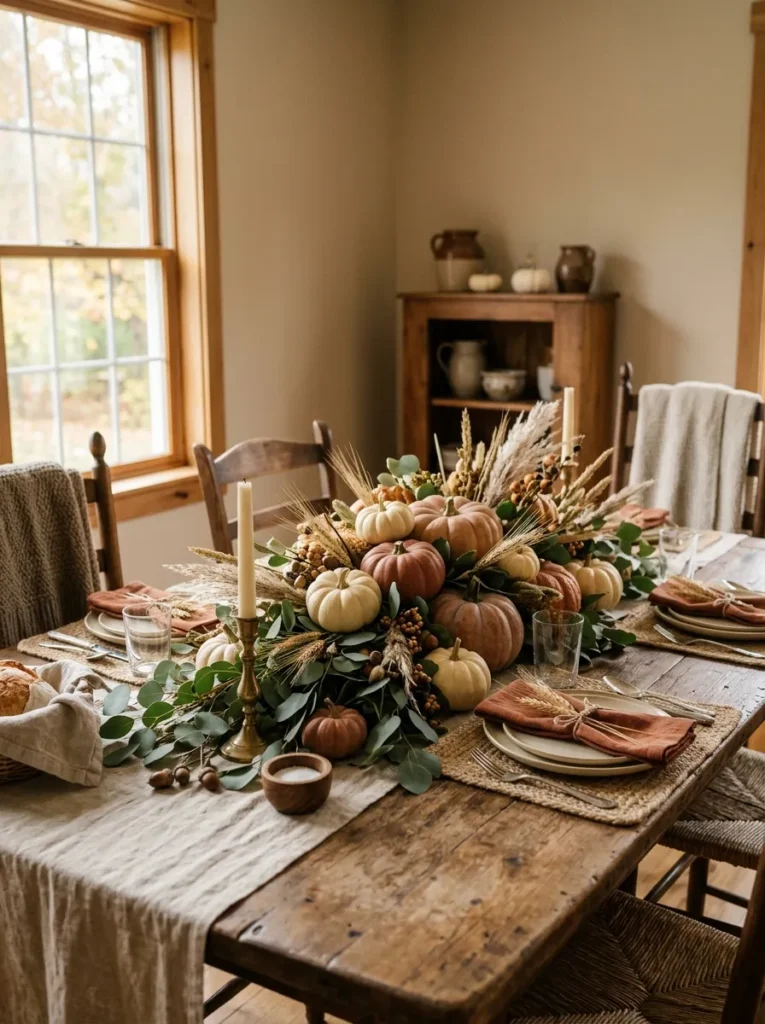
- Mix pumpkins in different sizes for a layered, collected look.
- Use cream, terracotta, muted orange, and soft brown for a warm palette.
- Add greenery or dried stems to keep the arrangement from feeling too heavy.
- Place the display where it can be admired without blocking conversation.
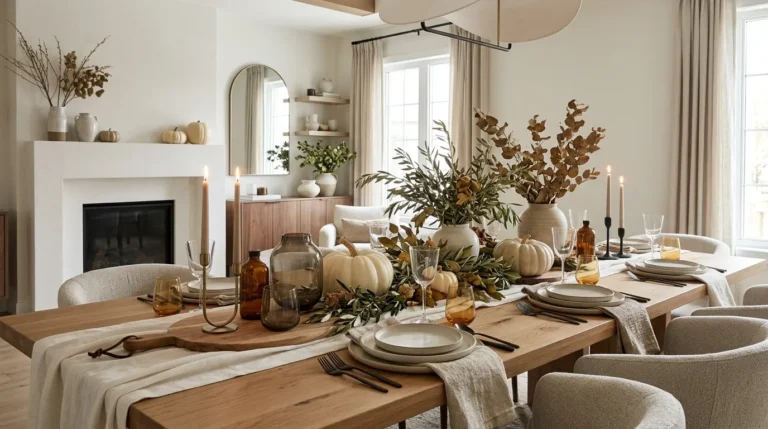
A beautiful pumpkin arrangement can instantly make an ordinary dining table feel ready for Thanksgiving. Choose several pumpkins in different shapes and sizes, then place the largest pieces toward the center and smaller ones around them. Cream and muted orange varieties create a softer look than using bright orange alone. Add a few eucalyptus branches, dried wheat stems, or small leafy sprigs for texture. In my experience, leaving some open table space around the arrangement makes the centerpiece feel intentional rather than crowded. This simple balance keeps plates, serving dishes, and conversation comfortably within reach.
For a more polished display, place the pumpkins on a narrow linen runner or shallow wooden tray. This creates a visual foundation while making the arrangement easier to move when dinner begins. You can also tuck in small candles for a gentle evening glow, keeping flames safely separated from dried materials. This is one of the easiest Thanksgiving decor ideas to adapt because the colors work with both modern and traditional interiors. On a dark wood table, lighter pumpkins stand out beautifully, while a pale table benefits from warmer terracotta and caramel tones.
Layered Fall Mantel
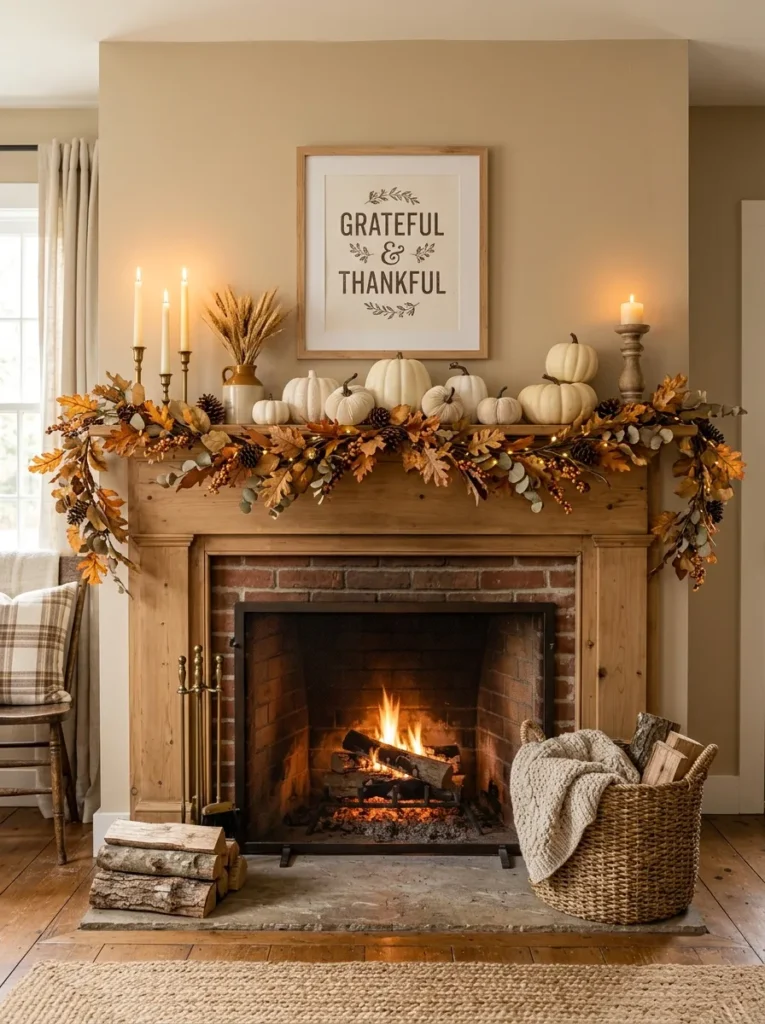
- Combine pumpkins, garlands, candles, and framed accents at different heights.
- Keep the center slightly taller to create a balanced focal point.
- Mix natural textures with simple decorative pieces for depth.
- Repeat two or three colors from the room to create visual harmony.
A layered mantel gives the room an instant seasonal focal point without requiring a complete decorating makeover. Start with a simple garland of eucalyptus, dried leaves, or autumn branches, then add pumpkins and candleholders at different heights. A framed print or small mirror can anchor the arrangement above the mantel. The trick is to vary height while keeping the color palette controlled. I’ve noticed that repeating colors already found in nearby furniture or textiles makes seasonal decorations look much more integrated. The finished display feels collected, warm, and polished instead of looking like separate decorations placed together.
Think about the mantel from across the room before adding another piece. The strongest arrangements usually have breathing room, with taller accents toward the center or slightly off-center and smaller objects filling the gaps. Add a woven basket, ceramic vessel, or stack of neutral books near the fireplace to extend the texture downward. Soft evening lamps or fireplace light can make the arrangement especially inviting after sunset. This approach works well in both spacious living rooms and smaller homes because you can adjust the number of objects without losing the layered autumn character.
Autumn Entryway Styling
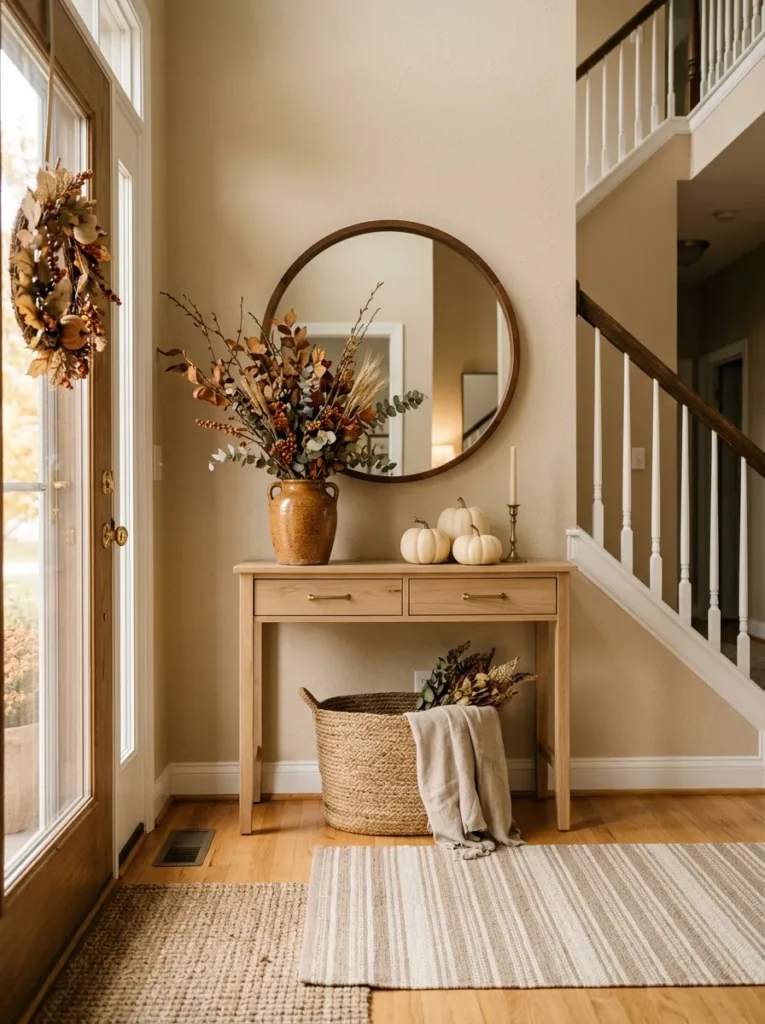
- Place a seasonal wreath or branch arrangement near the entrance.
- Add a small console display with pumpkins, candles, or ceramic pieces.
- Use a runner or woven basket to introduce natural texture.
- Keep the walkway open so the decoration remains practical.
Your entryway sets the seasonal tone before guests even reach the dining room, so a few thoughtful details can make a noticeable difference. Place a simple autumn wreath on the door or hang dried branches in a nearby vase for an immediate seasonal touch. On a narrow console, arrange two or three small pumpkins beside a ceramic vessel or candle. Add a woven basket underneath for useful storage. The goal is to create warmth without narrowing the walkway. A restrained arrangement often looks more sophisticated and welcoming than covering every available surface with decorations.
For smaller entryways, focus on vertical space rather than adding more furniture. A branch arrangement in a tall vase can draw the eye upward while leaving the console surface relatively clear. You can repeat the dining room palette with cream, rust, tan, and muted green accents to create a connected feeling throughout the home. A narrow runner adds softness underfoot and helps define the entrance visually. These simple Thanksgiving decor ideas can make an everyday foyer feel seasonal while preserving its practical purpose for coats, shoes, bags, and arriving guests.
Candlelit Table Glow
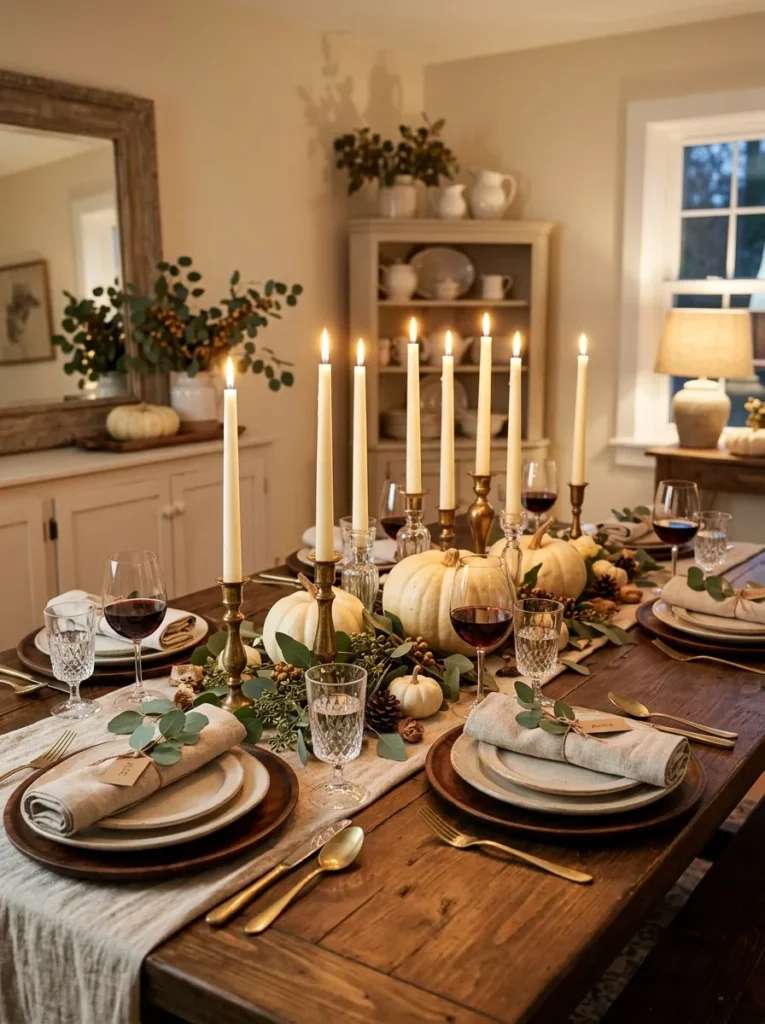
- Use candles in varied heights to create a soft, layered glow.
- Choose brass, glass, ceramic, or wooden holders for added texture.
- Keep candle colors within warm neutrals for a cohesive table.
- Leave enough space between flames, dishes, and greenery for safe dining.
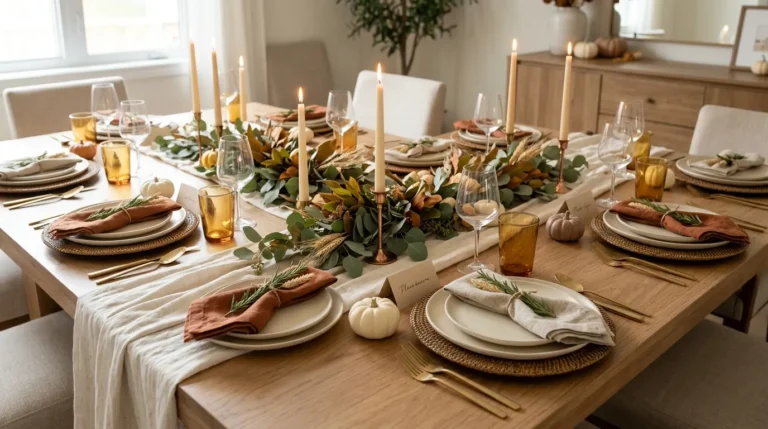
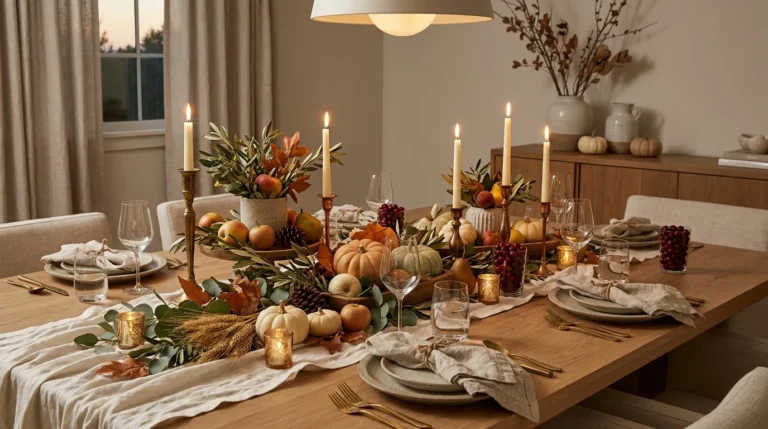
Few details create a warmer dinner atmosphere as quickly as candlelight. Arrange ivory or cream taper candles along the center of the table, mixing tall holders with shorter votives for gentle visual variation. Brass adds a classic touch, while clear glass keeps the arrangement feeling lighter. Place greenery or small pumpkins between the holders to connect the pieces visually. In my experience, candlelight works especially well with natural linen because the fabric catches the warm glow without becoming overly formal. Keep the centerpiece low enough that guests can comfortably see across the table during dinner.
You can also use flameless candles if children, pets, or busy serving areas make open flames inconvenient. Choose warm-white bulbs rather than cool white lighting so the table retains a welcoming autumn feel. Spread the lights evenly instead of clustering them in one area, which helps the entire table appear balanced. This simple adjustment can transform the dining room after sunset, especially when overhead lights are dimmed. Combined with neutral dishes, wooden serving boards, and seasonal foliage, the gentle illumination creates an inviting setting that feels special without requiring elaborate decorating.
Harvest Basket Display
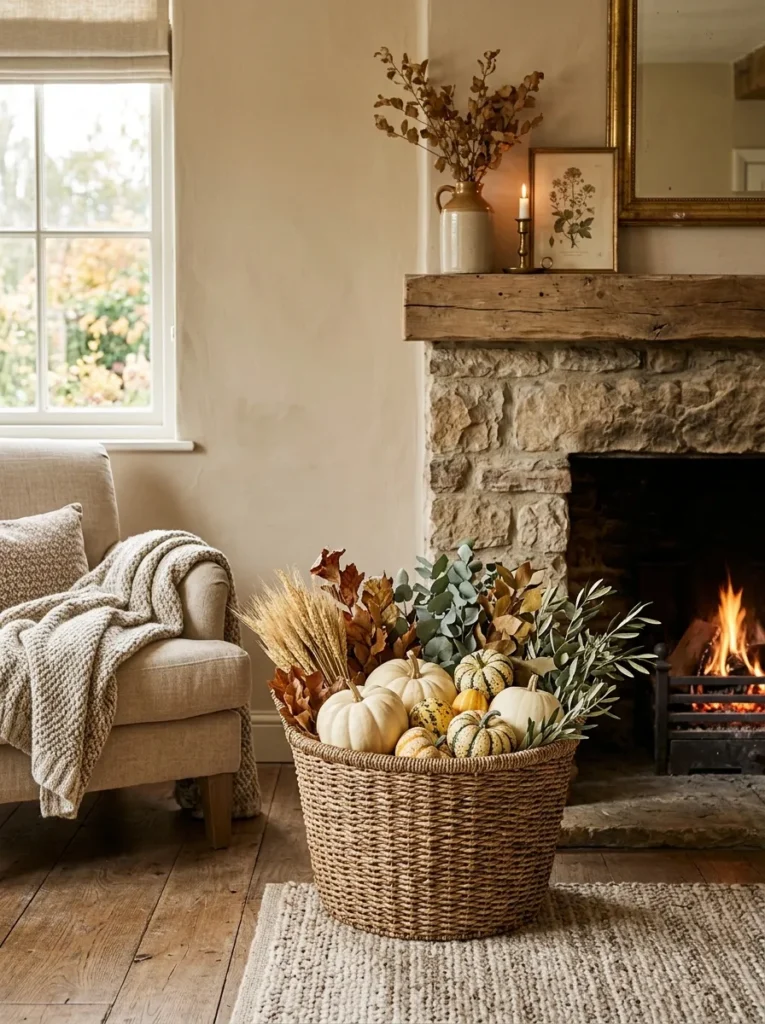
- Fill a sturdy basket with pumpkins, gourds, apples, and dried foliage.
- Choose woven materials to bring natural texture into the room.
- Position the basket beside a fireplace, console, or dining area.
- Keep the contents loosely arranged for an effortless seasonal appearance.
A harvest basket brings seasonal texture into a room without making the decoration feel overly formal. Choose a large woven basket and fill it with pumpkins, gourds, dried wheat, and leafy branches in complementary autumn shades. Place taller stems toward the back and smaller produce toward the front so every element remains visible. A mixture of cream, tan, muted orange, and soft green creates a relaxed palette that works beautifully with wood furniture. I’ve noticed that natural baskets are especially useful because they can be reused throughout the year for blankets, pillows, or everyday storage.
Place the basket beside a fireplace, under a console table, or near an empty dining room corner where it can add height and texture. Avoid packing it too tightly; a little space between the branches and pumpkins helps the arrangement look more natural. If your room already has strong patterns, keep the basket contents simple and neutral. For a smaller space, use a low basket filled with mini pumpkins and dried leaves instead. The result feels seasonal and inviting while requiring very little effort or additional furniture.
Thankful Wall Arrangement
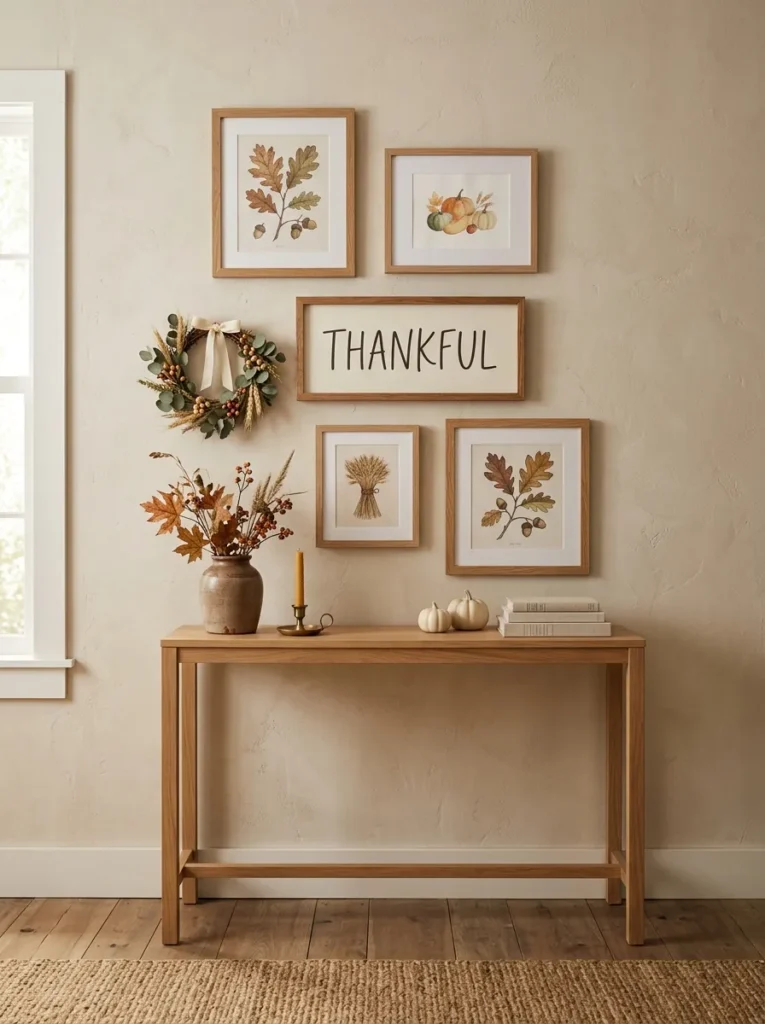
- Combine a simple thankful sign with framed seasonal artwork.
- Use matching frames to make different pieces feel connected.
- Add small wreaths, leaves, or botanical prints for texture.
- Keep the arrangement visually balanced rather than filling every wall space.
A thoughtfully arranged wall can bring Thanksgiving character into a room without taking up valuable floor or table space. Start with one meaningful focal piece, such as a simple thankful sign, then surround it with botanical prints, small wreaths, or framed autumn artwork. Choose frames in similar wood or neutral finishes so the collection feels intentional. Keep the colors soft with cream, brown, muted green, and touches of rust. This approach works particularly well above a console, sideboard, or dining bench because it creates a seasonal focal point while leaving the furniture surface available for practical everyday use.
Before hanging anything, lay the pieces on the floor and experiment with spacing. This makes it easier to create a balanced arrangement without unnecessary holes in the wall. Keep the largest piece slightly above or near the center, then use smaller artwork to fill the surrounding space. You can also add a small vase of dried branches on the furniture below to connect the wall with the rest of the room. These Thanksgiving decor ideas work especially well for renters or anyone who prefers seasonal changes that can be removed quickly after the holiday.
Plaid Chair Accents

- Drape plaid blankets or scarves over dining chairs for instant seasonal texture.
- Choose warm rust, cream, brown, or muted green patterns.
- Keep the fabric loosely folded for a relaxed, lived-in appearance.
- Repeat one plaid color elsewhere to make the room feel coordinated.
Plaid fabric can make a dining space feel ready for the holiday with almost no permanent changes. Drape a folded plaid throw over the back of each dining chair, or use the fabric on just the host and end chairs for a more restrained look. Rust, cream, brown, and muted green patterns pair naturally with autumn materials such as wood, linen, and dried foliage. I’ve seen this small change make plain dining chairs feel much more seasonal. It also adds softness to a room filled with hard surfaces, creating a comfortable balance around the table.
For a coordinated arrangement, choose a plaid pattern that shares at least one color with your centerpiece or table linens. You do not need matching fabric on every chair; alternating textiles can create a more relaxed appearance. If the dining area is small, use just two throws to avoid visual clutter. Fold the blankets neatly enough to look intentional while keeping their texture visible. After dinner, guests can easily use them if the room becomes cool. This makes the decoration both attractive and functional, which is especially useful during long Thanksgiving meals.
Dried Wheat Bundles
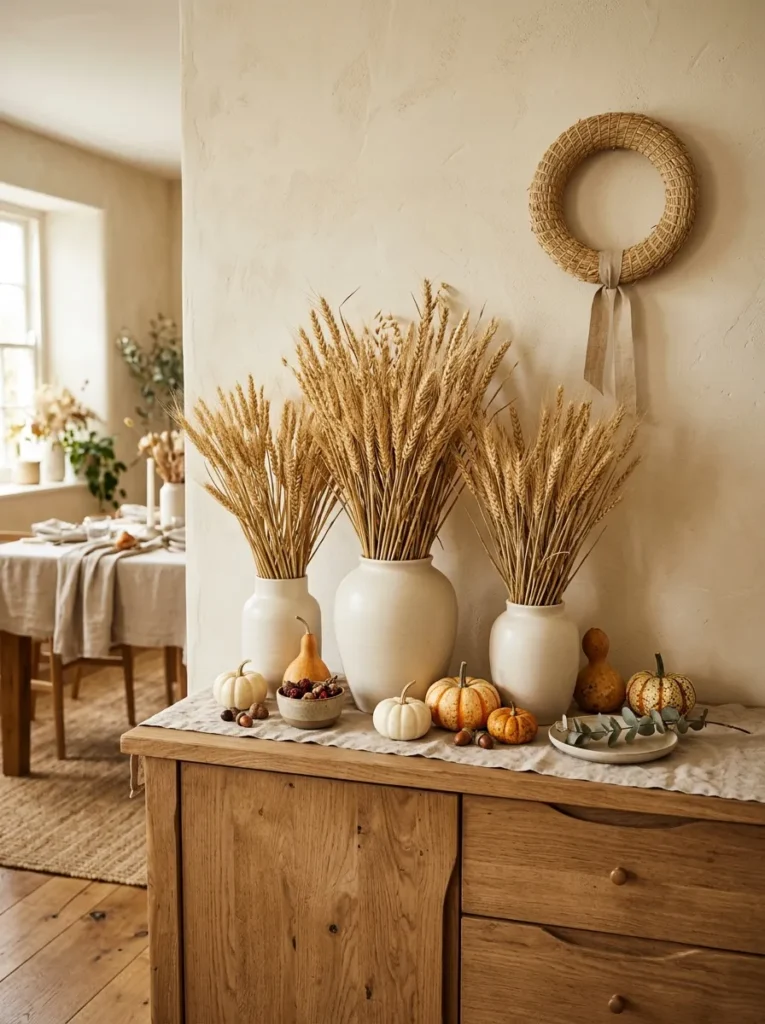
- Place dried wheat in simple ceramic, glass, or stoneware vessels.
- Group several bundles together for a stronger vertical focal point.
- Use natural tan and golden tones to complement autumn colors.
- Keep the arrangement airy so individual stems remain visible.
Dried wheat brings height, movement, and natural color to Thanksgiving decorating without overwhelming a room. Place several bundles in a tall ceramic vase, glass bottle, or stoneware vessel, allowing the stems to fan outward naturally. Golden wheat pairs beautifully with cream pumpkins, warm wood, and muted rust accents. Instead of arranging everything tightly, let some stems extend higher than others for an airy silhouette. In my experience, this type of arrangement works especially well when a room already has several decorative objects because the simple texture adds interest without introducing another complicated pattern.
Try placing wheat bundles on a dining sideboard, entryway console, fireplace mantel, or kitchen island. For a larger surface, use two vessels at different heights rather than one oversized arrangement. You can also tie the stems loosely with natural twine for a more rustic finish. Because dried wheat lasts well beyond the holiday, it can remain in the room throughout the autumn season. Pairing it with seasonal produce or greenery lets you refresh the display gradually without replacing the entire arrangement.
Rustic Wood Details
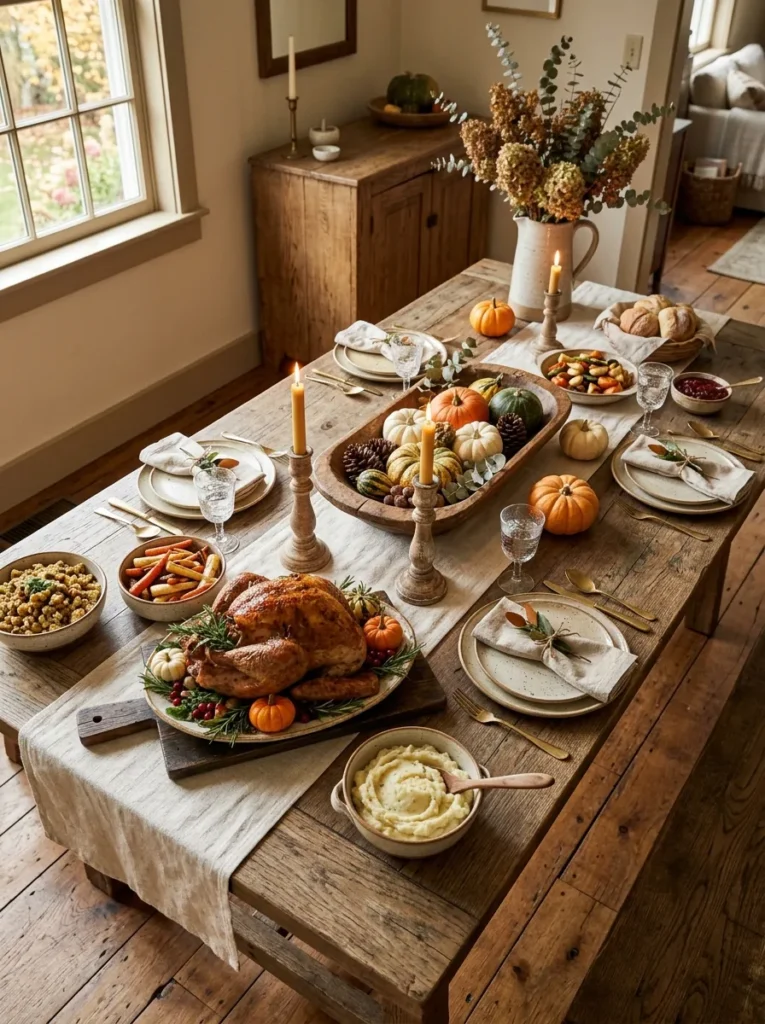
- Add wooden trays, boards, bowls, or candleholders to introduce natural warmth.
- Combine unfinished and lightly finished wood for subtle contrast.
- Use wood accents alongside linen and ceramic pieces for texture.
- Repeat the same wood tone in small areas for visual continuity.
Natural wood instantly gives seasonal decorating a grounded, welcoming quality. Add a reclaimed serving board, wooden bowl, carved candleholders, or shallow tray to your dining table or sideboard. Visible grain and slightly imperfect surfaces bring character that polished materials sometimes lack. Pair the wood with cream linen, handmade ceramics, pumpkins, and dried foliage for a balanced autumn palette. The combination feels warm without relying on excessive orange or themed decorations. A few carefully chosen wooden pieces can also make inexpensive seasonal accents look more cohesive and intentional.
Use wooden trays to group smaller decorations together, which helps prevent a table or console from appearing scattered. A large board can also double as a serving surface during dinner, making the decoration useful rather than purely ornamental. If your furniture is already dark, choose lighter wood accents to create contrast. For pale interiors, medium or warm-toned wood adds depth. I’ve noticed that repeating a similar wood tone in two or three areas of a room helps seasonal decorations feel connected while keeping the overall design relaxed and natural.
Cozy Fireplace Mantel
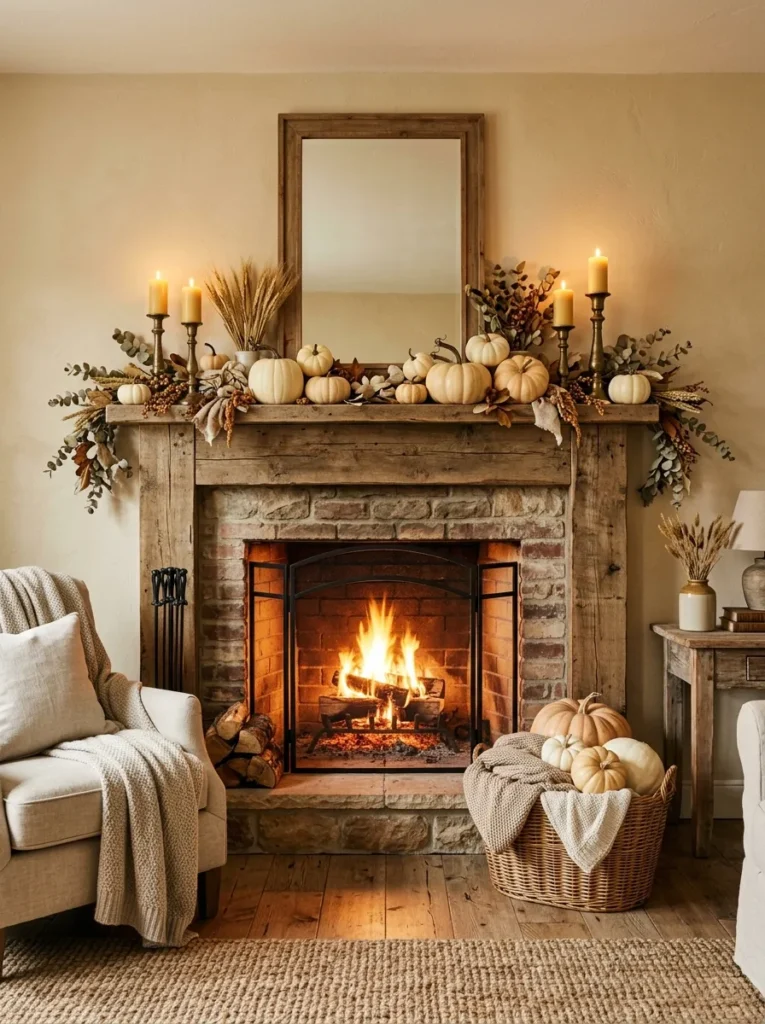
- Layer pumpkins, foliage, and candleholders across the mantel.
- Use warm neutrals to complement the natural glow of the fireplace.
- Add a simple mirror or artwork as a vertical anchor.
- Keep decorations away from heat sources and maintain safe clearances.
A fireplace naturally becomes one of the room’s strongest focal points, making it an ideal place for seasonal decorating. Begin with a simple garland or a few leafy branches, then layer pumpkins, ceramic vessels, and candleholders across the mantel. Use cream, tan, rust, and muted green to create warmth without overwhelming the room. A mirror or neutral artwork above the mantel can provide height and balance. The arrangement should feel full but not crowded, allowing the fireplace itself to remain part of the visual composition instead of disappearing behind decorations.
For a more relaxed display, vary the height of your accessories and leave small areas of open mantel visible. Place larger pumpkins or vessels near the center, then taper the pieces toward the edges. A woven basket filled with blankets beside the fireplace can extend the cozy feeling downward. Always keep decorative materials safely separated from heat sources and follow your fireplace manufacturer’s clearance recommendations. This setup works beautifully in both traditional and modern homes because the natural materials add seasonal character without requiring a heavily themed decorating style.
Autumn Window Sill
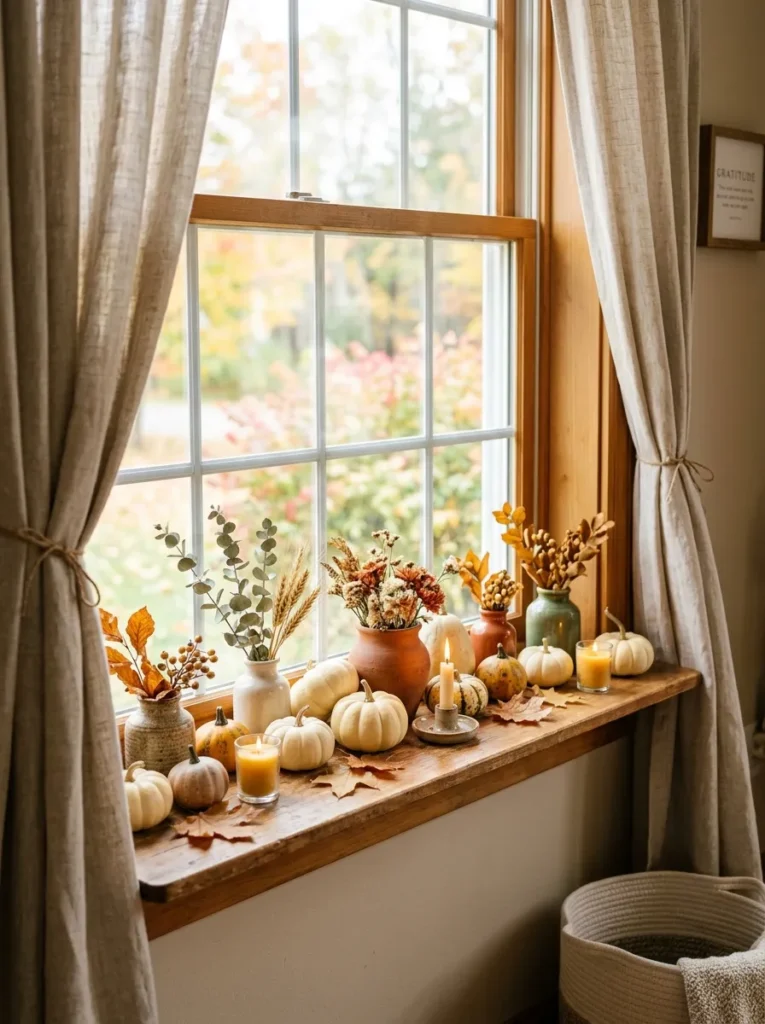
- Arrange small pumpkins and miniature gourds along a wide windowsill.
- Add tiny ceramic houses, candles, or natural branches for variety.
- Let daylight highlight the textures and warm seasonal colors.
- Keep the arrangement low enough to preserve the view outdoors.
A window sill can become a charming seasonal display when you want decoration without adding another piece of furniture. Arrange miniature pumpkins, gourds, small ceramic vessels, and a few dried leaves along the sill, keeping the composition low enough to preserve the outdoor view. Natural daylight will emphasize the subtle textures and colors throughout the day. Cream pumpkins work especially well in bright spaces because they reflect light softly rather than creating a heavy visual block. A few muted orange pieces can then add contrast without making the arrangement feel overly traditional.
Think of the window as part of the decoration rather than simply a background. Choose accessories that complement the room’s existing curtains, flooring, and furniture, then leave enough space between objects for the arrangement to breathe. If your sill is narrow, use only three or four small pieces instead of forcing a long display. Battery-operated candles can provide a warm evening glow without creating an open-flame hazard near curtains. This simple approach gives kitchens, dining rooms, and living spaces a subtle Thanksgiving touch while keeping their everyday function intact.
Layered Dining Linens
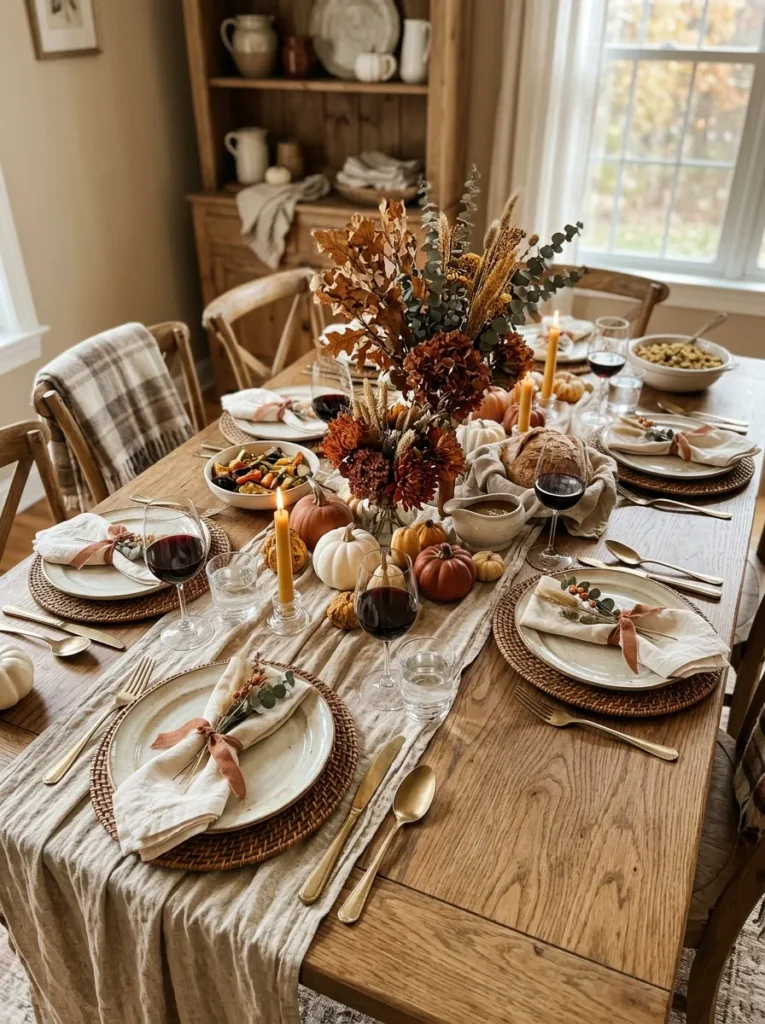
- Combine a runner, cloth napkins, and textured placemats for depth.
- Choose linen, cotton, or woven fabrics in complementary autumn tones.
- Use subtle patterns to add interest without competing with the centerpiece.
- Fold napkins simply so the table remains relaxed and usable.
Layered linens can completely change the appearance of a dining table while keeping the decorating process simple. Start with a neutral runner, then add woven placemats and cloth napkins in complementary shades such as cream, rust, taupe, or muted green. The combination creates depth without requiring an elaborate centerpiece. Natural linen and cotton also soften the harder surfaces of plates, glassware, and wooden furniture. In my experience, using different textures in similar colors gives a table a more thoughtfully designed appearance than using many unrelated patterns or colors.
Keep the layering practical by choosing fabrics that allow plates and serving dishes to sit securely. A runner can remain visible between place settings, while placemats define individual spaces without making the table feel formal. Fold napkins simply or place them beside each plate with a small dried leaf or twig. If the centerpiece already contains several colors, keep the textiles neutral. If the centerpiece is restrained, a subtle plaid or woven pattern can introduce more visual interest while maintaining a cohesive seasonal setting.
Gourd Bowl Arrangement

- Fill a wide ceramic or wooden bowl with miniature gourds.
- Mix cream, green, tan, and muted orange for natural contrast.
- Add a few dried leaves without overcrowding the bowl.
- Choose a shallow vessel so every piece remains easy to see.
A bowl filled with miniature gourds is an easy way to create a compact seasonal centerpiece without taking over the table. Choose a wide wooden, ceramic, or stoneware bowl and loosely fill it with gourds in different shapes and muted autumn colors. Cream, sage green, tan, and soft orange create more visual variety than using one shade. Add a few dried leaves around the edges for texture, but keep the arrangement open enough for each piece to remain visible. This simple display works especially well when you want seasonal character without a tall centerpiece.
Use a shallow bowl if your dining table is narrow or regularly used for family meals. A deeper vessel can hide smaller gourds and make the arrangement look heavier than intended. For a more polished finish, place the bowl on a linen runner and repeat one of its colors in the napkins or nearby ceramics. You can refresh the display throughout autumn by replacing a few pieces as needed. These small changes keep the arrangement looking natural and useful rather than overly styled, while making the table feel noticeably more festive.
Warm Textile Layers
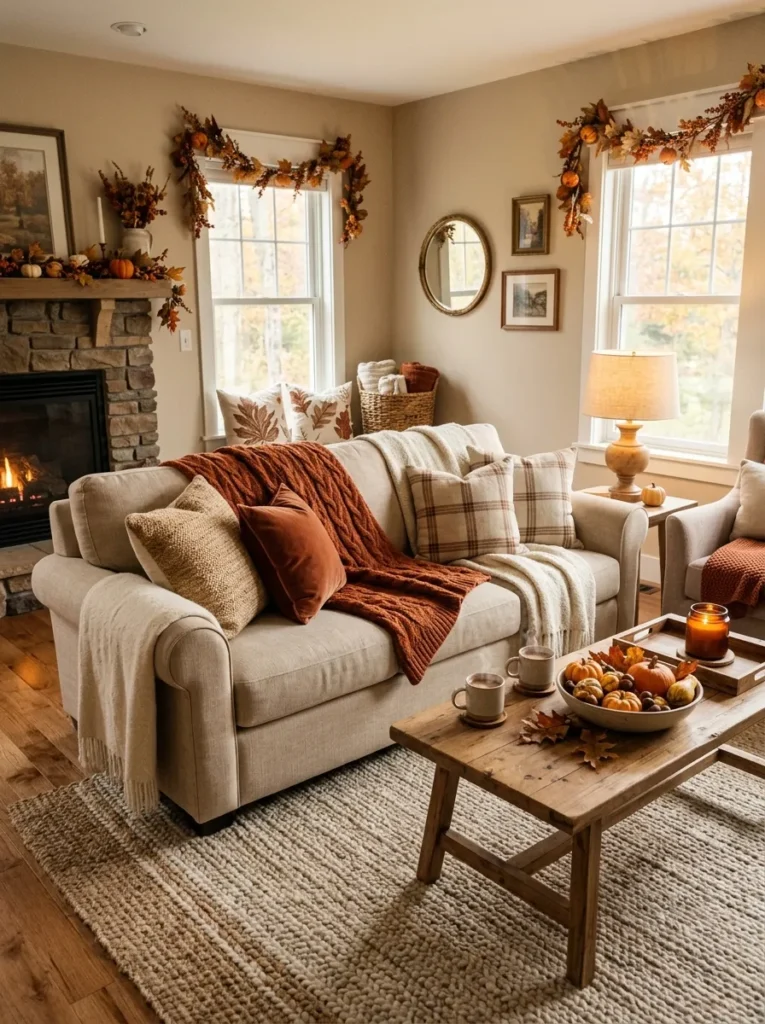
- Add knitted throws, woven pillows, or soft blankets to seating areas.
- Choose earthy shades that complement existing furniture and seasonal accents.
- Mix smooth linen with chunky or woven textures for contrast.
- Keep heavier textiles concentrated in areas meant for relaxing.
Soft textiles can make a room feel warmer for Thanksgiving without changing its permanent furniture or layout. Add a chunky knitted throw to an armchair, layer woven pillows on the sofa, or place a folded blanket in a basket near the fireplace. Earthy shades such as rust, caramel, cream, olive, and warm beige naturally complement autumn decorations. Combining different textures is more effective than simply adding more color. A smooth linen pillow beside a chunky knit throw creates contrast that makes the seating area look comfortable, layered, and ready for relaxed gatherings.
Focus heavier fabrics where people actually sit rather than covering every surface. A single textured blanket over the arm of a sofa can make a noticeable difference while keeping the room uncluttered. If your furniture is already patterned, choose solid textiles with tactile surfaces instead. For neutral furniture, subtle plaid or woven patterns can introduce seasonal personality. I’ve noticed that repeating one warm textile color near the dining or fireplace area helps connect separate parts of an open-plan room, creating a cohesive seasonal atmosphere without making every corner look identical.
Mini Pumpkin Garlands
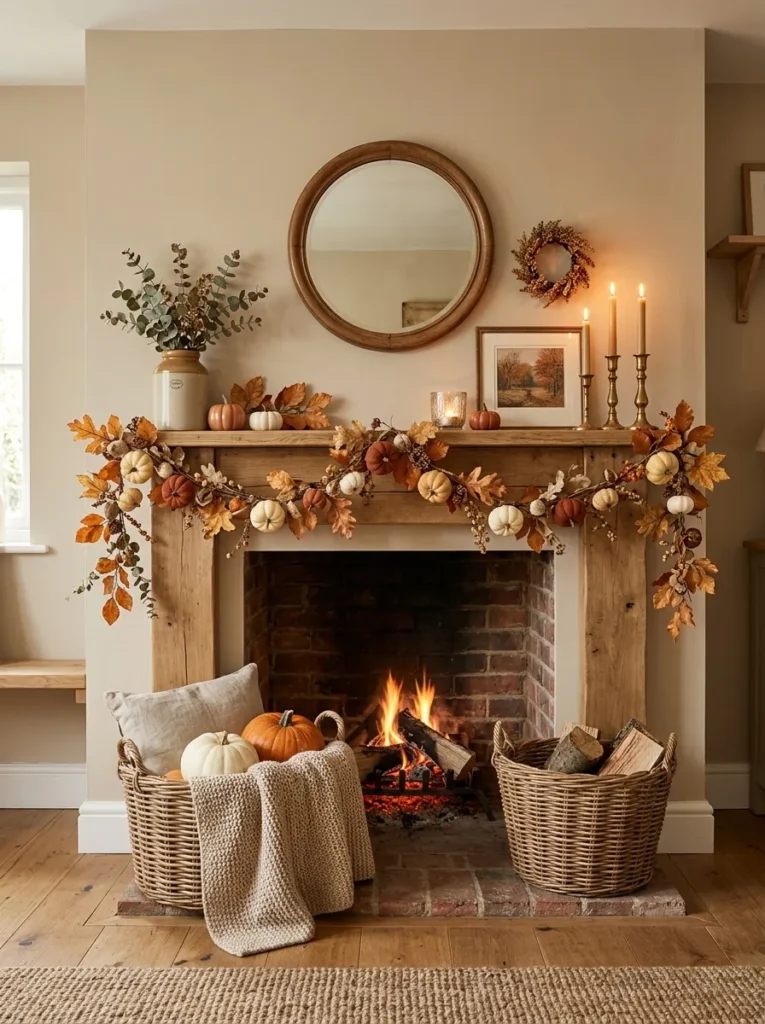
- String small pumpkins or pumpkin-shaped accents along a mantel or shelf.
- Use felt, fabric, wood, or lightweight artificial pieces for flexibility.
- Alternate pumpkins with leaves or small neutral accents.
- Keep the garland proportional to the furniture beneath it.
A miniature pumpkin garland adds seasonal detail without requiring a large collection of decorations. Drape a lightweight garland across a mantel, console shelf, dining sideboard, or open shelving, allowing the ends to fall slightly lower than the center. Use cream, rust, tan, and muted green accents to keep the arrangement connected to the rest of the room. Small fabric, wooden, or felt pumpkins can provide texture without adding much visual weight. The result feels festive while remaining simple enough to blend with everyday furniture and accessories.
Choose the length carefully so the garland does not overwhelm the furniture underneath it. On a narrow shelf, a shorter strand with plenty of open space usually looks cleaner than a densely packed arrangement. You can also add a few dried leaves or eucalyptus sprigs between the pumpkin shapes for additional texture. If your mantel already has candles or framed artwork, use a simpler garland so each element remains visible. This approach works particularly well for smaller homes because it introduces a recognizable Thanksgiving detail without consuming valuable surface or floor space.
Natural Leaf Garland

- Drape dried or faux leaves across mantels, shelves, or dining tables.
- Mix muted gold, brown, rust, and olive tones for natural variation.
- Add small berries or eucalyptus for extra texture.
- Choose flexible stems that can be shaped around existing decorations.
A natural leaf garland can bring the colors and textures of autumn into a room with very little effort. Drape it loosely across a mantel, sideboard, console, or dining table, then tuck in a few cream pumpkins or small ceramic pieces. Mixing muted gold, rust, brown, and olive leaves creates depth while keeping the palette grounded. Avoid making the garland perfectly symmetrical; slight variations in length and direction make the arrangement look more natural. This type of greenery works especially well when you want seasonal decoration that feels organic rather than heavily themed.
For a polished arrangement, let the garland follow the shape of the furniture instead of forcing it into a straight line. Add a few dried berries or eucalyptus stems where extra texture is needed, but leave portions of the surface visible. If using artificial foliage, choose pieces with varied leaf sizes and realistic muted tones. In my experience, natural-looking greenery becomes more convincing when it is mixed with real materials such as wood, linen, and stoneware. The combination creates a relaxed autumn atmosphere that works from early fall through Thanksgiving.
Thanksgiving Porch Pots
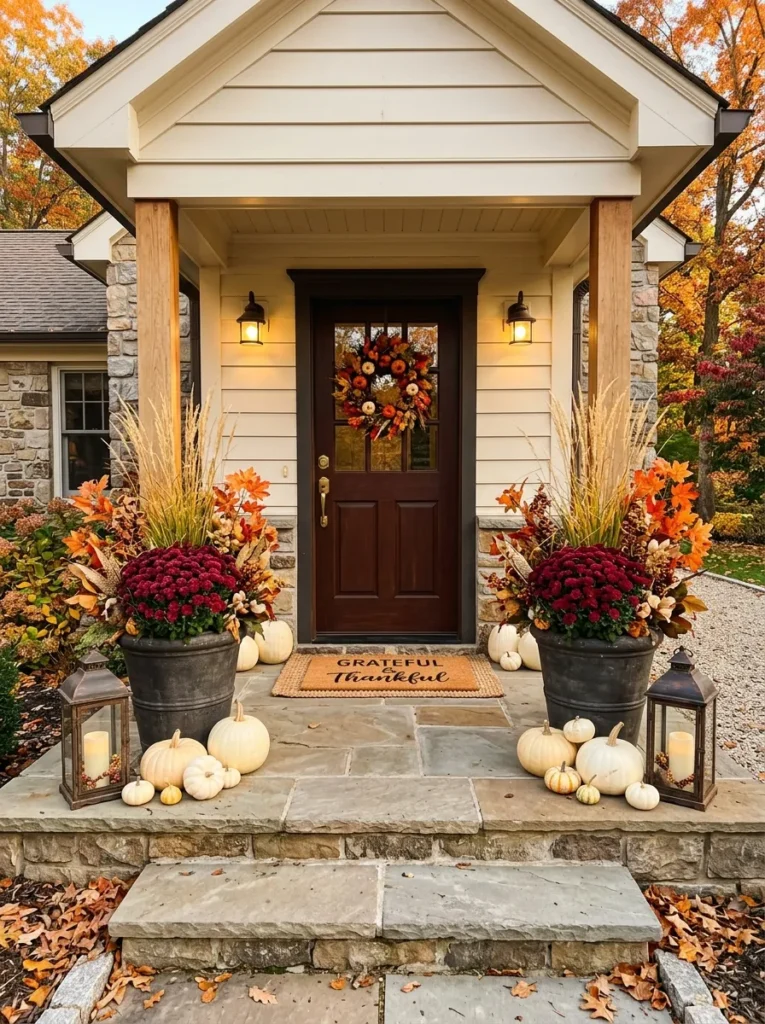
- Fill large planters with mums, ornamental grasses, and autumn foliage.
- Add small pumpkins around the base for extra seasonal texture.
- Choose planters that complement your home’s exterior materials.
- Keep the doorway clear for easy movement and welcoming guests.
Your front porch is the first place guests see, so a few seasonal planters can create an inviting entrance before they step inside. Fill large pots with mums, ornamental grasses, leafy branches, or other autumn-friendly plants suited to your climate. Place cream and muted orange pumpkins around the base to add seasonal texture. Choose containers that complement the exterior, such as natural terracotta, aged stone, or dark metal. Keeping the palette controlled helps the entrance look polished while still capturing the relaxed character associated with Thanksgiving decorating.
Symmetry works especially well around a centered front door, but it is not essential. One large planter can make a strong statement beside a narrow doorway, while two matching containers can frame wider entrances beautifully. Add a simple wreath or seasonal doormat if you want another layer without overcrowding the porch. Make sure pots and decorations do not obstruct steps or the main walkway. This outdoor arrangement also photographs well for Pinterest because the combination of foliage, pumpkins, and a welcoming doorway creates an instantly recognizable seasonal scene.
Copper Accent Pieces

- Introduce copper through trays, candleholders, vases, or small bowls.
- Pair metallic warmth with cream, brown, and muted green.
- Mix copper with wood and linen to prevent an overly polished appearance.
- Use a few small accents instead of decorating every surface.
Copper accents can add warmth and a subtle glow to Thanksgiving spaces without making the room feel overly formal. Try a copper tray on a sideboard, small candleholders on the dining table, or a copper bowl filled with miniature pumpkins. The metal looks especially inviting beside cream, brown, muted green, and terracotta shades. Rather than using copper everywhere, repeat it in two or three small areas so the finish feels intentional. Its warm surface catches candlelight and evening lamps beautifully, adding dimension when the room transitions from daylight to nighttime entertaining.
Balance the metallic finish with natural materials to keep the atmosphere relaxed. A copper tray beside a wooden bowl or a copper vase surrounded by linen textures creates an appealing contrast between polished and organic surfaces. If your room already includes brass or gold hardware, use copper sparingly so the finishes do not compete. Small pieces are usually enough to make an impact. I’ve noticed that metallic accents look most natural when they are treated as supporting details rather than the main theme of the seasonal display.
Thankful Dining Place Cards
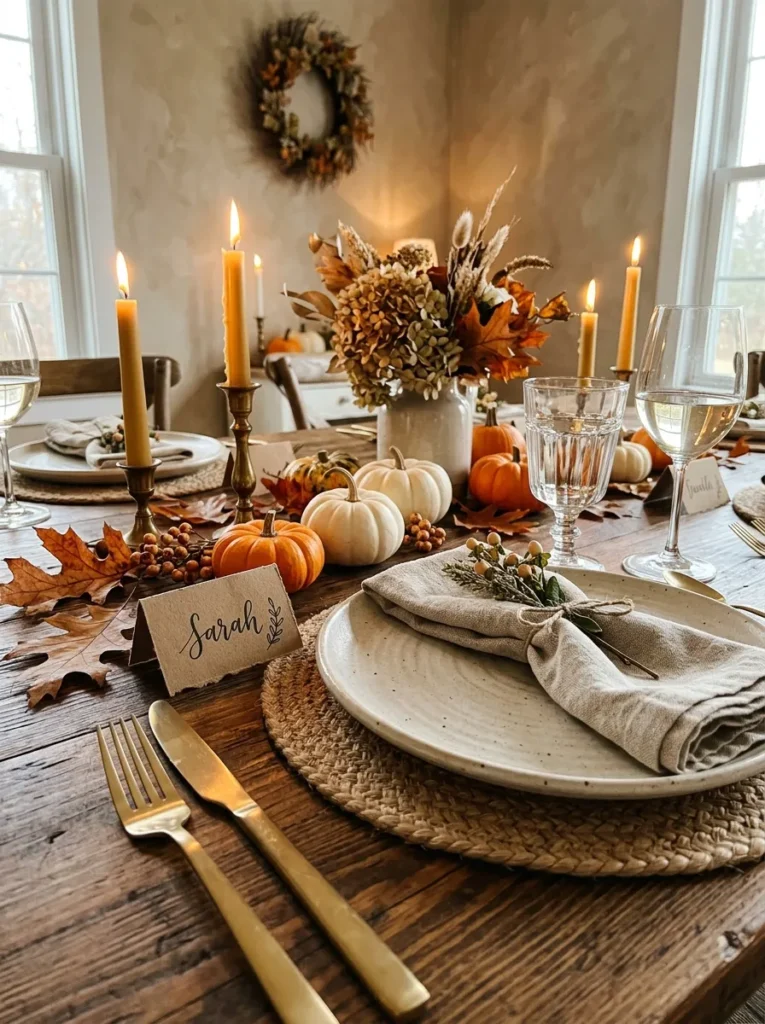
- Use simple cardstock, kraft paper, or small wooden tags.
- Write each guest’s name in an easy-to-read style.
- Add a tiny leaf, sprig, or ribbon for a finished touch.
- Place cards help define seating while adding personality to the table.
Personalized place cards can make a Thanksgiving table feel thoughtful without adding complicated decorations. Use kraft paper, cream cardstock, small wooden tags, or simple folded cards, then write each guest’s name clearly. Position one beside every plate and add a tiny dried leaf, sprig, or neutral ribbon if you want more detail. The cards create visual structure while also helping guests know where to sit. This small addition is especially useful for larger gatherings because it keeps the table organized while giving each setting a personal, welcoming touch.
Keep the design simple if your centerpiece already has strong seasonal details. A handwritten name on textured paper can look more charming than an elaborate printed card, especially when paired with natural linen and wooden accents. For a modern table, use clean typography and minimal decoration. For a rustic setting, kraft paper and twine fit naturally. These Thanksgiving decor ideas also give you an easy opportunity to coordinate colors across the table without repeating the same decoration at every place setting, keeping the overall arrangement balanced and comfortable.
Seasonal Staircase Decor
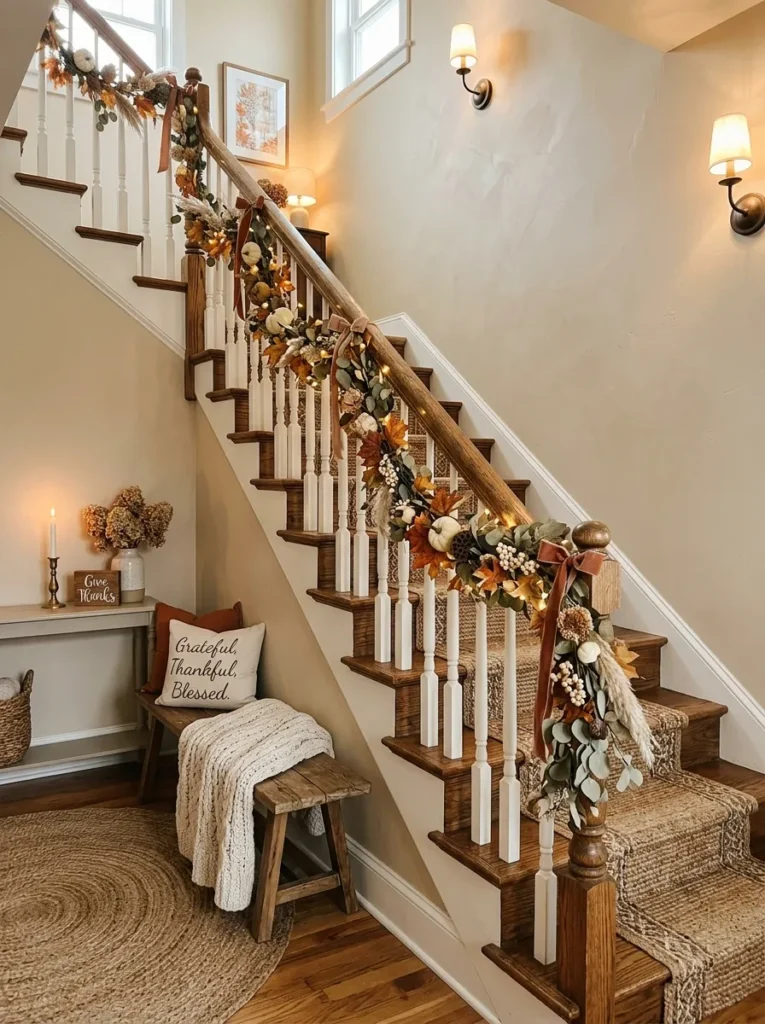
- Drape a lightweight garland along the staircase railing.
- Add small pumpkins or bows at selected intervals.
- Use muted autumn foliage to complement nearby rooms.
- Secure every decorative element firmly and keep steps unobstructed.
A staircase offers valuable vertical space for seasonal decorating, especially in homes where tables and shelves are already full. Drape a lightweight autumn garland along the railing, allowing the foliage to follow the natural line of the staircase. Add a few small pumpkins, muted ribbons, or dried leaves at selected points rather than covering every section. This creates movement and draws the eye upward. Choose colors that connect with nearby rooms so the decoration feels like part of the home rather than an isolated seasonal display.
Safety should guide the arrangement from the beginning. Secure garlands firmly, keep stair treads completely clear, and avoid placing loose pumpkins or objects where they could become trip hazards. If the railing is narrow, use a slim foliage strand rather than a bulky arrangement. Soft warm lighting nearby can emphasize the textures after sunset without requiring extra decorations on the stairs. In my experience, a restrained staircase display often looks more elegant because the architectural lines remain visible while the seasonal foliage adds just enough visual interest.
Cozy Reading Nook

- Add a textured throw and autumn-toned pillow to an existing chair.
- Place a small wooden table nearby for candles or seasonal accents.
- Use warm lighting to create a softer evening atmosphere.
- Keep the area functional for reading, relaxing, or quiet conversation.
A small reading corner can become one of the coziest seasonal areas in the home with just a few thoughtful changes. Start with an existing armchair, then add a rust or caramel throw and one textured pillow in cream, olive, or warm brown. Place a small wooden side table beside the chair for a mug, book, candle, or miniature pumpkin. A warm floor or table lamp completes the setup by creating softer illumination. The goal is not to build a new seating area but to make an existing corner feel more inviting.
Keep the decoration practical so the nook remains comfortable throughout the season. Choose washable or durable textiles if the chair is frequently used, and avoid placing too many small objects on the side table. A ceramic vase filled with dried branches can provide height without taking much space. If the corner sits near a window, allow natural daylight to remain the main feature during daytime. At night, warm lighting highlights the textures and earthy colors, turning the nook into a relaxing seasonal retreat without changing the room’s basic layout.
Festive Kitchen Shelves
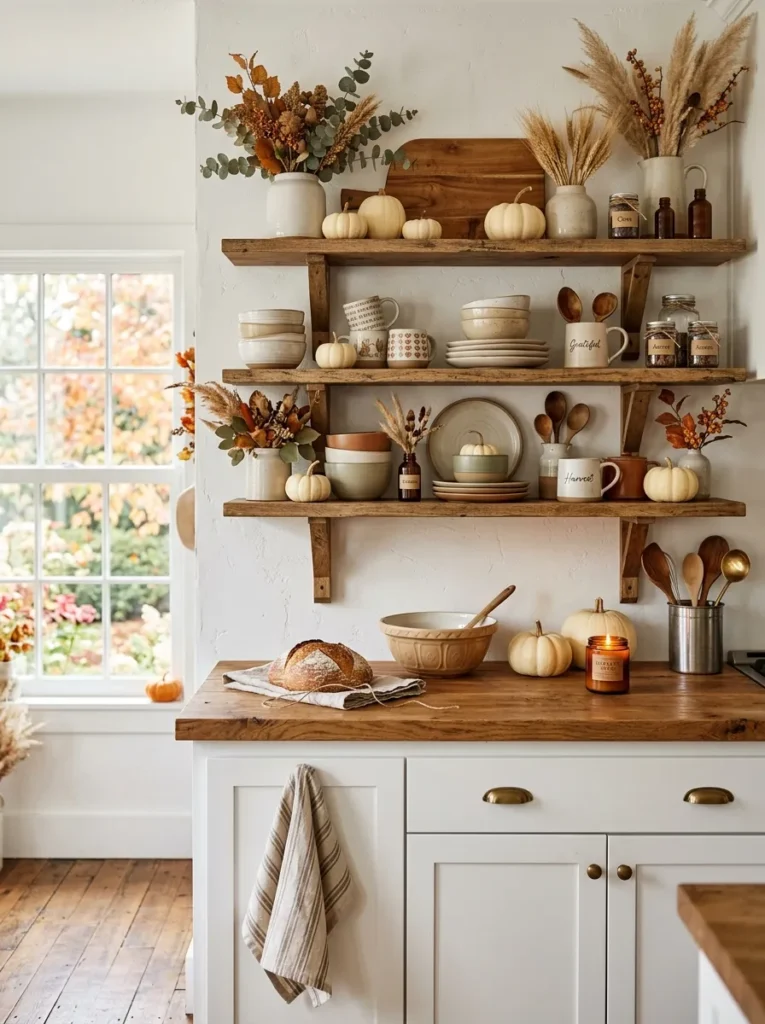
- Arrange small pumpkins, ceramic dishes, and autumn mugs on open shelves.
- Mix everyday kitchen pieces with a few seasonal accents.
- Use cream, tan, rust, and muted green for a cohesive palette.
- Leave enough open space to keep shelves practical and uncluttered.
Open kitchen shelves are an easy place to introduce seasonal character without sacrificing valuable counter space. Arrange a few cream pumpkins beside everyday ceramic dishes, autumn mugs, wooden bowls, and small glass jars. Add dried leaves or wheat stems to bring natural texture and height to the display. Keep the color palette focused on cream, tan, muted rust, and warm wood so the seasonal pieces blend naturally with the kitchen. This approach works particularly well when you want your Thanksgiving decor ideas to feel useful and connected to the spaces you use every day.
Avoid filling every shelf because negative space helps individual pieces stand out. Place taller items toward the back and smaller pumpkins or dishes toward the front to create gentle layers. You can also swap a few everyday mugs for seasonal ones rather than adding entirely new objects. I’ve noticed that small changes like this can make a kitchen feel festive without becoming visually busy. If your shelves are narrow, prioritize flat dishes, small vessels, and compact decorations. The finished arrangement should remain easy to reach, clean, and practical throughout the holiday season.
Welcoming Front Door
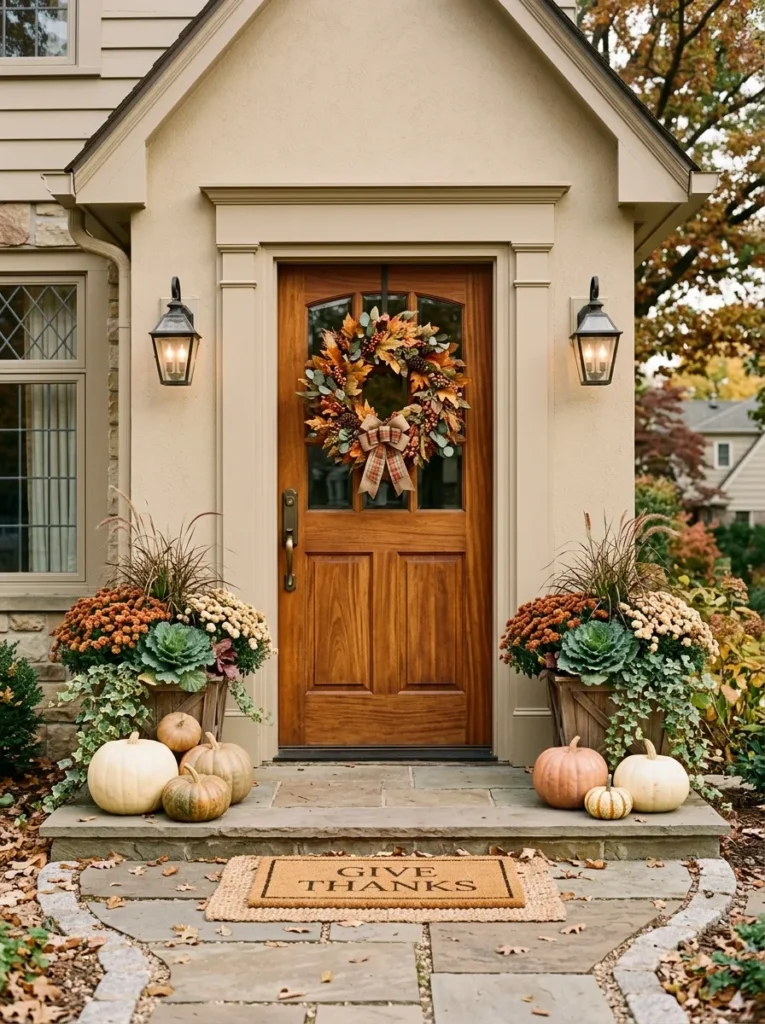
- Hang a seasonal wreath as the main focal point.
- Add pumpkins or planters near the doorway for extra dimension.
- Choose a doormat that complements the autumn color palette.
- Keep steps and the entrance path completely clear for guests.
A welcoming front door can make the entire home feel ready for Thanksgiving before guests even step inside. Start with a seasonal wreath featuring muted leaves, dried grasses, berries, or eucalyptus, then place a few pumpkins or planters near the entrance. Cream, tan, rust, and deep green work beautifully against natural wood or neutral exterior colors. A simple textured doormat can complete the arrangement without competing with the wreath. The key is to create a clear focal point while leaving enough open space around the doorway for the entrance to remain comfortable and functional.
For a balanced look, place matching planters or pumpkin groupings on both sides of a centered door. If the entrance is narrow, use one taller planter and a smaller pumpkin grouping instead of forcing symmetry. Choose weather-resistant materials when decorations will be exposed to rain or strong sunlight. These finishing touches can make the exterior feel connected to the indoor decorating scheme, especially when similar colors and natural textures appear inside. A thoughtfully styled doorway photographs beautifully for Pinterest while giving arriving guests an immediate sense of warmth and seasonal hospitality.
Conclusion
Thanksgiving decorating doesn’t have to mean filling every corner with seasonal pieces. The right combination of pumpkins, warm textiles, natural foliage, candlelight, wood, and thoughtful table details can completely change the atmosphere of your home. These thanksgiving decor ideas give you plenty of simple ways to create a cozy celebration that feels personal and inviting. I’ve seen how small decorating changes can make everyday spaces feel noticeably more welcoming. Save this post on Pinterest for your decorating plans, try your favorite ideas in your own space, and share it with someone who could use a little Thanksgiving inspiration. Make your home feel festive, warm, and ready to gather.