22 Fall Kitchen Decor Ideas That Make Autumn Feel Special
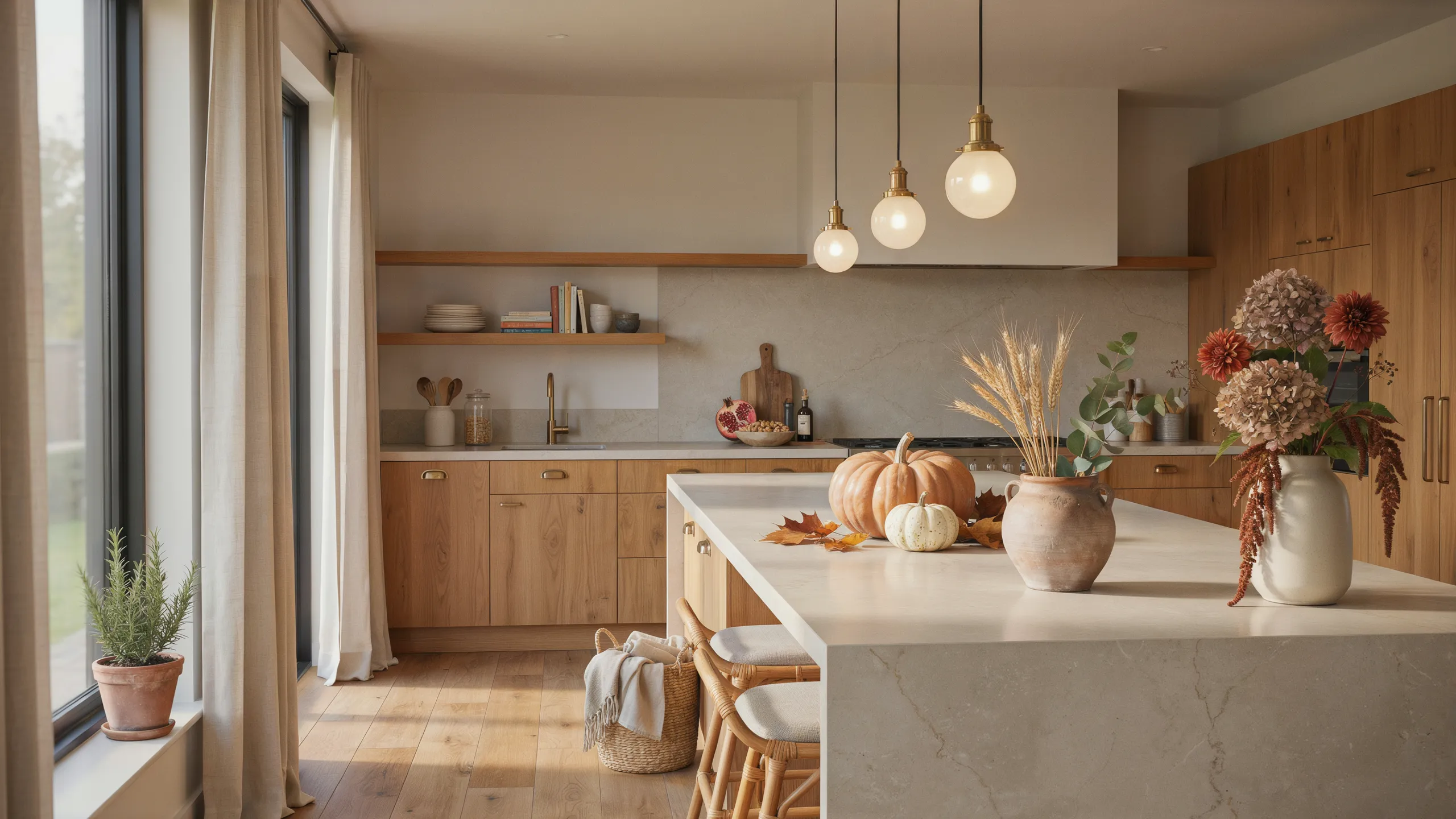
Your kitchen can feel completely different with just a few thoughtful autumn touches. Warm colors, natural textures, and simple seasonal details can turn an everyday space into a cozy fall retreat.
These fall kitchen decor ideas are designed to help you create that welcoming autumn feeling without needing a full kitchen makeover. From pumpkins and rustic wood to amber glassware, warm textiles, dried stems, and earthy ceramics, you’ll find simple ways to add seasonal character while keeping your kitchen practical and uncluttered. Whether you have a spacious island or a small countertop, there are ideas you can easily adapt to your home. In my experience, the smallest changes often make the biggest visual difference. Explore these inspiring setups, choose your favorites, and create a kitchen that feels warm, inviting, and beautifully ready for autumn.
Pumpkin Counter Display
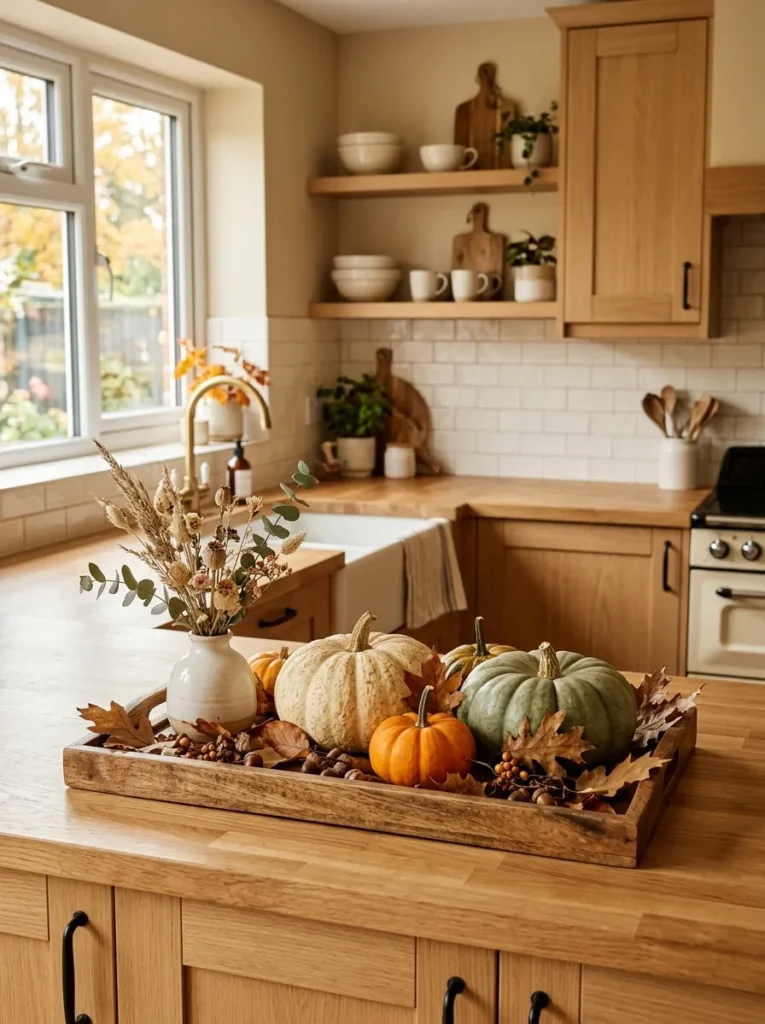
- Cluster small pumpkins and gourds on one counter corner for an instant seasonal focal point.
- Mix cream, orange, and muted green tones instead of relying on one bright color.
- Use a wooden tray to keep the arrangement contained and easy to move.
- Leave nearby counter space clear so the display stays decorative without becoming impractical.
Nothing says autumn quite like a small pumpkin arrangement catching your eye as you walk into the kitchen. A simple cluster on the counter can create a seasonal focal point without making the room feel crowded. Choose pumpkins in varied sizes and finishes, then place them on a wooden tray for a polished look. Cream, terracotta, sage, and soft orange work beautifully together. In my experience, keeping the display slightly off-center makes it feel more natural and styled. Leave enough workspace around it for coffee preparation, cooking, or everyday family routines.
For a more refined look, combine real pumpkins with ceramic or textured pieces that can be reused each year. A small vase of dried stems adds height, while a folded linen towel introduces softness beside the harder pumpkin shapes. Keep the tallest element toward the back and smaller pieces toward the front so everything remains visible. This arrangement works especially well on kitchen islands, open shelving, or a wide countertop corner. The result is inviting without being excessive. It also gives your fall kitchen decor a collected appearance rather than making the space feel decorated all at once.
Copper Accent Styling
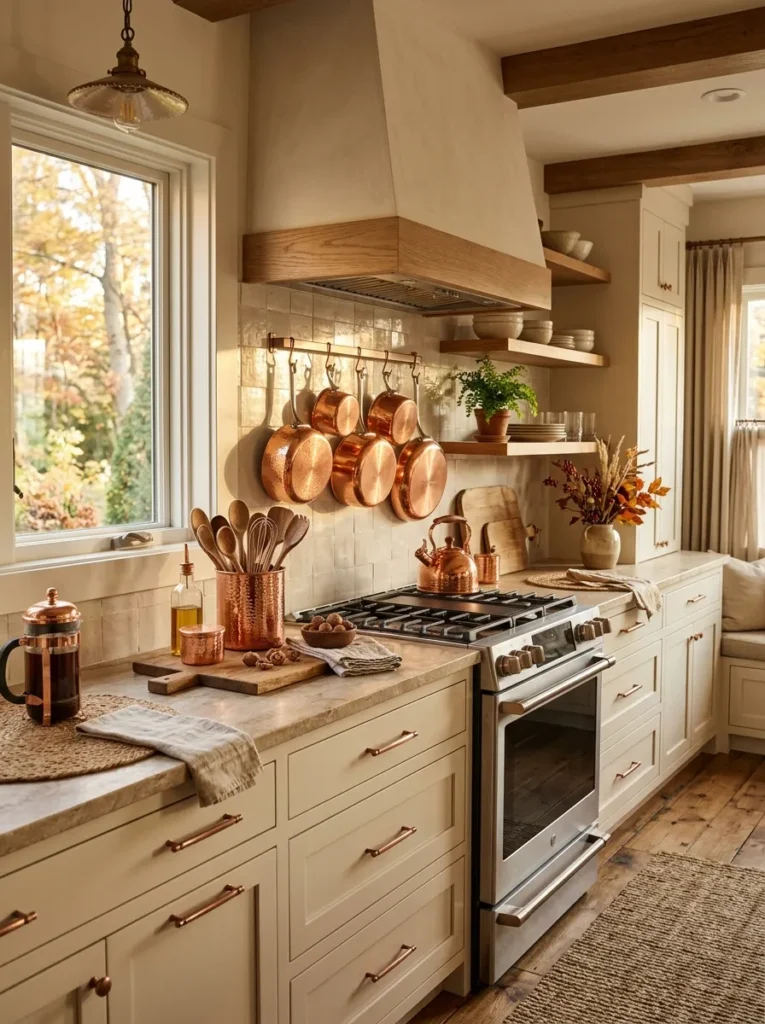
- Add copper-toned accessories to bring warmth and a subtle autumn glow.
- Display a few pieces rather than covering every surface with metallic accents.
- Pair copper with wood, cream, or charcoal for a balanced palette.
- Use functional pieces such as utensils, pans, or containers to combine beauty with purpose.
A little copper can make an ordinary kitchen feel instantly warmer, especially when autumn light starts becoming softer and more golden. Copper cookware, utensil holders, trays, or small containers can introduce that glow without requiring a complete seasonal makeover. Pair the metal with natural wood and creamy neutrals to keep the palette comfortable rather than overly bright. If your kitchen already has stainless steel appliances, use copper selectively instead of trying to match every finish. The contrast can actually make the accents more noticeable. I’ve noticed that just two or three coordinated pieces often create enough visual warmth.
Copper also works because it can be both decorative and genuinely useful. A hanging pan near the cooking area, a copper bowl on an island, or a small utensil container beside the stove adds character while remaining practical. For kitchens with dark cabinetry, copper creates a beautiful contrast; with white or cream cabinets, it adds depth and warmth. Keep surrounding accessories simple so the metallic finish remains the visual highlight. This approach makes seasonal decorating easier because the pieces can stay useful beyond autumn. You get a kitchen that feels thoughtfully styled without relying on temporary decorations everywhere.
Autumn Open Shelves
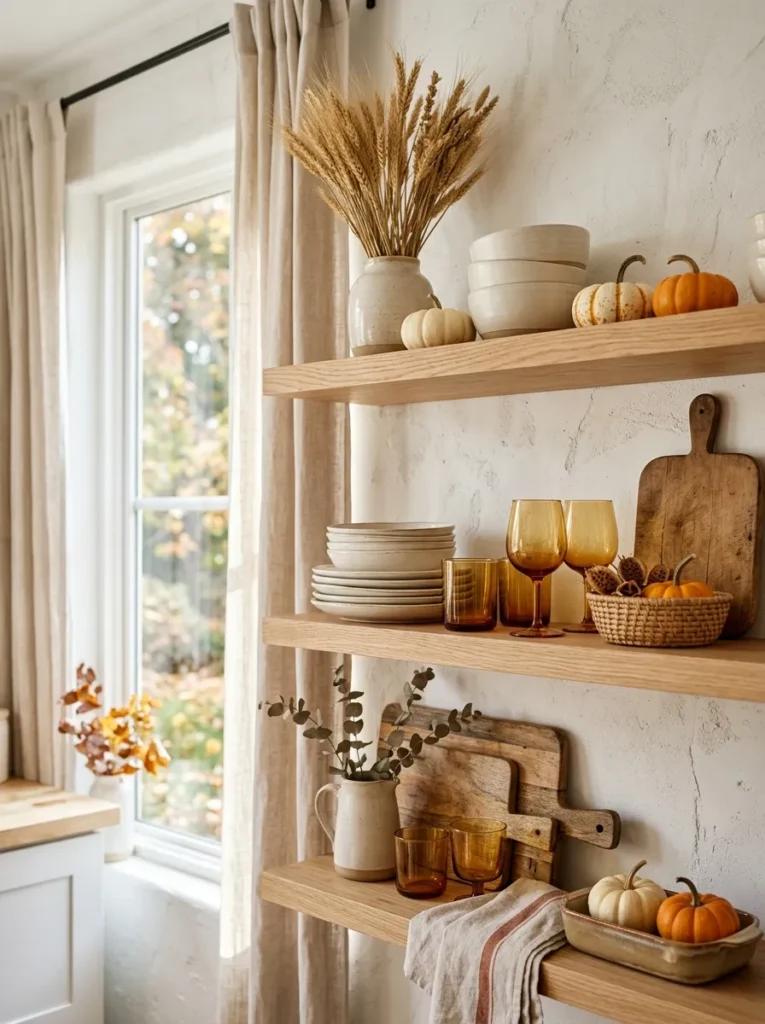
- Style open shelves with a few seasonal pieces instead of filling every available space.
- Layer neutral dishes with amber glassware, wood boards, and small decorative pumpkins.
- Vary heights and textures to create a naturally balanced arrangement.
- Keep frequently used dishes within easy reach so the styling remains functional.
Open shelves give you one of the easiest ways to introduce autumn character without changing the kitchen itself. Start with everyday plates and bowls, then add a few amber glasses, wooden boards, small pumpkins, or dried stems between them. The goal is gentle layering, not a crowded display. Vary the height of each item so the shelves have movement while still looking organized. Neutral ceramics provide a calm foundation, while warm autumn accents add seasonal color. This simple combination makes everyday objects feel intentional and gives the kitchen a welcoming look without sacrificing useful storage.
The best shelf styling usually leaves some breathing room between groups of objects. Try arranging items in small clusters rather than spreading individual decorations evenly across the entire shelf. A stack of plates can sit beside a wooden board, while a tiny pumpkin or vase fills the nearby gap. For real homes, keep heavier pieces on lower shelves and frequently used dishes where they are easiest to reach. This makes the arrangement practical as well as attractive. A few thoughtful changes can turn ordinary shelving into a warm seasonal feature that photographs beautifully and still works during busy kitchen routines.
Rustic Wooden Boards
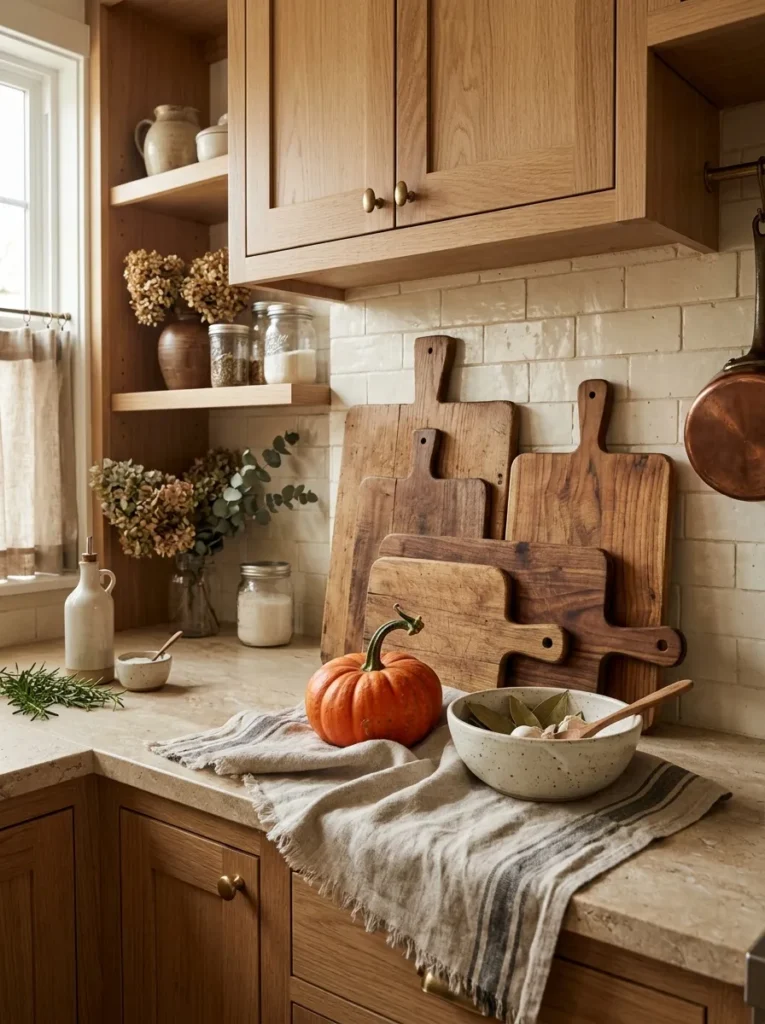
- Lean wooden cutting boards against the backsplash for instant warmth and texture.
- Mix different wood tones to create a relaxed, collected appearance.
- Add a small seasonal accent without covering the natural grain.
- Choose boards that remain useful for serving or everyday kitchen tasks.
Warm wood can make a kitchen feel inviting before you add a single seasonal decoration. Leaning a few wooden cutting boards against the backsplash creates height, texture, and a relaxed autumn foundation. Choose boards with different shapes or natural grain patterns so the arrangement feels collected rather than perfectly matched. A small pumpkin, ceramic crock, or folded linen towel can sit nearby without competing with the wood. This approach works especially well in kitchens with white cabinets or cooler surfaces. The natural tones soften those finishes and create a comfortable seasonal atmosphere that still feels timeless.
Wooden boards are also one of the most practical decorating choices because they do not need to disappear after autumn ends. Keep your favorite serving board at the front so you can easily grab it when preparing snacks or entertaining guests. Larger boards can rest against the backsplash, while smaller ones can overlap slightly in front. I’ve seen this work particularly well in compact kitchens because the arrangement uses vertical space instead of valuable countertop area. Add one warm-toned textile nearby, and the entire corner can feel intentionally styled without adding unnecessary clutter or sacrificing everyday functionality.
Amber Glassware
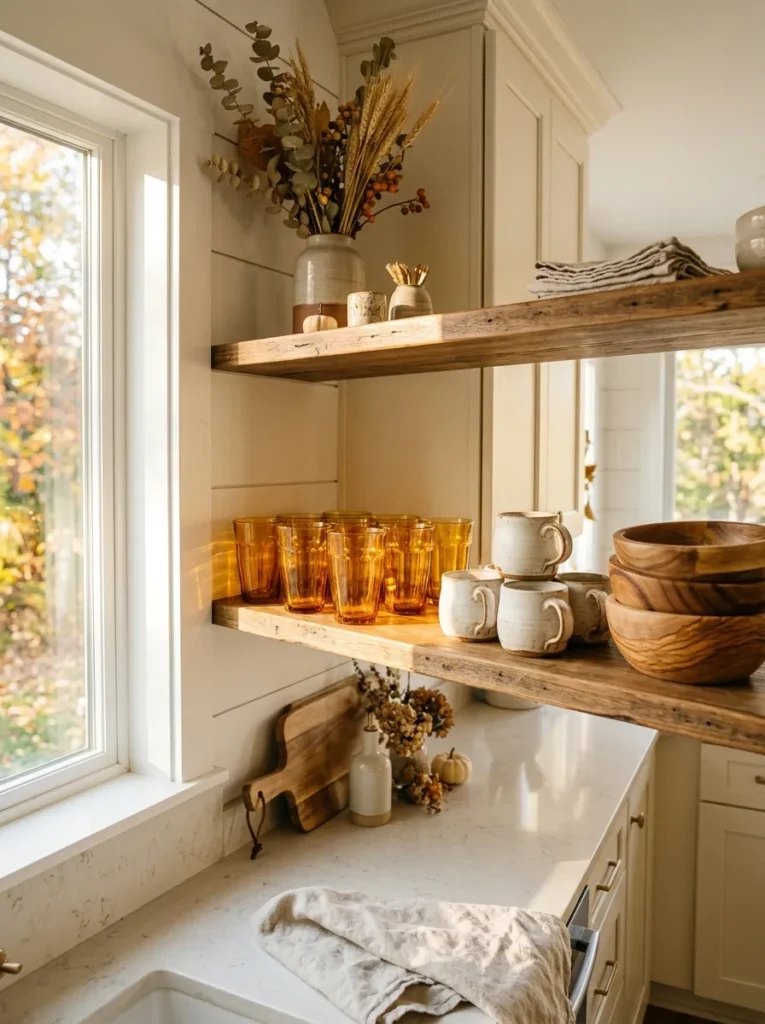
- Use amber glasses or tumblers to introduce rich autumn color without overwhelming the room.
- Display a small collection where sunlight can highlight the warm glass tones.
- Pair amber pieces with cream ceramics and natural wood for contrast.
- Choose everyday drinkware so seasonal styling remains useful.
Amber glassware brings a beautiful touch of autumn color while keeping the overall kitchen feeling light and sophisticated. The translucent brown-gold tones catch natural sunlight and create gentle warmth without the visual weight of darker decorations. Display a few glasses on open shelving, a kitchen hutch, or a serving cart where their color can become part of the room. Pair them with cream ceramics and natural wood for a balanced combination. This is an especially useful choice when you want seasonal color but prefer subtle decorating. The result feels warm, polished, and easy to live with.
For a stronger visual effect, place amber pieces near a window where daylight can pass through the glass. You may notice small golden reflections appearing across nearby surfaces, adding interest without extra accessories. Keep the collection modest so each piece remains visible instead of blending into a crowded shelf. Amber also pairs beautifully with muted green, beige, terracotta, and warm white. Because these glasses can be used every day, they offer more value than decorations that simply sit on a counter. They bring seasonal character to breakfast, casual dinners, and weekend gatherings while remaining practical throughout the year.
Harvest Fruit Bowl
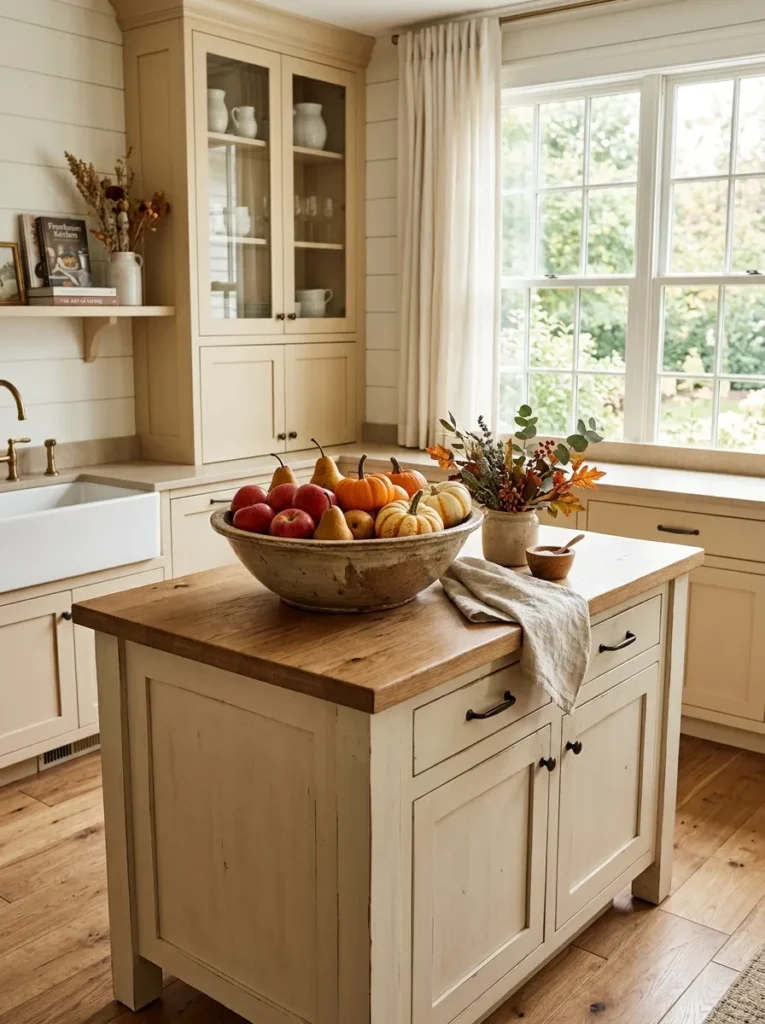
- Fill a simple bowl with apples, pears, or seasonal produce for natural color.
- Choose a wooden, ceramic, or woven bowl that complements your kitchen finishes.
- Place it on the island or dining counter where it becomes an easy focal point.
- Keep the fruit accessible so the decoration serves a practical purpose too.
A bowl of seasonal fruit can become the simplest autumn focal point in your kitchen. Fill a generously sized bowl with apples, pears, or other colorful produce, then place it where the arrangement can be seen from across the room. The natural reds, greens, and golden tones bring life to neutral counters without feeling overly decorated. Choose a wooden, ceramic, or woven bowl that complements your existing finishes. Unlike purely decorative accessories, fresh fruit adds color while remaining useful. It creates the kind of effortless seasonal detail that makes fall kitchen decor feel natural rather than staged.
Try combining different fruit colors instead of arranging everything in one shade. Red apples beside golden pears create gentle contrast, while a few small pumpkins can reinforce the autumn palette. Keep the bowl large enough to look intentional but not so large that it interferes with food preparation. On an island, position it slightly to one side so there is still comfortable workspace around it. This small adjustment can make the kitchen feel more welcoming for family breakfasts or casual gatherings. It also gives you a decoration that changes naturally as the fruit is eaten and replaced.
Plaid Kitchen Textiles
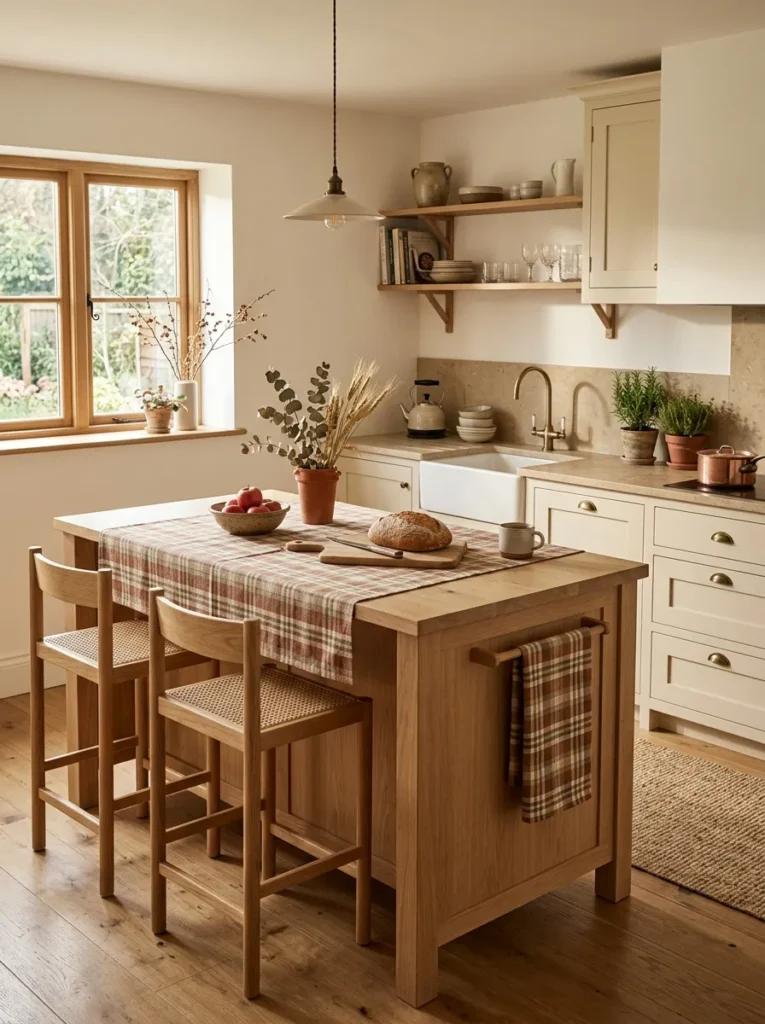
- Introduce plaid through towels, runners, or small fabric accents.
- Choose muted rust, cream, brown, or olive tones for an understated autumn palette.
- Layer one or two patterns instead of covering every surface.
- Swap lightweight summer textiles for thicker fabrics as temperatures cool.
Few changes make a kitchen feel seasonally ready as quickly as fresh textiles. A plaid runner or folded kitchen towel can introduce autumn pattern without taking up valuable space. Look for muted rust, cream, brown, olive, or charcoal rather than extremely bright colors for a softer result. One patterned textile can be enough to establish the seasonal palette, especially when the rest of the kitchen is neutral. I’ve noticed that swapping lightweight summer fabrics for slightly heavier cotton or linen pieces also makes the room feel visually warmer. The change is small, but the atmosphere can feel completely different.
Use plaid where it naturally belongs, such as an island runner, oven towel, breakfast nook cushion, or small tablecloth. If your kitchen already has several patterns, choose one simple plaid and keep nearby accessories mostly solid. This prevents the space from looking busy. For a more layered appearance, coordinate the plaid with a plain rust-colored towel or cream napkin rather than adding another competing pattern. These small textile changes are inexpensive and easy to reverse when the season ends. They can also protect surfaces from spills while quietly reinforcing the warm, relaxed character associated with autumn kitchens.
Dried Wheat Arrangement

- Place dried wheat stems in a simple vase for natural height and texture.
- Choose a neutral vessel that keeps attention on the warm golden stems.
- Position the arrangement where it will not interfere with food preparation.
- Combine it with wood or ceramic accents for a cohesive natural look.
Dried wheat brings height and movement to a kitchen while keeping the autumn palette beautifully natural. Place several golden stems in a simple ceramic or glass vase, then position the arrangement on an island, countertop corner, or open shelf. Their warm color works especially well with cream, beige, tan, and natural wood finishes. Unlike bulky seasonal displays, the stems draw the eye upward and use vertical space efficiently. This makes them particularly helpful when you want noticeable seasonal styling without filling the counters. Their soft texture also balances the harder surfaces commonly found around sinks, counters, and cabinetry.
For everyday kitchens, choose a sturdy vase with a wide enough base to prevent tipping when people are moving around the room. Keep the stems slightly uneven instead of cutting them to identical heights, which creates a more relaxed appearance. A few small pumpkins or a wooden bowl can sit nearby, but leave enough open space for the arrangement to breathe. In my experience, dried stems look especially attractive when placed near natural daylight because their fine texture becomes more visible. They require very little maintenance, making them an easy seasonal update for busy households.
Cinnamon-Toned Ceramics
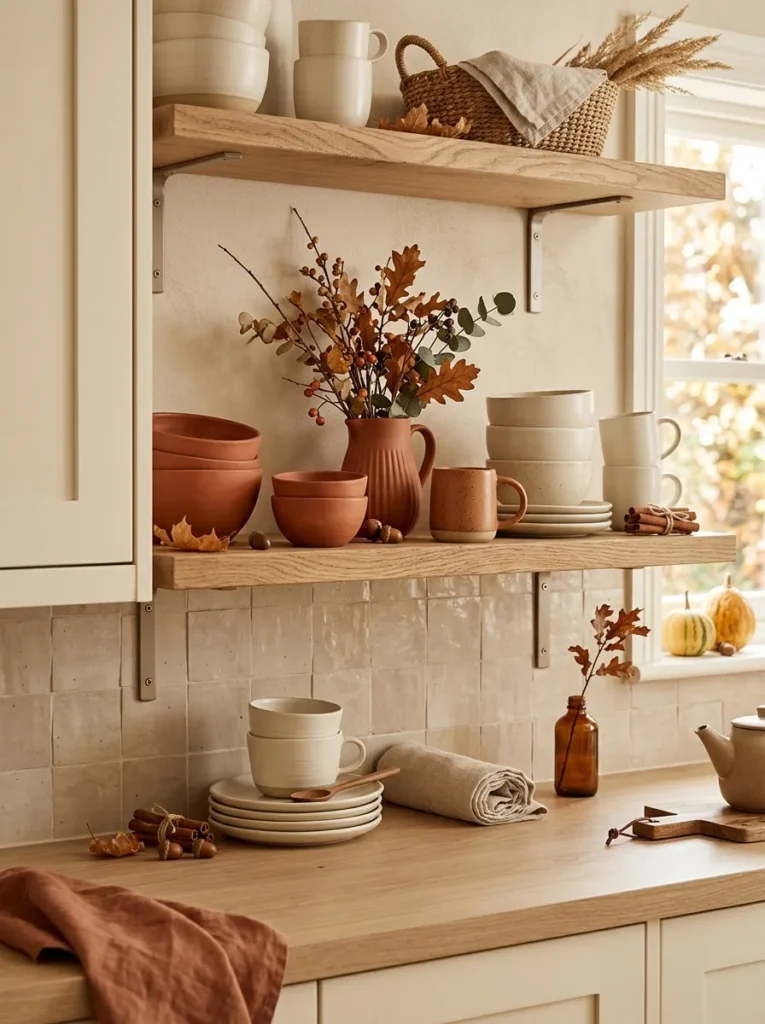
- Add mugs, bowls, or pitchers in warm cinnamon and terracotta shades.
- Use ceramic pieces to introduce color without changing permanent finishes.
- Mix warm pottery with cream dishes for gentle contrast.
- Keep everyday pieces visible so the seasonal update remains functional.
Warm cinnamon-colored ceramics can give a neutral kitchen the rich depth associated with autumn without making the space feel overly decorated. Try adding a few mugs, bowls, pitchers, or small serving dishes in cinnamon, terracotta, caramel, or muted clay shades. Their earthy colors create an easy connection with wooden surfaces and other natural materials. Keep most of your existing dishes neutral, then use the warmer pieces as accents. This creates contrast without requiring a complete collection of new tableware. The effect is subtle, but those repeated warm tones can make the kitchen feel noticeably cozier.
Display your favorite pieces where their color can be appreciated, such as open shelves, a glass-front cabinet, or a coffee station. You can also place a cinnamon-toned mug beside a wooden cutting board for a simple styled corner. If your kitchen has dark counters, choose lighter terracotta shades to prevent the arrangement from becoming too heavy. With pale cabinetry, deeper cinnamon tones can provide beautiful contrast. Because these pieces can be used for morning coffee, serving, or everyday meals, they combine seasonal decoration with practical value and can remain part of your kitchen long after autumn has passed.
Seasonal Coffee Station
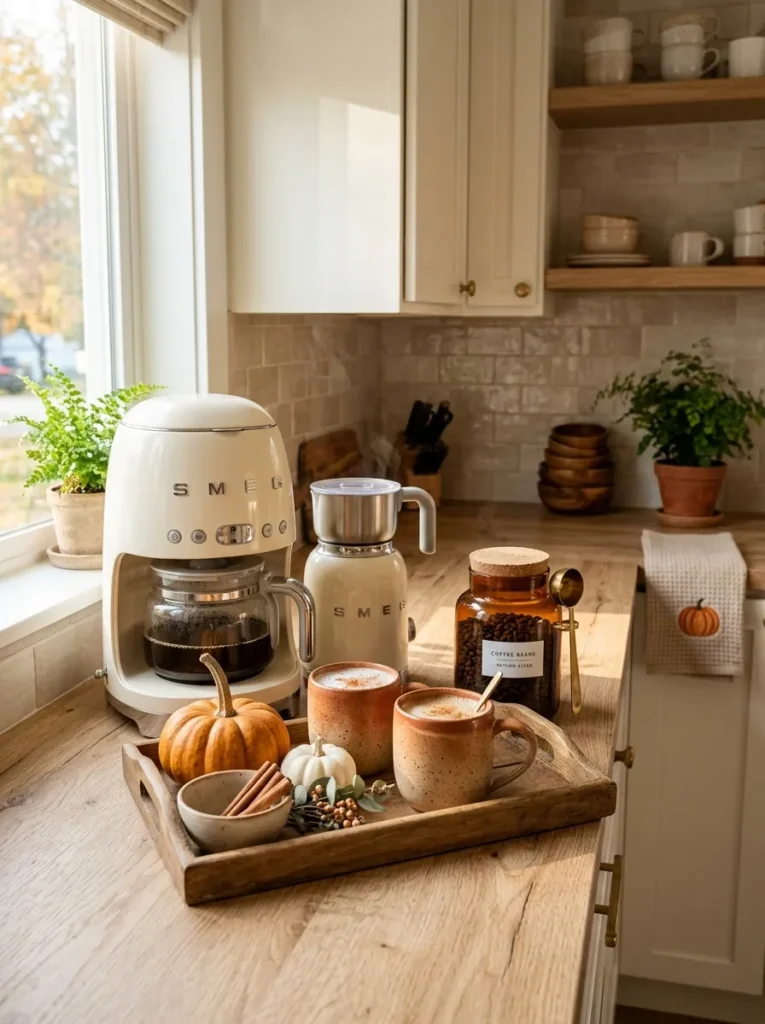
- Add a few autumn-toned mugs to create a welcoming beverage corner.
- Use a wooden tray to group coffee essentials neatly.
- Introduce small seasonal details such as cinnamon sticks or a tiny pumpkin.
- Keep everyday supplies accessible so the station remains genuinely useful.
A thoughtfully styled coffee station can turn an everyday morning routine into a small seasonal pleasure. Start with a wooden tray to organize your coffee maker, favorite mugs, and a few essentials in one defined area. Add one or two cinnamon-colored cups, a tiny pumpkin, or a glass jar filled with coffee beans for subtle autumn character. Keeping the arrangement compact prevents it from taking over the counter. This is where seasonal decorating becomes especially practical: the items you display are already part of your daily routine. The space feels warmer while remaining easy to use every morning.
For an extra layer of texture, add a small container of cinnamon sticks, a linen napkin, or a wooden spoon beside the coffee supplies. Keep the tallest item toward the back and smaller accents toward the front so everything remains easy to see. If you have limited counter space, use a narrow tray and choose only the essentials. The arrangement can also become a natural gathering point when friends or family visit. A few warm colors around the coffee maker can make the kitchen feel more inviting without requiring major changes. It is a simple upgrade with everyday value.
Burnt Orange Runner
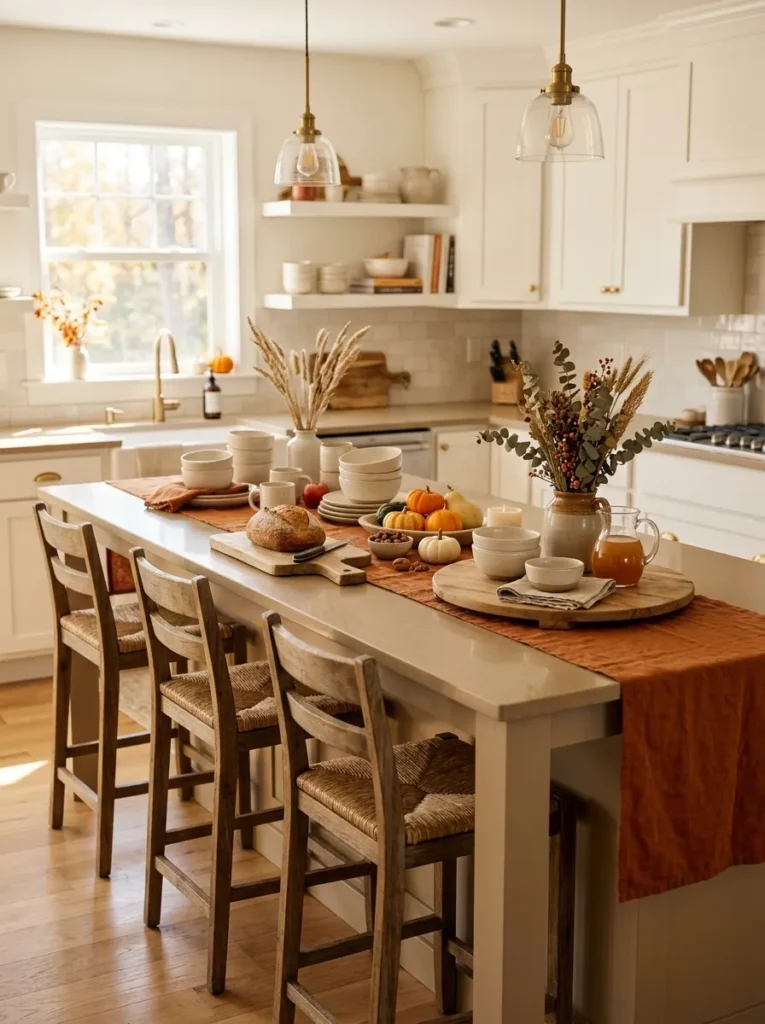
- Use a burnt orange runner to establish a warm autumn color anchor.
- Choose linen or cotton for natural texture and an easygoing appearance.
- Pair the runner with neutral dishes and wooden accessories.
- Keep the center of the table or island visually open for everyday use.
A burnt orange runner can instantly give a kitchen island or dining table a richer autumn presence. The color acts as a strong visual anchor, especially against cream, white, beige, or light wood surfaces. Choose linen or cotton for a relaxed texture, then keep the accessories above it simple. A few wooden boards, neutral ceramics, or small pumpkins can create a layered arrangement without competing with the runner. This works particularly well when you want one noticeable seasonal change rather than decorating the entire kitchen. The warm color naturally draws attention while making the surrounding neutrals feel softer.
To keep the setup practical, position decorative pieces toward the sides or along the runner rather than filling the entire surface. This leaves enough room for meals, food preparation, or serving dishes. If your island doubles as a workspace, choose a narrower runner that does not interfere with daily activities. In my experience, burnt orange looks especially balanced when repeated in one small accessory elsewhere, such as a mug or towel. That subtle connection helps the room feel coordinated without creating an overly matched appearance. The result is warm, seasonal, and easy to maintain.
Gourd Shelf Styling
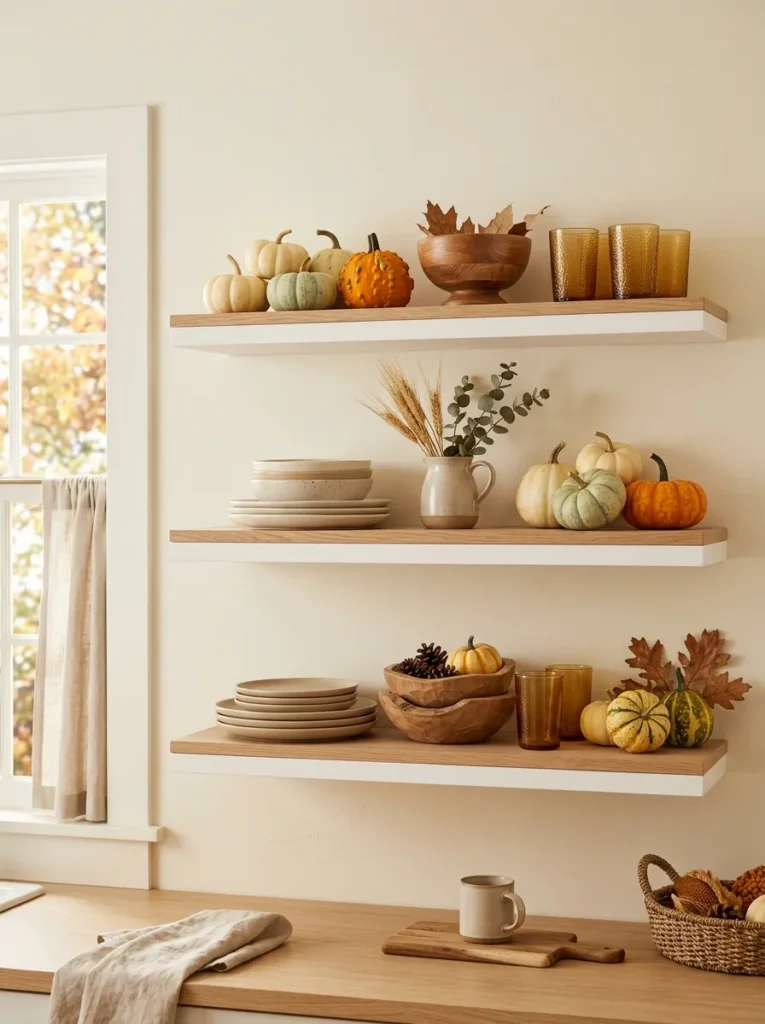
- Arrange small gourds in varied shapes for natural seasonal texture.
- Mix pale, green, and orange varieties for a softer color story.
- Place them between everyday dishes rather than creating one crowded cluster.
- Choose lightweight pieces that are easy to rearrange when cleaning shelves.
Small gourds can add plenty of seasonal personality without making your kitchen feel like a themed display. Their irregular shapes and natural colors bring visual texture to shelves, counters, or a kitchen hutch. Try combining pale cream, muted green, soft orange, and tan varieties for a more sophisticated palette. Instead of grouping every gourd together, place them between dishes or beside wooden bowls so the seasonal pieces feel naturally integrated. The variation in shape keeps the arrangement interesting, while the restrained colors prevent it from becoming visually overwhelming. This approach works beautifully in both traditional and modern kitchens.
When styling shelves, use smaller gourds where they can be easily seen and avoid placing too many in front of functional dishes. A single gourd beside a stack of plates can be more effective than a large collection packed into one area. You can also pair them with amber glassware, woven baskets, or dried stems for additional texture. Choose lightweight varieties if you regularly move items for cleaning. This makes the display easier to maintain throughout the season. The finished arrangement feels collected and organic, giving everyday shelving a subtle autumn update while preserving its useful storage function.
Farmhouse Pumpkin Tray
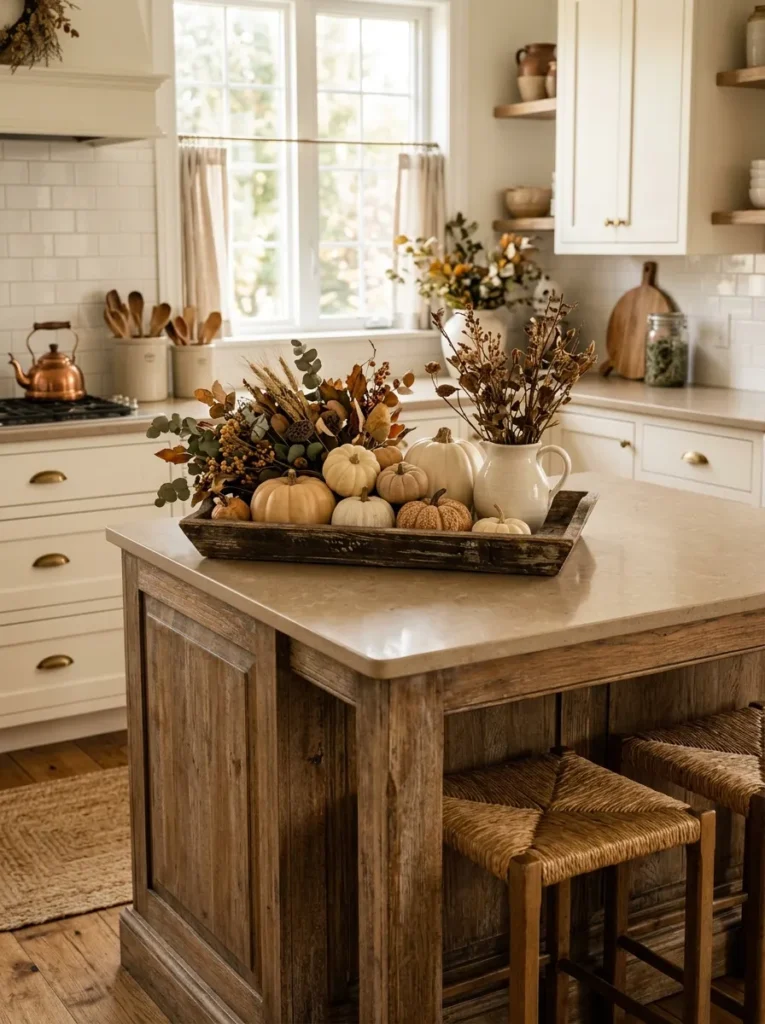
- Group pumpkins on a wooden tray for a contained seasonal display.
- Mix different sizes and neutral shades to create visual depth.
- Add one ceramic pitcher or small vase for extra height.
- Keep the tray movable so you can easily clear the counter when needed.
A wooden tray filled with pumpkins can create a charming autumn focal point while keeping the arrangement organized. Choose several pumpkins in different sizes, then combine cream, white, muted orange, and soft green tones for a relaxed farmhouse palette. Adding a small ceramic pitcher or vase creates height and keeps the display from looking flat. The tray also gives every piece a visual boundary, which makes the arrangement feel intentional rather than scattered. This is especially useful on kitchen islands where decorations need to share space with everyday activities and still remain easy to move.
For a more natural composition, place the largest pumpkin toward the back and let smaller pieces overlap slightly in front. Avoid making everything perfectly symmetrical because the varied shapes already provide plenty of visual interest. A wooden tray with a slightly aged finish works beautifully with white cabinets, while a lighter tray can complement darker kitchens. I’ve noticed that keeping one side of the island relatively open makes these displays feel much more practical. You can simply lift the tray when preparing food, then return it afterward, preserving the seasonal look without creating an obstacle.
Dried Leaf Garland
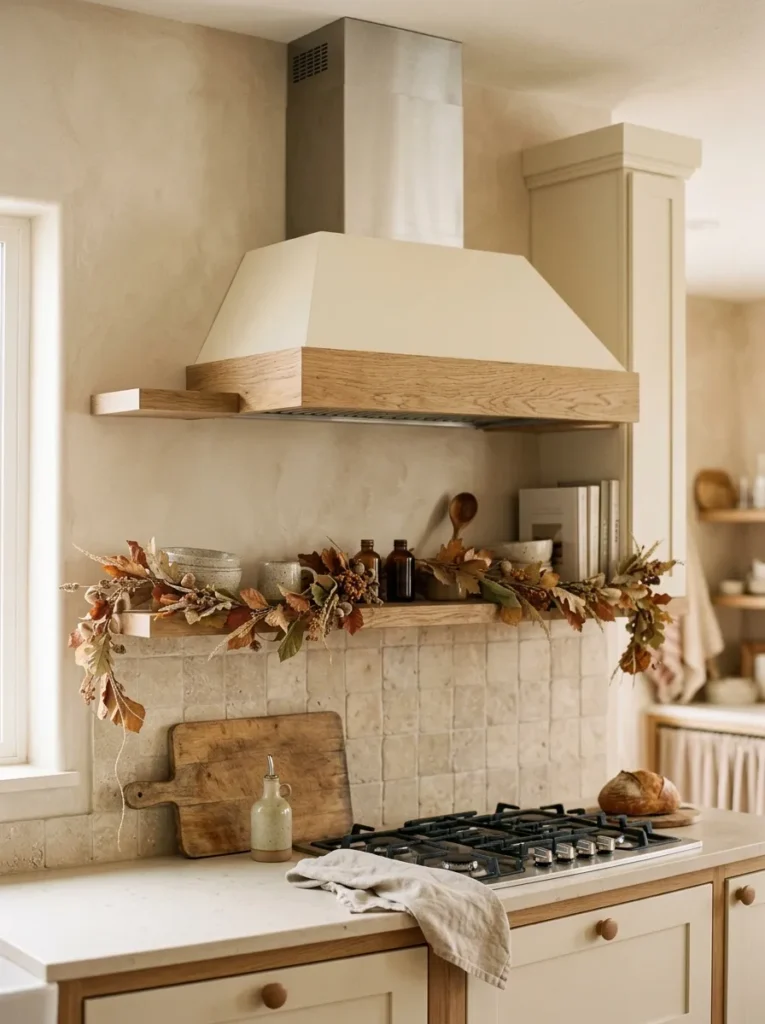
- Drape a lightweight leaf garland along a shelf, hood, or cabinet edge.
- Choose muted foliage colors for a natural, sophisticated appearance.
- Keep the garland thin enough to avoid overwhelming the kitchen.
- Secure it carefully away from heat sources and cooking areas.
A delicate leaf garland can add seasonal movement to a kitchen without taking up countertop space. Drape it along an open shelf, the top edge of a cabinet, or another suitable area where it can be clearly seen. Muted rust, tan, ochre, and olive leaves create a natural autumn palette that works especially well with neutral kitchens. Keep the garland relatively thin so the cabinetry and shelves remain visible. The flowing shape introduces a softer line among straight countertops and cabinets, giving the room more visual variety without requiring large decorative objects.
Placement matters when using foliage around a working kitchen. Keep dried materials well away from stovetops, ovens, candles, and other heat sources, and secure the garland so it cannot fall into food preparation areas. A shorter strand can work beautifully across a shelf without becoming difficult to manage. Pair it with simple ceramics or wooden accessories rather than adding several competing decorations. The result feels seasonal but restrained. This type of accent is particularly effective when you want to decorate vertically, because it adds color and texture to otherwise unused edges while leaving counters and work surfaces completely available.
Cream And Terracotta
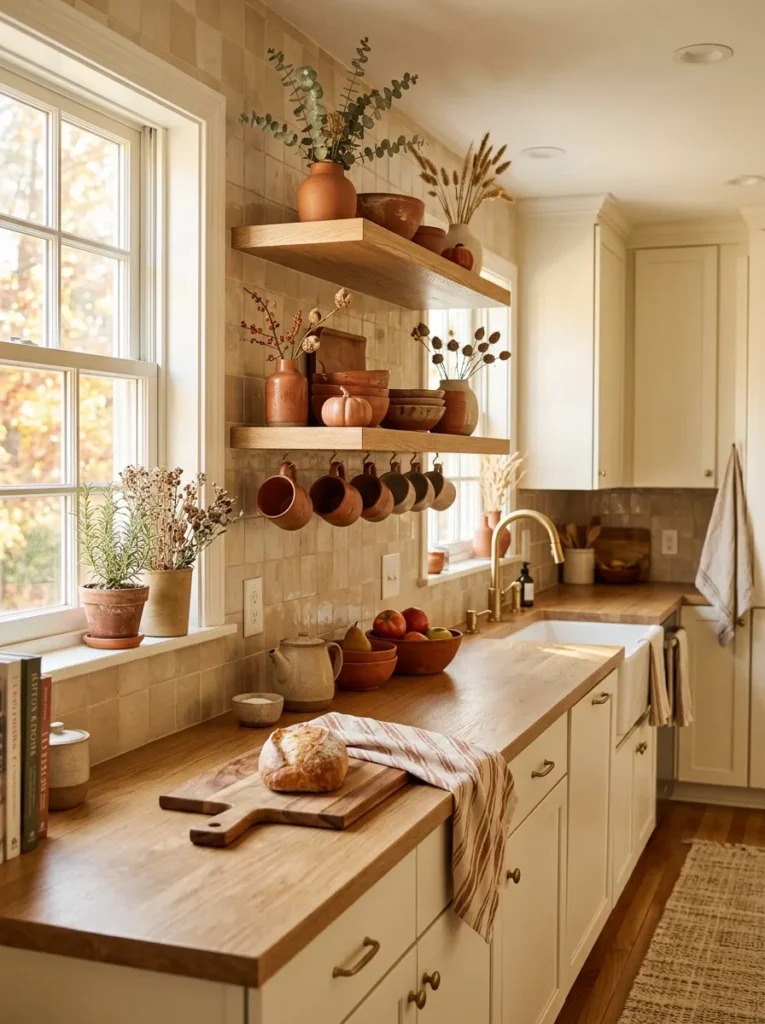
- Combine creamy neutrals with terracotta for a warm, balanced autumn palette.
- Use terracotta through ceramics, planters, mugs, or small decorative pieces.
- Keep larger surfaces light so the darker accents stand out naturally.
- Repeat the earthy tone in two or three areas for visual connection.
Cream and terracotta create an easy autumn color combination that feels warm without becoming visually heavy. Keep larger elements such as cabinets, walls, or countertops in creamy neutrals, then introduce terracotta through ceramics, mugs, bowls, or small decorative pieces. The contrast gives the kitchen more depth while preserving a bright and airy foundation. This palette works particularly well when you want seasonal color but do not enjoy strong orange decorations. Terracotta feels earthy and sophisticated, making it easy to blend with wood, woven textures, brass, or muted green accessories already present in the room.
To make the color scheme feel connected, repeat terracotta in two or three small areas rather than concentrating everything in one corner. A mug near the coffee station, a ceramic bowl on open shelving, and a small vase on the island can create a subtle visual rhythm. Keep surrounding accessories simple so the earthy tone remains noticeable. If your kitchen receives plenty of natural light, deeper terracotta shades can add richness without making the room feel dark. The finished space feels coordinated and seasonal while still looking appropriate for everyday cooking, dining, and entertaining throughout the fall months.
Woven Basket Storage
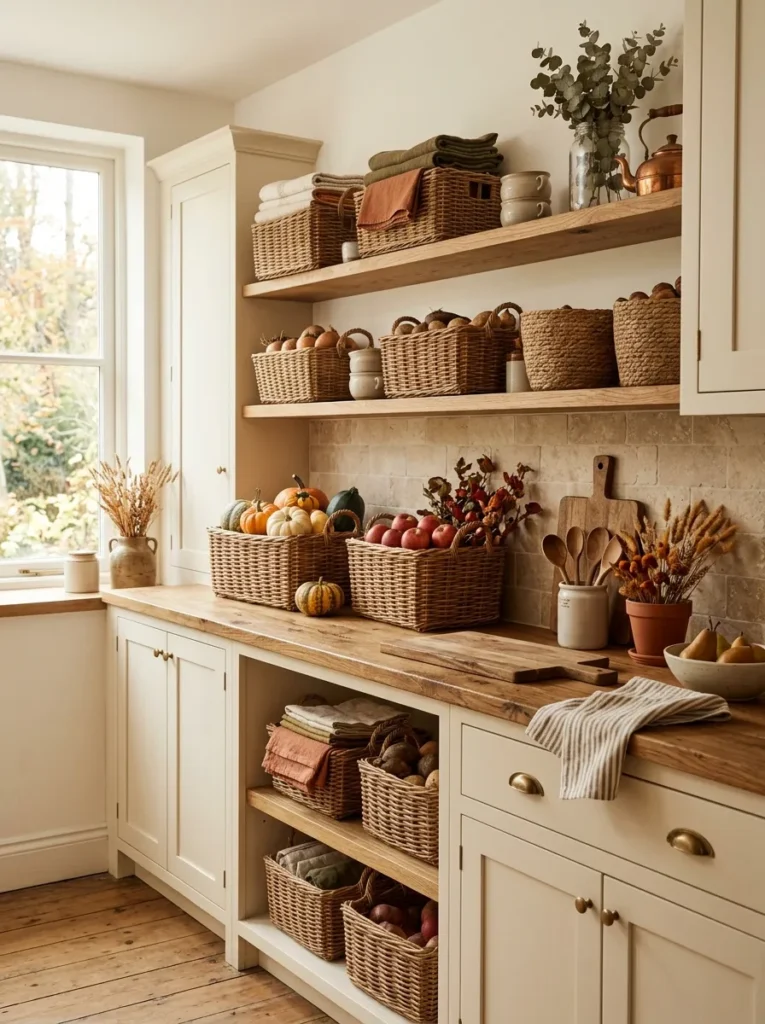
- Use woven baskets to add natural texture while organizing kitchen essentials.
- Choose warm beige, tan, or honey tones to complement autumn colors.
- Store towels, produce, or less-used items inside for practical styling.
- Place baskets on open shelves, lower cabinets, or a pantry station.
Woven baskets can make kitchen storage feel warmer while adding the natural texture that works so beautifully with autumn decorating. Use rattan, seagrass, or similar woven materials in warm beige, tan, or honey tones. A basket on an open shelf can hold folded towels, while a larger one beneath the counter can organize produce or less-used kitchen supplies. The texture creates contrast against smooth cabinetry and stone surfaces. This is one of those updates that looks decorative but solves a genuine storage problem. Your kitchen gains warmth, organization, and visual interest without adding unnecessary objects.
For the most cohesive appearance, repeat the basket material in only a few locations rather than filling every shelf with woven storage. A pair of baskets can work especially well beneath an island or along a pantry wall. Keep the shapes relatively simple if your kitchen already has patterned textiles or detailed cabinetry. I’ve noticed that natural baskets also help soften kitchens with lots of hard surfaces, such as tile, metal, and stone. Because they hide everyday clutter, they can make the entire room appear calmer while keeping commonly needed items accessible and easy to put away.
Autumn Herb Pots
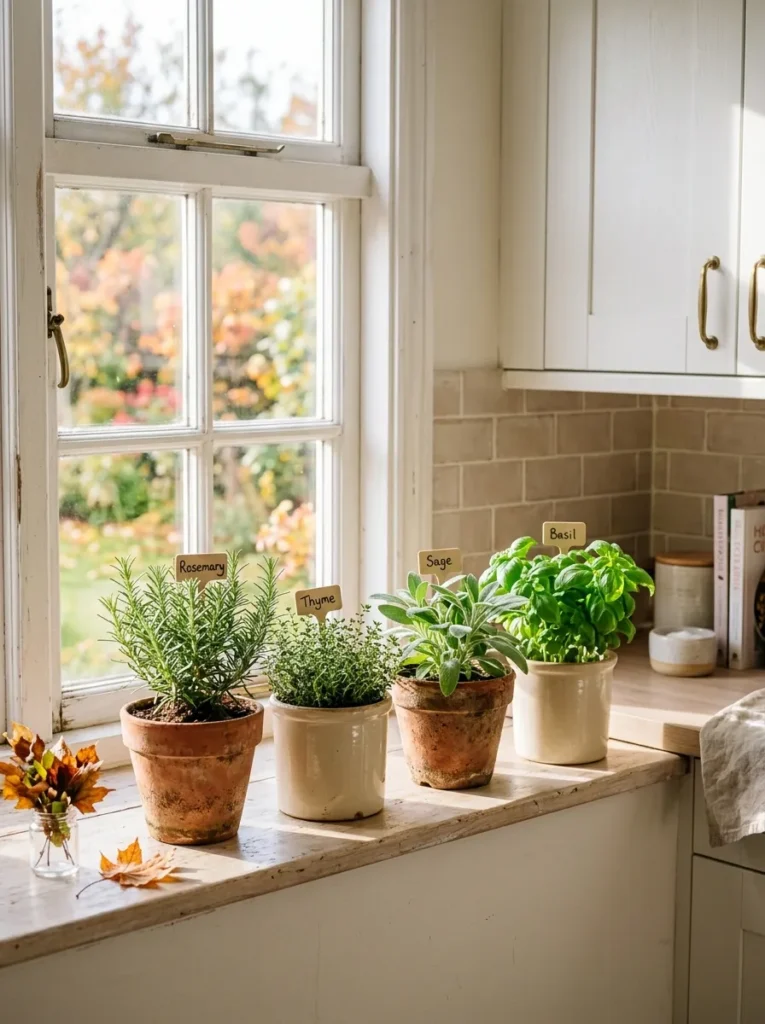
- Grow herbs in small ceramic or terracotta pots for useful seasonal greenery.
- Place basil, rosemary, thyme, or sage near a bright kitchen window.
- Choose pots in earthy colors that complement surrounding materials.
- Keep the arrangement compact so plants remain easy to water and use.
Fresh herbs can bring a subtle seasonal touch to the kitchen while adding greenery and everyday usefulness. Arrange rosemary, thyme, sage, or basil in small terracotta or cream ceramic pots near a bright window. Their green leaves provide a refreshing contrast against warm autumn colors such as rust, tan, and golden brown. Choose containers with slightly different shapes but similar tones for a relaxed arrangement. Instead of treating the plants as purely decorative, keep them close enough to reach while cooking. This creates a practical display that naturally becomes part of your daily kitchen routine.
Herb pots work particularly well on windowsills, small shelves, or a sunny corner of the countertop. Make sure each plant receives the light and care it needs, and avoid placing pots where water could damage the surrounding surface. A small wooden board beneath the containers can help protect the counter while visually grouping the arrangement. If your kitchen has limited space, two or three herbs are usually enough to create the desired effect. The combination of living greenery, earthy containers, and warm natural materials creates a welcoming atmosphere that feels seasonal without relying heavily on decorative accessories.
Wood Bead Accents
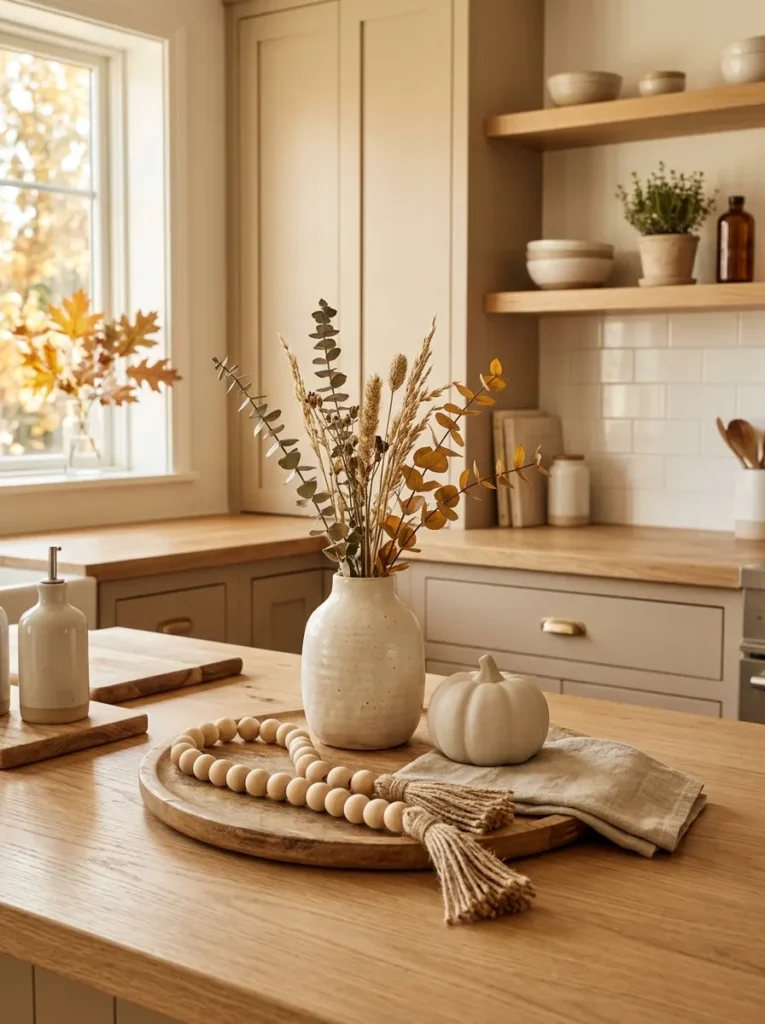
- Add a simple strand of wooden beads for subtle texture and warmth.
- Choose unfinished or lightly stained wood for a natural appearance.
- Place the strand inside a tray or beside a ceramic vessel.
- Keep the accent small so it supports the main arrangement without dominating it.
Small details can have a surprisingly strong effect when the rest of the kitchen is kept simple. A strand of wooden beads introduces natural texture and warmth without demanding much visual space. Choose unfinished, honey-toned, or lightly stained wood, then place the beads inside a decorative tray, beside a ceramic vase, or around a small seasonal arrangement. Their rounded shapes contrast nicely with straight cabinet lines and rectangular countertops. Because the accent is understated, it works especially well for kitchens where you want a seasonal feeling without adding obvious autumn symbols to every surface.
Use wooden beads as a supporting element rather than the main decoration. They look particularly natural when paired with cream ceramics, dried stems, pumpkins, or woven baskets. Keep the arrangement contained so the beads do not become tangled or interfere with food preparation. A small loop placed beside a vase can provide just enough texture to make the display feel finished. In my experience, organic materials such as unfinished wood help seasonal decorations blend more naturally into everyday interiors. The result is subtle, warm, and versatile, making the accent easy to keep in place even after autumn ends.
Vintage Crock Display
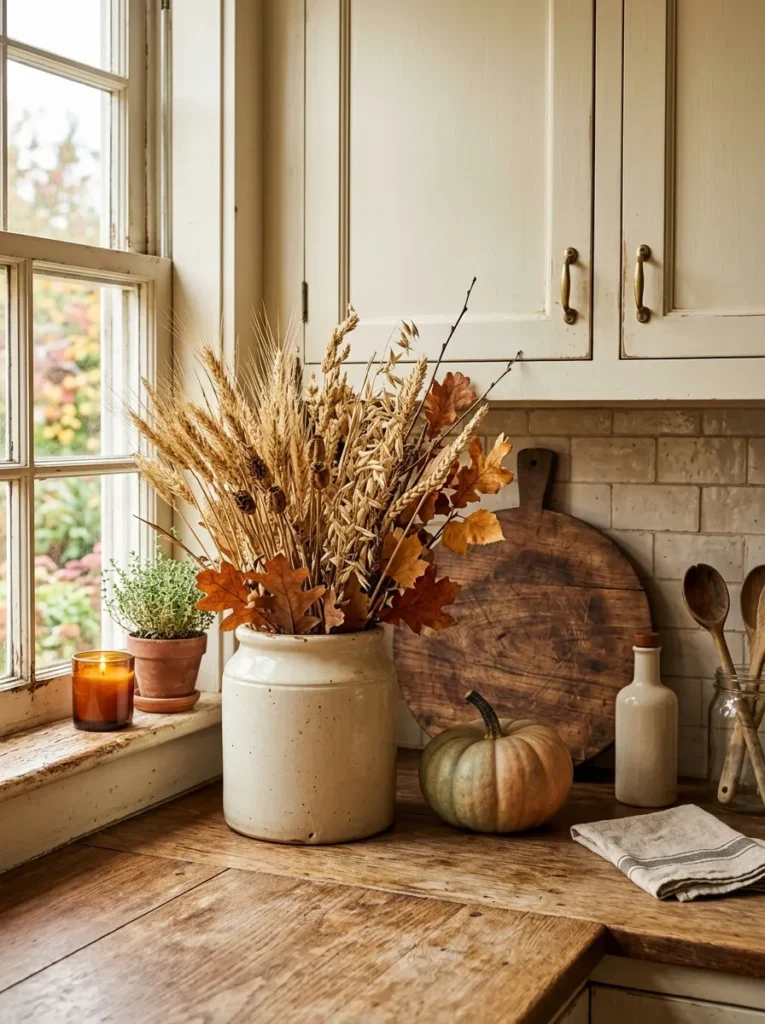
- Display a vintage-style crock or ceramic pitcher as a simple seasonal anchor.
- Choose cream, stone, or muted brown finishes for an aged appearance.
- Fill it with dried stems for added height and texture.
- Pair it with wooden accessories to reinforce the rustic character.
A vintage crock can give a kitchen an instantly collected look, especially when paired with natural autumn textures. Choose a cream, stone, or softly weathered ceramic piece and place it on an island, counter corner, or open shelf. Fill it with dried wheat, branches, or muted seasonal stems to create height without adding visual clutter. The aged finish contrasts beautifully with smooth modern countertops and cabinetry. Rather than looking like a temporary decoration, the crock can feel like a useful piece that has naturally belonged in the kitchen for years. That character adds warmth and personality.
If you already have wooden cutting boards, baskets, or neutral ceramics, a vintage crock can connect those materials into one cohesive arrangement. Place the tallest stems toward the back and allow a few branches to extend naturally to the sides. Avoid overcrowding the vessel because the simplicity is part of its charm. A small pumpkin or wooden bowl nearby can reinforce the seasonal palette without competing for attention. This approach works particularly well in farmhouse, cottage, rustic, and transitional kitchens. It adds depth to a quiet corner while keeping the overall styling relaxed, practical, and easy to refresh.
Warm Pendant Lighting

- Use warm-toned bulbs to make the kitchen feel softer during autumn evenings.
- Choose pendant shades in glass, brass, ceramic, or woven materials.
- Focus lighting over islands or breakfast areas where people naturally gather.
- Keep the light comfortable and functional rather than overly dim.
Lighting can completely change how autumn colors and textures appear once the sun goes down. Warm pendant lighting above a kitchen island creates a soft glow that makes wood, ceramics, textiles, and seasonal accents feel richer. Look for fixtures in glass, brass, ceramic, or woven materials that complement your existing finishes. The goal is not simply to make the kitchen darker and cozier, but to create comfortable illumination where people actually gather. A well-positioned pendant can make an island feel more inviting for casual meals, conversations, coffee, or evening food preparation.
Choose bulbs with a warm color temperature while still providing enough brightness for practical tasks. If your kitchen already has strong overhead lighting, use pendant fixtures to create a softer secondary layer rather than replacing all illumination. This layered approach gives you more control throughout the day. Warm lighting also enhances earthy autumn colors, making terracotta, amber glass, wood, and rust tones appear especially inviting. For safety and functionality, keep fixtures appropriately positioned above work areas and follow the manufacturer’s installation recommendations. The result is a kitchen that feels comfortable after sunset without sacrificing everyday visibility.
Natural Stone Styling
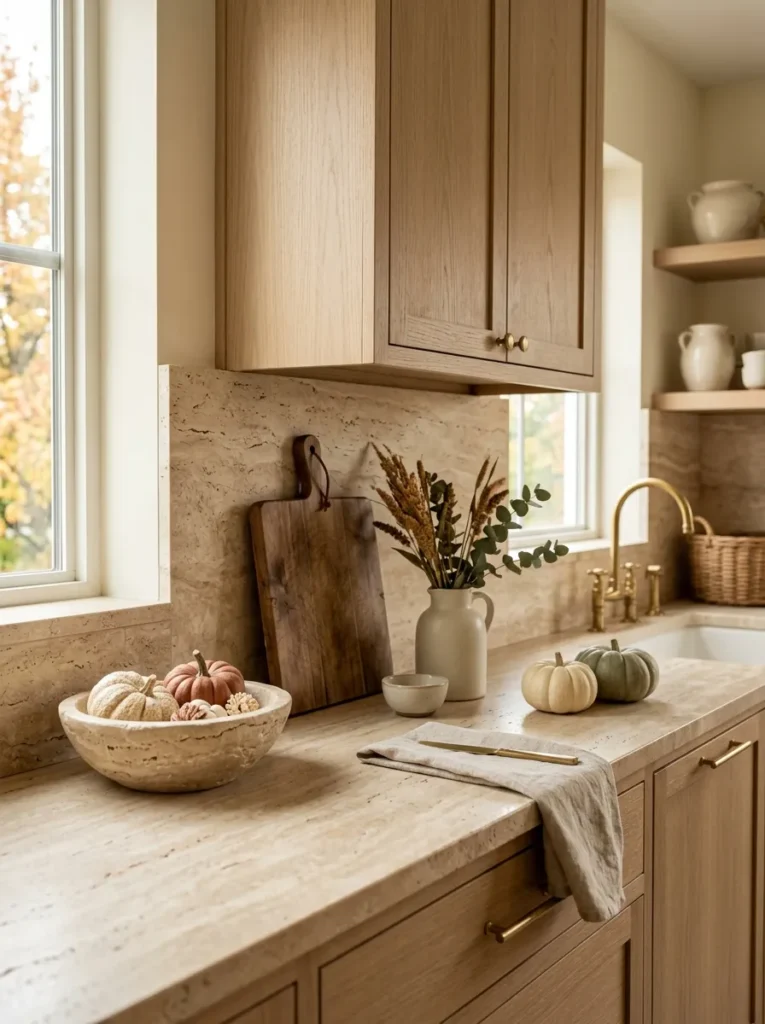
- Highlight existing stone surfaces with simple autumn-colored accessories.
- Use limestone, marble, travertine, or stoneware pieces for organic texture.
- Pair cool stone with warm wood and muted seasonal colors.
- Keep decorative additions minimal so the natural material remains visible.
Natural stone can give seasonal decorating a grounded, sophisticated foundation without adding many accessories. If your kitchen already features marble, limestone, travertine, or another stone surface, let that material become part of the seasonal design. Add a stoneware bowl, neutral ceramic vessel, or small tray alongside warm wood and muted autumn accents. The contrast between cool mineral textures and warmer materials creates visual depth. Rather than covering the countertop with decorations, allow generous areas of stone to remain visible. Its natural variation can provide enough detail to make a simple arrangement feel considered.
For a balanced look, combine stone surfaces with materials that soften their appearance. Wooden boards, linen towels, dried stems, and muted pumpkins can introduce warmth without competing with the stone’s natural pattern. If your countertop has strong veining, keep decorative pieces simple and relatively solid in color. If the stone is subtle, you can introduce slightly richer autumn shades nearby. This approach is especially useful in modern kitchens where excessive seasonal decoration may feel out of place. A restrained arrangement lets the permanent architecture shine while giving the space a warmer, more seasonal character.
Autumn Window Nook
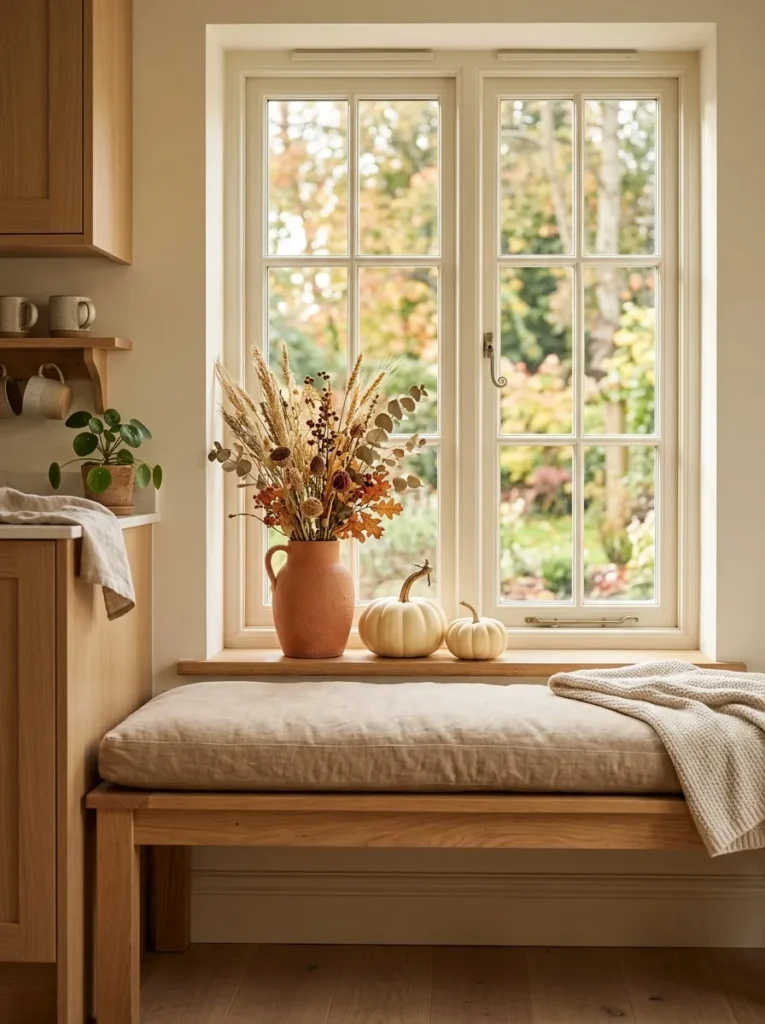
- Style a kitchen window with a few small seasonal accents.
- Add a linen curtain, cushion, or runner in a warm autumn shade.
- Use natural light to highlight pumpkins, greenery, or ceramic pieces.
- Keep the windowsill uncluttered so the area remains bright and functional.
A kitchen window can become a beautiful seasonal focal point simply by using the natural light already available. Place two or three small pumpkins, a ceramic vase, or a few dried stems along a wide sill or nearby breakfast nook. Warm beige, cream, terracotta, and muted green tones work especially well in daylight. If there is seating beneath the window, add a linen cushion or folded throw in a subtle autumn shade. This creates a welcoming corner without taking away from the brightness that makes the kitchen feel spacious and fresh during the day.
Keep the arrangement deliberately light so the window remains the visual star. Avoid blocking too much glass or filling the sill with decorations that make cleaning difficult. A small vase beside one pumpkin may be enough to create balance. If the area receives strong direct sunlight, choose materials that can handle the conditions without fading or becoming damaged. This simple setup works particularly well in kitchens with breakfast benches or small dining areas. It creates a naturally illuminated seasonal corner where warm textures and earthy colors can complement the rest of your kitchen beautifully.
Conclusion
Creating a cozy autumn kitchen doesn’t require expensive changes or a complete redesign. A few pumpkins, warm textiles, natural wood, seasonal colors, or thoughtful countertop accents can completely refresh the space. These fall kitchen decor ideas give you plenty of inspiration to create a kitchen that feels welcoming, practical, and full of seasonal charm. I’ve seen how small styling changes can transform an ordinary room into a space that feels much more inviting. Choose one idea to try first, then build from there. Save this post on Pinterest, share it with someone who loves autumn decorating, and start creating your own cozy kitchen today.