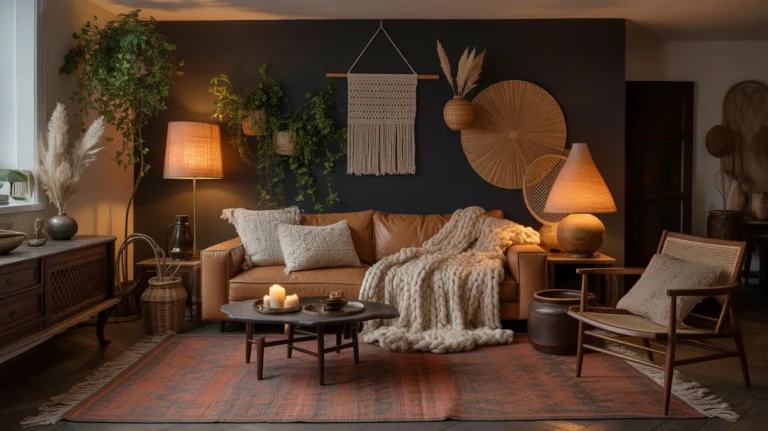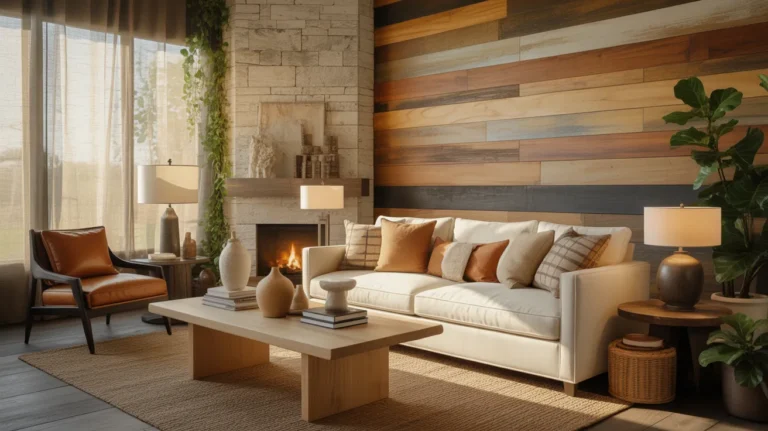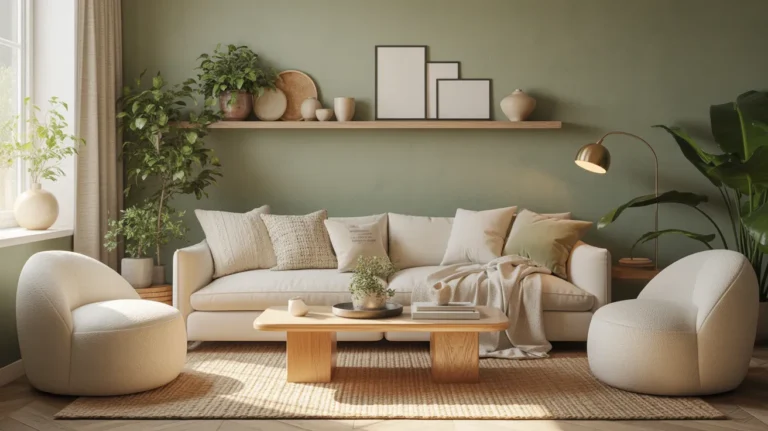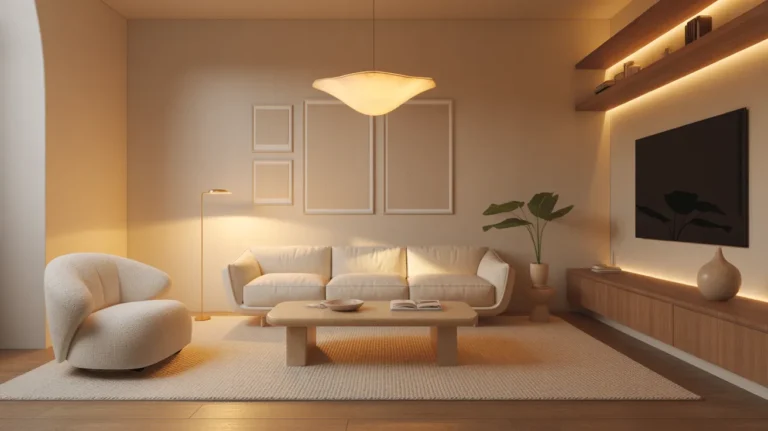
23 Maximalist Living Room Ideas Full of Bold Style
Ready to make your living room feel bolder, richer, and unmistakably yours? These maximalist living room ideas show how color, pattern, texture, and personality can work beautifully together.
If your space feels plain, unfinished, or too carefully matched, maximalist decorating offers an exciting alternative. Instead of choosing between color and comfort, you can layer both through statement furniture, patterned rugs, gallery walls, dramatic lighting, collected decor, and inviting textiles. The goal is not to fill every corner—it is to create a room where each detail feels intentional and interesting. In my experience, even one strong change, such as a colorful sofa or oversized artwork, can completely shift the atmosphere. Explore these ideas for practical inspiration you can adapt to your own style, layout, and budget.
Jewel-Tone Sofa
- Choose one richly colored sofa as the room’s visual anchor.
- Layer contrasting cushions in velvet, boucle, or woven fabrics.
- Balance intense upholstery with quieter flooring and natural textures.
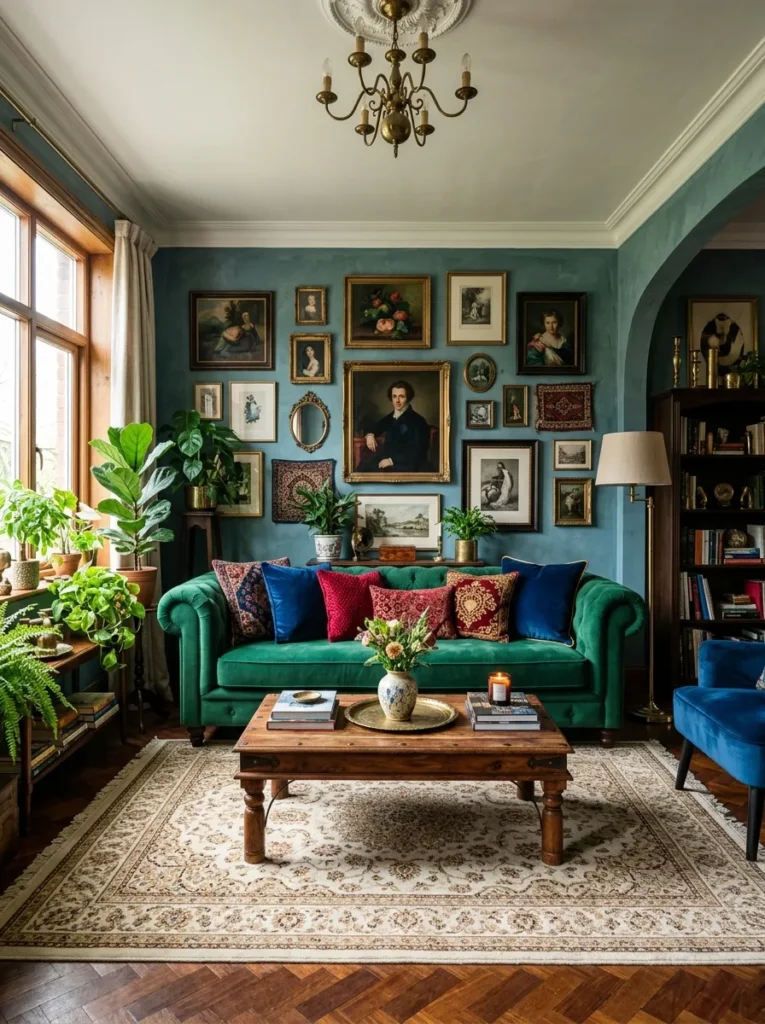
A jewel-tone sofa instantly gives the room a confident focal point without requiring every surface to be equally dramatic. Deep emerald, sapphire blue, ruby red, or mustard can bring richness while still feeling polished and livable. In my experience, a strong sofa color works best when nearby accessories repeat small hints of the same shade rather than matching everything exactly. Add patterned cushions, a textured throw, and one contrasting chair to create visual rhythm. The result feels collected instead of chaotic, while the seating area remains comfortable enough for everyday lounging, reading, or relaxed conversations with guests.
The trick is giving the bold upholstery enough breathing room. Keep the flooring, major window treatments, or one wall relatively calm so the sofa remains visually important. A patterned rug can connect several colors without making the room feel crowded, especially when its background tone is softer. Brass lighting, dark wood, or natural woven baskets can also ground intense jewel shades. This approach makes a maximalist living room feel intentional because every colorful detail has a relationship with something nearby. You get the layered Pinterest look while keeping the space practical, balanced, and easy to update as your tastes change.
Patterned Wallpaper
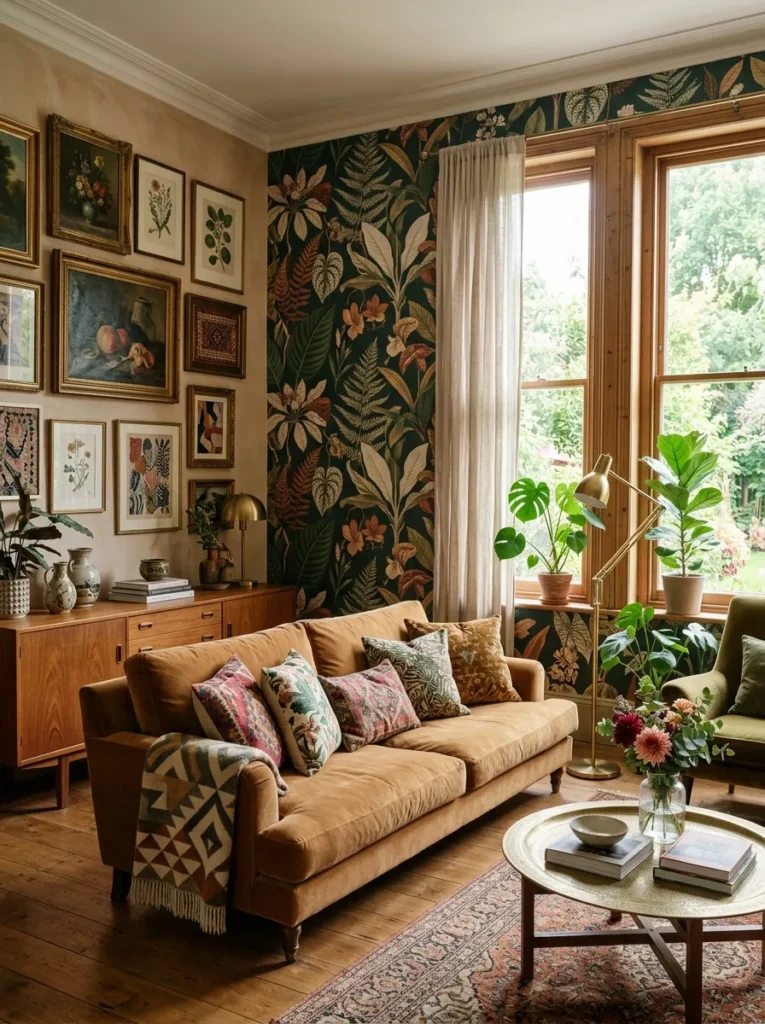
- Use wallpaper to turn a plain wall into a dramatic backdrop.
- Select oversized florals, botanical prints, or geometric patterns for impact.
- Keep nearby furniture simple enough to let the wall breathe.
A plain wall can become the most memorable feature in the room with the right patterned wallpaper. Oversized florals, dramatic botanicals, vintage motifs, and expressive geometric prints create instant depth without adding bulky furniture. I’ve noticed that large-scale patterns often look more sophisticated than tiny repeated designs because they give the eye clear shapes to follow. Choose a wallpaper palette that already includes two or three colors you love, then repeat those shades through cushions, artwork, or a nearby accent chair. This creates connection throughout the room instead of making the wall feel like an isolated decorative statement.
Wallpaper also gives you a useful way to define a seating zone, especially in an open-plan home. Apply it behind the main sofa or around a fireplace to create a visual boundary without constructing another wall. If the print is busy, introduce solid upholstery and natural wood nearby to prevent competing patterns from becoming overwhelming. For renters, removable wallpaper can provide a similar effect with less commitment. The finished space feels layered, personal, and deliberately styled. Instead of simply filling an empty wall, you create a backdrop that makes furniture and accessories look more considered.
Gallery Wall Layers
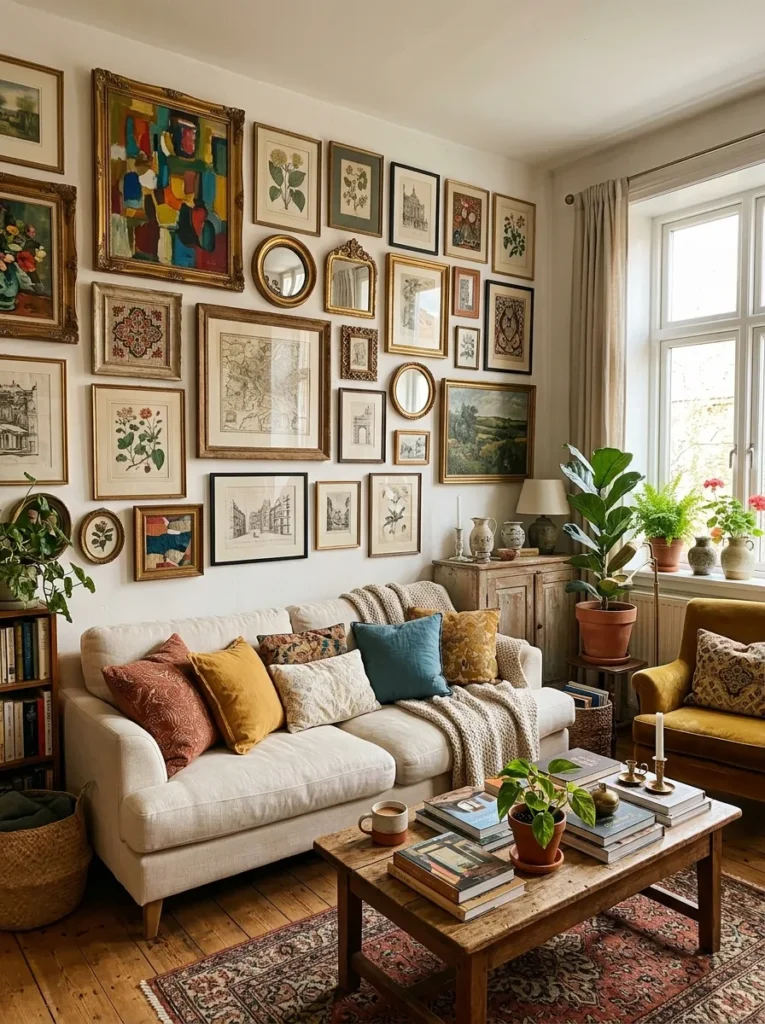
- Mix artwork sizes to create a collected, lived-in arrangement.
- Combine framed prints, mirrors, photographs, and small decorative objects.
- Leave enough visual breathing room to keep the display organized.
A layered gallery wall can make an ordinary seating area feel instantly personal and full of character. Rather than buying matching artwork, combine different frame finishes, image sizes, colors, and textures to create a collected appearance. Start with your largest piece near the center, then build outward with smaller artwork and mirrors. That simple anchor keeps the arrangement from feeling random. For a more relaxed look, vary the spacing slightly while maintaining an overall shape. The result gives the room visual movement and creates countless small details for the eye to discover, which makes this approach especially effective in Pinterest-inspired interiors.
The beauty of this idea is that it can evolve over time instead of needing to be completed in one shopping trip. Add travel photographs, thrifted artwork, handmade prints, or sentimental pieces whenever you find something that fits the palette. In my experience, repeating one or two colors throughout unrelated frames helps even a very eclectic collection feel connected. Position the gallery above the sofa, fireplace, or console so it naturally becomes a focal point. Add a textured rug and a few sculptural accessories below it, and the entire wall becomes part of a cohesive, layered composition rather than a collection of disconnected decorations.
Layered Persian Rugs
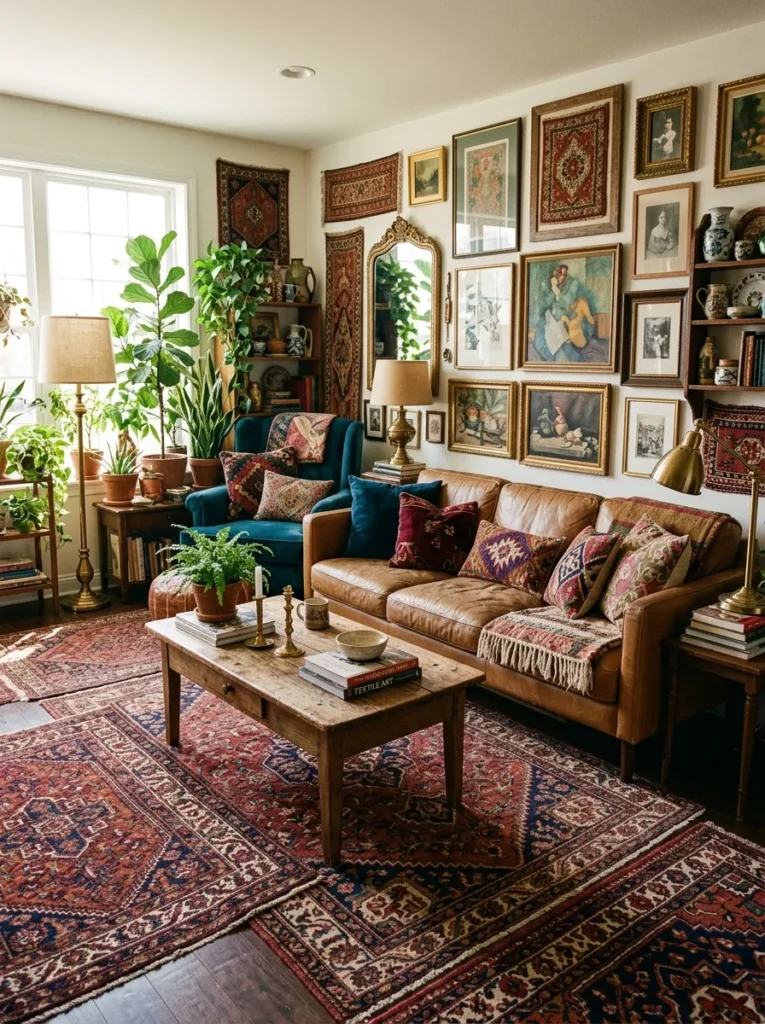
- Overlap rugs to introduce pattern, color, and tactile depth.
- Combine traditional motifs with simpler textures for visual balance.
- Use rug layering to define the main seating arrangement.
Few changes make a room feel richer as quickly as layering rugs beneath the seating area. A vintage Persian-style rug can provide intricate color and pattern, while a larger neutral jute or woven rug creates a calm foundation underneath. This combination adds depth without requiring new furniture. I’ve noticed that slightly overlapping rugs also make large living rooms feel more connected because the patterns visually bridge separate seating pieces. Choose colors that appear elsewhere in the room, such as rust from the artwork or navy from the cushions, so the floor becomes part of the overall design rather than an afterthought.
Rug layering also solves a practical design problem: defining where one zone begins and ends. In a large or open room, position the largest rug underneath the front legs of the main seating, then place a smaller patterned rug slightly off-center for added character. Make sure both rugs sit securely and avoid excessive bunching in walking paths. A mix of low and medium textures creates more dimension without making the floor difficult to use. The finished arrangement feels warm, collected, and comfortably eclectic, giving the room that abundant maximalist character while still keeping the furniture arrangement visually organized.
Velvet Accent Chairs
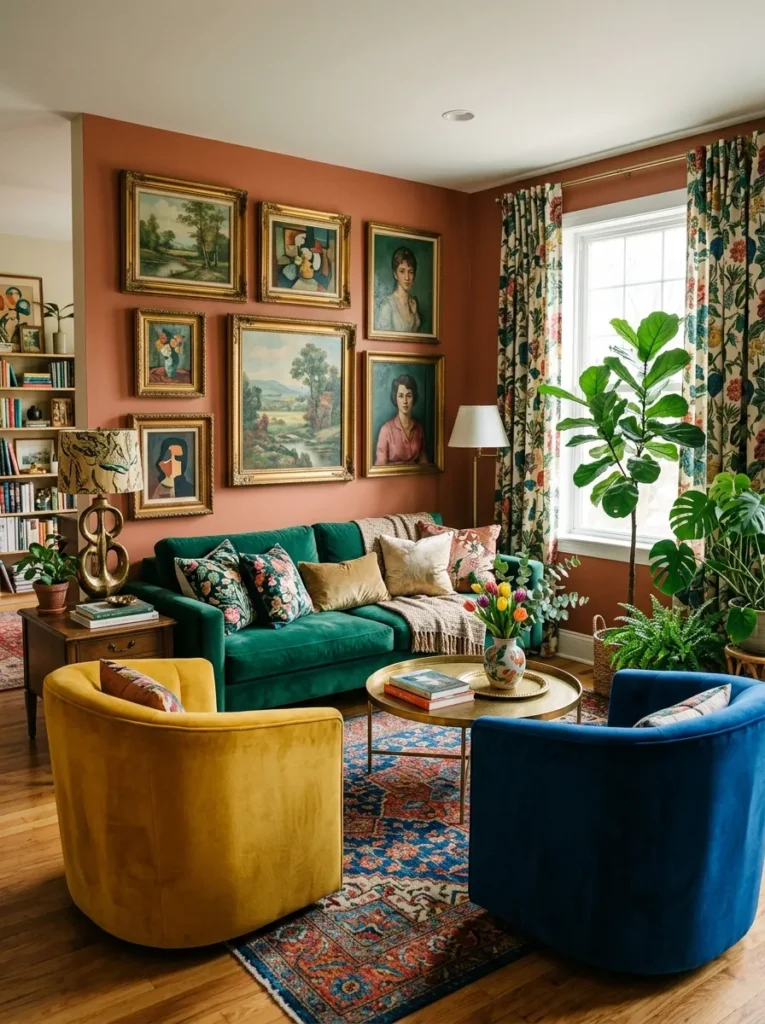
- Add one or two velvet chairs in contrasting colors.
- Choose curved silhouettes for a softer, more decorative profile.
- Position chairs to encourage conversation rather than simply filling space.
A velvet accent chair can introduce a surprisingly powerful dose of color without replacing the main sofa. Look for saturated shades such as mustard, cobalt, plum, teal, or burnt orange, especially when the rest of the room already contains related tones. Curved backs and rounded arms make the chairs feel softer and more decorative, while slim legs prevent the seating area from appearing visually heavy. Place one chair opposite the sofa or pair two across from each other to encourage conversation. The result is a seating arrangement that feels intentionally designed rather than simply assembled around available furniture.
The fabric itself contributes another layer of richness because velvet catches light differently across its surface. During the day, natural light highlights subtle shifts in color, while evening lamps create a softer, more luxurious appearance. In my experience, you do not need matching chairs to create cohesion; repeating one color through a cushion, artwork detail, or small accessory is often enough. Add a patterned throw or small side table beside the chair for function. This creates a comfortable reading or conversation corner while giving the overall room another strong visual moment without overcrowding the layout.
Statement Ceiling Decor
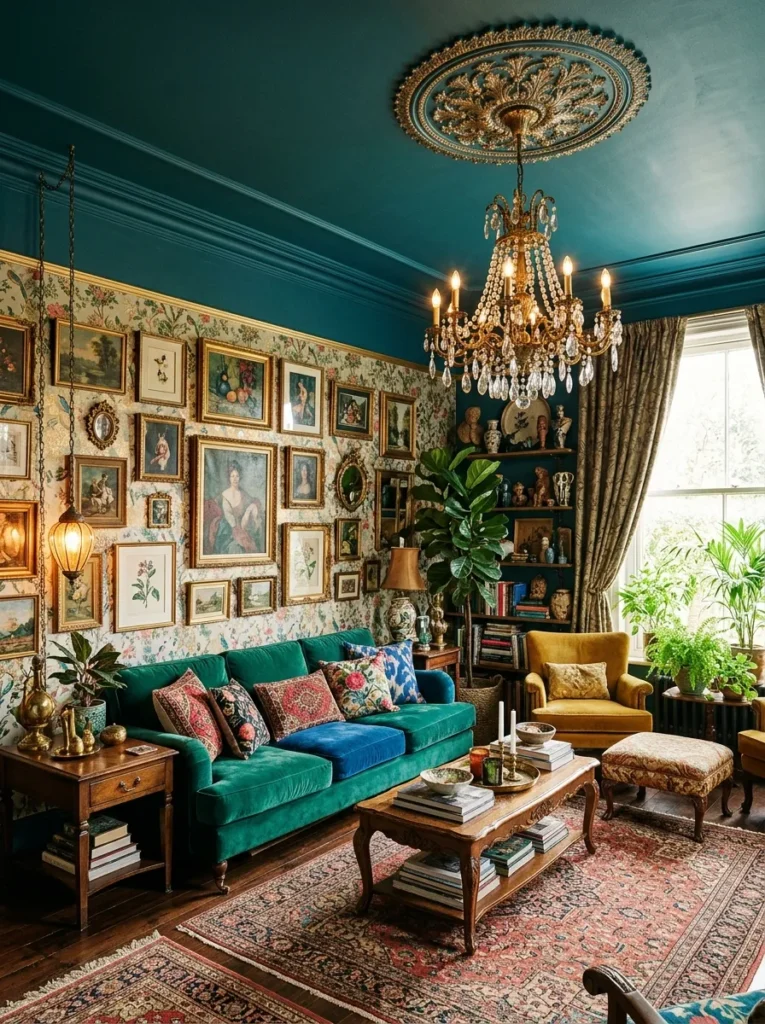
- Turn the fifth wall into an unexpected decorative feature.
- Try bold paint, patterned wallpaper, or a decorative ceiling medallion.
- Pair dramatic overhead details with warm, layered lighting.
The ceiling is an easy-to-miss opportunity for adding personality, yet it can completely change how a room feels when treated as part of the design. A painted ceiling in deep teal, terracotta, plum, or warm ochre can make the entire space feel more enveloping. Patterned wallpaper overhead creates an even stronger statement, particularly when the walls remain slightly quieter. Keep the furniture arrangement grounded and comfortable so the ceiling provides the drama above. When done thoughtfully, this unexpected surface draws the eye upward and gives the room greater visual height, depth, and personality without taking away valuable floor space.
Lighting becomes especially important when the ceiling itself is decorative. A sculptural chandelier or vintage pendant can reinforce the design while spreading light across the room. Use warm bulbs and add floor or table lamps so the ceiling does not become the only illuminated feature after sunset. I’ve seen this work well in rooms with tall ceilings because the decorative treatment helps connect the upper and lower parts of the space. Repeat one ceiling color subtly in cushions, artwork, or ceramics, and the result feels cohesive rather than disconnected from the rest of the room.
Bold Color Blocking
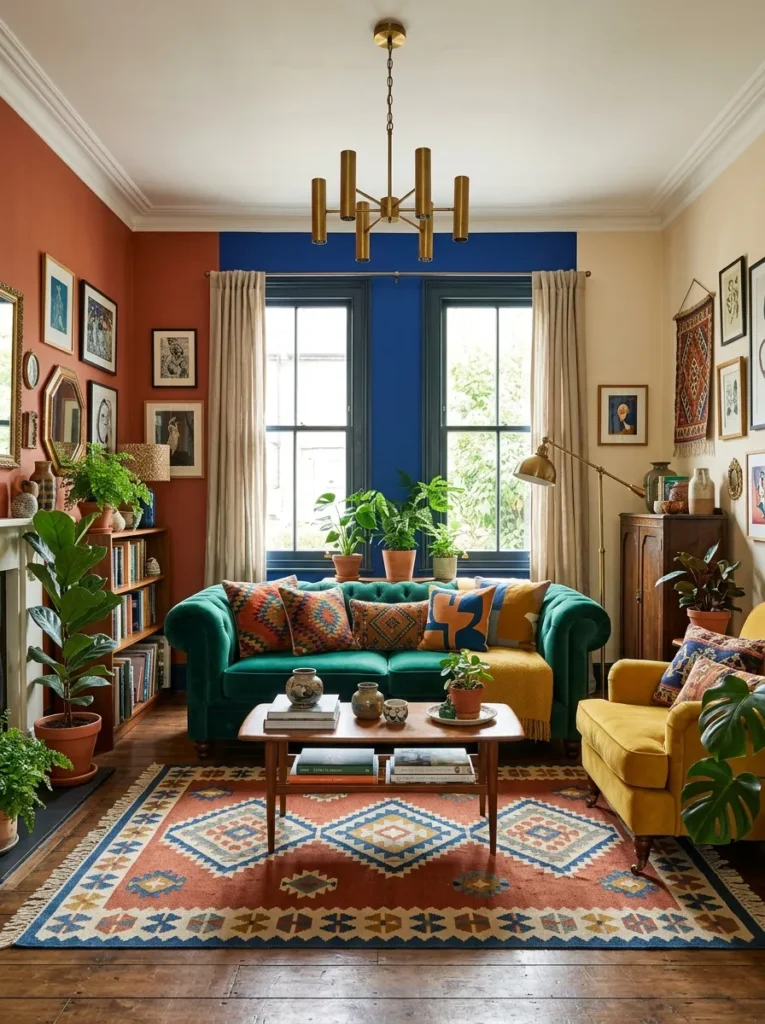
- Divide walls or furniture zones with contrasting paint colors.
- Pair unexpected shades that share a warm or cool undertone.
- Use color placement to highlight architectural features or seating areas.
Color blocking gives a room strong visual structure while allowing several bold shades to coexist. Instead of covering every wall with patterns, divide the space into intentional areas using contrasting paint colors. A terracotta lower section paired with cream above can create warmth, while a cobalt accent wall adds energy nearby. The key is repeating selected colors through furniture and accessories so the palette feels connected. This technique works particularly well when you want a maximalist living room to feel energetic without becoming visually confusing. Each color has a clear role, making the overall arrangement easier to understand.
You can also use color blocking to highlight features that might otherwise disappear. Paint the wall behind a sofa, fireplace, shelving unit, or reading nook in a contrasting shade to establish a natural focal point. Keep the remaining walls lighter if the room receives limited daylight, then introduce stronger colors through furniture and artwork. I’ve noticed that using three main shades usually creates enough variety without requiring dozens of competing tones. Finish with patterned cushions, a textured rug, and metallic accents to soften the painted geometry. The result feels playful, intentional, and highly personal without sacrificing everyday comfort.
Mixed Floral Textiles
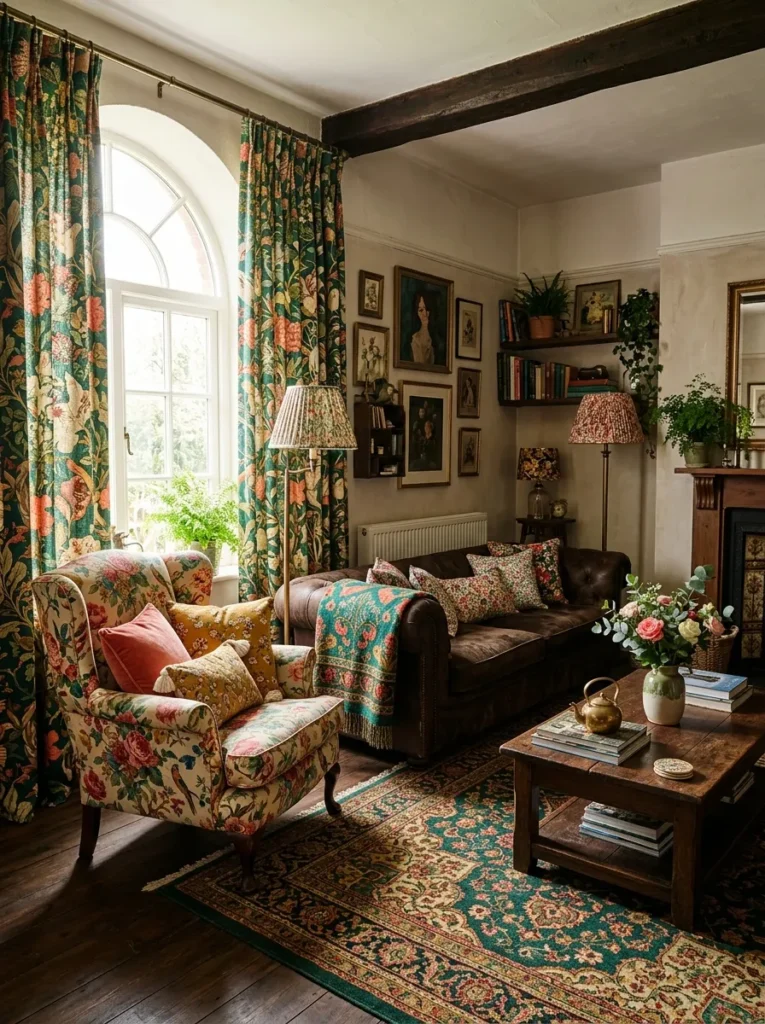
- Combine floral curtains, cushions, throws, or upholstered furniture.
- Vary flower scale so patterns complement rather than compete.
- Repeat two or three colors across different textile pieces.
Floral patterns can bring incredible depth to a room when they are layered thoughtfully rather than matched perfectly. Try combining an oversized botanical curtain with smaller floral cushions and one vintage-inspired upholstered chair. Different scales keep the patterns from visually competing, while a shared color palette creates cohesion. For example, emerald, coral, mustard, and cream can appear across several textiles without using identical prints. This approach gives the room the abundant, collected quality associated with maximalist interiors. The space feels more expressive because every fabric contributes another layer of color, texture, and personality.
When mixing florals, give each pattern a different visual job. One can be the dominant print, another can provide a smaller supporting motif, and a third can act almost like a texture from a distance. In my experience, solid-colored furniture is useful when several textiles are already patterned because it gives the eye somewhere to rest. Add natural wood, woven baskets, or aged brass to introduce quieter materials between the fabrics. The result feels cozy and richly decorated rather than chaotic. It is also easy to refresh seasonally by replacing only cushions and throws instead of redesigning the entire room.
Eclectic Bookcase Styling
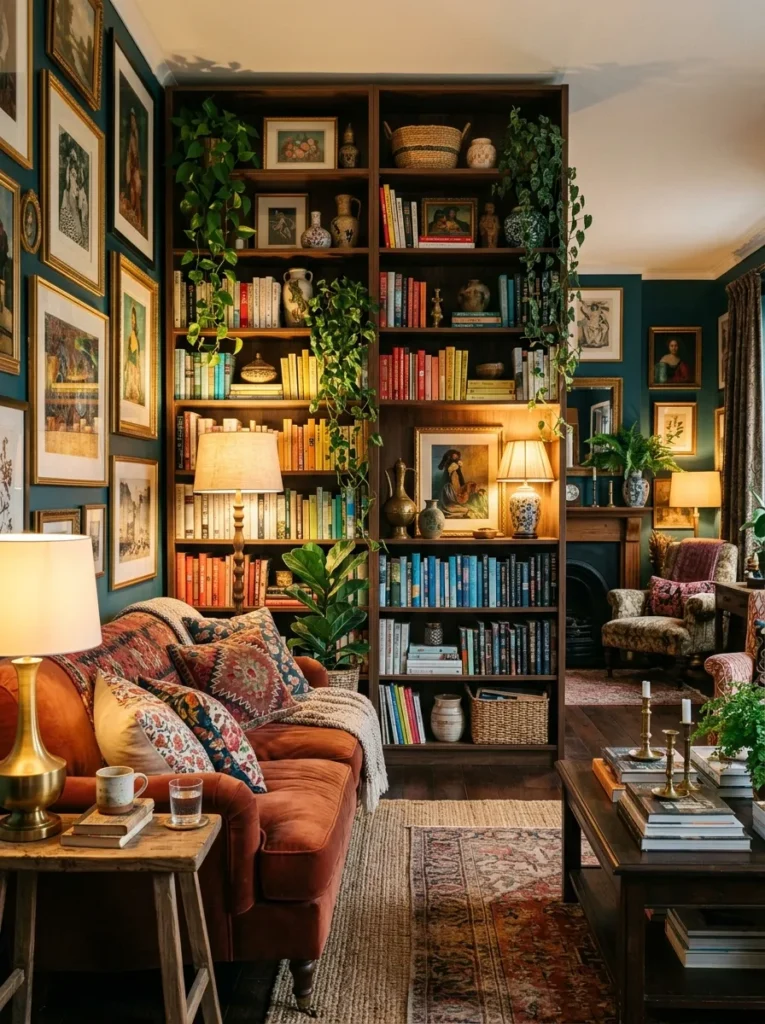
- Fill open shelves with books, art, ceramics, and collected objects.
- Arrange items at different heights to create movement.
- Leave small areas open so the display does not feel overcrowded.
An eclectic bookcase can become one of the most useful decorative features in a richly styled living room. Instead of filling every shelf with identical objects, mix books, framed artwork, ceramics, plants, baskets, and small sculptural pieces. Vary the height and orientation of your items so the eye moves naturally across the shelves. Place some books vertically and stack others horizontally to create different levels. This simple variation makes the display feel collected over time rather than purchased as a matching set. It also gives you a practical place to showcase meaningful pieces that might otherwise remain hidden.
The easiest way to keep a busy bookcase visually balanced is to create small pockets of empty space. Those breathing areas make colorful objects easier to appreciate and prevent the shelving from looking cluttered. Try repeating a few colors from the seating area, such as rust, green, blue, or mustard, while allowing the materials to vary. I’ve noticed that adding one or two trailing plants can soften hard shelf edges beautifully. Place a floor lamp beside the bookcase to highlight the arrangement after dark, turning ordinary storage into a warm decorative feature that contributes to the room’s overall character.
Oversized Art Statement
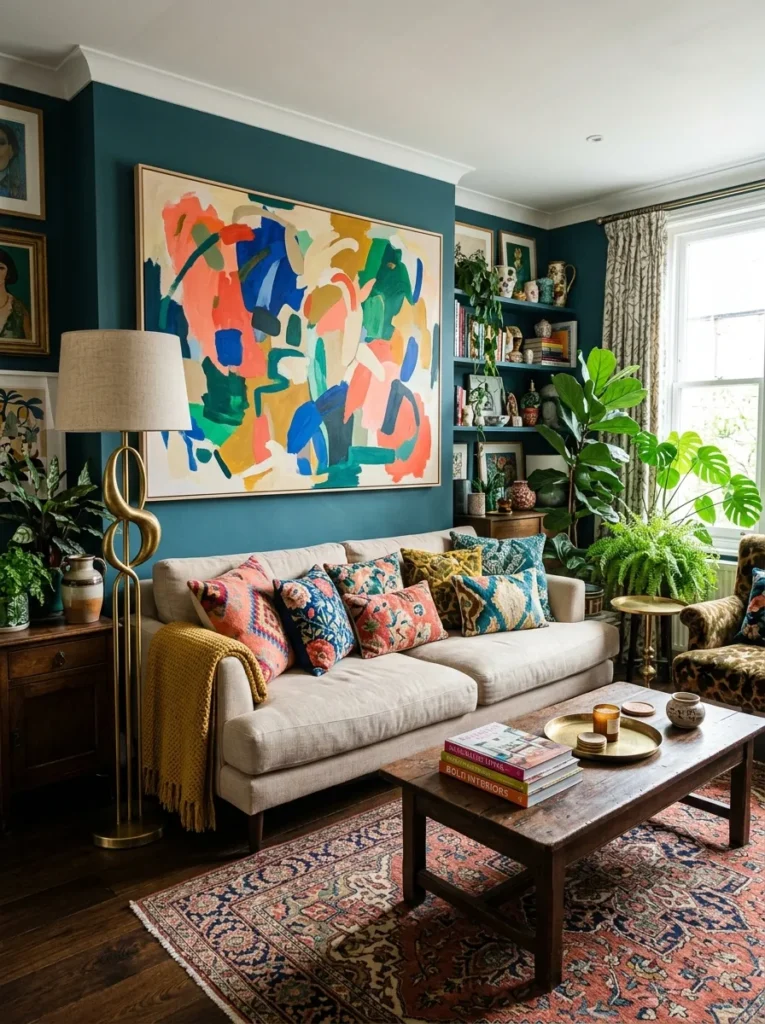
- Choose one large artwork to anchor the main seating wall.
- Let bold colors in the artwork guide nearby accessories.
- Use a substantial frame to make the piece feel intentional.
An oversized artwork can transform a blank wall into an instant focal point without filling the room with dozens of smaller decorations. Choose an abstract painting, colorful portrait, expressive botanical piece, or large vintage print that contains several shades already present in your furniture. The artwork should feel substantial enough to relate to the sofa beneath it. Rather than matching every color exactly, repeat one or two tones through cushions or ceramics. This creates visual continuity while allowing the artwork to remain the strongest feature. The result feels expressive, curated, and confidently maximalist without becoming cluttered.
Scale matters more than price when choosing statement artwork. A large inexpensive print can often create greater impact than several tiny pieces scattered across a wall. Position the center of the artwork at a comfortable viewing height, then leave enough surrounding space for it to remain visually dominant. In my experience, a substantial frame can make even a simple print feel more finished and intentional. Add a textured rug and one or two sculptural accessories below to connect the artwork with the rest of the room. This creates a balanced composition where the wall, furniture, and floor work together.
Antique Furniture Mix
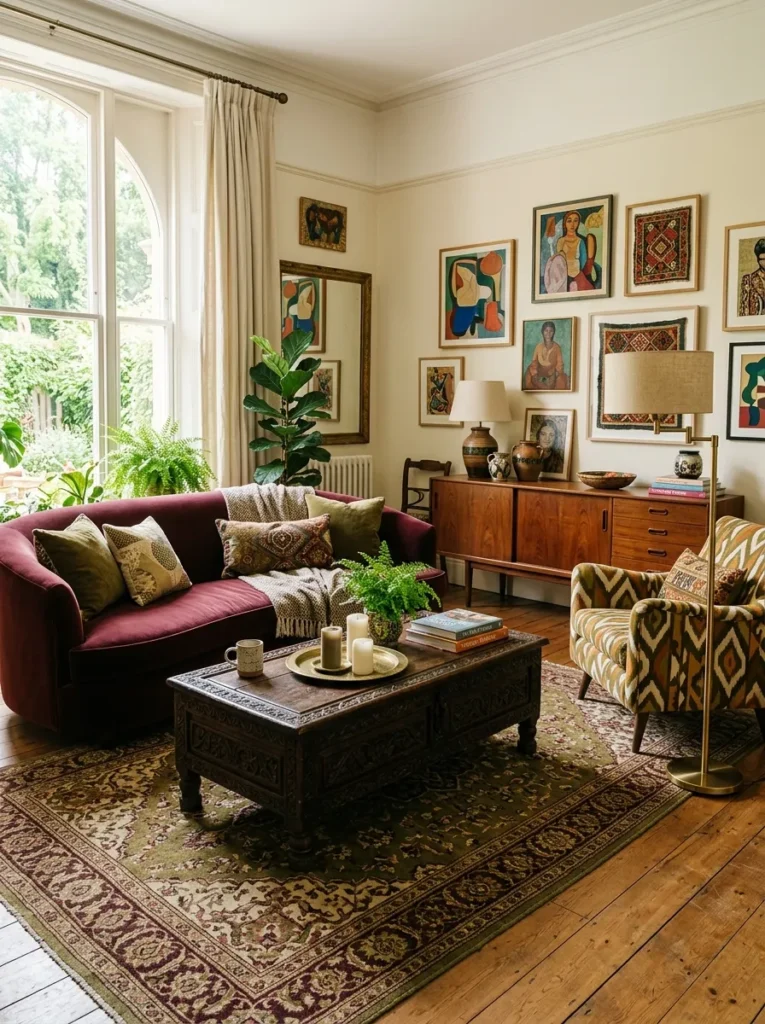
- Combine vintage furniture with newer pieces for collected character.
- Look for carved wood, aged finishes, and distinctive silhouettes.
- Balance ornate pieces with simple contemporary upholstery.
Mixing antique furniture with contemporary pieces gives a room depth that a matching furniture set often cannot provide. An aged wooden cabinet beside a modern curved sofa creates contrast between old and new, while carved details and worn finishes add visual character. Look for pieces with interesting silhouettes rather than trying to make everything coordinate. A vintage side table, ornate mirror, or traditional coffee table can become a memorable feature when surrounded by simpler furnishings. This combination creates a home that feels collected gradually, with each piece contributing its own history, texture, and personality.
You do not need expensive antiques to achieve the look. Thrift stores, secondhand markets, family furniture, and older pieces you already own can provide the right character. If an ornate item feels too heavy, balance it with lighter upholstery, contemporary lighting, or a simple woven rug. I’ve seen this work especially well when the wood tones are slightly varied rather than perfectly matched. Repeat one finish, such as brass or dark wood, in a few smaller details to connect everything. The finished room feels layered and authentic while avoiding the overly coordinated appearance of a showroom.
Colorful Curved Sofa
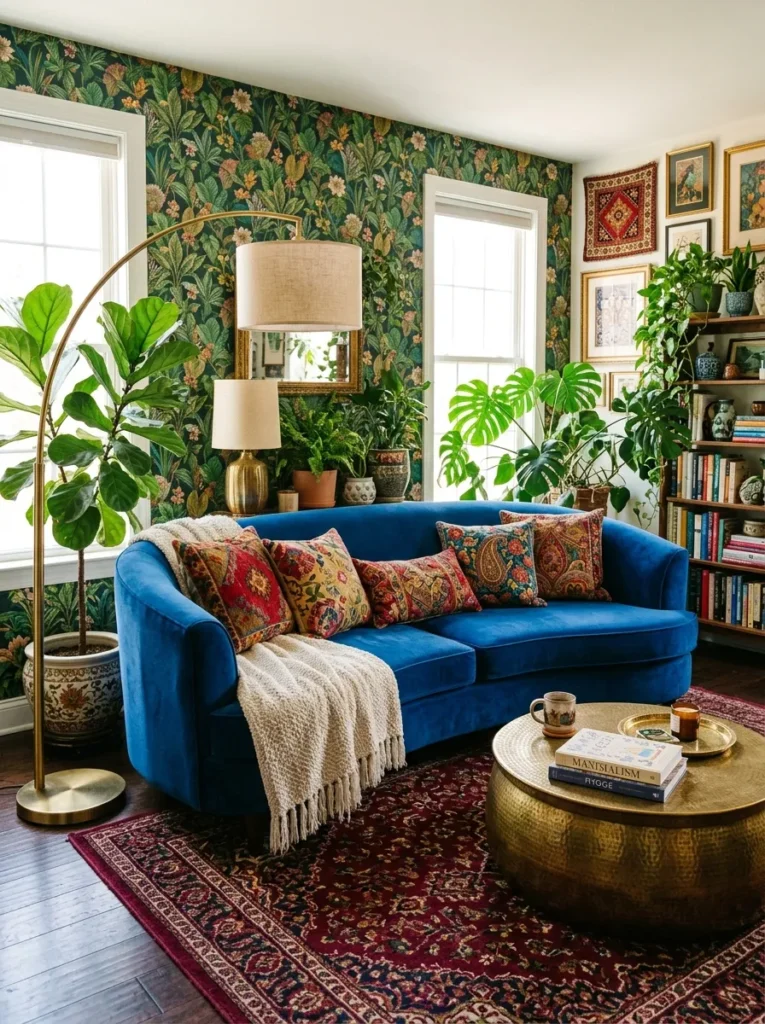
- Choose a rounded sofa shape to soften strong colors and patterns.
- Position it centrally when the room has generous floor space.
- Pair saturated upholstery with contrasting pillows and textured throws.
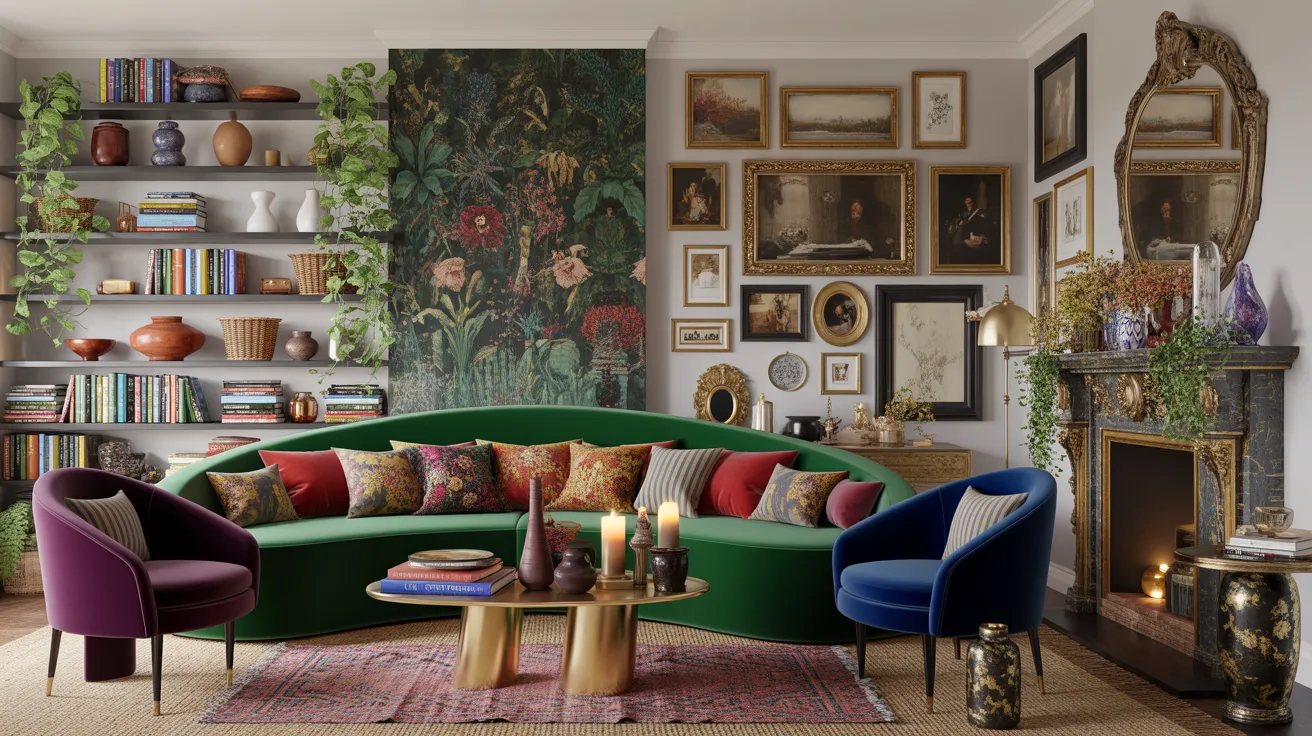
A colorful curved sofa combines two powerful design features in one piece: expressive color and a softer silhouette. Cobalt blue, emerald green, burnt orange, or deep plum can immediately establish the palette for the rest of the room. The rounded shape makes the furniture feel inviting while breaking up the straight lines commonly found in living spaces. Place the sofa where it can be appreciated from several angles, especially in an open-plan layout. Add cushions in contrasting patterns rather than matching the upholstery exactly, allowing the seating area to become the room’s central visual feature.
The surrounding pieces should support the sofa without competing for attention. A round coffee table echoes the curved silhouette, while a rectangular rug can provide contrast and visually anchor the entire arrangement. Add one patterned chair or ottoman if more seating is needed, but keep pathways clear around the furniture. In my experience, a curved sofa works particularly well when its color appears in small details elsewhere, such as artwork, ceramics, or a throw. These repeated accents create a connected palette and help a dramatic centerpiece feel naturally integrated into the rest of the room.
Dramatic Window Treatments
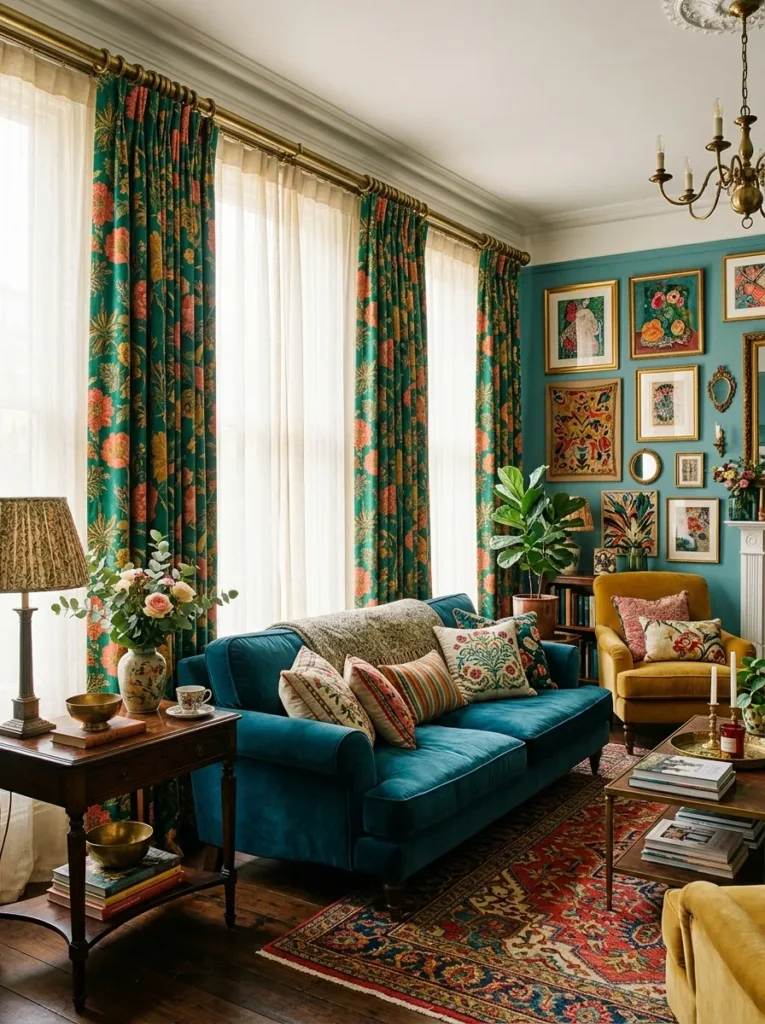
- Use patterned curtains to introduce height, color, and movement.
- Hang panels close to the ceiling for a taller appearance.
- Layer sheer curtains with heavier fabrics for flexibility.
Window treatments can become a major design feature when you choose fabric with enough color, pattern, and texture to stand beside the room’s other bold elements. Floor-to-ceiling curtains in botanical, floral, geometric, or vintage prints draw the eye upward and make windows feel more substantial. Hang the panels close to the ceiling and let them reach the floor for an elegant vertical line. If the room already contains strong furniture, choose a curtain pattern that repeats one existing color. This simple connection helps the windows feel integrated rather than visually separate from the seating area.
Layering sheer panels beneath heavier curtains gives you both decoration and practical control over light. During the day, the sheer fabric can soften sunlight while preserving brightness; in the evening, close the heavier panels for a cozier atmosphere. I’ve noticed that substantial curtain rods and full-width panels make even modest windows feel more luxurious. Avoid stopping curtains exactly at the window frame because that can visually shorten the wall. Instead, extend the fabric beyond the window when possible. The finished effect adds softness, height, privacy, and another beautiful layer to an already richly decorated room.
Sculptural Lighting
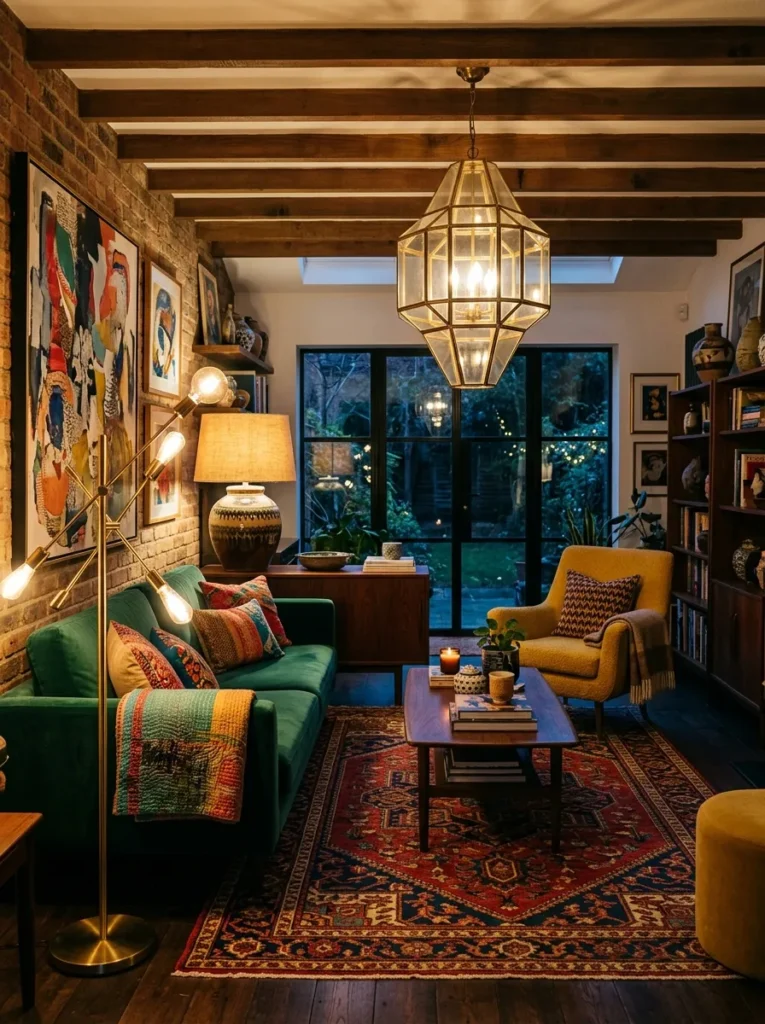
- Choose lamps with unusual shapes to add artistic character.
- Mix floor, table, and ceiling lights at different heights.
- Use warm bulbs to soften intense colors after sunset.
Lighting can function as decoration rather than simply serving a practical purpose. A sculptural floor lamp, oversized ceramic table lamp, or unusual pendant can introduce shape and personality even when the lights are switched off. Look for curved silhouettes, textured ceramic bases, aged brass finishes, or oversized shades that complement the room’s scale. Place lights at different heights around the seating area instead of relying on one central fixture. This creates layers across the room and prevents the corners from disappearing into darkness. The result feels warmer, more dimensional, and visually interesting throughout the day.
Warm lighting becomes especially valuable when the room contains saturated colors and busy patterns. Cooler bulbs can make bold interiors feel harsh, while warmer illumination brings out the richness of velvet, wood, brass, and painted walls. In my experience, placing a floor lamp beside a sofa and a smaller lamp on a side table creates an instantly more inviting evening atmosphere. Add a statement ceiling fixture if the room allows it, but keep the shapes varied rather than identical. This combination gives the space a collected quality while ensuring that decorative details remain visible after natural daylight fades.
Botanical Decor Layers
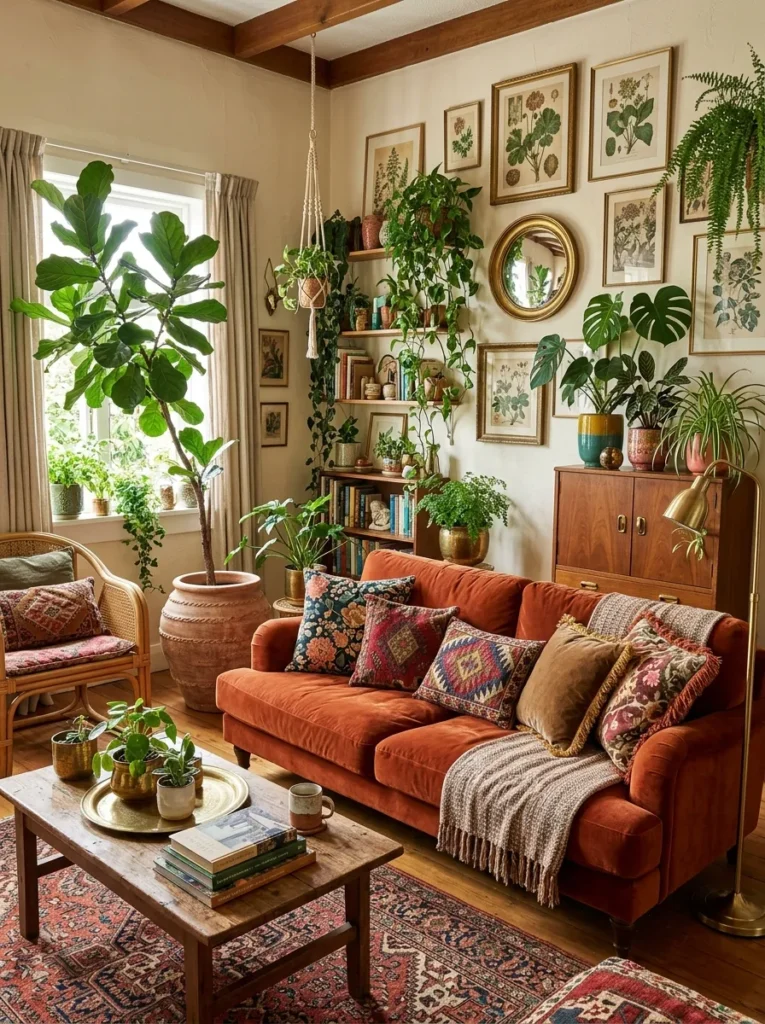
- Introduce plants at different heights for natural visual movement.
- Combine large leafy plants with smaller tabletop greenery.
- Use decorative pots that complement the room’s color palette.
Plants add a natural counterpoint to the strong colors, patterns, and decorative objects found throughout an eclectic living room. A tall leafy plant can fill an empty corner, while smaller plants on shelves, side tables, or window ledges create layers at lower heights. Choose foliage with different leaf shapes rather than buying several identical varieties. This variation makes the greenery feel more organic and helps soften furniture with strong geometric lines. Decorative pots can also contribute to the palette, especially when their colors repeat shades found in artwork, cushions, or rugs. The room gains freshness without losing its abundant character.
Think vertically when arranging botanical decor. Place a tall plant beside a cabinet, a medium plant near the seating area, and trailing greenery on an upper shelf to guide the eye through different levels. Make sure each plant has enough light and that larger pots do not obstruct walking paths. I’ve noticed that even a few well-positioned plants can make a heavily decorated room feel more balanced because natural shapes break up hard edges. Combine greenery with woven baskets, wood, and stone accessories for additional texture. The result feels lively, layered, and comfortable rather than overly manufactured or visually flat.
Patterned Accent Walls
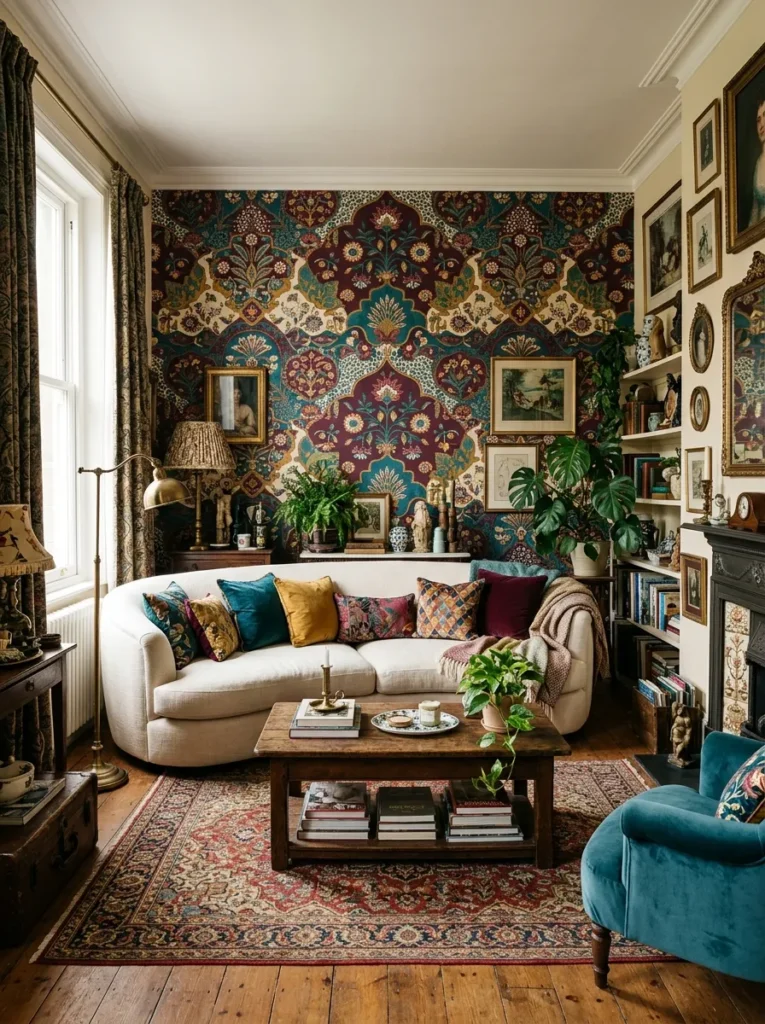
- Create one high-impact wall with layered color and pattern.
- Use geometric, floral, or vintage-inspired designs for personality.
- Keep surrounding surfaces calmer so the feature remains focused.
A patterned accent wall can give a living room an immediate focal point without requiring a complete redesign. Choose one wall behind the sofa, fireplace, or main seating area and introduce a bold geometric, botanical, or vintage-inspired pattern. The strongest results usually come from selecting a design that includes colors already present in the room. That way, the wall connects naturally with existing furniture and accessories. If the pattern is especially busy, keep larger furniture pieces relatively simple so the overall composition remains readable. This creates drama while preserving enough visual breathing room for everyday comfort.
An accent wall can also help define a room that lacks obvious architectural boundaries. In an open-plan space, placing a strong pattern behind the main seating area visually establishes that zone without adding physical partitions. I’ve noticed that repeating just one accent color from the wall in nearby cushions or artwork is often enough to create cohesion. You can use wallpaper, decorative paint techniques, or removable wall coverings depending on your space. Finish with warm lighting and textured furnishings to soften the pattern. The result feels intentional, layered, and expressive while keeping the decorating project focused on one manageable surface.
Clashing Pattern Mix
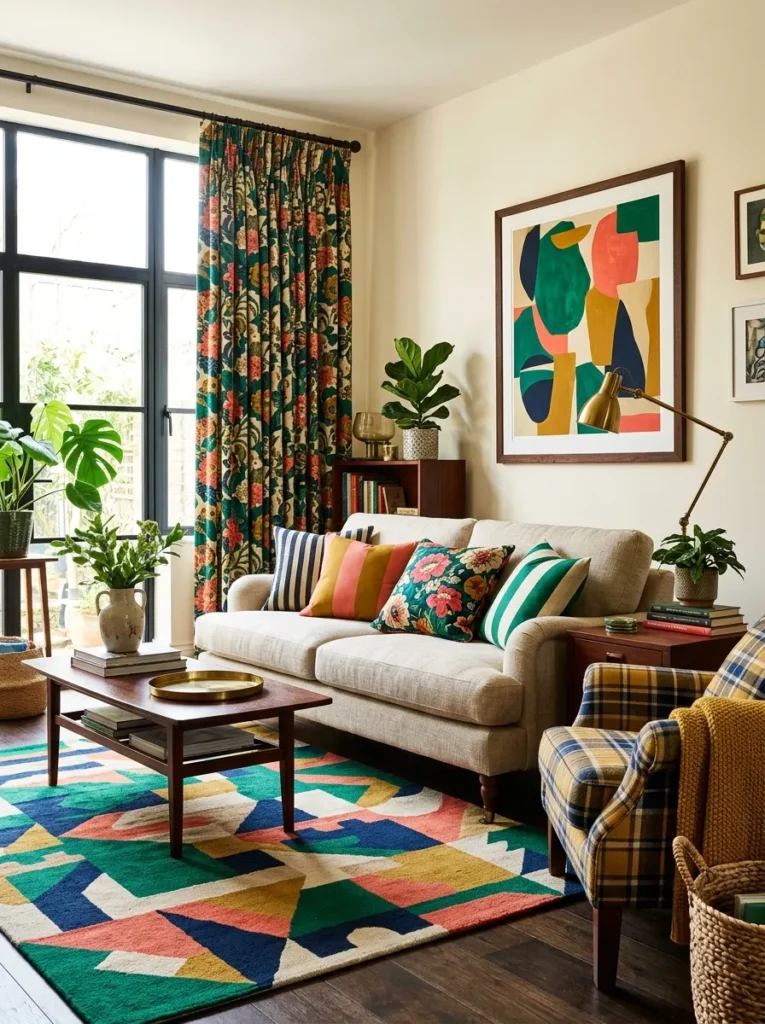
- Combine stripes, florals, checks, and geometric motifs thoughtfully.
- Vary pattern scale to prevent visual competition.
- Repeat colors across unrelated prints to create cohesion.
Pattern mixing is one of the easiest ways to create a richly layered interior, but the secret is controlled contrast rather than random combinations. Pair a large floral print with smaller checks, stripes, or geometric motifs so each design has a different visual scale. Keep at least two colors consistent across several patterns to establish a connection. For example, a navy stripe, mustard floral, and cream geometric print can look surprisingly cohesive when those shades repeat throughout the room. This creates the lively, collected appearance associated with maximalist design without making every surface compete equally.
Start with one dominant pattern and build outward from it. A large rug or dramatic curtain can establish the main visual direction, while cushions and smaller upholstered pieces provide supporting designs. Solid-colored furniture can act as a pause between busy surfaces and make the room easier to live with. In my experience, mixing pattern scales is more important than matching patterns perfectly. Add natural wood, woven materials, or simple ceramics to introduce quiet textures between prints. The finished space feels playful and confident, with enough variation to keep the eye moving without creating unnecessary visual confusion.
Decorative Fireplace Mantel
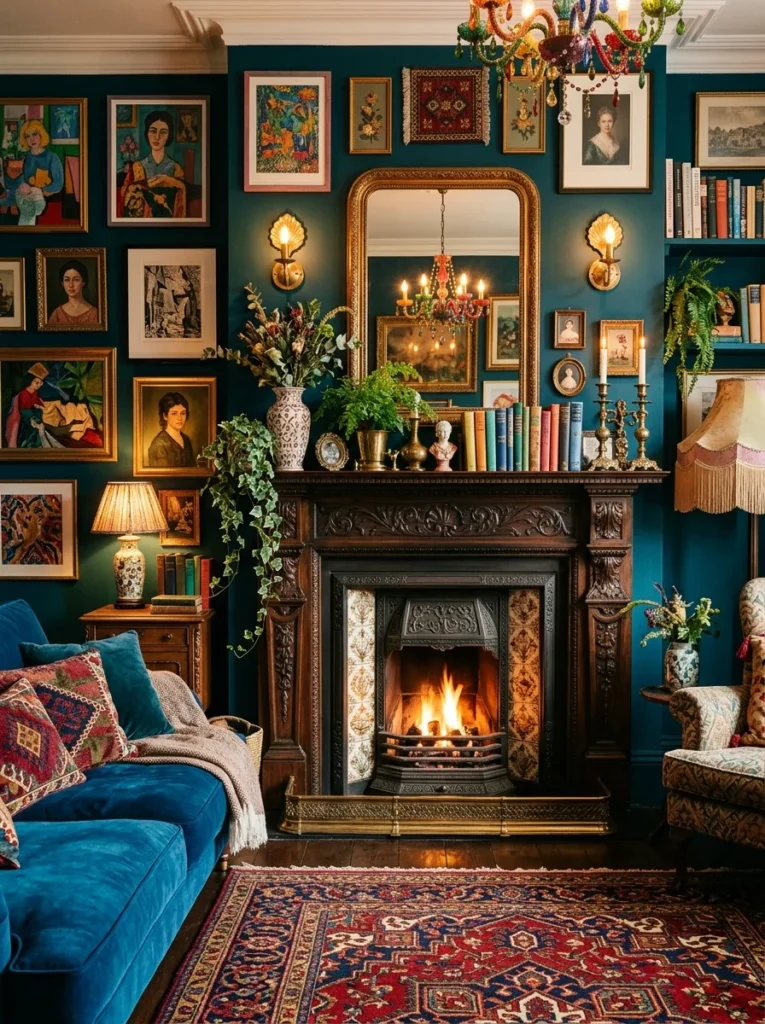
- Turn the mantel into a curated display of color and texture.
- Layer artwork, mirrors, ceramics, candles, and collected objects.
- Keep the tallest pieces toward the back for depth.
A decorative fireplace mantel offers a natural stage for displaying the colors, objects, and artwork that define your room. Instead of arranging everything in a straight line, layer pieces from front to back to create depth. Lean a large artwork or mirror against the wall, then add smaller framed pieces, ceramics, candlesticks, books, or greenery around it. Varying heights makes the arrangement feel collected rather than rigid. Choose objects that repeat colors already found in your sofa, rug, or curtains so the mantel becomes part of the room’s overall visual story instead of appearing separately decorated.
The mantel should feel full without becoming difficult to maintain or visually top-heavy. Start with one substantial piece as the anchor, then build around it using smaller objects. If the fireplace is functional, keep all decorative materials safely away from heat and flames. I’ve noticed that adding one natural element, such as trailing greenery or dried branches, can soften an arrangement filled with hard surfaces. Warm sconces or nearby lamps can highlight the display after sunset. With thoughtful layering, even a simple fireplace becomes an architectural focal point that adds character, color, and personality to the entire seating area.
Layered Mirror Display
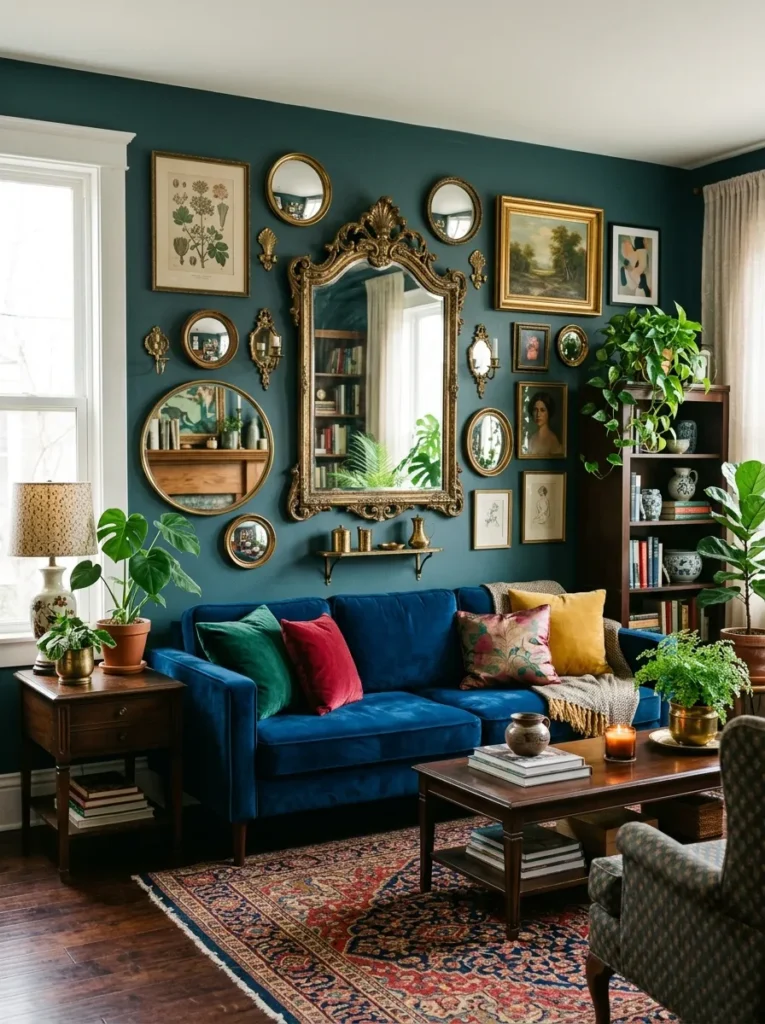
- Combine mirrors with artwork for extra depth and reflection.
- Mix round, arched, and ornate frames for visual variety.
- Place reflective pieces where they can bounce natural light.
A layered mirror display can make a richly decorated living room feel brighter while adding another dimension to the walls. Combine one larger ornate mirror with smaller round or arched mirrors and a few framed artworks for a collected arrangement. Different frame finishes, such as brass, wood, black, or aged gold, create visual interest without requiring identical pieces. Position the display where it can reflect a window, lamp, or attractive part of the room. This creates depth and movement because the reflection becomes another layer of the decor rather than simply functioning as a practical mirror.
Mirror placement matters particularly in rooms with limited natural light. Instead of facing a mirror toward a cluttered corner, use it to reflect greenery, artwork, or an attractive window view. In my experience, mixing reflective surfaces with matte materials creates the most balanced effect. Pair the mirrors with velvet upholstery, woven textiles, aged wood, and ceramic accessories so the room does not feel overly shiny. A large mirror can also visually expand a compact seating area, while smaller mirrors add decorative rhythm. The finished arrangement feels brighter, more spacious, and wonderfully collected without adding bulky furniture.
Maximalist Reading Nook
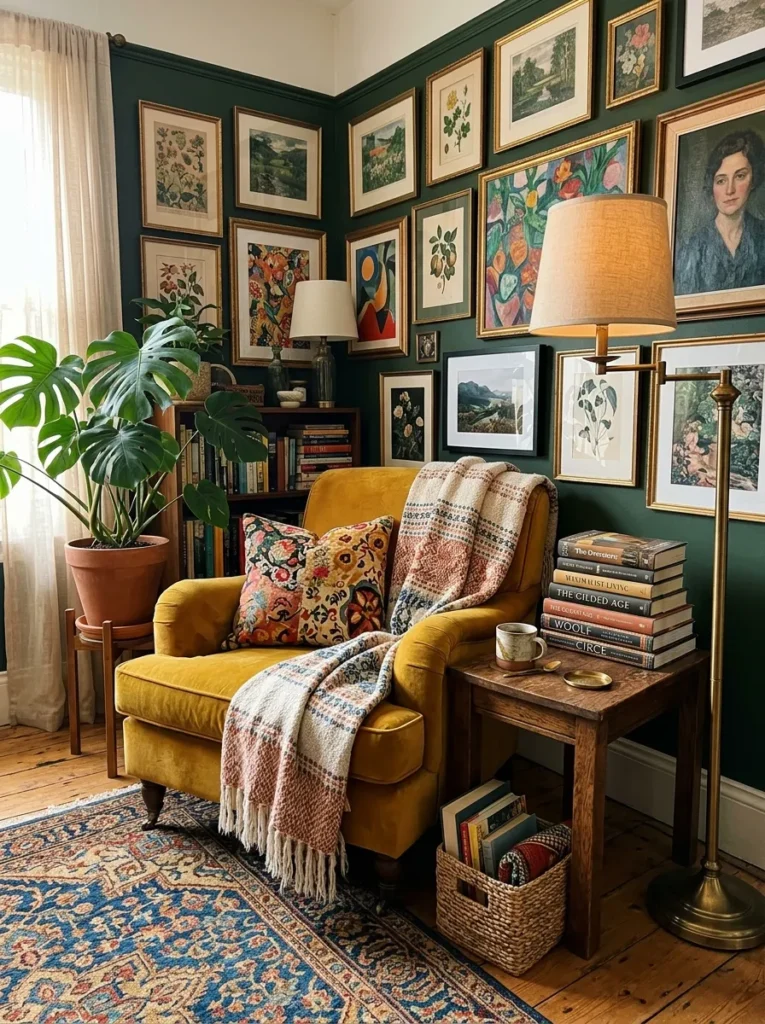
- Create a dedicated corner with one comfortable statement chair.
- Layer a floor lamp, side table, books, and soft textiles nearby.
- Use color and pattern to distinguish the nook from the main seating.
A small reading nook can give a large living room another purpose while adding a concentrated burst of color and texture. Start with one comfortable statement chair in velvet, boucle, leather, or patterned upholstery, then position a compact side table beside it. Add a warm floor lamp, a stack of favorite books, and a soft throw within easy reach. The corner does not need much furniture to feel complete. In a maximalist living room, this smaller zone can carry stronger patterns or colors because it has a clearly defined purpose and does not need to compete with every element across the room.
Use a rug or artwork to visually separate the nook from the main seating arrangement. A contrasting wall color behind the chair can make the area feel even more intentional, while a tall plant adds height and softens the surrounding edges. I’ve noticed that practical details make these corners much more enjoyable than purely decorative setups. Make sure the lamp provides comfortable reading light and leave enough clearance around the chair for easy movement. The finished nook becomes a useful retreat for reading or relaxing while adding another beautifully layered composition to the overall room.
Collected Travel Decor
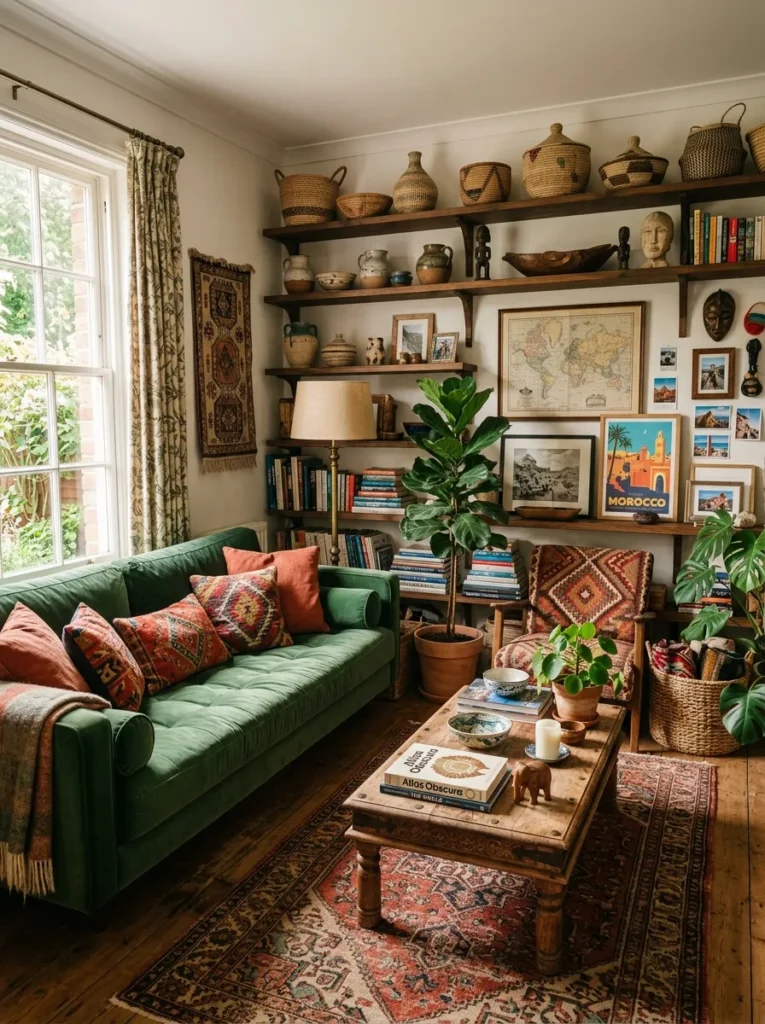
- Display meaningful souvenirs instead of generic decorative objects.
- Mix pottery, textiles, baskets, books, and small artwork.
- Group related pieces together to create stronger visual impact.
Meaningful objects can make a room feel far more personal than perfectly coordinated accessories ever could. Display handmade ceramics, woven baskets, carved objects, textiles, postcards, books, or artwork that remind you of places and experiences you value. Rather than scattering these pieces randomly, group several related objects on a shelf, console, or coffee table so they create a stronger visual statement. This approach gives the room personality while making the decor feel naturally accumulated. The goal is not to recreate a particular destination, but to let different colors, materials, and shapes tell a personal story through the space.
Collected decor works especially well when the surrounding furniture provides a simple foundation. A colorful souvenir can stand out beautifully against dark wood, a neutral wall, or a richly upholstered sofa. Repeat small color or material connections throughout the room to prevent the collection from looking disconnected. In my experience, objects with visible texture are particularly effective because they add interest even when their colors differ. Give treasured pieces enough space to be noticed rather than filling every available surface. The result feels authentic, lived-in, and individual, turning the room into a reflection of personal taste rather than a showroom display.
Eclectic Coffee Table
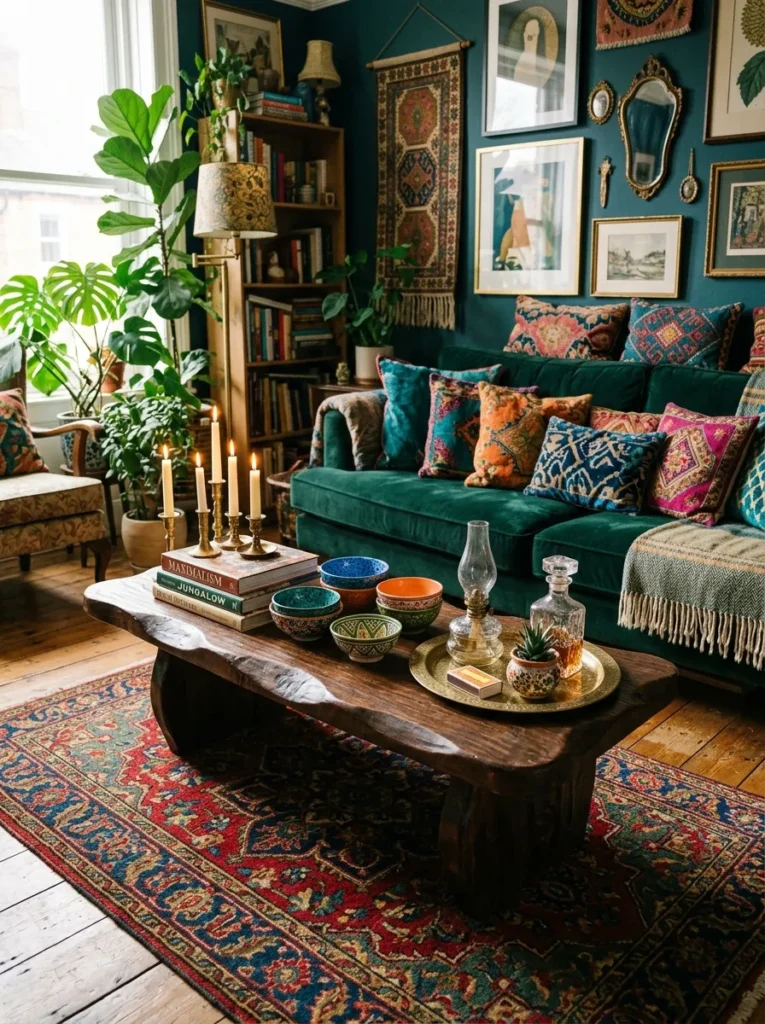
- Choose a sculptural or vintage table as a central focal point.
- Layer books, trays, candles, and small decorative objects.
- Keep enough open surface for drinks and everyday use.
A coffee table can become much more than a practical surface when it is styled as part of the room’s overall composition. Choose a sculptural wooden design, vintage trunk, painted table, or unusual rounded shape that adds character between the seating pieces. Then create a small arrangement using stacked books, a decorative tray, ceramic bowl, candle, or vase. Keep the tallest objects toward the center and leave enough empty surface for everyday use. This small styling zone adds another layer of personality while helping the surrounding furniture feel connected rather than randomly positioned.
Function should remain just as important as appearance. A beautiful table becomes frustrating when there is nowhere to place a drink, remote, book, or laptop. Use a tray to group smaller objects so they can be moved easily when the surface is needed. In my experience, combining three different heights creates a simple but effective arrangement without requiring excessive decoration. Introduce one material already used elsewhere, such as brass, wood, ceramic, or woven fiber, to reinforce the room’s palette. The result is a practical centerpiece that adds texture, color, and visual interest without overwhelming the seating area.
Layered Textile Seating
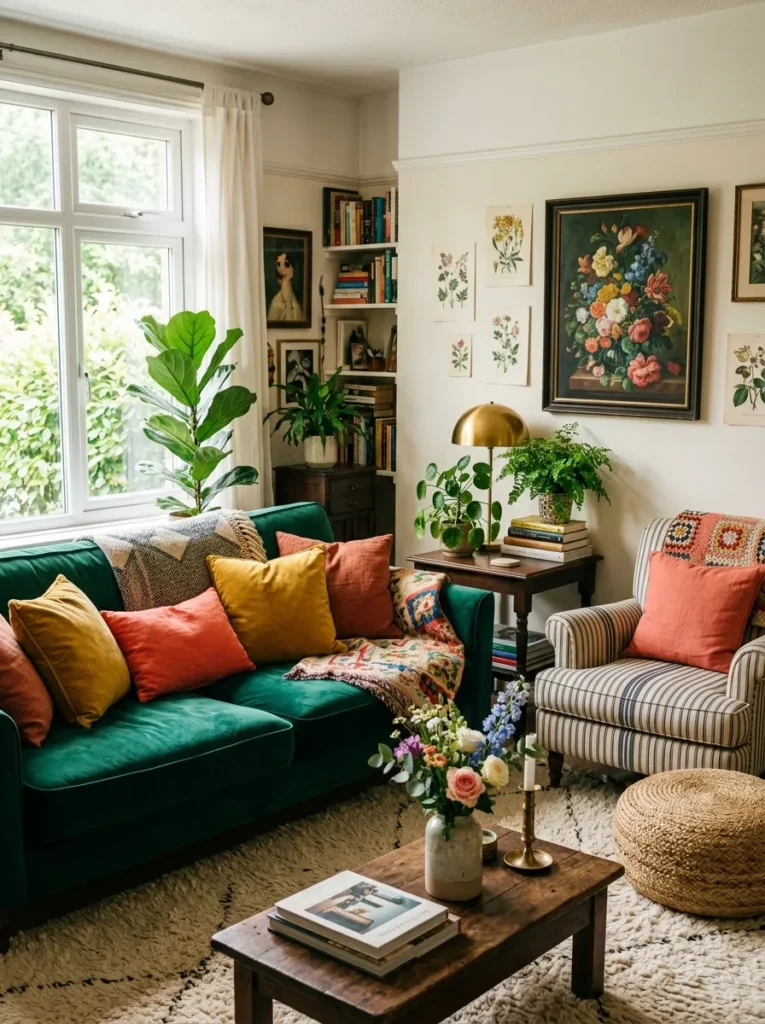
- Combine cushions, throws, and upholstery in varied textures.
- Mix solids with stripes, florals, checks, or abstract patterns.
- Repeat key colors to make the seating arrangement feel cohesive.
Layered textiles are one of the easiest ways to make a seating area feel inviting, abundant, and visually complete. Start with cushions in different shapes and sizes, then combine velvet, linen, woven fabric, boucle, or cotton for tactile variety. Add a patterned throw across the sofa and introduce one contrasting chair or pouf nearby. The patterns do not need to match; they simply need a few shared colors to create connection. This approach gives the seating area the rich, comfortable quality people often want from maximalist interiors while keeping the room practical enough for everyday lounging.
Texture becomes especially important when the room already contains strong colors or dramatic artwork. A velvet cushion can soften a geometric print, while a chunky woven throw adds warmth beside smooth upholstery. I’ve noticed that using different textures in similar colors often creates a more sophisticated result than adding even more contrasting shades. Arrange cushions loosely rather than making everything perfectly symmetrical, and keep the most comfortable pieces within easy reach. With a few thoughtful layers, the seating area becomes softer, more welcoming, and visually richer, giving the entire room a finished appearance without needing additional major furniture.
Conclusion
A bold living room does not have to feel chaotic. With thoughtful color, varied textures, meaningful accessories, and balanced patterns, you can create a space that feels expressive while remaining comfortable and functional. These maximalist living room ideas offer plenty of ways to start, whether you want a dramatic transformation or simply one colorful update. I’ve seen how small changes can completely transform a space when they reflect the people who live there. Save this post on Pinterest for your next decorating project, try an idea that speaks to you, and share it with someone who loves bold interiors. Your most memorable room may be one creative layer away.