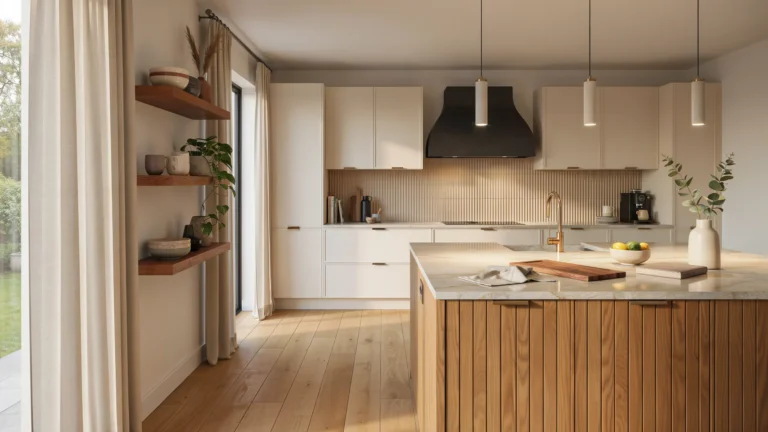
23 Modern Boho Kitchen Ideas for Dreamy Spaces
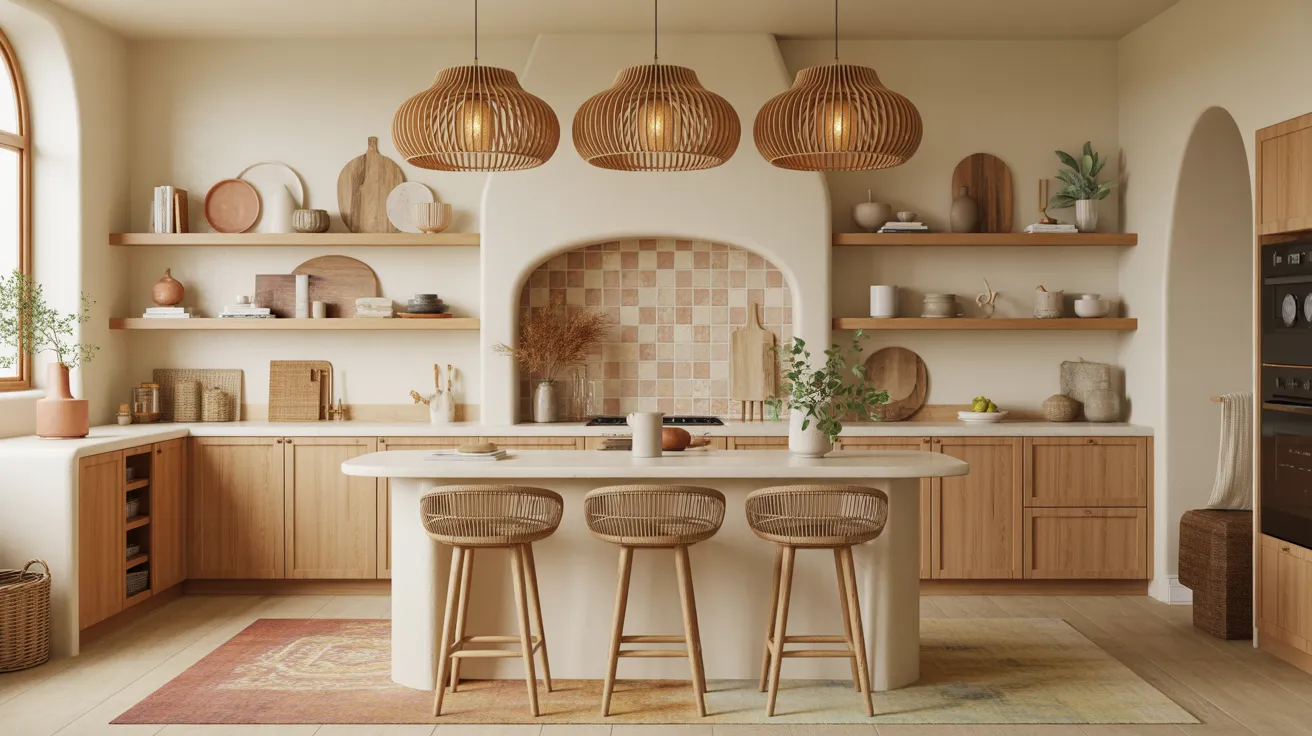
Your dream kitchen might be closer than you think.A few warm textures, earthy colors, and thoughtful details can completely change the feeling of your space.
These modern boho kitchen ideas are designed for anyone who wants a kitchen that feels stylish, welcoming, and effortlessly lived-in without looking cluttered or overly decorated. From natural wood cabinets and woven lighting to earthy tiles, vintage ceramics, greenery, and soft neutral textures, each idea shows how small design choices can create a bigger transformation. If your kitchen currently feels plain, cold, or disconnected, these approachable updates can give it more warmth and personality. In my experience, combining just two or three natural materials can make a surprisingly noticeable difference. Explore the ideas, save your favorites, and find the details that feel right for your home.
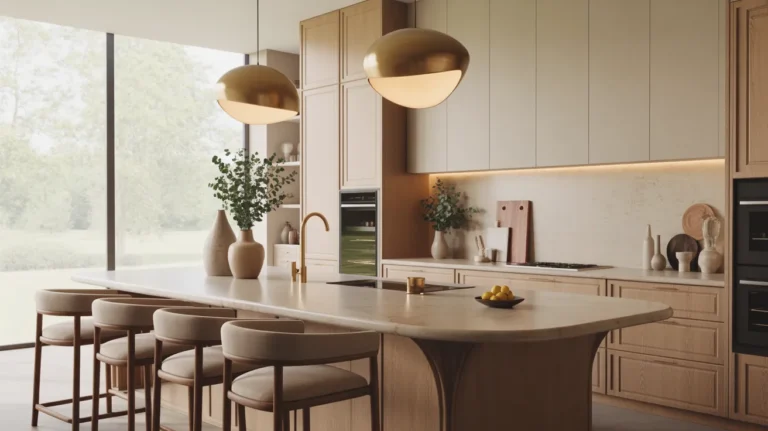
Warm Wood Cabinets
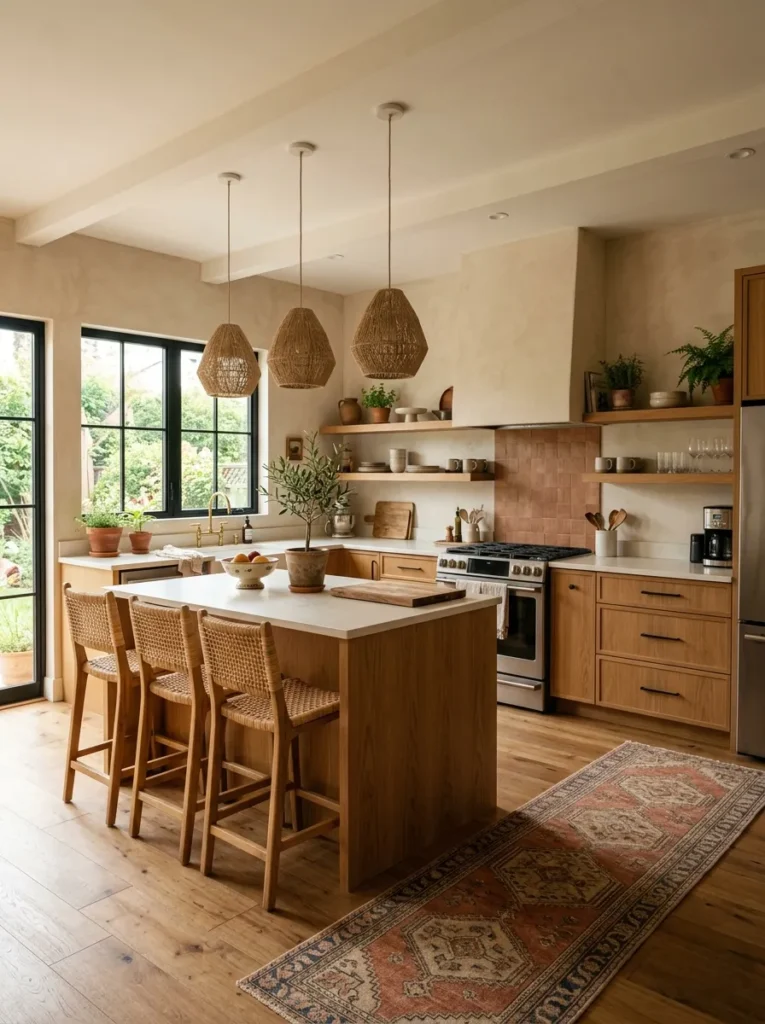
- Natural wood cabinetry brings warmth without making the kitchen feel heavy.
- A matte finish keeps the look relaxed and modern.
- Pairing wood with creamy surfaces creates an inviting contrast.
- Open shelving can break up a long wall of cabinets.
- In smaller kitchens, lighter wood tones help maintain an airy feel.
Warm wood can make a kitchen feel welcoming almost instantly, especially when paired with soft, earthy finishes. Light or medium oak cabinetry gives the room natural character while keeping the overall design fresh and contemporary. Instead of glossy doors or overly polished surfaces, choose simple flat panels or subtle shaker detailing for a relaxed appearance. I’ve noticed that natural wood also works beautifully with cream, sand, and clay tones because the palette feels connected rather than overly coordinated. Add a few handmade-looking accessories, woven textures, and leafy plants to complete the layered bohemian effect.
The beauty of this approach is that it balances personality with everyday practicality. Wood cabinets hide small marks better than many stark white finishes, making them useful for busy households and frequently used kitchens. Keep the surrounding surfaces relatively calm so the cabinetry remains the visual anchor. Creamy quartz, warm stone, or softly textured tile can provide enough contrast without competing for attention. For a Pinterest-worthy finish, introduce one or two memorable details, such as rattan stools or a vintage-style rug. The result feels collected, comfortable, and modern without looking overly decorated.
Rattan Pendant Lights
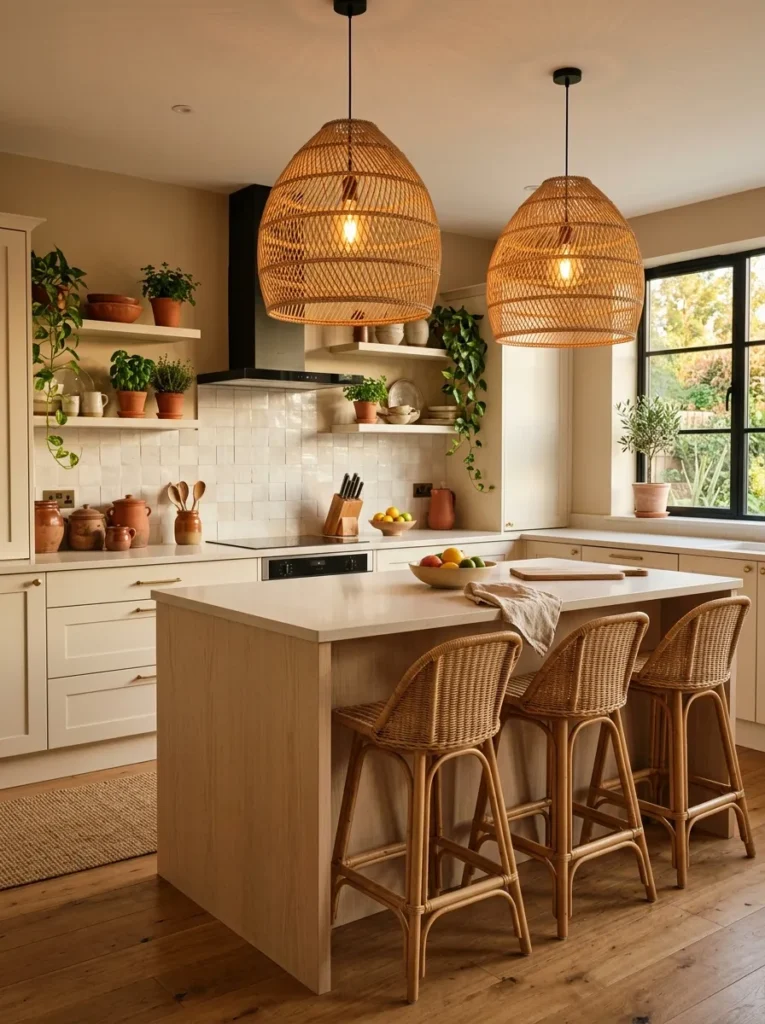
- Woven pendants add texture and soften a streamlined kitchen.
- Their natural fibers reinforce the relaxed bohemian character.
- Oversized shades can create a stronger focal point above an island.
- Warm bulbs make evening gatherings feel more intimate.
- Choose simple shapes when the kitchen already has several patterns.
A beautiful light fixture can change the entire personality of a kitchen, and woven pendants make that transformation especially noticeable. Rattan shades introduce softness above hard surfaces such as stone counters, tile backsplashes, and metal appliances. Their open weave also allows light to filter through gently, creating interesting shadows without making the room feel dark. For modern boho kitchen ideas, this is one of the easiest upgrades because the fixture adds personality without requiring a full renovation. Hang one statement pendant over a small island or use two or three matching shades above a longer counter for balanced visual rhythm.
Scale matters more than many homeowners expect when choosing woven lighting. A tiny pendant can disappear above a large island, while an oversized shade can make a compact kitchen feel crowded. Measure the island and consider the ceiling height before buying. I’ve seen this work well when the lighting remains simple and the surrounding decor uses similar natural materials. Keep the bulb temperature warm rather than cool, especially if your cabinets are beige, oak, or walnut. The combination creates a cozy glow while preserving the clean structure that keeps the space feeling contemporary.
Terracotta Accent Tiles
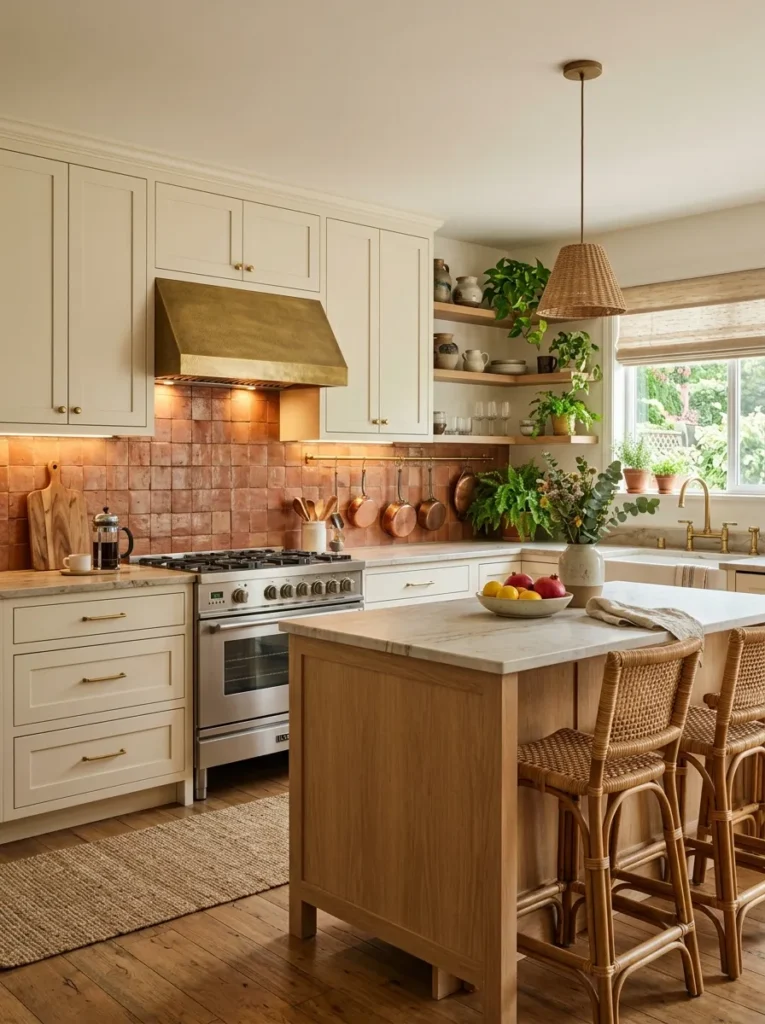
- Terracotta introduces earthy color without overwhelming the room.
- Small tiles can create visual interest behind a range or sink.
- Handmade finishes add subtle variation and character.
- Pair warm tile with pale cabinets for balanced contrast.
- A sealed surface makes the accent easier to maintain.
Terracotta tiles bring an earthy focal point that instantly makes a kitchen feel more distinctive. Their warm clay tones work especially well with creamy cabinets, natural wood, and brushed brass because each material contributes a different layer of warmth. Instead of covering every wall, use terracotta behind the range, sink, or open shelving to create a focused feature. This keeps the design visually controlled while giving the room plenty of personality. For homeowners who want modern boho kitchen ideas with character, a softly irregular tile surface can provide that handcrafted feeling without making the space look dated.
The finish and grout color can dramatically change the final appearance, so test samples before committing. Matte terracotta usually feels softer and more organic than highly polished tile, while a slightly varied shape can add handmade charm. Choose grout that complements rather than sharply contrasts with the tile if you want a seamless appearance. In my experience, keeping the rest of the kitchen relatively simple allows an earthy backsplash to stand out beautifully. Add wooden utensils, woven storage baskets, or a small trailing plant nearby, and the entire space gains a cohesive, naturally layered look.
Creamy Stone Countertops
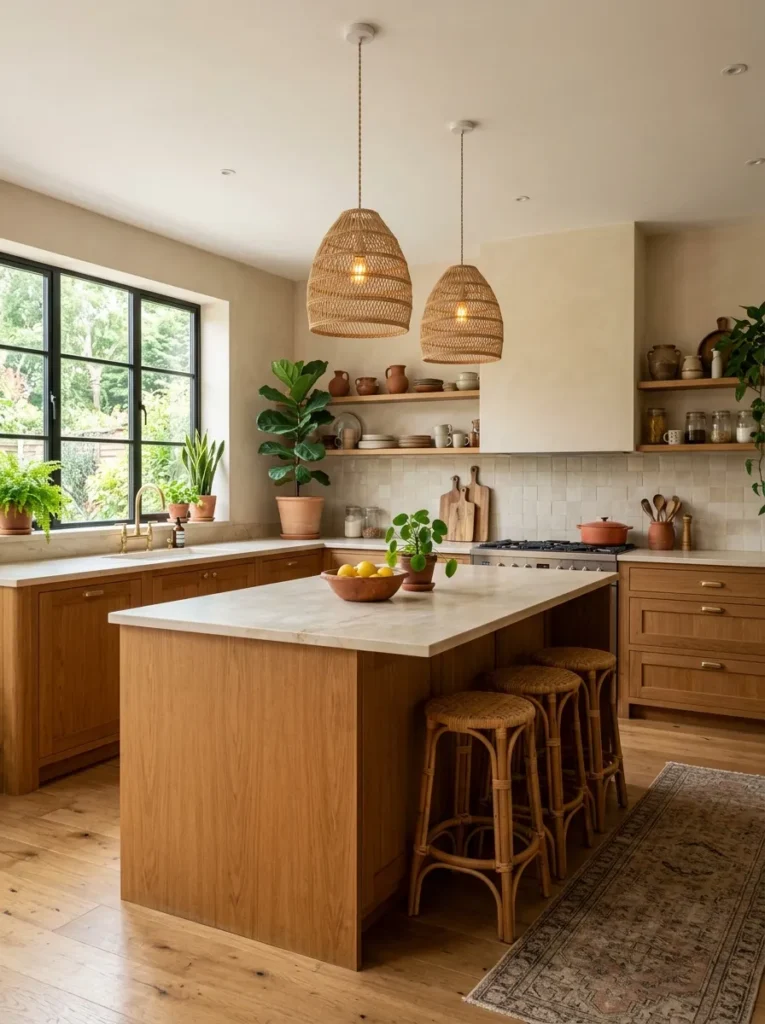
- Soft stone surfaces keep the kitchen feeling bright and grounded.
- Cream tones complement wood, rattan, and terracotta beautifully.
- Subtle veining adds interest without creating visual clutter.
- A honed finish gives the counter a softer, natural appearance.
- Extend the material slightly up the backsplash for a seamless look.
Few surfaces make a kitchen feel instantly calmer like a creamy stone countertop. Soft ivory, limestone, or warm beige surfaces create a gentle foundation for richer bohemian accents without competing with them. Instead of choosing dramatic veining, look for understated movement that resembles natural stone. This approach works particularly well with oak cabinets because the two materials share warm undertones. For modern boho kitchen ideas, the countertop can quietly connect different elements throughout the room, allowing terracotta, woven baskets, plants, and patterned textiles to stand out while maintaining a polished, contemporary appearance.
Function matters just as much as appearance when selecting a countertop. Kitchens experience spills, heat, chopping, and constant daily use, so choose a material and finish that suit your routine. A honed surface can provide a softer appearance, while durable engineered options may offer easier maintenance for busy households. I’ve noticed that extending the countertop material slightly onto the backsplash can make smaller kitchens appear more continuous and spacious. Keep decorative items intentional rather than filling every corner. A wooden cutting board, ceramic bowl, and small plant are often enough to make the surface feel warm and lived-in.
Open Wood Shelving
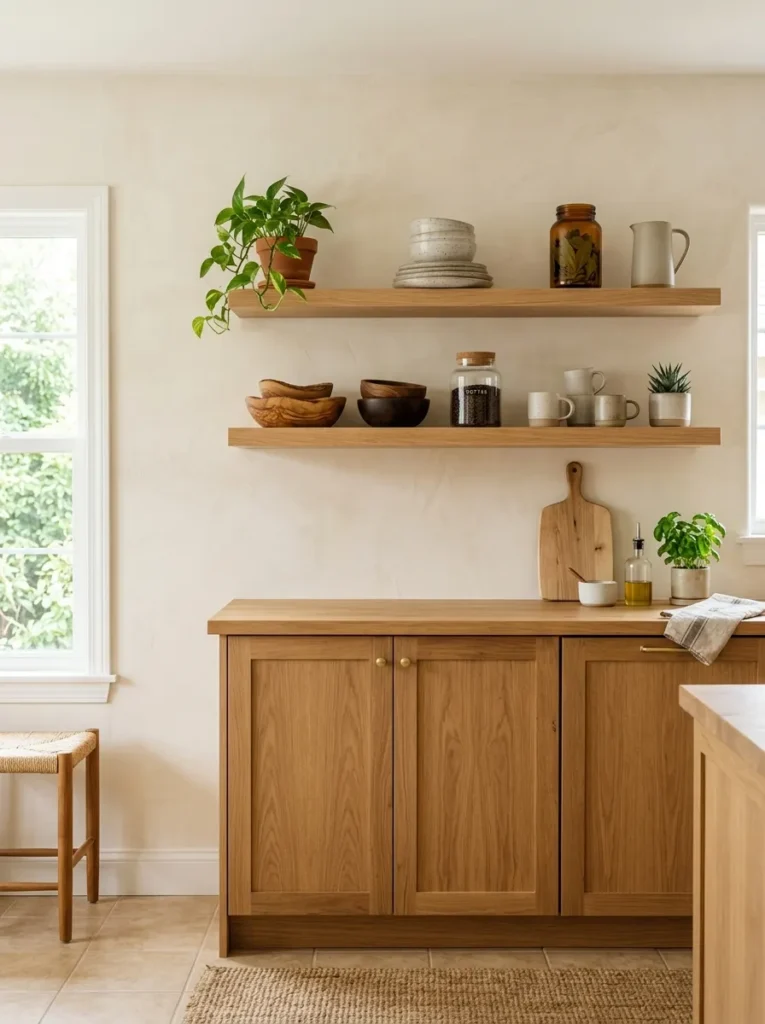
- Wooden shelves create an airy alternative to upper cabinets.
- They provide an easy spot for favorite ceramics and everyday dishes.
- Matching the shelf tone to cabinetry creates visual continuity.
- Keep frequently used pieces within easy reach.
- Leave some open space so the display does not feel crowded.
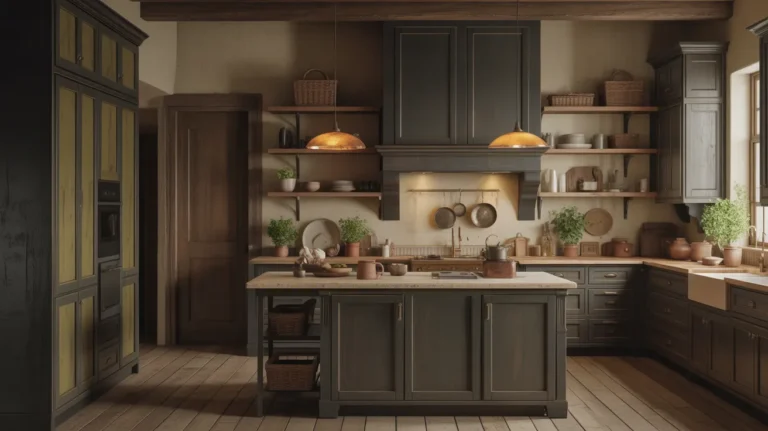
Open wood shelving can make a kitchen feel lighter while giving everyday objects a place to become part of the decor. Two or three sturdy shelves against a warm plaster or tiled wall create an attractive vertical display without adding bulky cabinetry. Use them for ceramic bowls, favorite mugs, wooden boards, and small plants rather than purely decorative objects. This keeps the setup practical as well as beautiful. Natural oak or walnut works especially well because the visible grain introduces warmth and texture. The result feels relaxed, personal, and thoughtfully arranged without requiring an elaborate decorating scheme.
The secret to successful open shelving is restraint. Too many objects can quickly turn an airy arrangement into visual clutter, especially in smaller kitchens. Start with larger pieces at different heights, then add a few smaller items to fill gaps naturally. Leave sections of the shelf completely empty so the wall remains visible. I’ve seen homeowners get better results when they display things they actually use instead of creating a staged collection. Choose a consistent palette of cream, clay, wood, and muted green to make mismatched pieces feel connected. This simple approach adds personality while keeping the kitchen organized.
Patterned Kitchen Runners
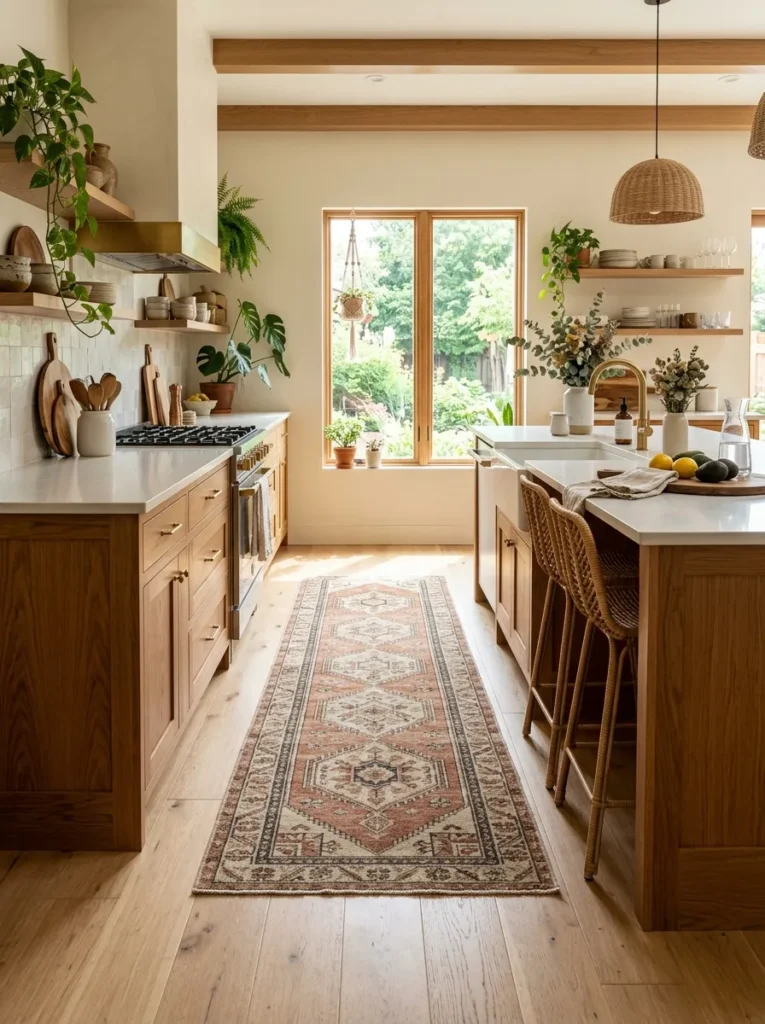
- A patterned runner introduces softness against hard flooring.
- Muted geometric or tribal-inspired motifs suit the relaxed aesthetic.
- Long runners visually connect the cabinets and cooking zone.
- Low-pile washable designs are practical for busy kitchens.
- Repeat one color from the runner elsewhere for a cohesive finish.
A patterned runner is one of the simplest ways to give a kitchen more personality without changing permanent finishes. Place one along the main walkway between the cabinets and island, where its shape naturally emphasizes the room’s layout. Muted geometric, vintage-inspired, or tribal-style patterns can introduce bohemian character while keeping the overall design sophisticated. Choose colors that already appear elsewhere, such as rust, cream, olive, or warm brown. This small connection helps the room feel intentionally layered rather than randomly decorated. It also adds softness beneath your feet in an area that often feels visually hard.
Practicality should guide the choice as much as pattern. Kitchens are high-traffic areas, so washable or low-pile runners are usually easier to live with than delicate rugs. Make sure the rug stays flat and does not interfere with cabinet doors, appliances, or walking paths. I’ve noticed that a slightly faded pattern often looks more natural in a relaxed bohemian setting than an extremely bold new design. If the kitchen already has a detailed backsplash, choose a quieter runner. When the walls and cabinets are simple, however, the floor can handle a stronger pattern and become an inviting focal point.
Natural Wood Island
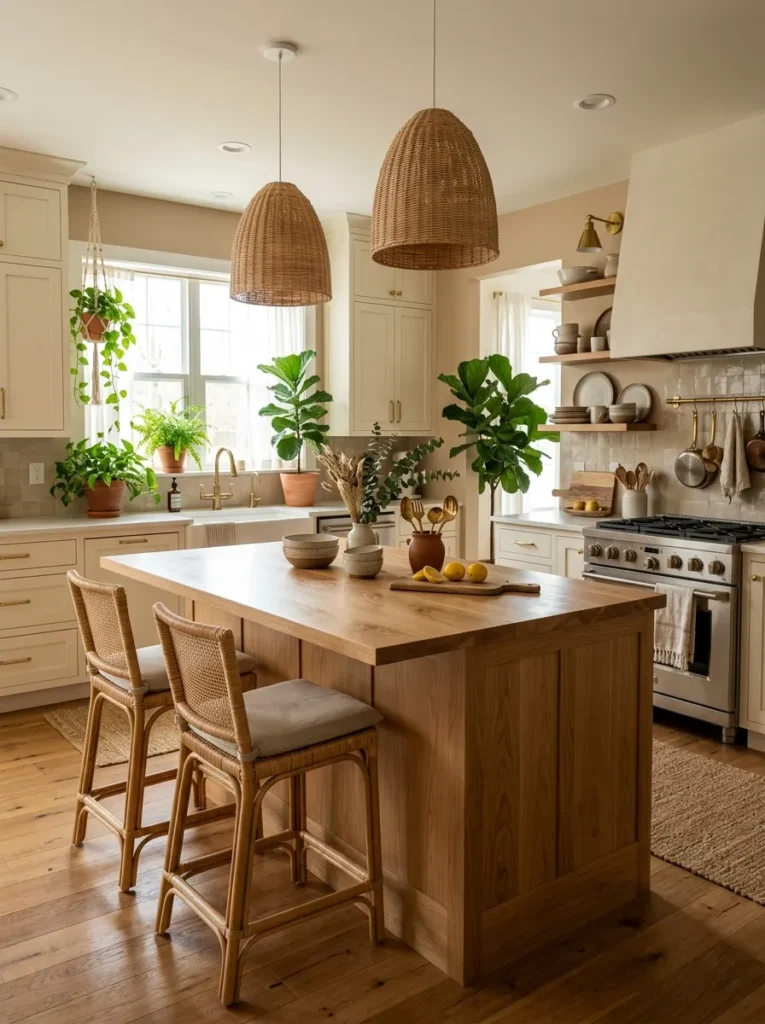
- A wood island creates a warm centerpiece without overwhelming the kitchen.
- Visible grain adds organic texture to an otherwise sleek layout.
- Choose a simple silhouette to keep the space contemporary.
- Open shelving underneath can provide useful storage.
- Pair it with woven stools for a cohesive natural look.
A natural wood island can become the visual anchor that brings a modern kitchen and relaxed bohemian style together. Choose oak, walnut, or another warm-toned timber with visible grain, then keep the shape clean and uncomplicated. The island can add warmth to white or cream cabinetry while creating a welcoming place for cooking, casual meals, and conversation. For modern boho kitchen ideas, this contrast is especially effective because the wood introduces organic character without sacrificing the crisp lines expected in contemporary interiors. A simple island silhouette also leaves room for decorative textures elsewhere.
The island should work hard, not simply look beautiful. Consider drawers for cookware, an overhang for stools, or open shelving for baskets and frequently used items. Leave enough clearance around it so doors, appliances, and people can move comfortably. In my experience, a slightly thicker wooden countertop can make an island feel more substantial without requiring an oversized base. Pair it with woven counter stools, a ceramic fruit bowl, or a small vase of greenery. These details soften the functional centerpiece and create a layered space that feels inviting throughout the day.
Woven Bar Stools
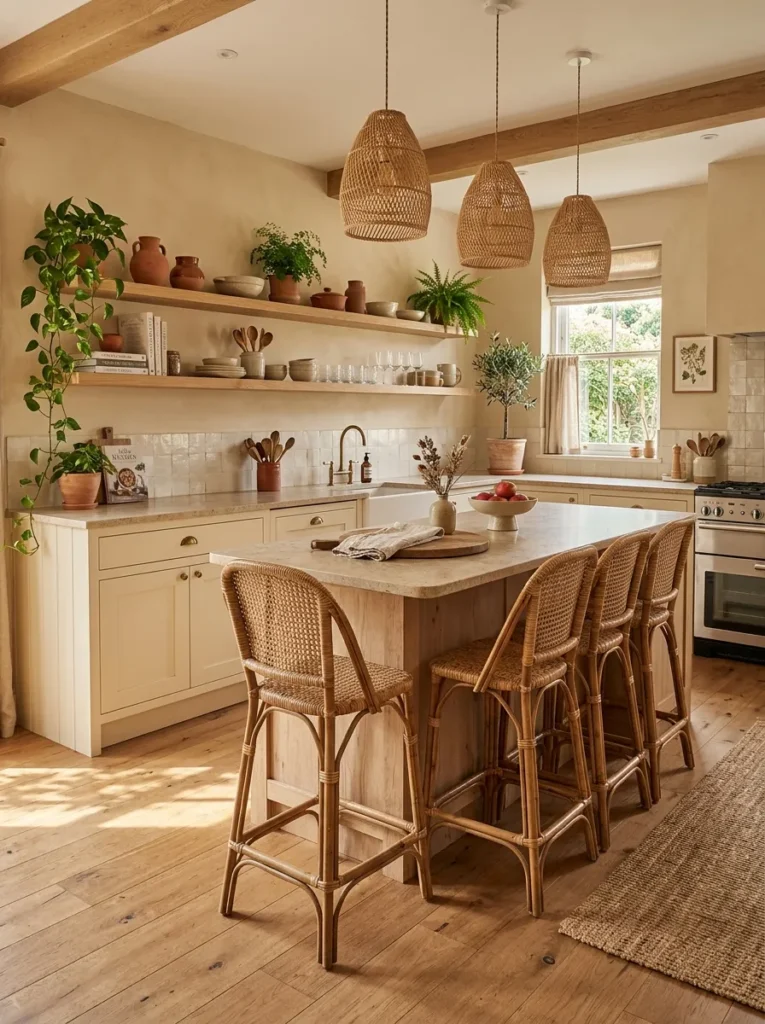
- Woven seats soften the straight lines of cabinets and counters.
- Rattan or cane adds natural texture without visual heaviness.
- Choose simple frames for a cleaner modern appearance.
- Rounded backs can make the seating area feel more relaxed.
- Neutral upholstery works well with colorful rugs and accessories.
Woven bar stools can instantly make a kitchen island feel more relaxed and approachable. Their natural texture creates contrast against smooth countertops, painted cabinets, and stainless-steel appliances, adding the handcrafted quality that defines comfortable bohemian spaces. Rattan, cane, rush, and woven paper cord are all useful options, depending on the look and durability you need. Keep the frame relatively simple if your kitchen already contains several decorative details. The goal is to introduce texture without making the seating feel bulky. A neutral woven finish also allows patterned rugs, ceramics, and artwork to provide color.
Comfort deserves attention because island seating is often used for longer than expected. Look for a supportive backrest and a height that matches your counter or bar surface correctly. If the kitchen is narrow, stools with open frames can preserve visual space better than heavy upholstered chairs. I’ve noticed that natural woven seating looks particularly cohesive when another woven element appears nearby, such as a pendant shade or storage basket. You do not need to match everything exactly. Repeating similar materials in small doses creates connection while allowing each piece to retain its own character.
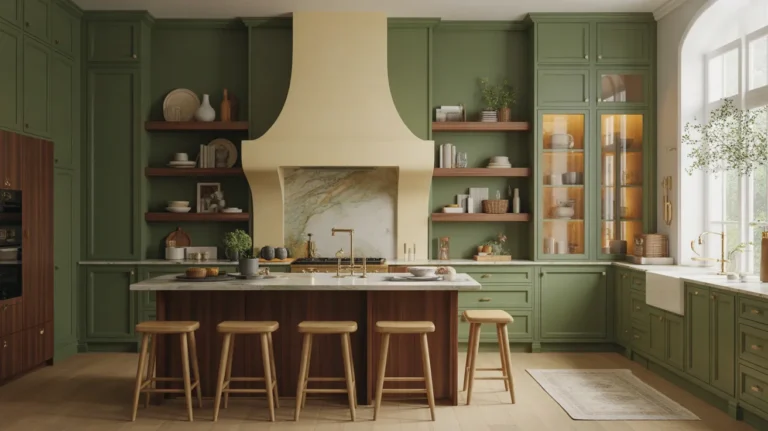
Earthy Green Cabinets
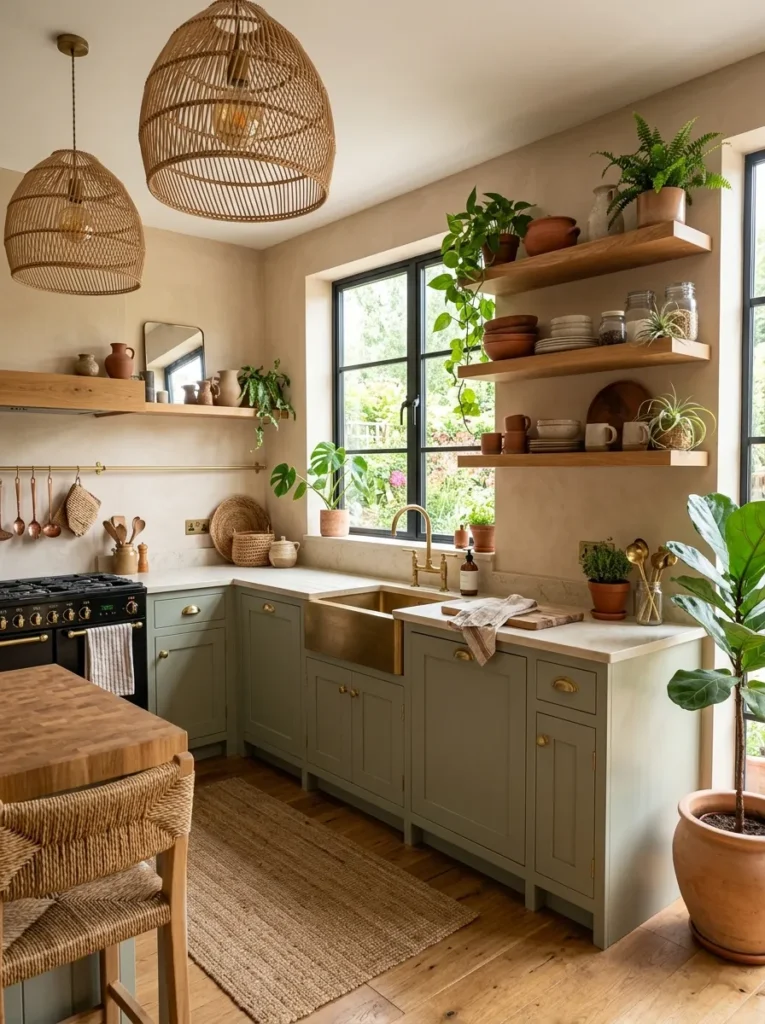
- Muted green cabinetry adds color while keeping the palette grounded.
- Sage and olive tones work especially well with natural wood.
- Matte finishes create a softer, more organic appearance.
- Brass or aged-metal hardware adds subtle warmth.
- Keep countertops light to prevent deeper greens from feeling heavy.
Earthy green cabinetry can bring color into a kitchen without losing the calm character of natural materials. Sage, olive, moss, and muted eucalyptus shades pair naturally with oak, rattan, terracotta, and creamy stone. A matte finish helps the color feel softer and more contemporary than a high-gloss surface. If you want the cabinets to become the main visual feature, keep the countertop and backsplash relatively quiet. This creates a balanced composition where the green provides personality while the surrounding materials maintain an airy, grounded feeling. The combination works beautifully in both compact and spacious kitchens.
Choosing the right green depends heavily on the natural light in your room. A north-facing kitchen may make cooler shades appear darker, while strong sunlight can make warmer olive tones feel richer. Always test a sample at different times of day before committing to the full cabinetry. That’s why many designers recommend viewing paint samples beside your actual countertop and flooring. Add aged brass pulls, handmade ceramics, and a few plants to reinforce the organic palette. With thoughtful lighting and restrained accessories, green cabinets can create a distinctive focal point while still feeling timeless enough for everyday living.
Arched Cabinet Niches
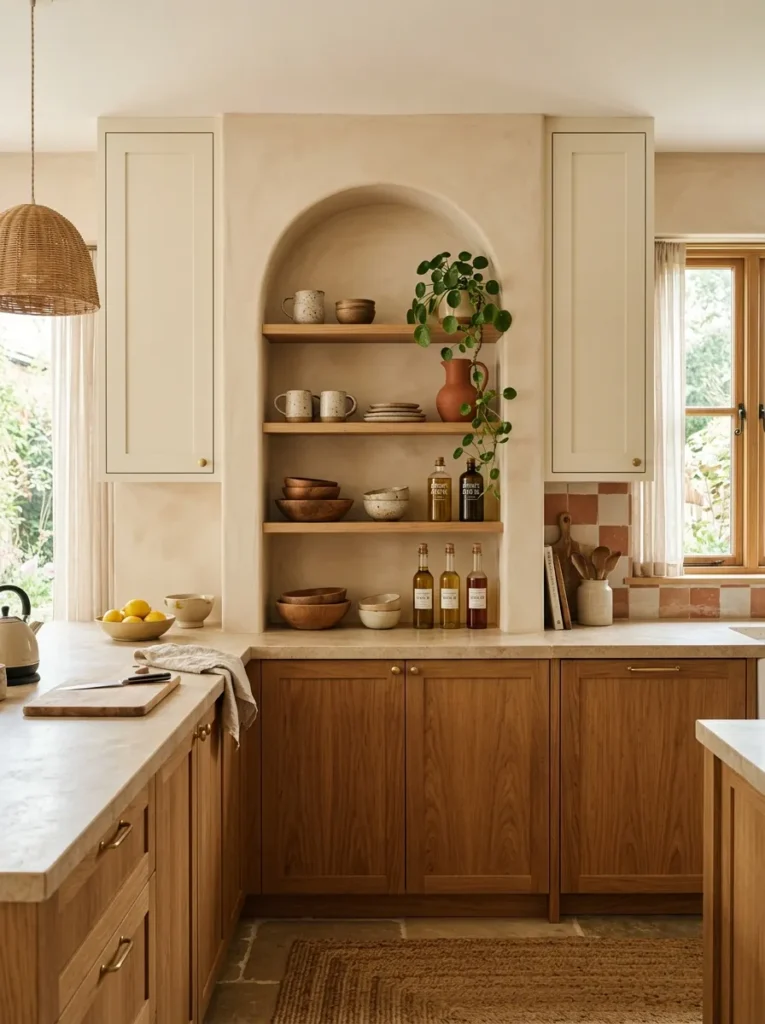
- Soft arches introduce architectural character without adding visual clutter.
- A recessed niche can display ceramics, oils, or everyday kitchen pieces.
- Painted interiors create a subtle focal point.
- Curved details soften kitchens dominated by straight lines.
- Keep the surrounding cabinetry simple so the arch stands out.
An arched niche can give a modern kitchen a handcrafted architectural detail without requiring an elaborate renovation. The curved opening breaks up rows of straight cabinets and creates a natural place to display ceramics, cookbooks, oils, or small decorative pieces. Paint the interior a slightly warmer shade than the surrounding walls for subtle depth, or use handmade tile for stronger texture. This kind of detail works especially well in modern boho kitchen ideas because the rounded shape feels organic while the clean construction keeps the overall space contemporary. It adds interest without demanding another large decorative feature.
Think carefully about what the niche will actually hold before deciding its dimensions. A shallow recess may work beautifully for small pottery, while deeper storage can accommodate frequently used bottles and kitchen essentials. Keep the display edited so the curved architecture remains visible. I’ve noticed that grouping objects by height creates a more intentional appearance than filling every available inch. Choose materials that repeat elsewhere, such as oak, clay, or woven fibers. When the colors stay within a warm neutral palette, even practical storage can look like a carefully considered design feature rather than an afterthought.
Limewashed Accent Walls
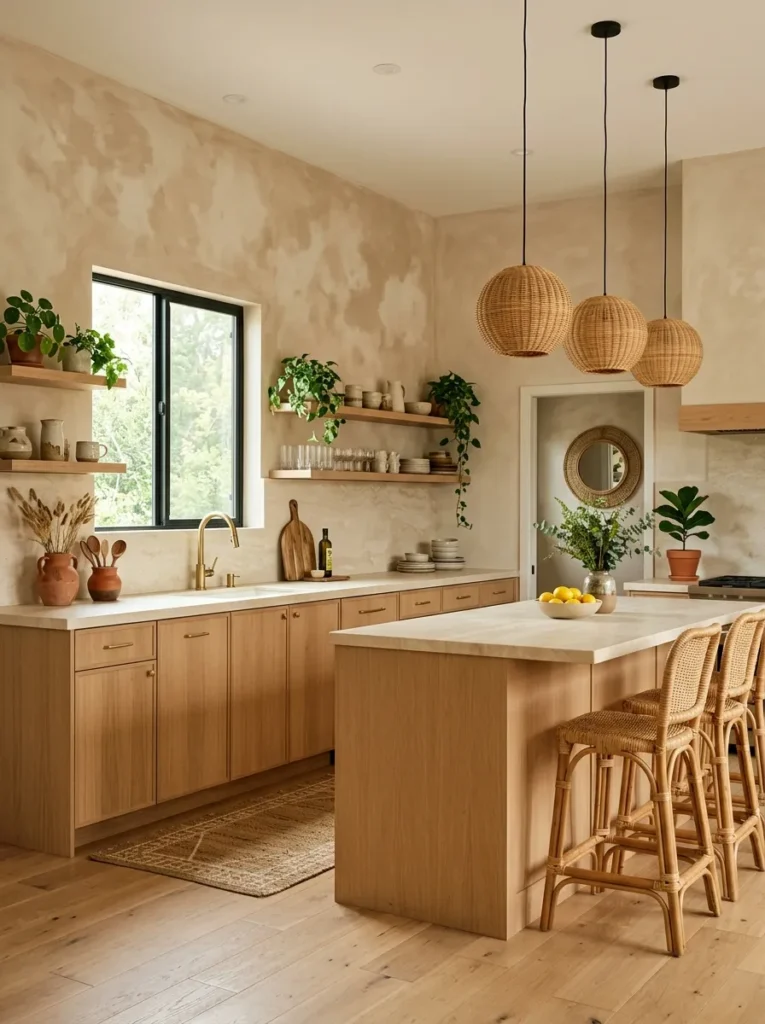
- Limewashed walls create soft movement and natural-looking texture.
- The finish adds depth without relying on bold patterns.
- Warm beige and creamy tones complement wood beautifully.
- Subtle variation helps flat walls feel more architectural.
- Use the finish on one wall to keep the kitchen balanced.
A limewashed wall can transform a plain kitchen backdrop into something that feels softly textured and naturally imperfect. Unlike a flat painted surface, the finish creates gentle variations in tone that catch daylight differently throughout the room. Warm beige, ivory, sand, and muted taupe are especially useful because they complement natural wood and earthy accessories without introducing another strong color. For a relaxed contemporary kitchen, apply the finish to one prominent wall rather than every surface. This creates visual depth while allowing cabinetry, lighting, and decorative objects to remain clear and easy to appreciate.
Preparation is important because textured finishes can reveal imperfections differently than standard paint. Make sure the wall is suitable for the chosen product and consider a sample before covering a large area. In my experience, limewash looks most effective when the rest of the room has relatively simple finishes that let its subtle movement show. Pair the wall with warm lighting, handmade ceramics, and natural wood instead of adding several competing patterns. The finished space feels relaxed and tactile, while the restrained palette keeps the kitchen looking fresh rather than overly rustic or themed.
Vintage Ceramic Display
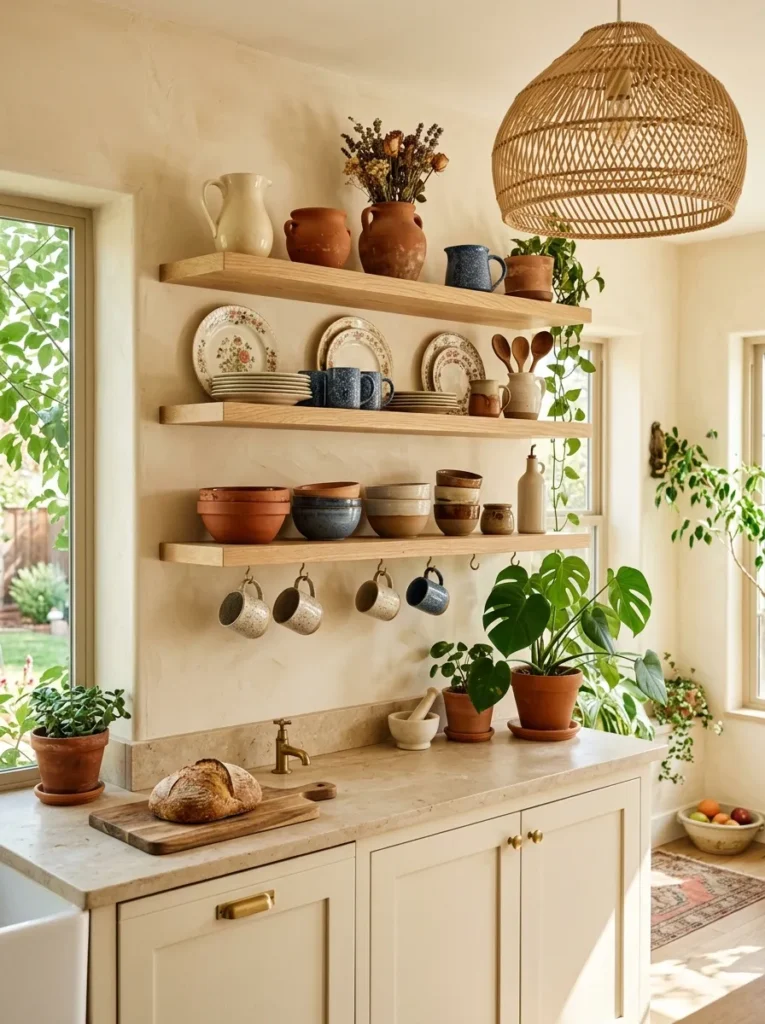
- Handmade ceramics add personality and visual warmth.
- Vintage pieces can make a new kitchen feel more collected.
- Display plates, pitchers, bowls, and small serving pieces together.
- Open shelving provides an easy rotating display area.
- Choose related colors rather than identical pieces for natural variety.
A collection of vintage ceramics can give a newly renovated kitchen the personality that built-in finishes alone cannot provide. Mix plates, bowls, pitchers, mugs, and small serving pieces in cream, clay, ochre, muted green, or soft brown. Slight differences in shape and glaze make the display feel collected rather than mass-produced. Place the pieces on open shelving, inside glass-front cabinets, or on a dedicated ledge where they can be appreciated without interfering with food preparation. These small objects bring history, color, and texture into the room while keeping the overall design comfortably understated.
You do not need an expensive collection to create this effect. Start with a few pieces you genuinely like, then gradually add objects from flea markets, thrift stores, local makers, or existing family collections. Check each item for cracks or damage before using it for food storage, particularly with older ceramics. I’ve seen this approach work especially well when the display includes different heights and shapes but stays within a controlled color family. Leave some breathing room between pieces so the shelves do not become crowded. The result feels personal, warm, and naturally layered rather than overly styled.
Brass Hardware Details
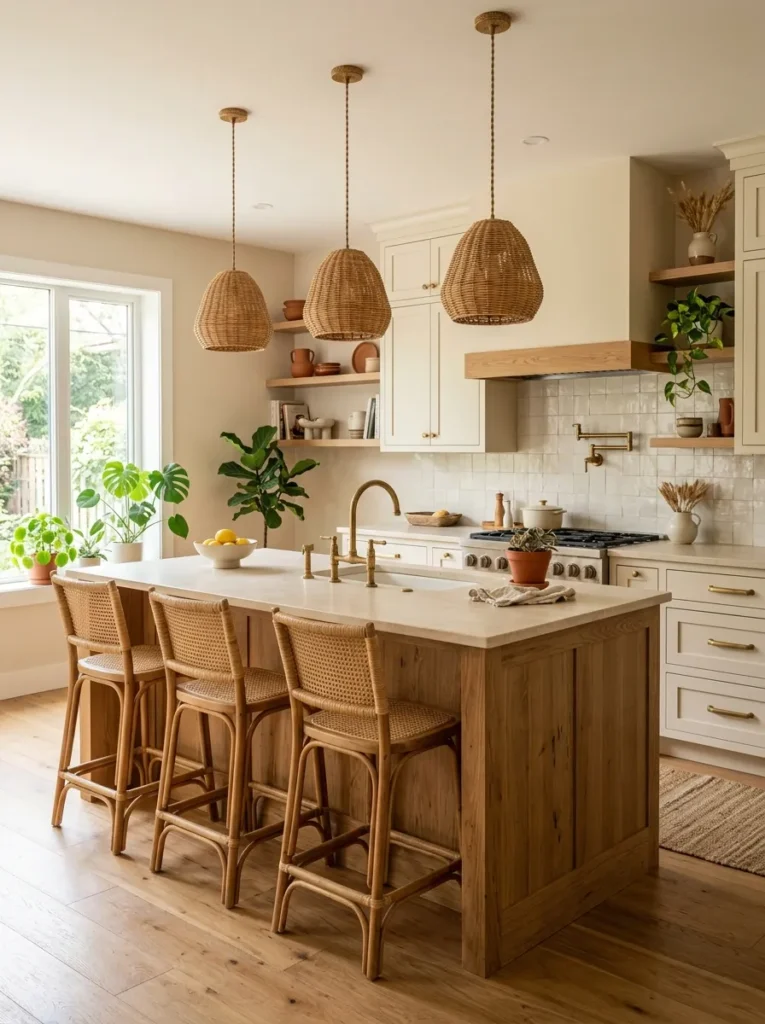
- Warm brass hardware adds a refined touch to simple cabinetry.
- Aged finishes feel more relaxed than highly polished metal.
- Small pulls can refresh existing cabinets without a major renovation.
- Repeat the finish on one or two fixtures for cohesion.
- Avoid matching every metal perfectly for a collected appearance.
Sometimes the smallest hardware change can give a kitchen an entirely different personality. Warm brass pulls and knobs introduce a subtle glow that works beautifully with cream cabinets, natural wood, terracotta, and woven materials. Choose aged, brushed, or satin finishes if you want a softer appearance that does not feel overly formal. Simple bar pulls suit contemporary cabinetry, while rounded knobs can add a slightly more relaxed touch. For modern boho kitchen ideas, hardware works best as a supporting detail rather than the main attraction. It quietly connects the room’s materials while adding just enough visual warmth.
Before replacing every handle, check the existing hole spacing if you are updating installed cabinets. Matching the measurements can make the project faster and prevent unnecessary drilling or cabinet repairs. I’ve noticed that brass looks especially polished when repeated selectively through a faucet, light fixture, or small decorative object. However, there is no need to make every metal identical. A restrained mix can actually feel more natural and collected. Keep the countertop relatively uncluttered so the hardware remains visible, and use warm lighting to bring out the subtle richness of the metal after sunset.
Layered Neutral Textiles
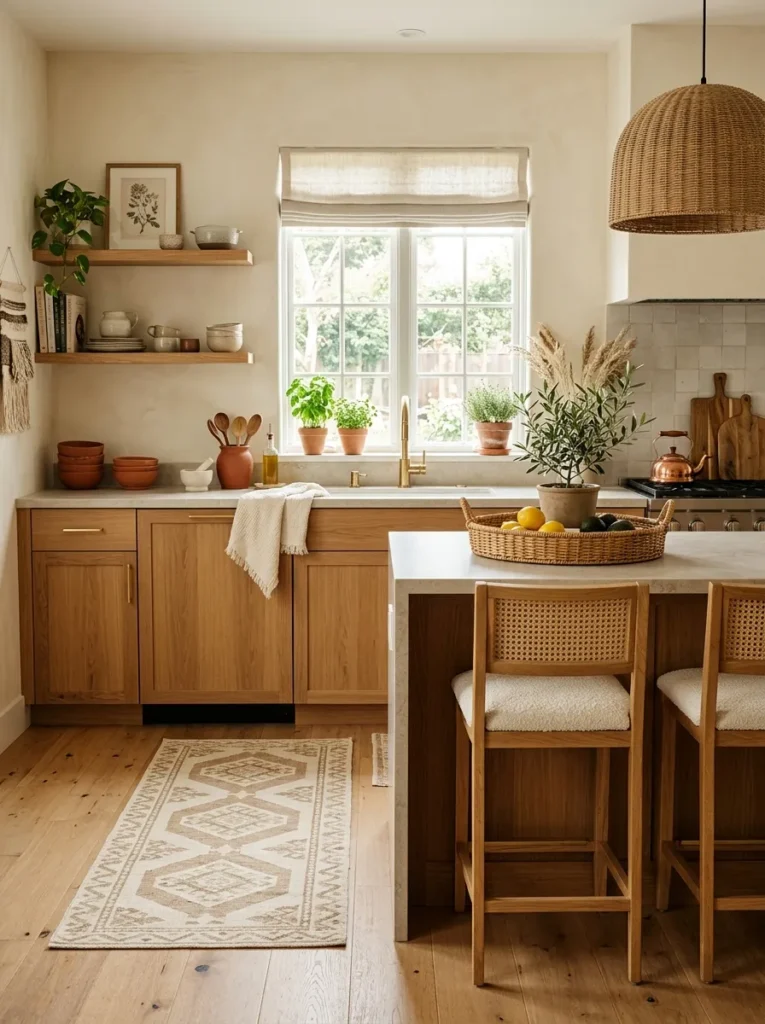
- Textiles soften hard cabinetry, counters, and flooring.
- Neutral patterns add depth without introducing visual chaos.
- Linen towels and cotton runners are practical everyday choices.
- Small fabric accents can make a new kitchen feel lived-in.
- Repeat two or three tones for a cohesive palette.
Textiles can make a modern kitchen feel noticeably warmer, especially when the permanent surfaces are clean and streamlined. Linen towels, woven runners, cotton cushions, and soft fabric shades introduce texture without requiring major changes. Choose cream, oatmeal, beige, muted rust, or soft olive rather than adding several unrelated colors. A patterned runner can provide gentle movement underfoot, while a casually draped linen towel brings softness near the sink. These details help balance hard materials such as stone, tile, metal, and cabinetry. The result feels comfortable and personal while still maintaining a polished contemporary foundation.
The best textile choices are the ones that can handle real kitchen life. Look for washable fabrics and runners that are appropriate for high-traffic areas, particularly around the sink and cooking zone. Keep patterns varied but related rather than stacking several bold prints together. In my experience, one patterned textile paired with two quieter fabrics usually creates enough visual layering. Rotate towels and runners seasonally if you enjoy refreshing the room without buying new furniture. This approach keeps the kitchen feeling fresh while preserving the warm, natural character that makes the overall style so inviting.
Statement Clay Backsplash
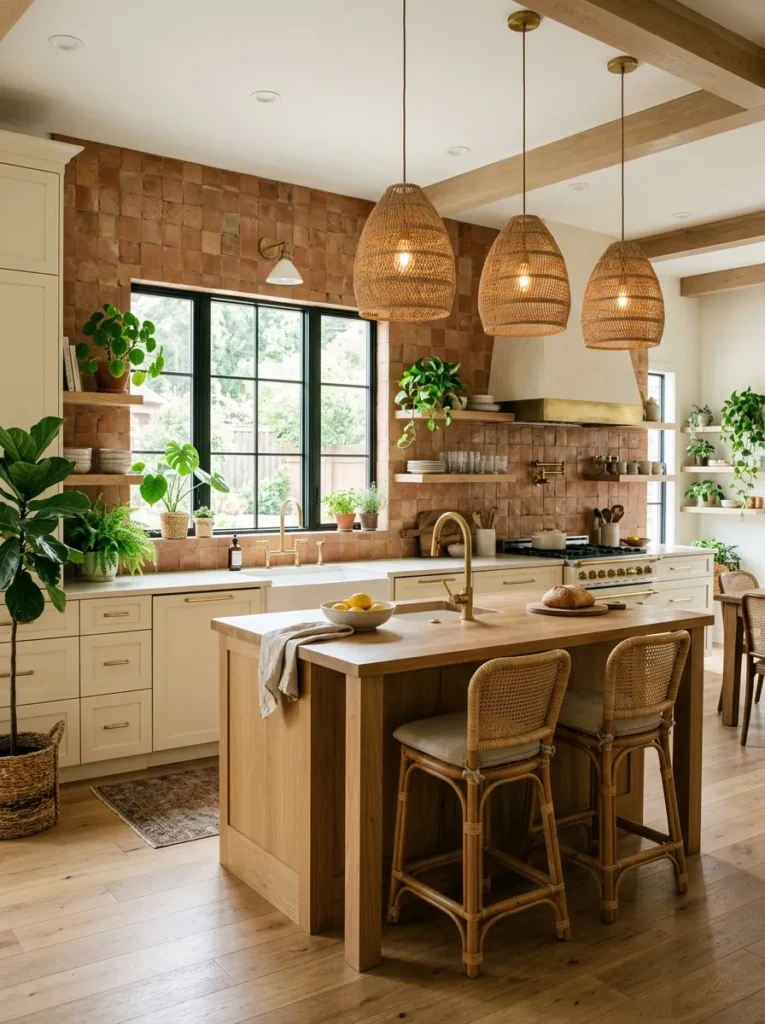
- Clay-toned surfaces create a strong earthy focal point.
- Handcrafted tiles add subtle irregularity and texture.
- A full-height backsplash can visually connect the counters and cabinets.
- Warm clay works beautifully with cream and natural wood.
- Use simple hardware and lighting to keep the feature balanced.
A clay-toned backsplash can become the defining feature of a kitchen while keeping the overall palette warm and natural. Choose muted terracotta, dusty cinnamon, sunbaked beige, or earthy rose tones to create depth behind the countertop. Handmade tiles with slight variations in shape and glaze add character that perfectly complements natural wood and woven materials. A full-height installation can make the kitchen feel more substantial, while a smaller splash zone provides a budget-friendly alternative. This is a particularly effective way to bring the earthy side of bohemian design into a clean, contemporary kitchen.
Balance is essential when working with a stronger backsplash color. If the tiles have noticeable texture or variation, choose simpler cabinetry and countertops so the wall remains the focal point. Consider grout carefully because high contrast can emphasize every individual tile, while a similar tone creates a more continuous surface. That’s why many designers recommend testing tile, grout, and countertop samples together before installation. Add a few clay vessels or wooden accessories to echo the backsplash subtly. The finished kitchen feels warm and distinctive without becoming visually overwhelming or overly themed.
Curved Kitchen Island
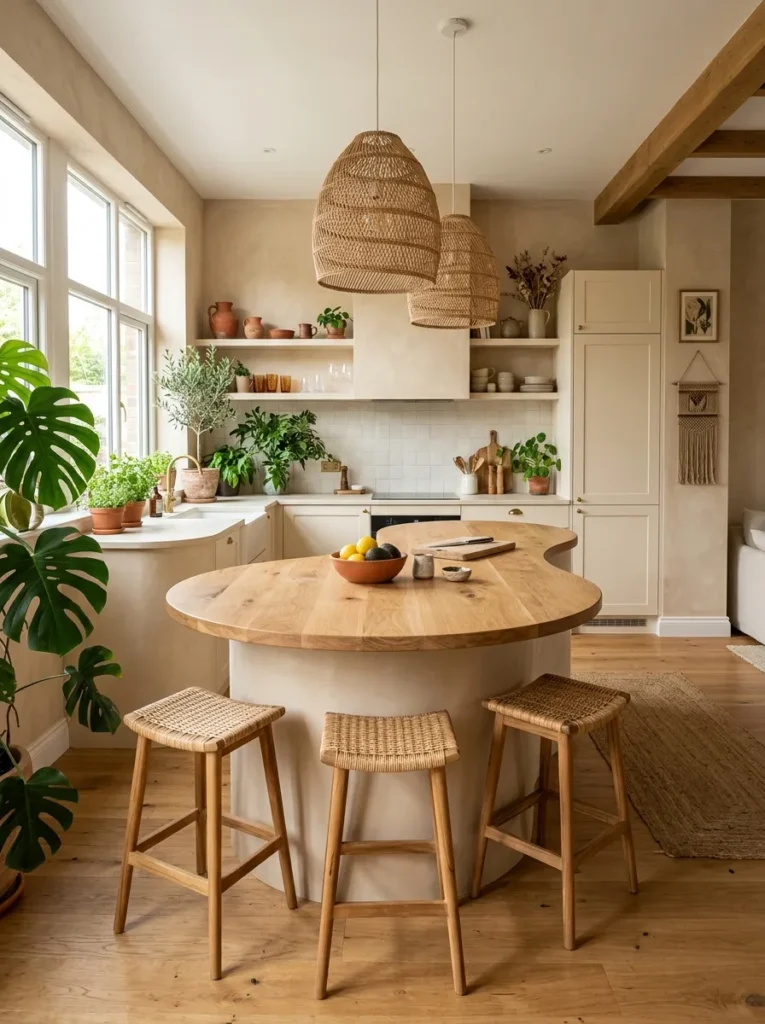
- Rounded edges soften the strong geometry of a modern kitchen.
- Curved corners improve movement around busy walkways.
- A rounded countertop can make seating feel more social.
- Natural wood keeps the sculptural shape feeling warm.
- Use simple stools to let the island remain the focal point.
A curved island can soften a kitchen filled with straight cabinets, rectangular appliances, and hard-edged counters. Rounded corners create a gentler visual flow while making the island feel more sculptural and distinctive. The shape can also improve movement around the kitchen, particularly when people frequently pass between the island, refrigerator, and cooking area. For modern boho kitchen ideas, combining a curved silhouette with natural oak, cream, or warm stone creates an appealing balance between contemporary design and organic texture. The result feels visually interesting without relying on excessive decoration or complicated architectural details.
Before choosing a curved island, consider the room’s dimensions and how the shape affects usable storage. A rounded end may reduce cabinet capacity slightly, but it can create a more comfortable seating zone. Make sure there is adequate clearance around the island for cabinet doors and everyday traffic. I’ve noticed that curved islands look particularly effective when paired with linear cabinetry because the contrast makes the shape more noticeable. Keep pendant lights and stools relatively simple so they support rather than compete with the island. This creates a polished focal point while preserving the kitchen’s relaxed atmosphere.
Natural Fiber Roman Shades
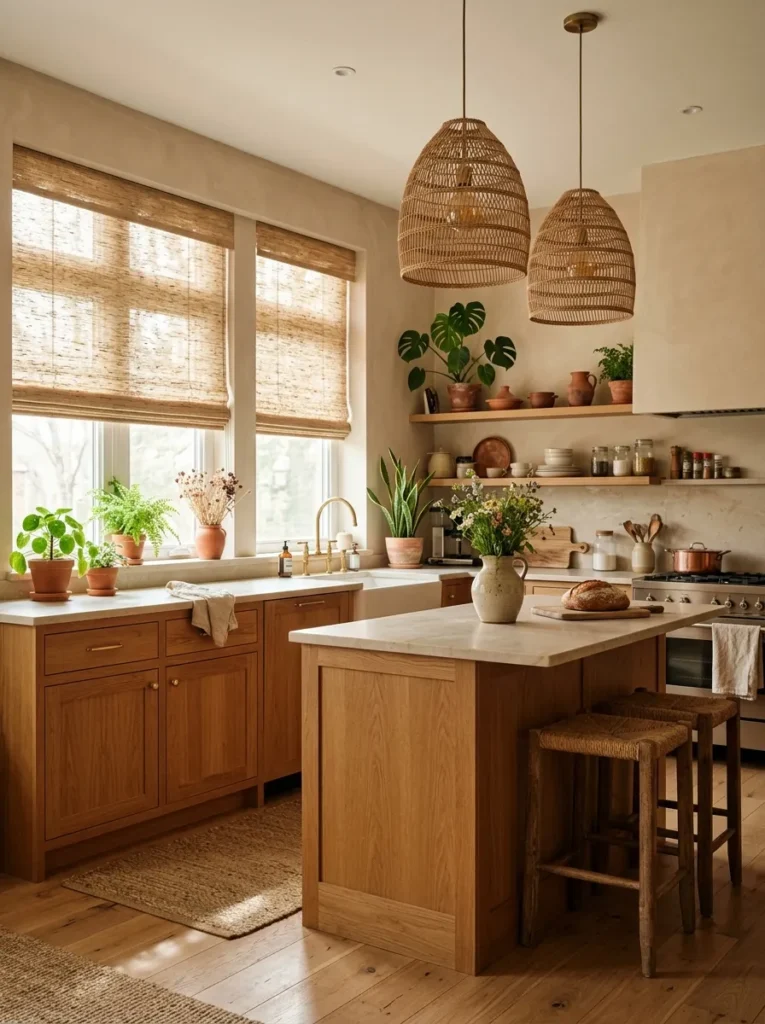
- Woven window shades add texture without blocking the view completely.
- Bamboo, linen, and grasscloth create an organic layer.
- Light-filtering materials keep the kitchen bright during the day.
- Neutral shades complement wood, cream, clay, and green tones.
- A simple shade can make a bare window feel finished.
Windows are easy to overlook when decorating a kitchen, yet a natural fiber shade can make the entire room feel more finished. Bamboo, woven grass, linen, and similar materials introduce texture while filtering harsh sunlight. Their neutral tones work naturally with oak, cream cabinetry, terracotta, and muted green accents. Choose a light-filtering option when you want to preserve daylight while reducing glare on countertops. For a relaxed contemporary kitchen, simple Roman shades usually look cleaner than heavily gathered curtains. They frame the window without taking attention away from the cabinetry, backsplash, or other key design features.
Consider how much moisture, sunlight, and cooking activity the window area receives before selecting a material. A kitchen shade should be easy to clean and durable enough for daily use. If the room has limited natural light, choose a lighter woven tone so the window remains visually open. In my experience, mounting the shade slightly above the window frame can make the opening appear taller and more substantial. Pair the texture with another natural element, such as a rattan pendant or wooden stool, but avoid repeating the same weave everywhere. A little variation keeps the room sophisticated.
Open Pantry Shelving
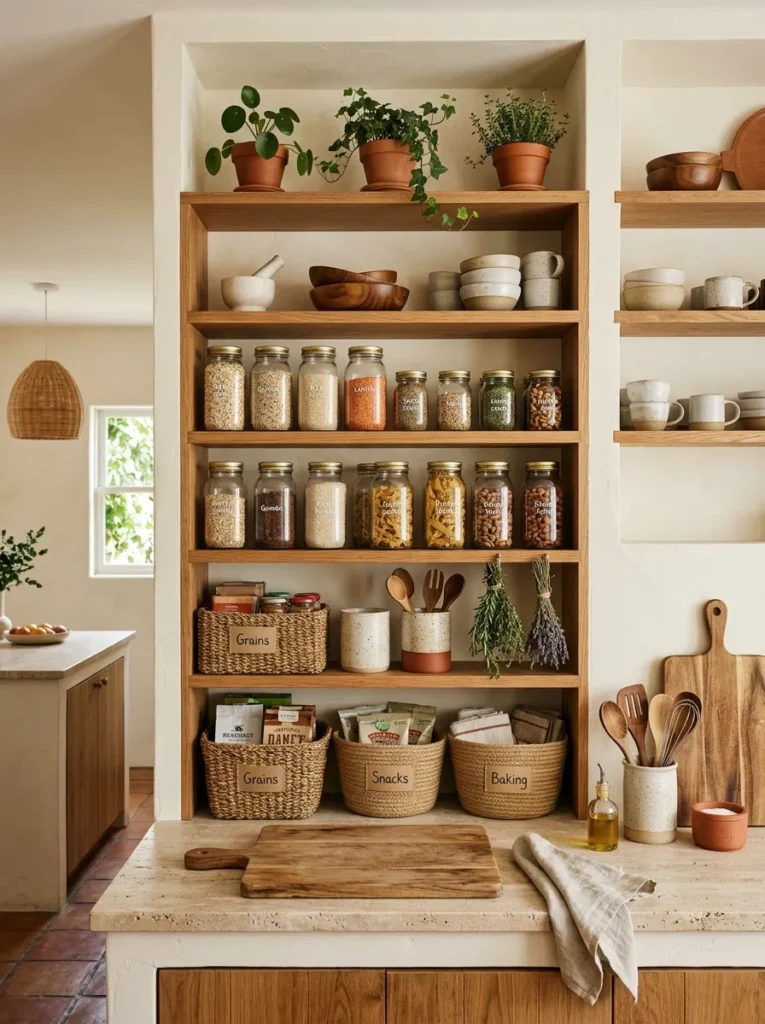
- Open pantry storage keeps frequently used ingredients visible and accessible.
- Wooden shelves bring warmth to practical storage.
- Matching jars create a cleaner visual appearance.
- Baskets can hide less attractive everyday items.
- Keep the most-used ingredients at comfortable eye level.
Open pantry shelving can turn everyday food storage into a practical design feature. Instead of hiding everything behind a solid door, display attractive jars, baskets, wooden containers, and ceramic storage pieces on warm wood shelves. This works especially well when the pantry sits beside the main kitchen because it creates visual continuity between storage and living areas. Clear containers make staples easy to identify, while woven baskets can conceal packets and less attractive items. The combination keeps frequently used ingredients accessible while giving the kitchen a more relaxed, thoughtfully organized appearance.
Organization becomes essential when storage is visible. Group similar foods together and choose containers that are easy to refill and clean. Keep heavier items on lower shelves and frequently used ingredients within comfortable reach. Labels can make the system easier to maintain, particularly when several family members use the pantry. I’ve seen open shelving work best when homeowners resist the urge to display everything. Leave some breathing room between containers and mix practical storage with a few natural accents, such as a wooden bowl or small plant. The pantry then feels intentional rather than crowded, while everyday organization becomes much easier.
Handmade Pendant Clusters
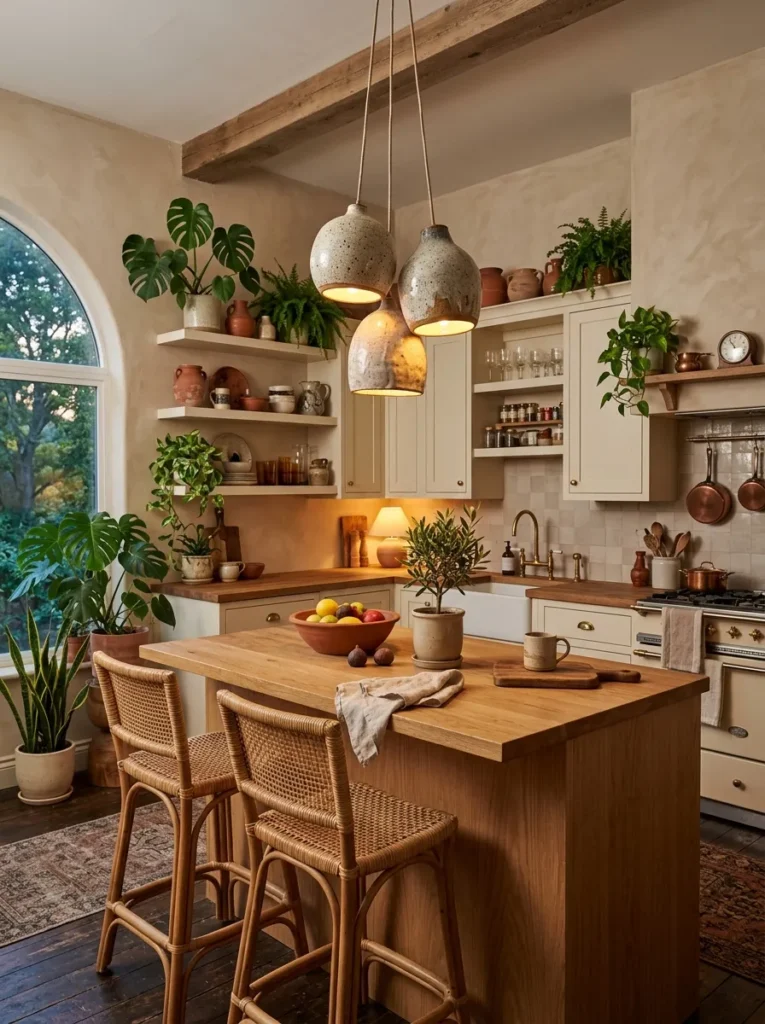
- Grouped pendants create a stronger focal point above an island.
- Handmade ceramic shades add artisan character and texture.
- Varying shapes can make the arrangement feel collected.
- Keep the color palette restrained for a cleaner look.
- Hang fixtures at consistent heights for a more polished composition.
A cluster of handmade pendants can turn the space above a kitchen island into an eye-catching design feature. Ceramic shades with imperfect surfaces, earthy glazes, or subtle variations bring artisan character while still feeling contemporary. Three fixtures usually create enough visual weight for a medium or large island, while two may work better in a smaller kitchen. Keep the shapes related but not necessarily identical to create a collected appearance. This is an easy way to add personality because the lighting becomes both functional and decorative. The result feels thoughtfully designed without relying on excessive accessories.
Scale and spacing are especially important when installing multiple fixtures. The pendants should illuminate the work surface without obstructing sightlines across the kitchen. Measure the island length, ceiling height, and distance between each fixture before finalizing the arrangement. Warm bulbs can emphasize ceramic textures and make neutral finishes feel richer after sunset. I’ve noticed that handmade fixtures look strongest when the surrounding decor remains relatively quiet. Pair them with simple stools, natural wood, and a few carefully selected ceramics rather than competing statement pieces. This lets the lighting remain the visual centerpiece.
Layered Open Cabinets
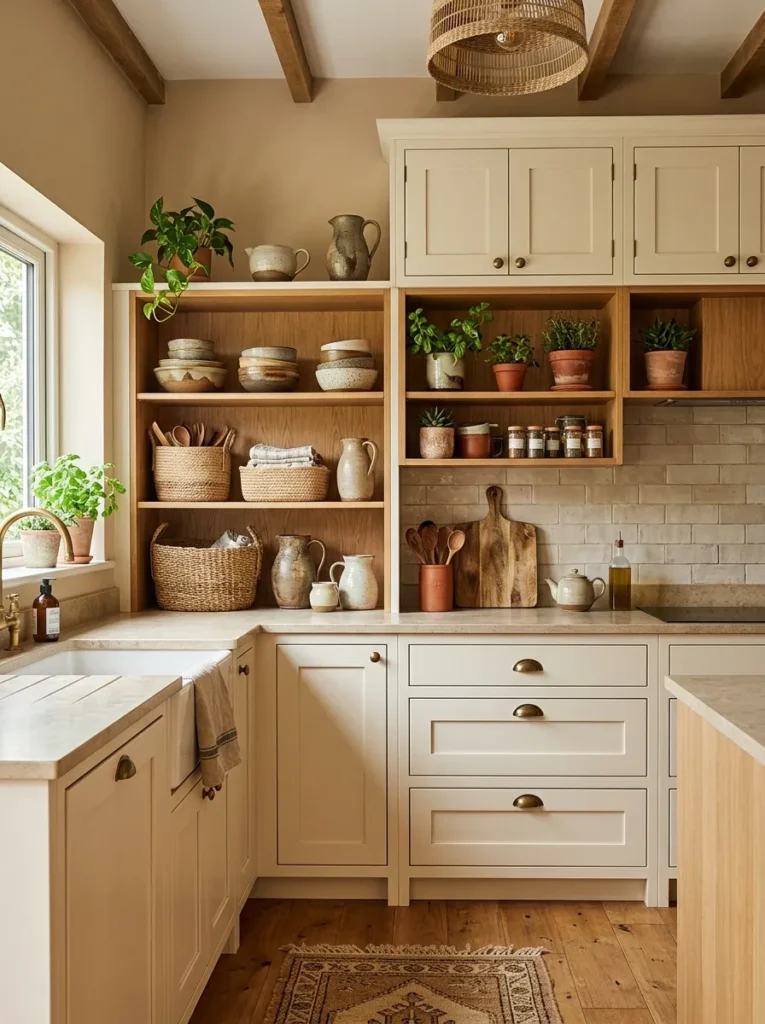
- Combining closed and open storage creates visual breathing room.
- Open sections provide space for attractive everyday pieces.
- Closed cabinets hide appliances and less decorative items.
- Wood interiors can add warmth to painted cabinetry.
- Use open compartments sparingly to prevent visual clutter.
A combination of closed cabinetry and open compartments can make a kitchen feel lighter while preserving plenty of practical storage. Use closed doors for appliances, cleaning supplies, cookware, and other items that do not need to remain visible. Reserve open sections for attractive bowls, ceramics, cookbooks, baskets, or plants. This balance is especially useful in modern boho kitchens because it creates visual variety without turning every storage area into a display. Warm oak interiors can add another layer of texture, particularly when the main cabinetry is painted cream, beige, or muted green.
The key is deciding which items deserve to remain visible. Open storage works best when the objects are useful, attractive, or connected by a consistent palette. Avoid filling every compartment because empty space helps the display breathe. I’ve noticed that homeowners often find this arrangement easier to maintain when they assign each open section a simple purpose. One might hold everyday dishes while another contains cookbooks and a small plant. Keep bulky appliances behind closed doors whenever possible. This approach combines accessibility with visual calm, making the kitchen feel organized without becoming overly minimal.
Botanical Kitchen Corners
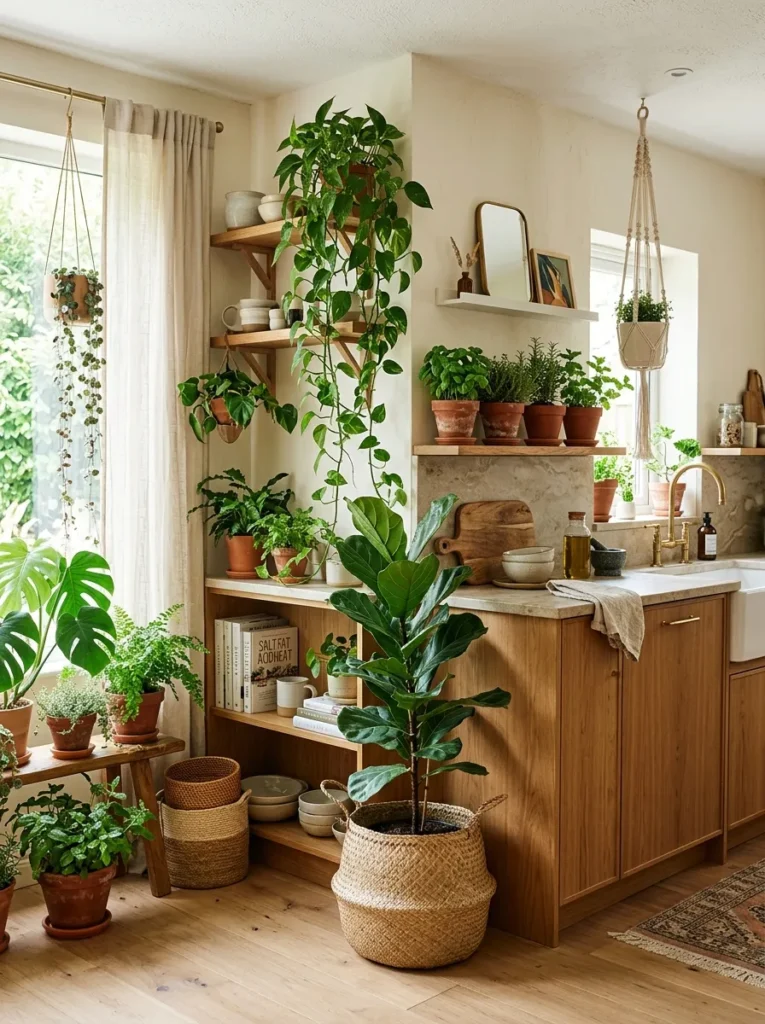
- Greenery adds life and color to neutral kitchen palettes.
- A small plant can soften an empty corner instantly.
- Hanging plants work well where counter space is limited.
- Herbs near a window combine beauty with everyday usefulness.
- Use different leaf shapes for more natural visual variety.
A small botanical corner can make a kitchen feel noticeably fresher without changing its permanent finishes. Place a tall leafy plant beside a cabinet, group herbs near a sunny window, or use a trailing plant on an open shelf. Green foliage adds a natural color contrast against cream, beige, wood, and terracotta while introducing softer organic shapes. For modern boho kitchen ideas, plants also reinforce the connection to natural materials that makes the style feel relaxed. Even one well-positioned plant can soften an empty corner and make a streamlined kitchen feel more lived-in.
Choose plants according to the actual conditions in your kitchen rather than selecting them purely for appearance. Bright windows may support herbs and sun-loving varieties, while darker corners may require more tolerant options. Keep pots stable and place them away from areas where water could damage wood or create slippery surfaces. In my experience, grouping plants at different heights creates a fuller effect without needing many individual pots. Combine terracotta containers with woven baskets or wooden stands for additional texture. The goal is not to create an indoor jungle, but to introduce just enough greenery to make the space feel lively.
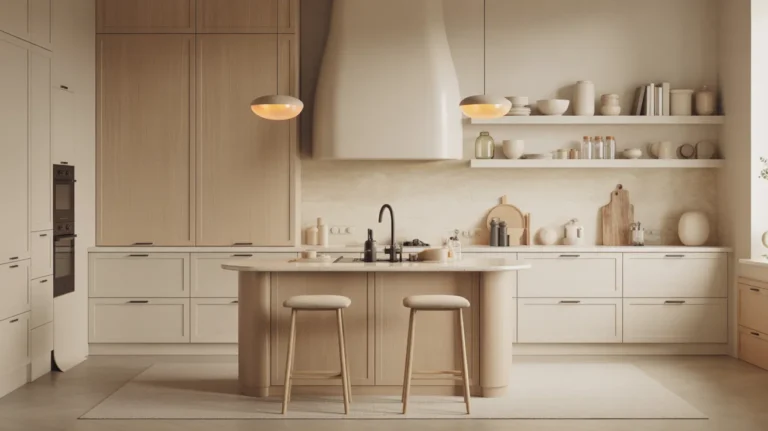
Textured Plaster Range Hood
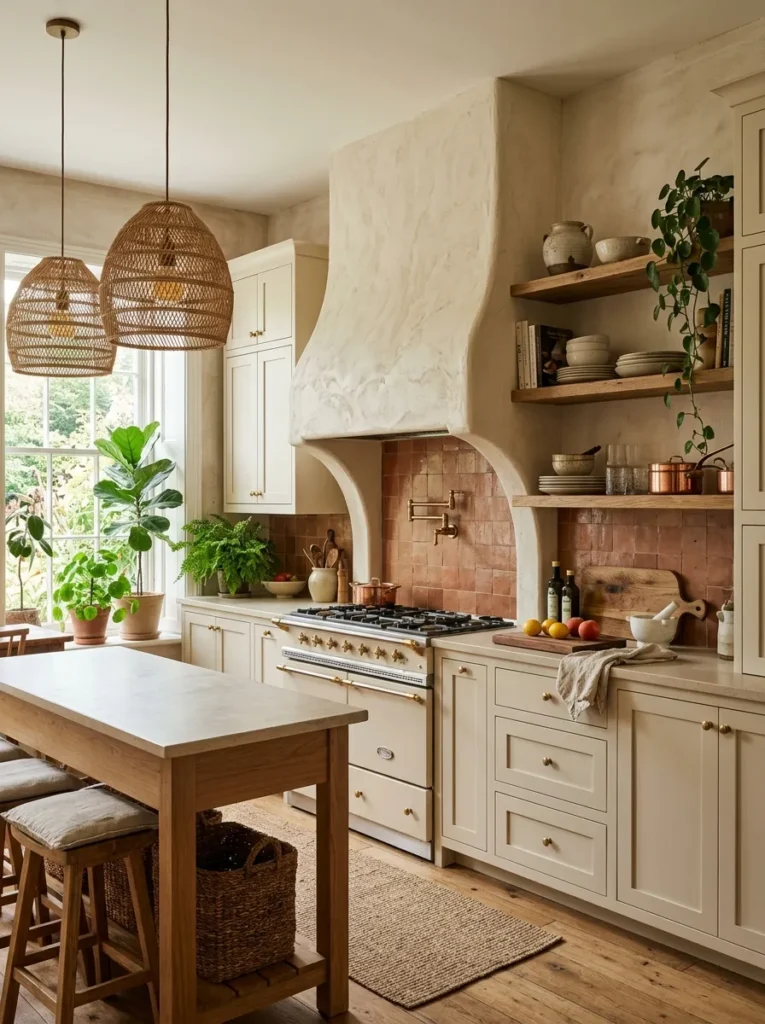
- A plaster hood creates a soft architectural focal point.
- Rounded edges reinforce the organic side of the design.
- Cream and beige finishes blend beautifully with natural materials.
- Keep the surrounding backsplash simple so the hood stands out.
- Built-in shelving can add practical storage beside the feature.
A textured plaster range hood can give a kitchen a custom architectural feel without relying on elaborate decoration. Its softly curved profile introduces an organic shape among straight cabinetry, while a warm ivory or beige finish keeps the feature visually connected to the rest of the room. Pair it with natural oak, creamy stone, terracotta, and woven accents for a balanced composition. For modern boho kitchen ideas, the hood can become the main focal point while quieter surrounding materials prevent the space from feeling busy. The result feels substantial, handcrafted, and contemporary at once.
The hood should also be designed around practical ventilation needs rather than appearance alone. Choose the appropriate insert and make sure the installation meets local building and ventilation requirements. A durable plaster-compatible finish can make cleaning easier around a cooking area. I’ve noticed that this feature looks most sophisticated when the backsplash remains relatively restrained and the hood has enough surrounding space to breathe. Add one or two shelves with handmade ceramics nearby, rather than covering the entire wall with decor. This keeps the architectural detail prominent while maintaining an uncluttered, functional cooking zone.
Layered Boho Lighting
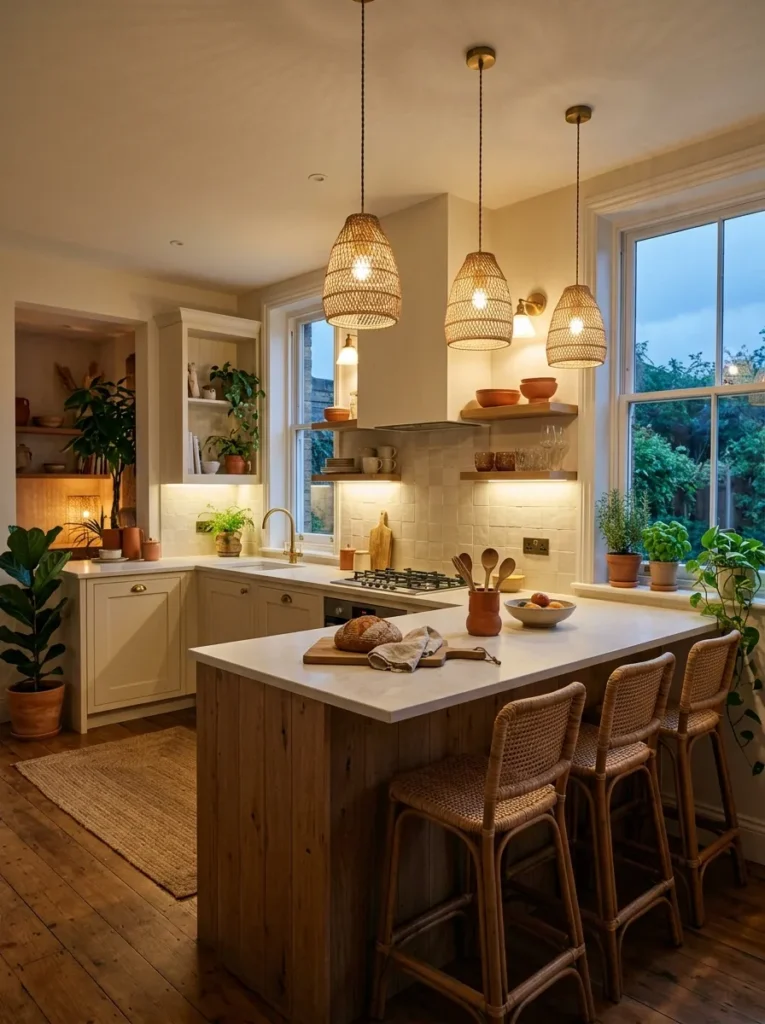
- Combining different light sources makes the kitchen more adaptable.
- Pendant lights provide focused illumination over work areas.
- Under-cabinet lighting helps brighten food preparation surfaces.
- Wall sconces can add warmth around open shelving or dining areas.
- Warm bulbs create a softer evening atmosphere.
Good lighting can make every carefully chosen material in a kitchen look better, especially after natural daylight disappears. Instead of depending on one ceiling fixture, combine pendant lights, under-cabinet illumination, and smaller accent fixtures to create several useful layers. Pendant lights can define the island, while task lighting makes counters easier to use for chopping and preparation. Wall sconces can add a softer decorative glow near shelving or dining areas. This layered approach gives modern kitchens the relaxed depth associated with bohemian interiors while still providing the practical brightness needed for everyday cooking.
Think about lighting according to how the kitchen is actually used throughout the day. Bright task lighting is useful while preparing meals, while warmer ambient illumination can make the room more comfortable during dinner or entertaining. Install dimmers where possible so the atmosphere can change without changing the fixtures. In my experience, warm bulbs between roughly 2700K and 3000K tend to complement wood, cream, clay, and woven materials particularly well. Keep the fixtures visually related but avoid making every light identical. A thoughtful mixture creates depth, flexibility, and a polished finish that completes the entire kitchen.
Conclusion
Creating a warm, stylish kitchen does not always require a complete renovation. These modern boho kitchen ideas show how natural wood, earthy colors, woven textures, greenery, handmade accents, and thoughtful lighting can transform an ordinary space into one that feels personal and inviting. I’ve seen how even small changes, such as replacing lighting or adding a patterned runner, can completely refresh a room. Choose one idea that inspires you and start there. Save this post on Pinterest so you can return to your favorite designs later, and share it with someone planning their own kitchen makeover. Your dream space can begin with one simple change.