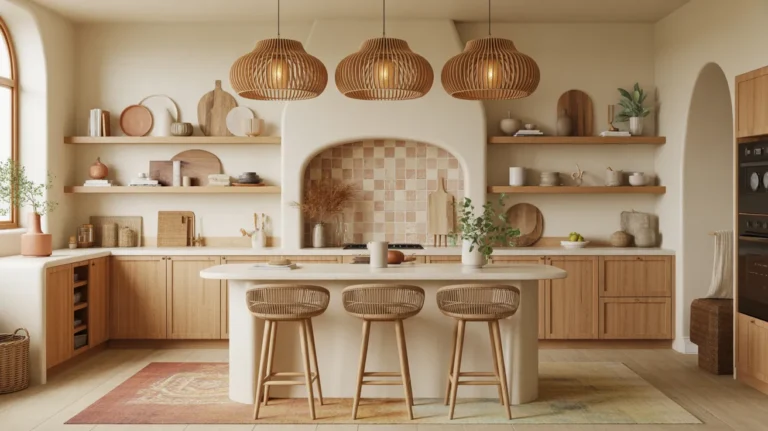
20 Scandinavian Kitchen Ideas for Timeless Style
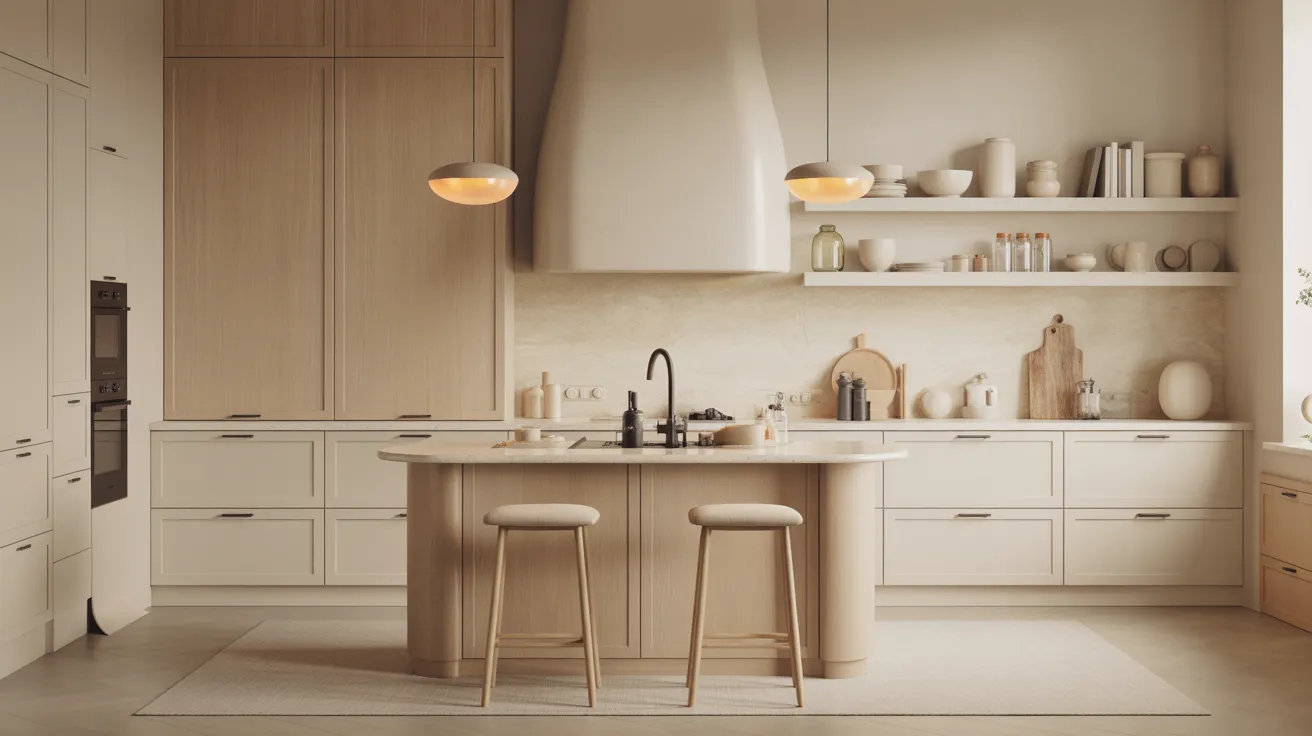
Your kitchen can feel bright, warm, and beautifully organized without looking overly designed.
Think pale wood, soft neutrals, clever storage, and simple details that make every corner feel intentional.
These scandinavian kitchen ideas bring together timeless materials, practical layouts, natural textures, and calming colors to help you create a space that feels both stylish and genuinely comfortable. Whether your kitchen is compact, open-plan, modern, or simply ready for a refresh, these ideas offer approachable ways to improve its look and function. You’ll discover ways to make small spaces feel larger, add warmth without clutter, and create visual balance through thoughtful finishes. In my experience, the biggest transformations often come from a few carefully chosen details rather than a complete renovation. Explore these inspiring ideas and find the combinations that feel right for your home.
Light Oak Cabinetry
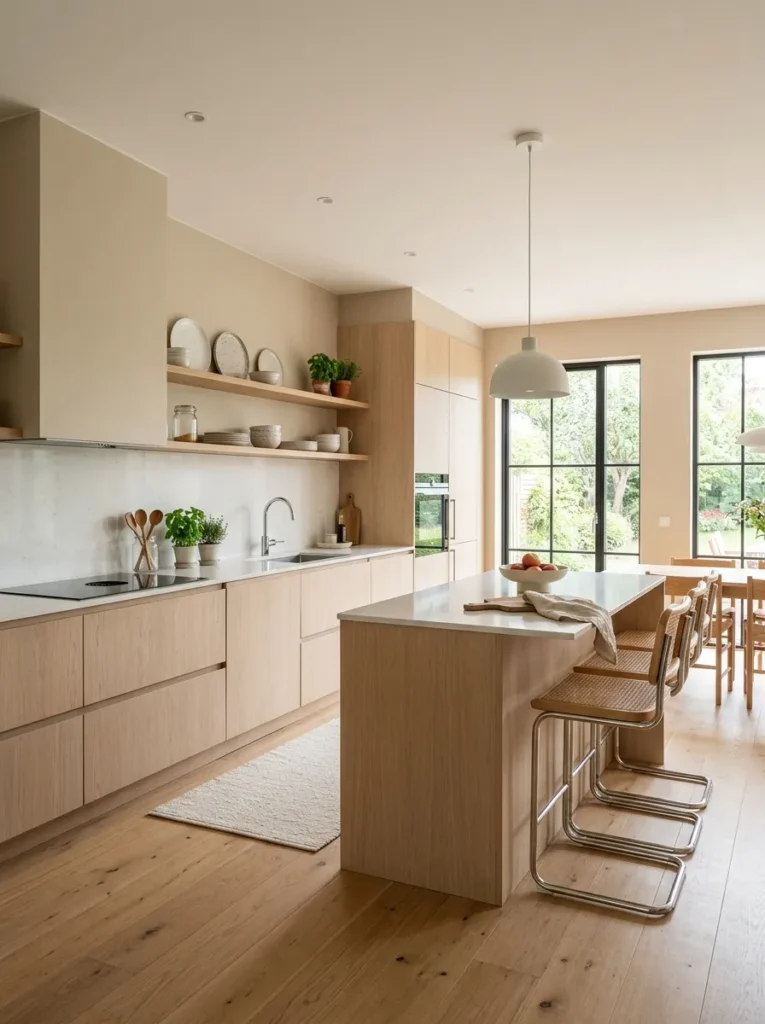
- Pale oak brings warmth without making the room feel heavy.
- Natural wood grain adds texture to an otherwise simple palette.
- Light cabinetry makes compact kitchens appear brighter and more spacious.
- Matte finishes help maintain a calm, understated appearance.
Light oak cabinets can instantly make a kitchen feel brighter, warmer, and more welcoming without adding visual clutter. The soft wood tone works beautifully with white countertops, cream walls, and muted textiles, creating the balanced look often associated with Scandinavian kitchen ideas. In my experience, natural oak is especially useful when a room feels cold or overly plain because its subtle grain introduces character without overwhelming the space. Choose flat-panel doors and simple hardware to keep the cabinetry streamlined. The result is a kitchen that feels fresh, practical, and timeless rather than tied to one decorating trend.
The beauty of pale oak is that it adapts easily as your kitchen evolves. You can pair it with black fixtures for gentle contrast, brushed metal for a softer finish, or warm beige accents for an especially cozy appearance. I’ve noticed that this combination also handles everyday living well because small imperfections in natural wood can blend naturally into the overall texture. Keep countertops visually quiet and avoid too many competing patterns. A simple backsplash, woven runner, and a few ceramic pieces can complete the look while preserving the open, uncluttered feeling that makes Nordic interiors so appealing.
White Shaker Cabinets
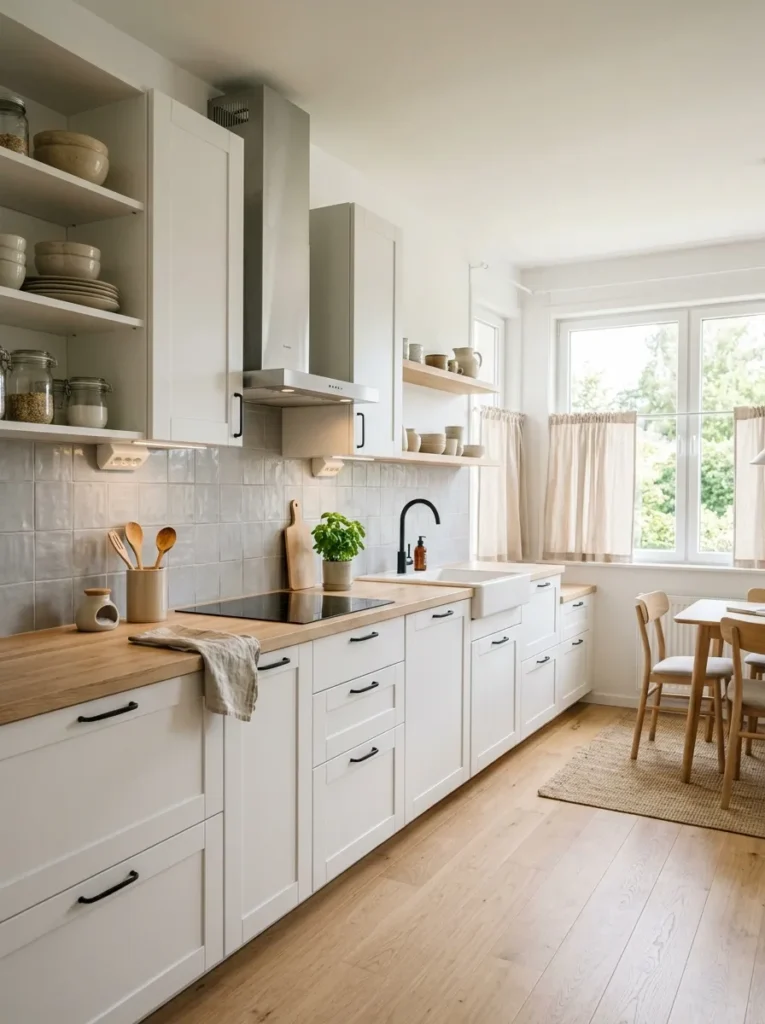
- White cabinetry reflects light and visually opens the room.
- Shaker detailing adds subtle character without looking ornate.
- Pale wood counters prevent an all-white kitchen from feeling sterile.
- Simple black handles create definition and visual structure.
Few choices create a cleaner foundation than crisp white Shaker cabinetry, especially when you want a kitchen that feels spacious and easy to personalize. The recessed panels add just enough detail to keep the walls from looking flat, while the white finish reflects daylight throughout the room. Pairing these cabinets with pale timber counters introduces warmth and prevents the space from becoming too clinical. For smaller kitchens, this combination can make the layout feel noticeably more open. Keep the surrounding finishes restrained so the cabinetry remains the main visual feature instead of competing with busy patterns.
White Shaker doors also provide flexibility when your style changes over time. A muted tile backsplash can create a soft backdrop, while natural linen, wooden stools, and handmade ceramics bring warmth through smaller details. If the kitchen receives limited daylight, choose a warm white rather than a stark blue-white to maintain a comfortable atmosphere. I’ve seen this approach work particularly well in homes where owners want a fresh appearance without committing to a highly specific color scheme. Because the cabinetry stays visually quiet, you can update lighting, textiles, hardware, or artwork later without redesigning the entire room.
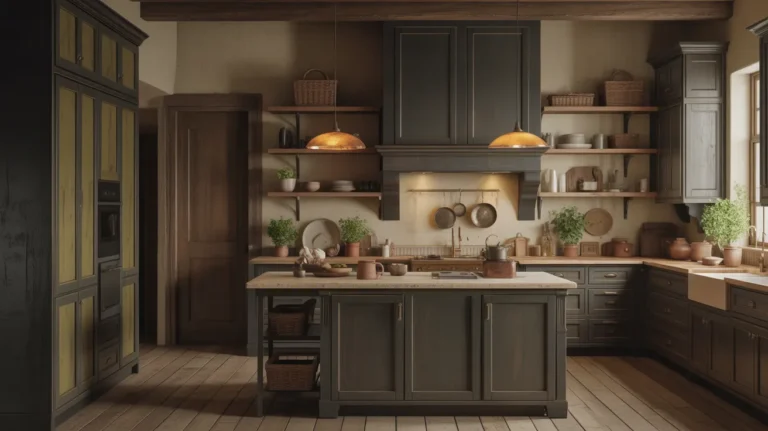
Open Wood Shelving
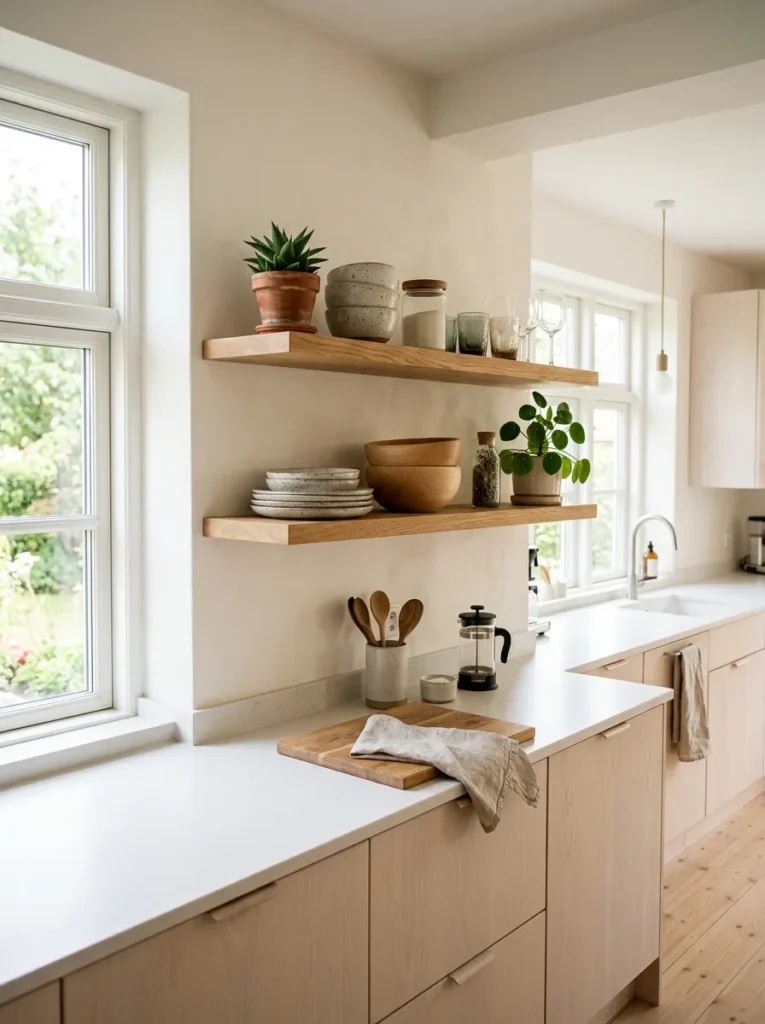
- Floating shelves make useful everyday items part of the decor.
- Natural wood adds warmth against pale walls and cabinetry.
- Keeping shelves lightly styled prevents visual overcrowding.
- Everyday dishes become easier to reach and organize.
Open wood shelving can turn an ordinary kitchen wall into a warm, useful display without making the room feel crowded. Two or three slim oak shelves are often enough to introduce natural texture while keeping the overall design light. Use them for everyday plates, mugs, wooden bowls, glass jars, or a small trailing plant rather than filling every inch. This approach gives the kitchen personality while preserving the clean lines expected from Scandinavian interiors. When planning your layout, position shelves where frequently used items are easy to reach, especially near coffee stations, preparation areas, or the sink.
The key is restraint because open storage shows everything. Choose a small collection of pieces that share complementary tones, such as cream ceramics, clear glass, pale wood, and muted stoneware. Leave generous gaps between objects so the shelves feel intentional rather than messy. I’ve noticed that mixing functional pieces with just one or two decorative accents creates the most natural result. If you cook frequently, keep shelves away from areas exposed to heavy grease or steam. With thoughtful placement and simple styling, this feature can add storage, texture, and personality without sacrificing the airy feeling.
Warm Neutral Palette
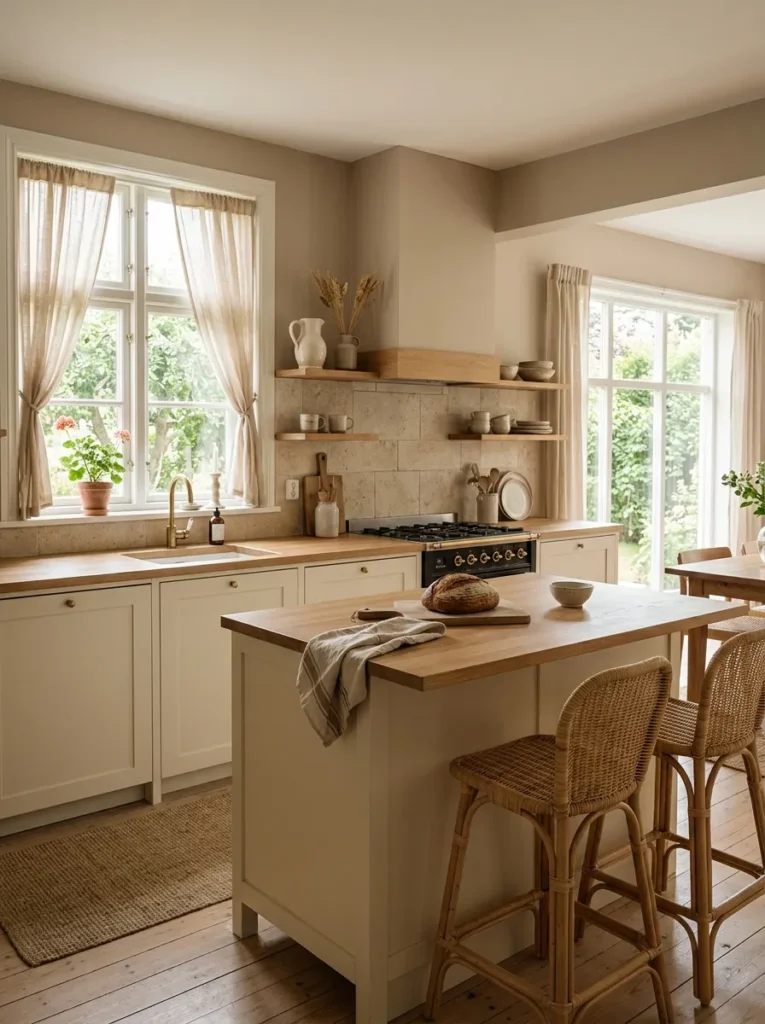
- Warm neutrals create a softer alternative to stark white.
- Layered beige tones add depth without visual clutter.
- Natural materials keep the palette connected to Scandinavian style.
- Soft colors can make everyday spaces feel more comfortable.
A warm neutral palette gives a Scandinavian kitchen a relaxed appearance while keeping the overall design bright and uncluttered. Instead of relying on pure white everywhere, combine ivory cabinetry with beige walls, pale timber, and soft taupe accessories. These closely related shades create depth without introducing strong visual contrast. This is especially useful in kitchens that need to feel welcoming rather than ultra-modern. The gentle color layering also makes natural materials stand out beautifully. For a cohesive result, repeat one or two warm tones across textiles, ceramics, lighting, and small decorative pieces throughout the room.
Choosing several subtle shades does not mean the kitchen needs to look flat or boring. Texture becomes important when the colors are quiet. Try combining smooth painted cabinets with lightly grained wood, woven seating, handmade pottery, or a softly textured runner. I’ve noticed that this approach works particularly well in open-plan homes because the neutral tones transition naturally into nearby dining and living areas. Avoid introducing too many unrelated colors, as they can weaken the calm effect. A few carefully selected accents, such as muted green plants or brushed brass details, can provide just enough variation without disturbing the peaceful palette.
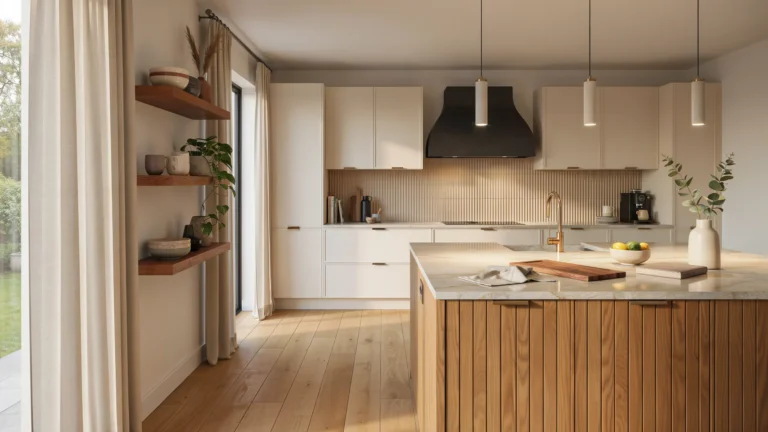
Black Accent Fixtures
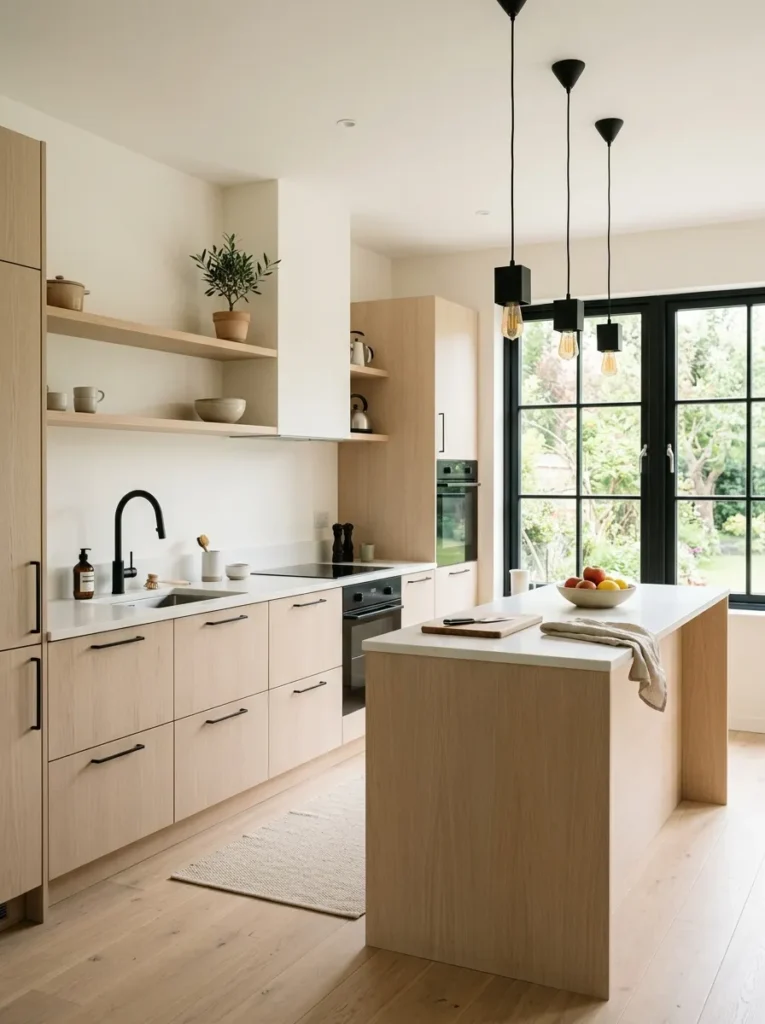
- Black hardware creates definition against pale surfaces.
- Small dark accents can make a simple kitchen feel more finished.
- Matte finishes keep the contrast sophisticated rather than flashy.
- Repeating black details creates visual consistency throughout the room.
A few black fixtures can give a pale kitchen the crisp definition it needs without changing its peaceful character. Matte black cabinet pulls, a simple faucet, or slim pendant lights create small points of contrast against white and light wood surfaces. This technique is particularly effective when the rest of the room uses soft neutral colors. Rather than becoming the dominant feature, the dark accents guide the eye around the space and make simple cabinetry look more intentional. Among practical Scandinavian kitchen ideas, this is one of the easiest updates because hardware and lighting can often be changed without major renovation.
The trick is to repeat the dark finish thoughtfully instead of scattering it randomly. For example, pair black cabinet handles with a matching faucet and one or two light fixtures so the elements feel connected. I’ve seen kitchens look much more polished simply by repeating the same finish in several small places. Choose matte or satin surfaces if you prefer a softer appearance, particularly in compact rooms. Keep the surrounding materials light and natural so the black details remain accents. This balance creates a modern Nordic look that feels structured, clean, and easy to live with.
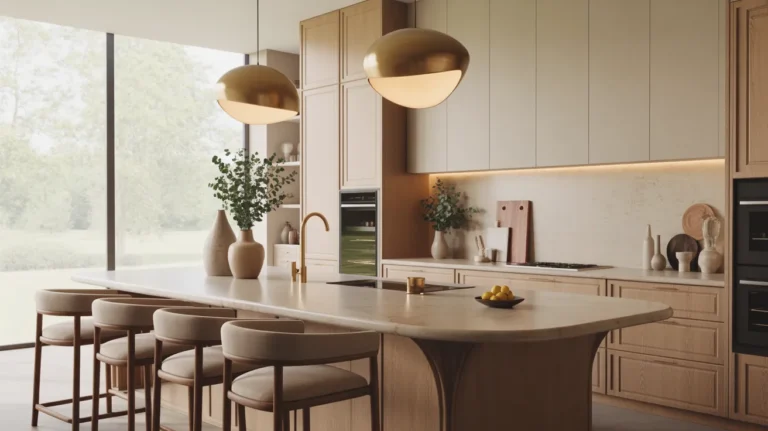
Minimal Pendant Lighting
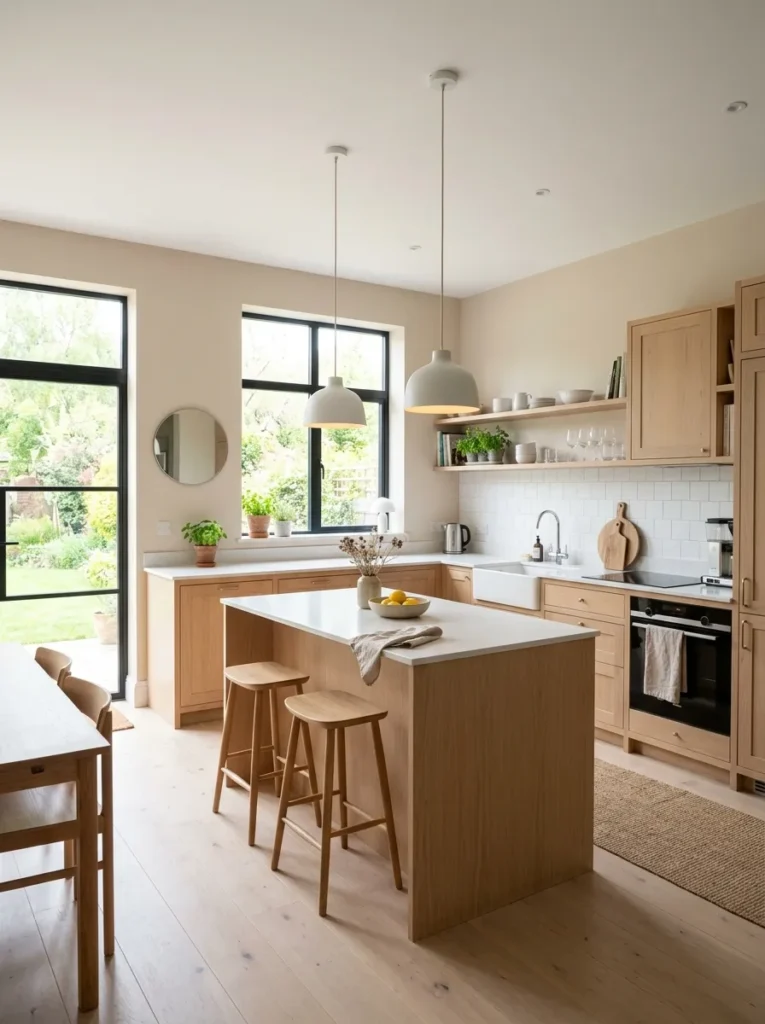
- Simple pendants provide focused light without overwhelming the room.
- Repeated fixtures can create symmetry above an island.
- Warm bulbs make pale materials feel more inviting.
- Clean silhouettes complement streamlined Nordic cabinetry.
Minimal pendant lighting can become a quiet focal point while keeping the kitchen visually clean. Choose fixtures with simple silhouettes, such as small domes, rounded shades, or slim cylindrical forms, and position them above an island or dining counter. The goal is to provide useful task lighting while adding a deliberate design detail overhead. Warm white bulbs work especially well with pale wood because they enhance the natural grain instead of making it appear cold. In a simple kitchen, thoughtfully chosen lighting can make the entire room feel more finished without requiring additional decoration.
Scale matters when selecting pendant lights for a Nordic-inspired space. Oversized fixtures can dominate a compact kitchen, while very small lights may disappear above a large island. Measure the island and consider using two or three matching pendants when the surface is long enough. Keep the hanging heights consistent for a balanced appearance, and avoid complicated shapes that compete with the cabinetry. In my experience, simple lighting becomes particularly effective when the rest of the kitchen is restrained. The fixtures provide visual rhythm while still allowing natural wood, clean surfaces, and practical storage to remain the main focus.
Natural Stone Backsplash
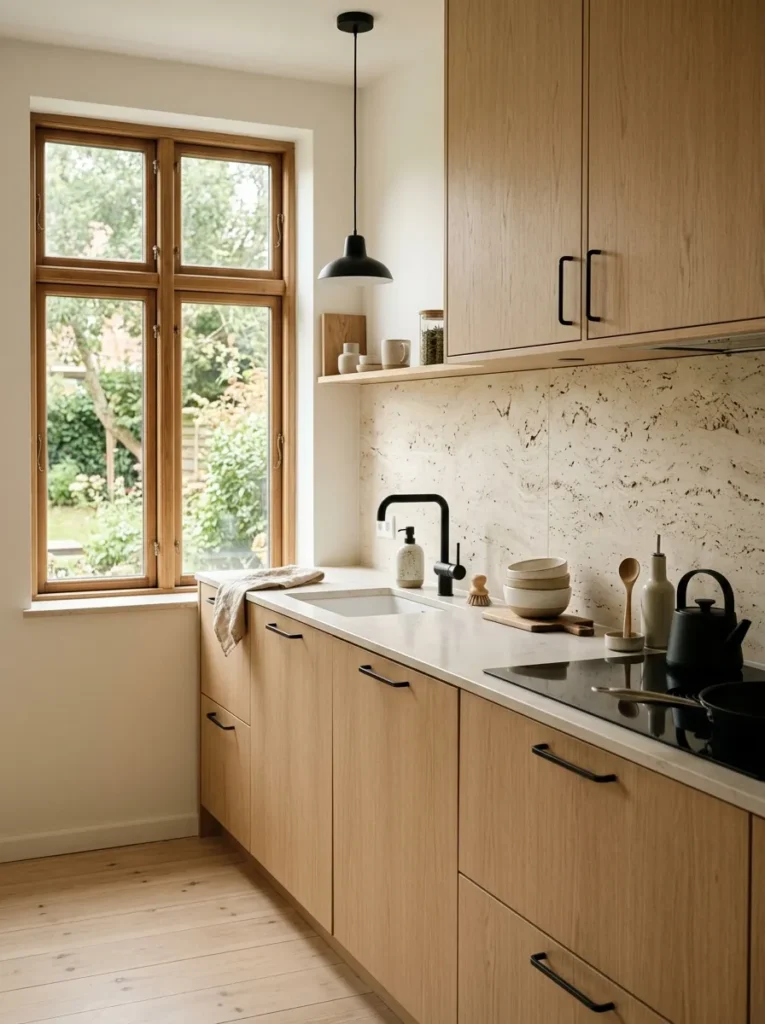
- Natural stone adds organic texture to a simple kitchen.
- Soft cream tones keep the backsplash visually calm.
- Subtle variation prevents pale surfaces from looking flat.
- A durable stone surface can combine beauty with everyday function.
A natural stone backsplash brings quiet character to a Scandinavian kitchen without introducing busy patterns or strong colors. Choose limestone, travertine, or another softly veined stone in cream, beige, or warm gray to complement pale cabinetry and timber accents. The natural variation creates visual interest while maintaining the restrained appearance that makes Nordic interiors so appealing. A continuous stone surface can also make the kitchen feel more cohesive because there are fewer visual interruptions between the counter and upper wall. For everyday cooking, select a properly sealed material and follow the manufacturer’s care recommendations.
The finish you choose can change the entire mood of the room. Honed stone creates a soft, understated appearance, while a slightly textured surface emphasizes the material’s natural character. Keep the surrounding elements simple so the backsplash has room to breathe. I’ve noticed that stone looks especially beautiful beside pale oak because the two materials share subtle organic variations without appearing overly coordinated. Add only a few decorative pieces, such as handmade pottery or a wooden cutting board. This combination creates a practical backdrop that feels authentic, warm, and connected to nature.
Pale Wood Flooring
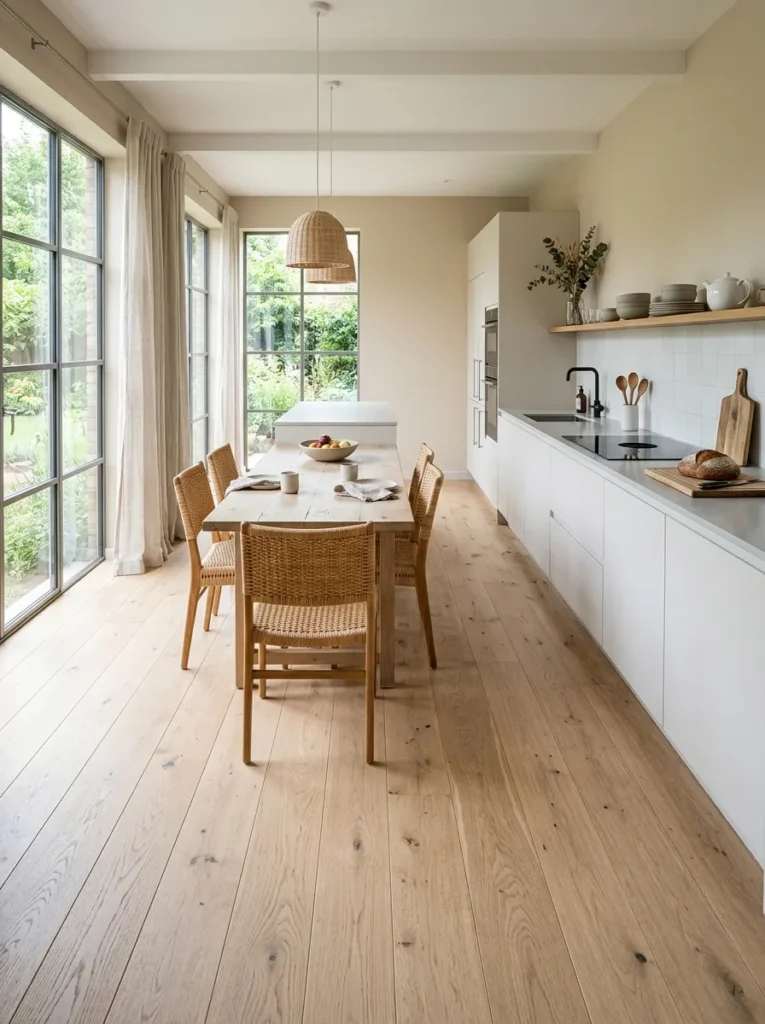
- Pale flooring makes the entire room feel lighter and more open.
- Continuous wood visually connects adjoining living spaces.
- Natural grain adds warmth beneath simple cabinetry.
- Matte or low-sheen finishes maintain a relaxed appearance.
Pale wood flooring creates a warm foundation that can make even a compact kitchen feel more spacious. Light oak, ash, or similarly toned timber reflects daylight and works naturally with white cabinetry, beige walls, and neutral countertops. The flooring also helps connect the kitchen visually with nearby dining or living areas, which is especially useful in open-plan homes. Among Scandinavian kitchen ideas, this approach stands out because it combines visual simplicity with practical warmth underfoot. Choose a durable finish suited to kitchen traffic and clean spills promptly to keep the surface looking its best.
The direction and width of the boards can also influence how the room feels. Running boards along the longest dimension may visually emphasize length, while wider planks can create a calmer, less fragmented appearance. Keep rugs and mats simple so they do not hide too much of the natural flooring. I’ve noticed that pale timber becomes especially effective when repeated in smaller elements, such as stools, shelving, or cutting boards. This repetition creates a subtle connection throughout the room. The finished space feels bright and cohesive while still having enough texture to avoid looking sterile.
Soft Linen Textiles
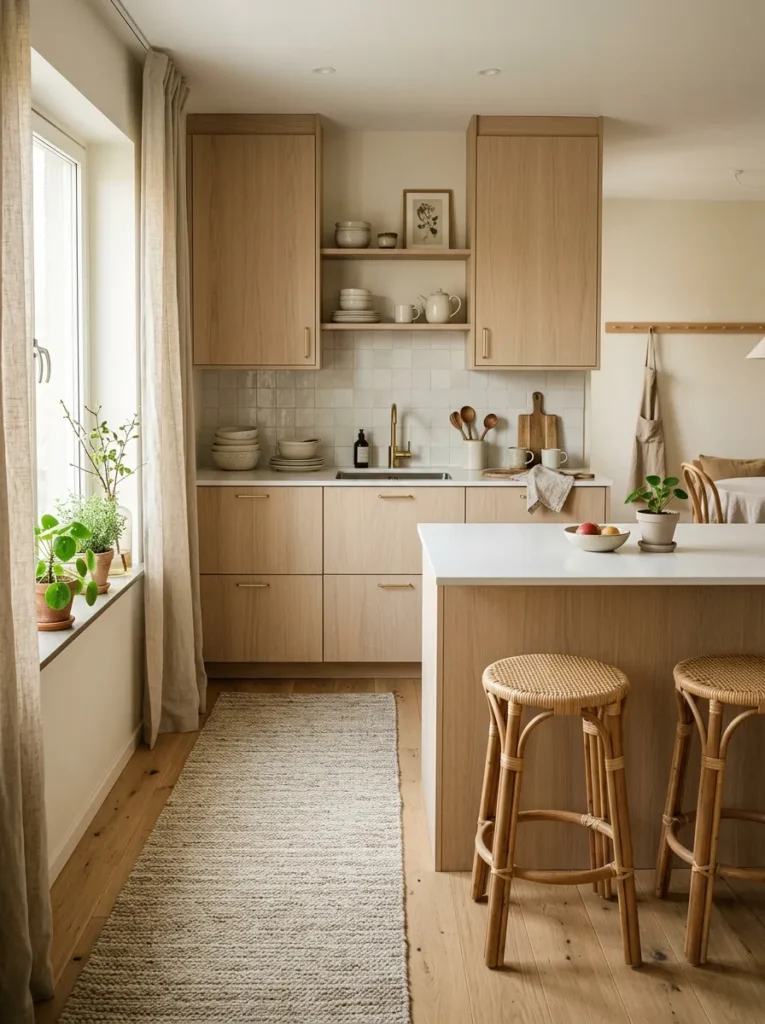
- Linen introduces softness without adding heavy visual patterns.
- Neutral textiles complement wood and light cabinetry naturally.
- A simple runner can define the kitchen zone.
- Washable fabrics make everyday styling more practical.
Soft linen textiles can make a minimalist kitchen feel noticeably warmer without disturbing its clean appearance. A lightweight linen curtain, neutral runner, or simple seat cushion introduces texture through fabric rather than strong color or decoration. Choose shades such as oatmeal, cream, stone, or muted beige to complement pale timber and white surfaces. These materials work particularly well when the kitchen already has sleek cabinetry because their relaxed texture softens harder finishes. For busy homes, look for washable or easy-care options so the room remains attractive without creating unnecessary maintenance.
Textiles are also an easy way to refresh the kitchen when you do not want to change permanent features. Swap a runner seasonally, add linen cushions to wooden stools, or replace heavy curtains with lightweight panels to increase the sense of daylight. I’ve noticed that even one textured textile can make a sparse room feel more lived-in and comfortable. Keep patterns subtle or skip them entirely if the space already contains visible wood grain or stone variation. The result is a kitchen that feels relaxed and welcoming while preserving the uncluttered character of Nordic design.
Sleek Handleless Cabinets
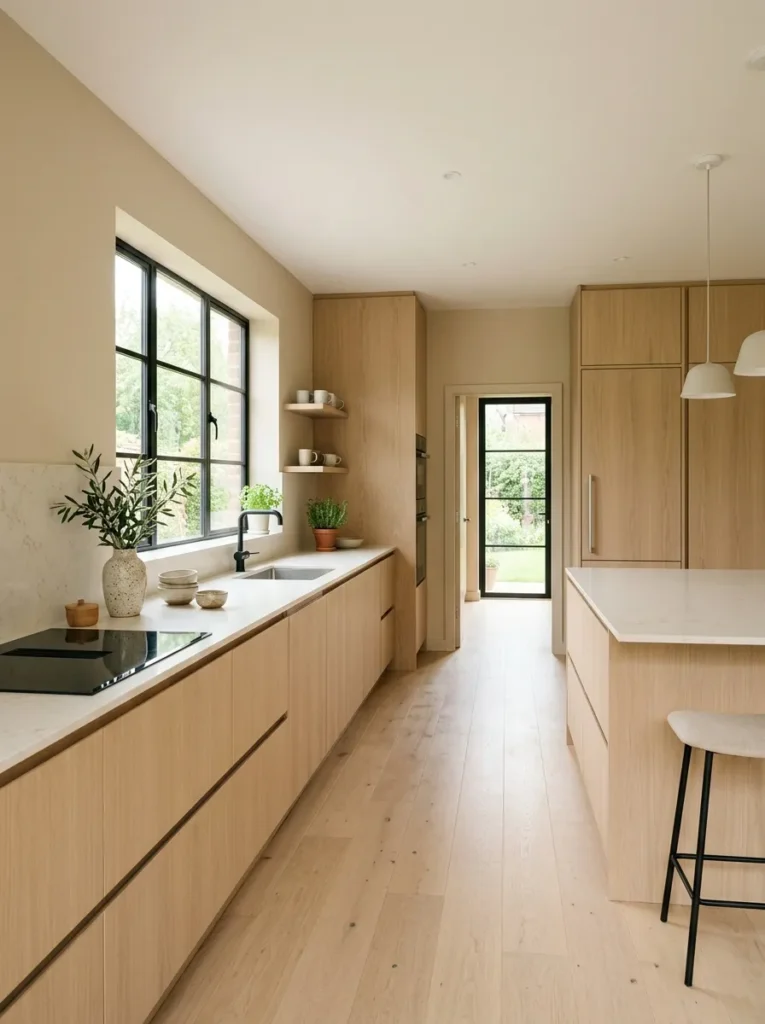
- Handleless fronts create an uninterrupted, streamlined appearance.
- Integrated hardware keeps small kitchens visually calm.
- Smooth cabinet lines make the room feel more spacious.
- A simple profile pairs beautifully with natural materials.
Handleless cabinetry creates an exceptionally clean look by removing visual interruptions from cabinet fronts. Instead of traditional knobs or pulls, choose push-to-open doors or discreet integrated channels that keep the surfaces smooth and continuous. This approach works particularly well with pale oak, soft white, or muted gray cabinetry because the material itself becomes the main visual feature. The result feels modern without relying on dramatic finishes. For compact kitchens, reducing small visual details can also make the cabinetry appear less bulky and help the entire room feel more open and organized.
A handleless design does require thoughtful planning because everyday usability matters as much as appearance. Choose durable door mechanisms and consider how often each cabinet will be opened before deciding where integrated channels or push systems make sense. I’ve noticed that combining handleless lower cabinets with a few open shelves can create a useful balance between concealed storage and accessible display. Keep countertops relatively clear to preserve the streamlined effect. When paired with warm wood, soft lighting, and simple ceramics, this approach delivers a polished Nordic look that feels practical rather than overly futuristic.
Compact Kitchen Island
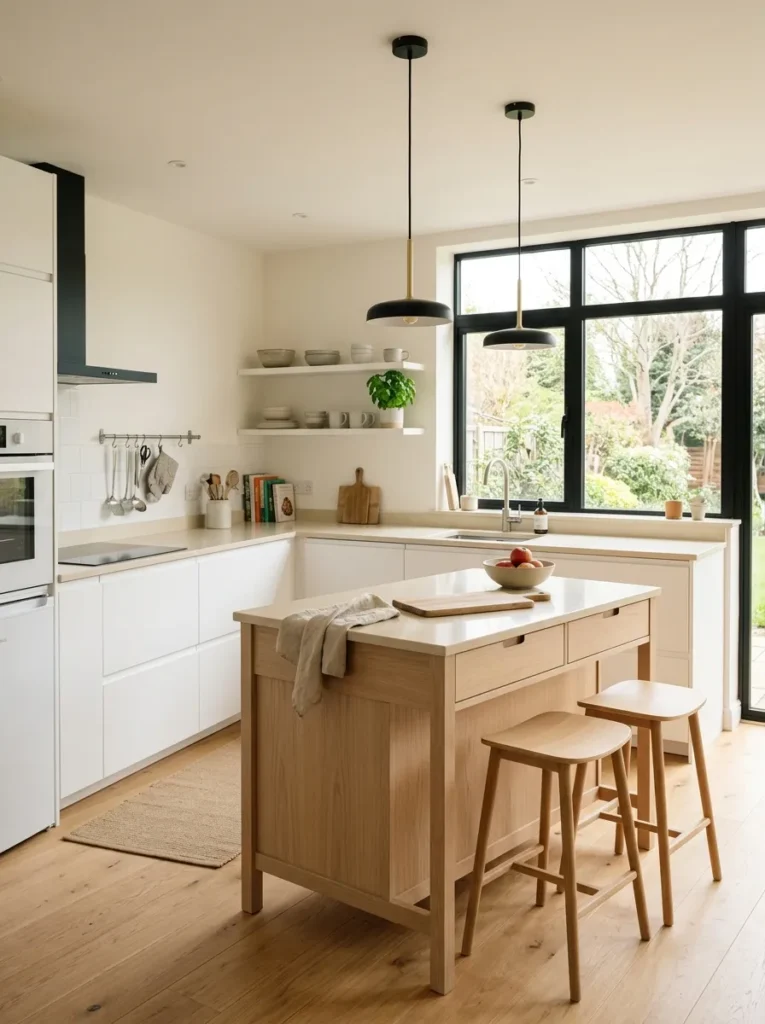
- A compact island adds workspace without overwhelming the room.
- Built-in storage can reduce countertop clutter.
- A small seating area makes the kitchen more functional.
- Rounded corners can improve movement in tighter layouts.
A compact kitchen island can add valuable preparation space without sacrificing the airy feeling of a Scandinavian interior. Choose a narrow design with clean lines and enough clearance around it for comfortable movement. Pale oak or painted cabinetry keeps the island visually light, while a simple stone countertop provides a durable work surface. If space allows, add one or two slim stools for casual meals or morning coffee. This is one of the most practical Scandinavian kitchen ideas for homeowners who want extra function but do not have room for a large statement island.
Before choosing an island, measure the available circulation space carefully and account for appliance doors, drawers, and walkways. A beautiful island becomes frustrating if it blocks movement or makes the kitchen difficult to use. I’ve seen smaller islands work especially well when they combine storage, preparation space, and seating in one compact footprint. Keep the design visually simple and avoid excessive shelving or decorative details. When the proportions are right, even a modest island can become a useful center point while maintaining the bright, uncluttered character of the surrounding kitchen.
Greenery And Herbs
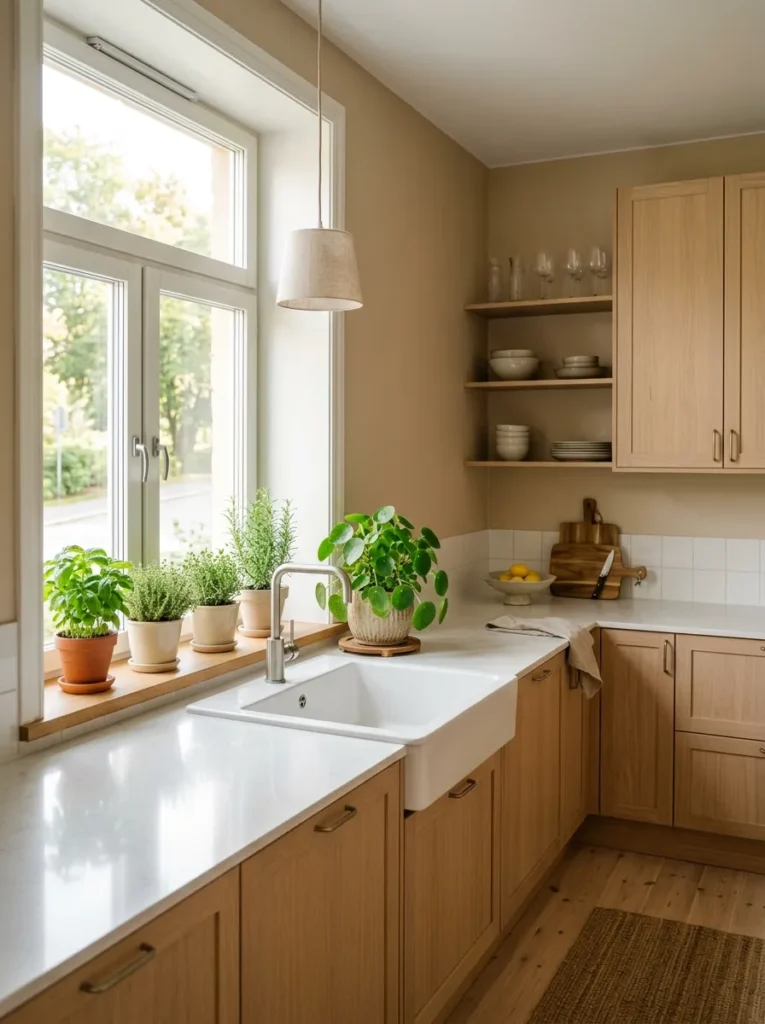
- Small plants introduce fresh color without overwhelming neutral interiors.
- Fresh herbs near the cooking area add everyday usefulness.
- Ceramic or terracotta pots bring subtle natural texture.
- A windowsill can become a simple decorative feature.
A few carefully placed plants can bring a Scandinavian kitchen to life without disrupting its minimalist character. Fresh herbs such as basil, thyme, rosemary, or mint work especially well near a bright window where they can be easily reached while cooking. For decorative greenery, choose one larger plant or several small varieties rather than filling every surface. Against pale cabinetry and natural wood, green leaves provide gentle contrast and make the room feel more connected to nature. This simple addition can make an otherwise neutral kitchen look fresher, warmer, and more lived-in.
Placement matters when adding greenery to a practical cooking space. Keep herbs where they receive suitable light, but avoid positioning delicate plants directly beside heat sources or areas exposed to frequent splashing. Use simple ceramic, stone, or terracotta pots that complement the existing materials. I’ve noticed that repeating natural elements, such as wood, plants, and handmade pottery, creates a particularly cohesive effect without requiring much decoration. A small windowsill garden can also make unused space useful. The finished kitchen feels relaxed and organic while still preserving the clean, orderly appearance associated with Nordic interiors.
Two-Tone Cabinetry
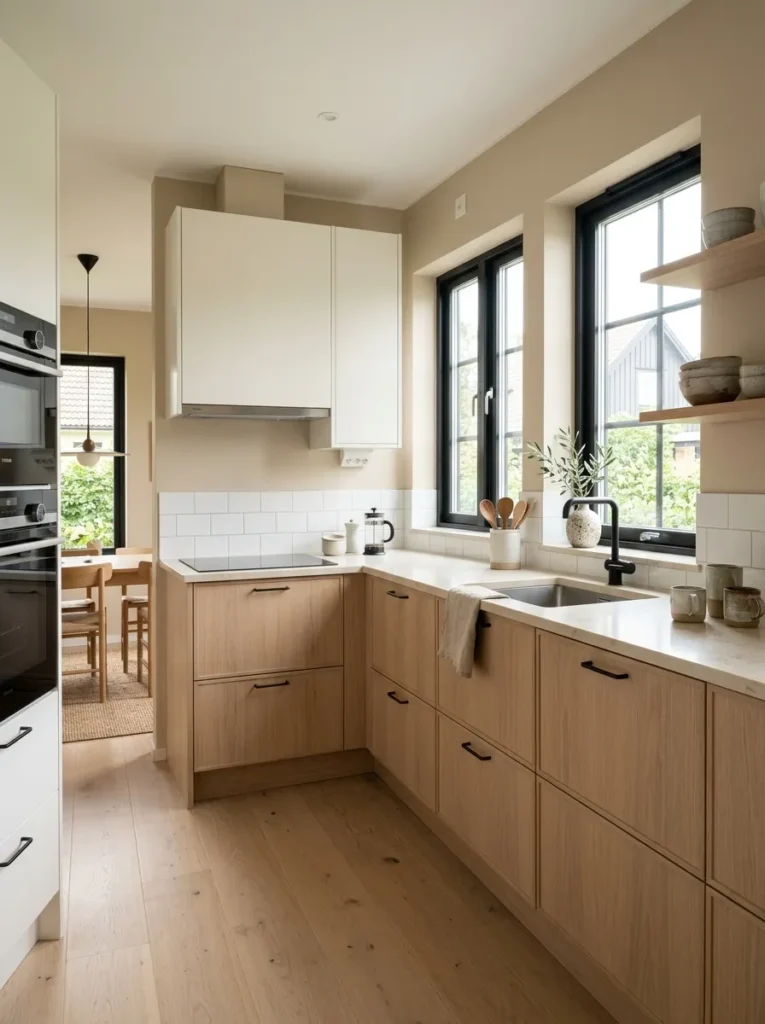
- Two cabinet tones add depth without introducing busy patterns.
- White uppers can make the kitchen feel visually lighter.
- Wood lowers bring warmth and natural texture.
- Matching countertops help unify the contrasting finishes.
Two-tone cabinetry gives a Scandinavian kitchen more dimension while keeping the overall palette calm and cohesive. A particularly effective combination is warm white upper cabinets with pale oak lower units, creating a gentle transition between brightness and natural texture. The lighter upper section helps the walls feel open, while the wood base grounds the room visually. This approach works well when an all-white kitchen feels too plain or when full wood cabinetry seems too heavy. Keep the countertop and backsplash relatively quiet so the two cabinet finishes remain balanced rather than competing.
The proportions of each finish can make a noticeable difference. Using lighter cabinetry above eye level keeps the upper part of the kitchen visually soft, while natural wood below adds warmth where people interact most with the space. I’ve noticed that repeating the lower cabinet wood tone in stools, shelving, or cutting boards helps the combination feel intentional. Avoid introducing several additional colors, as that can dilute the clean effect. With restrained hardware and simple lighting, two finishes can create enough visual interest to make the kitchen feel thoughtfully designed without losing its relaxed Nordic character.
Integrated Appliances
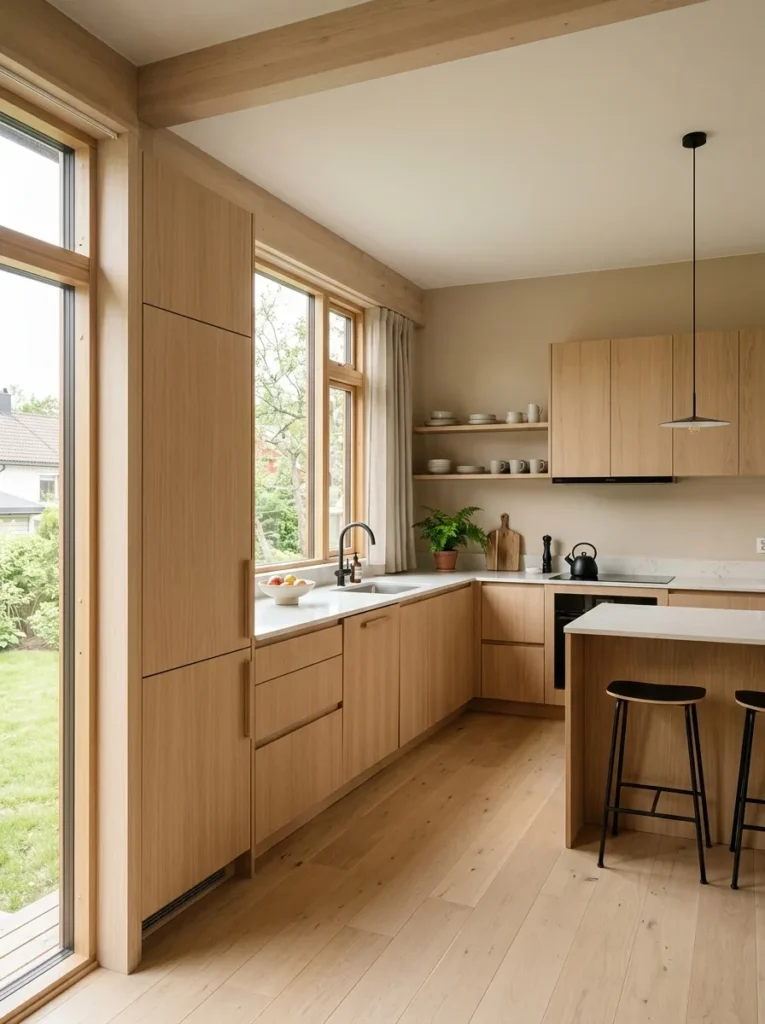
- Concealed appliances create smoother cabinet lines.
- Matching fronts reduce visual clutter around the kitchen.
- Integrated designs work especially well in open-plan spaces.
- Hidden appliances can make compact layouts feel more organized.
Integrated appliances help create the seamless, uncluttered appearance that makes Nordic kitchens feel so polished. Refrigerators, dishwashers, and other built-in appliances can be concealed behind matching cabinet fronts, allowing the cabinetry to read as one continuous surface. This is especially useful in open-plan homes where the kitchen is visible from dining or living areas. Instead of drawing attention to large stainless-steel appliances, the eye moves toward natural wood, simple lighting, and carefully chosen surfaces. The result feels calmer while still providing all the practical equipment needed for everyday cooking.
Planning is important because integrated appliances require compatible cabinet dimensions, ventilation, and installation details. Check manufacturer specifications before ordering cabinetry, particularly around refrigerators, ovens, and dishwashers. I’ve seen this approach make a surprisingly big difference in smaller kitchens because removing visual interruptions can make the entire wall appear more spacious. Pair concealed appliances with handleless or minimal cabinet fronts for an especially streamlined result. You do not need to hide every appliance, though. A carefully selected range hood, oven, or cooktop can remain visible while the major storage appliances stay visually integrated.
Cozy Breakfast Nook
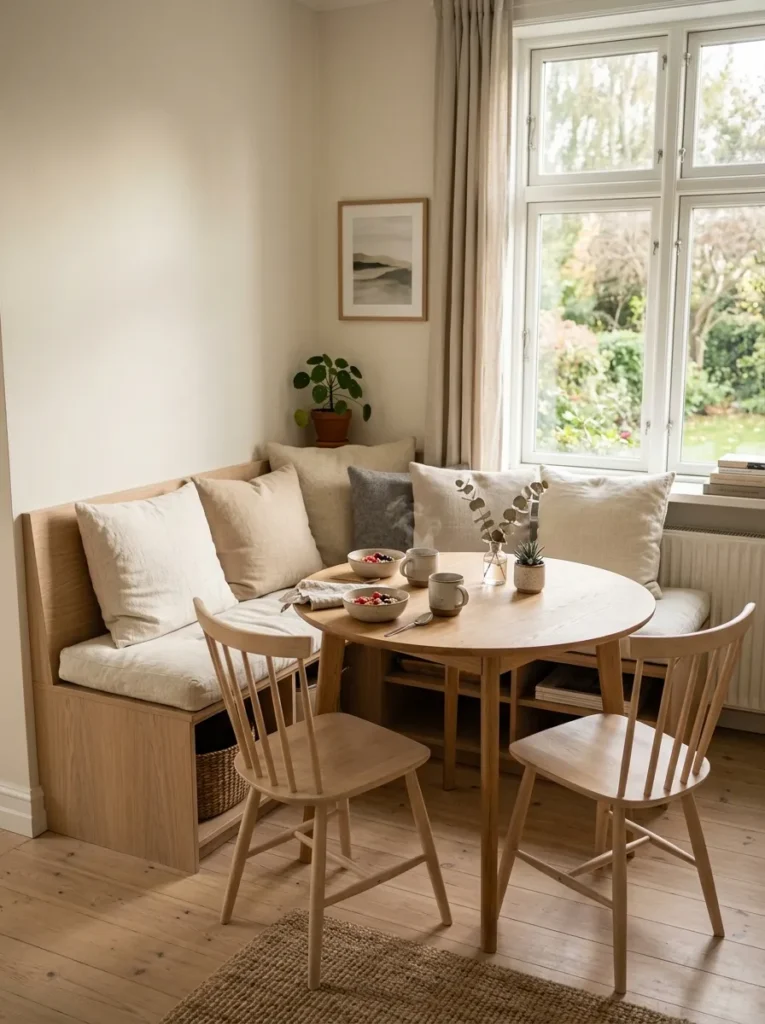
- A built-in bench can transform an unused corner into useful seating.
- Round tables improve movement in compact kitchen layouts.
- Linen cushions add softness to hard architectural surfaces.
- Window seating makes natural light part of the design.
A small breakfast nook can turn an overlooked kitchen corner into one of the most useful spaces in the home. A built-in wooden bench paired with a compact round table creates casual seating without requiring a large dining area. Place the nook beside a window whenever possible so natural daylight becomes part of the experience. Keep the colors soft with cream cushions, pale timber, and neutral walls to maintain the relaxed Scandinavian character. This setup is ideal for morning coffee, quick meals, homework, or simply creating a comfortable spot within a busy kitchen.
The best breakfast nooks balance comfort with easy movement. A round table is often more practical than a rectangular one in a tight corner because there are fewer sharp edges and circulation feels less restricted. Choose cushions with washable covers if the area will be used frequently, especially in homes with children. I’ve noticed that adding one small pendant or wall light makes a nook useful even after daylight fades. Keep decorations minimal, perhaps using a small vase, plant, or ceramic bowl. These details create warmth without turning a functional corner into unnecessary clutter.
Soft Gray Cabinetry
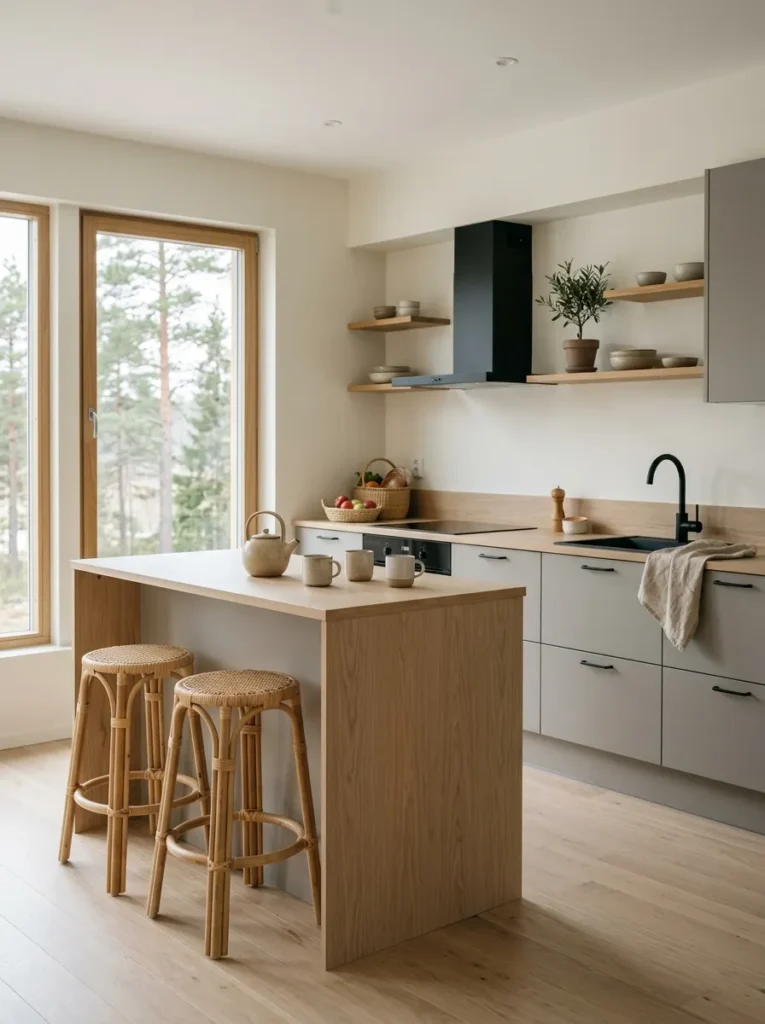
- Soft gray adds depth while remaining visually understated.
- Warm undertones prevent gray cabinetry from feeling cold.
- Pale wood creates a natural contrast against muted doors.
- Neutral finishes make the kitchen easy to update.
Soft gray cabinetry offers a beautiful middle ground between bright white and natural wood. Choose a warm, muted gray rather than a cool blue-gray to keep the kitchen welcoming and connected to the natural materials commonly used in Nordic interiors. Pale oak counters or flooring can add warmth, while cream walls prevent the room from feeling too dark. This combination works especially well in kitchens with generous daylight because the changing light reveals subtle shifts in the gray throughout the day. The finished space feels sophisticated but still relaxed and practical for everyday living.
When choosing gray paint or cabinet finishes, always view samples in the actual kitchen because artificial lighting can dramatically change the appearance. A shade that looks warm in a showroom may appear cooler at home. I’ve noticed that pairing gray cabinetry with natural timber and soft textiles helps create a much more inviting result than using gray alone. Keep metallic finishes restrained and choose simple hardware to preserve the clean aesthetic. With a few warm accents, muted gray cabinets can provide enough contrast to give the kitchen character without sacrificing its calm, timeless appearance.
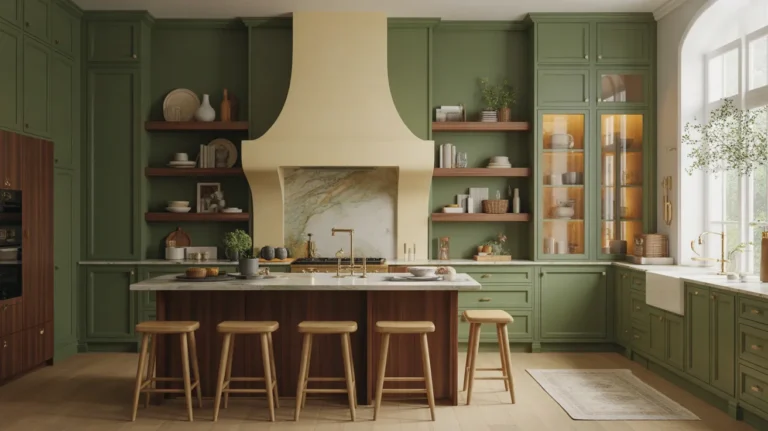
Statement Range Hood
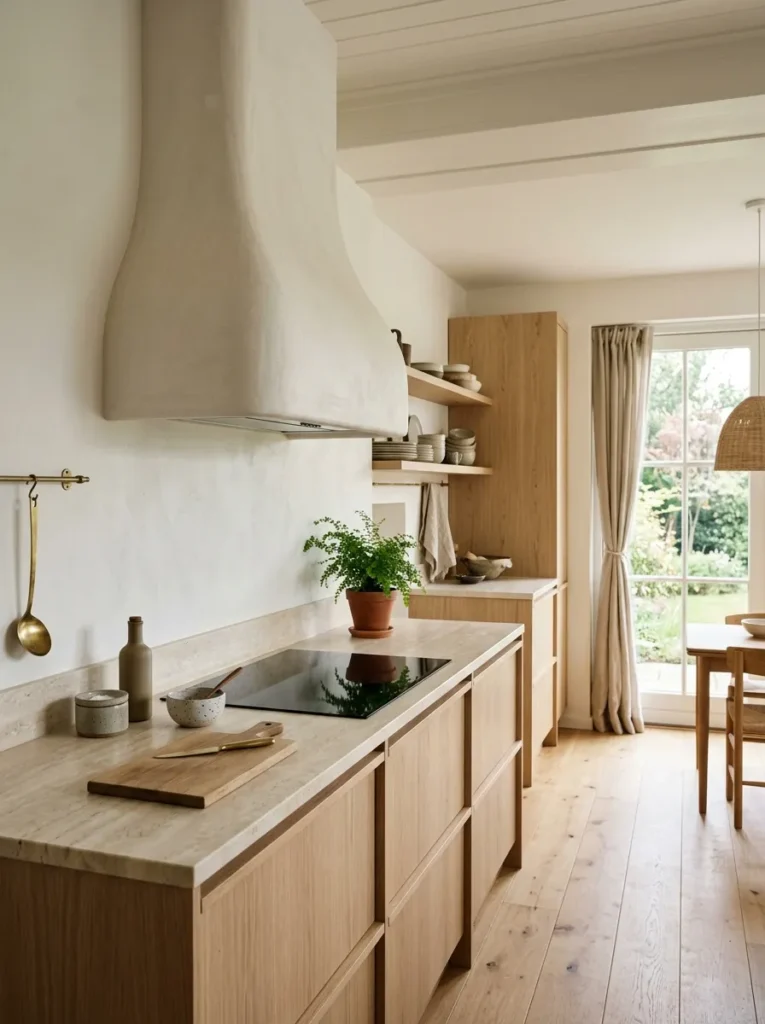
- A simple hood can become the kitchen’s main architectural feature.
- Plaster or painted finishes create a soft sculptural effect.
- Minimal surroundings keep attention on the hood.
- A carefully proportioned shape can add character without clutter.
A sculptural range hood can give a minimalist kitchen a strong architectural focal point without relying on bold colors or excessive decoration. A plastered, painted, or softly curved hood works particularly well above a simple cooktop because its shape becomes the visual feature. Keep the surrounding cabinetry understated so the hood has enough breathing room. Pale oak, creamy stone, and warm white walls create an ideal backdrop for this approach. The result feels custom and intentional while still following the quiet principles that make Scandinavian interiors so appealing.
Proportion is the most important consideration when designing a statement hood. It should be wide enough to suit the cooking surface and scaled appropriately to the cabinetry and ceiling height. Check ventilation requirements and local installation standards before choosing a custom shape or material. In my experience, a simple hood looks most sophisticated when it uses one continuous finish rather than several decorative details. Pair it with discreet lighting and minimal hardware to keep the composition balanced. This allows one architectural feature to provide personality while the rest of the kitchen remains calm and functional.
Functional Wall Storage
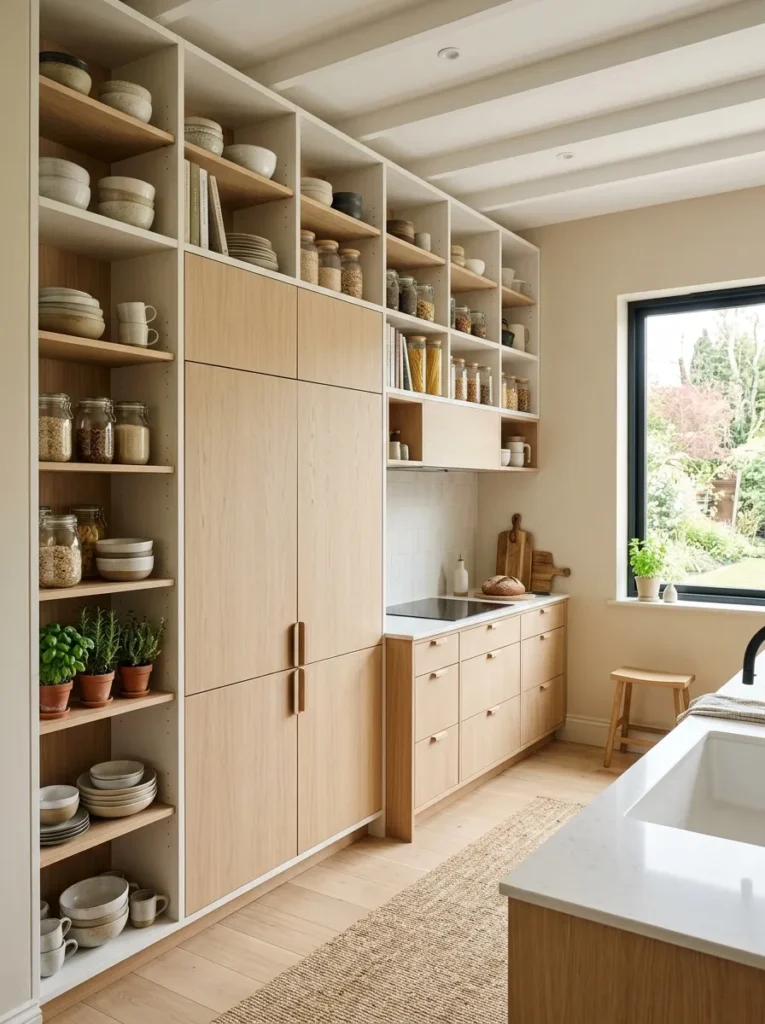
- A storage wall maximizes vertical space without spreading clutter.
- Closed cabinets hide appliances, pantry items, and everyday mess.
- Open shelves provide a small area for attractive essentials.
- Consistent cabinet fronts create a calmer visual rhythm.
A dedicated storage wall can make a Scandinavian kitchen feel remarkably organized by giving everyday items a defined place. Use tall cabinetry for pantry supplies, small appliances, cookware, and cleaning essentials while keeping the main countertops relatively clear. Combining closed doors with one small open-shelf section adds variety without exposing everything. This approach is particularly useful in kitchens where floor space is limited because vertical storage uses the wall efficiently. A consistent cabinet finish also creates a smooth backdrop, helping the entire room appear more spacious and thoughtfully planned.
Good storage is about accessibility as much as appearance. Keep frequently used items between waist and eye level, while reserving higher cabinets for occasional-use pieces. Add internal drawers, pull-out pantry shelves, or adjustable organizers where they genuinely improve daily routines. I’ve noticed that kitchens feel much calmer when appliances have dedicated storage rather than permanently occupying the countertop. Choose matching fronts and simple hardware to maintain visual consistency. When storage is planned around the way you actually cook and clean, the kitchen becomes easier to maintain, allowing its natural materials and minimalist details to remain visible.
Natural Wood Island
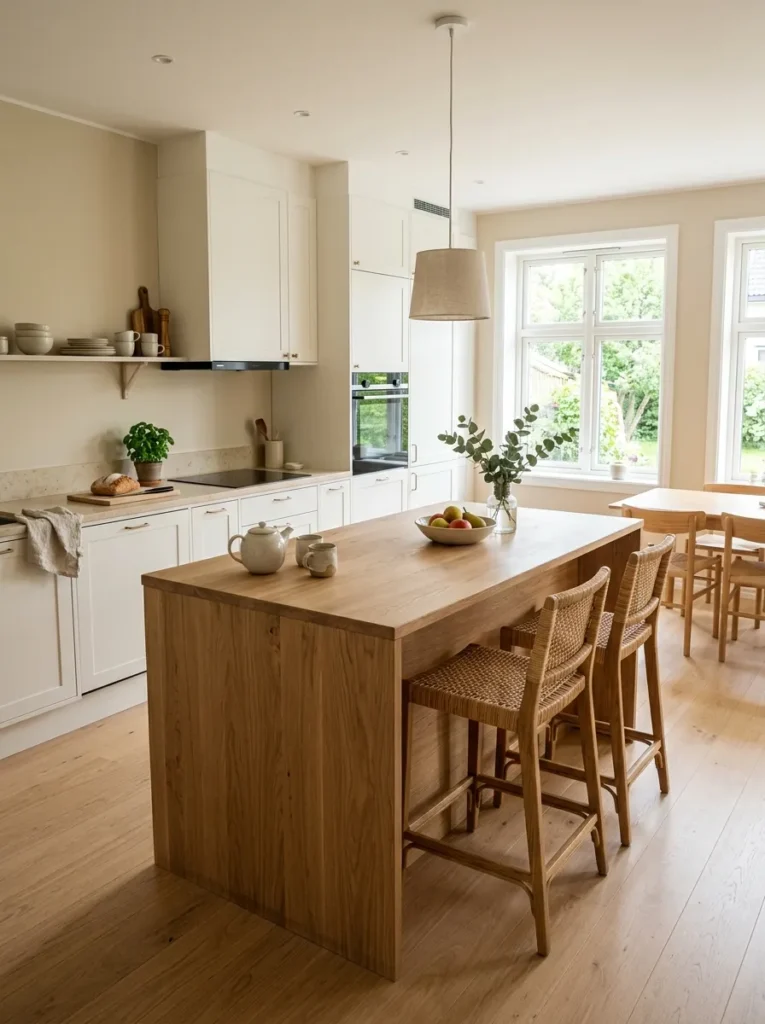
- A wood island adds warmth to an otherwise pale kitchen.
- Natural grain creates visual texture without busy patterns.
- Matching timber details can connect different areas of the room.
- A durable finish keeps the island practical for everyday use.
A natural wood island can become the warm centerpiece of a Scandinavian kitchen while keeping the surrounding design simple and bright. Pale oak works particularly well with white cabinetry, creamy countertops, and soft neutral walls because it introduces texture without creating heavy contrast. Use the island for food preparation, casual seating, or additional storage so its beauty also serves a practical purpose. This balance between function and natural materials is central to Scandinavian kitchen ideas, where useful features are often treated as part of the overall visual design rather than hidden away.
Choose the wood tone carefully and consider how it relates to existing floors, cabinets, and furniture. The island does not need to match every wooden element exactly, but similar undertones will help the room feel connected. I’ve noticed that a lightly textured finish often looks more natural than an extremely glossy surface, particularly in a relaxed kitchen. Add simple stools and keep the countertop lightly styled with only useful items, such as a wooden board or ceramic bowl. The result is a welcoming focal point that adds character without disrupting the kitchen’s clean, airy proportions.
Timeless Nordic Details
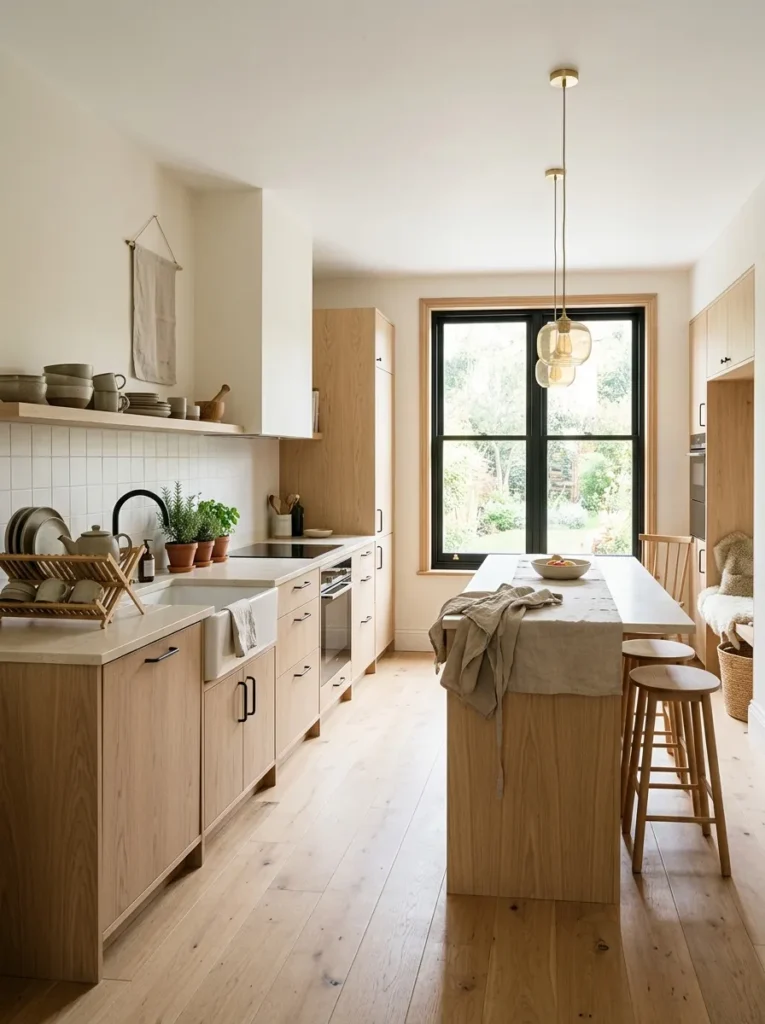
- Natural materials help the kitchen feel connected to nature.
- Simple hardware keeps the design visually restrained.
- Handmade ceramics add personality without creating clutter.
- Repeating warm textures creates a cohesive finished look.
Timeless Nordic details come from thoughtful combinations rather than one dramatic feature. Pale wood, warm white surfaces, simple hardware, natural textiles, handmade ceramics, and understated greenery can work together to create a kitchen that feels comfortable today and adaptable for years to come. The strongest result usually comes from repeating a few materials instead of introducing many unrelated finishes. This creates visual continuity while allowing individual pieces to stand out. If you are collecting inspiration for a long-lasting kitchen, focus on proportions, natural textures, practical storage, and finishes you genuinely enjoy seeing every day.
The most successful Scandinavian spaces often feel personal rather than perfectly staged. Leave room for useful objects, favorite ceramics, cookbooks, and small plants so the kitchen can develop naturally with everyday life. I’ve noticed that timelessness comes more from restraint than from avoiding personality. Choose quality where it matters, especially for cabinetry, countertops, flooring, and frequently used hardware, then use smaller accessories for seasonal updates. This makes future changes easier without requiring another major renovation. The finished kitchen feels bright, functional, warm, and effortlessly cohesive while preserving the simple character that makes Nordic design so enduring.
Conclusion
A beautiful Scandinavian kitchen does not need complicated decoration or expensive-looking features. Simple wood tones, soft colors, smart storage, natural textures, and thoughtful lighting can completely change how a space feels and functions. These scandinavian kitchen ideas give you plenty of inspiration to create a kitchen that feels brighter, calmer, warmer, and easier to live in. Start with one detail that catches your eye, then build from there at your own pace. I’ve seen how small changes can make a surprisingly big difference. Save this post on Pinterest, try your favorite ideas, and share it with someone planning their dream kitchen.